
Mitosis Cell Cycle Notes the cells nucleus and
- Slides: 2
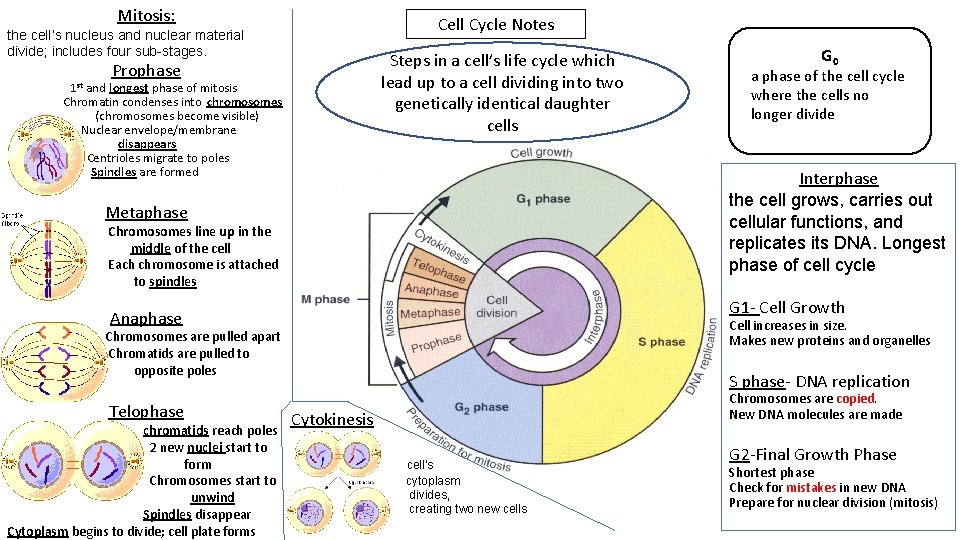
Mitosis: Cell Cycle Notes the cell’s nucleus and nuclear material divide; includes four sub-stages. 1 st Steps in a cell’s life cycle which lead up to a cell dividing into two genetically identical daughter cells Prophase and longest phase of mitosis Chromatin condenses into chromosomes (chromosomes become visible) Nuclear envelope/membrane disappears Centrioles migrate to poles Spindles are formed Chromosomes line up in the middle of the cell Each chromosome is attached to spindles G 1 - Cell Growth Anaphase Cell increases in size. Makes new proteins and organelles Chromosomes are pulled apart Chromatids are pulled to opposite poles chromatids reach poles 2 new nuclei start to form Chromosomes start to unwind Spindles disappear Cytoplasm begins to divide; cell plate forms a phase of the cell cycle where the cells no longer divide Interphase the cell grows, carries out cellular functions, and replicates its DNA. Longest phase of cell cycle Metaphase Telophase G 0 S phase- DNA replication Chromosomes are copied. New DNA molecules are made Cytokinesis cell’s cytoplasm divides, creating two new cells G 2 -Final Growth Phase Shortest phase Check for mistakes in new DNA Prepare for nuclear division (mitosis)
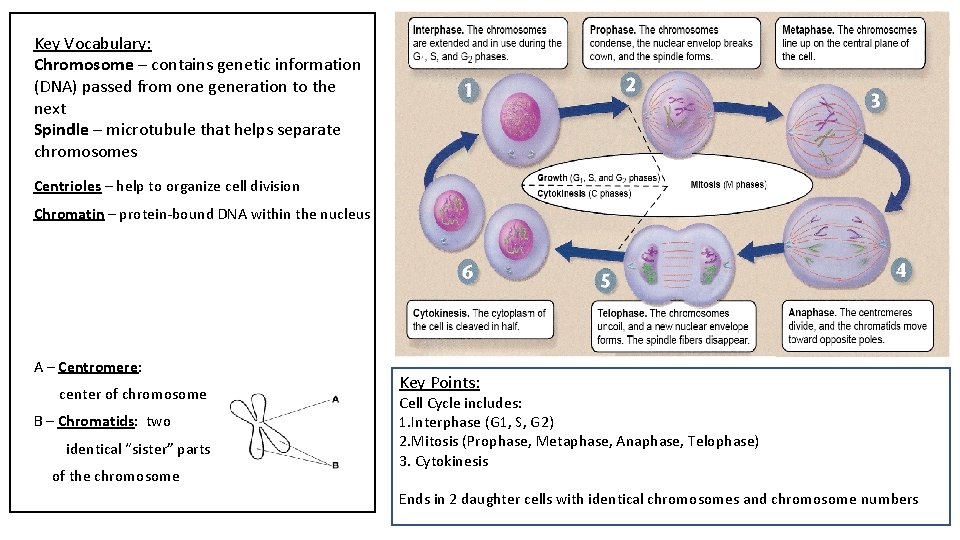
Key Vocabulary: Chromosome – contains genetic information (DNA) passed from one generation to the next Spindle – microtubule that helps separate chromosomes Centrioles – help to organize cell division Chromatin – protein-bound DNA within the nucleus A – Centromere: center of chromosome B – Chromatids: two identical “sister” parts of the chromosome Key Points: Cell Cycle includes: 1. Interphase (G 1, S, G 2) 2. Mitosis (Prophase, Metaphase, Anaphase, Telophase) 3. Cytokinesis Ends in 2 daughter cells with identical chromosomes and chromosome numbers