
Mitosis and Meiosis Cell Division Why Do Cells


- Slides: 50
Mitosis and Meiosis Cell Division
Why Do Cells Divide? For growth, repair, and reproduction
Mitosis • Organisms grow by the addition of cells • In multicellular organisms some of these cells perform unique functions (different from other cells).
• Differentiation-The process of a cell becoming specialized and thus different. • Totipotent cells can differentiate into specialized cells. A multicellular organism can be formed from one totipotent cell.
When do cells divide? • Most limiting factor in size is the size of the cell membrane. –Cells must obtain nutrients –as volume increases, cell surface area does not increase as greatly –larger cells require a larger surface area for survival
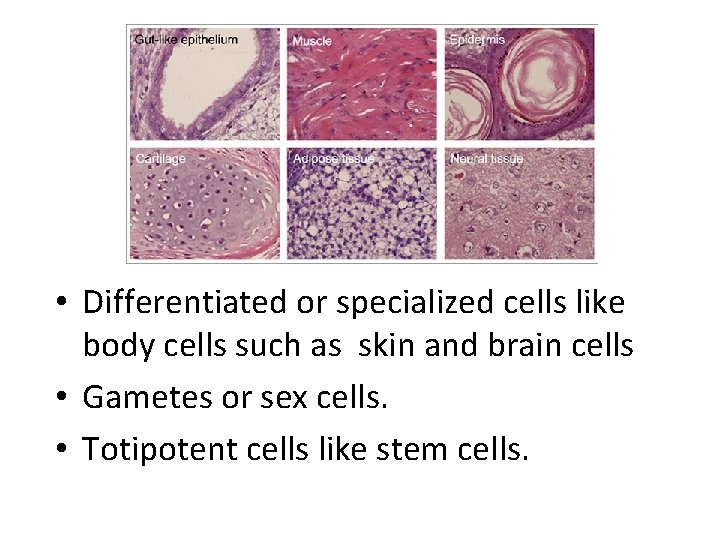
What kind of cells divide? • Differentiated or specialized cells like body cells such as skin and brain cells • Gametes or sex cells. • Totipotent cells like stem cells.
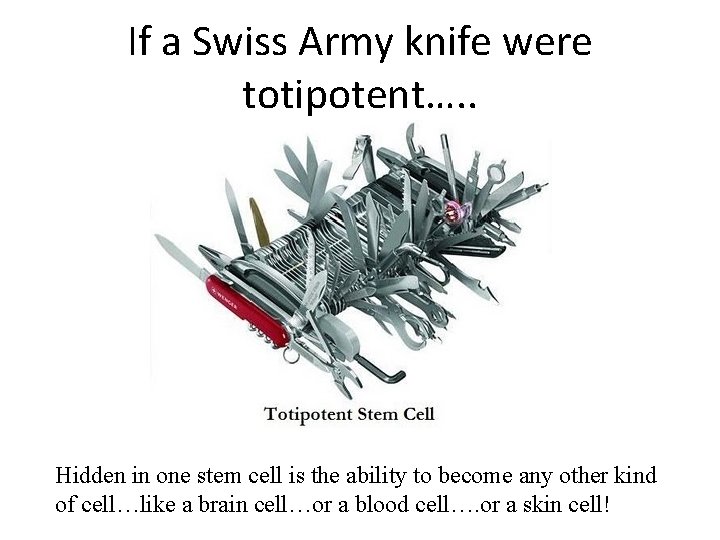
If a Swiss Army knife were totipotent…. . Hidden in one stem cell is the ability to become any other kind of cell…like a brain cell…or a blood cell…. or a skin cell!
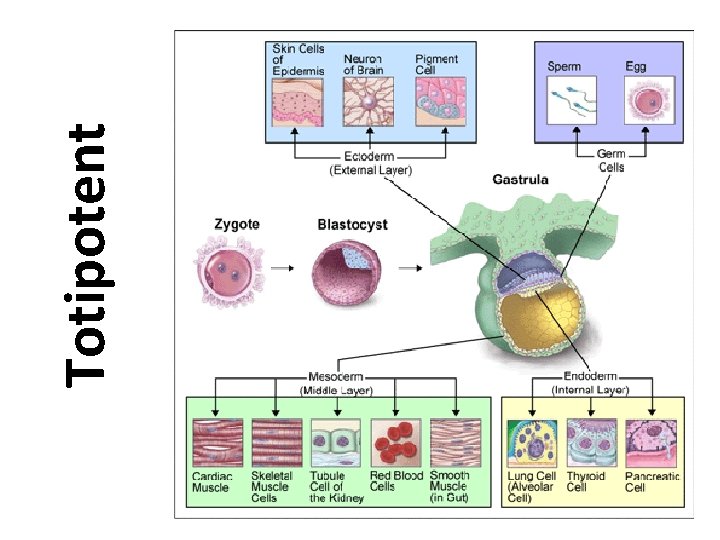
Totipotent
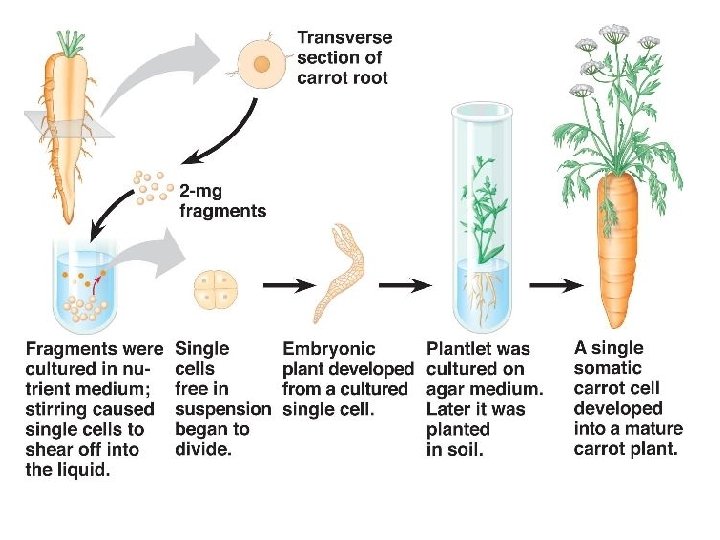
Totipotent • The ability to turn into all the mature cell types of the body (as well as embryonic components that are required for development but do not become tissues of the adult body such as the placenta). Plant cells are totipotent and any cell can form an entire plant. (Cuttings from a plant can grow into the entire plant etc. )
Plant vs. Animal Cells • Under normal conditions once an animal cell becomes specialized or differentiated, it no longer can form an entire organism, it can only form specialized kinds of cells.
Cell Division vs. Nuclear Division • Cytokinesis: The actual division of the cytoplasm. Following mitosis this produces two new cells. • Mitosis: The division of the nucleus of the cell into two new nuclei. Mitosis Animation
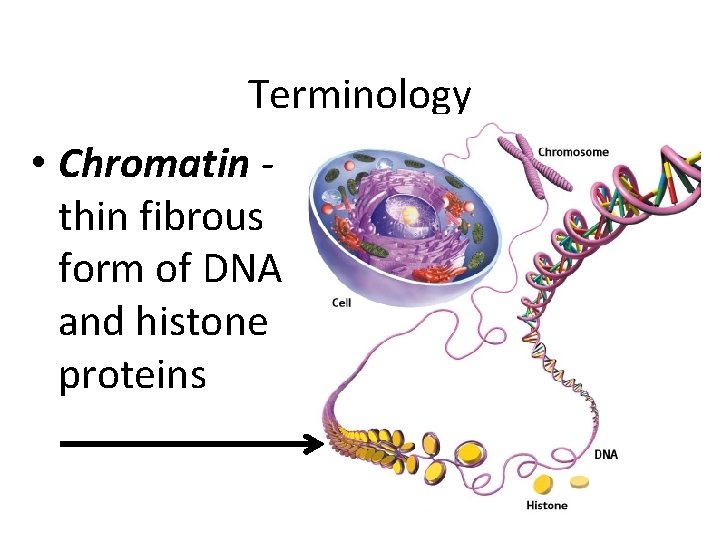
Terminology • Chromatin thin fibrous form of DNA and histone proteins
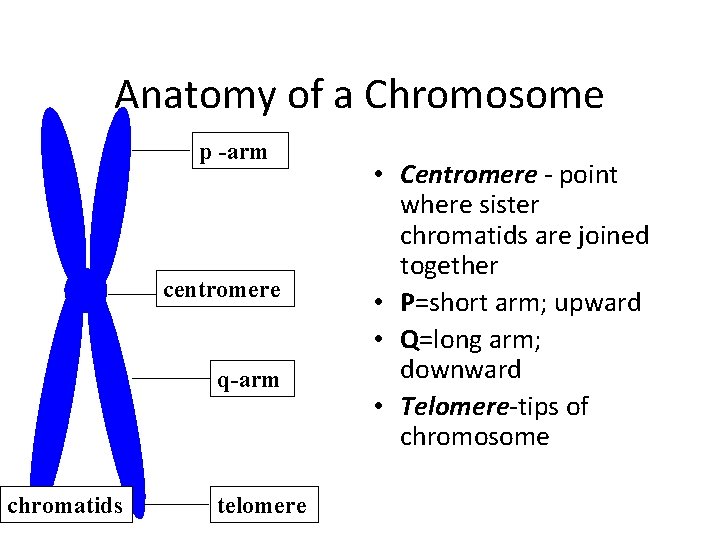
Anatomy of a Chromosome p -arm centromere q-arm chromatids telomere • Centromere - point where sister chromatids are joined together • P=short arm; upward • Q=long arm; downward • Telomere-tips of chromosome
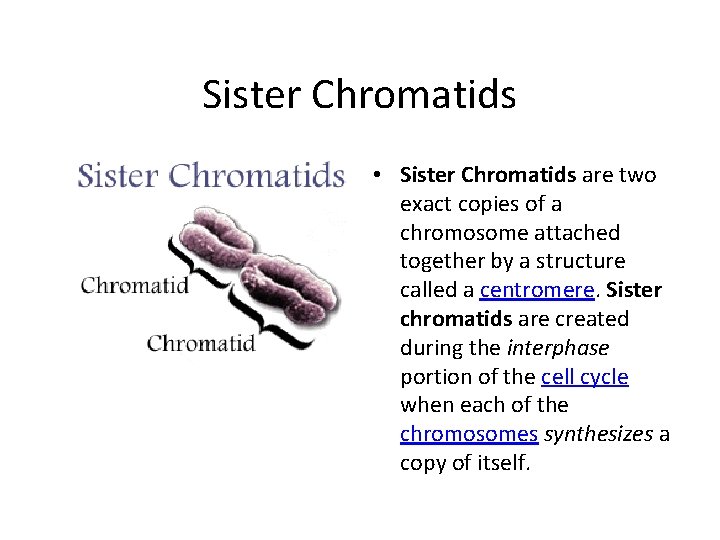
Sister Chromatids • Sister Chromatids are two exact copies of a chromosome attached together by a structure called a centromere. Sister chromatids are created during the interphase portion of the cell cycle when each of the chromosomes synthesizes a copy of itself.
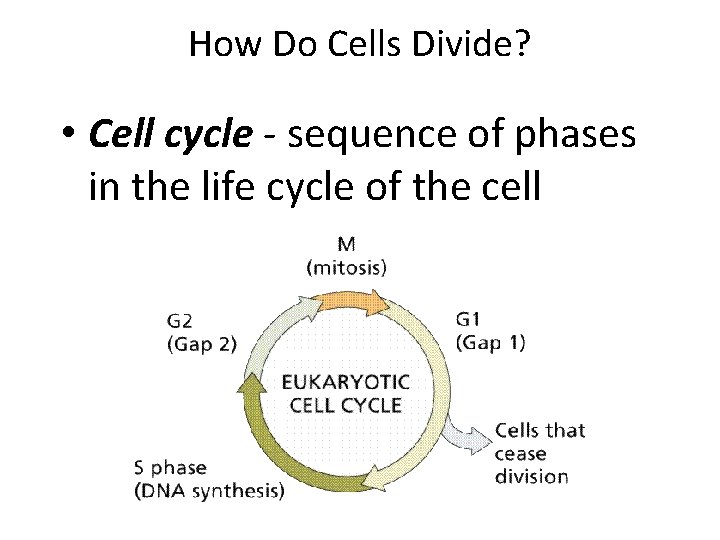
How Do Cells Divide? • Cell cycle - sequence of phases in the life cycle of the cell
Getting ready to split • Cell cycle has two parts: –growth and preparation (interphase) –cell division • mitosis (nuclear division) • cytokinesis (cytoplasm division)
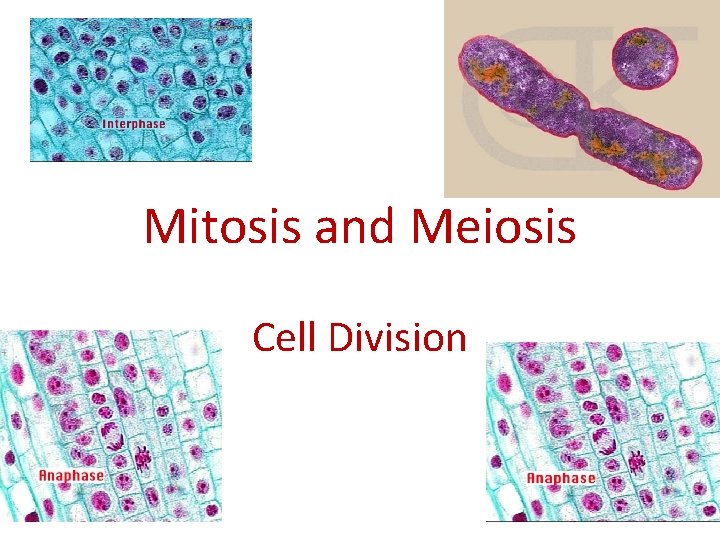
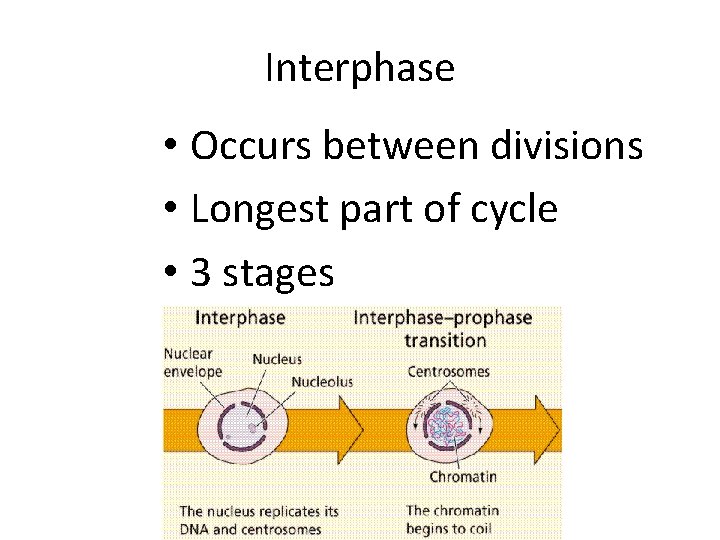
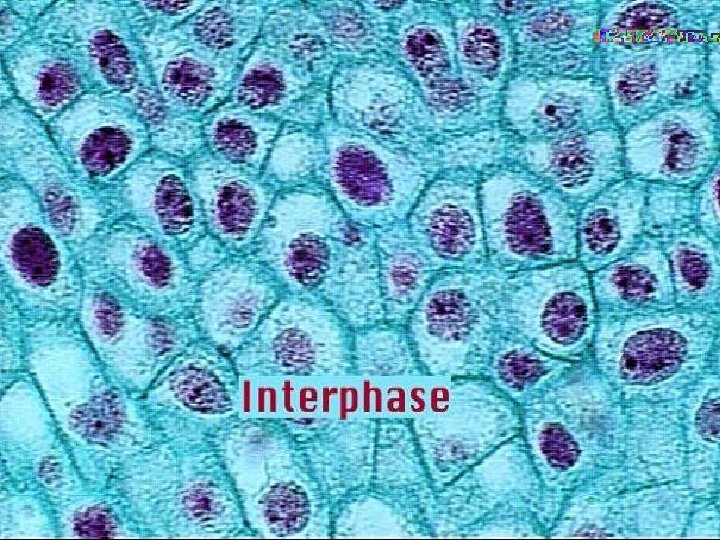
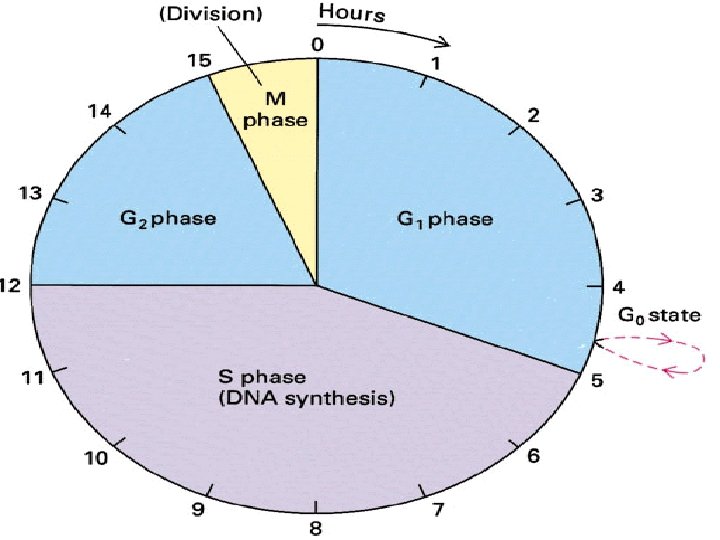
Interphase • Occurs between divisions • Longest part of cycle • 3 stages
Interphase • G 1 or Gap 1 –The cell just finished dividing so in Gap 1 the cell is recovering from mitosis
Interphase • S or Synthesis stage –DNA replicates before division an identical copy is the very first mission.
Interphase • G 2 or Gap 2 –This is preparation for mitosis –Organelles are replicated. –More growth occurs.
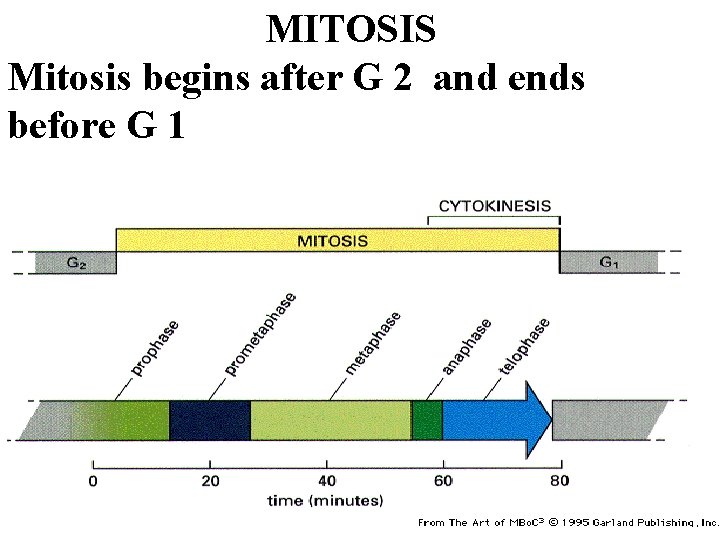
MITOSIS Mitosis begins after G 2 and ends before G 1
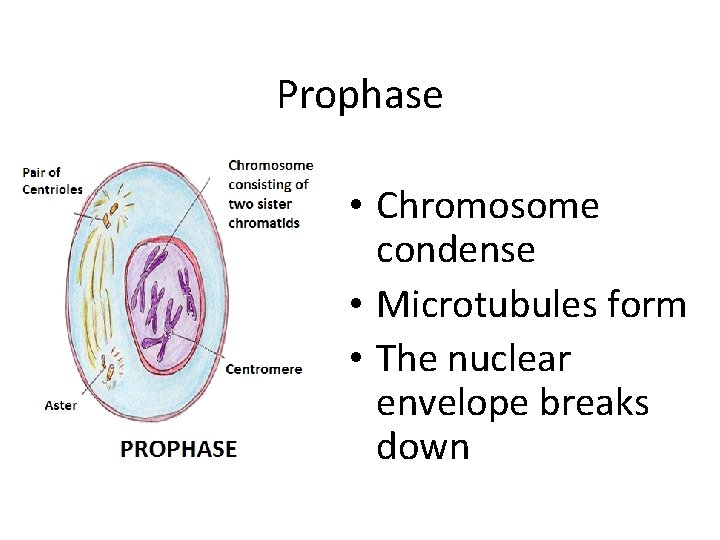
Prophase • Chromosome condense • Microtubules form • The nuclear envelope breaks down
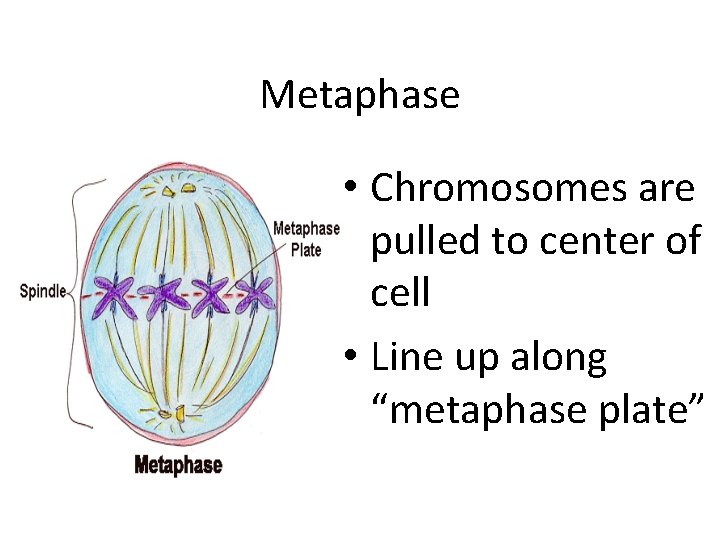
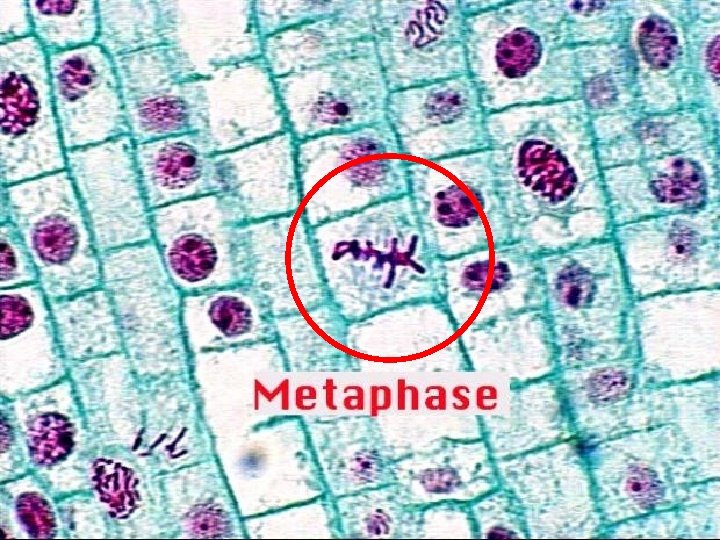
Metaphase • Chromosomes are pulled to center of cell • Line up along “metaphase plate”
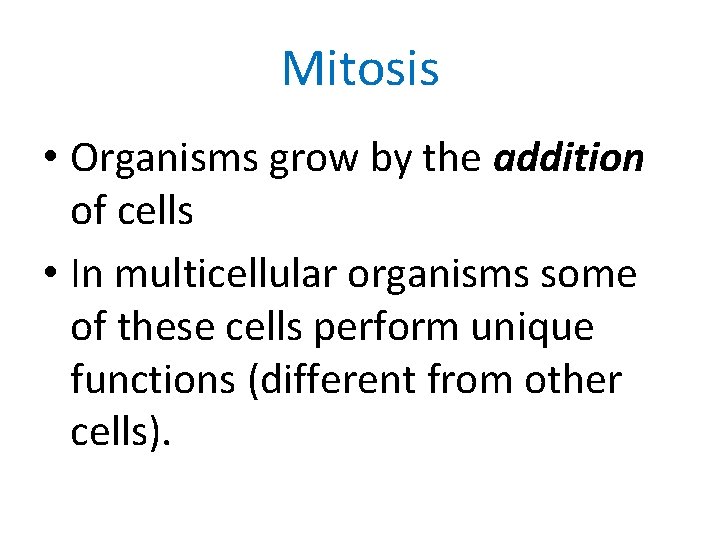
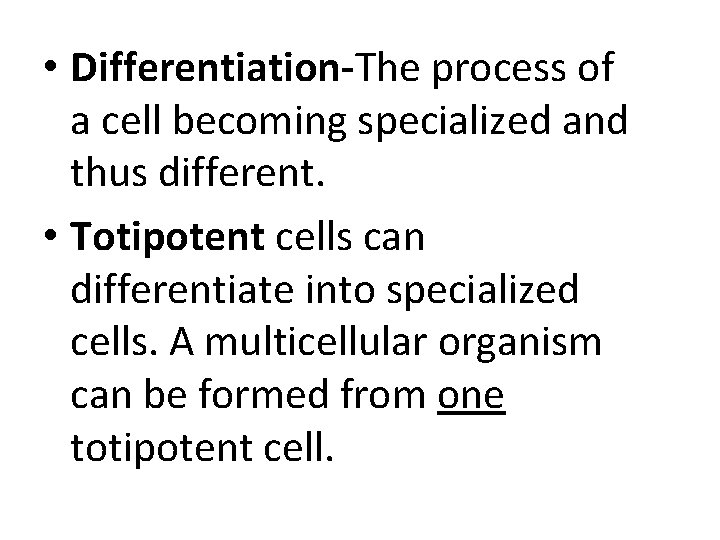
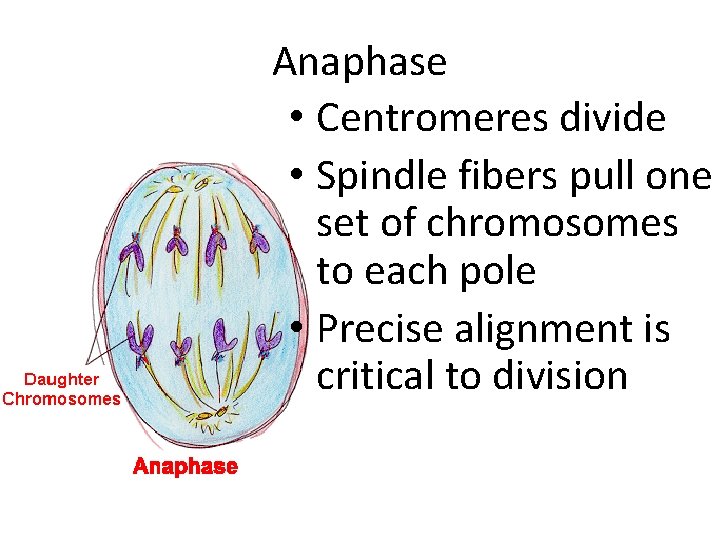
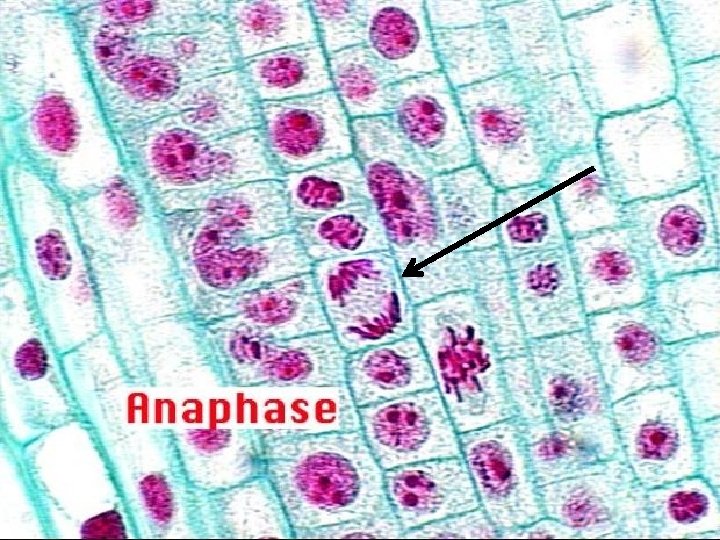
Anaphase • Centromeres divide • Spindle fibers pull one set of chromosomes to each pole • Precise alignment is critical to division
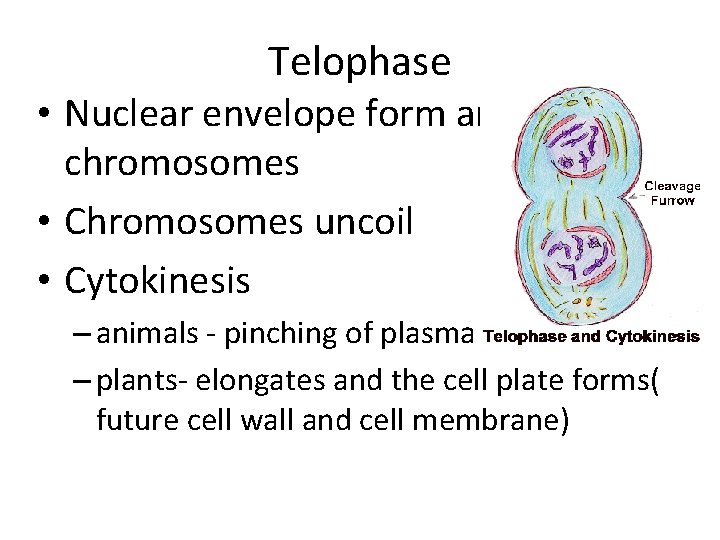
Telophase • Nuclear envelope form around chromosomes • Chromosomes uncoil • Cytokinesis – animals - pinching of plasma membrane – plants- elongates and the cell plate forms( future cell wall and cell membrane)
Meiosis
What is Meiosis? A division of the nucleus that reduces chromosome number by half. • Important in sexual reproduction • Involves combining the genetic information of one parent with that of the other parent to produce a genetically distinct individual
Terminology • Diploid - two sets of chromosomes (2 n), in humans 23 pairs or 46 total • Haploid - one set of chromosomes (n) - gametes or sex cells, in humans 23 chromosomes
Chromosome Pairing • Homologous pair –each chromosome in pair are identical to the other ( carry genes for same trait) –only one pair differs - sex chromosomes X or Y
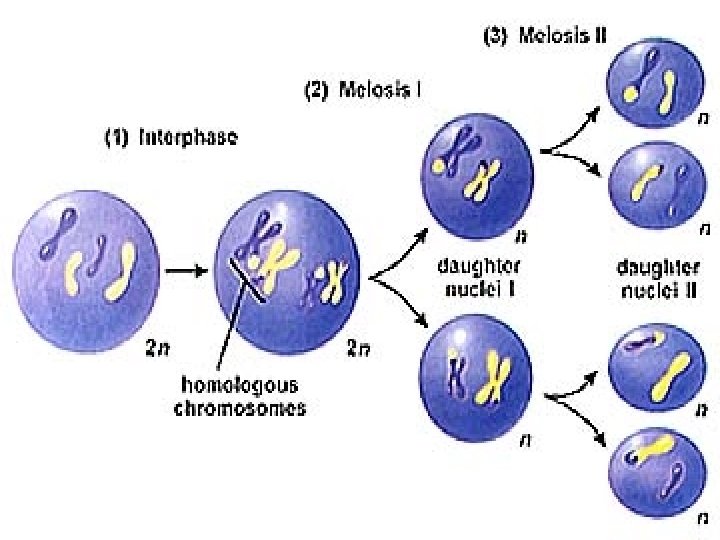
Phases of Meiosis • A diploid cell replicates its chromosomes • Two stages of meiosis –Meiosis I and Meiosis II –Only 1 replication
Important vocabulary –Synapsis - pairing of homologous chromosomes forming a tetrad. –Crossing over - chromatids of tetrad exchange parts.
Meiosis I
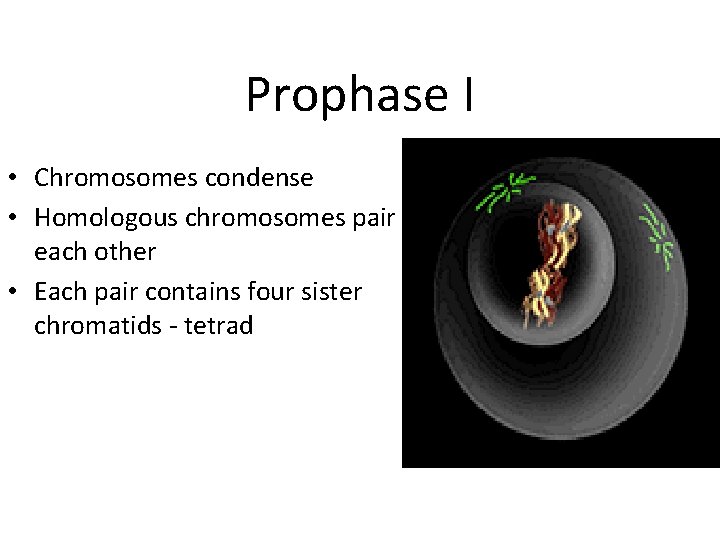
Prophase I • Chromosomes condense • Homologous chromosomes pair w/ each other • Each pair contains four sister chromatids - tetrad
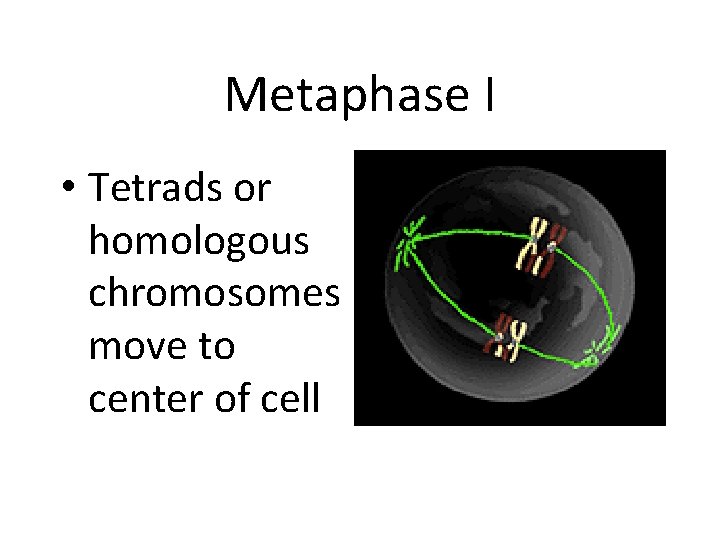
Metaphase I • Tetrads or homologous chromosomes move to center of cell
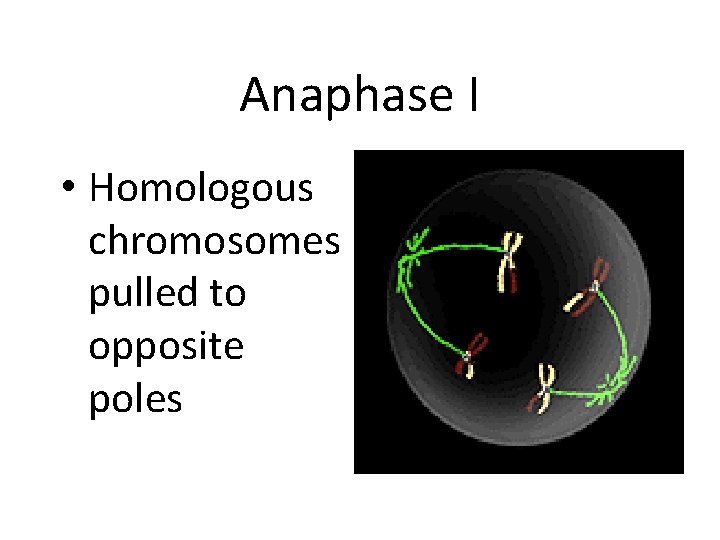
Anaphase I • Homologous chromosomes pulled to opposite poles
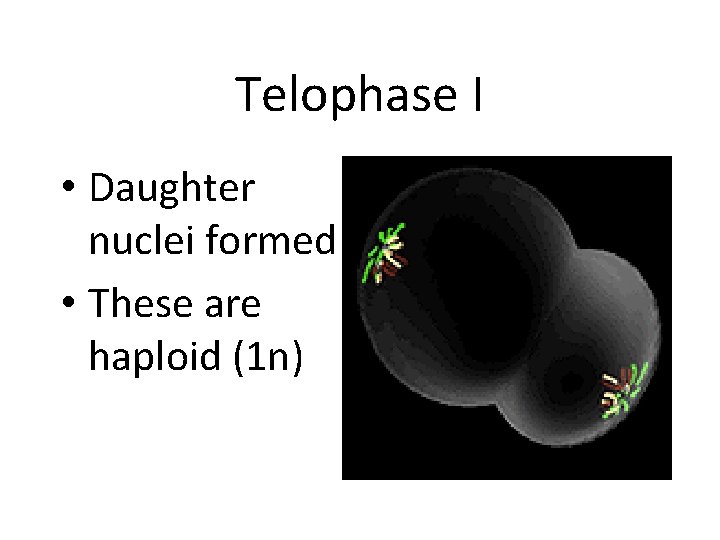
Telophase I • Daughter nuclei formed • These are haploid (1 n)
Meiosis II • Daughter cells undergo a second division; much like mitosis • NO ADDITIONAL REPLICATION OCCURS
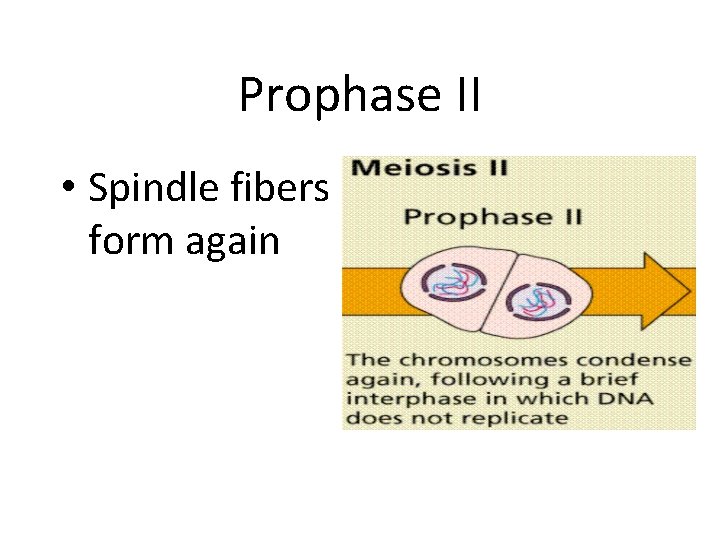
Prophase II • Spindle fibers form again
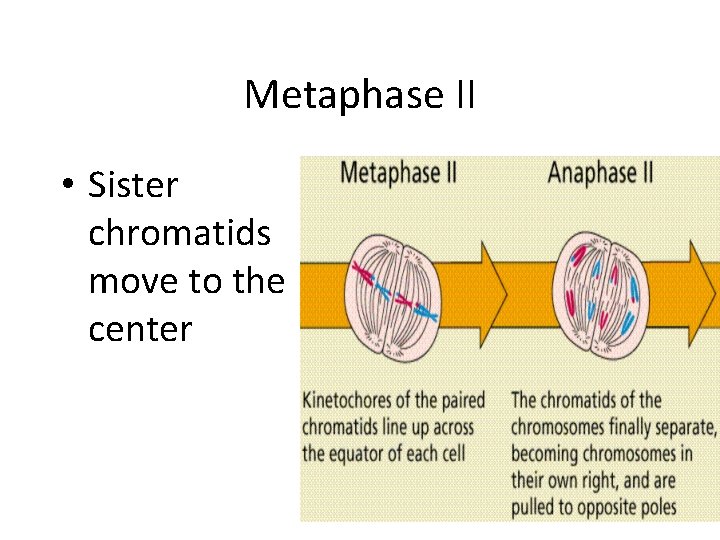
Metaphase II • Sister chromatids move to the center
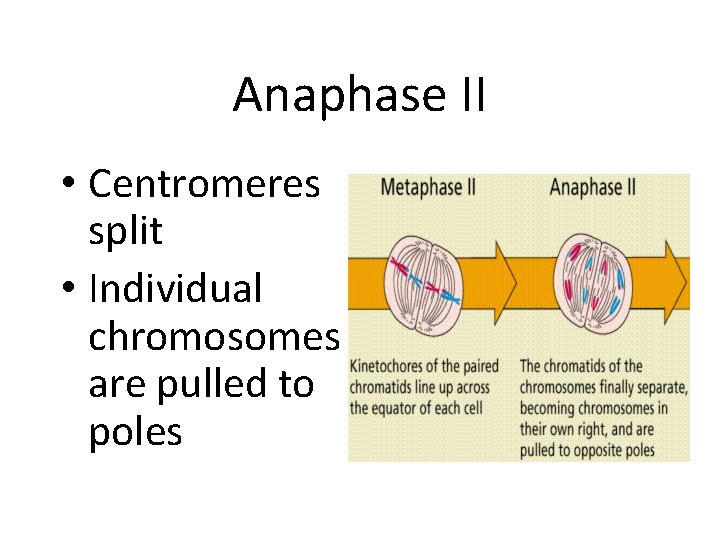
Anaphase II • Centromeres split • Individual chromosomes are pulled to poles
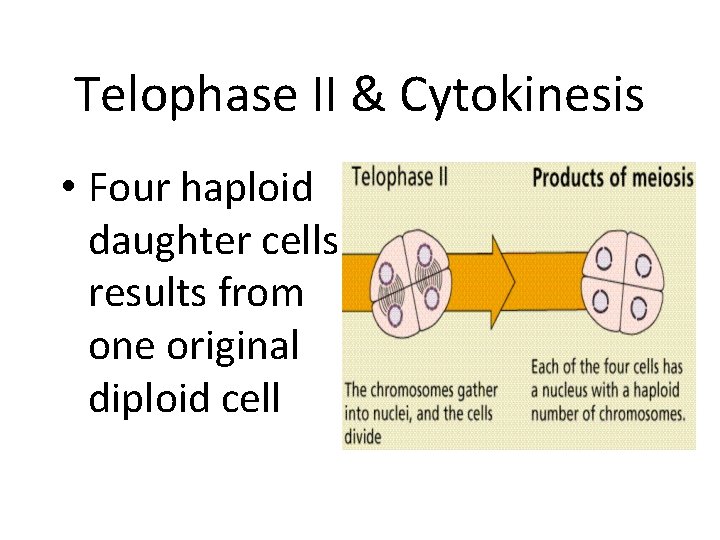
Telophase II & Cytokinesis • Four haploid daughter cells results from one original diploid cell
Review Mitosis & Meiosis • Both are forms of nuclear division • Both involve replication • Both involve disappearance of the nucleus, and nucleolus, nuclear membrane • Both involve formation of spindle fibers
DIFFERENCES • Meiosis produces daughter cells that have 1/2 the number of chromosomes as the parent. Go from 2 n to 1 n. • Daughter cells produced by meiosis are not genetically identical to one another. • In meiosis cell division takes place twice but replication occurs only once.
Value of Variation • Variation - differences between members of a population. • Meiosis results in random separation of chromosomes in gametes. • Causes diverse populations that over time can be stronger for survival.