
MITOSIS AND ASEXUAL REPRODUCTION The survival of a
- Slides: 32
MITOSIS AND ASEXUAL REPRODUCTION
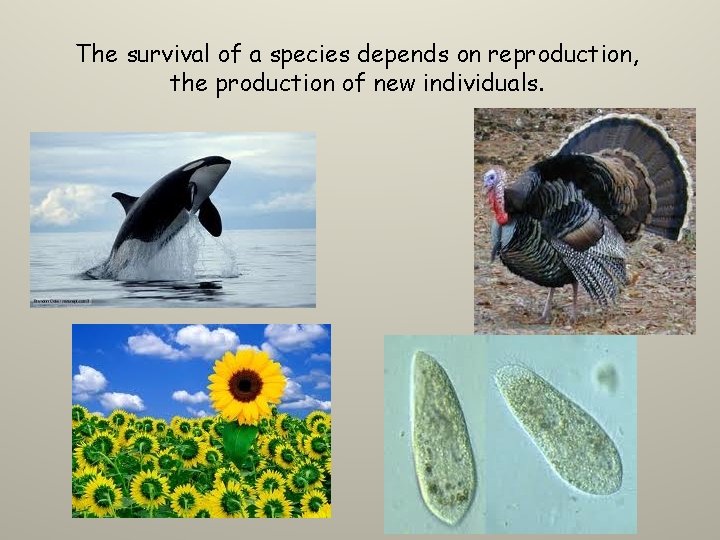
The survival of a species depends on reproduction, the production of new individuals.
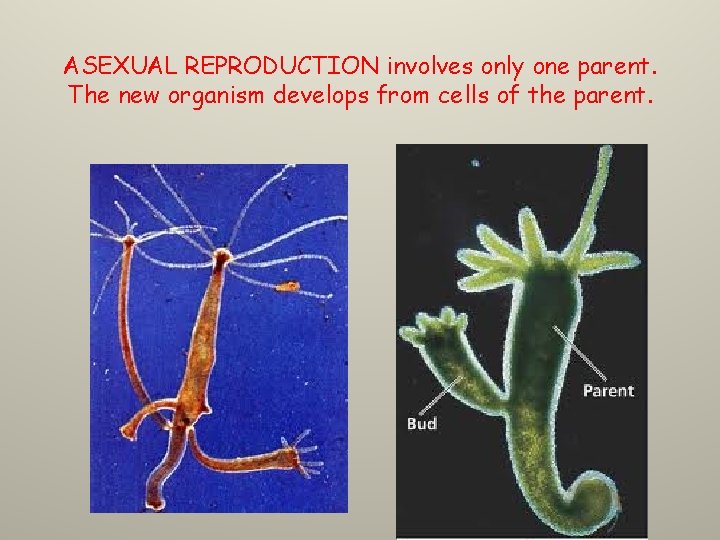
ASEXUAL REPRODUCTION involves only one parent. The new organism develops from cells of the parent.
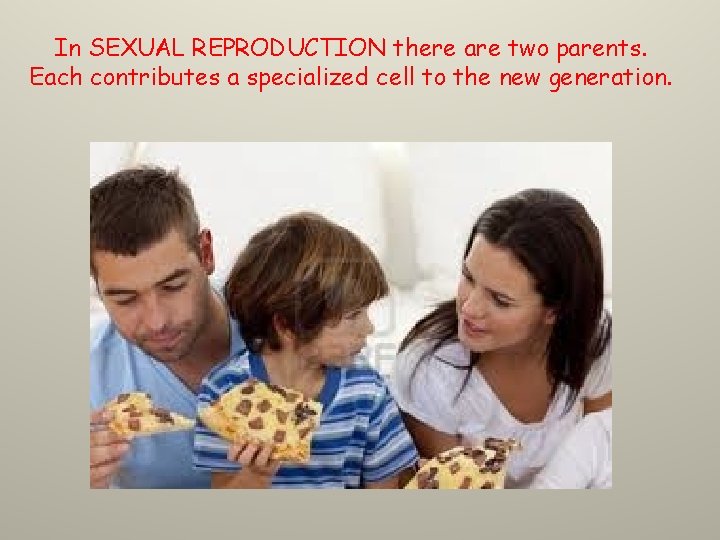
In SEXUAL REPRODUCTION there are two parents. Each contributes a specialized cell to the new generation.
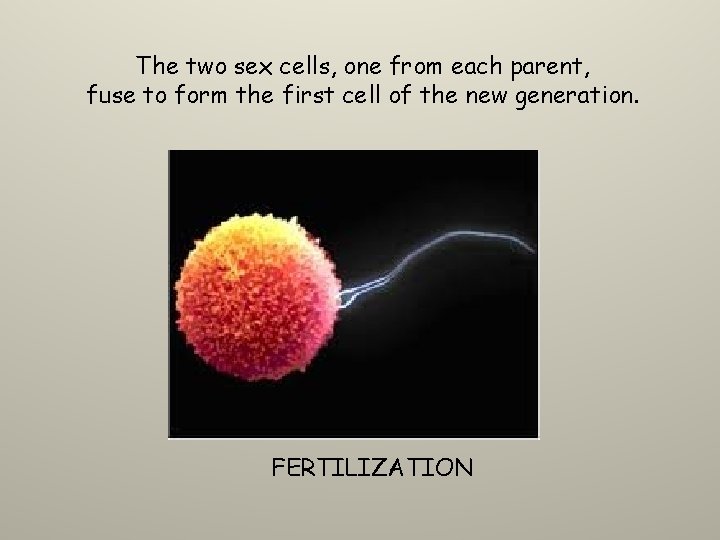
The two sex cells, one from each parent, fuse to form the first cell of the new generation. FERTILIZATION
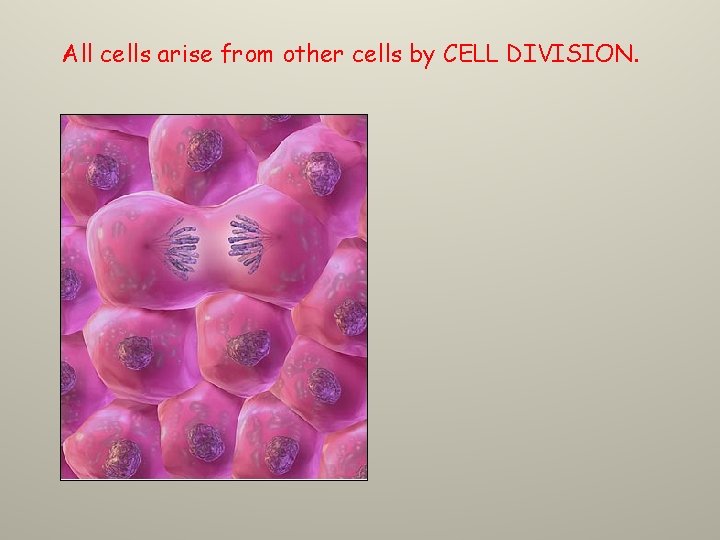
All cells arise from other cells by CELL DIVISION.
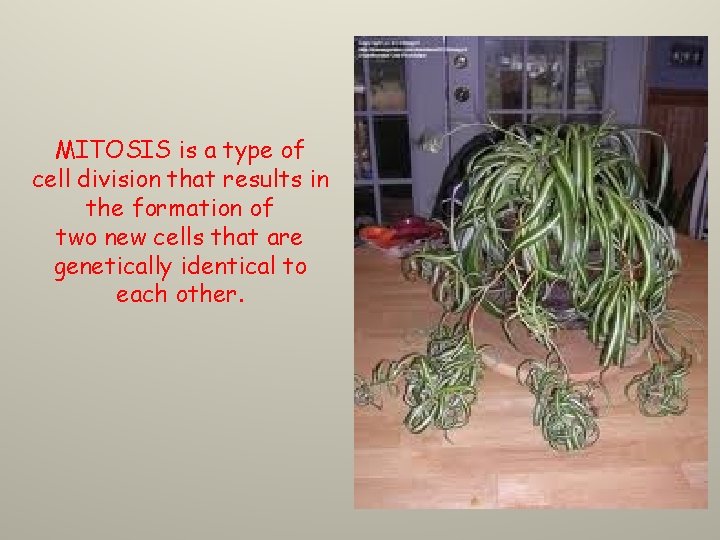
MITOSIS is a type of cell division that results in the formation of two new cells that are genetically identical to each other.
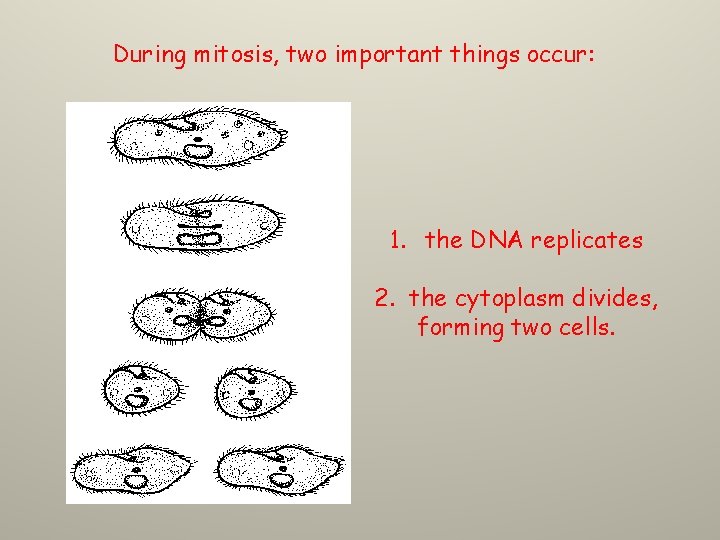
During mitosis, two important things occur: 1. the DNA replicates 2. the cytoplasm divides, forming two cells.
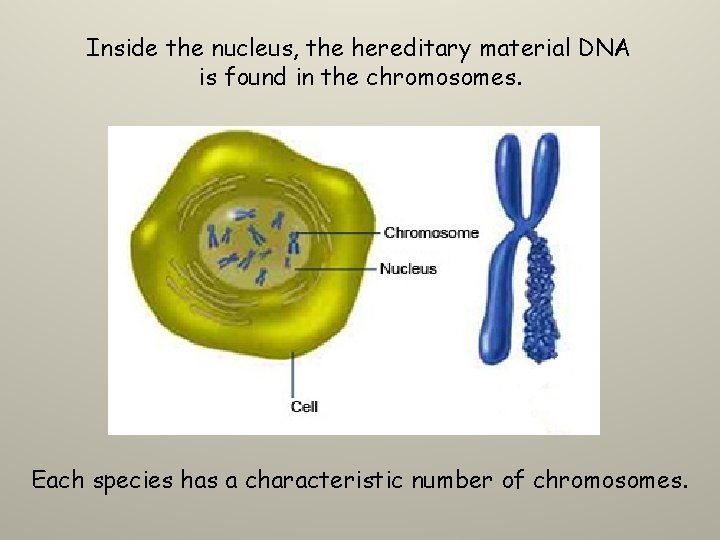
Inside the nucleus, the hereditary material DNA is found in the chromosomes. Each species has a characteristic number of chromosomes.
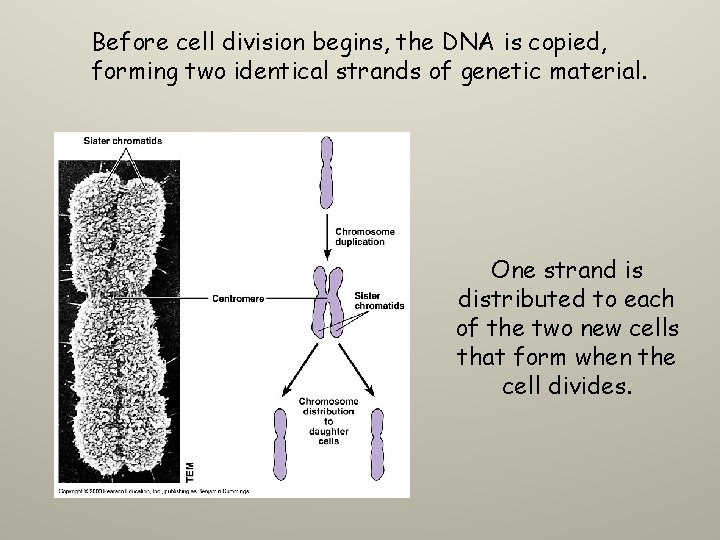
Before cell division begins, the DNA is copied, forming two identical strands of genetic material. One strand is distributed to each of the two new cells that form when the cell divides.
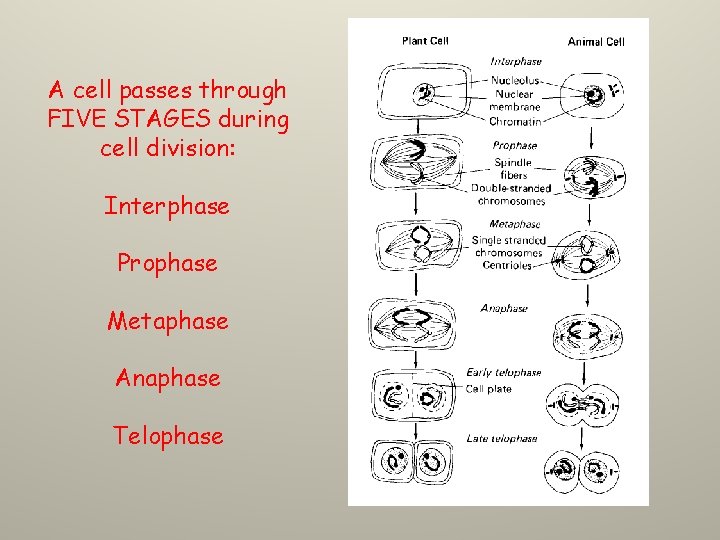
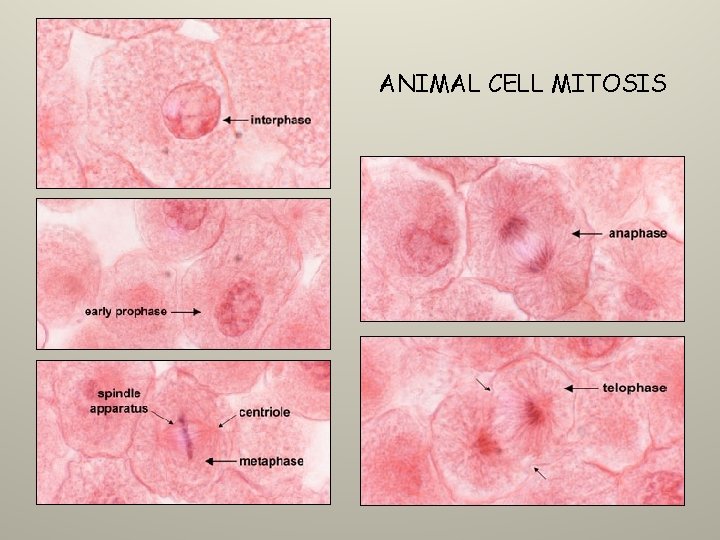
A cell passes through FIVE STAGES during cell division: Interphase Prophase Metaphase Anaphase Telophase
I Pick My Apple Tree
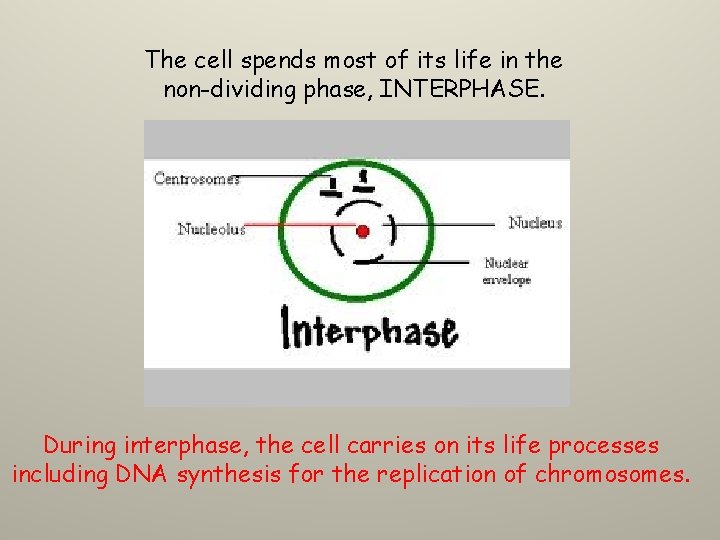
The cell spends most of its life in the non-dividing phase, INTERPHASE. During interphase, the cell carries on its life processes including DNA synthesis for the replication of chromosomes.
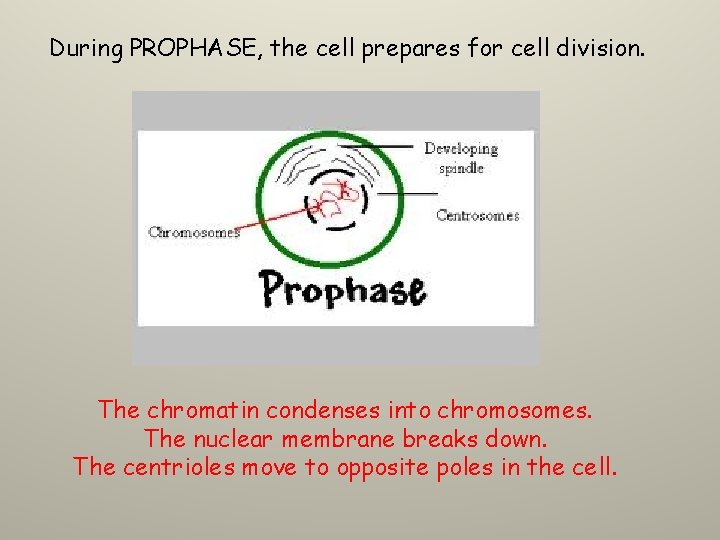
During PROPHASE, the cell prepares for cell division. The chromatin condenses into chromosomes. The nuclear membrane breaks down. The centrioles move to opposite poles in the cell.
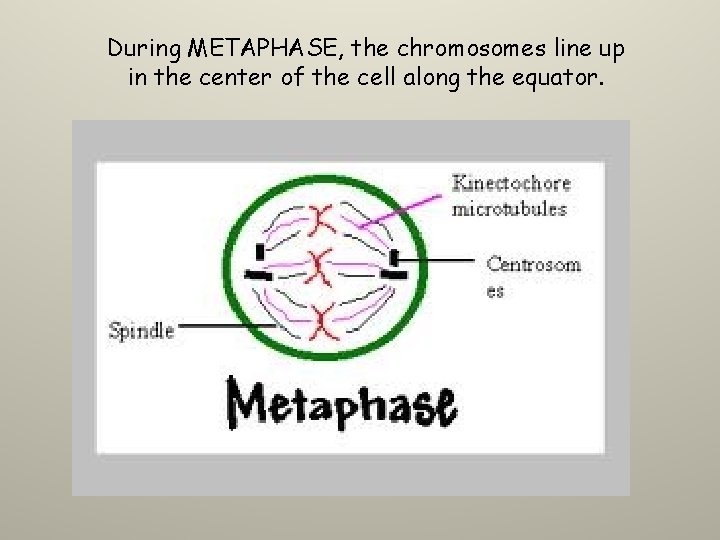
During METAPHASE, the chromosomes line up in the center of the cell along the equator.
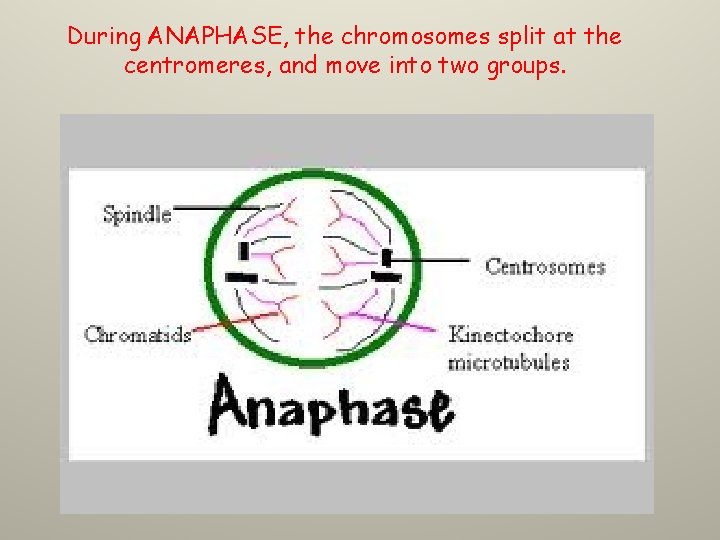
During ANAPHASE, the chromosomes split at the centromeres, and move into two groups.
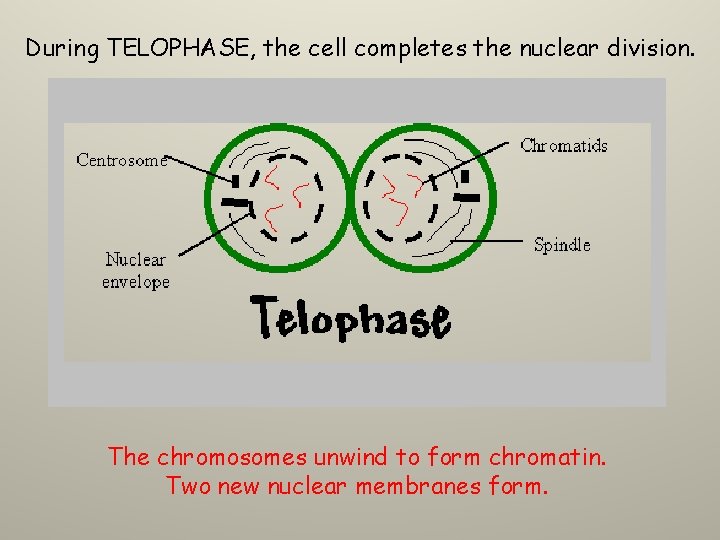
During TELOPHASE, the cell completes the nuclear division. The chromosomes unwind to form chromatin. Two new nuclear membranes form.
ANIMAL CELL MITOSIS
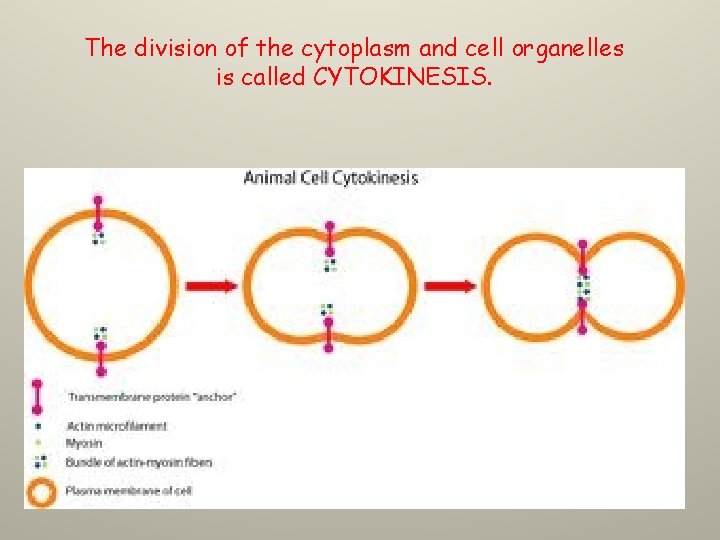
The division of the cytoplasm and cell organelles is called CYTOKINESIS.
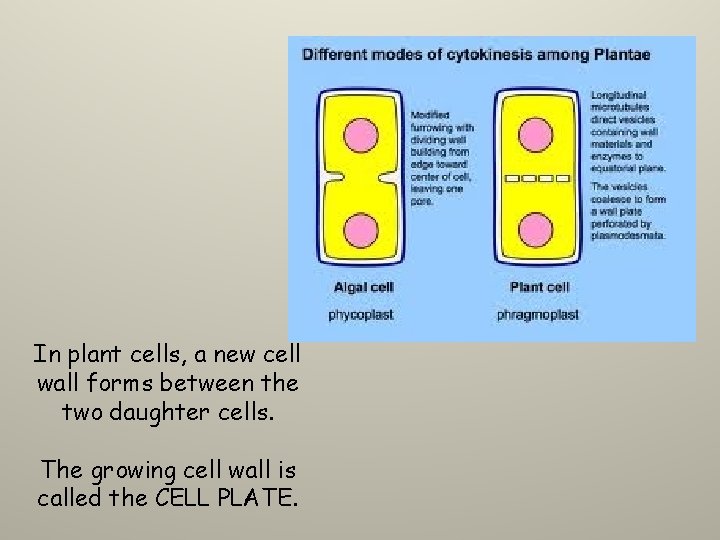
In plant cells, a new cell wall forms between the two daughter cells. The growing cell wall is called the CELL PLATE.
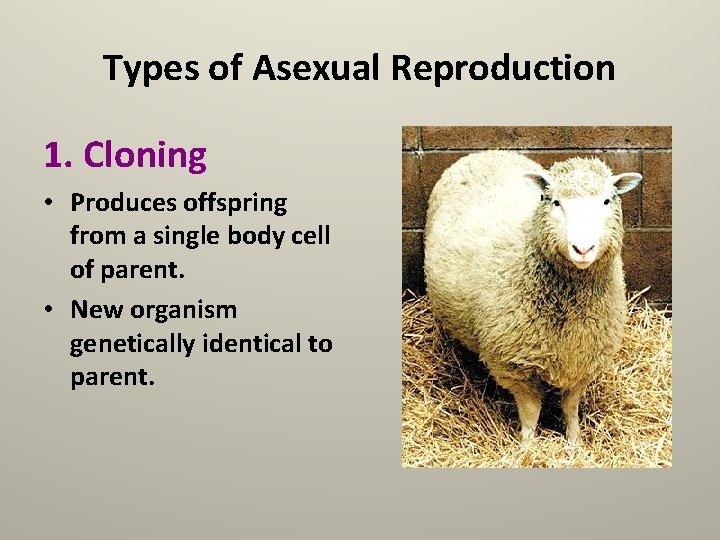
Types of Asexual Reproduction 1. Cloning • Produces offspring from a single body cell of parent. • New organism genetically identical to parent.
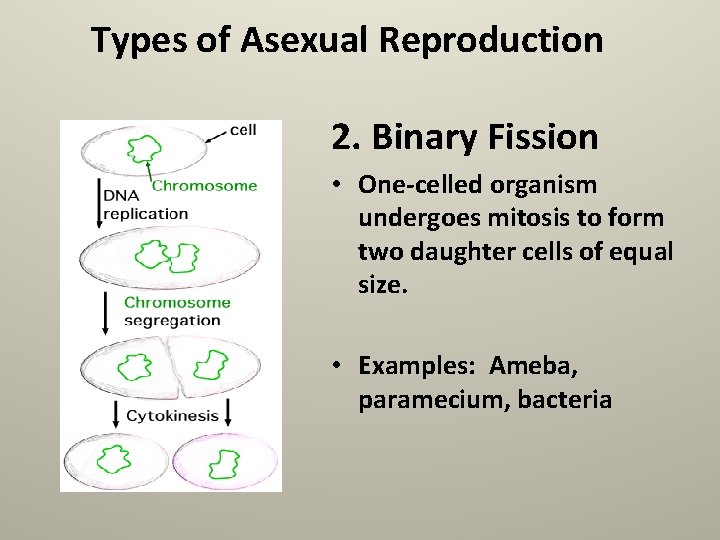
Types of Asexual Reproduction 2. Binary Fission • One-celled organism undergoes mitosis to form two daughter cells of equal size. • Examples: Ameba, paramecium, bacteria
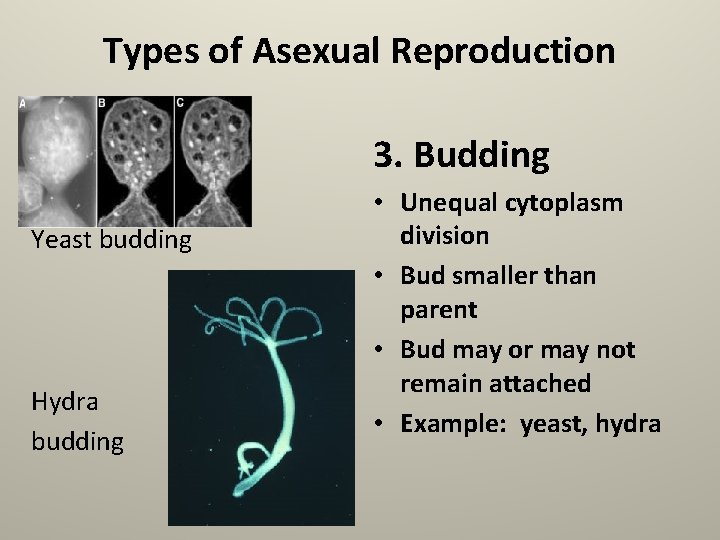
Types of Asexual Reproduction 3. Budding Yeast budding Hydra budding • Unequal cytoplasm division • Bud smaller than parent • Bud may or may not remain attached • Example: yeast, hydra
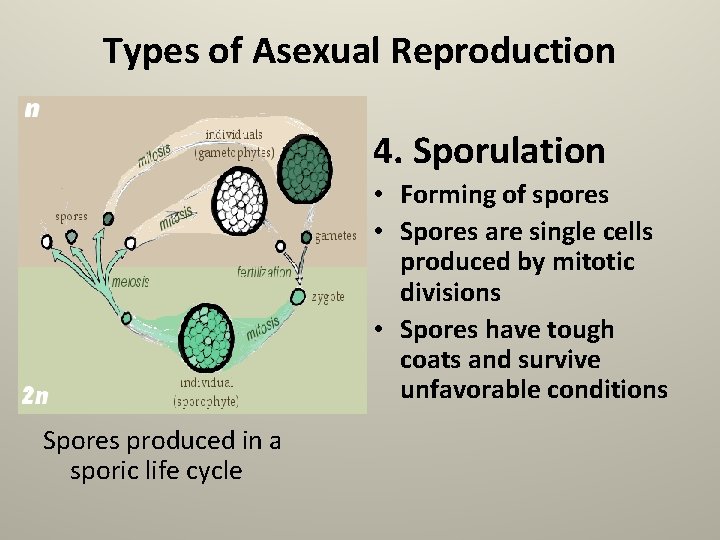
Types of Asexual Reproduction 4. Sporulation • Forming of spores • Spores are single cells produced by mitotic divisions • Spores have tough coats and survive unfavorable conditions Spores produced in a sporic life cycle
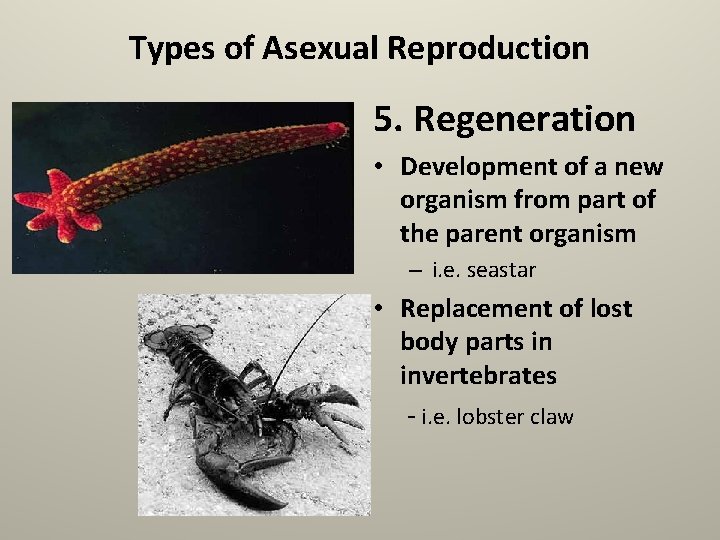
Types of Asexual Reproduction 5. Regeneration • Development of a new organism from part of the parent organism – i. e. seastar • Replacement of lost body parts in invertebrates - i. e. lobster claw
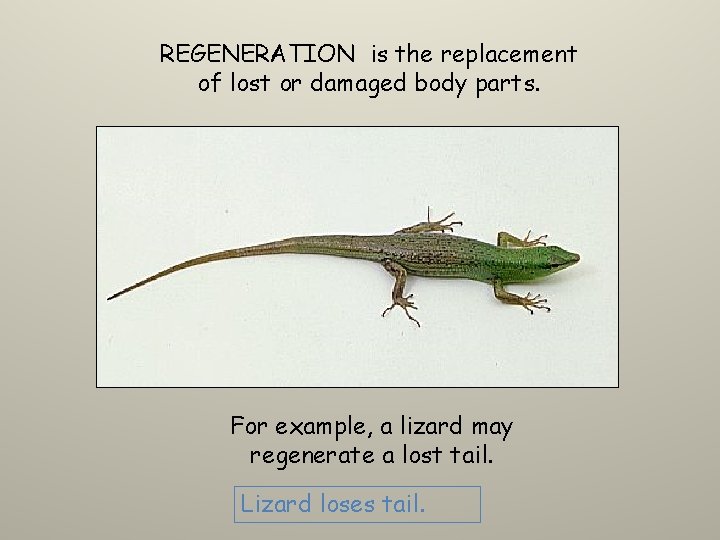
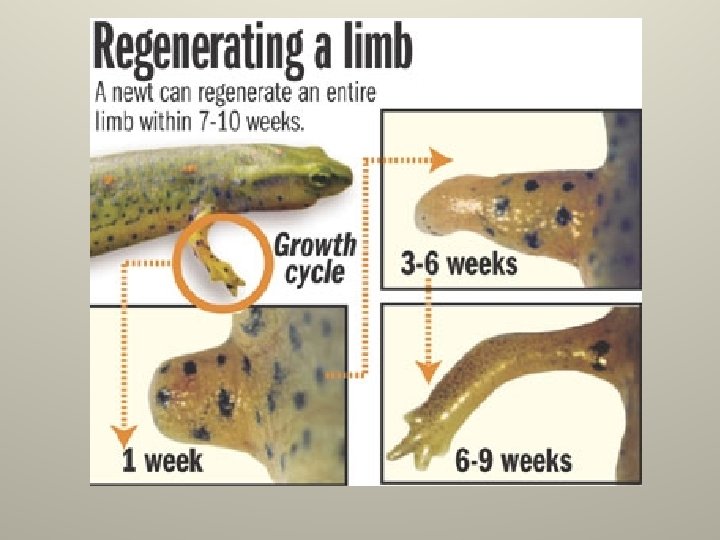
REGENERATION is the replacement of lost or damaged body parts. For example, a lizard may regenerate a lost tail. Lizard loses tail.
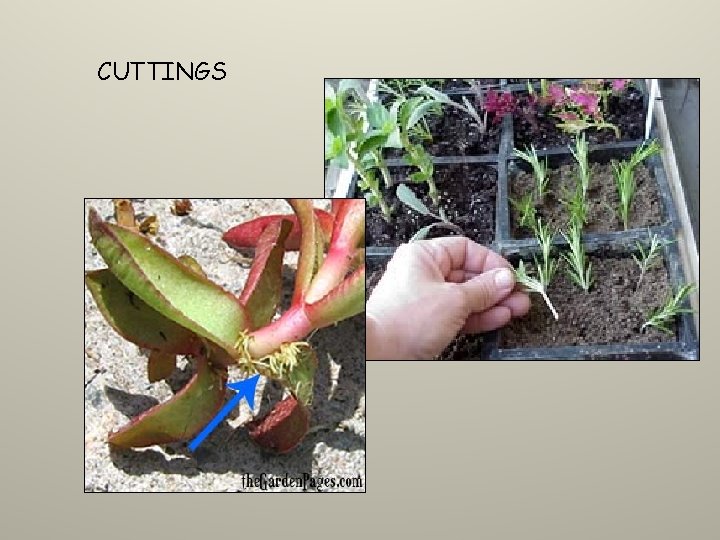
CUTTINGS
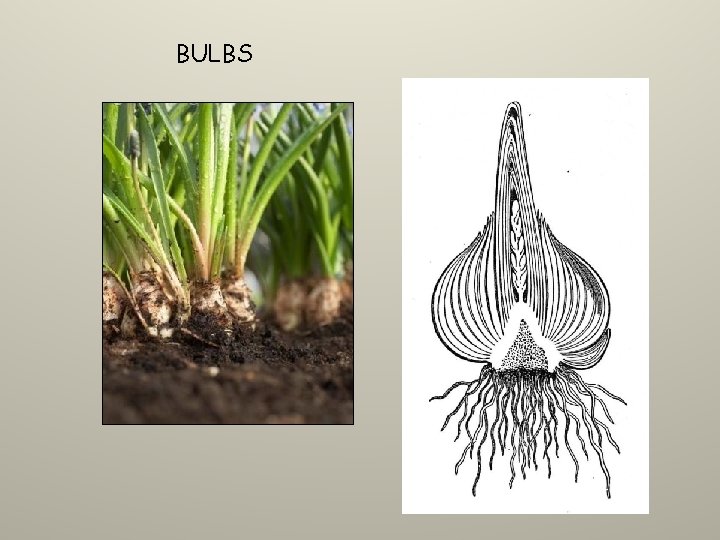
BULBS
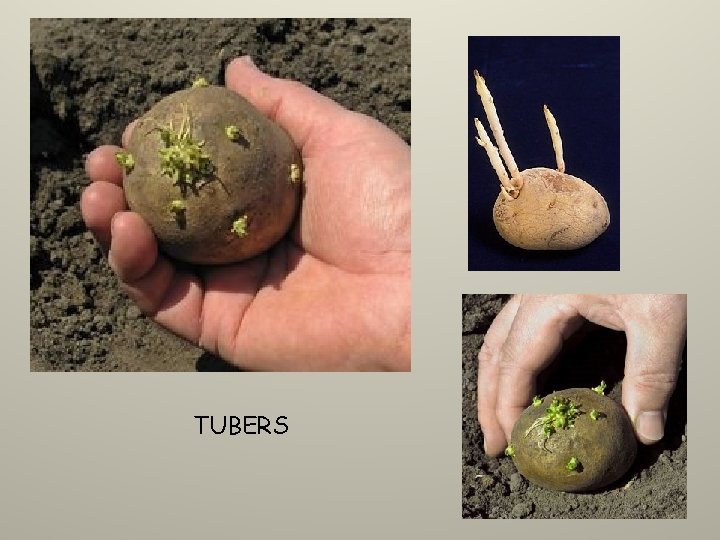
TUBERS
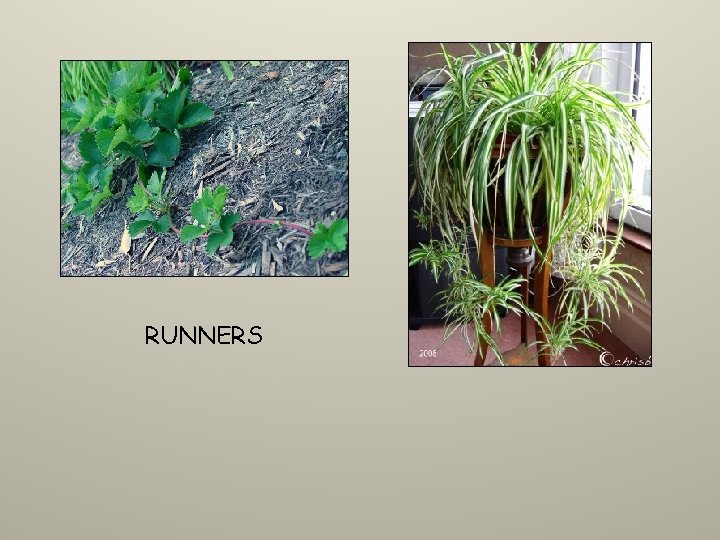
RUNNERS
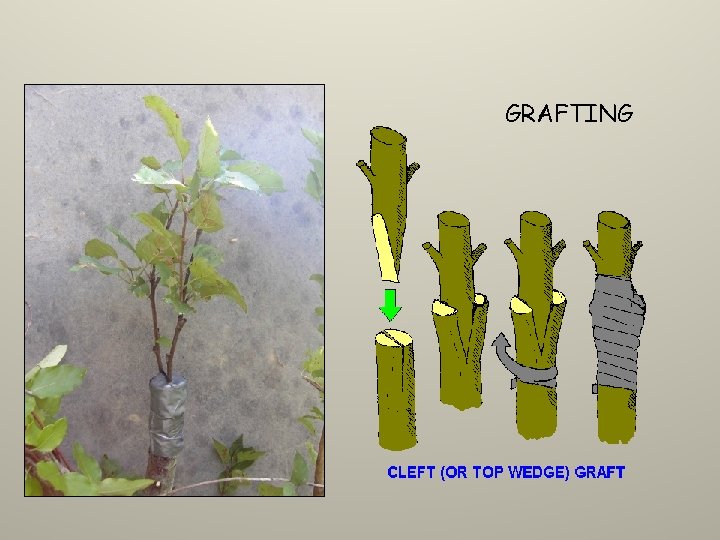
GRAFTING