
Mitochondrial DNA and ancestry How to interpret this
- Slides: 7
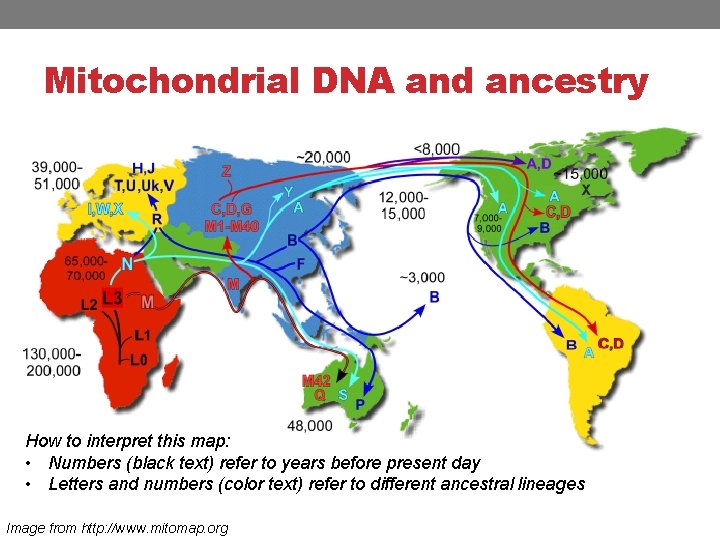
Mitochondrial DNA and ancestry How to interpret this map: • Numbers (black text) refer to years before present day • Letters and numbers (color text) refer to different ancestral lineages Image from http: //www. mitomap. org
Why is it important to talk about race? • Part of our personal identity, our heritage • Pride, Belonging, Culture, Tradition • Influences how we interact with the world • As a Social Construct and political category, race is very real and important. • As a Biological category, and as a foundation for Racism, it does not hold up to critical examination • Why is it hard to talk about race?
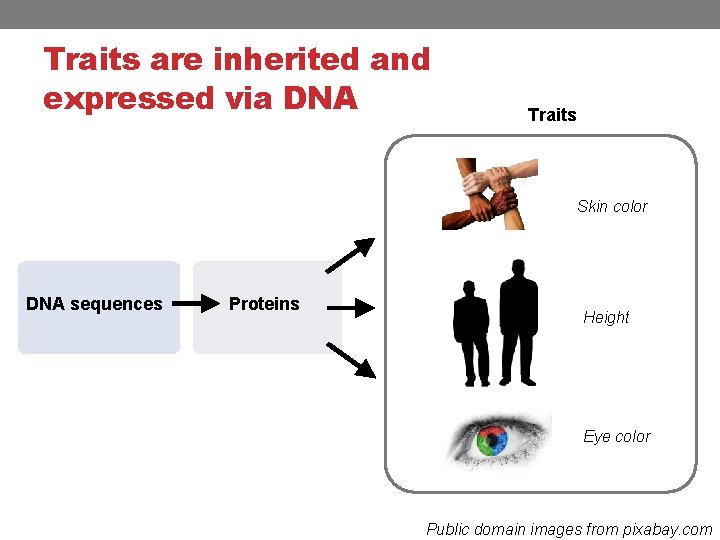
Traits are inherited and expressed via DNA Traits Skin color DNA sequences Proteins Height Eye color Public domain images from pixabay. com
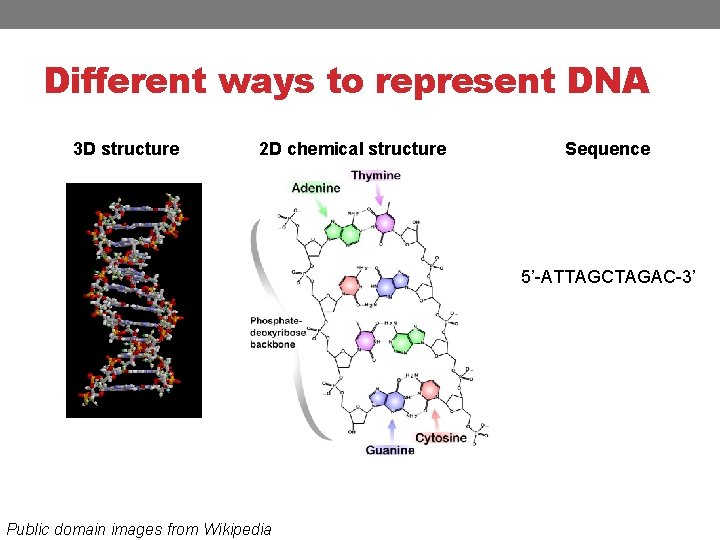
Different ways to represent DNA 3 D structure 2 D chemical structure Sequence 5’-ATTAGCTAGAC-3’ Public domain images from Wikipedia
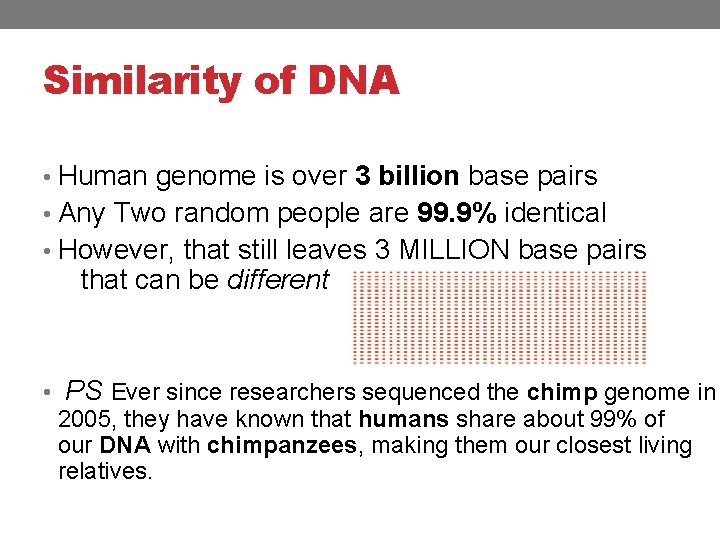
Similarity of DNA • Human genome is over 3 billion base pairs • Any Two random people are 99. 9% identical • However, that still leaves 3 MILLION base pairs that can be different • PS Ever since researchers sequenced the chimp genome in 2005, they have known that humans share about 99% of our DNA with chimpanzees, making them our closest living relatives.
Perspectives on race American Anthropological Association: “Evidence from the analysis of genetics (e. g. , DNA) indicates that most physical variation, about 94%, lies within so-called racial groups. Conventional geographic "racial" groupings differ from one another only in about 6% of their genes. This means that there is greater variation within "racial" groups than between them. …These facts render any attempt to establish lines of division among biological populations both arbitrary and subjective. ” 6
Perspectives on race Human Genome Project: “DNA studies do not indicate that separate classifiable subspecies (races) exist within modern humans…People who have lived in the same geographic region for many generations may have some alleles in common, but no allele will be found in all members of one population and in no members of any other. ” 7