
Mitochondrial Disease its Anesthetic Considerations Stephen Okoth BSN
Mitochondrial Disease & its Anesthetic Considerations Stephen Okoth BSN, SRNA (Sr. ) York College of PA/Wellspan Health NAP S
Objectives S Discuss the structure of the Mitochondrion S Discuss the main function of the Mitochondrion S Detecting and Diagnosing mitochondrial diseases S Treatment of mitochondrial diseases S Anesthetic considerations for patients with mitochondrial diseases S Case Review

Endosymbiotic theory http: //philschatz. com/biology-concepts-book/contents/m 45513. html
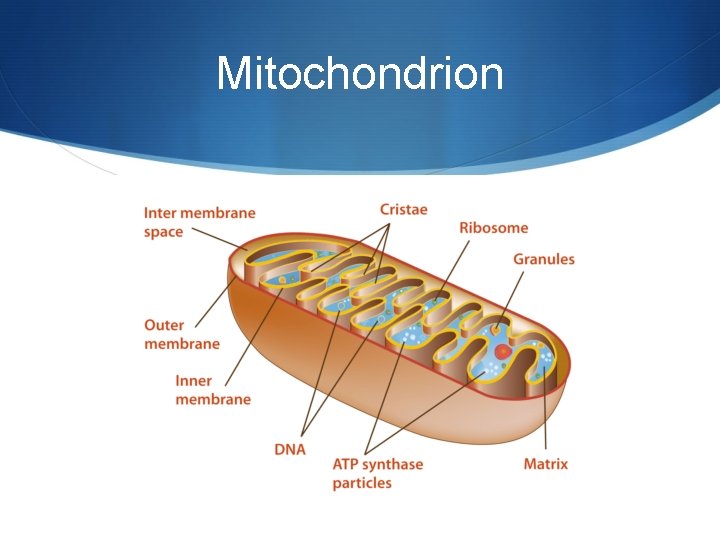
Mitochondrion
Mitochondrial vs. Nucleic DNA S The mitochondrial genome is circular, whereas the nuclear genome is linear S The mitochondrial genome is built of 16, 569 DNA base pairs, whereas the nuclear genome is made of 3. 3 billion DNA base pairs. S The mitochondrial genome contains 37 genes that encode 13 proteins, 22 t. RNAs, and 2 r. RNAs. S The small mitochondrial genome are unable to produce all of the proteins needed for functionality; thus, mitochondria rely heavily on imported nuclear gene products.
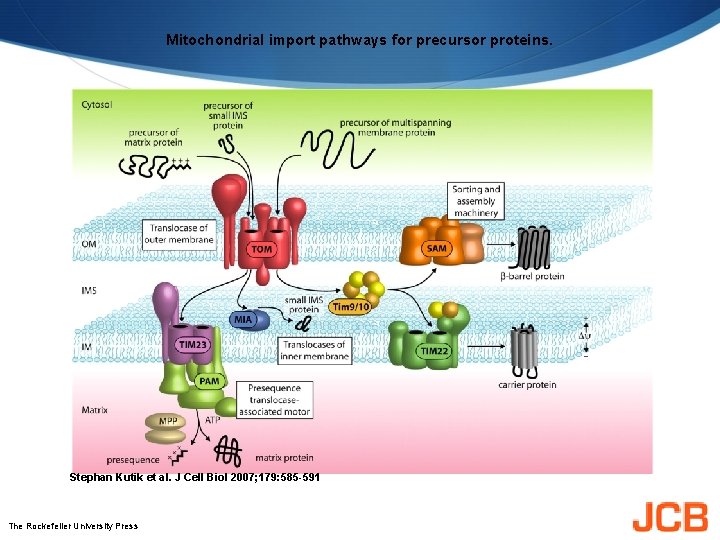
Mitochondrial import pathways for precursor proteins. Stephan Kutik et al. J Cell Biol 2007; 179: 585 -591 The Rockefeller University Press
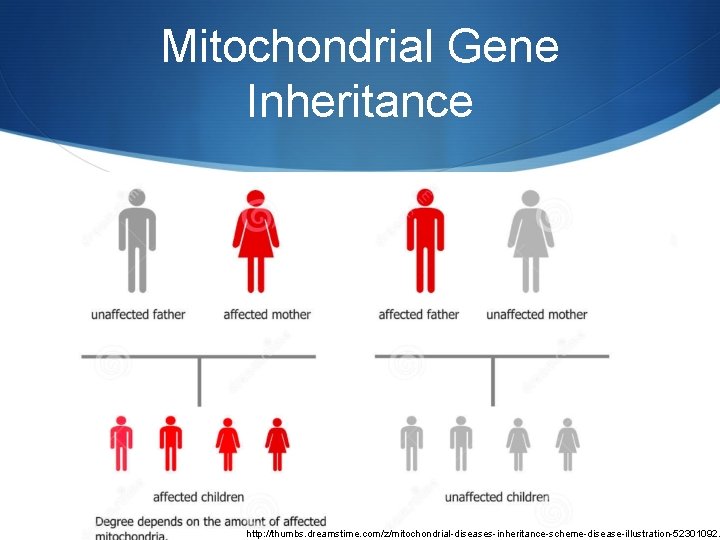
Mitochondrial Gene Inheritance http: //thumbs. dreamstime. com/z/mitochondrial-diseases-inheritance-scheme-disease-illustration-52301092.
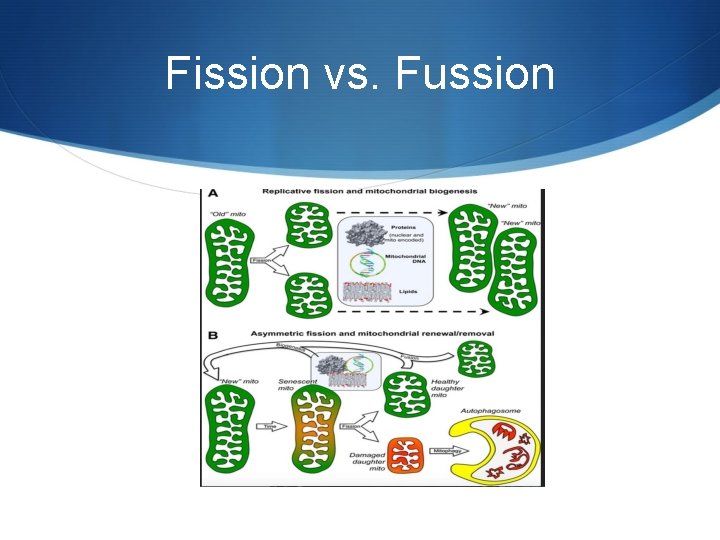
Fission vs. Fussion
Function S Energy production in the form of ATP S Thermogenesis S Storage and Regulation of Calcium Ions S Apoptosis S Cholesterol and Neurotransmitter Metabolism S Detoxification of Ammonia
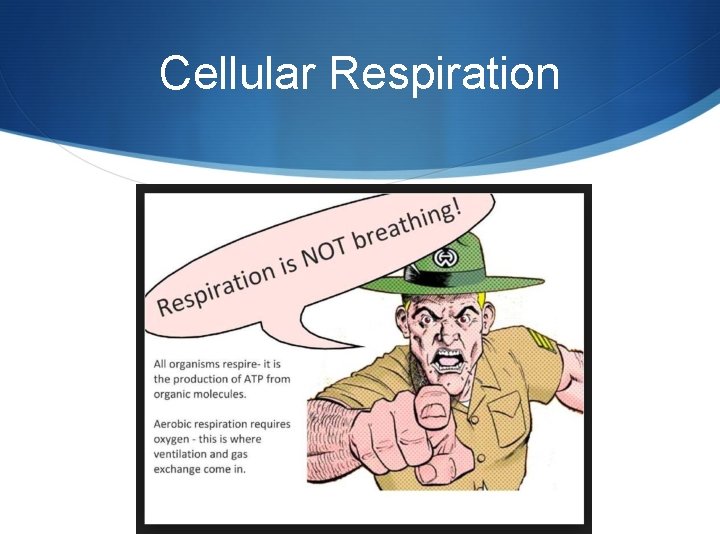
Cellular Respiration
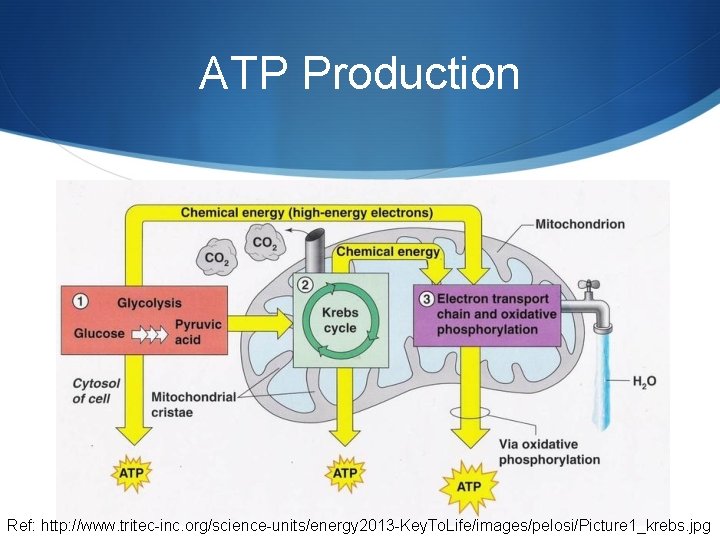
ATP Production Ref: http: //www. tritec-inc. org/science-units/energy 2013 -Key. To. Life/images/pelosi/Picture 1_krebs. jpg
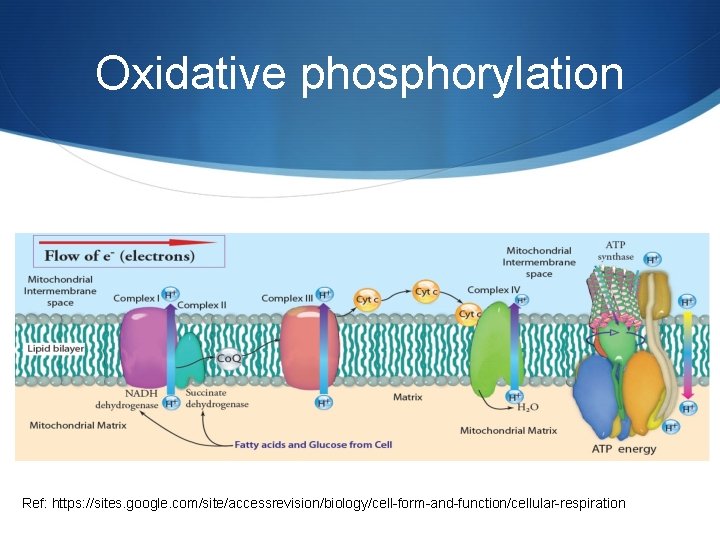
Oxidative phosphorylation Ref: https: //sites. google. com/site/accessrevision/biology/cell-form-and-function/cellular-respiration
Mitochondrial diseases S clinical and biochemical disorders resulting from dysfunction of the mitochondria. First clinically described in 1960 S This results in a lack of cellular energy to perform various functions and in the accumulation of byproducts that impair or destroy the cell itself S They can be caused by mutation of genes encoded by either nuclear DNA or mitochondrial DNA (mt. DNA) S Mitochondrial disorders may present at any age. S There is an estimated incidence of 1 in 4000 live births suffering from mitochondrial disease in the United States. S These diseases have varying etiologies and are often very difficult to classify
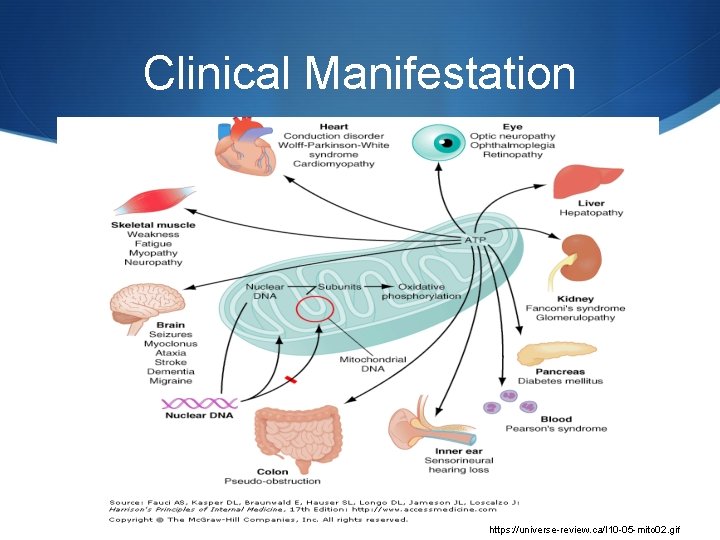
Clinical Manifestation https: //universe-review. ca/I 10 -05 -mito 02. gif
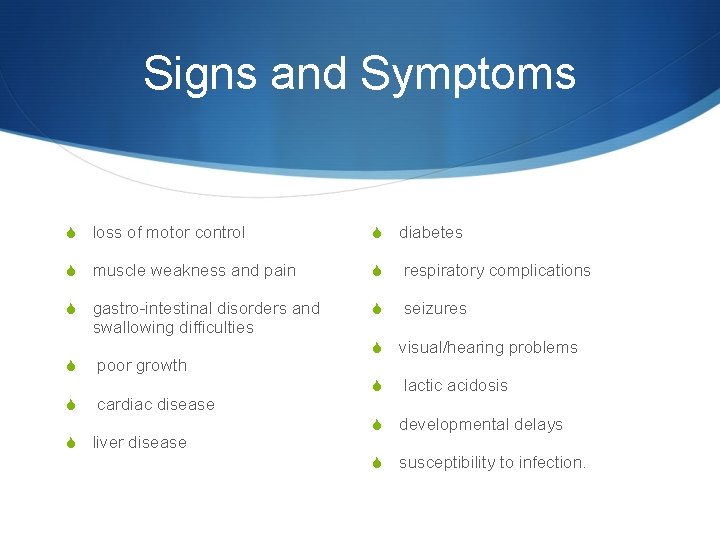
Signs and Symptoms S loss of motor control S diabetes S muscle weakness and pain S respiratory complications S gastro-intestinal disorders and swallowing difficulties S seizures S visual/hearing problems S lactic acidosis S developmental delays S susceptibility to infection. S S S poor growth cardiac disease liver disease

Classifying the diseases S Scientists have discovered over 40 different mitochondrial diseases. S Early on diseases would be classed by clinical syndrome e. g S CPEO: chronic progressive external ophthalmoplegia S MELAS: mitochondrial encephalopathy with lactid acidosis and stroke like episodes S MERRF: myoclonic epilepsy with ragged red fibers S LHON: Leber hereditary optic neuropathy
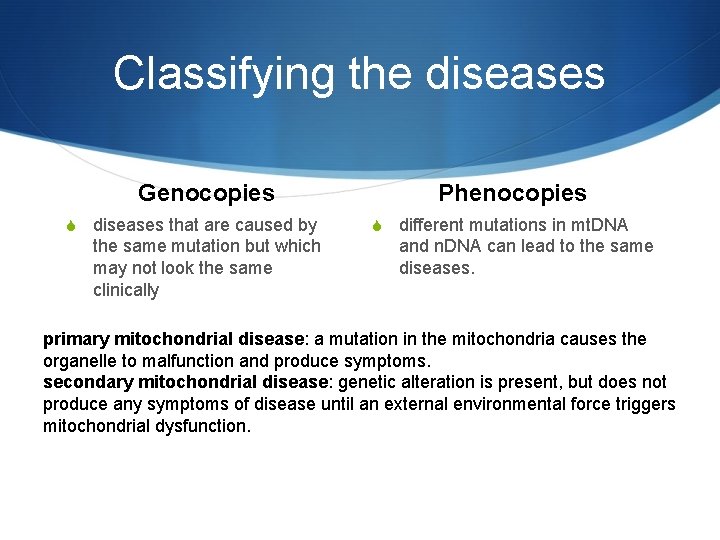
Classifying the diseases Genocopies S diseases that are caused by the same mutation but which may not look the same clinically Phenocopies S different mutations in mt. DNA and n. DNA can lead to the same diseases. primary mitochondrial disease: a mutation in the mitochondria causes the organelle to malfunction and produce symptoms. secondary mitochondrial disease: genetic alteration is present, but does not produce any symptoms of disease until an external environmental force triggers mitochondrial dysfunction.

Causes of Mitochondrial diseases S The major cause of the disease is gene inheritance. Either nucleic or mitochondrial genes S The other cause is mitochondrial toxins. Various agents including commonly used drugs have been found to be toxic to the mitochondria.
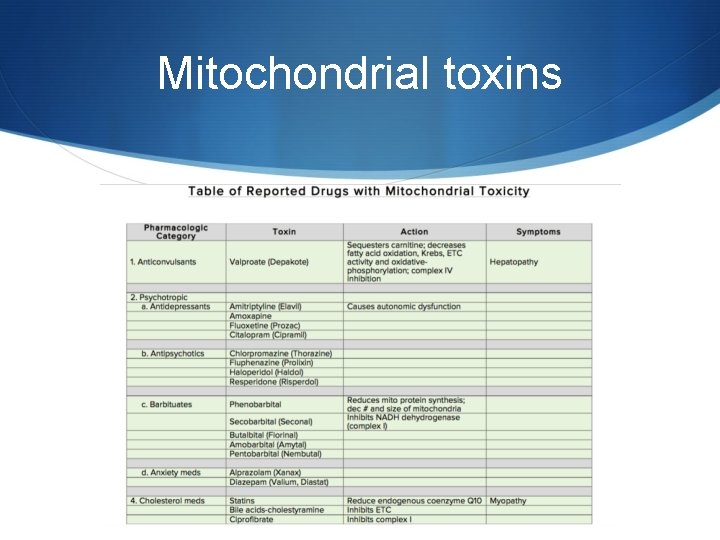
Mitochondrial toxins

Mitochondrial toxins
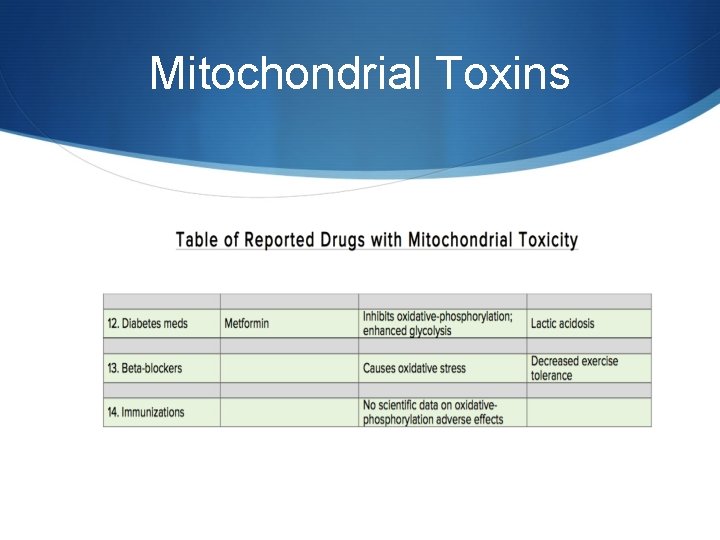
Mitochondrial Toxins
Diagnosing S Mitochondrial diseases are difficult to diagnose. Referral to an appropriate research center is critical. S Combination of clinical observations, laboratory evaluation, cerebral imaging, and muscle biopsies are used to aid diagnosis. S A single blood or urine lab test with normal results does not rule out or confirm a 100% diagnosis of mitochondrial disease. S Genetic testing can be done to assess for known mutations
Who knew…. .
Muscle Biopsy S When treated with a dye that stains mitochondria red, muscles affected by mitochondrial disease often show ragged red fibers — muscle cells (fibers) that have excessive abnormal mitochondria. S Other stains can detect the absence of essential mitochondrial enzymes in the muscle. S It is also possible to extract mitochondrial proteins from the muscle and measure their activity.

Ragged Red Fibers
Treating mitochondrial disease S There is no definitive cure for mitochondrial diseases S Therapy is aimed at alleviating symptoms, maintaining optimal health, using preventive measures to mitigate symptom worsening during times of physiologic stress, and avoiding mitochondrial toxins. S The use of antioxidant supplements aimed at reducing reactive oxygen species that are produced in increased amounts in this disease.
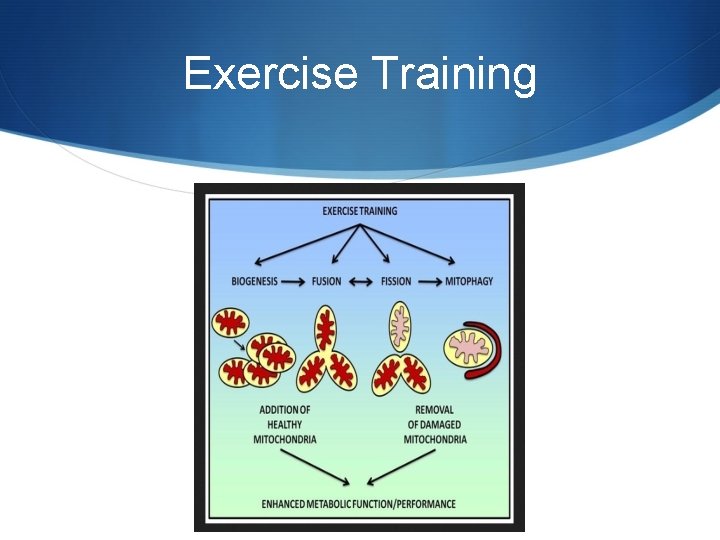
Exercise Training

Anesthetic Considerations S The heterogeneity of the diseases makes it very difficult to have the one perfect anesthetic. S The lack of clinical trials investigating the effects of anesthetic agents in patients with mitochondrial disease has limited the anesthetists ability to deliver the perfect anesthetic. S Adverse effects on mitochondrial function of many agents used in anesthesia have been documented in vitro, but there are few reports of adverse events in vivo. S The theoretical effects of any agent need to be considered in the general context of any one patient’s
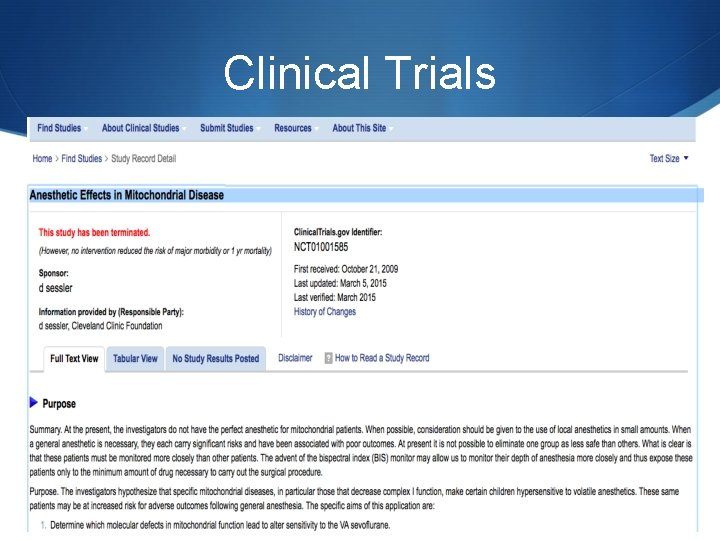
Clinical Trials

Clinical Trial
Pre-op Evaluation S Multi-system involvement in these disorders necessitates a thorough pre op evaluation including family history. S Determine degree of neurological and musculoskeletal compromise. S Careful cardiac assessment including EKG and echocardiography. S Renal and Hepatic function S All clinical manifestations of MD, including seizures, arrhythmias, cardiac dysfunction, myopathy, and endocrinopathies, can be worsened by trauma, illness, or surgical stress.
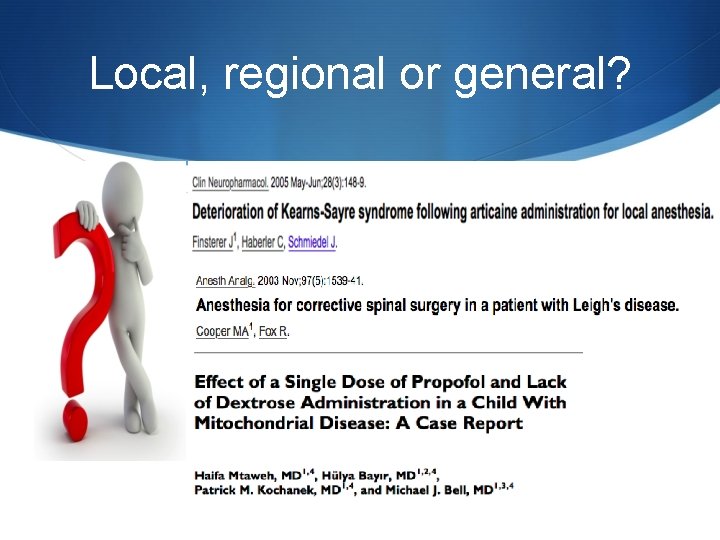
Local, regional or general?
Pre Medication S Avoid lactated ringers solution which could increase lactate load. S Avoid respiratory depressants, patients have inadequate response to hypoxia or hypercapnia.
Induction S Sensitivity to induction agents S Ketamine and barbiturates inhibit complex I S Etomidate inhibits complex I and complex II S Propofol has been shown to be most problematic as it inhibits complex I and IV as well as disrupting fatty acid transport. Conflicting opinions however persist on single dose use.
PRIS S Propofol-related infusion syndrome (PRIS) is a rare yet often fatal syndrome that has been observed in critically ill patients receiving propofol for sedation. S Doses greater than 4 mg/kg/hr for durations longer than 48 hours place a patient at risk for PRIS. S PRIS is characterized by severe unexplained metabolic acidosis, arrhythmias, acute renal failure, rhabdomyolysis, hyperkalemia, and cardiovascular collapse. S The exact pathophysiology of PRIS remains to be determined, but is thought to be related to impaired tissue metabolism. S Risk factors for developing PRIS include sepsis, severe cerebral injury, and high propofol doses. S Early recognition of the manifestations is the key to managing PRIS. If is suspected, propofol should be discontinued an alternative sedative agent initiated. General measures to support cardiac and renal function should be initiated promptly in patients with suspected PRIS.
Muscle Relaxation S There is conflicting evidence on the use of muscle relaxants. S It is generally thought that there could be an increased sensitivity to non depolarizing muscle relaxants. S Succinylcholine has been used successfully but is often avoided as these patients are thought to have a susceptibility to MH and could be subject to hyperkalemia if they are inactive.
Analgesia S Beneficial in minimizing oxygen demand S However impaired respiratory control necessitates that opioids are used with caution. S Remifentanil is thought to have less effect on mitochondrial energetics than fentanyl which is preferred over morphine S L. A’s have been shown to inhibit complex I & acylcarnitine transferase. Lidocaine<ropivicaine<bupivacaine
Intra-op S Monitor blood glucose especially in long cases. S Less tolerance to hypoxia S Maintain normothermia. Hypothermia further depresses mitochondrial activity. S Keep patient hydrated
Emergence S May not be a good candidate for deep extubation S Consider leaving on ventilator or going to PACU on ventilator if far from baseline.
Post-Op S Crucial period for these patients S Exacerbation of mitochondrial disease may not be immediate. S Warrants patients to be monitored longer S Do not transfer from OR to stage 2 recovery.
Case Review S 46 year old male pt. 6’ 2” 80 kg BMI 22. 6 scheduled for vascular access port. S PMH: recent diagnosis of genetically associated mitochondrial disease, industrial injury that required transplantation of toes to right hand. S PSH: appendectomy, tonsillectomy, depression, chronic pain, GERD, left heart catheterization S Allergies: Penicillin
Case review cont’d S Patient states he has been feeling progressively weak and fatigued since July 2013. work up done for lymes dz, adrenal insufficiency and myasthenia gravis all negative. S Pt muscle biopsy in 2009 which showed no pathology. S Meds: L-carnitine, L-arginine, vit c, vit d 3, riboflavin, duloxetine, ubiquinone, dextrose 30 mg po q morning,
What did we do? S Switched patient’s IV fluids from LR to 0. 9% NSS which was already running in the pre operative area. S Checked patients blood glucose in pre op. S Made anesthesiologist and surgeon aware of concerns with patient’s disease process.
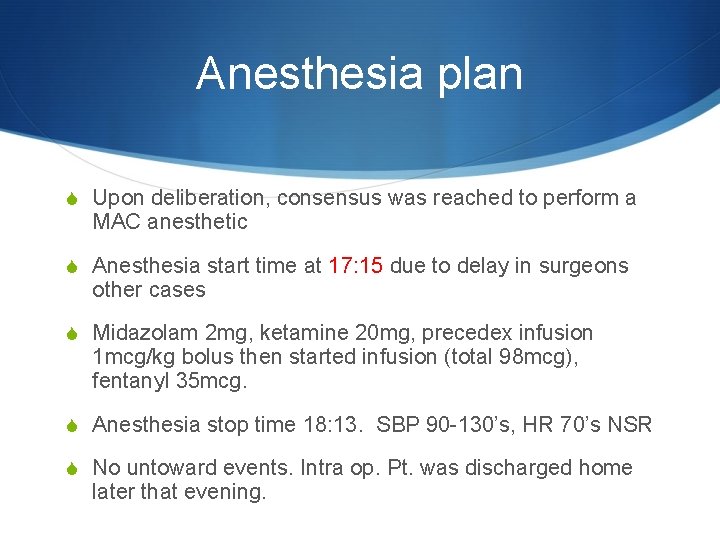
Anesthesia plan S Upon deliberation, consensus was reached to perform a MAC anesthetic S Anesthesia start time at 17: 15 due to delay in surgeons other cases S Midazolam 2 mg, ketamine 20 mg, precedex infusion 1 mcg/kg bolus then started infusion (total 98 mcg), fentanyl 35 mcg. S Anesthesia stop time 18: 13. SBP 90 -130’s, HR 70’s NSR S No untoward events. Intra op. Pt. was discharged home later that evening.

References S Alberts, B. , Johnson, A. , Lewis, J. , Raff, M. , Roberts, K. , & Walter, P. (2002). Molecular Biology Of The Cell (4 th Edition ed. ). New York, New York: Garland Science. S Chial, H. , & Craig, J. (2008). mt. DNA and Mitochondrial Diseases. Nature Education , 1 (1), 217. S Chinnery, P. (2000). Mitochondrial Disorders Overview. Gene. Reviews. S Cooper, G. (2000). The Cell: A Molecular Approach (2 nd Edition ed. ). Sunderland , MA: Sinauer Associates. S Cooper, M. , & Fox, R. (2003). Anesthesia for corrective spinal surgery in a patient with leigh disease. Anesthesia & Analgesia , 97 (5), 1539 -1541. S El-Hattab, A. , & Scaglia, F. (2016, March). Mitochondrial Cytopathies. Cell Calcium. S Finsterer, J. , & Segall, L. (2010). Drugs interfering with mitochondrial disorders. Drug and Chemical Toxicology , 33 (2), 138 -151. S Finsterer, J. , Haberler, C. , & Schmiedel, J. (2005). Deterioration of kearns-sayre syndrome following articaine administration for local anesthetic. Clinical Neuropharmacology. S Hall, J. , & Guyton, A. (2011). Guyton and Hall Textbook of Medical Physiology (12 th ed. ). Philadelphia: Saunders Elsevier. S Koenig, M. (2008). Presentation and Diagnosis of Mitochondrial Disease in Children. Pediatric Neurology , 38 (5), 305 -313. S Krane, E. , & Williamson, J. (2011). Anesthesia for Patients with Mitochondrial Disease.
References S Kuhlbrandt, W. (2015). Structure and function of mitochondrial membrane protein complexes. BMC Biology , 13. S Mtaweh, H. , Bayir, H. , Kochanek, P. , & Bell, M. (2014). Effect of a single dose of propofol and lack of dextrose administration in a child with mitochondrial disease. Journal of Child Neurology , 29 (8), NP 40 -NP 46. S Niezgoda, J. , & Morgan, P. (2013). Anesthetic Considerations in Patients with Mitochondrial Defects. Pediatric Anesthesia , 23 (9), 785 -793. S Parikh, S. , Saneto, R. , Falk, M. , Anselm, I. , Cohen, B. , & Haas, R. (2009). A modern approach to the treatment of mitochondrial disease. Current Treatments in Neurology , 11 (6), 414 -430. S Rivera-Cruz, B. (2013). Mitochondrial Diseases and Anesthesia: a Literature Review of Current Opinions. AANA Journal , 81 (3), 237 -243. S Scheffler, I. (2007). Mitochondria (2 nd ed. ). Hoboken: Wiley. S Sirrs, S. , Duncan, P. , & O'Riley, M. (2010). Anesthetic Considerations in Mitochondrial Diseases. Retrieved March 1, 2016, from United Mitochondrial Disease Foundation: www. umdf. com S UMDF. (n. d. ). understanding mitochondrial disease. Retrieved February 17, 2016, from United Mitochondrial Disease Foundation: umdf. org S Wallace, J. , & Perndt, H. (1998). Anesthesia and mitochondrial disease. Paediatric Anesthesia , 249 -254.
- Slides: 47