
Mitochondria and Chloroplast Mitochondria Cellular respiration Uses oxygen
- Slides: 13
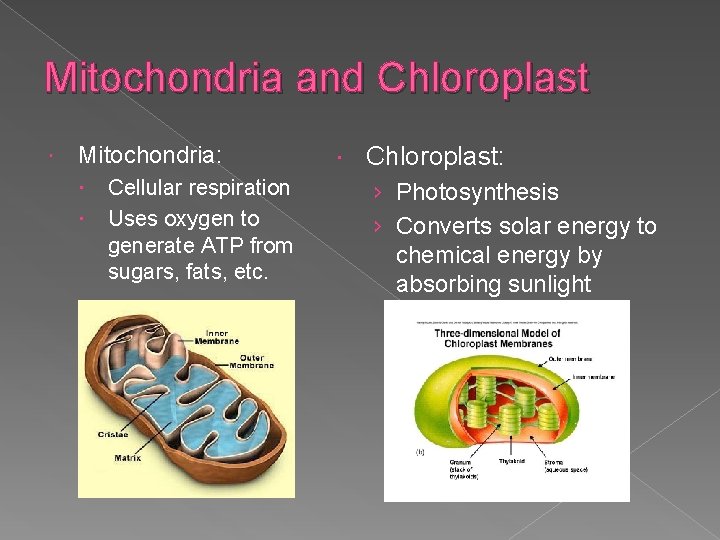
Mitochondria and Chloroplast Mitochondria: Cellular respiration Uses oxygen to generate ATP from sugars, fats, etc. Chloroplast: › Photosynthesis › Converts solar energy to chemical energy by absorbing sunlight
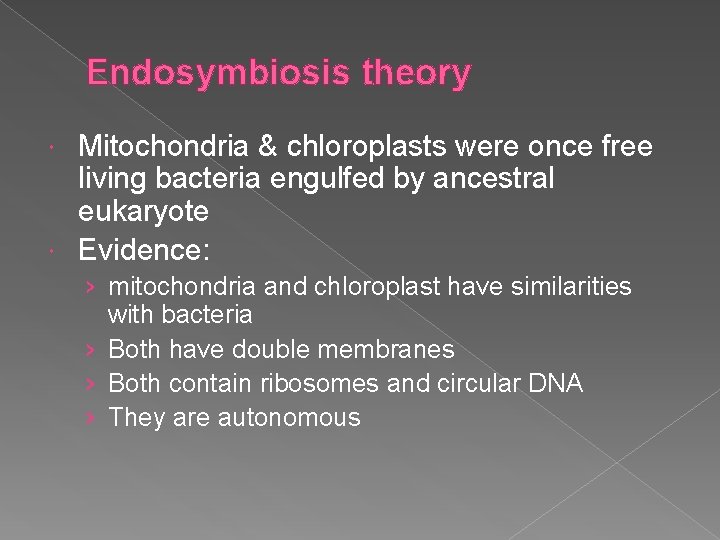
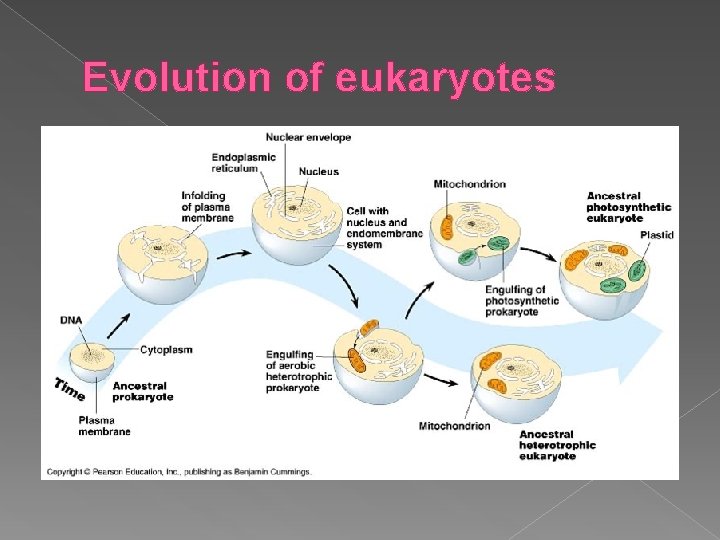
Endosymbiosis theory Mitochondria & chloroplasts were once free living bacteria engulfed by ancestral eukaryote Evidence: › mitochondria and chloroplast have similarities with bacteria › Both have double membranes › Both contain ribosomes and circular DNA › They are autonomous
Evolution of eukaryotes
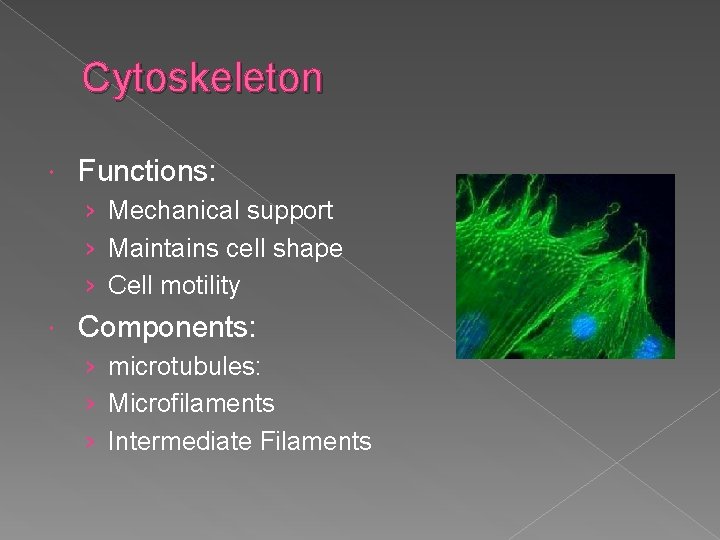
Cytoskeleton Functions: › Mechanical support › Maintains cell shape › Cell motility Components: › microtubules: › Microfilaments › Intermediate Filaments
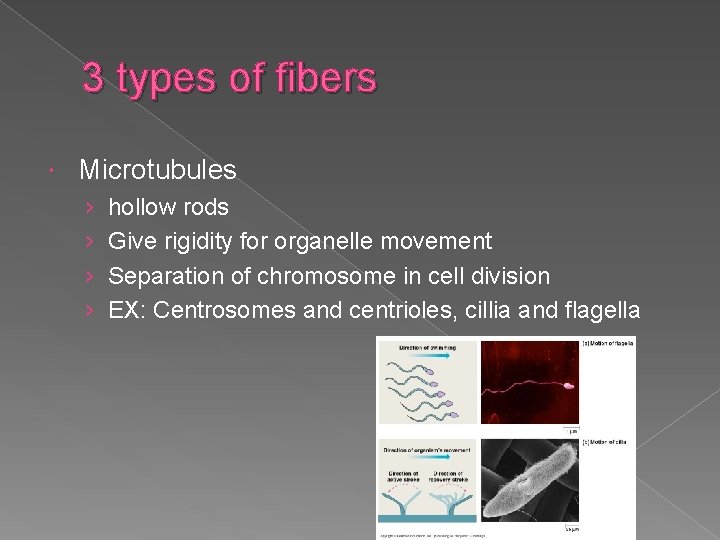
3 types of fibers Microtubules › › hollow rods Give rigidity for organelle movement Separation of chromosome in cell division EX: Centrosomes and centrioles, cillia and flagella
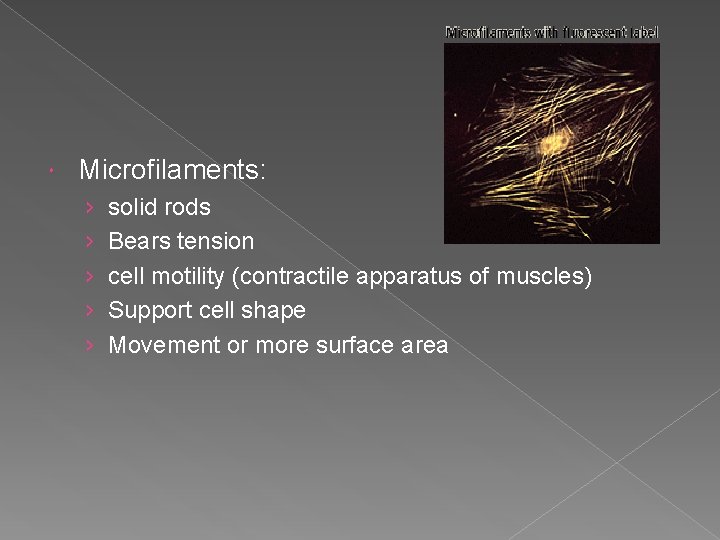
Microfilaments: › › › solid rods Bears tension cell motility (contractile apparatus of muscles) Support cell shape Movement or more surface area
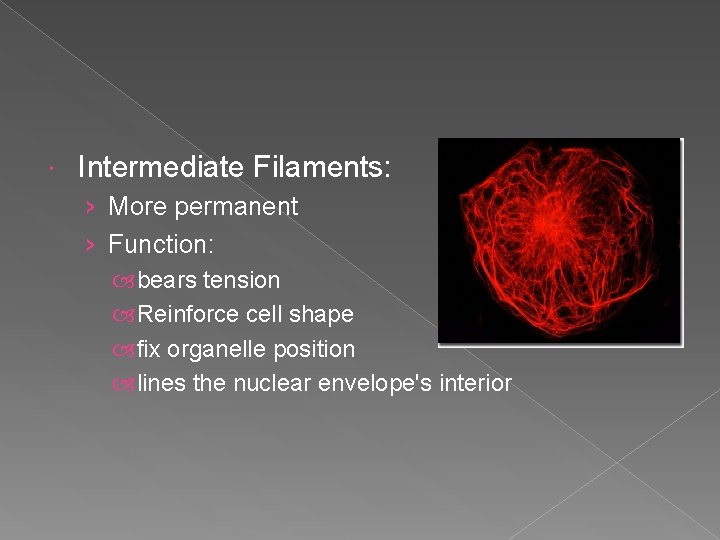
Intermediate Filaments: › More permanent › Function: bears tension Reinforce cell shape fix organelle position lines the nuclear envelope's interior
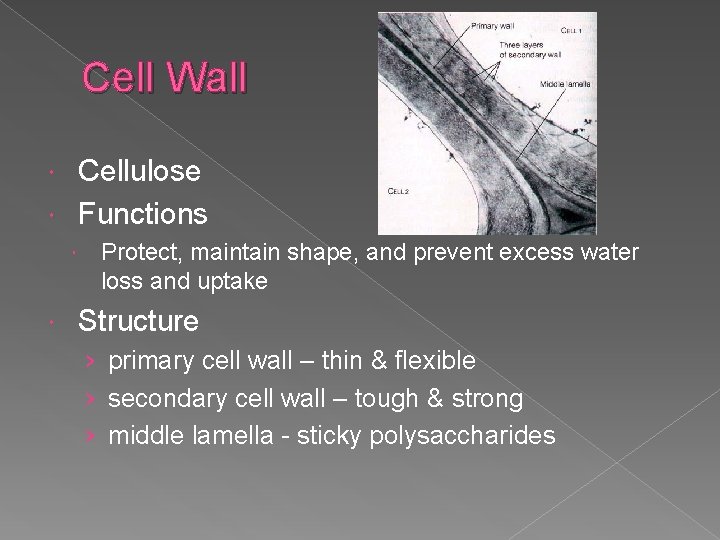
Cell Wall Cellulose Functions Protect, maintain shape, and prevent excess water loss and uptake Structure › primary cell wall – thin & flexible › secondary cell wall – tough & strong › middle lamella - sticky polysaccharides
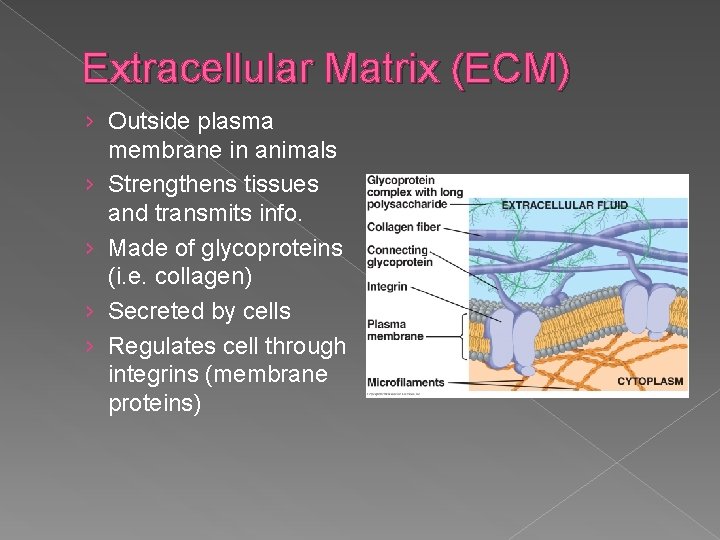
Extracellular Matrix (ECM) › Outside plasma membrane in animals › Strengthens tissues and transmits info. › Made of glycoproteins (i. e. collagen) › Secreted by cells › Regulates cell through integrins (membrane proteins)
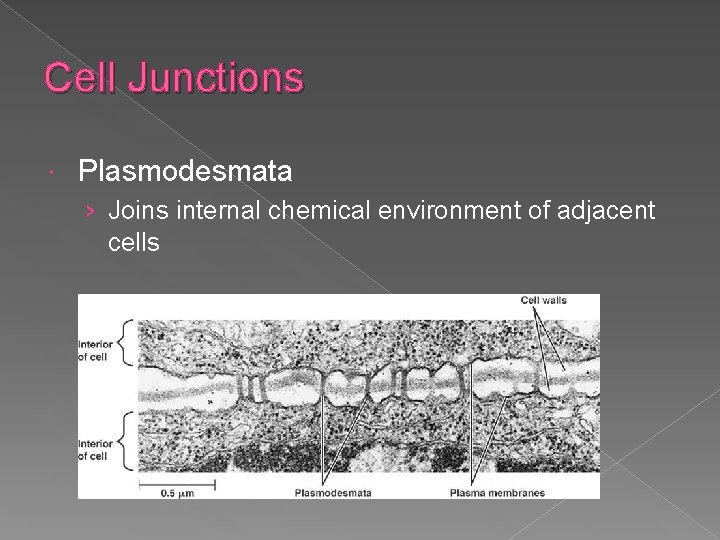
Cell Junctions Plasmodesmata › Joins internal chemical environment of adjacent cells
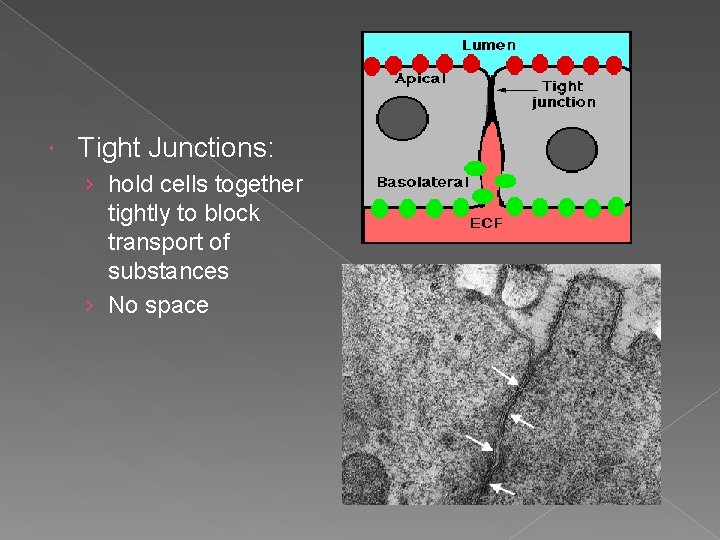
Tight Junctions: › hold cells together tightly to block transport of substances › No space
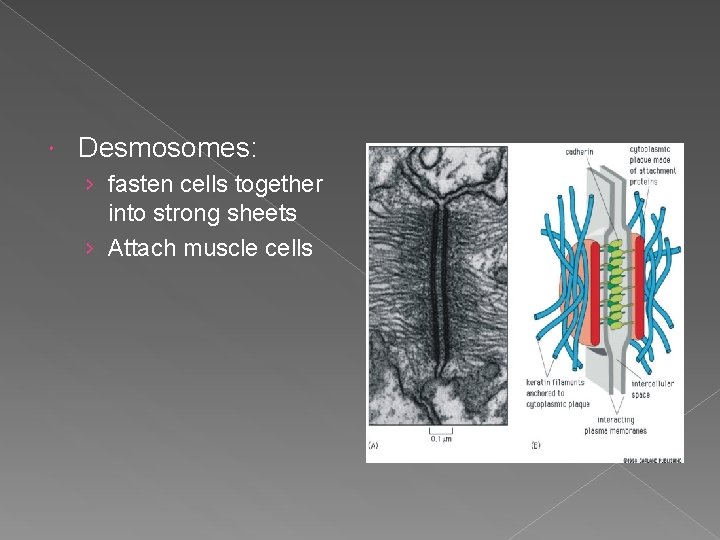
Desmosomes: › fasten cells together into strong sheets › Attach muscle cells
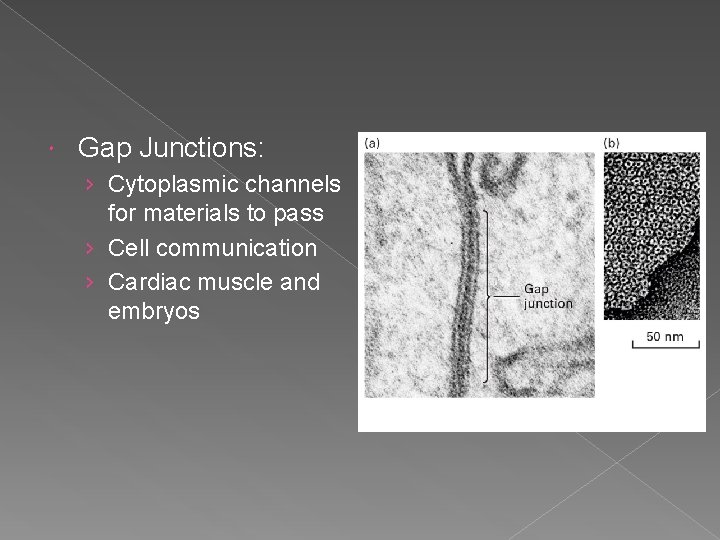
Gap Junctions: › Cytoplasmic channels for materials to pass › Cell communication › Cardiac muscle and embryos