
Mitigating the effect of hydropower stations on fish


- Slides: 30
Mitigating the effect of hydropower stations on fish migration in Norway Ana T. Silva
Research Interests: • Ecohydraulics and anthropogenic changes to aquatic systems • Fluid dynamics (Hydraulics) • Effect of turbulence on fish behaviour, swimming performance and energetic costs • Fish behaviour and ecology • Biomechanics of aquatic locomotion • Fish physiology • Neurobiology: Hydrodynamic stimuli and fish behavioural response • Ecology, fish conservation and restoration
• What's the aim of my Ph. D/Post-Doc? • What is the context and the content of my work? • How is my work innovative compared to existing methods/solutions? • How can my work be implemented and used later on?
Mitigating the effect of hydropower plants on fish migration in Norway by understanding the impact of hydraulics on fish migratory behaviour
• What's the aim of my Ph. D/Post-Doc? • What is the context and the content of my work? • How is my work innovative compared to existing methods/solutions? • How can my work be implemented and used later on?
Fish conservation and sustainability in rivers implies: Interplay between fish (endogenous factors: motivation, physiology, fish life stage, species, size. . ) and the enviroment (exogenous factors: hydraulics, temperature, light, p. H, oxygen, flow. . ) Multidisciplinary approach : Biology, Ecology, Physiology, Biomechanics, Fish behaviour, Hydraulics, Neurobiology Hydrology, . . . . Economy, Sociology
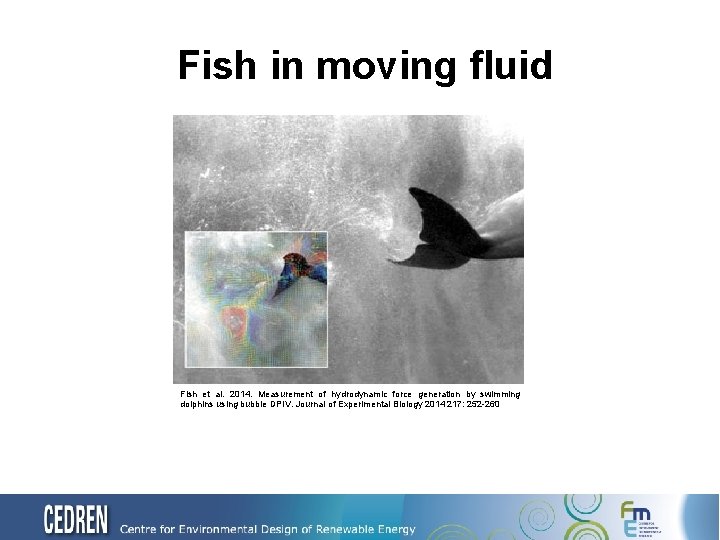
Fish in moving fluid Fish et al. 2014. Measurement of hydrodynamic force generation by swimming dolphins using bubble DPIV. Journal of Experimental Biology 2014 217: 252 -260
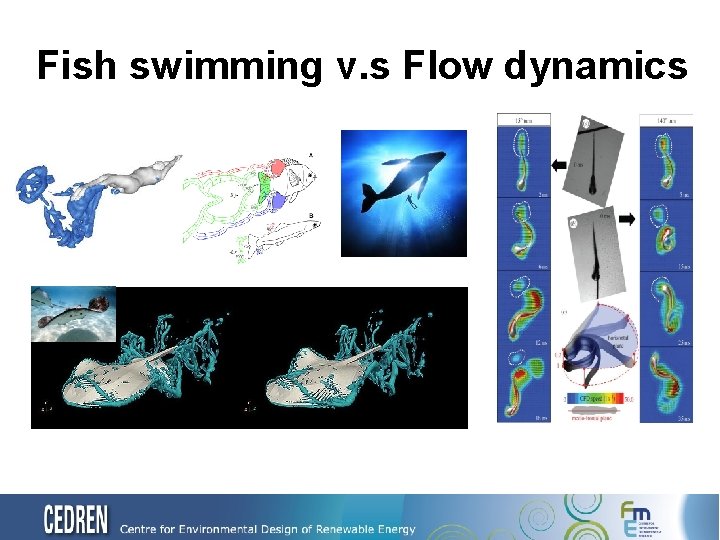
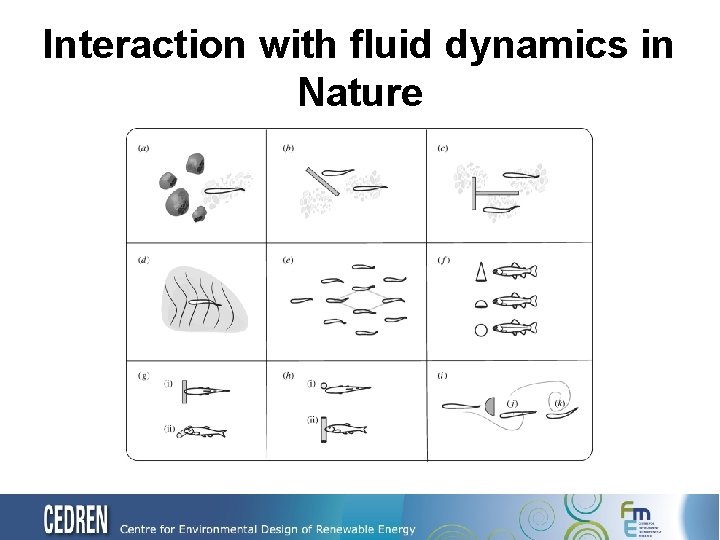
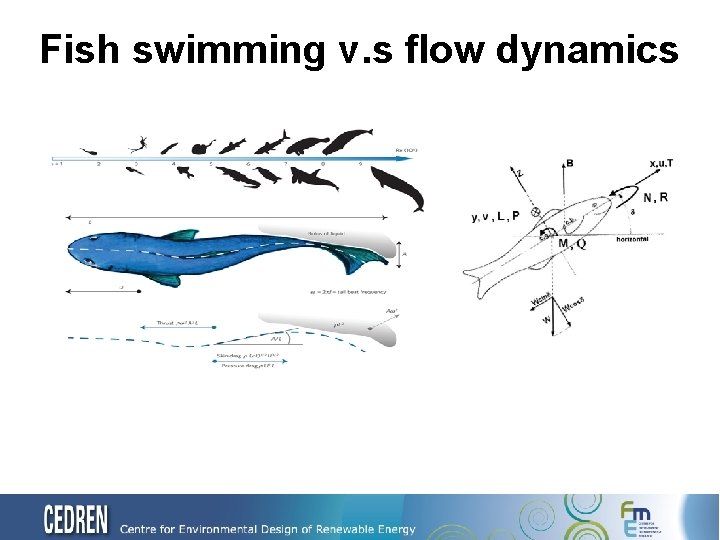
Fish swimming v. s Flow dynamics
Interaction with fluid dynamics in Nature
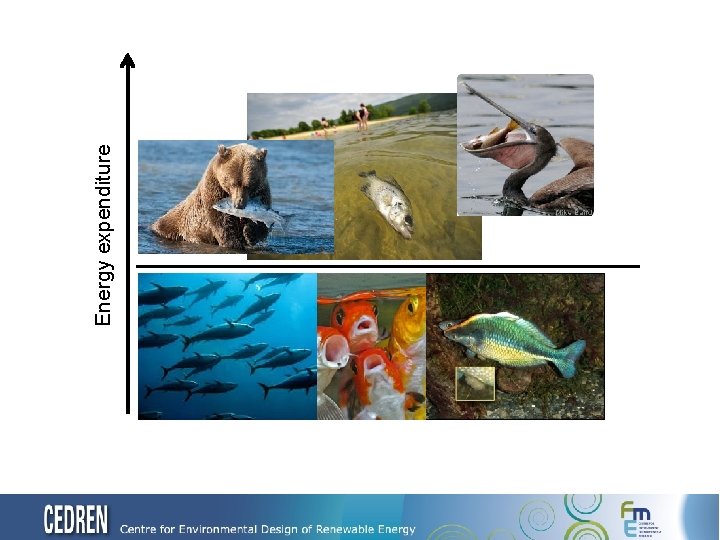
Energy expenditure
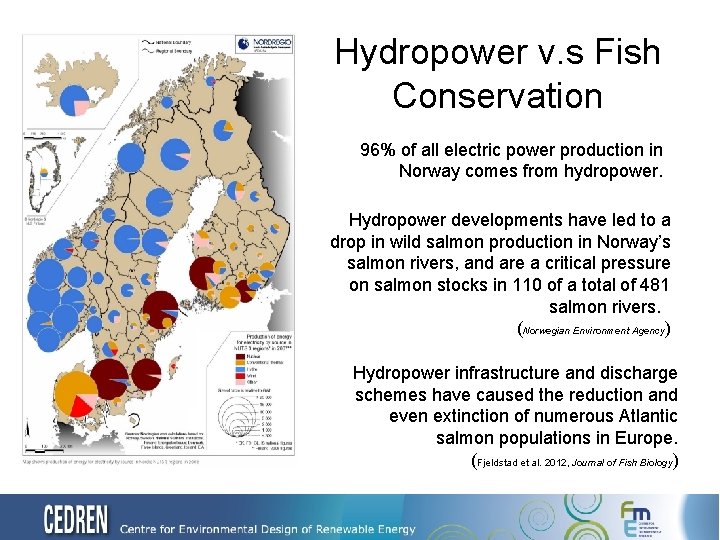
Hydropower v. s Fish Conservation 96% of all electric power production in Norway comes from hydropower. Hydropower developments have led to a drop in wild salmon production in Norway’s salmon rivers, and are a critical pressure on salmon stocks in 110 of a total of 481 salmon rivers. (Norwegian Environment Agency) Hydropower infrastructure and discharge schemes have caused the reduction and even extinction of numerous Atlantic salmon populations in Europe. (Fjeldstad et al. 2012, Journal of Fish Biology)
• What's the aim of my Ph. D/Post-Doc? • What is the context and the content of my work? • How is my work innovative compared to existing methods/solutions? • How can my work be implemented and used later on?
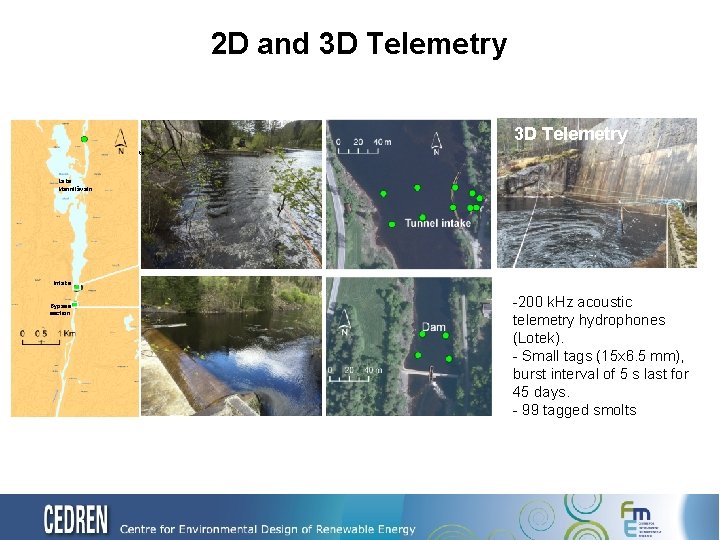
2 D and 3 D Telemetry Lake Mannflåvatn Intake Bypass section -200 k. Hz acoustic telemetry hydrophones (Lotek). - Small tags (15 x 6. 5 mm), burst interval of 5 s last for 45 days. - 99 tagged smolts
Photo: Hans-Petter F. 1 4
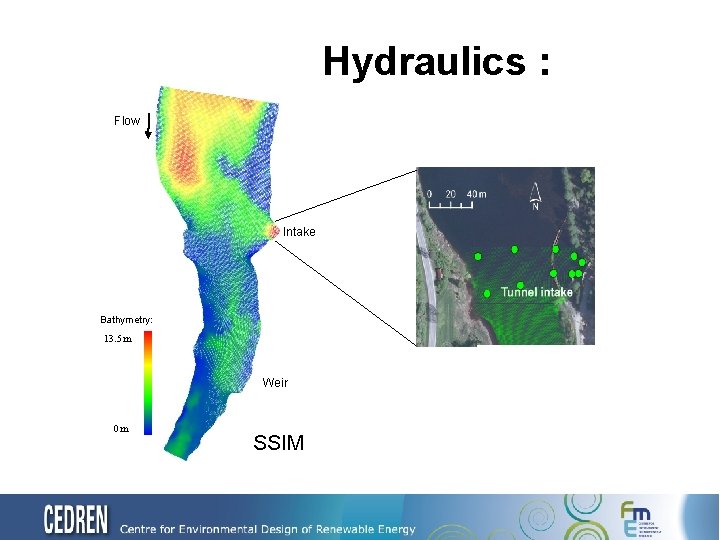
Hydraulics : Flow Intake Bathymetry: 13. 5 m Weir 0 m SSIM
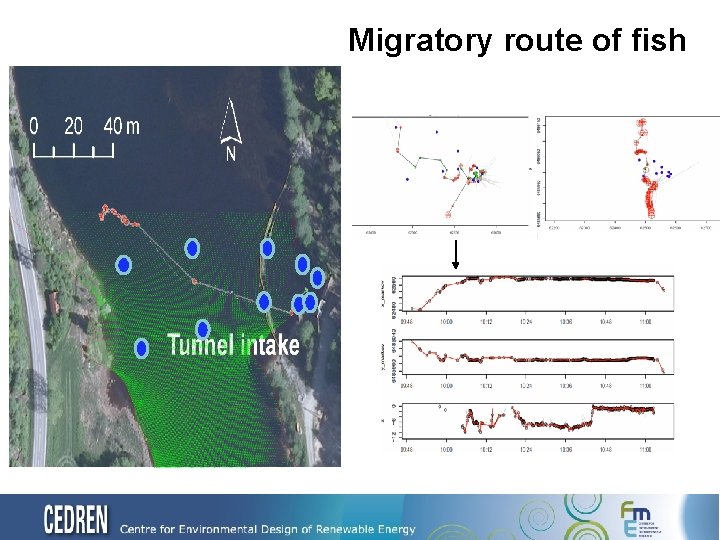
Migratory route of fish
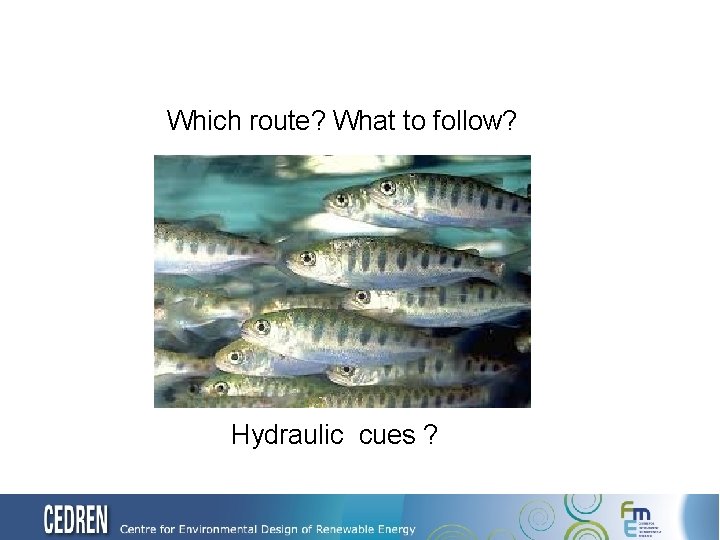
Which route? What to follow? Hydraulic cues ?
• What's the aim of my Ph. D/Post-Doc? • What is the context and the content of my work? • How is my work innovative compared to existing methods/solutions? • How can my work be implemented and used later on?
• Integrates a multidisciplinary approach to study the impact of antrophogenic activity on fish populations aiming to improve fish sustainability • Uses new technology to reveal relationships between hydraulics and fish behaviour in 3 D.
• What's the aim of my Ph. D/Post-Doc? • What is the context and the content of my work? • How is my work innovative compared to existing methods/solutions? • How can my work be implemented and used later on?
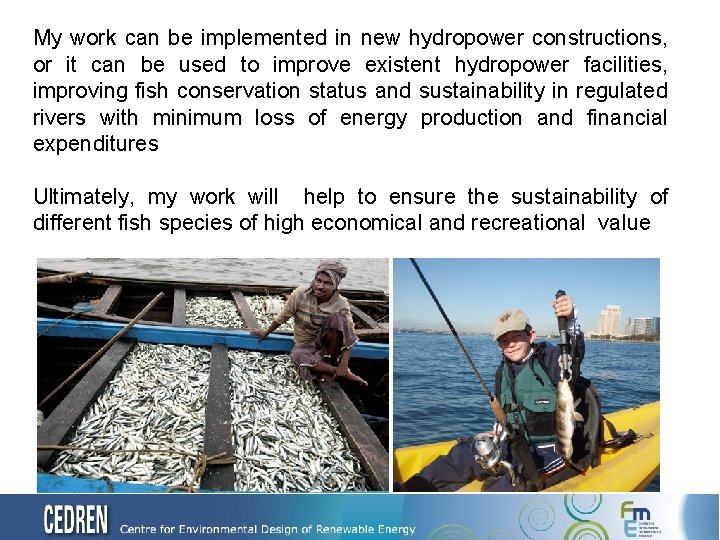
My work can be implemented in new hydropower constructions, or it can be used to improve existent hydropower facilities, improving fish conservation status and sustainability in regulated rivers with minimum loss of energy production and financial expenditures Ultimately, my work will help to ensure the sustainability of different fish species of high economical and recreational value
Questions? Contact: ana. silva@nina. no
24 www. cedren. no Contact: ana. silva@nina. no 24
Centre for environmental design of renewable energy - CEDREN Mitigating the effect of hydropower stations on fish migration in Norway Ana T. Silva
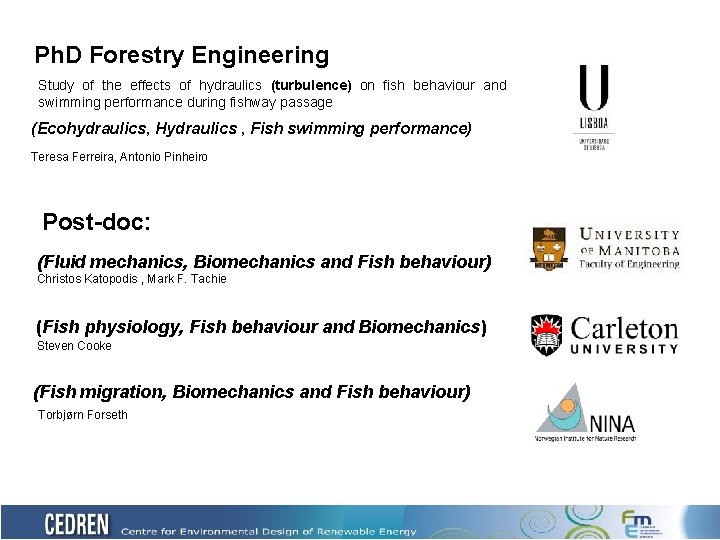
Ph. D Forestry Engineering Study of the effects of hydraulics (turbulence) on fish behaviour and swimming performance during fishway passage (Ecohydraulics, Hydraulics , Fish swimming performance) Teresa Ferreira, Antonio Pinheiro Post-doc: (Fluid mechanics, Biomechanics and Fish behaviour) Christos Katopodis , Mark F. Tachie (Fish physiology, Fish behaviour and Biomechanics) Steven Cooke (Fish migration, Biomechanics and Fish behaviour) Torbjørn Forseth
Fish swimming v. s flow dynamics
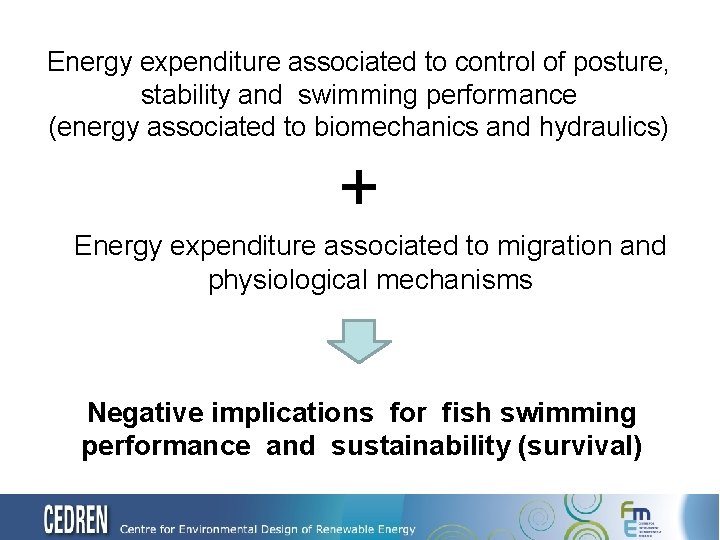
Energy expenditure associated to control of posture, stability and swimming performance (energy associated to biomechanics and hydraulics) + Energy expenditure associated to migration and physiological mechanisms Negative implications for fish swimming performance and sustainability (survival)
Heading for normal slides • Text