
MITE 6304 Designing Shared Virtual Environment for Learning

- Slides: 26
MITE 6304 Designing Shared Virtual Environment for Learning
What is a physical learning environment?
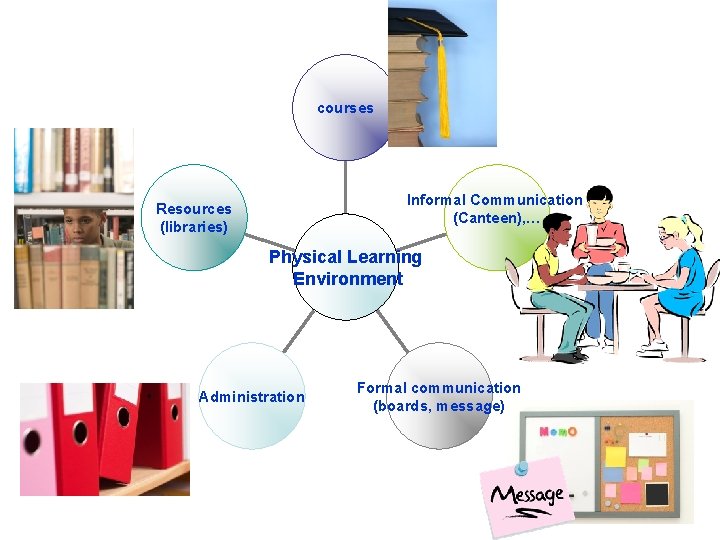
courses Informal Communication (Canteen), … Resources (libraries) Physical Learning Environment Administration Formal communication (boards, message)
What is a virtual learning environment? • Does a virtual learning environment refer to any educational web site?
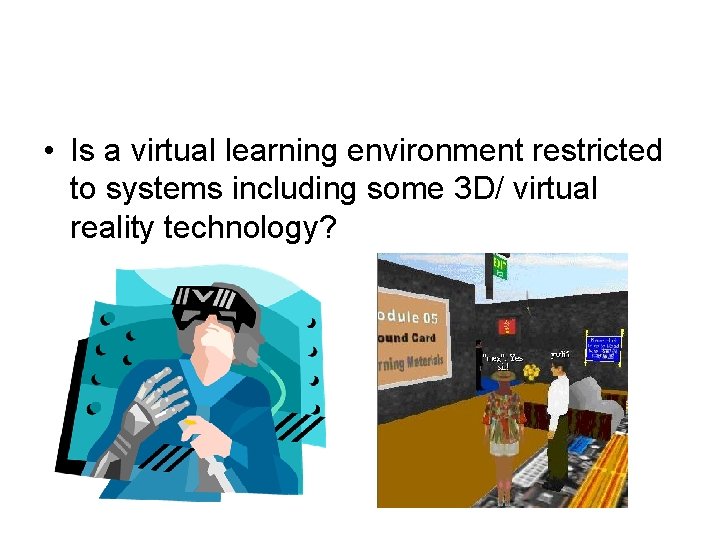
• Is a virtual learning environment restricted to systems including some 3 D/ virtual reality technology?
According to Wikipedia, Virtual learning environments is… • A virtual learning environment (VLE) is a software system designed to support teaching and learning in an educational setting, – • as distinct from a Managed Learning Environment (MLE) where the focus is on management. A VLE will normally work over the Internet and provide a collection of tools – such as those for assessment (particularly of types that can be marked automatically, such as multiple choice), – communication, – uploading of content, – return of students' work, – peer assessment, – administration of student groups, – collecting and organizing student grades, – questionnaires, tracking tools, etc. – New features in these systems include wikis, blogs, RSS and 3 D virtual learning spaces. • • Originally created for distance education, VLEs are now most often used to supplement the face-2 -face classroom, commonly known as Blended Learning. These systems usually run on servers, to serve the course to students by Multimedia and/or web pages.
What is specific to virtual learning environment? Dillenbourg P.
• The information space has been designed. • Educational interactions occur in the environment, turning spaces into places. • The information/social space is explicitly represented. The representation varies from text to 3 D immersive worlds. • Students are not only active, but also actors. They coconstruct the virtual space. • Virtual learning environments integrate heterogeneous technologies and multiple pedagogical approaches. • Most virtual environments overlap with physical environments.
1. A virtual learning environment is a designed information space. • Using information in educational interactions.
• Multi-authoring – Information stored in a VLE is produced by many authors.
• Indicating information source – Web information without explicit information regarding to its author will soon have no more value.
• Maintaining information. – When Web sites grow, if information has not been carefully structures, maintenance becomes very heavy: maintaining links, removing obsolete information, …
• Following technical evolution. – The effort devoted to developing Web sites has to survive the current technology.
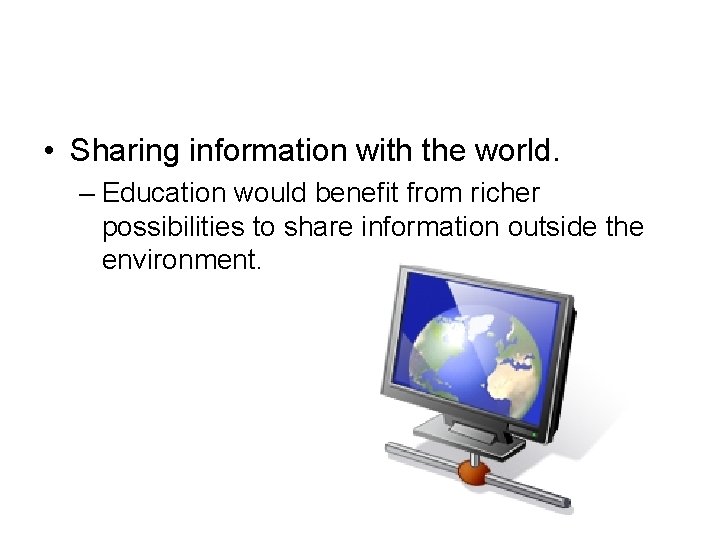
• Sharing information with the world. – Education would benefit from richer possibilities to share information outside the environment.
• Today’s use of virtual learning environment is not restricted to wellstructured information spaces. What do you think? Content management may become a main issue for all teachers Involved in VLEs. Have you thought about the functional relationship between how information is structured and represented and how it can be used in learning activities and interaction?
2. A virtual learning environment is a social space. • A book can hardly be described as a learning environment. But, reading a book in a seminar, discussing with other students, writing a summary for the tutor, … do constitute a learning environment. • A set of Web pages does not constitute a VLE unless there is a social interaction about the information. This includes synchronous (e. g. chat, msn) versus asynchronous (e. g email, forums) communication, 1 to 1 or 1 to many, text based Vs audio & video.
3. The virtual space is explicitly represented. • The representation of the learning environment ranges from text-based interfaces to 3 D graphical output. • Representations of space may have an impact on the learning process beyond motivational aspects.
4. Students are not only active, but also actors. • More specific to VLEs is the set of activities in which the students construct and share objects. • Most often these objects are Web pages. • Writing activities (producing synthneses, study reports, . . ) are very popular in schools. • Students are not restricted to consuming Web information, they become information producers, they enter in the game.
5. VLEs are not restricted to distance education. • Asynchronous communication provides students with time flexibility • Many Web-based courses combine distance and presence, which makes learning environments more robust.
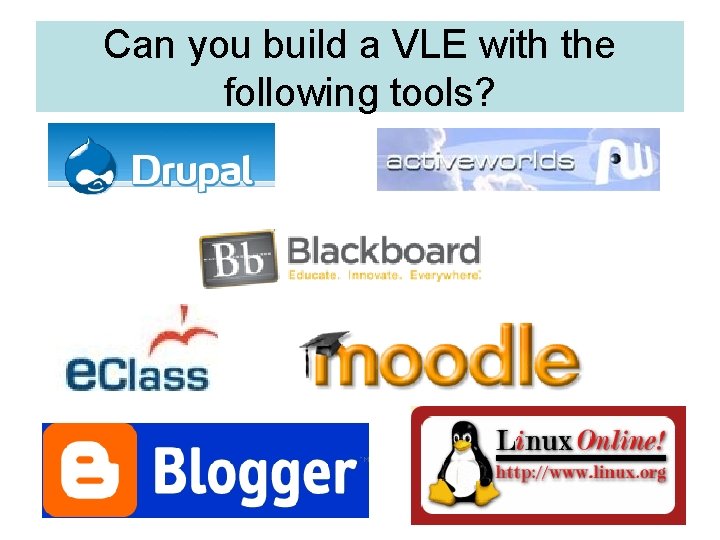
6. A VLE environment integrates multiple tools • A VLE integrates a variety of tools supporting multiple functions: information, communication, collaboration, learning and management. – For example: Moodle, Wiki, Active Worlds, Second Life
7. VLE overlaps with the physical environment • VLE also integrate all the physical tools that can be found in a classroom. – A variety of non-computerised learning resources: instruments, books, . . – A variety of interactions that are not computermediated: face-to face discussion among students, lectures by the teacher, group discussions, … – A variety of activities that are not computerbased: field trips, role playing, …
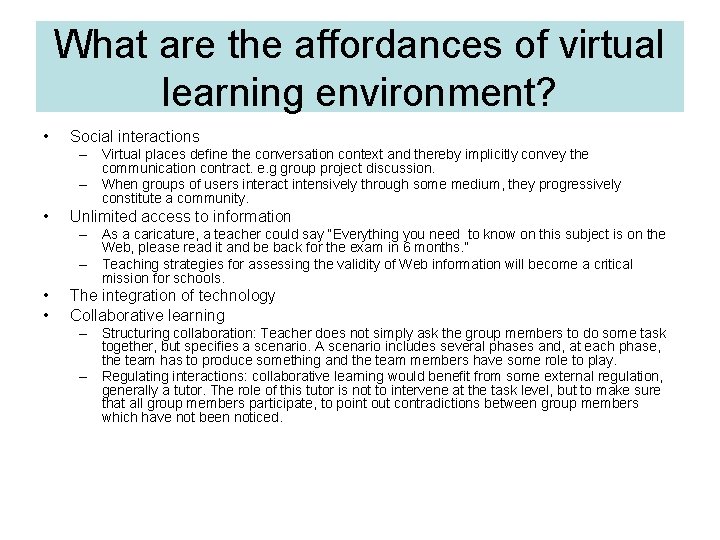
What are the affordances of virtual learning environment? • Social interactions – Virtual places define the conversation context and thereby implicitly convey the communication contract. e. g group project discussion. – When groups of users interact intensively through some medium, they progressively constitute a community. • Unlimited access to information – As a caricature, a teacher could say “Everything you need to know on this subject is on the Web, please read it and be back for the exam in 6 months. ” – Teaching strategies for assessing the validity of Web information will become a critical mission for schools. • • The integration of technology Collaborative learning – Structuring collaboration: Teacher does not simply ask the group members to do some task together, but specifies a scenario. A scenario includes several phases and, at each phase, the team has to produce something and the team members have some role to play. – Regulating interactions: collaborative learning would benefit from some external regulation, generally a tutor. The role of this tutor is not to intervene at the task level, but to make sure that all group members participate, to point out contradictions between group members which have not been noticed.
Courseware effectiveness is bound to the pedagogical context of use: the pedagogical scenario in which the courseware is integrated, the degree of teacher involvement, the time frame, the technical infrastructure, …
Can you build a VLE with the following tools?
Discussion • Could we enrich classroom activities with the use of VLE? How? • If anyone has found useful VLE, please list it out in the Moodle to let us share the experience!
References • Dillenbourg P. (2000). Virtual Learning Environments in EUN Conference 2000: Learning in the new millennium: Building new education strategies for schools. Workshop on Virtual learning environments. University of Geneva. URL: http: //tecfa. unige. ch/tecfa/publicat/dil-papers-2/Dil. 7. 5. 18. pdf Retrieved 4 May 2006. • Selecting a Learning Management Platform (PDF) Selecting a Learning Management Platform. 2. e. LP (e-Learning Programme). . . It is worth noting that learning platforms exist for both corporate environments