
MISTAKES IN MEIOSIS GENETIC DISORDERS Chromosomal Abnormalities KARYOTYPES
MISTAKES IN MEIOSIS: GENETIC DISORDERS Chromosomal Abnormalities

KARYOTYPES �Test to examine chromosomes �Can help identify genetic problems by: �Counting the number of chromosomes �Looking for structural changes in chromosomes �The test can be performed on almost any tissue: �Amniotic fluid �Blood �Bone marrow �Tissue from the placenta

KLINEFELTER SYNDROME �Not inherited �Genetic Changes: � Boy with extra copy of X chromosome (XXY) �Problem: � Nondisjunction causes polysomy �Symptoms: � Low levels of testosterone � Breast development � Decreased body and facial hair � Abnormal sexual development � Learning disabilities
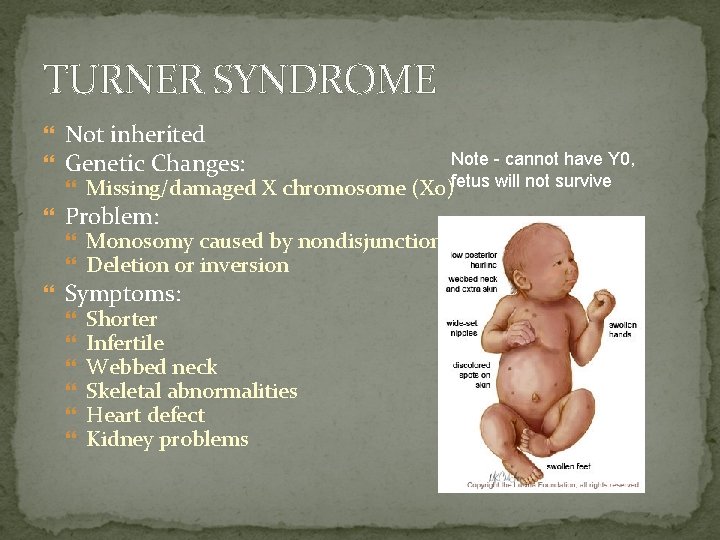
TURNER SYNDROME Not inherited Genetic Changes: Missing/damaged X chromosome Problem: Note - cannot have Y 0, (X 0)fetus will not survive Monosomy caused by nondisjunction Deletion or inversion Symptoms: Shorter Infertile Webbed neck Skeletal abnormalities Heart defect Kidney problems
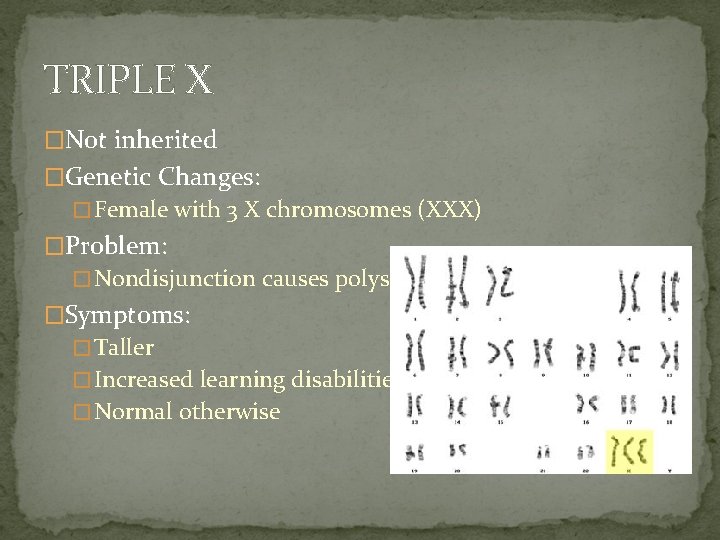
TRIPLE X �Not inherited �Genetic Changes: �Female with 3 X chromosomes (XXX) �Problem: �Nondisjunction causes polysomy �Symptoms: �Taller �Increased learning disabilities �Normal otherwise
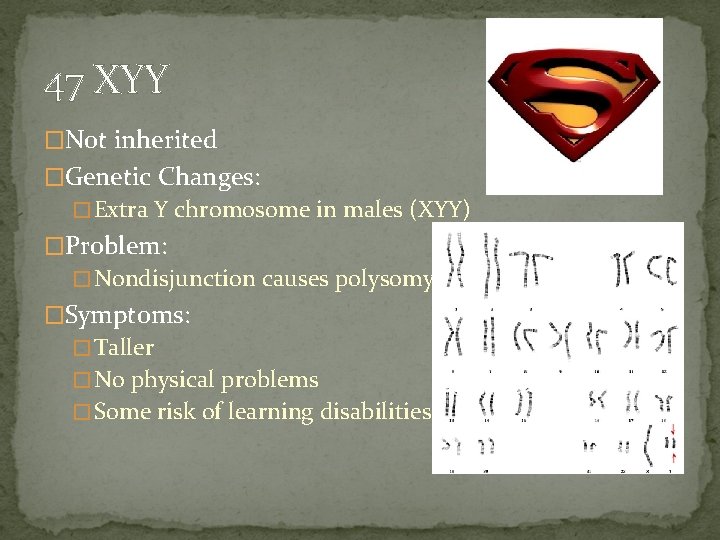
47 XYY �Not inherited �Genetic Changes: �Extra Y chromosome in males (XYY) �Problem: �Nondisjunction causes polysomy �Symptoms: �Taller �No physical problems �Some risk of learning disabilities
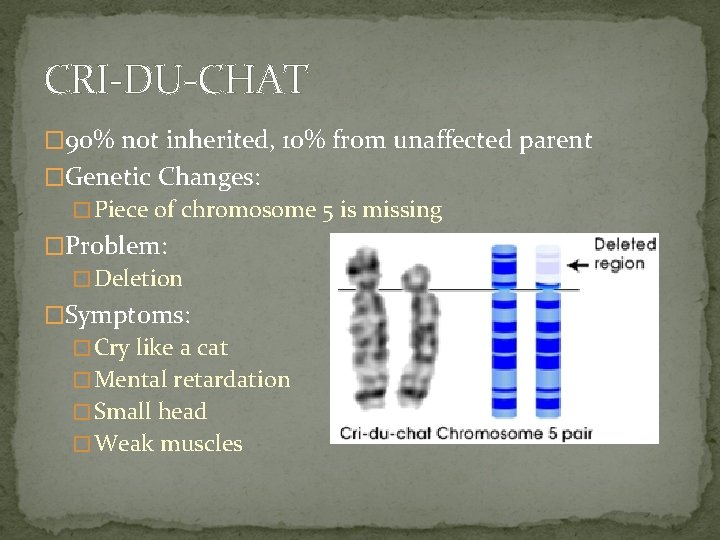
CRI-DU-CHAT � 90% not inherited, 10% from unaffected parent �Genetic Changes: �Piece of chromosome 5 is missing �Problem: �Deletion �Symptoms: �Cry like a cat �Mental retardation �Small head �Weak muscles
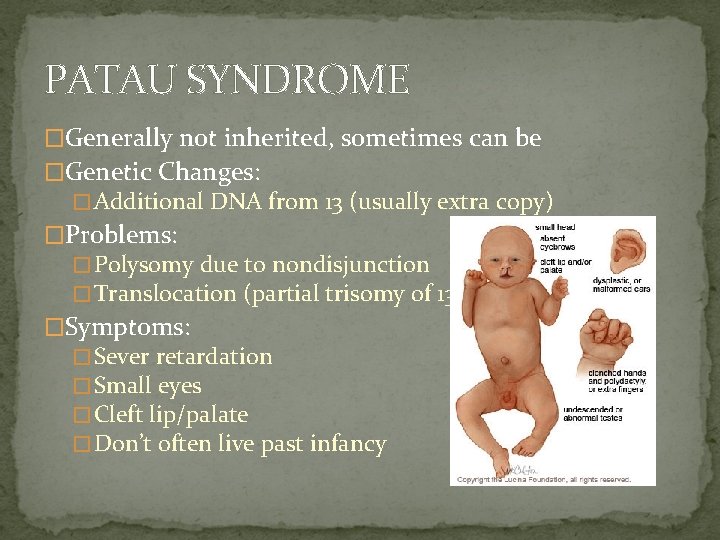
PATAU SYNDROME �Generally not inherited, sometimes can be �Genetic Changes: � Additional DNA from 13 (usually extra copy) �Problems: � Polysomy due to nondisjunction � Translocation (partial trisomy of 13) �Symptoms: � Sever retardation � Small eyes � Cleft lip/palate � Don’t often live past infancy

EDWARDS SYNDROME �Can be inherited or not �Genetic Changes: �Extra DNA from chromosome 18 �Problem: �Trisomy/polysomy of 18 due to nondisjunction �Symptoms: �Low birth weight �Abnormal head, jaw, mouth �Retardation �Only 5 -10% survive 1 st year
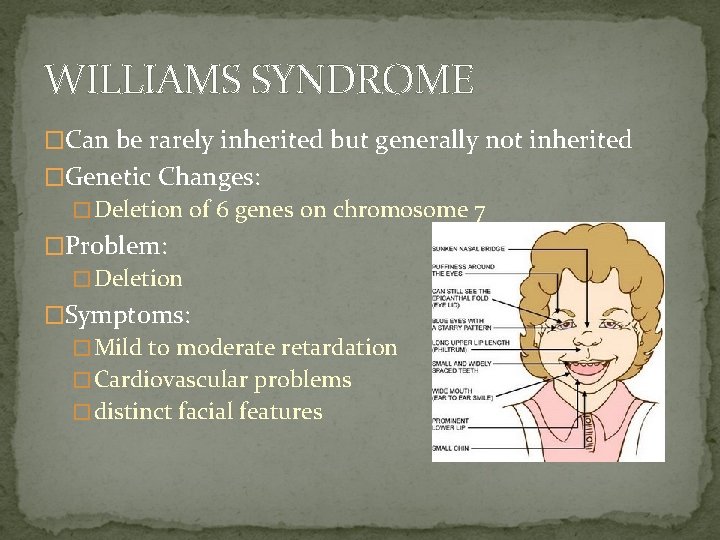
WILLIAMS SYNDROME �Can be rarely inherited but generally not inherited �Genetic Changes: �Deletion of 6 genes on chromosome 7 �Problem: �Deletion �Symptoms: �Mild to moderate retardation �Cardiovascular problems �distinct facial features
- Slides: 10