
MISMART Medical Clearance Form Michigan Psychiatric Care Improvement





- Slides: 42
MI-SMART Medical Clearance Form Michigan Psychiatric Care Improvement Project
OVERVIEW • Background • MI-SMART • Hack’s • Case Form Impairment Index Score Studies 2
Background 3
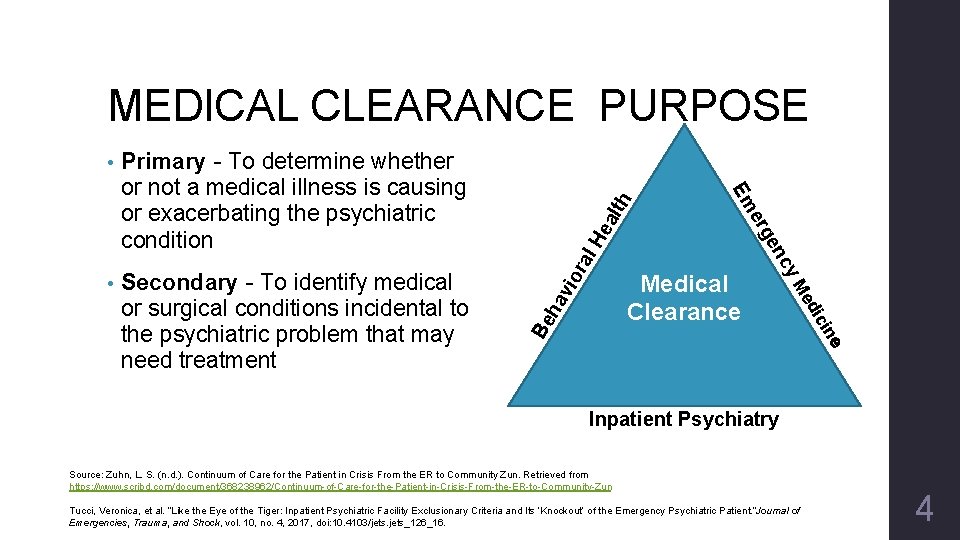
• Secondary - To identify medical or surgical conditions incidental to the psychiatric problem that may need treatment Medical Clearance ne ici ed Primary - To determine whether or not a medical illness is causing or exacerbating the psychiatric condition y. M nc ge er Em • Be ha vio ra l. H ea lth MEDICAL CLEARANCE PURPOSE Inpatient Psychiatry Source: Zuhn, L. S. (n. d. ). Continuum of Care for the Patient in Crisis From the ER to Community Zun. Retrieved from https: //www. scribd. com/document/368238962/Continuum-of-Care-for-the-Patient-in-Crisis-From-the-ER-to-Community-Zun Tucci, Veronica, et al. “Like the Eye of the Tiger: Inpatient Psychiatric Facility Exclusionary Criteria and Its ‘Knockout’ of the Emergency Psychiatric Patient. ”Journal of Emergencies, Trauma, and Shock, vol. 10, no. 4, 2017, doi: 10. 4103/jets_126_16. 4
MPCIP MDHHS and its community partners are in the process of implementing many crisis system improvements through the Michigan Psychiatric Care Improvement Project (MPCIP). Some examples are: Medical Clearance Algorithm Psychiatric Bed Registry Michigan Crisis and Access Line (MCAL) Psychiatric Residential Treatment Facilities • For more information please visit the MDHHS MPCIP website. https: //www. michigan. gov/documents/mdhhs/MIPAD_Workgroup_Report_-_Version_for_Publication_641418_7. pdf 5
MEDICAL CLEARANCE WORKGROUP • MDHHS partnered with Michigan Health and Hospital Association (MHA) to establish a workgroup of Emergency Medicine, Psychiatry, Psychology physicians, CMHSP representatives, and Crisis Service Providers. • For more information visit MDHHS MPCIP Website 6
OVERVIEW OF THE FRAMEWORK • While this is not a formal rule-making process; the intent is to offer similar public notice and opportunity for comment. 7
QUALITY ASSURANCE PROCESS • Quality Improvement Feedback System Technical Issue(s) Feedback Loop Implementation Experience Survey Recommended Form changes are being gathered via the contact page. Additionally, feedback is being gathered via our email MPCIP-Support@MPHI. org 8
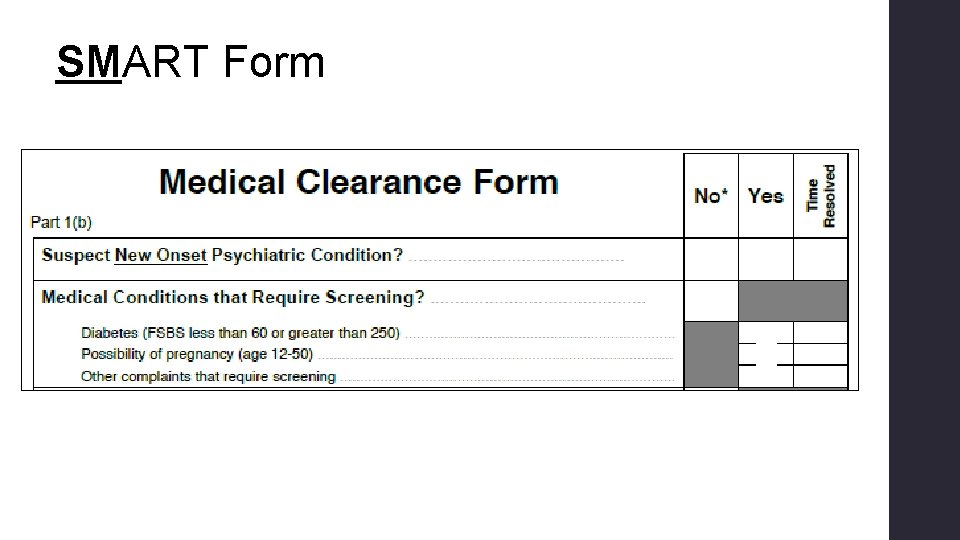
MI-SMART Form 9
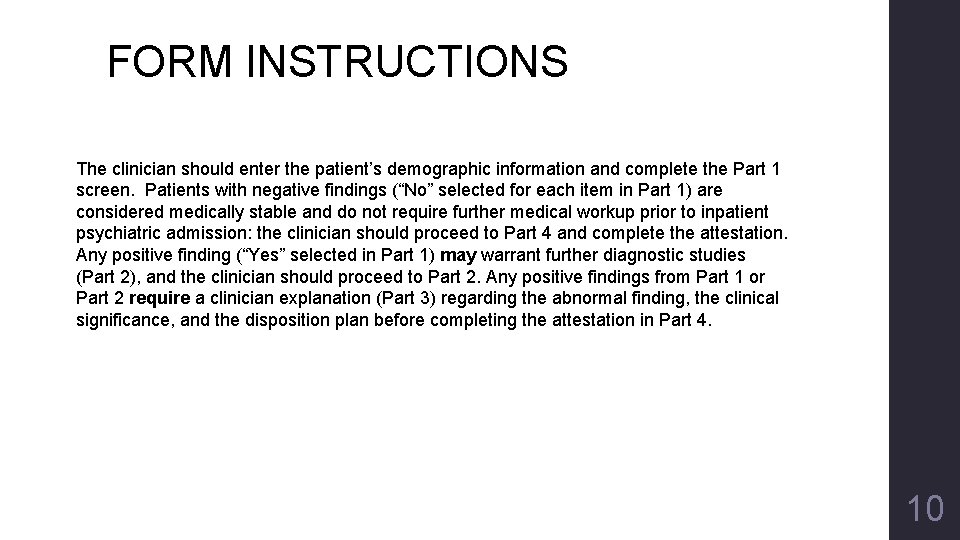
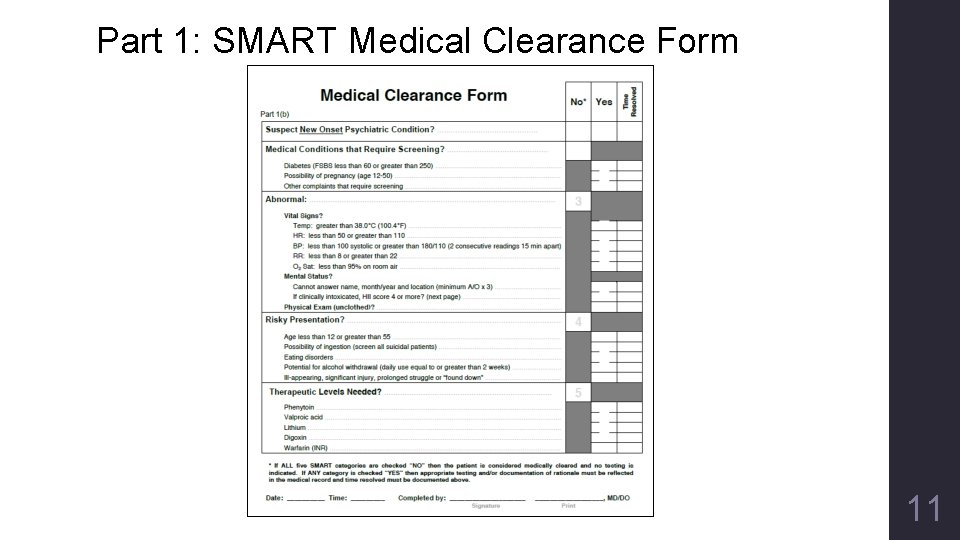
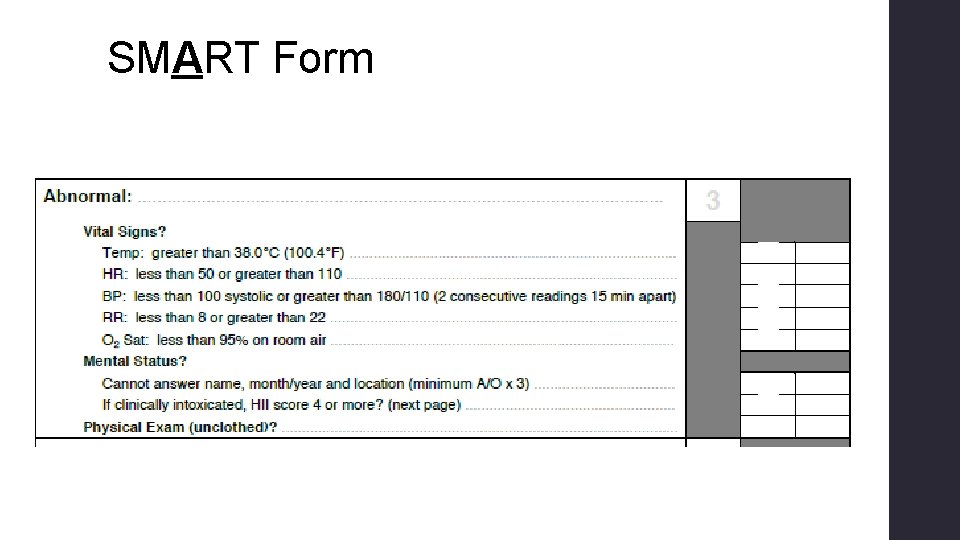
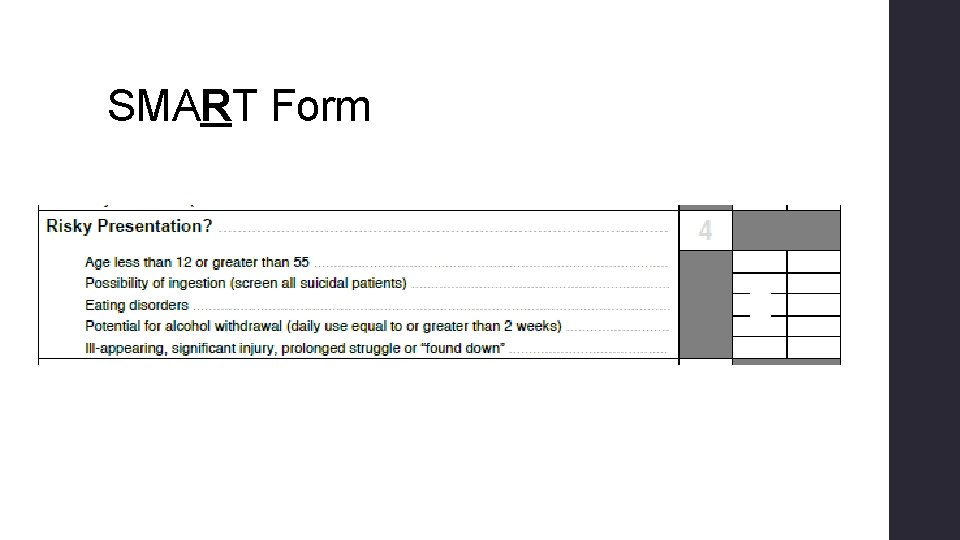
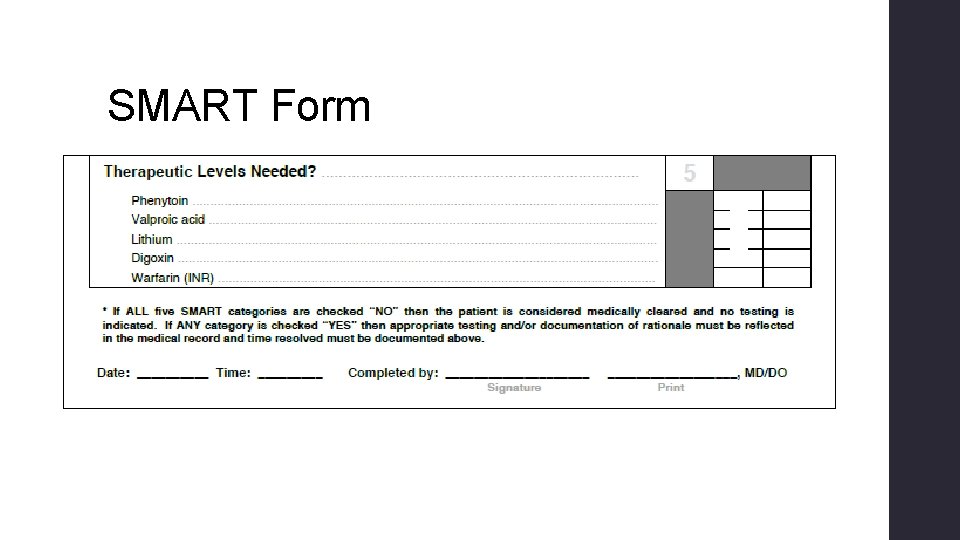
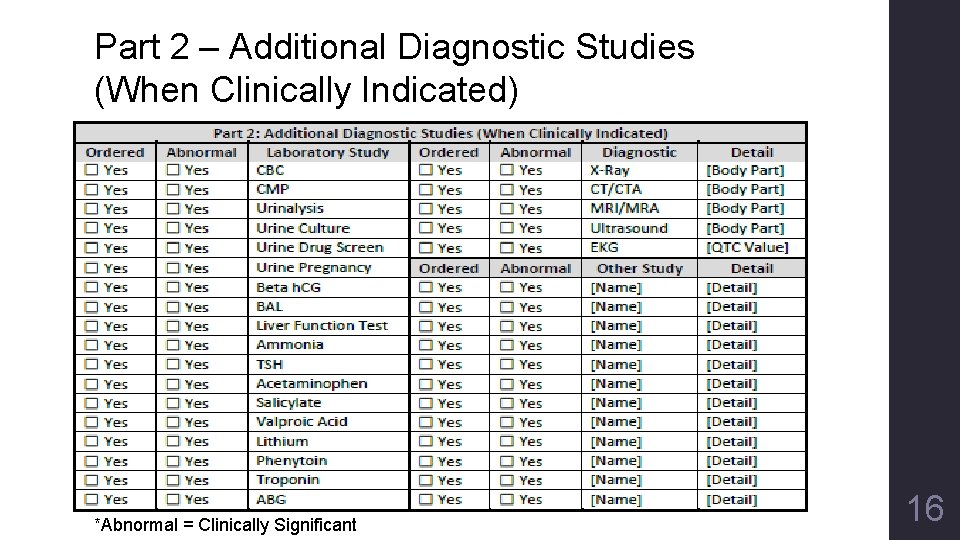
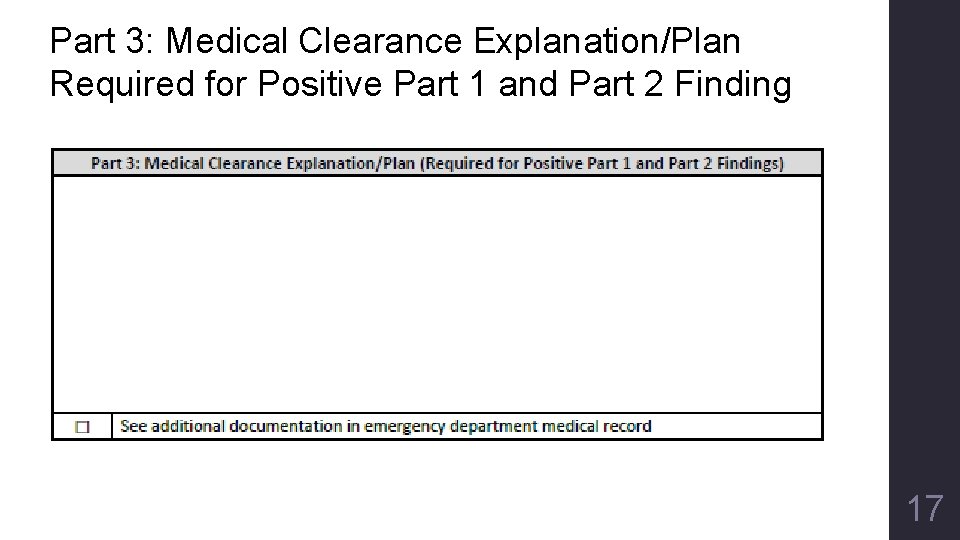
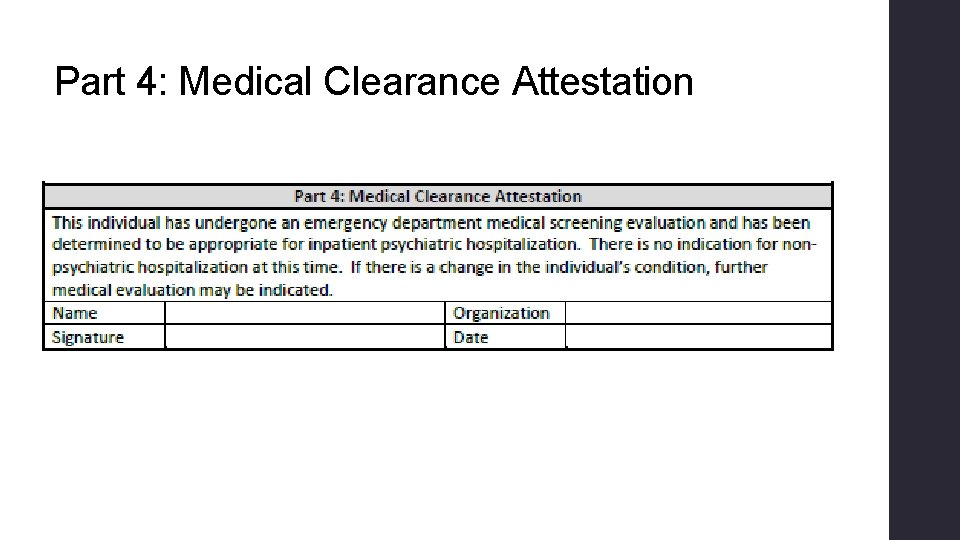
FORM INSTRUCTIONS The clinician should enter the patient’s demographic information and complete the Part 1 screen. Patients with negative findings (“No” selected for each item in Part 1) are considered medically stable and do not require further medical workup prior to inpatient psychiatric admission: the clinician should proceed to Part 4 and complete the attestation. Any positive finding (“Yes” selected in Part 1) may warrant further diagnostic studies (Part 2), and the clinician should proceed to Part 2. Any positive findings from Part 1 or Part 2 require a clinician explanation (Part 3) regarding the abnormal finding, the clinical significance, and the disposition plan before completing the attestation in Part 4. 10
Part 1: SMART Medical Clearance Form 11
SMART Form
SMART Form
SMART Form
SMART Form
Part 2 – Additional Diagnostic Studies (When Clinically Indicated) *Abnormal = Clinically Significant 16
Part 3: Medical Clearance Explanation/Plan Required for Positive Part 1 and Part 2 Finding 17
Part 4: Medical Clearance Attestation
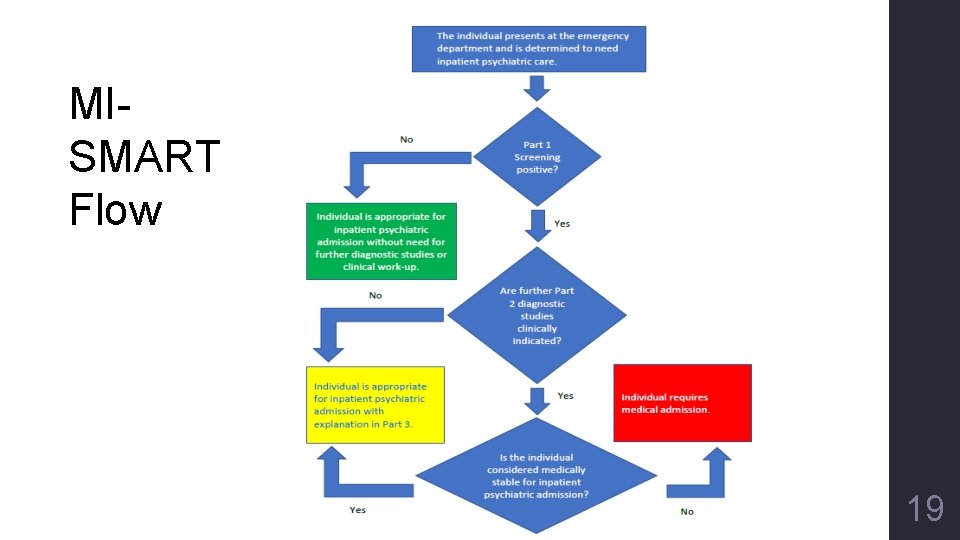
MISMART Flow 19
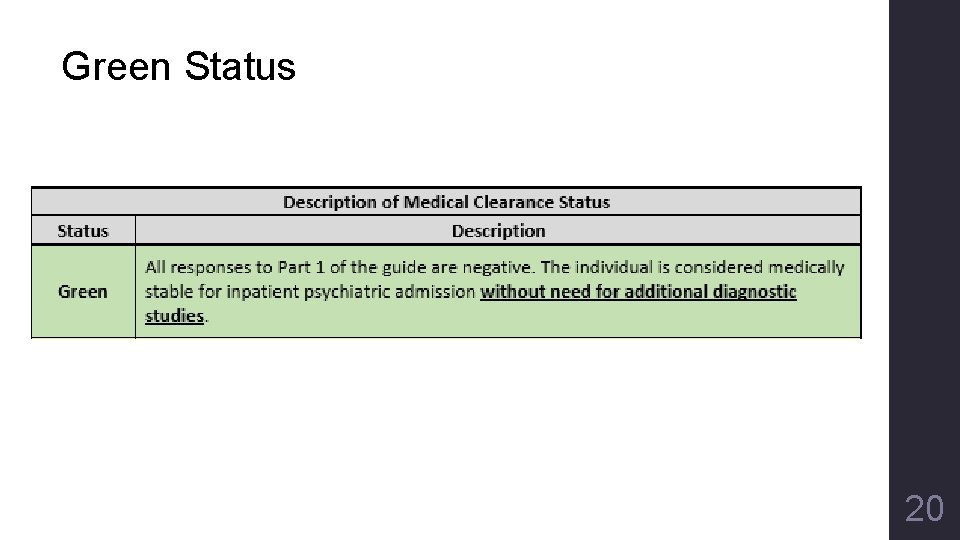
Green Status 20
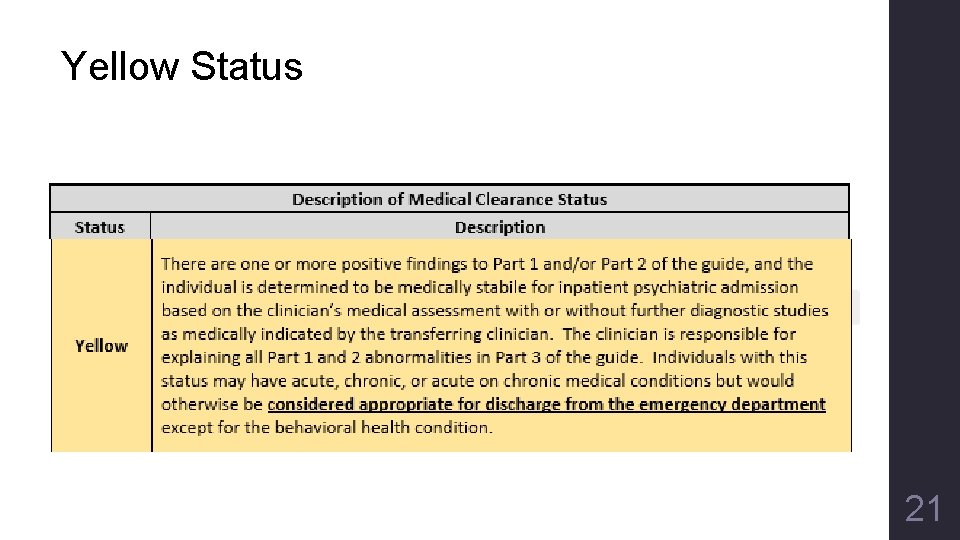
Yellow Status 21
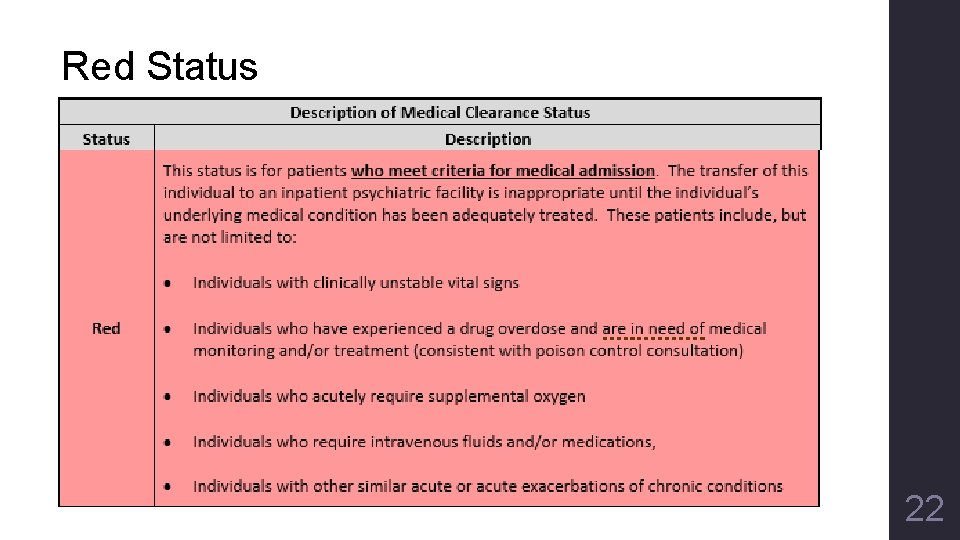
Red Status 22
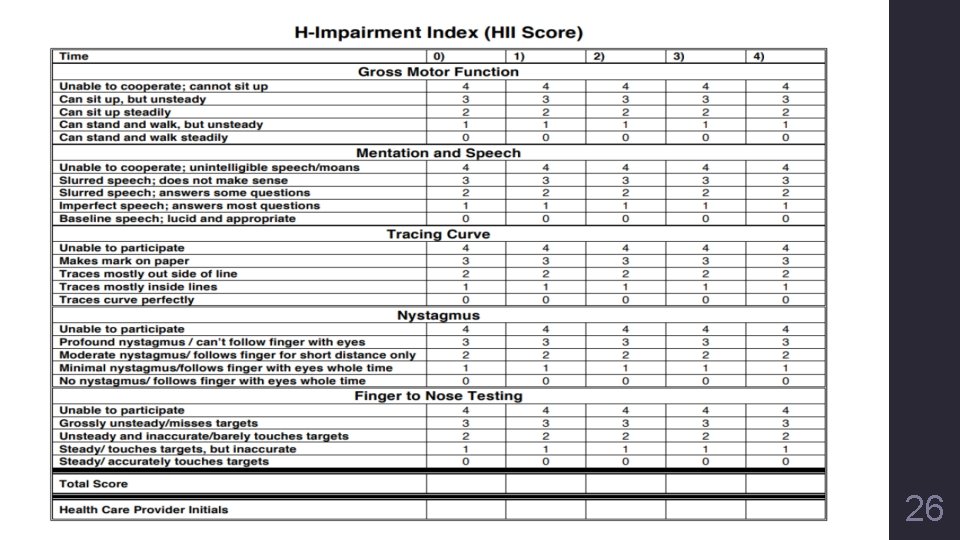
Hack's Impairment Index (HII) Score Source: Hack, J. B. , Goldlust, E. J. , Ferrante, D. , & Zink, B. J. (2017). Performance of the Hacks Impairment Index Score: A Novel Tool to Assess Impairment from Alcohol in Emergency Department Patients. Academic Emergency Medicine, 24(10), 1193– 1203. doi: 10. 1111/acem. 13266 23
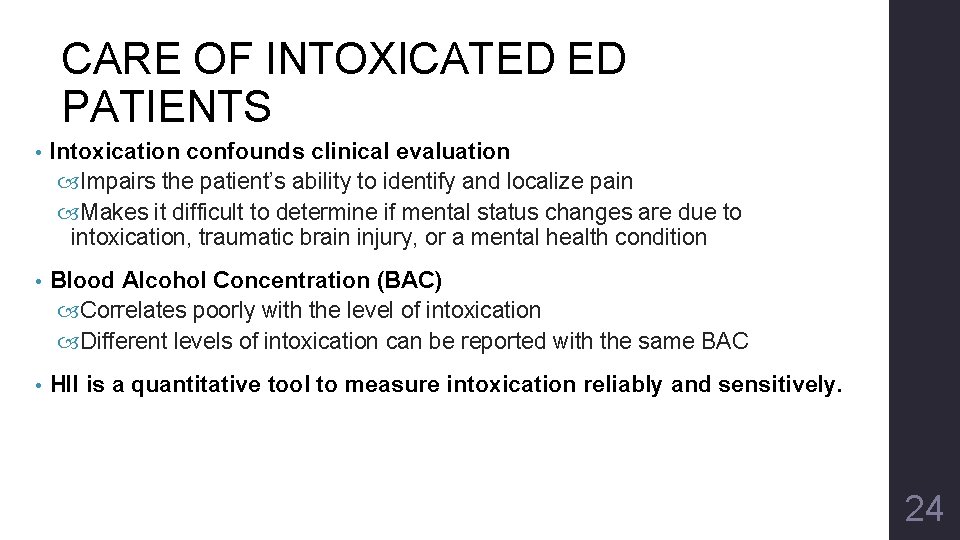
CARE OF INTOXICATED ED PATIENTS • Intoxication confounds clinical evaluation Impairs the patient’s ability to identify and localize pain Makes it difficult to determine if mental status changes are due to intoxication, traumatic brain injury, or a mental health condition • Blood Alcohol Concentration (BAC) Correlates poorly with the level of intoxication Different levels of intoxication can be reported with the same BAC • HII is a quantitative tool to measure intoxication reliably and sensitively. 24
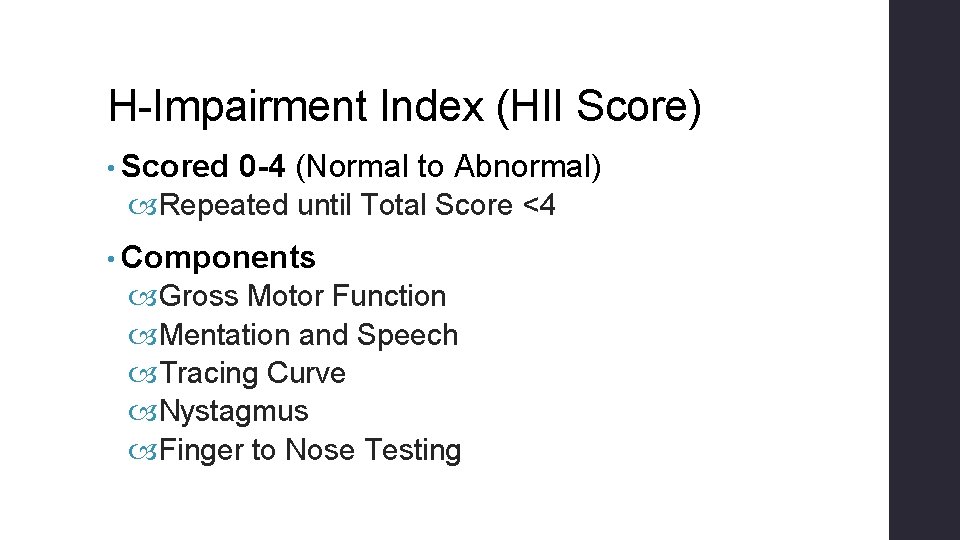
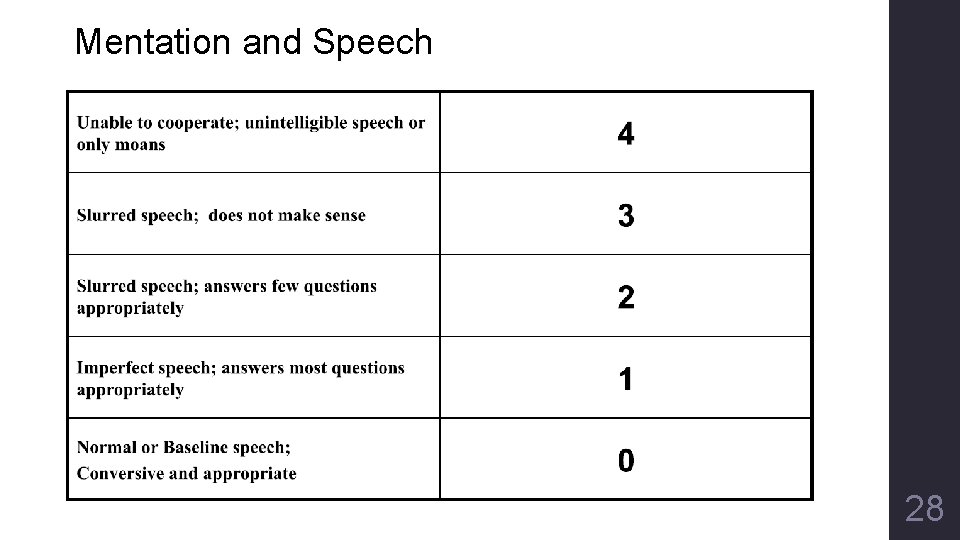
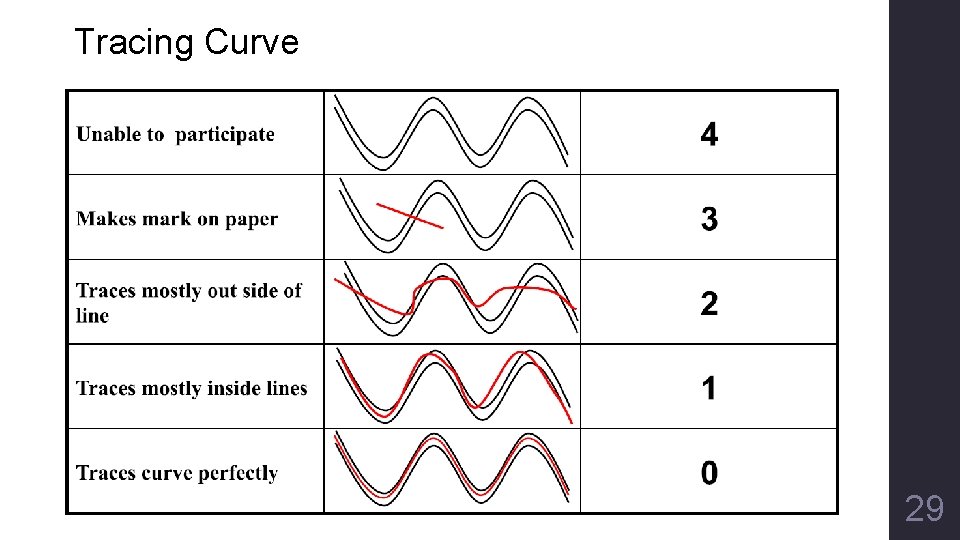
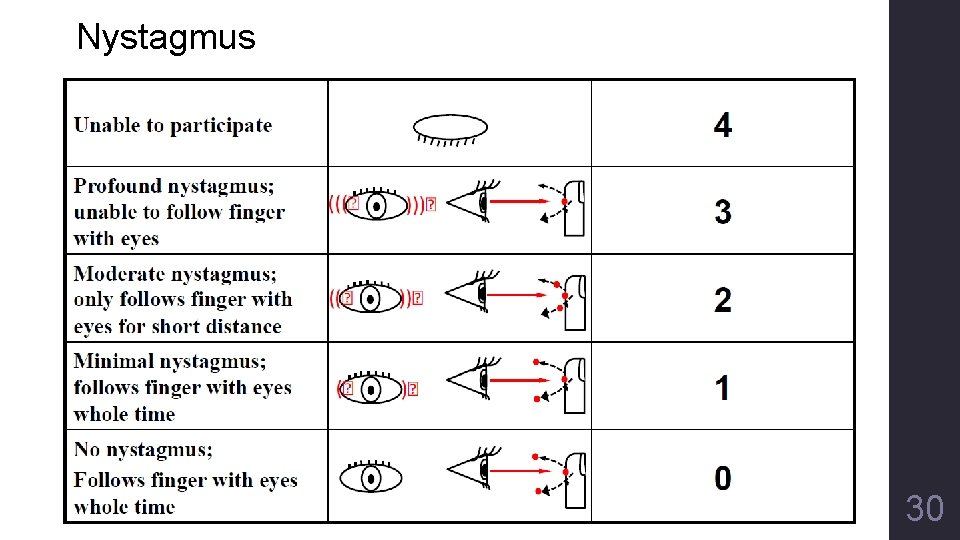
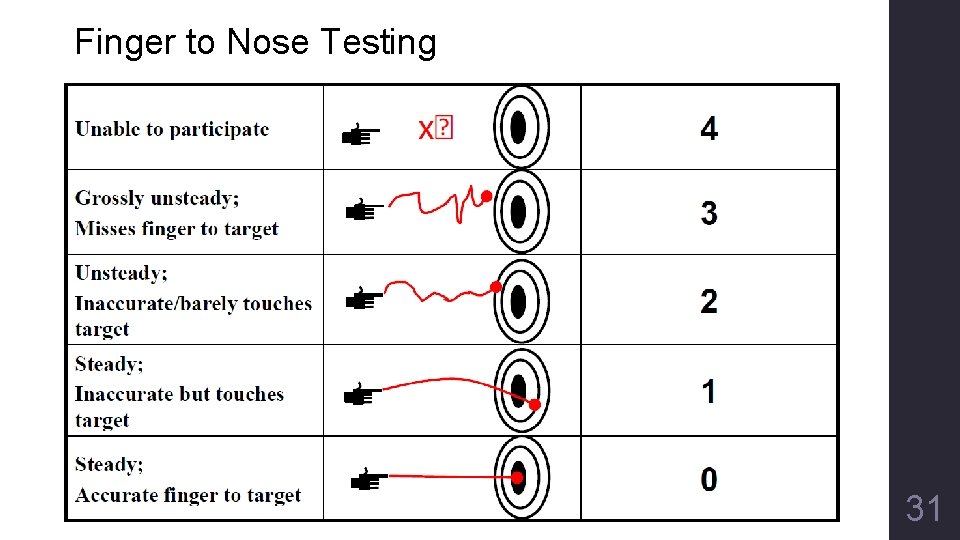
H-Impairment Index (HII Score) • Scored 0 -4 (Normal to Abnormal) Repeated until Total Score <4 • Components Gross Motor Function Mentation and Speech Tracing Curve Nystagmus Finger to Nose Testing
26
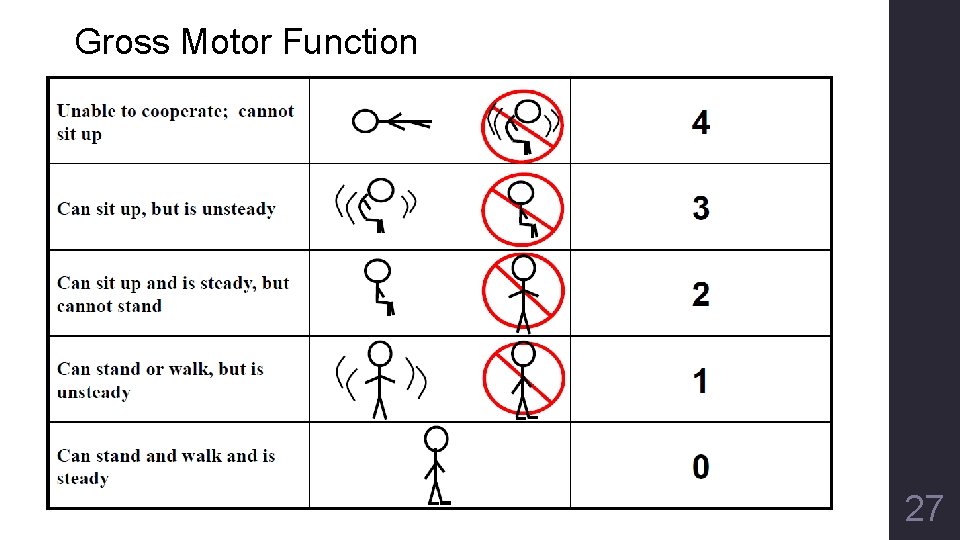
Gross Motor Function 27
Mentation and Speech 28
Tracing Curve 29
Nystagmus 30
Finger to Nose Testing 31
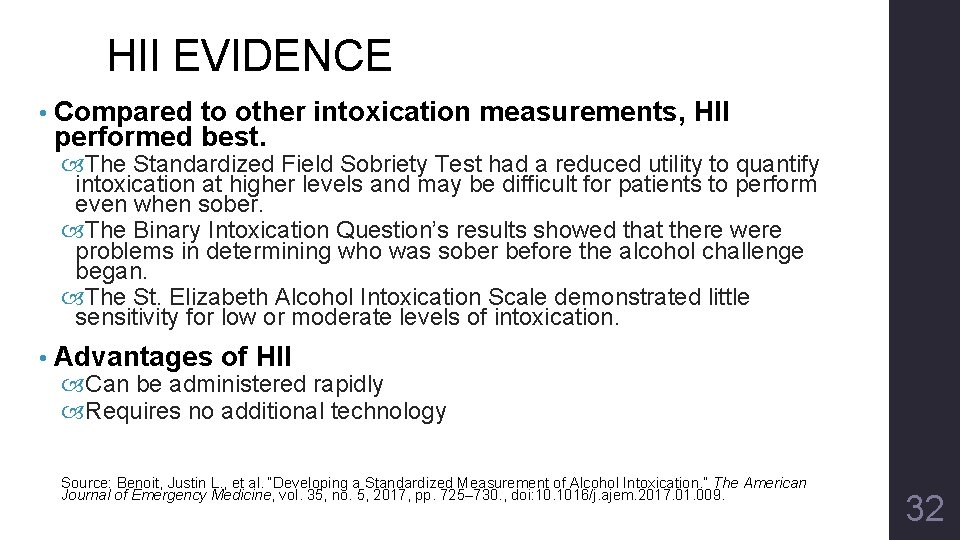
HII EVIDENCE • Compared to other intoxication measurements, HII performed best. The Standardized Field Sobriety Test had a reduced utility to quantify intoxication at higher levels and may be difficult for patients to perform even when sober. The Binary Intoxication Question’s results showed that there were problems in determining who was sober before the alcohol challenge began. The St. Elizabeth Alcohol Intoxication Scale demonstrated little sensitivity for low or moderate levels of intoxication. • Advantages of HII Can be administered rapidly Requires no additional technology Source: Benoit, Justin L. , et al. “Developing a Standardized Measurement of Alcohol Intoxication. ” The American Journal of Emergency Medicine, vol. 35, no. 5, 2017, pp. 725– 730. , doi: 10. 1016/j. ajem. 2017. 01. 009. 32
Case Studies 33
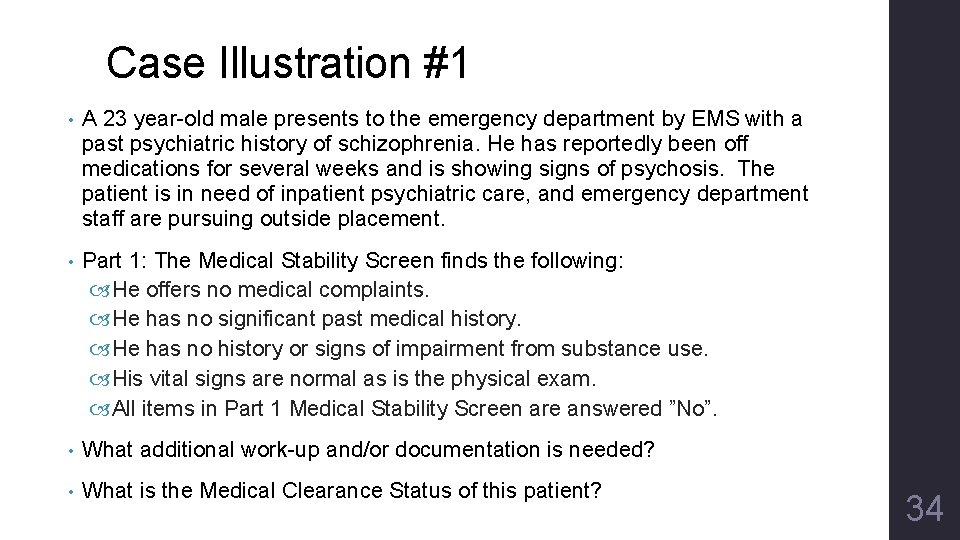
Case Illustration #1 • A 23 year-old male presents to the emergency department by EMS with a past psychiatric history of schizophrenia. He has reportedly been off medications for several weeks and is showing signs of psychosis. The patient is in need of inpatient psychiatric care, and emergency department staff are pursuing outside placement. • Part 1: The Medical Stability Screen finds the following: He offers no medical complaints. He has no significant past medical history. He has no history or signs of impairment from substance use. His vital signs are normal as is the physical exam. All items in Part 1 Medical Stability Screen are answered ”No”. • What additional work-up and/or documentation is needed? • What is the Medical Clearance Status of this patient? 34
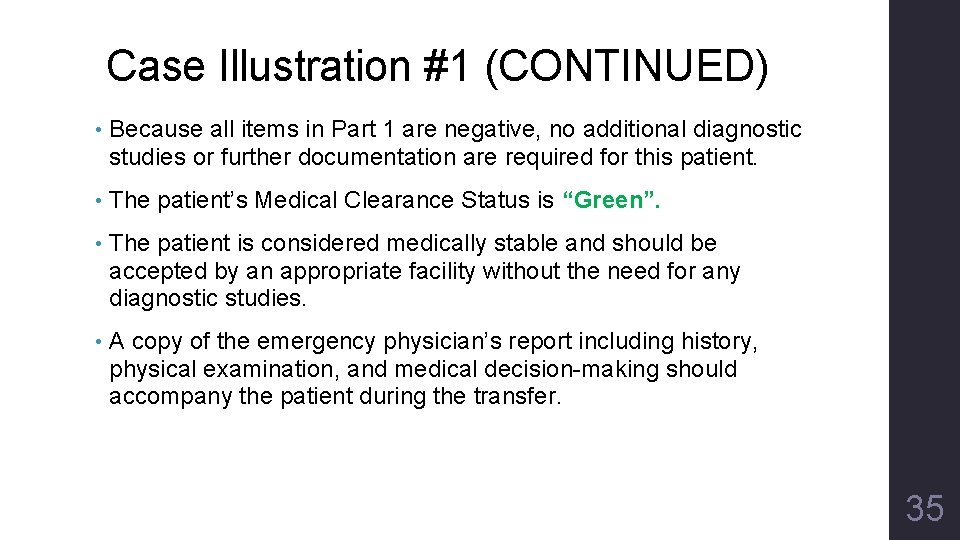
Case Illustration #1 (CONTINUED) • Because all items in Part 1 are negative, no additional diagnostic studies or further documentation are required for this patient. • The patient’s Medical Clearance Status is “Green”. • The patient is considered medically stable and should be accepted by an appropriate facility without the need for any diagnostic studies. • A copy of the emergency physician’s report including history, physical examination, and medical decision-making should accompany the patient during the transfer. 35
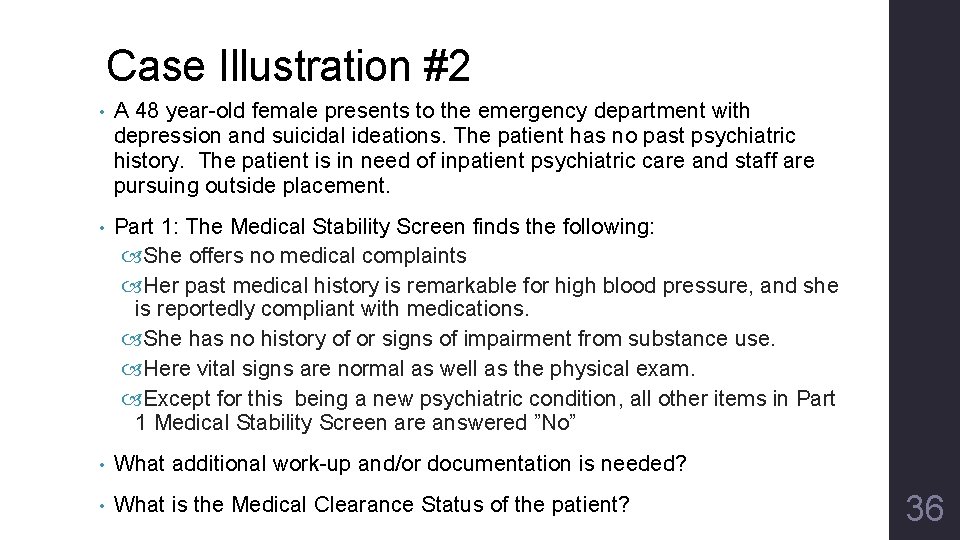
Case Illustration #2 • A 48 year-old female presents to the emergency department with depression and suicidal ideations. The patient has no past psychiatric history. The patient is in need of inpatient psychiatric care and staff are pursuing outside placement. • Part 1: The Medical Stability Screen finds the following: She offers no medical complaints Her past medical history is remarkable for high blood pressure, and she is reportedly compliant with medications. She has no history of or signs of impairment from substance use. Here vital signs are normal as well as the physical exam. Except for this being a new psychiatric condition, all other items in Part 1 Medical Stability Screen are answered ”No” • What additional work-up and/or documentation is needed? • What is the Medical Clearance Status of the patient? 36
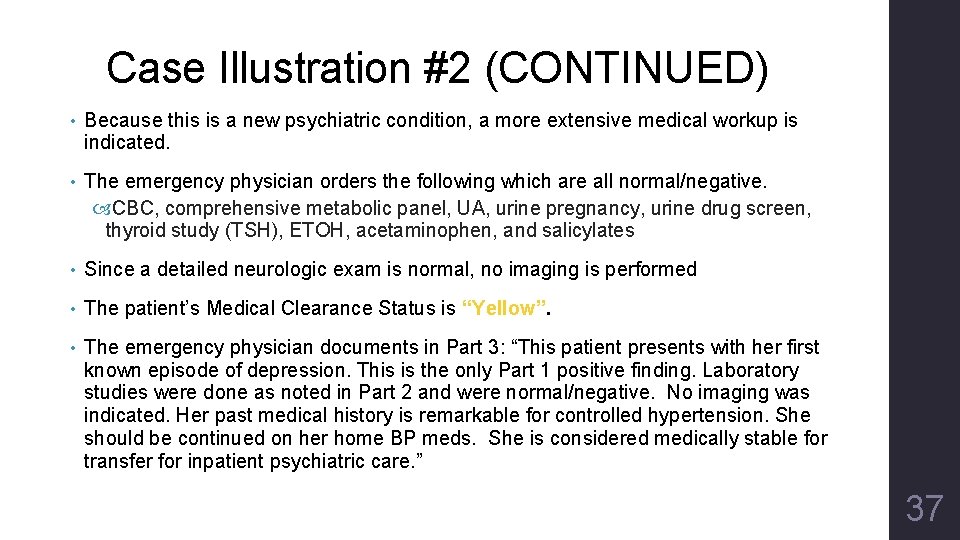
Case Illustration #2 (CONTINUED) • Because this is a new psychiatric condition, a more extensive medical workup is indicated. • The emergency physician orders the following which are all normal/negative. CBC, comprehensive metabolic panel, UA, urine pregnancy, urine drug screen, thyroid study (TSH), ETOH, acetaminophen, and salicylates • Since a detailed neurologic exam is normal, no imaging is performed • The patient’s Medical Clearance Status is “Yellow”. • The emergency physician documents in Part 3: “This patient presents with her first known episode of depression. This is the only Part 1 positive finding. Laboratory studies were done as noted in Part 2 and were normal/negative. No imaging was indicated. Her past medical history is remarkable for controlled hypertension. She should be continued on her home BP meds. She is considered medically stable for transfer for inpatient psychiatric care. ” 37
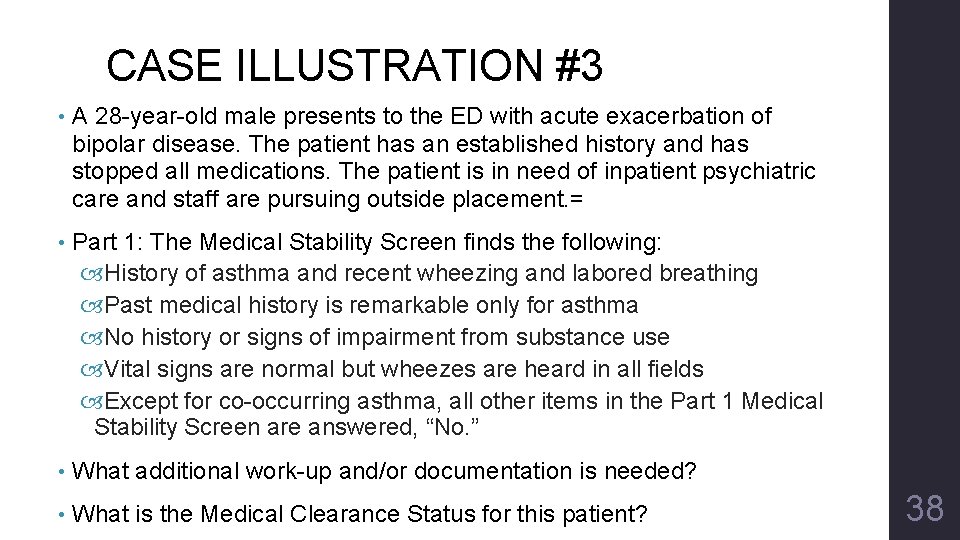
CASE ILLUSTRATION #3 • A 28 -year-old male presents to the ED with acute exacerbation of bipolar disease. The patient has an established history and has stopped all medications. The patient is in need of inpatient psychiatric care and staff are pursuing outside placement. = • Part 1: The Medical Stability Screen finds the following: History of asthma and recent wheezing and labored breathing Past medical history is remarkable only for asthma No history or signs of impairment from substance use Vital signs are normal but wheezes are heard in all fields Except for co-occurring asthma, all other items in the Part 1 Medical Stability Screen are answered, “No. ” • What additional work-up and/or documentation is needed? • What is the Medical Clearance Status for this patient? 38
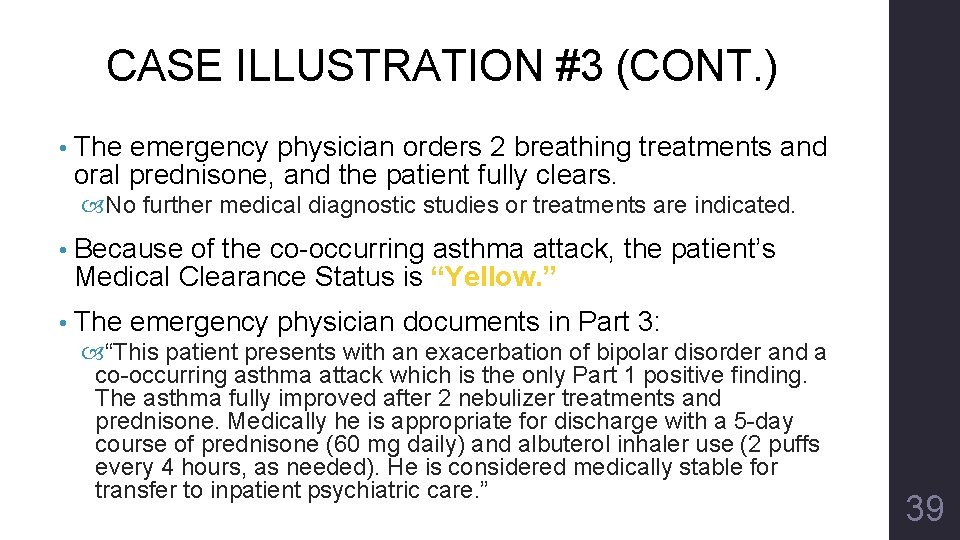
CASE ILLUSTRATION #3 (CONT. ) • The emergency physician orders 2 breathing treatments and oral prednisone, and the patient fully clears. No further medical diagnostic studies or treatments are indicated. • Because of the co-occurring asthma attack, the patient’s Medical Clearance Status is “Yellow. ” • The emergency physician documents in Part 3: “This patient presents with an exacerbation of bipolar disorder and a co-occurring asthma attack which is the only Part 1 positive finding. The asthma fully improved after 2 nebulizer treatments and prednisone. Medically he is appropriate for discharge with a 5 -day course of prednisone (60 mg daily) and albuterol inhaler use (2 puffs every 4 hours, as needed). He is considered medically stable for transfer to inpatient psychiatric care. ” 39
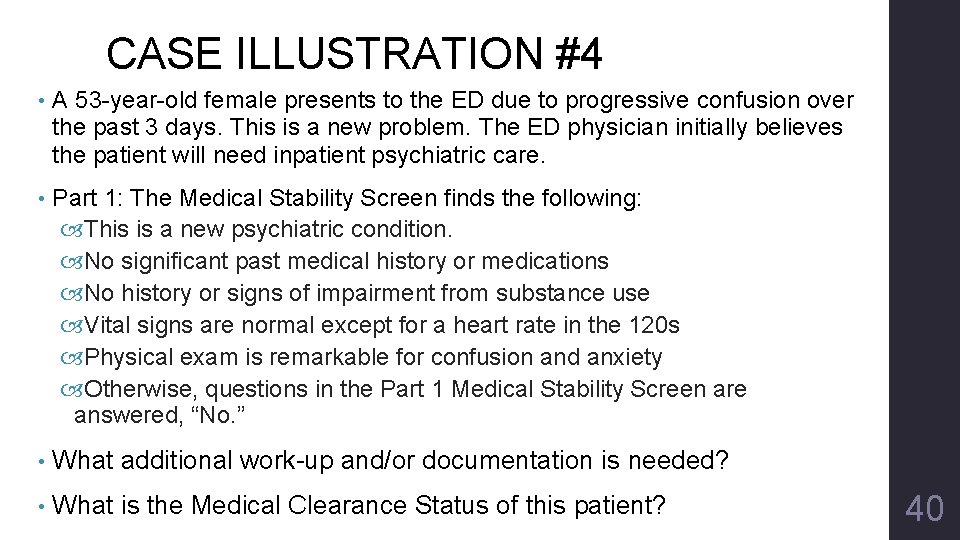
CASE ILLUSTRATION #4 • A 53 -year-old female presents to the ED due to progressive confusion over the past 3 days. This is a new problem. The ED physician initially believes the patient will need inpatient psychiatric care. • Part 1: The Medical Stability Screen finds the following: This is a new psychiatric condition. No significant past medical history or medications No history or signs of impairment from substance use Vital signs are normal except for a heart rate in the 120 s Physical exam is remarkable for confusion and anxiety Otherwise, questions in the Part 1 Medical Stability Screen are answered, “No. ” • What additional work-up and/or documentation is needed? • What is the Medical Clearance Status of this patient? 40
CASE ILLUSTRATION #4 (CONT. ) • Because this is a new psychiatric condition, a more extensive medical workup is indicated. • The emergency physician orders the following, which are all normal/negative, except for the TSH, which is not available as it must be sent out. CBC, comprehensive metabolic panel, UA, urine drug screen, thyroid study (TSH), ETOH, and head CT • The increased heart rate persists after lorazepam is administered for anxiety and a liter of normal saline IV is administered for possible dehydration. • Because of the persistent increased heart rate, the Medical Clearance Status is “Red, ” and it is NOT appropriate to send the patient to a psychiatric unit. The patient is ultimately diagnosed with thyrotoxicosis (thyroid disease), which caused the confusion, and this fully resolves with medical treatment. 41
RESOURCES AND SUPPORT • Visit the MDHHS MPCIP website for more resources and to learn more about the Michigan Psychiatric Care Improvement Project. • Contact the MPCIP team with questions at MPCIP-support@mphi. org. 42