
MIS STUDENT SUCCESS REPORT Review of Degree Works





- Slides: 16
MIS STUDENT SUCCESS REPORT Review of Degree Works and SARS Systems De Anza College, March 9 of 2016 Lourdes del Rio-Parent, Ph. D IR&P FHDA
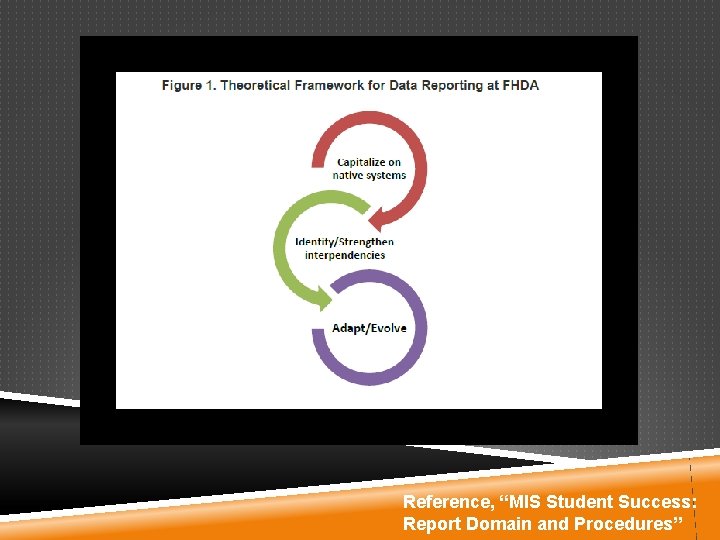
Reference, “MIS Student Success: Report Domain and Procedures”
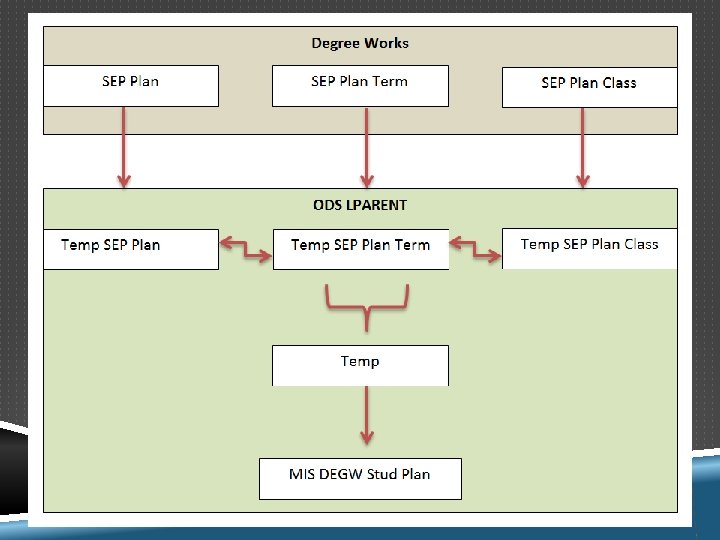
LIKELY NATIVE SYSTEMS: DEGREE WORKS AND SARS Native System: System that has been successfully used to document the activities or services we need to report. Allows us to more efficiently gather and validate data for the report. Degree Works: Degree audit system used by the College to document student education plan development. Student ID Terms or length of education plan (abbreviated, 1 or 2 terms; comprehensive, 3 or more terms) Date when plan was developed or modified SARS: Scheduling system used to schedule appointments across offices and departments at the College Student ID Purpose of the meeting Date of the meeting (including whether the meeting was cancelled, attended)
IDENTIFY AND STRENGTHEN INTERDEPENDENCIES The use of Degree Works (DW) to document student education plan development is dependent on: Counselors/Advisors/Students: Having an incentive to learn and frequently use DW (e. g. , priority registration, facilitates tasks at work) Knowing how to use DW (training, tutorials and reference material readily available and easy to use) Using DW effectively (e. g. , frequent use of DW to monitor and plan student progress) Being aware how DW data is used for research and reporting
REPORTING SS 09 EDUCATION PLAN DEVELOPMENT Title 5 § 55524. Student Educational Plan (1) Abbreviated student education plans are one to two terms in length designed to meet the immediate needs of students for whom a comprehensive plan is not appropriate; Comprehensive student education plans take into account a student’s interests, skills, career and education goals, major, potential transfer institutions, and the steps the student needs to take on their educational path to complete their identified course of study. The comprehensive plan helps the student achieve their course of study. The comprehensive plan includes, but is not limited to, addressing the education goal and course of study requirements, such as the requirements for the major, transfer, certificate, program, applicable course prerequisites or co-requisites, the need for basic skills, assessment for placement results, and the need for referral to other support and instructional services as appropriate. The comprehensive student education plan is tailored to meet the individual needs and interests of the student and may include other elements to satisfy participation requirements for programs such as EOPS, DSPS, Cal. WORKs, veterans education benefits, athletics, and others.
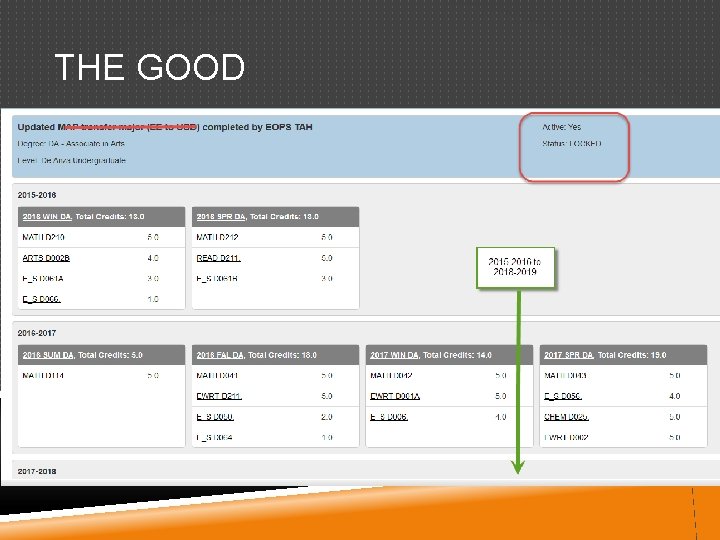
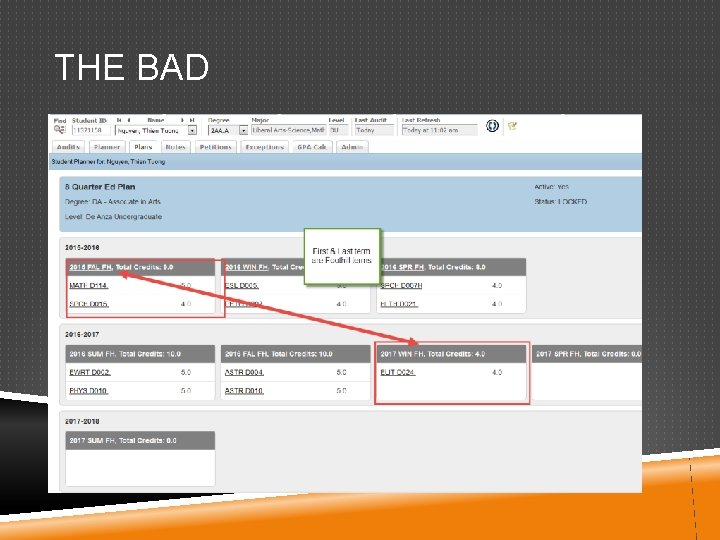
REPORTING SS 09 EDUCATION PLAN DEVELOPMENT (CONT. ) SS 09 is intended to capture information on education plans as defined in Title 5, Section 55524. Once an abbreviated and/or a comprehensive education plan is developed, revisions are reported in SS 11 (STUDENT-SUCCESS-OTHER-SERVICES). FHDA adopted operational definitions: 1 to 2 terms: abbreviated plan 3 or more terms: comprehensive plan Only terms with at least one course will count Does not need to be approved/locked or active
EDIT MEANT TO FIX SCHOOL CODE
EXAMPLES OF EDUCATION PLANS
THE GOOD
THE BAD
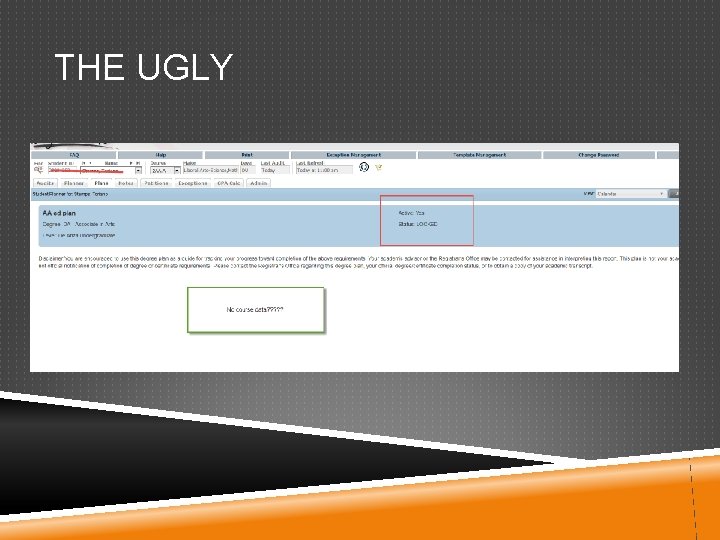
THE UGLY
IDENTIFY AND STRENGTHEN INTERDEPENDENCIES SARS is used to document orientation (SS 06), counseling (SS 08), and academic probation (SS 10) and follow-up services (SS 11: orientation, assessment, education plan, other follow-up services) Use of this system is dependent on counselors, advisors, or assistants: Having an incentive or motivation to learn and effectively use SARS (e. g. , facilitates tasks at work) Knowing how to use SARS (training, tutorials, reference material readily available on what each reason code means, when should be used) Using SARS effectively (e. g. , properly documenting reasons for meeting)
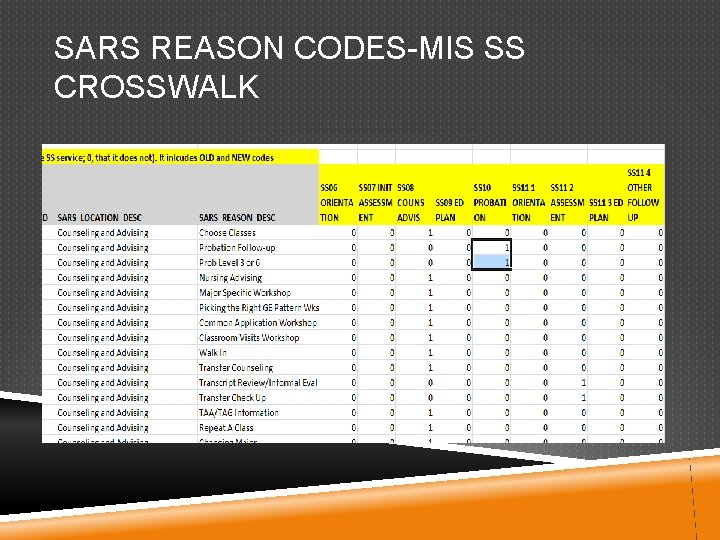
CONTENT REVIEW OF SARS CODES For a given location using SARS (e. g. , Counseling, EOPS Office, Athletics), are all 3 SP related services provided at the location covered by the reason codes in SARS? To what extent do users agree on the crosswalk between reason codes for the location and MIS SS codes/services? (See IRP-MIS-SS website for lookup table. ) Are all users motivated to use SARS reason codes to document the services provided at the location? Do all users agree on the “meaning” for each of the reason codes used at the location? (User know what each reason code means. ) Are the SARS reasons codes being used correctly and efficiently to document services at the location?
SARS REASON CODES-MIS SS CROSSWALK
QUESTIONS Can Degree Works or SARS be classified as a “native system” at the De Anza College that can effectively be used for the MIS SS data report? Can we strengthen interdependencies between users and these systems? Should we evolve, adapt or change these systems, or our work practices?