
MIS 5121 Business Processes ERP Systems Controls Week
MIS 5121: Business Processes, ERP Systems & Controls Week 14: SAP GRC, Character Edward Beaver Edward. Beaver@temple. edu ff
Video: Record the Class
![MIS 5121: Upcoming Events • November 28 th: Complete Student Feedback Forms [in class]](http://slidetodoc.com/presentation_image_h2/6ed6b26187114d048634682579f2c09d/image-3.jpg "MIS 5121: Upcoming Events • November 28 th: Complete Student Feedback Forms [in class]")
MIS 5121: Upcoming Events • November 28 th: Complete Student Feedback Forms [in class] • December 11 th : Extra Credit Assignment – Due by Noon • December 12 th: Final Exam (at class time) th • December 13 : Final Exercise (Risk Control Matrix)- Due by Noon
Discussion v Something really new, different you learned in this course in last week v Questions you have about this week’s content (readings, videos, links, …)? v. Question still in your mind, something not adequately answered in prior readings or classes? 4
Key IT Controls Overview • SAP GRC Module – What is means – 2 -3 Functions Included – 1 -2 Benefits of Use
Character 6
Character and Controls Character: the mental and moral qualities distinctive to an individual (Oxford Dictionary) Who you are when no one is looking Decisions made in moment of moral crisis shows our true character and morality. In the Real World Control Failures we’ve reviewed, Describe the character of the leaders involved (a root of the control failures)? ________________
Character and Controls What are the differences between the ‘Adams’? Ø Adam I - ‘Big Me’ Ø Ø Ø _________ Adam II - ‘Little Me’ Ø Ø _________
Character and Controls Ø Adam I - ‘Big Me’ Ø Ø Ø Career-oriented: build, create, produce Ambitious – “Success” Selfishness – has infinite desires Economic logic – cultivate your strengths Adam II - ‘Little Me’ Ø Ø Internal: moral qualities, right vs. wrong Sacrifice self in service to others “Charity, love and redemption” Moral logic - give to receive Humble Ø Ø Ø Wisdom isn’t a body of information. It’s the moral quality of knowing what you don’t know and figuring out how to handle your ignorance, uncertainty and limitations. Go down to go up – valley of humility to climb heights of character Basis for grace
Character and Controls Which Adam does our Culture nurture? Which Adam are you?
Character and Controls Which Adam does Culture nurture? Adam I - ‘Big Me’ § § Be the best you can be Natural disposition (self) Adam II - ‘Little Me’ has been displaced by Adam I – ‘Big Me’ Mental space once occupied with moral struggle has become occupied with struggle to achieve
Character and Controls Which Adam are you? My Lessons Learned: v Character is on the inside v v OK to be flawed – we all are. Character can be developed v v Not what we do But directly shapes what we do Face our imperfect nature with humility Move from Success to Significance (Deep Satisfaction) v No good life is possible unless it’s organized around a vocation, not serving ourselves. Look outside yourself for a problem / opportunity addressed by an activity you intrinsically enjoy
Character and Controls IT Governance: – “Do the right thing, the right way” Character: – “Do the right thing, because it is the right thing to do. ”
Character and Controls Humility Code v v v v v We’re not wired to live for happiness, we live for holiness Holiness defines the goal of life – at our core we’re flawed Although we are flawed creatures, we are splendidly endowed Pride is the central vice Character is built in the course of our inner confrontation Things that lead us astray are short term – Character endures for the long term We cannot achieve self-mastery on our own – we need redemptive assistance from outside (God, family, traditions, …) No good life is possible unless it’s organized around a vocation – a problem addressed by an activity you intrinsically enjoy (Passion matters) Person who successfully struggles against weakness may or may not become rich and famous, but that person will become mature David Brooks: The Road to Character
US Army 7 Values • 1. Loyalty: My company and customers are my family. I will pledge allegiance to both. • 2. Duty: Fulfill all my obligations & try to go beyond the norm. • 3. Respect: How I treat others will define my character. • 4. Selfless Service: Others Welfare before my own. • 5. Integrity: Do what is legally and morally right. Moral compass and inter-values • 6. Honor: Hold my values close to me • 7. Personal Courage: Ability to face fear and danger

Professor Ed Beaver Thoughts on Success (Gleaned from my 40 Year Career) Provided ‘Free’ – worth?
Success. . . First Things First • Solve Business Problems • Learn all you can about the business • Outcome is business / organization’s success / value • Right role of Technology (IT and Supply Chain) • Technology is Fun • Business Value is the end – not Technology (Beware of technology driven initiatives)
Success. . . Your Personal Act • Whatever our Job / Role is – Do it Well • Interpersonal Skills are Critical – hone them • Speak and write well • Be Inquisitive, Learn Continually • Energy – in all you do, exude it • In your career you’ll have many bosses – some good, some bad. Manage the relationship • Boss knows what you’re working on – contributions • Boss working to support your efforts
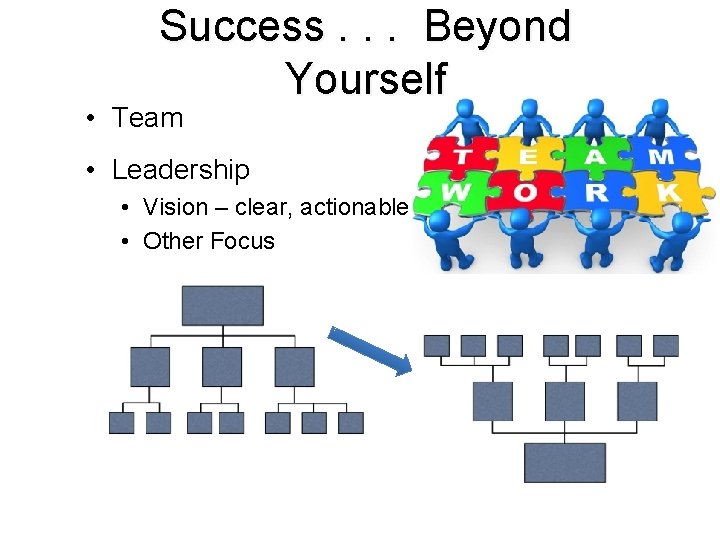
Success. . . Beyond Yourself • Team • Leadership • Vision – clear, actionable • Other Focus
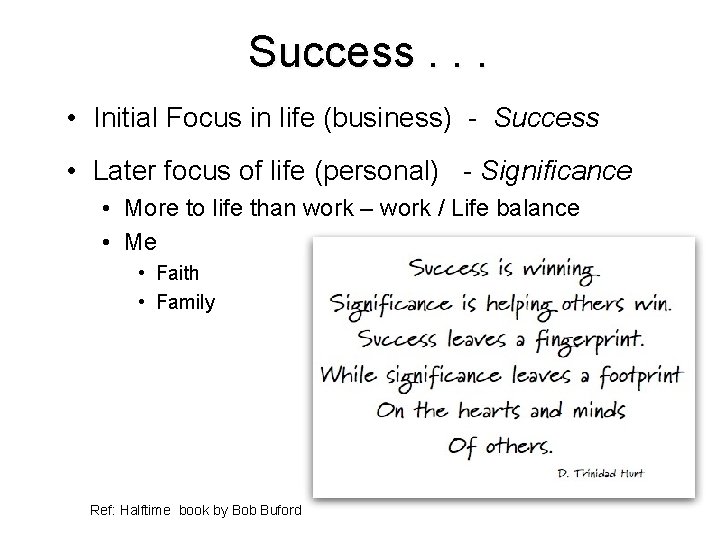
Success. . . • Initial Focus in life (business) - Success • Later focus of life (personal) - Significance • More to life than work – work / Life balance • Me • Faith • Family Ref: Halftime book by Bob Buford
SFF: Student Feedback Forms • Value v. Your feedback already (after test, etc. ) has already helped me improve the class v. Better class for subsequent students and to FOX MIS in total • Request v Have you received the e-SFF e-mail? ? v Take 10 -15 minutes to complete – NOW! v http: //esff. temple. edu
Break Time ‘The wisdom of moderation is not just realize the midpoint between two opposite poles, but instead, it is an awareness of the inevitability of conflict. ’
Risk / Control Matrix Final Exercise 23
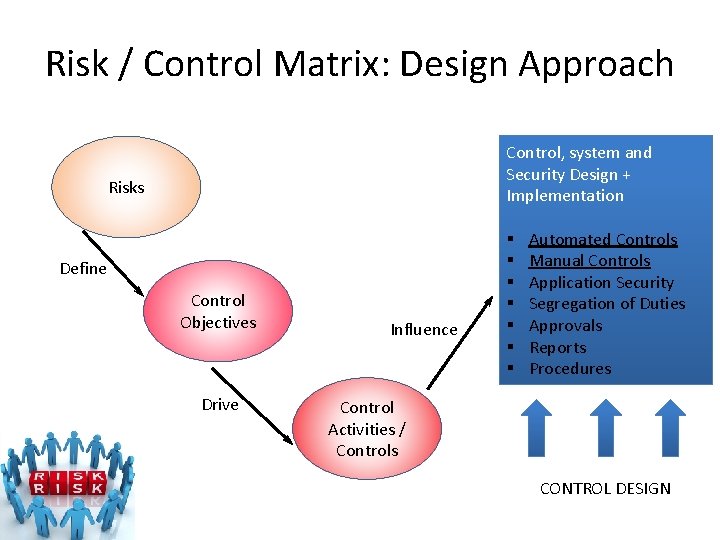
Risk / Control Matrix: Design Approach Control, system and Security Design + Implementation Risks Define Control Objectives Drive Influence § § § § Automated Controls Manual Controls Application Security Segregation of Duties Approvals Reports Procedures Control Activities / Controls CONTROL DESIGN
Risk / Control Matrix: Final Exercise Part 5: Create Control Process and Auditing Documentation for the Order to Cash (OTC) process § Appendix 2 and 3 of the Exercise Guide has documentation examples from the Procure to Pay process: § § § Appendix 2: Automated Configuration Control Appendix 3: Manual Monitoring Control Using these examples and format, create one example document for one of your identified OTC Controls (Part 3) Submit as separate Word document or insert as tab in Submission Spreadsheet Resources: § § § Professor: in class, e-mail, phone (609 -206 -9783) Table TSTC (List of transaction codes – reports) Internet: many good examples, ideas there
Risk / Control Matrix: Final Exercise Part 6: Team Member Evaluation (Optional) All members of a team receive the same points for the exercise submissions. If you feel that one or more members are not doing their fair share, please submit the Team Member Evaluation form to me by email. All responses will be kept confidential.

Extra Slides
Risk / Control Matrix: Final Exercise Part 1: a) Analyze the key risks that exist for the Order to Cash (OTC) process at GBI b) Define and document the key risks that exist for the Order to Cash (OTC) process at GBI § § § Tab: Part 1 – GBI Risks Identify at minimum 25 risks in the process Identify a minimum 4 risks in each of the OTC sub-processes: ü OR&H: Order Receipt and Handling ü MF: Material Flow (shipping) ü CI: Customer Invoicing ü PR&H: Payment Receipt and Handling
Risk / Control Matrix: Final Exercise Part 2: Identify key controls for the Order to Cash (OTC) process at GBI § § Tab: Part 2 – GBI Controls Identify at minimum 15 controls for the process Identify a minimum 3 controls in each of the OTC subprocesses: ü OR&H: Order Receipt and Handling ü MF: Material Flow (shipping) ü CI: Customer Invoicing ü PR&H: Payment Receipt and Handling At least two (2) controls must be Automated / Config controls
Risk / Control Matrix: Final Exercise Part 3: Link Risks (Part 1) to the Controls (Part 2) § § § Tab: Part 1 – GBI Risks At least one (1) control must be identified for each risk identified as High Severity or High Likelihood / Frequency A given control may address multiple risks (listed once in Part 2 tab and multiple times in Part 1 tab) A given risk may be addressed by multiple controls (listed once in Part 1 tab and multiple times in Part 2 tab) Risks without a control: ² ² Acceptable Risk: Business agrees no controls will be developed TBD (To Be Determined)
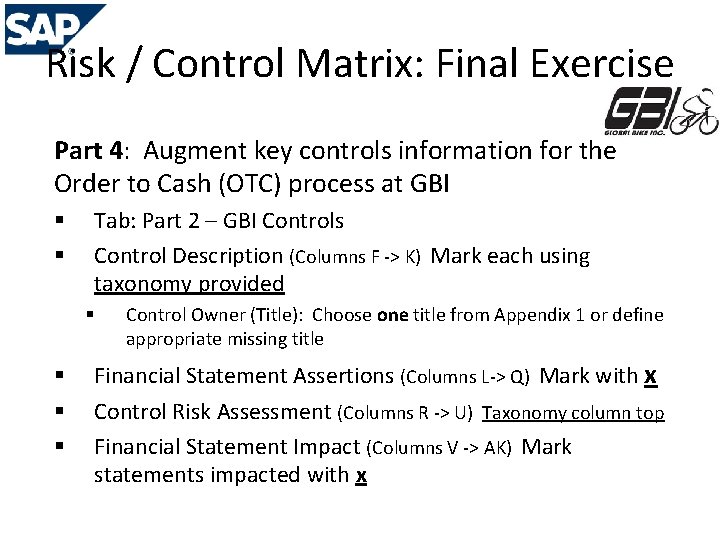
Risk / Control Matrix: Final Exercise Part 4: Augment key controls information for the Order to Cash (OTC) process at GBI § § Tab: Part 2 – GBI Controls Control Description (Columns F -> K) Mark each using taxonomy provided § § Control Owner (Title): Choose one title from Appendix 1 or define appropriate missing title Financial Statement Assertions (Columns L-> Q) Mark with x Control Risk Assessment (Columns R -> U) Taxonomy column top Financial Statement Impact (Columns V -> AK) Mark statements impacted with x
Extra Slides
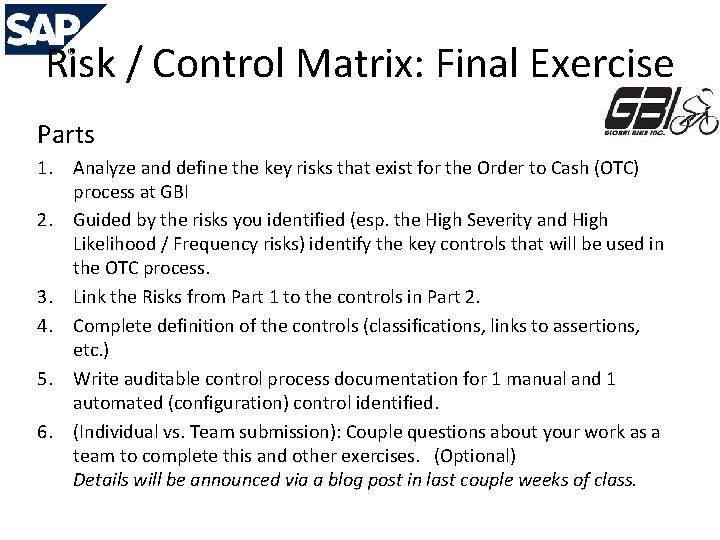
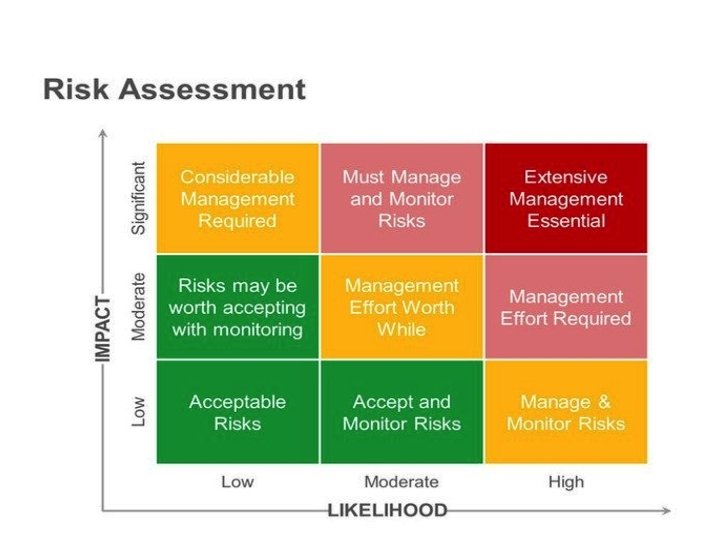
Risk / Control Matrix: Final Exercise Parts 1. Analyze and define the key risks that exist for the Order to Cash (OTC) process at GBI 2. Guided by the risks you identified (esp. the High Severity and High Likelihood / Frequency risks) identify the key controls that will be used in the OTC process. 3. Link the Risks from Part 1 to the controls in Part 2. 4. Complete definition of the controls (classifications, links to assertions, etc. ) 5. Write auditable control process documentation for 1 manual and 1 automated (configuration) control identified. 6. (Individual vs. Team submission): Couple questions about your work as a team to complete this and other exercises. (Optional) Details will be announced via a blog post in last couple weeks of class.
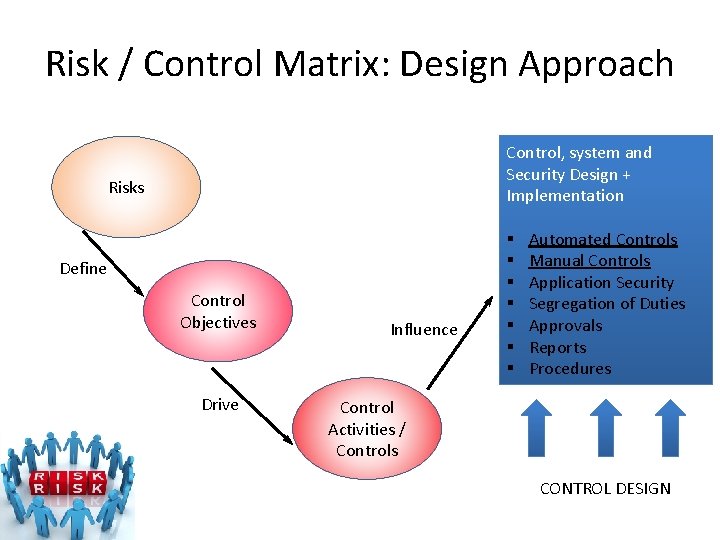
Risk / Control Matrix: Design Approach Control, system and Security Design + Implementation Risks Define Control Objectives Drive Influence § § § § Automated Controls Manual Controls Application Security Segregation of Duties Approvals Reports Procedures Control Activities / Controls CONTROL DESIGN
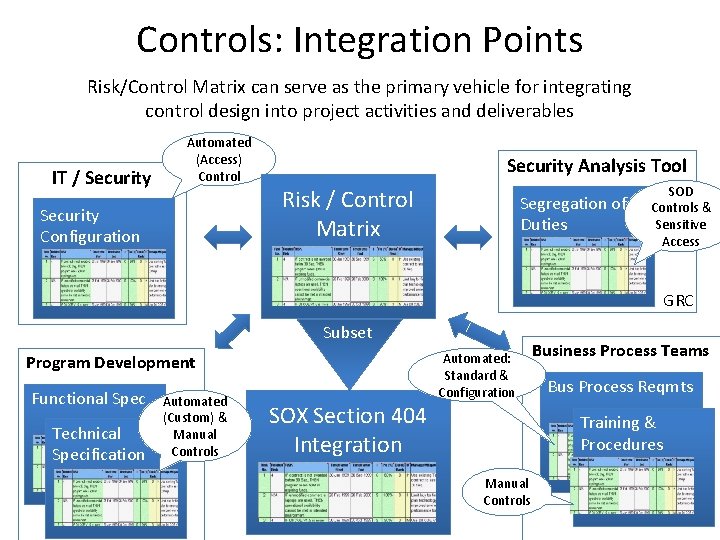
Controls: Integration Points Risk/Control Matrix can serve as the primary vehicle for integrating control design into project activities and deliverables IT / Security Automated (Access) Control Security Analysis Tool Risk / Control Matrix Security Configuration Segregation of Duties SOD Controls & Sensitive Access GRC Subset Automated: Standard & Configuration Program Development Functional Spec Technical Specification Automated (Custom) & Manual Controls SOX Section 404 Integration Business Process Teams Bus Process Reqmts Training & Procedures Manual Controls
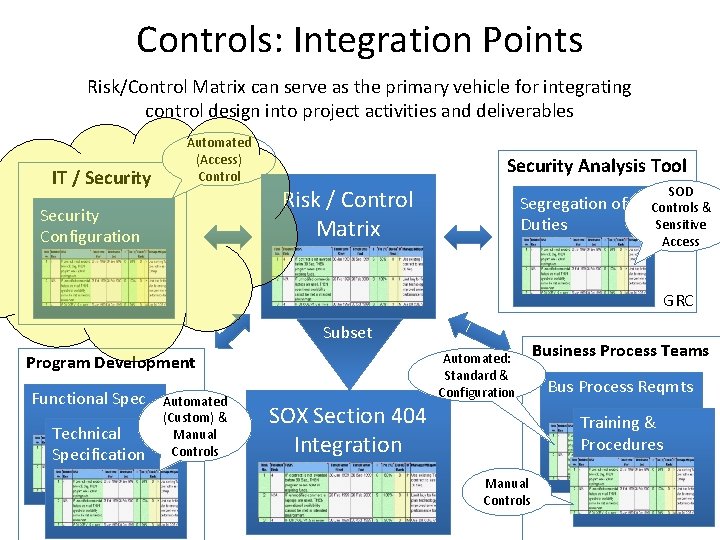
Controls: Integration Points Risk/Control Matrix can serve as the primary vehicle for integrating control design into project activities and deliverables IT / Security Automated (Access) Control Security Analysis Tool Risk / Control Matrix Security Configuration Segregation of Duties SOD Controls & Sensitive Access GRC Subset Automated: Standard & Configuration Program Development Functional Spec Technical Specification Automated (Custom) & Manual Controls SOX Section 404 Integration Business Process Teams Bus Process Reqmts Training & Procedures Manual Controls
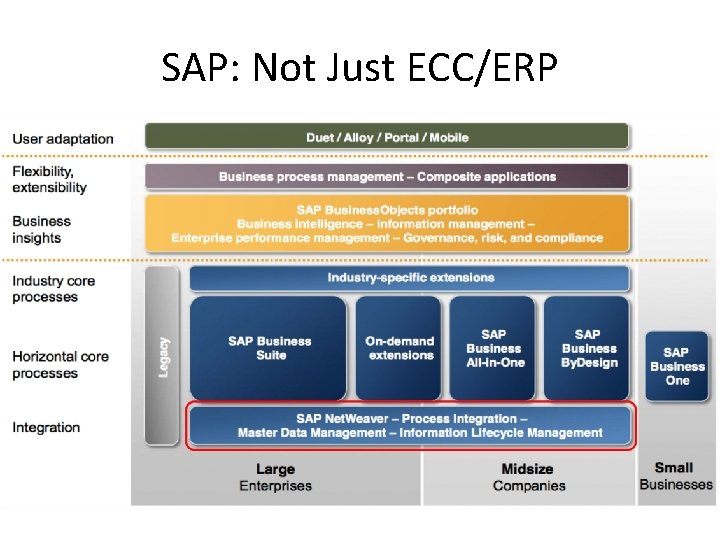
SAP: Not Just ECC/ERP
‘The wisdom of moderation is not just realize the midpoint between two opposite poles, but instead, it is an awareness of the inevitability of conflict. ’
Assignment Questions - Character • • • What mindset is more helpful in being successful; being humble or more selfabsorbed and concerned with yourself? Do you think self-awareness can be practiced or not? If possible, how to practice? In the valley of humility they learned to quiet the self. However, when you facing difficulty or disaster, how can you overcome the fear can see the world clearly? In your life, have you faced any hardships, and what did you do to overcome those hardships to make yourself better? How to make you not only grateful or humble in respect to others but also make you realize who you really are? Why it is importance of practicing small acts of self-control? What are some examples of their road to character? Life stories of persons in book show they met diversity and rose to a level of success. However, what toll did their journey have on the family and how did they cope? Which character is more suitable for the current society, big me or little me?
Assignment Questions - Character • • • A person’s character is very crucial in the audit industry. How do we build our reputation and maintain a good ethical character in this industry? How would you define “ eulogy virtues” and “resume virtues”? Is there something that a person should change in themselves to build character? In the book, David Brooks highlighted some instances where individuals were not exceptionally talented, but through hard work and dedication, they were able to achieve their goals. So in your opinion, is it better to work harder or smarter? I would like to discuss with classmates that from where or whom do you get your morality, or your moral center?
- Slides: 41