
MIS 2000 Information Systems for Management Instructor Bob
MIS 2000 Information Systems for Management Instructor: Bob Travica Class 21 Systems Adoption Process Updated: 2018
Outline • Concept of Systems Adoption • Factors of Systems Adoption • Speed of Systems Adoption • New System vs. Old Organization • Management of IS Adoption • Process/Change Management Process • Summary 2
Concept of Systems Adoption/Acceptance (SA) • • SA is one of core IS issues. Definition: SA is a process of translating an IS into the regular use. Focus is on IS users, especially primary users. Often, adopting a system runs in parallel with adopting new processes (PPC case) – change management process. 3
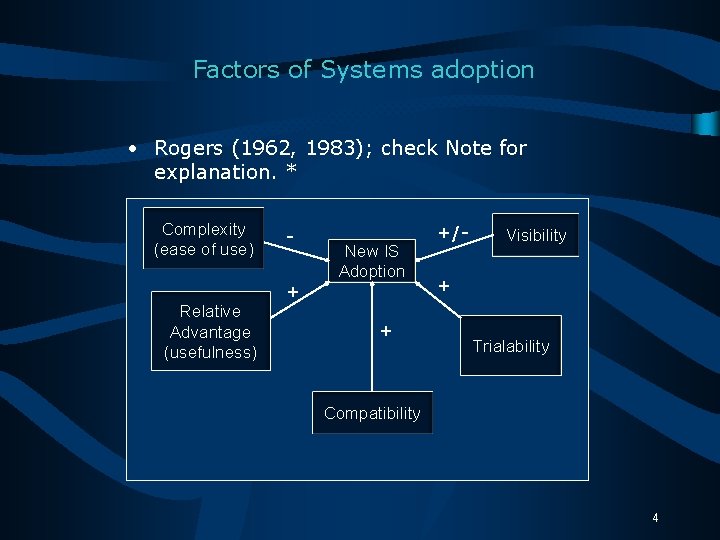
Factors of Systems adoption • Rogers (1962, 1983); check Note for explanation. * Complexity (ease of use) + Relative Advantage (usefulness) New IS Adoption + +/- Visibility + Trialability Compatibility 4
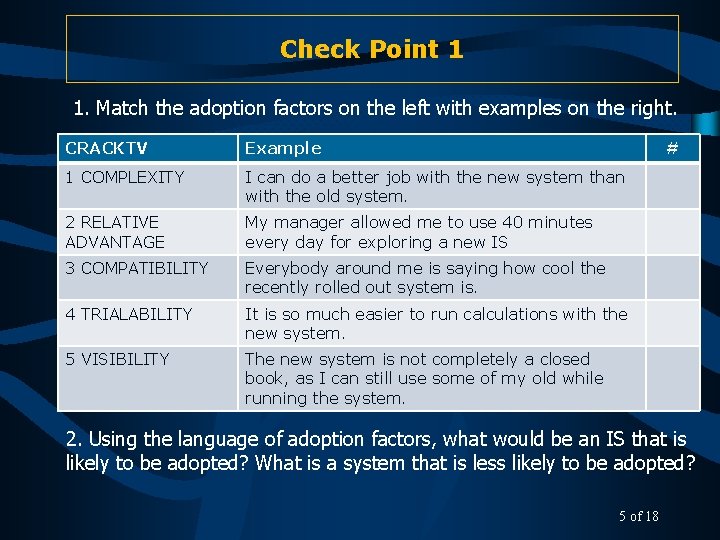
Check Point 1 1. Match the adoption factors on the left with examples on the right. CRACKTV Example # 1 COMPLEXITY I can do a better job with the new system than with the old system. 2 RELATIVE ADVANTAGE My manager allowed me to use 40 minutes every day for exploring a new IS 3 COMPATIBILITY Everybody around me is saying how cool the recently rolled out system is. 4 TRIALABILITY It is so much easier to run calculations with the new system. 5 VISIBILITY The new system is not completely a closed book, as I can still use some of my old while running the system. 2. Using the language of adoption factors, what would be an IS that is likely to be adopted? What is a system that is less likely to be adopted? 5 of 18
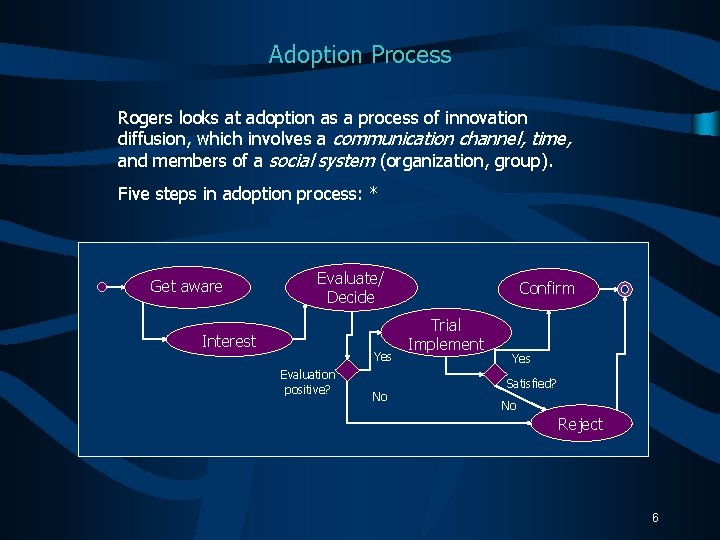
Adoption Process Rogers looks at adoption as a process of innovation diffusion, which involves a communication channel, time, and members of a social system (organization, group). Five steps in adoption process: * Get aware Evaluate/ Decide Interest Yes Evaluation positive? No Confirm Trial Implement Yes Satisfied? No Reject 6
Check Point 2 • 3. Can you recall a situation when you faced a new digital technology and were thinking about purchasing it for regular use? (This could be application software, a device/machine like smart phone, tablet or wearables, etc. ) Try to describe your adoption process by using Rogers’s model of adoption process. What attracted you in the first place? How did you evaluate it? What made you adopt or reject the technology? 7 of 18
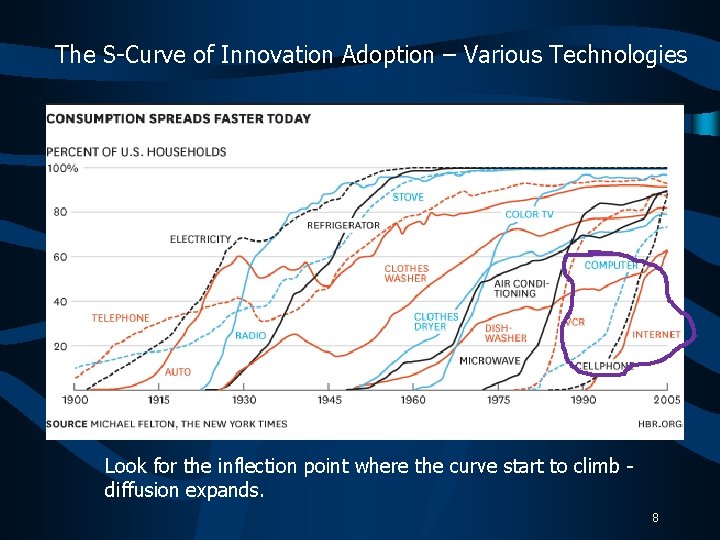
The S-Curve of Innovation Adoption – Various Technologies Look for the inflection point where the curve start to climb diffusion expands. 8
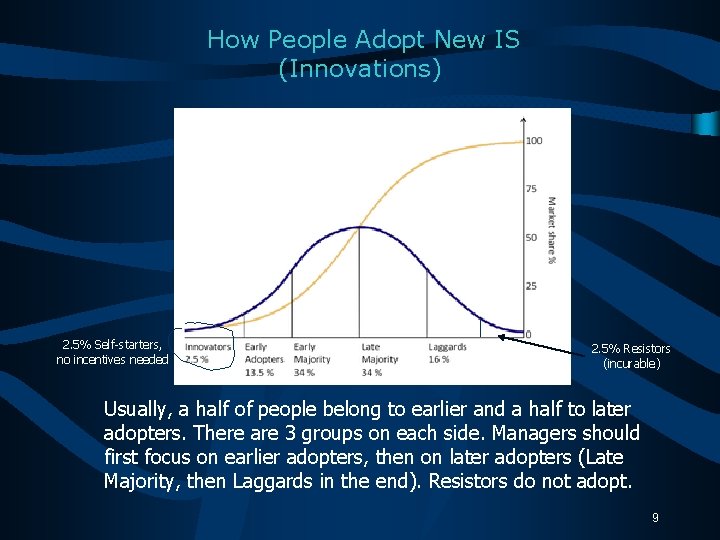
How People Adopt New IS (Innovations) 2. 5% Self-starters, no incentives needed 2. 5% Resistors (incurable) Usually, a half of people belong to earlier and a half to later adopters. There are 3 groups on each side. Managers should first focus on earlier adopters, then on later adopters (Late Majority, then Laggards in the end). Resistors do not adopt. 9
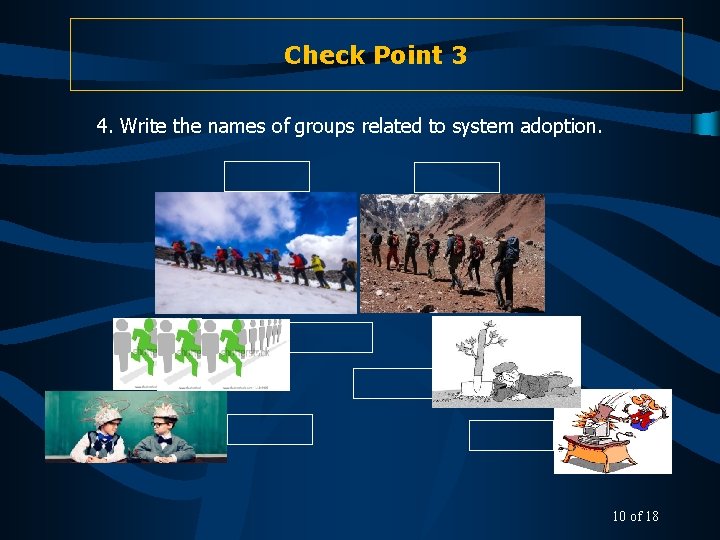
Check Point 3 4. Write the names of groups related to system adoption. 10 of 18
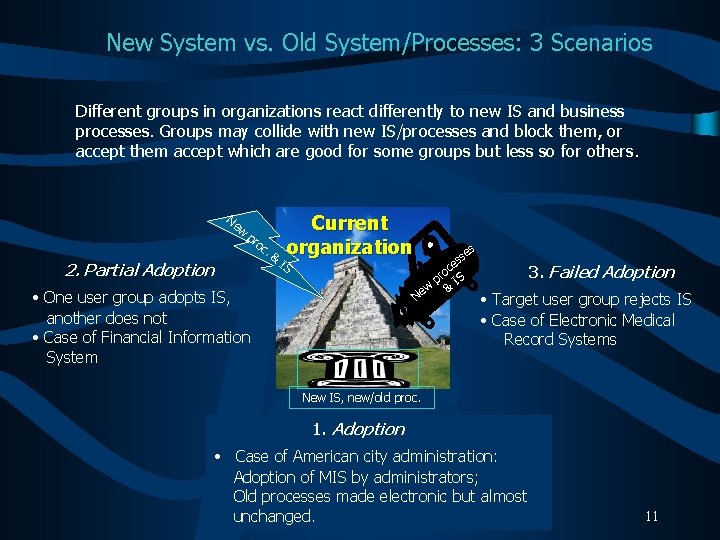
New System vs. Old System/Processes: 3 Scenarios Different groups in organizations react differently to new IS and business processes. Groups may collide with new IS/processes and block them, or accept them accept which are good for some groups but less so for others. Ne w pr oc 2. Partial Adoption . & Current organization es s es c o pr IS w & e IS • One user group adopts IS, another does not • Case of Financial Information System N 3. Failed Adoption • Target user group rejects IS • Case of Electronic Medical Record Systems New IS, new/old proc. 1. Adoption • Case of American city administration: Adoption of MIS by administrators; Old processes made electronic but almost unchanged. 11
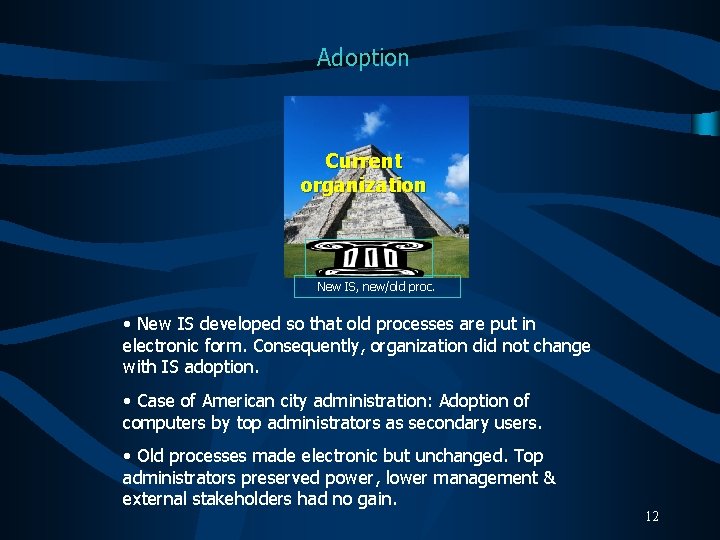
Adoption Current organization New IS, new/old proc. • New IS developed so that old processes are put in electronic form. Consequently, organization did not change with IS adoption. • Case of American city administration: Adoption of computers by top administrators as secondary users. • Old processes made electronic but unchanged. Top administrators preserved power, lower management & external stakeholders had no gain. 12
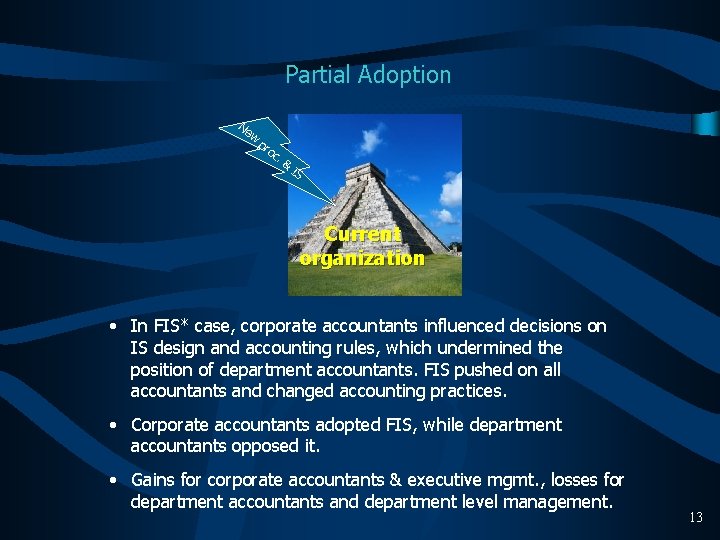
Partial Adoption Ne w pr oc . & IS Current organization • In FIS* case, corporate accountants influenced decisions on IS design and accounting rules, which undermined the position of department accountants. FIS pushed on all accountants and changed accounting practices. • Corporate accountants adopted FIS, while department accountants opposed it. • Gains for corporate accountants & executive mgmt. , losses for department accountants and department level management. 13
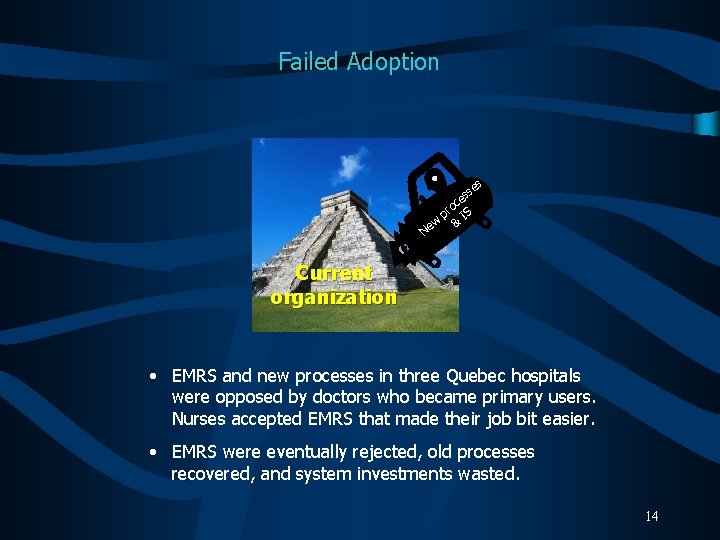
Failed Adoption es ss e oc pr IS ew & N Current organization • EMRS and new processes in three Quebec hospitals were opposed by doctors who became primary users. Nurses accepted EMRS that made their job bit easier. • EMRS were eventually rejected, old processes recovered, and system investments wasted. 14
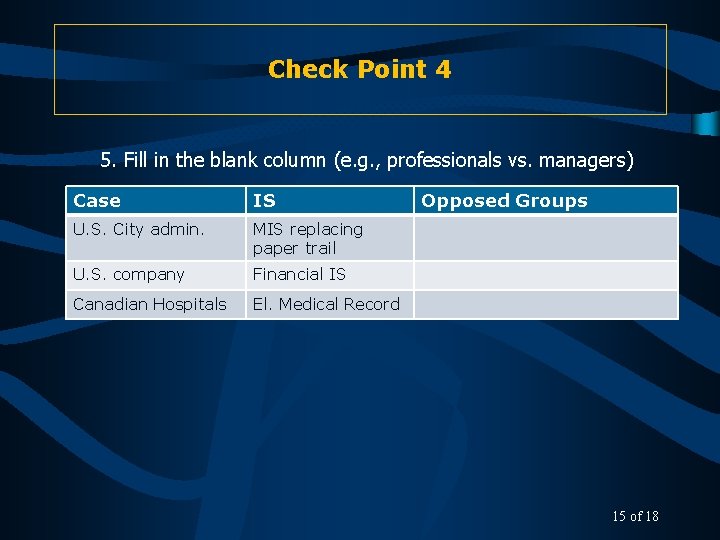
Check Point 4 5. Fill in the blank column (e. g. , professionals vs. managers) Case IS U. S. City admin. MIS replacing paper trail U. S. company Financial IS Canadian Hospitals El. Medical Record Opposed Groups 15 of 18
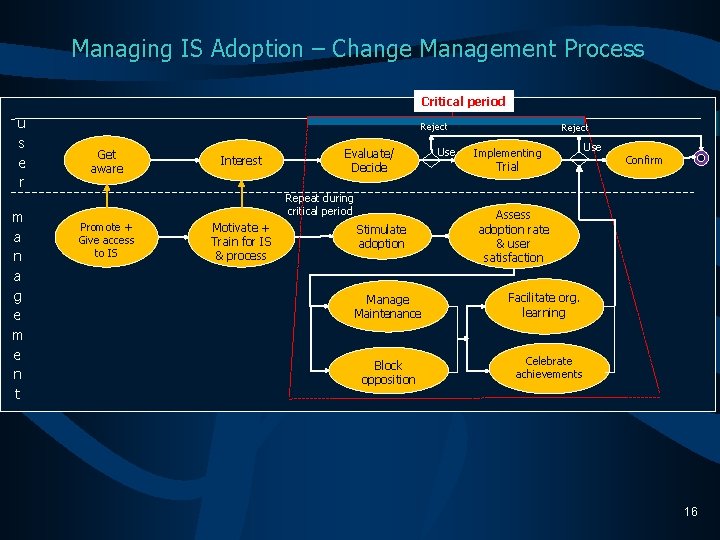
Managing IS Adoption – Change Management Process Critical period u s e r m a n a g e m e n t Reject Get aware Interest Evaluate/ Decide Repeat during critical period Promote + Give access to IS Motivate + Train for IS & process Stimulate adoption Manage Maintenance Block opposition Use Reject Implementing Trial Use Confirm Assess adoption rate & user satisfaction Facilitate org. learning Celebrate achievements 16
Summary • SA is a process of translating an IS into routine use. Usually coupled with adopting new processes – altogether these make a change management process. • Factors of systems adoption are complexity/ease of use, relative advantage, compatibility, trialability, and visibility. • Adoption process consists of steps an individual goes through awareness, interest, evaluation/decision, implementing trial, and confirmation (the last two kicks in if the user stays on the course of adoption). • Adoption of any innovation follows an S-curve showing adopter % over time. In general, 50% of users are early and 50% late adopters, each side can be further differentiated into 3 groups. Managers should focus first on the early majority group, then on the late majority group. 17
Summary • IS adoption involves organizational groups with different interests. 3 scenarios: adoption, and rejection. Groups may be in tension, and group perspective influences individual adopters. • Managing system adoption (change management) involves supporting users in their adoption by promoting a system, making it available for trial, motivating, training, stimulating early adopters, assessing user satisfaction and adoption rates, managing maintenance, blocking opposition, facilitating org. learning, and celebrating achievements resulting from system adoption. 18 of 18
- Slides: 18