
MIOSHA Update Hazard Communication Training Including GHS Revisions



- Slides: 30
MIOSHA Update Hazard Communication Training Including GHS Revisions
Objectives • Overview of changes to the MIOSHA Part 42, 92 and 430: Hazard Communication Standard (Haz Com) • Labeling requirements • Safety Data Sheets (SDS) format – 16 sections
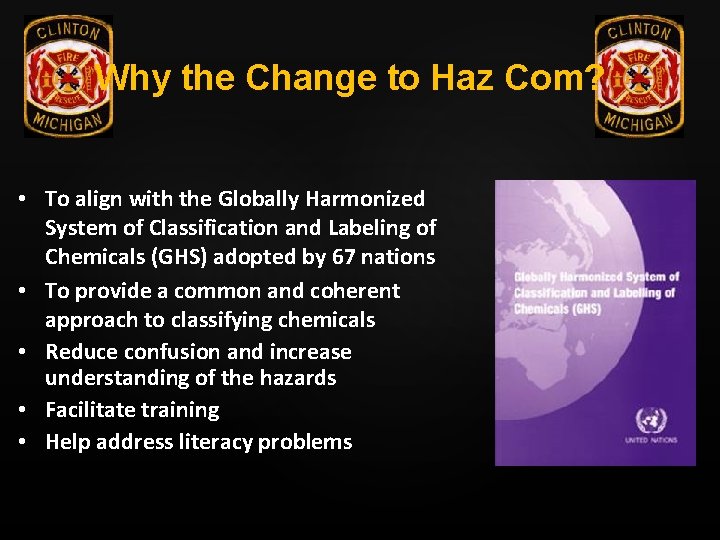
Why the Change to Haz Com? • To align with the Globally Harmonized System of Classification and Labeling of Chemicals (GHS) adopted by 67 nations • To provide a common and coherent approach to classifying chemicals • Reduce confusion and increase understanding of the hazards • Facilitate training • Help address literacy problems
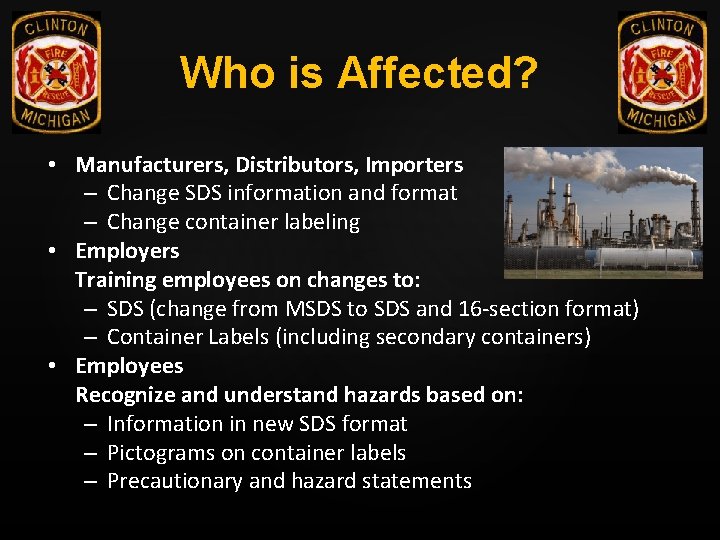
Who is Affected? • Manufacturers, Distributors, Importers – Change SDS information and format – Change container labeling • Employers Training employees on changes to: – SDS (change from MSDS to SDS and 16 -section format) – Container Labels (including secondary containers) • Employees Recognize and understand hazards based on: – Information in new SDS format – Pictograms on container labels – Precautionary and hazard statements
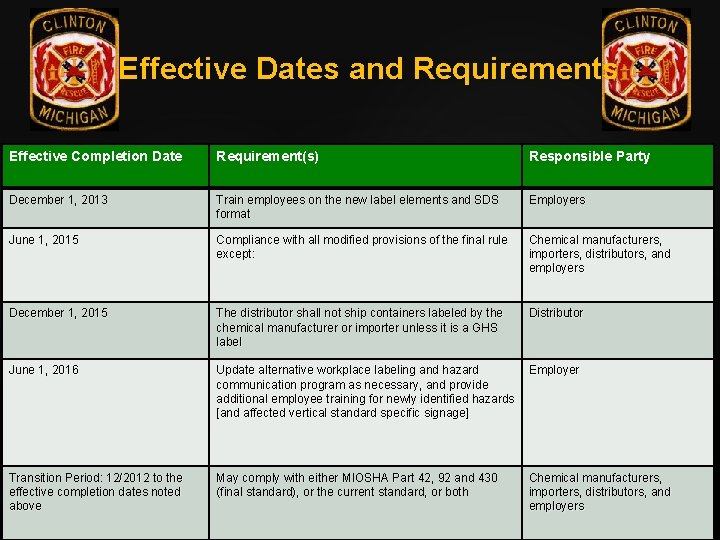
Effective Dates and Requirements Effective Completion Date Requirement(s) Responsible Party December 1, 2013 Train employees on the new label elements and SDS format Employers June 1, 2015 Compliance with all modified provisions of the final rule except: Chemical manufacturers, importers, distributors, and employers December 1, 2015 The distributor shall not ship containers labeled by the chemical manufacturer or importer unless it is a GHS label Distributor June 1, 2016 Update alternative workplace labeling and hazard communication program as necessary, and provide additional employee training for newly identified hazards [and affected vertical standard specific signage] Employer Transition Period: 12/2012 to the effective completion dates noted above May comply with either MIOSHA Part 42, 92 and 430 (final standard), or the current standard, or both Chemical manufacturers, importers, distributors, and employers
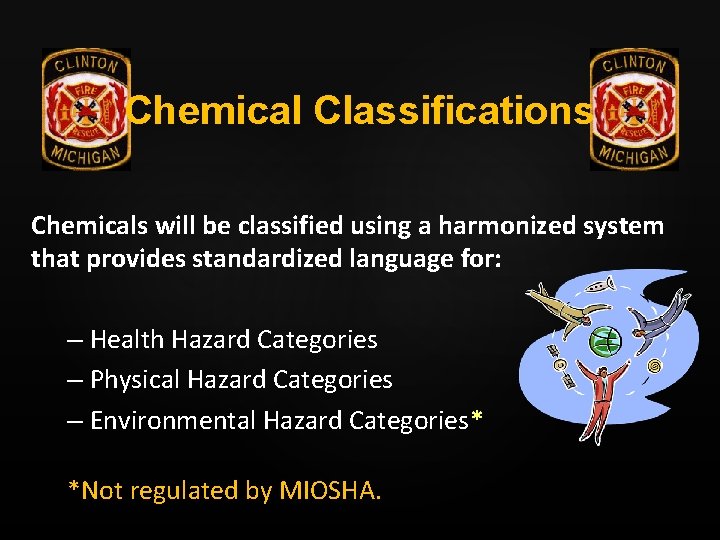
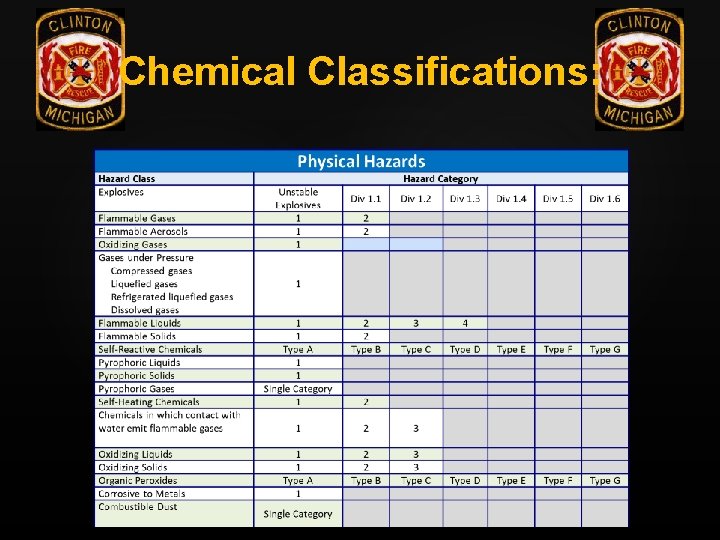
Chemical Classifications Chemicals will be classified using a harmonized system that provides standardized language for: – Health Hazard Categories – Physical Hazard Categories – Environmental Hazard Categories* *Not regulated by MIOSHA.
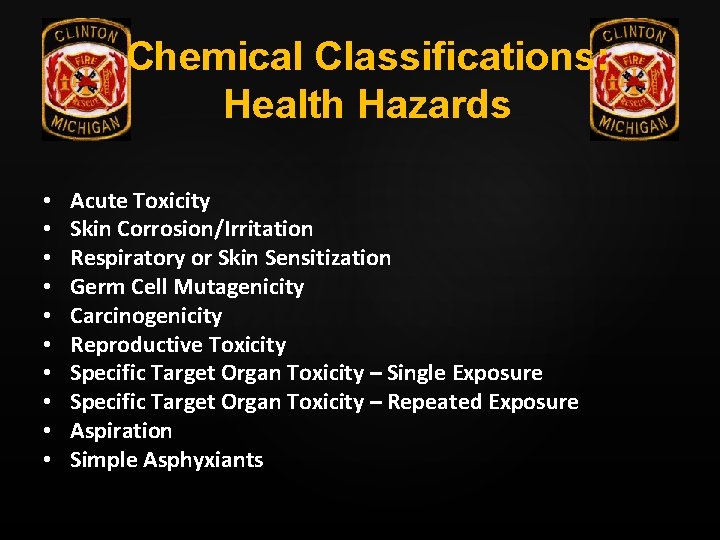
Chemical Classifications: Health Hazards • • • Acute Toxicity Skin Corrosion/Irritation Respiratory or Skin Sensitization Germ Cell Mutagenicity Carcinogenicity Reproductive Toxicity Specific Target Organ Toxicity – Single Exposure Specific Target Organ Toxicity – Repeated Exposure Aspiration Simple Asphyxiants
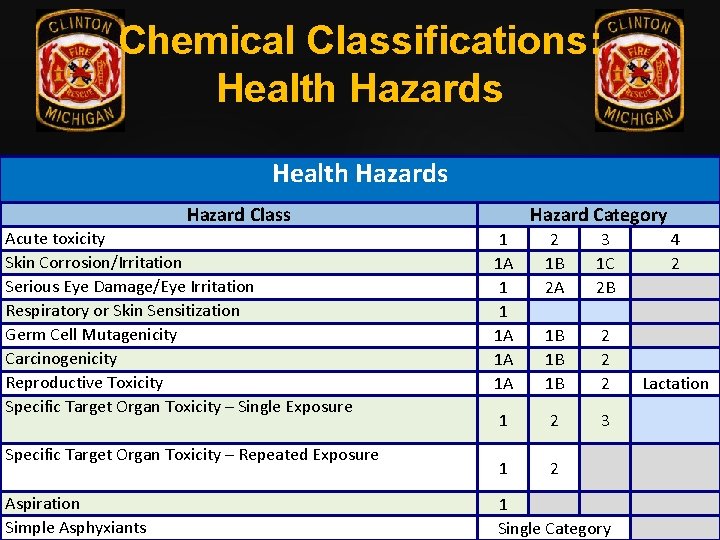
Chemical Classifications: Health Hazards Hazard Class Acute toxicity Skin Corrosion/Irritation Serious Eye Damage/Eye Irritation Respiratory or Skin Sensitization Germ Cell Mutagenicity Carcinogenicity Reproductive Toxicity Specific Target Organ Toxicity – Single Exposure Specific Target Organ Toxicity – Repeated Exposure Aspiration Simple Asphyxiants Hazard Category 1 1 A 1 A 1 A 2 1 B 2 A 3 1 C 2 B 1 B 1 B 1 B 2 2 2 1 2 3 1 2 1 Single Category 4 2 Lactation
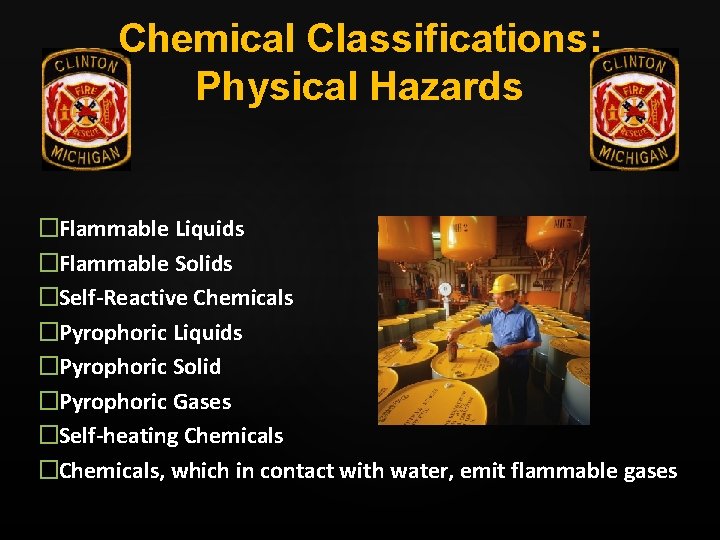
Chemical Classifications: Physical Hazards �Flammable Liquids �Flammable Solids �Self-Reactive Chemicals �Pyrophoric Liquids �Pyrophoric Solid �Pyrophoric Gases �Self-heating Chemicals �Chemicals, which in contact with water, emit flammable gases
Chemical Classifications:
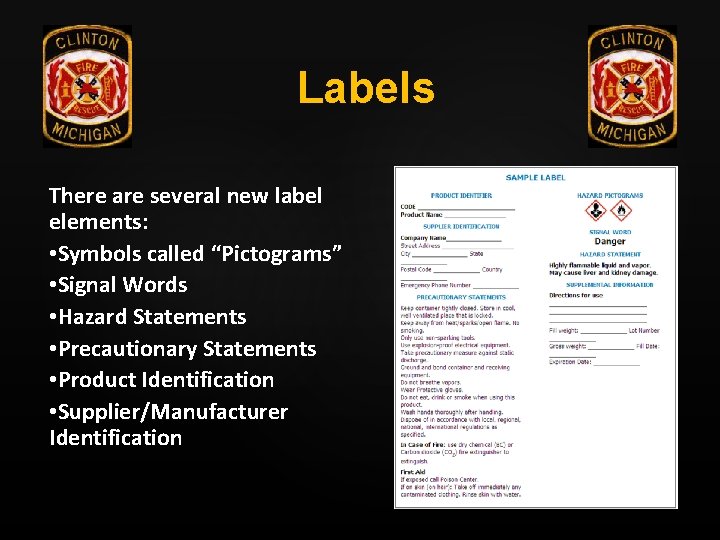
Labels There are several new label elements: • Symbols called “Pictograms” • Signal Words • Hazard Statements • Precautionary Statements • Product Identification • Supplier/Manufacturer Identification
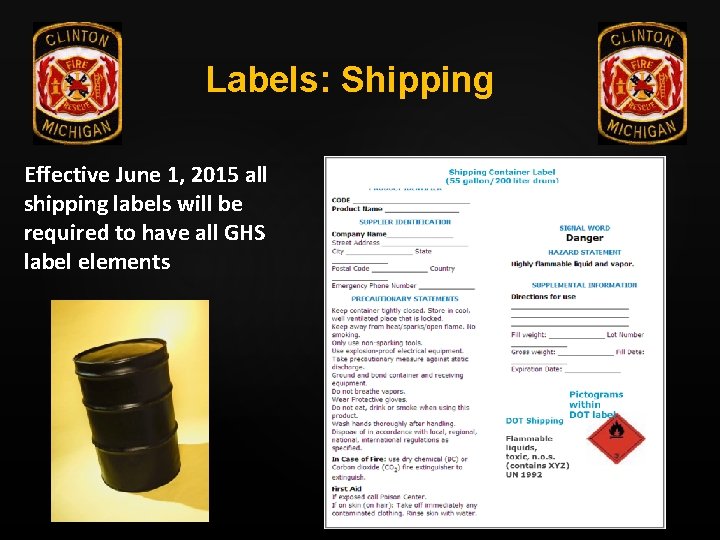
Labels: Shipping Effective June 1, 2015 all shipping labels will be required to have all GHS label elements
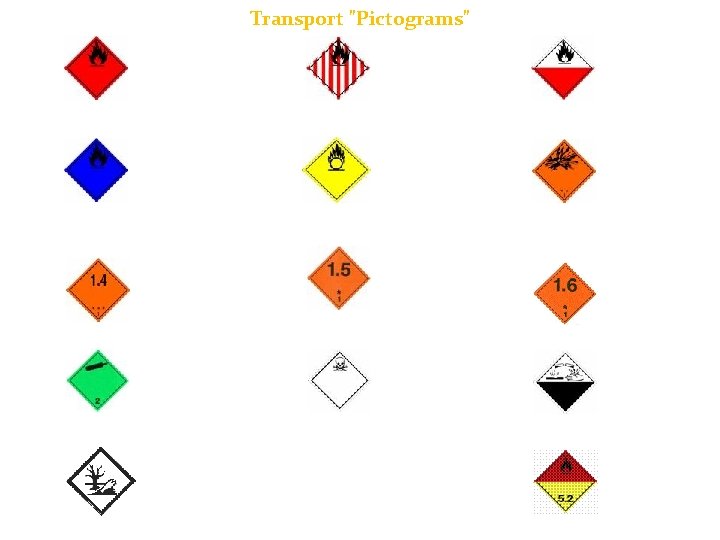
Transport "Pictograms" Flammable Liquid Flammable Gas Flammable Aerosol Flammable solid Self-Reactive Substances Pyrophorics (Spontaneously Combustible) Self-Heating Substances, which in contact with water, emit flammable gases (Dangerous When Wet) Oxidizing Gases Oxidizing Liquids Oxidizing Solids Explosive Division 1. 4 Explosive Division 1. 5 Compressed Gases Explosive Divisions 1. 1, 1. 2, 1. 3 Explosive Division 1. 6 Acute Toxicity (Poison): Oral, Dermal, Corrosive Inhalation Marine Pollutant Organic Peroxides
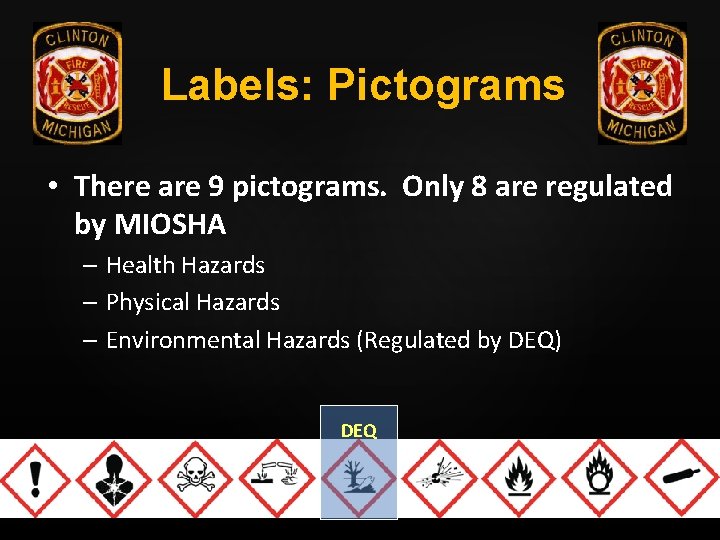
Labels: Pictograms • There are 9 pictograms. Only 8 are regulated by MIOSHA – Health Hazards – Physical Hazards – Environmental Hazards (Regulated by DEQ) DEQ
Labels: Pictograms – Health Hazards Acute toxicity (Severe) Acute = short-term effect Acute toxicity (Less Severe): Irritant Dermal sensitizer Acute toxicity (harmful) Narcotic effects Respiratory tract irritation
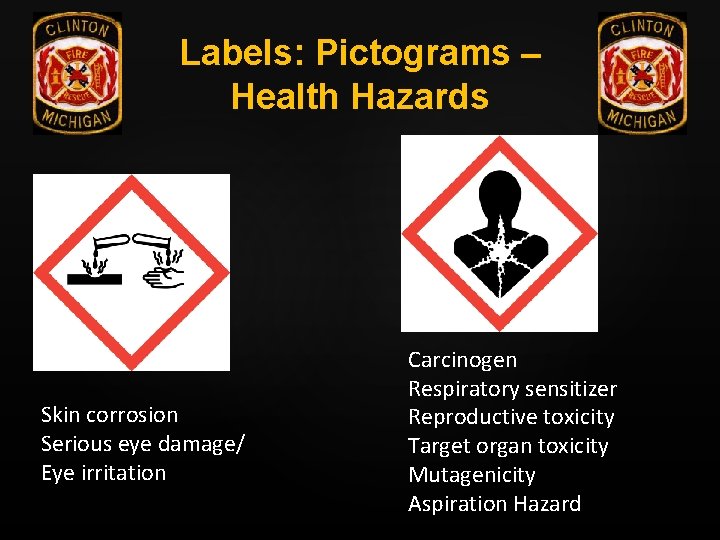
Labels: Pictograms – Health Hazards Skin corrosion Serious eye damage/ Eye irritation Carcinogen Respiratory sensitizer Reproductive toxicity Target organ toxicity Mutagenicity Aspiration Hazard
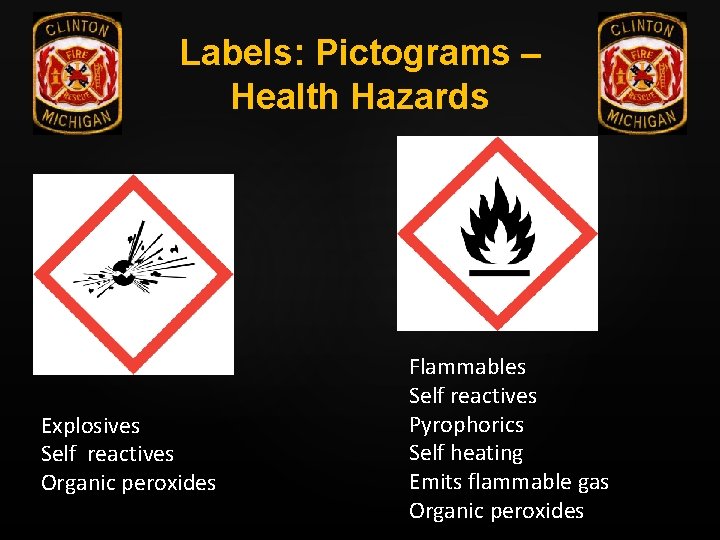
Labels: Pictograms – Health Hazards Explosives Self reactives Organic peroxides Flammables Self reactives Pyrophorics Self heating Emits flammable gas Organic peroxides
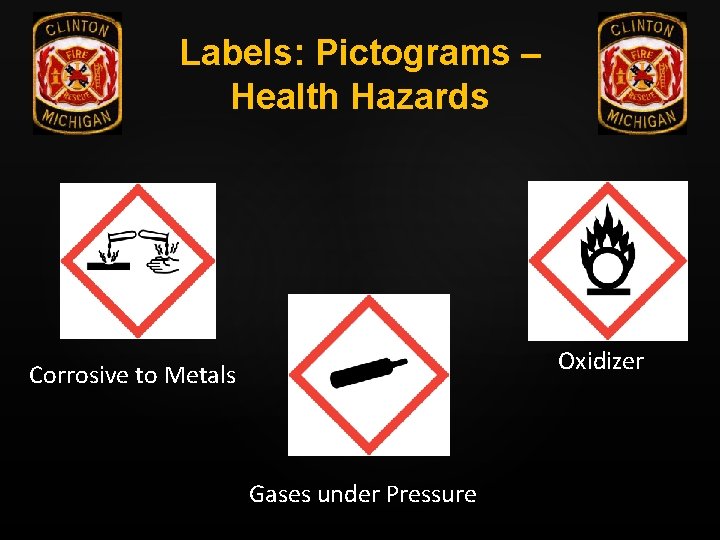
Labels: Pictograms – Health Hazards Oxidizer Corrosive to Metals Gases under Pressure
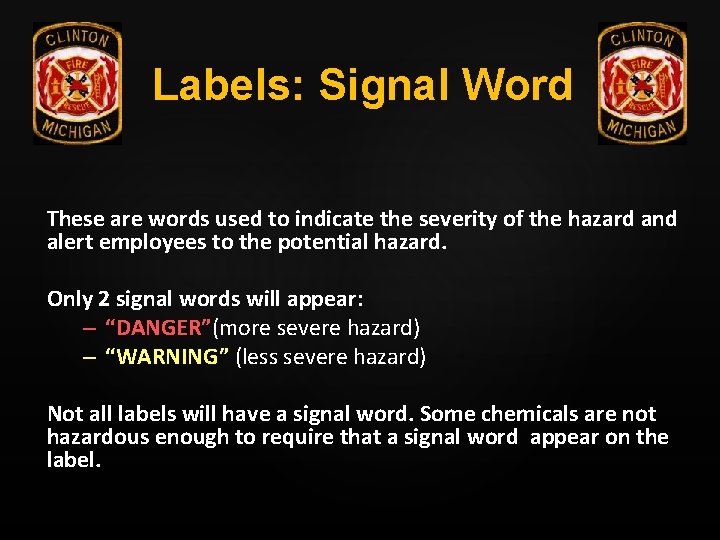
Labels: Signal Word These are words used to indicate the severity of the hazard and alert employees to the potential hazard. Only 2 signal words will appear: – “DANGER”(more severe hazard) – “WARNING” (less severe hazard) Not all labels will have a signal word. Some chemicals are not hazardous enough to require that a signal word appear on the label.
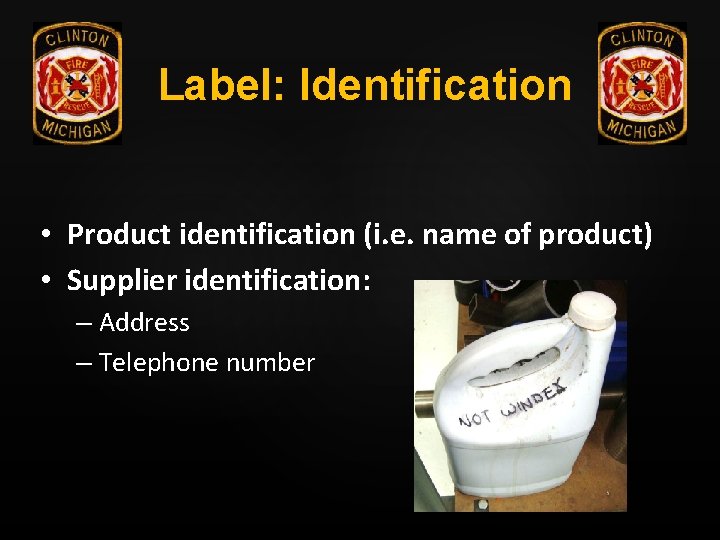
Label: Identification • Product identification (i. e. name of product) • Supplier identification: – Address – Telephone number
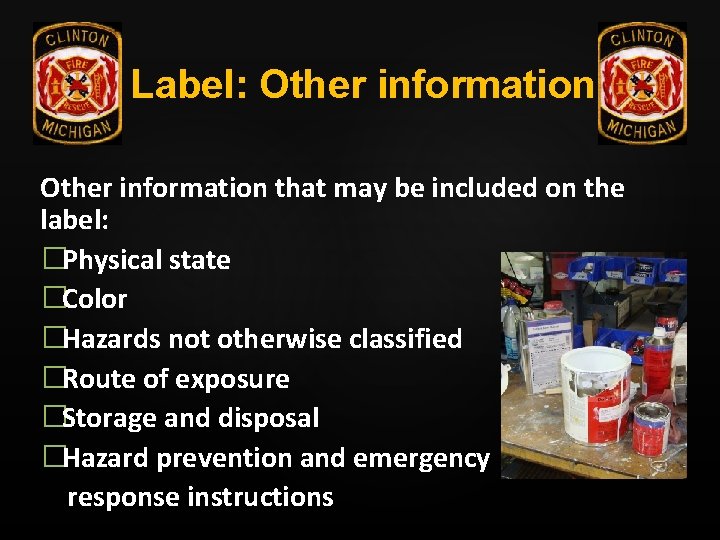
Label: Other information that may be included on the label: �Physical state �Color �Hazards not otherwise classified �Route of exposure �Storage and disposal �Hazard prevention and emergency response instructions
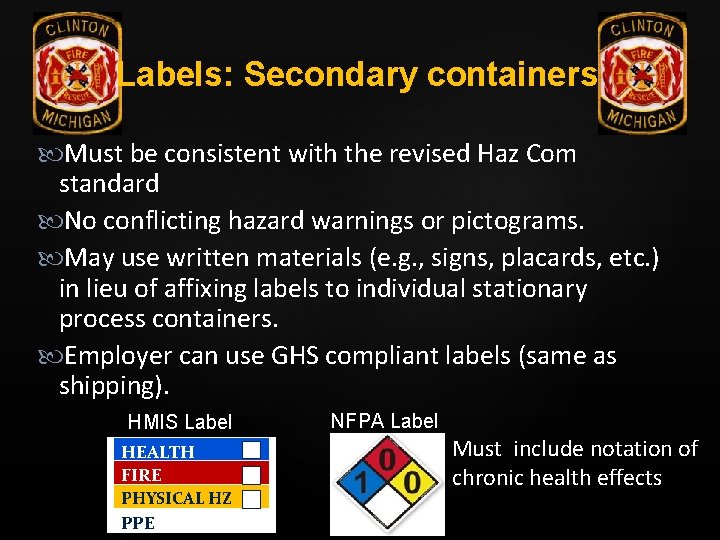
Secondary Container Labels Excerpt from the Hazard Communication Standard (f): • (6) Workplace labeling. Except as provided in paragraphs (7) and (8) of this section, the employer shall ensure that each container of hazardous chemicals in the workplace is labeled, tagged or marked with either: • (i) The information specified under paragraphs (1)(i) through (v) of this section for labels on shipped containers [GHS Label]; or, • (ii) Product identifier and words, pictures, symbols, or combination thereof, which provide at least general information regarding the hazards of the chemicals, and which, in conjunction with the other information immediately available to employees under the hazard communication program, will provide employees with the specific information regarding the physical and health hazards of the hazardous chemical [e. g. HMIS, NFPA or other label system].
Labels: Secondary containers Must be consistent with the revised Haz Com standard No conflicting hazard warnings or pictograms. May use written materials (e. g. , signs, placards, etc. ) in lieu of affixing labels to individual stationary process containers. Employer can use GHS compliant labels (same as shipping). HMIS Label HEALTH FIRE PHYSICAL HZ PPE NFPA Label Must include notation of chronic health effects
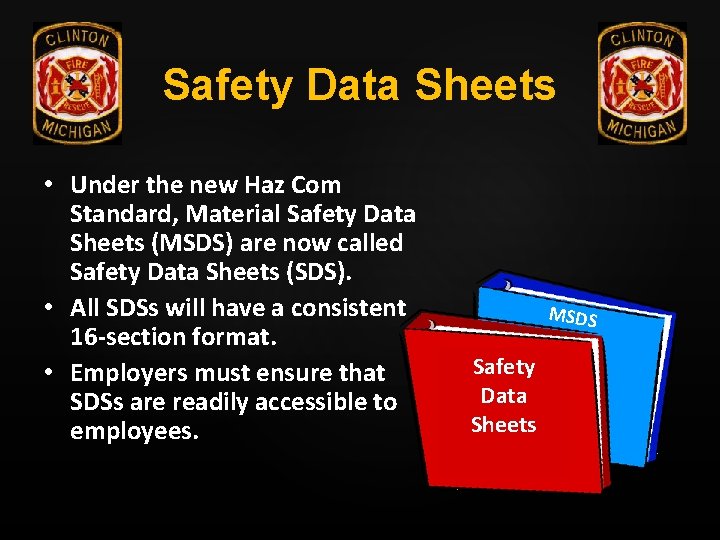
Safety Data Sheets • Under the new Haz Com Standard, Material Safety Data Sheets (MSDS) are now called Safety Data Sheets (SDS). • All SDSs will have a consistent 16 -section format. • Employers must ensure that SDSs are readily accessible to employees. MSDS Safety Data Sheets
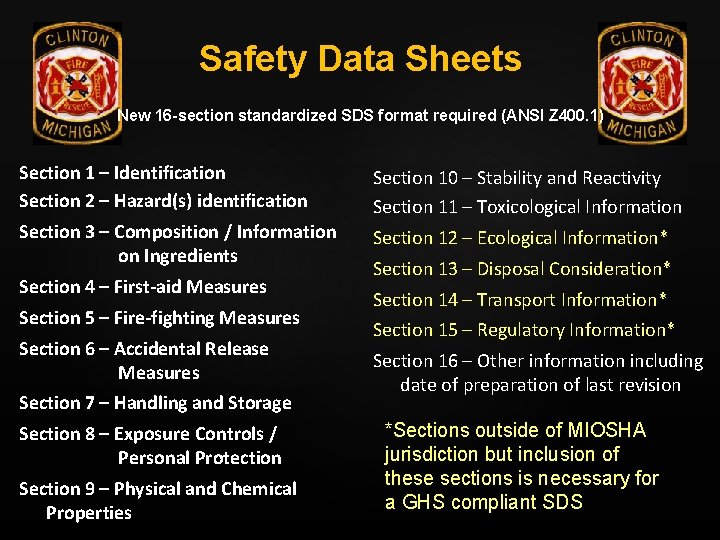
Safety Data Sheets New 16 -section standardized SDS format required (ANSI Z 400. 1) Section 1 – Identification Section 2 – Hazard(s) identification Section 10 – Stability and Reactivity Section 11 – Toxicological Information Section 3 – Composition / Information on Ingredients Section 12 – Ecological Information* Section 4 – First-aid Measures Section 5 – Fire-fighting Measures Section 6 – Accidental Release Measures Section 7 – Handling and Storage Section 8 – Exposure Controls / Personal Protection Section 9 – Physical and Chemical Properties Section 13 – Disposal Consideration* Section 14 – Transport Information* Section 15 – Regulatory Information* Section 16 – Other information including date of preparation of last revision *Sections outside of MIOSHA jurisdiction but inclusion of these sections is necessary for a GHS compliant SDS
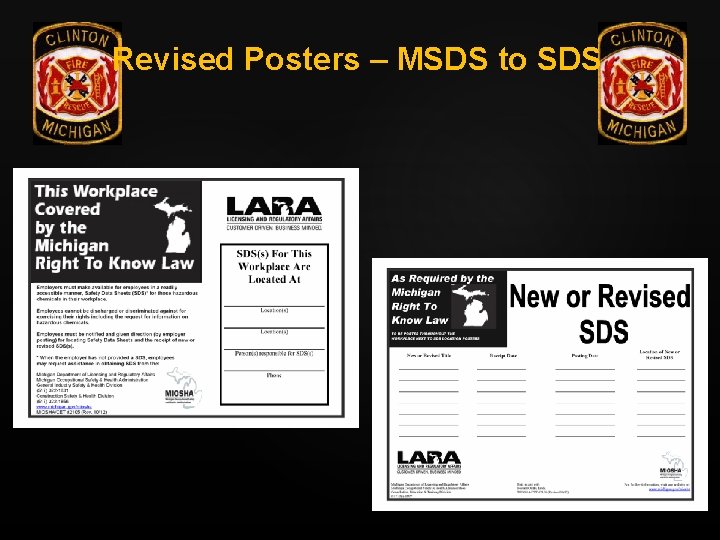
Revised Posters – MSDS to SDS
Your Responsibilities • Ensure that all secondary containers are labeled correctly • Provide an SDS for all products at your station • Know where to find SDS and labeling in the department’s SDS Information Station
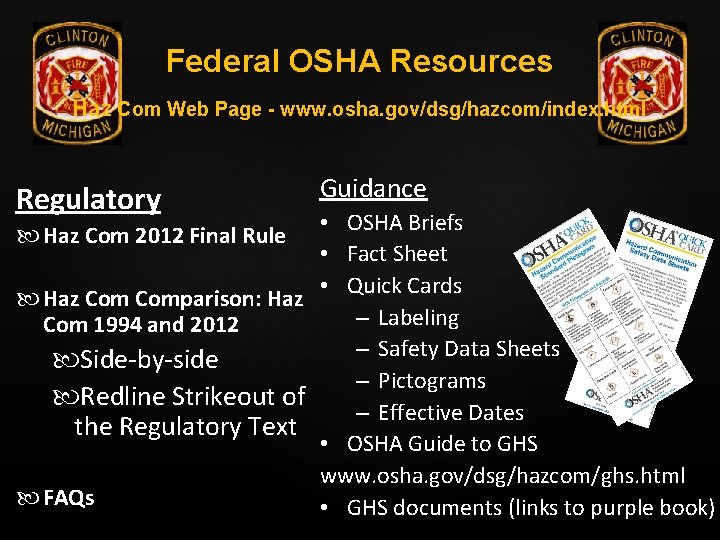
Federal OSHA Resources Haz Com Web Page - www. osha. gov/dsg/hazcom/index. html Regulatory Guidance • OSHA Briefs • Fact Sheet • Quick Cards Haz Comparison: Haz – Labeling Com 1994 and 2012 – Safety Data Sheets Side-by-side – Pictograms Redline Strikeout of – Effective Dates the Regulatory Text • OSHA Guide to GHS www. osha. gov/dsg/hazcom/ghs. html FAQs • GHS documents (links to purple book) Haz Com 2012 Final Rule