
Minority Race and Ethnicity Main Idea Races are



- Slides: 67
Minority, Race, and Ethnicity
Main Idea �Races are socially constructed categories that set people apart according to various physical traits.
Objectives �Explain the social construction of race and ethnicity. �Describe the extent and causes of prejudice. �Distinguish discrimination from prejudice.
Objectives continued �Identify examples of pluralism, assimilation, segregation, and genocide. �Assess the social standing of racial and ethnic categories of US society.
Read �Pages from Fryer’s Higher Geography
�People today have a hard time thinking of themselves as a single category. �What is an “American” anyway?
� Don’t forget the melungeons.
�Race—a socially constructed category of people who share biologically transmitted traits that members of a society consider important.
�We tend to see race �Black, white, Asian �Over time, concepts change � 1900—Jews, Italians, and Irishmen were seen as “non -white”
�The three racial categories differ in just 6% of genes �Biologically, race is important only in assessing risk factors for disease.
The social purpose of race �Racial categories allow societies to rank people in a hierarchy.
�The possibility of a “pure” person of one single race is very rare.
A Class Divided � http: //www. pbs. org/wgbh/frontline/film/clas s-divided/
�Ethnicity—a shared cultural heritage based on common ancestry, language, or religion
� Race is biological, while ethnicity is cultural
�Minority—a group of people with physical or cultural traits different from those of the dominant group in the society.
2 Important Characteristics �Share a distinctive identity based on physical or cultural traits �Experience subordination
�Prejudice—Negative feelings toward persons based on their membership in certain groups.
�Prejudice is unfair because all people in some category are described as the same.
�Stereotype—a belief or association that links a whole group of people with certain traits or characteristics
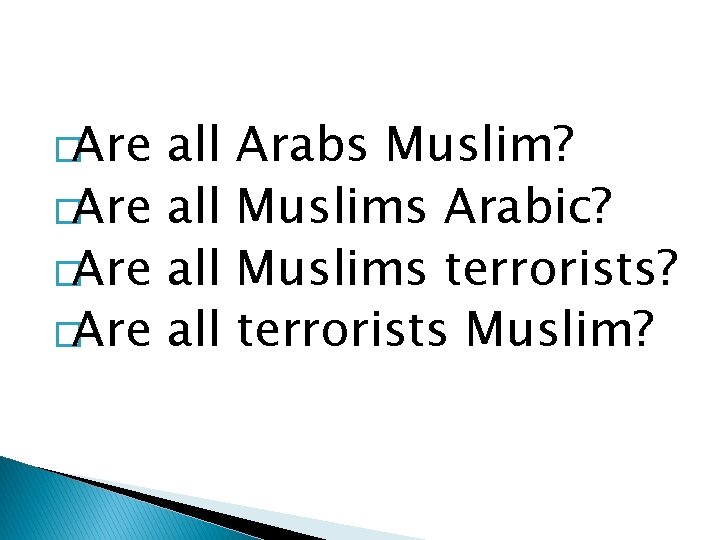
�Are all Arabs Muslim? Muslims Arabic? Muslims terrorists? terrorists Muslim?
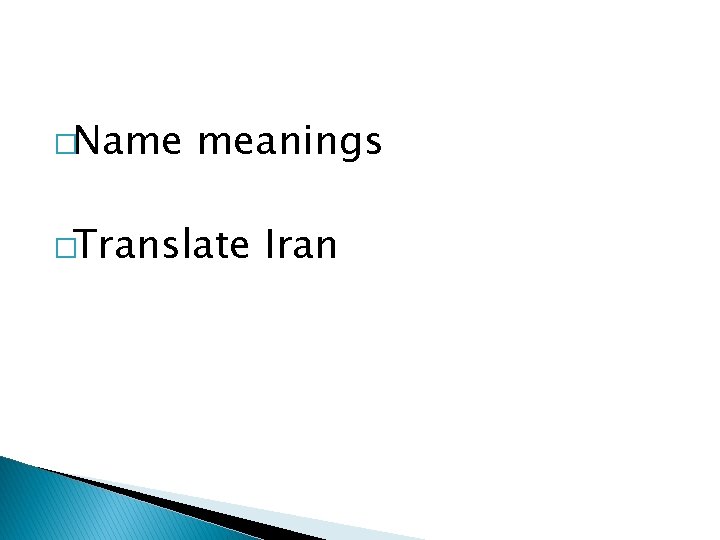
�Name meanings �Translate Iran
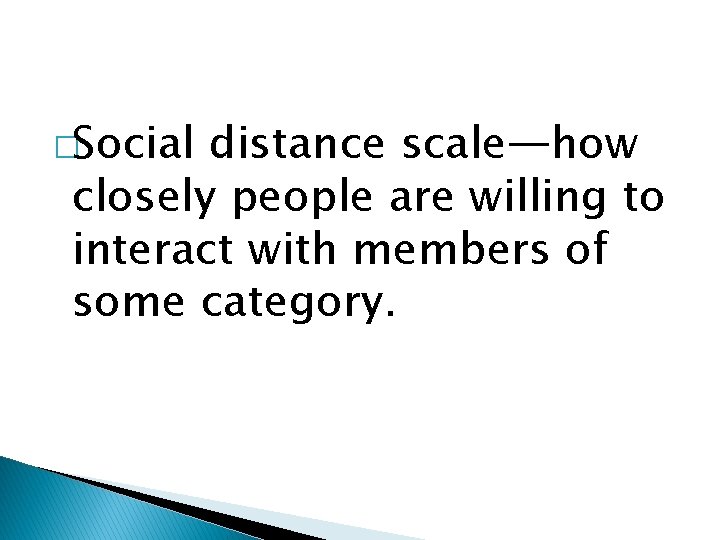
�Social distance scale—how closely people are willing to interact with members of some category.
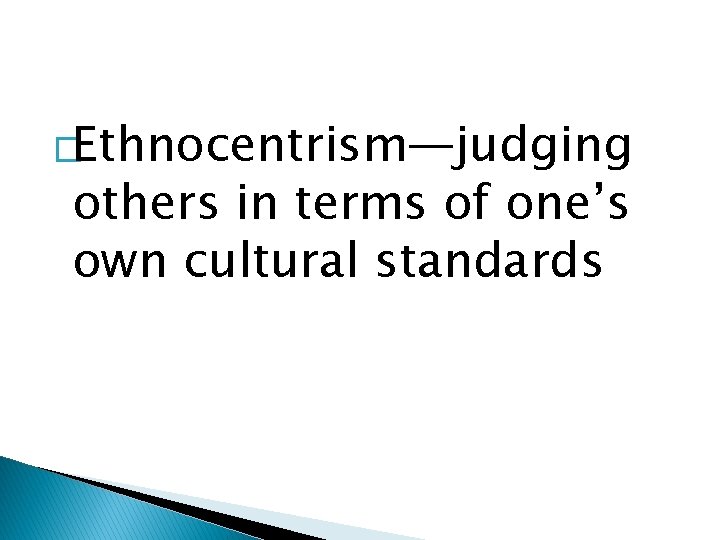
�Ethnocentrism—judging others in terms of one’s own cultural standards
�Subjugation—process by which a minority group is denied equal access to the benefits of a society
�Approximately 10 million Africans were forcibly brought to the Western hemisphere during the time of slavery.
�De jure segregation— denial of equal access based on the law. �When were schools in Hawkins County desegregated?
�De facto segregation—denial to equal access based on everyday practice �Job interviews, applications for rental property, etc
�Racism—an extreme form of prejudice that assumes superiority of one group over others.
�Discrimination—treating people differently based on ethnicity, race, religion, or culture.
�Self-fulfilling prophecy—an expectation that leads to behavior that causes the expectation to become reality. �Remember what Jane Elliot said about test scores?
Theories of Prejudice 1. Scapegoat theory—prejudice springs from frustration among people who are themselves disadvantaged
2. Authoritarian Personality Theory �Personality trait in certain individuals �Rigidly conform to conventional values �Clear cut right and wrong �Hierarchical �Little schooling; demanding upbringing
� 3. Culture theory—some prejudice is found in everyone because it is embedded in culture
� 4. Conflict theory—Powerful people use prejudice to justify their oppression of others
�Think of the racial tensions in the deep south in the 1960 s. How would each of these theories apply?
�Institutionalized discrimination—unfair practices that grow out of common behaviors and attitudes and that are a part of the structure of a society.
�Pluralism—a state at which racial and ethnic minorities are distinct but have social parity. �In other words, categories of people are socially different, but share resources equally.
�Is the United States pluralistic?
�Assimilation—the blending or fusing of minority groups into the dominant society.
� Is the “melting pot” a form of assimilation?
�Miscegenation— biological reproduction by partners of different categories.
1967 � https: //www. youtube. com/watch? v=8 BI 5 j. Fy. A d. Z 8
� 1967 Loving v. Virginia �US Supreme Court ruled anti miscegenation laws were deemed unconstitutional.
�Segregation—physical separation of categories of people
�Brown v. Board of Education, Topeka, Kansas �The US Supreme Court ruled unanimously that racially segregated schools provided African-American children with inferior schooling.
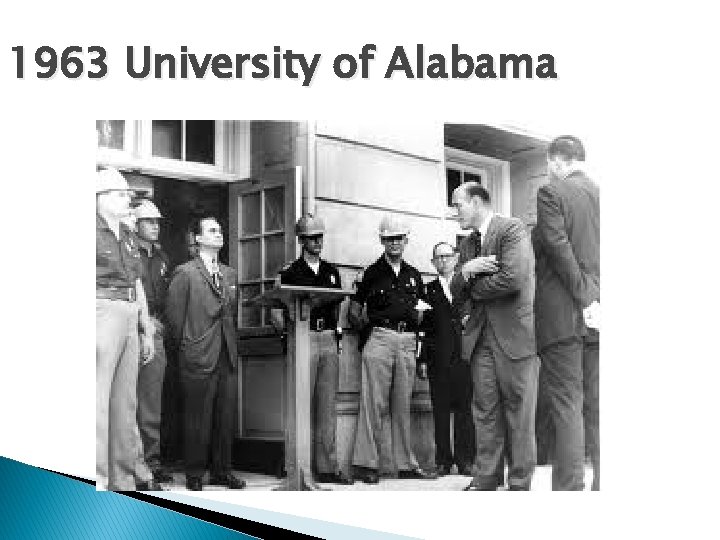
1963 University of Alabama
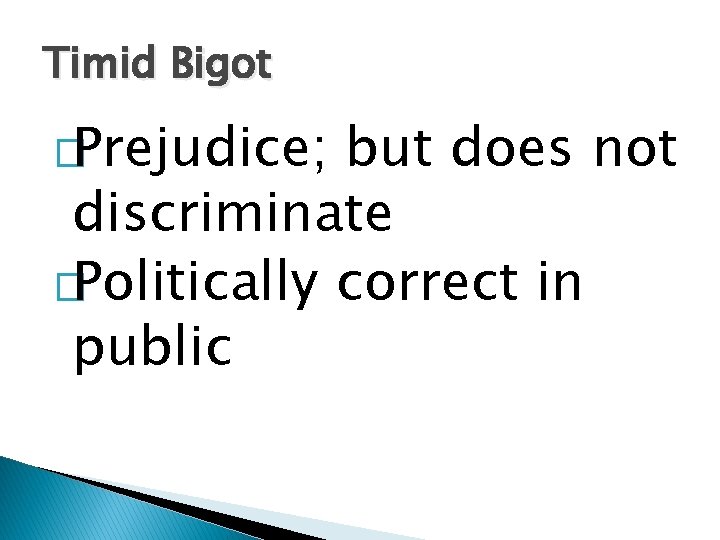
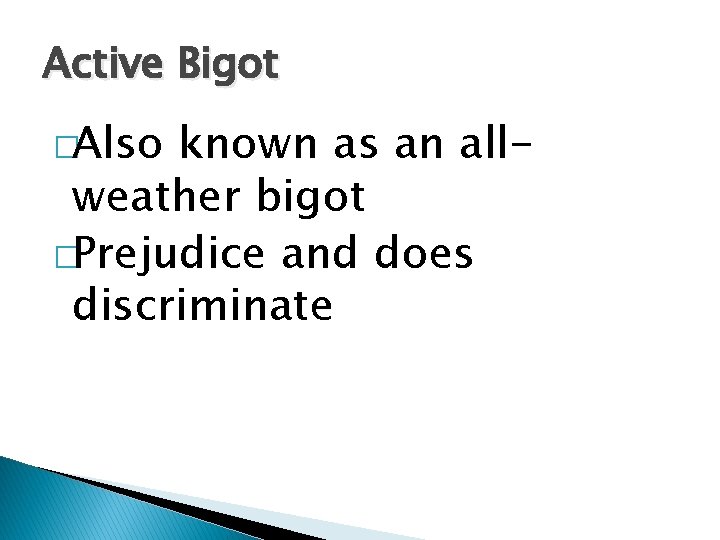
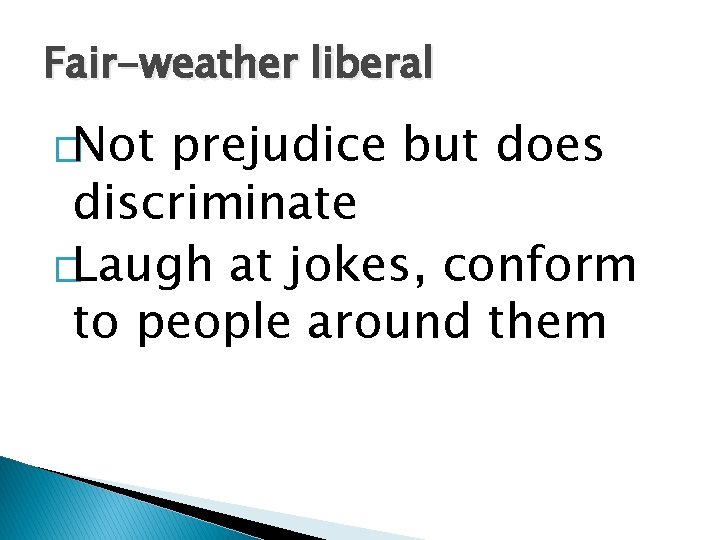
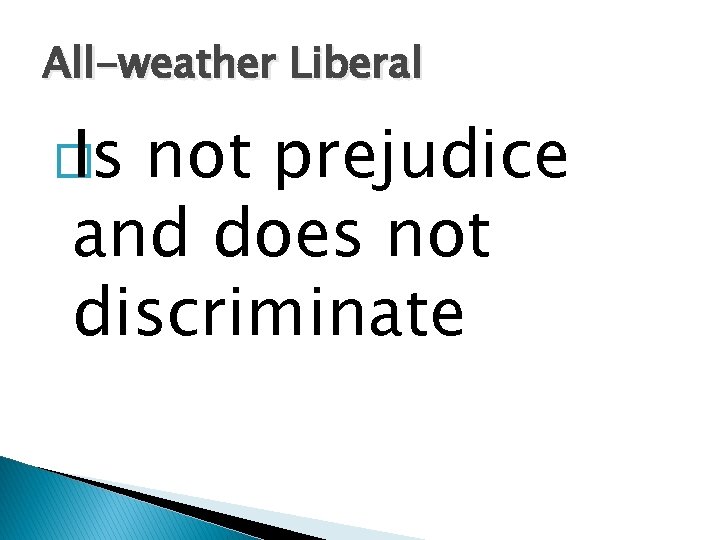
Merton’s typology of prejudice �Bigot--a person who strongly and unfairly dislikes other people, ideas, etc. : a bigoted person; especially : a person who hates or refuses to accept the members of a particular group (such as a racial or religious group)
Timid Bigot �Prejudice; but does not discriminate �Politically correct in public
Active Bigot �Also known as an allweather bigot �Prejudice and does discriminate
Fair-weather liberal �Not prejudice but does discriminate �Laugh at jokes, conform to people around them
All-weather Liberal � Is not prejudice and does not discriminate
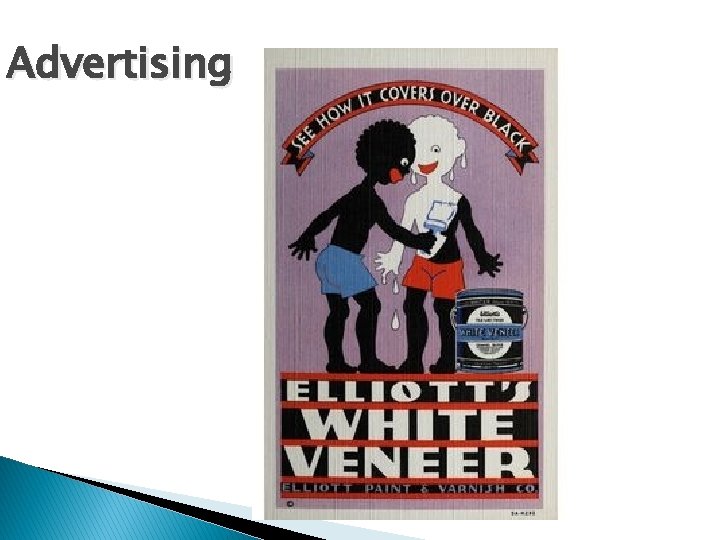
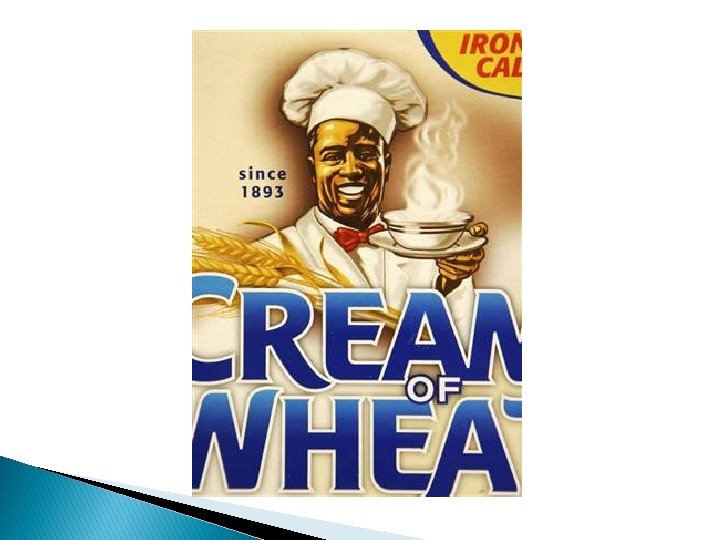
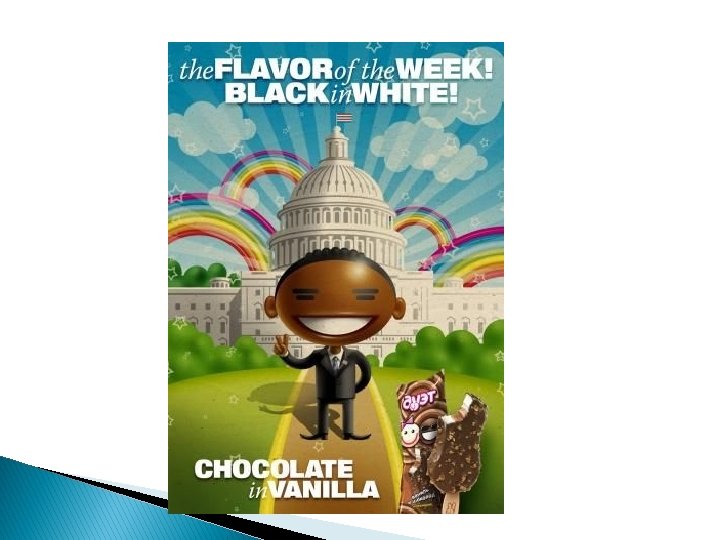
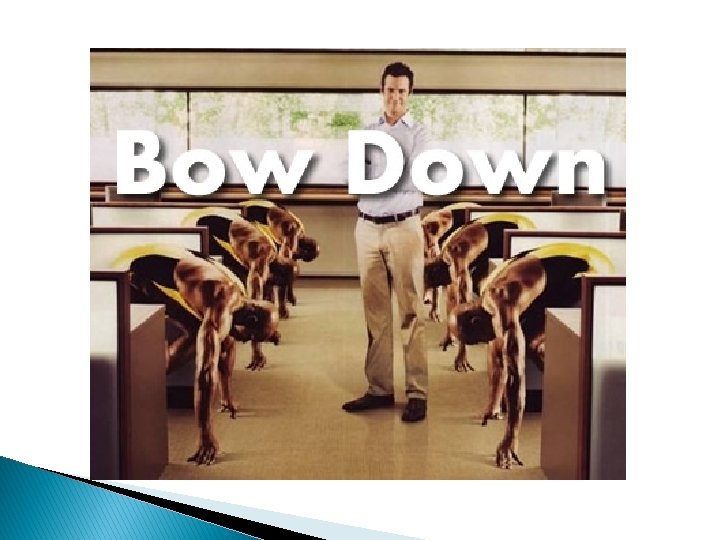
Advertising
�Genocide—the systemic effort to destroy an entire population. �The Holocaust is the most obvious example. Think of another.
�The Holocaust is also an example of the scapegoat theory. Germany went through extreme economic hardship after WWl. Hitler convinced the people it was the fault of the Jews
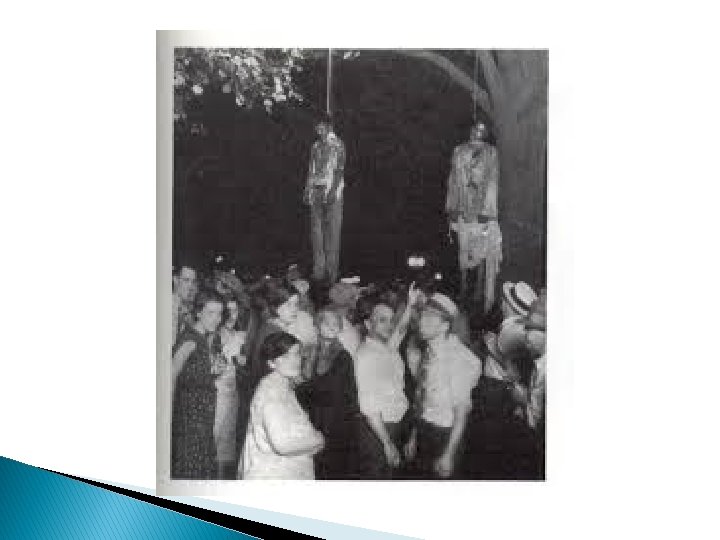
� Hate crime—a criminal act motivated by prejudice.
Native Americans �Not “Indians” � 1871 US government declared Native Americans wards of the government �Forced assimilation
�Entitled 1924 to citizenship in
Asian Americans �Order 9066 -detained people of Japanese decent into detention camps after Pearl Harbor attack.
�Why did no one fear German Americans?