
Minnesota OSHA COVID19 Preparedness Plan MNOSHA Workplace Safety
- Slides: 16
Minnesota OSHA COVID-19 Preparedness Plan MNOSHA Workplace Safety Consultation www. dli. mn. gov
Prepare Workplace for a COVID-19 Outbreak Executive Order 20‐ 40, issued by Gov. Tim Walz on April 23, 2020, requires each business in operation during the peacetime emergency establish a “COVID ‐ 19 Preparedness Plan. ” https: //mn. gov/governor/assets/EO%2020‐ 40%20 Final_tcm 1055‐ 429564. pdf
Make sure sick workers stay home • Establish health screening protocols for workers at the start of each shift, such as temperature taking or a health screening survey. • Identify and isolate workers with COVID‐ 19 symptoms and those who have been exposed, and send them home. • Establish communication protocols when workers have been potentially exposed. • Establish worker sickness reporting protocols. • Evaluate and adjust sick leave policies to reflect the need for isolation and incentivize workers who are sick to stay home. • Provide accommodations for vulnerable populations. • Clearly communicate sick leave policies to all workers. 3
Increase social distancing: Workers should be at least six feet away from each other • Maximize the use of telecommuting. • Stagger shifts and breaks; create additional shifts. • Evaluate traffic patterns to reduce crowding at entrances, in hallways, etc. • Limit gatherings of workers. • Ensure physical distancing in workplaces, including at workstations, productions lines, etc. • Limit non‐essential worker interaction across floors, buildings, campuses, worksites, etc. • Increase physical space between workers and customers, such as using a drive‐thru or partitions. 4
Worker hygiene and source control • Ensure workers regularly wash their hands. Ensure handwashing and/or hand‐ sanitizer facilities are readily available and stocked. • Provide recommended protective supplies, such as non‐medical cloth masks, gloves, disinfectant, guards, shields, etc. • Post handwashing and “cover your cough” signs. • Encourage use of source control masks, such as non‐medical cloth masks. • Prohibit on‐site food preparation and sharing. 5
Cleaning and disinfection protocols • Routinely clean and disinfect all areas, such as offices, bathrooms, common areas, shared electronic equipment, machinery, tools, controls, etc. • At least daily, clean all high touch items like door knobs, handles, light switches, surfaces, etc. • Ensure availability of hand sanitizer and approved cleaning products. • Decontaminate the workplace if a worker becomes ill with COVID‐ 19. All workers – management and employees – must be trained in these protocols. 6
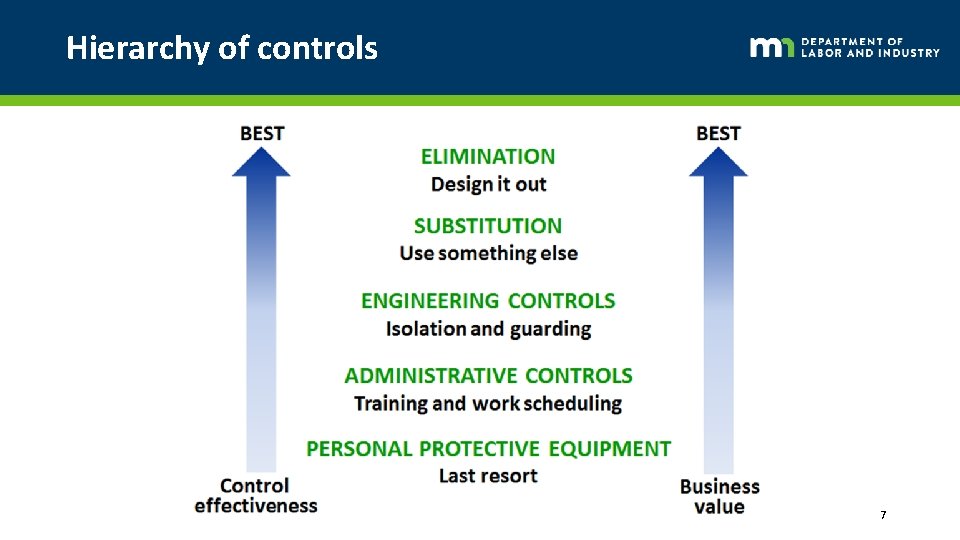
Hierarchy of controls 7
Challenges • Staff interactions with each other • Contact with the public 8
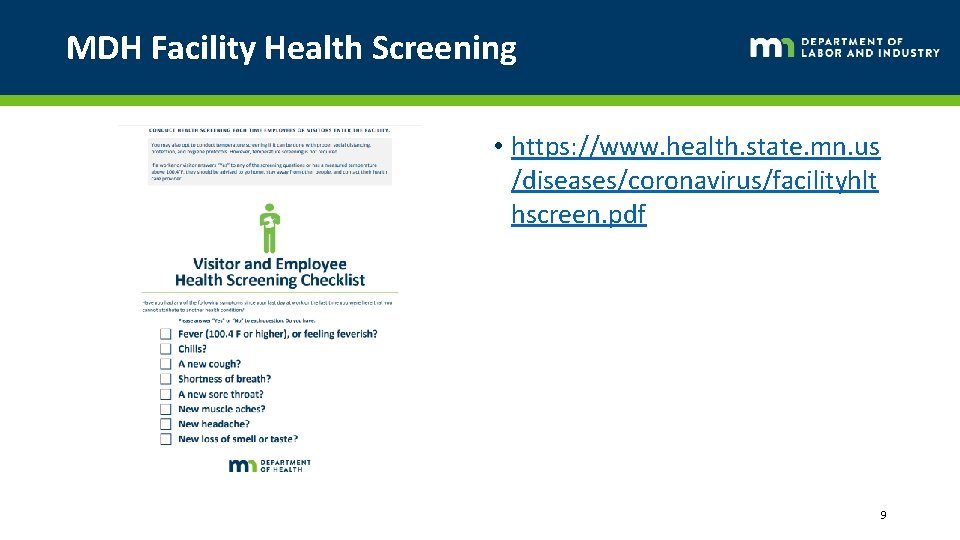
MDH Facility Health Screening • https: //www. health. state. mn. us /diseases/coronavirus/facilityhlt hscreen. pdf 9
CDL Road Testing Facilities • How can employees socially distance from each other? • No more than five people for each 1, 000 square feet of public space at a given time • Alternate shifts • High risk individuals • High touch surfaces – refrigerator, microwave, bathroom door knobs • Routine cleaning – who is responsible for it a schedule • Pathways in to the building • Building zones – who goes where 10
Housekeeping • Regularly clean and disinfect surfaces and equipment • Use Environmental Protection Agency (EPA)‐approved cleaning chemicals labeled for use against the coronavirus • EPA List N: Disinfectants for Use Against SARS-Co. V-2 • Follow the manufacturer’s instructions for use of all cleaning and disinfection products • Disinfect all shared equipment • Pay attention to the required contact time of the product being used 11
CDL Facilities interaction with the public • Plexiglass barriers • Applicants sitting in waiting area – can they wait outside and be notified by text • Only schedule a limited number of applicants • Institute no touch practices • No walk ins • Use signage and controls 12
Tips for Social Distancing between staff Public Entities Should: • Designate one‐way entrances and exits in and out of the facility to support 6‐foot physical distancing for workers. • Revise break times to prevent congregating in cafeterias and breakrooms. • Designate additional areas for breaks and meals. • Designate an area for isolating workers who show symptoms of COVID‐ 19 infection, such as a wellness area, isolated first aid station or other area where access can be restricted.
Tips for Social Distancing with customers Public Entities Should: • Define employee only areas; most public places allow persons from the public to co‐mingle into all areas of the public building. This can lead to decreased social distancing for public sector employees. • Create an employee only entrance to the facility. • Create a designated check‐in location for a single point of contact close to the point of entry by the public. • Limit public access to the building. Allow people to “check‐in” and encourage people to wait outside or away from one another. • Consider appointment meetings for customer service and possible drop boxes for many activities when open and still under social distancing guidelines. • Create barriers with plexiglass to protect employees. • Eliminate large assembly areas “waiting rooms” that do not have room for social distancing.
At the storefront • Install signs at each public entrance instructing employees and customers that they should not enter if they have a cough or fever, must maintain at least a six‐foot distance from each other, use a cloth or tissue if they cough or sneeze and not to shake hands or have other physical contact • If people must wait to be let in, and can wait in their cars, have them wait in their cars and contact them by phone when they can enter 15
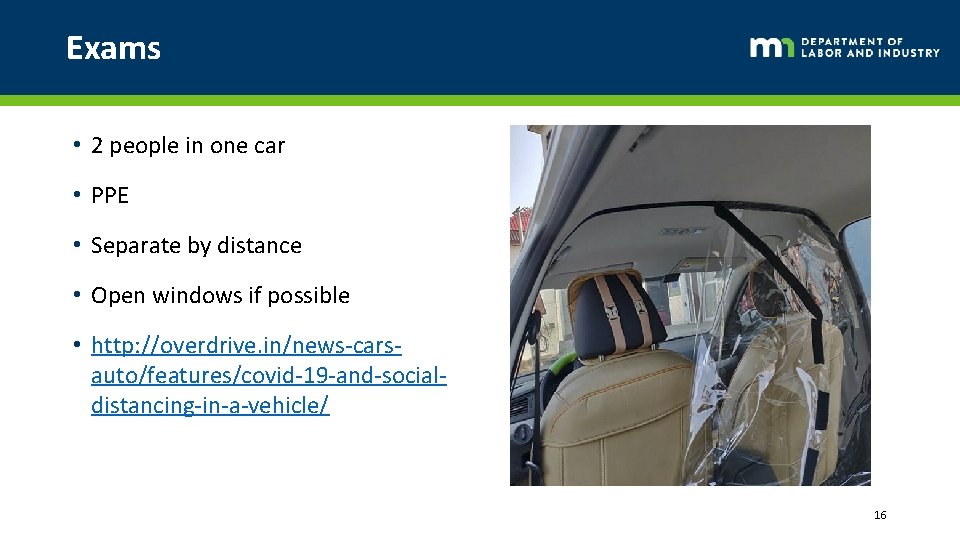
Exams • 2 people in one car • PPE • Separate by distance • Open windows if possible • http: //overdrive. in/news‐cars‐ auto/features/covid‐ 19‐and‐social‐ distancing‐in‐a‐vehicle/ 16