
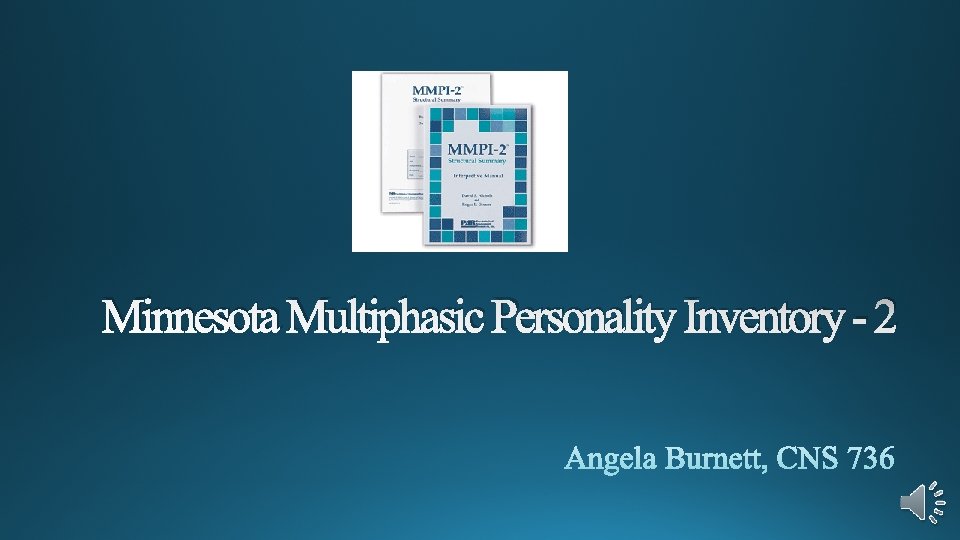
Minnesota Multiphasic Personality Inventory 2 Scale Description Interpretation
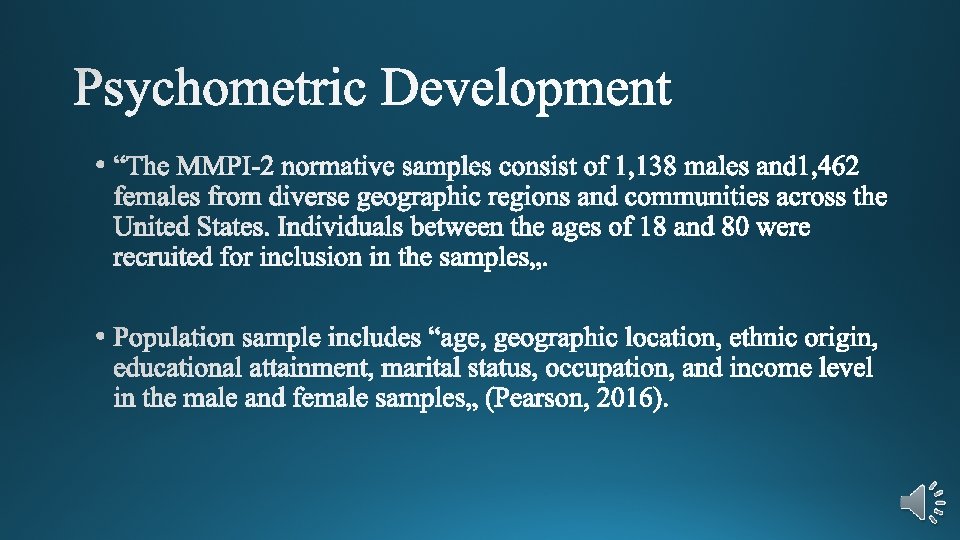
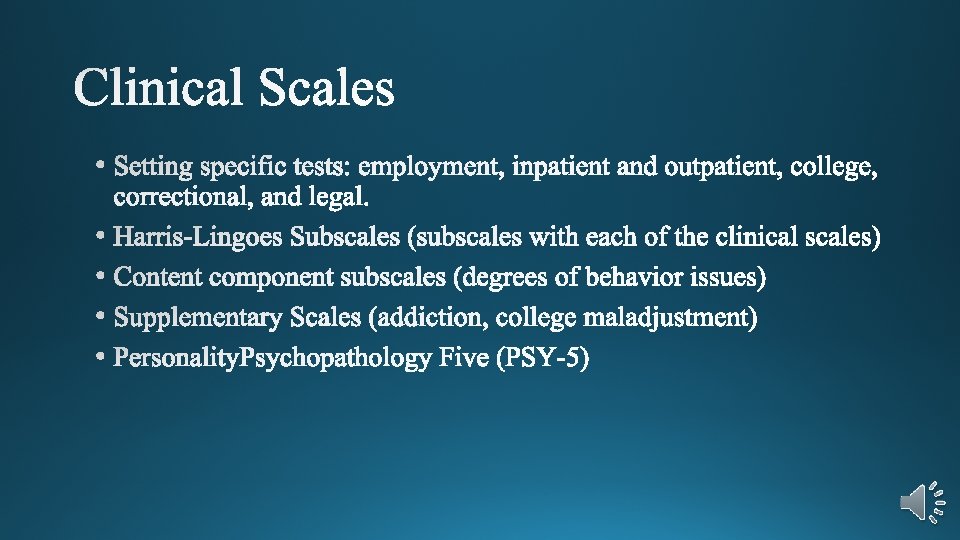
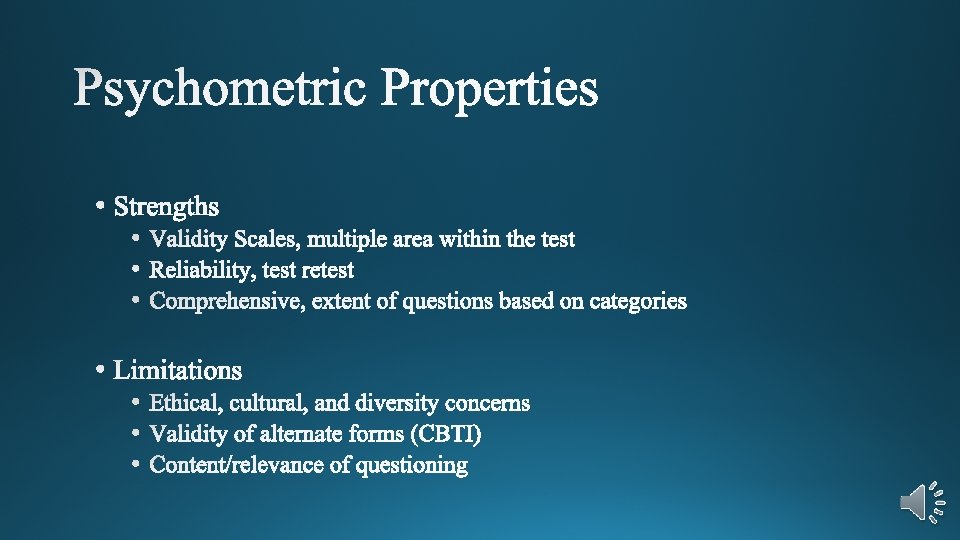

- Slides: 12
Minnesota Multiphasic Personality Inventory - 2
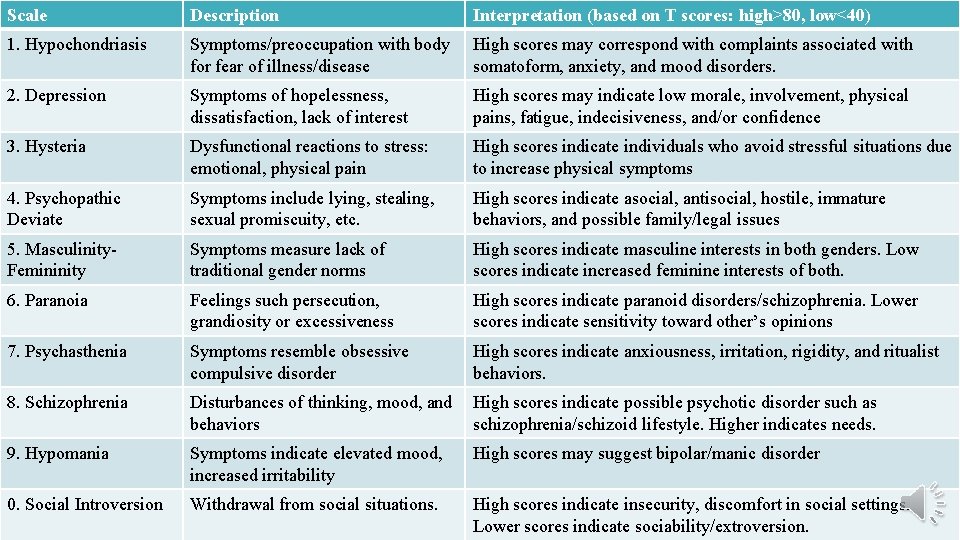
Scale Description Interpretation (based on T scores: high>80, low<40) 1. Hypochondriasis Symptoms/preoccupation with body for fear of illness/disease High scores may correspond with complaints associated with somatoform, anxiety, and mood disorders. 2. Depression Symptoms of hopelessness, dissatisfaction, lack of interest High scores may indicate low morale, involvement, physical pains, fatigue, indecisiveness, and/or confidence 3. Hysteria Dysfunctional reactions to stress: emotional, physical pain High scores indicate individuals who avoid stressful situations due to increase physical symptoms 4. Psychopathic Deviate Symptoms include lying, stealing, sexual promiscuity, etc. High scores indicate asocial, antisocial, hostile, immature behaviors, and possible family/legal issues 5. Masculinity. Femininity Symptoms measure lack of traditional gender norms High scores indicate masculine interests in both genders. Low scores indicate increased feminine interests of both. 6. Paranoia Feelings such persecution, grandiosity or excessiveness High scores indicate paranoid disorders/schizophrenia. Lower scores indicate sensitivity toward other’s opinions 7. Psychasthenia Symptoms resemble obsessive compulsive disorder High scores indicate anxiousness, irritation, rigidity, and ritualist behaviors. 8. Schizophrenia Disturbances of thinking, mood, and behaviors High scores indicate possible psychotic disorder such as schizophrenia/schizoid lifestyle. Higher indicates needs. 9. Hypomania Symptoms indicate elevated mood, increased irritability High scores may suggest bipolar/manic disorder 0. Social Introversion Withdrawal from social situations. High scores indicate insecurity, discomfort in social settings. Lower scores indicate sociability/extroversion.
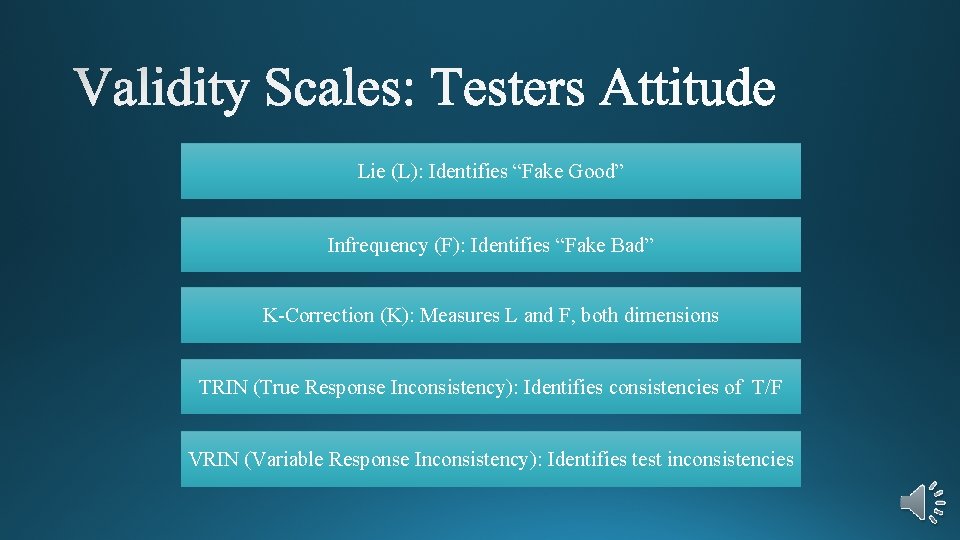
Lie (L): Identifies “Fake Good” Infrequency (F): Identifies “Fake Bad” K-Correction (K): Measures L and F, both dimensions TRIN (True Response Inconsistency): Identifies consistencies of T/F VRIN (Variable Response Inconsistency): Identifies test inconsistencies