
Ministry of Environmental Protection Branch Solid Waste Management
Ministry of Environmental Protection Branch Solid Waste Management Strategy November 2015

Agenda • Current Status – Solid Waste Management in Saskatchewan • Next Steps – A Solid Waste Management Strategy • Regional Waste Management Approach • Group Discussion
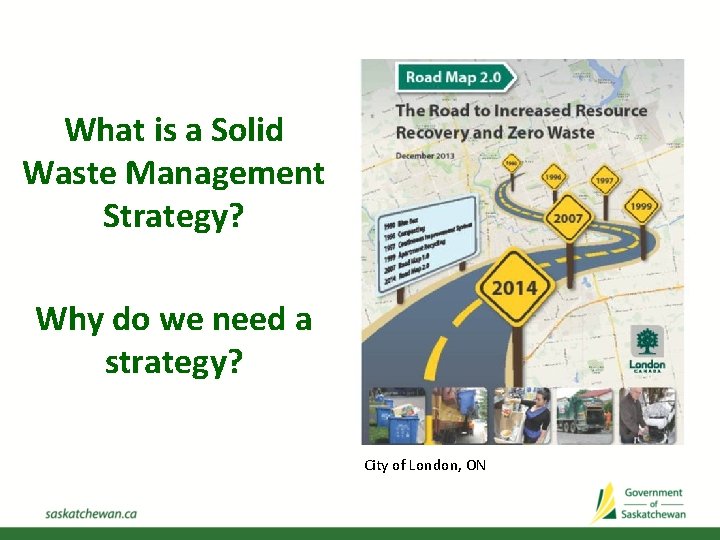
What is a Solid Waste Management Strategy? Why do we need a strategy? City of London, ON
Strategy Work Completed To Date • Documentation of the status of waste management in Saskatchewan • Creation of an Advisory committee • Identification of Best practices from a comprehensive jurisdictional scan • Formalization of a Consultation plan
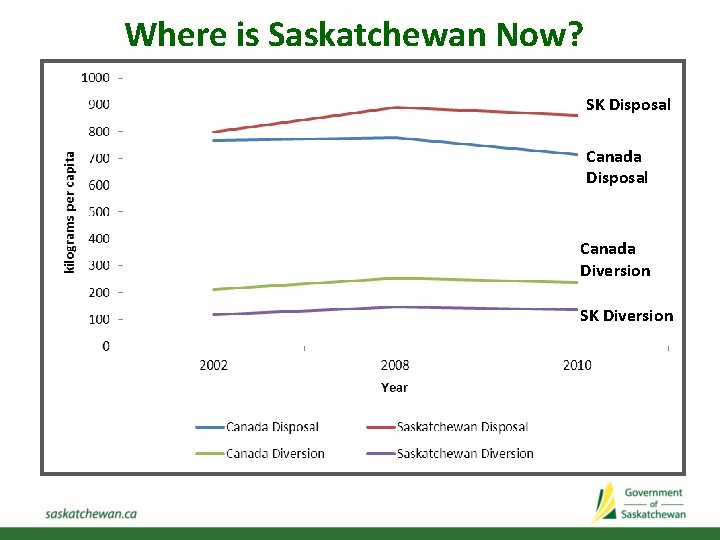
Where is Saskatchewan Now? SK Disposal Canada Diversion SK Diversion
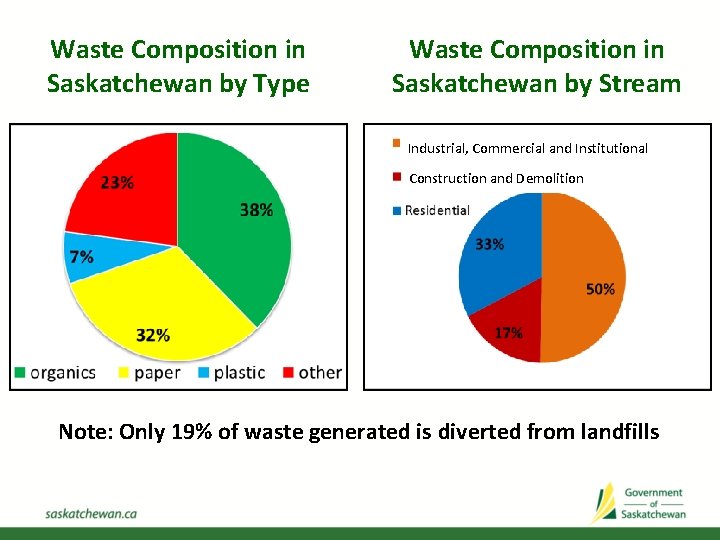
Waste Composition in Saskatchewan by Type Waste Composition in Saskatchewan by Stream Industrial, Commercial and Institutional Construction and Demolition Note: Only 19% of waste generated is diverted from landfills
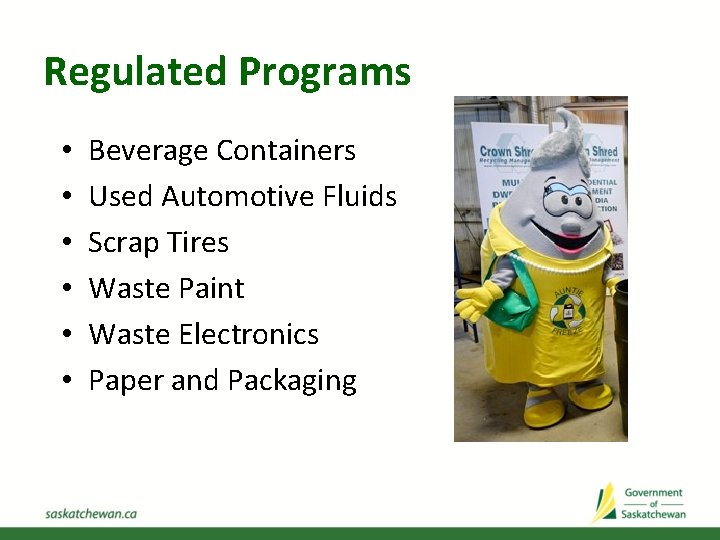
Regulated Programs • • • Beverage Containers Used Automotive Fluids Scrap Tires Waste Paint Waste Electronics Paper and Packaging
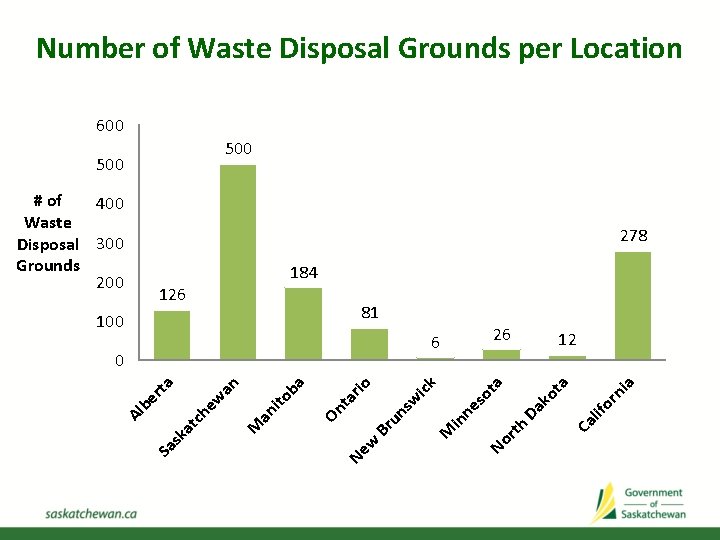
Number of Waste Disposal Grounds per Location 600 500 # of 400 Waste Disposal 300 Grounds 200 278 184 26 a or lif Da rth ni ta so ne M in No Ne w Br un sw ick io On ta r ba M an ito an ew sk at ch Sa Al be rta 0 12 ta 6 Ca 81 100 ko 126
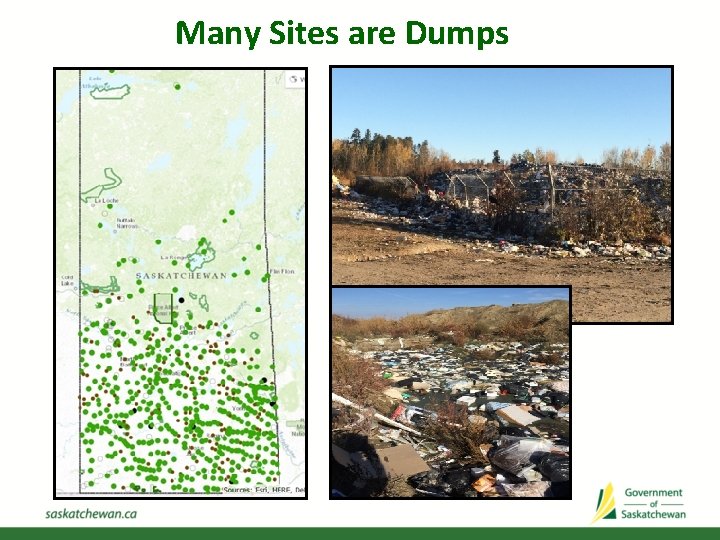
Many Sites are Dumps
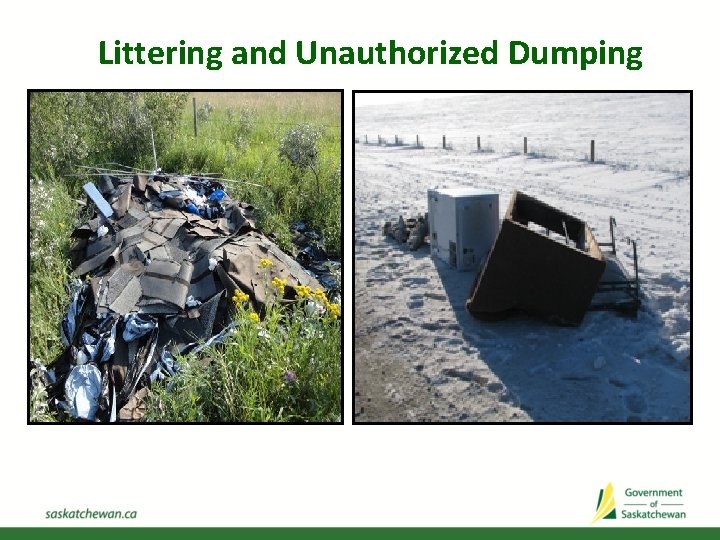
Littering and Unauthorized Dumping
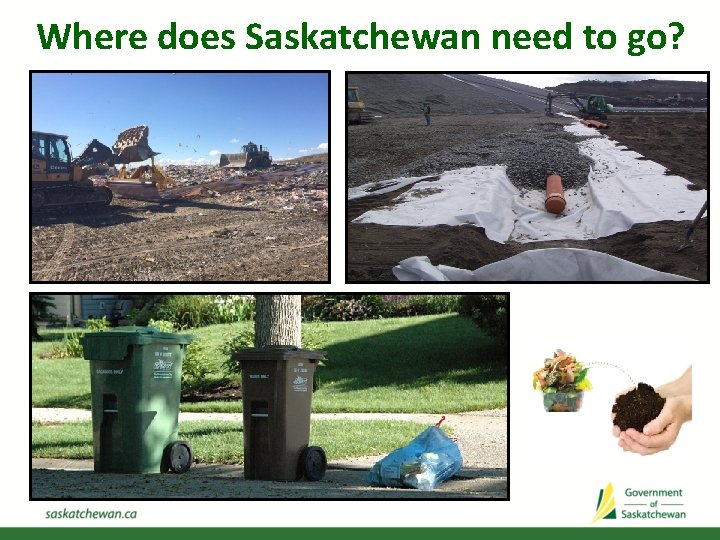
Where does Saskatchewan need to go?
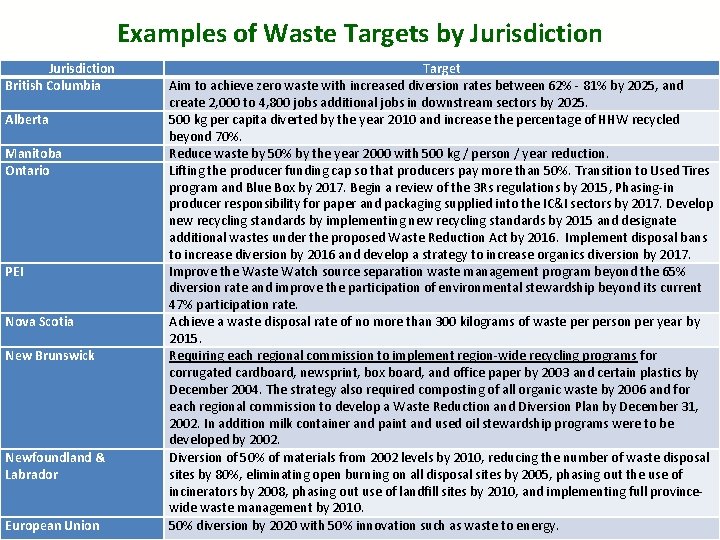
Examples of Waste Targets by Jurisdiction British Columbia Alberta Manitoba Ontario PEI Nova Scotia New Brunswick Newfoundland & Labrador European Union Target Aim to achieve zero waste with increased diversion rates between 62% - 81% by 2025, and create 2, 000 to 4, 800 jobs additional jobs in downstream sectors by 2025. 500 kg per capita diverted by the year 2010 and increase the percentage of HHW recycled beyond 70%. Reduce waste by 50% by the year 2000 with 500 kg / person / year reduction. Lifting the producer funding cap so that producers pay more than 50%. Transition to Used Tires program and Blue Box by 2017. Begin a review of the 3 Rs regulations by 2015, Phasing-in producer responsibility for paper and packaging supplied into the IC&I sectors by 2017. Develop new recycling standards by implementing new recycling standards by 2015 and designate additional wastes under the proposed Waste Reduction Act by 2016. Implement disposal bans to increase diversion by 2016 and develop a strategy to increase organics diversion by 2017. Improve the Waste Watch source separation waste management program beyond the 65% diversion rate and improve the participation of environmental stewardship beyond its current 47% participation rate. Achieve a waste disposal rate of no more than 300 kilograms of waste person per year by 2015. Requiring each regional commission to implement region-wide recycling programs for corrugated cardboard, newsprint, box board, and office paper by 2003 and certain plastics by December 2004. The strategy also required composting of all organic waste by 2006 and for each regional commission to develop a Waste Reduction and Diversion Plan by December 31, 2002. In addition milk container and paint and used oil stewardship programs were to be developed by 2002. Diversion of 50% of materials from 2002 levels by 2010, reducing the number of waste disposal sites by 80%, eliminating open burning on all disposal sites by 2005, phasing out the use of incinerators by 2008, phasing out use of landfill sites by 2010, and implementing full provincewide waste management by 2010. 50% diversion by 2020 with 50% innovation such as waste to energy.
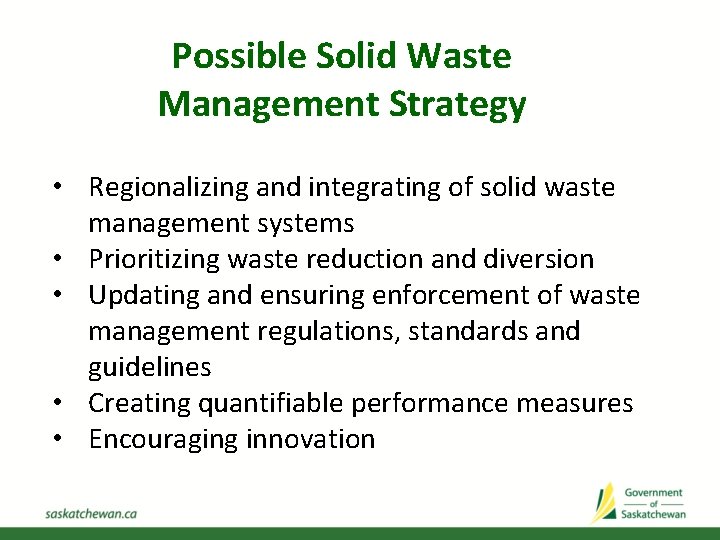
Possible Solid Waste Management Strategy • Regionalizing and integrating of solid waste management systems • Prioritizing waste reduction and diversion • Updating and ensuring enforcement of waste management regulations, standards and guidelines • Creating quantifiable performance measures • Encouraging innovation
Next Steps: Exploring best practices through consultation • Improving solid waste management through working together – Regional Waste Management Approach • Prioritizing waste reduction and diversion • Updating and ensuring enforcement of waste management regulations, standards and guidelines • Creating measurable performance measures • Encouraging innovation
Why Consider Regionalization?

Regional Waste Management Approach • Regional Waste Authorities typically include: – One or two centralized landfills with supporting transfer stations – Consolidates waste collection – Operation of recycling program for the region – Join public education programs – Public funding for waste authorities – Regional Waste Management Plans
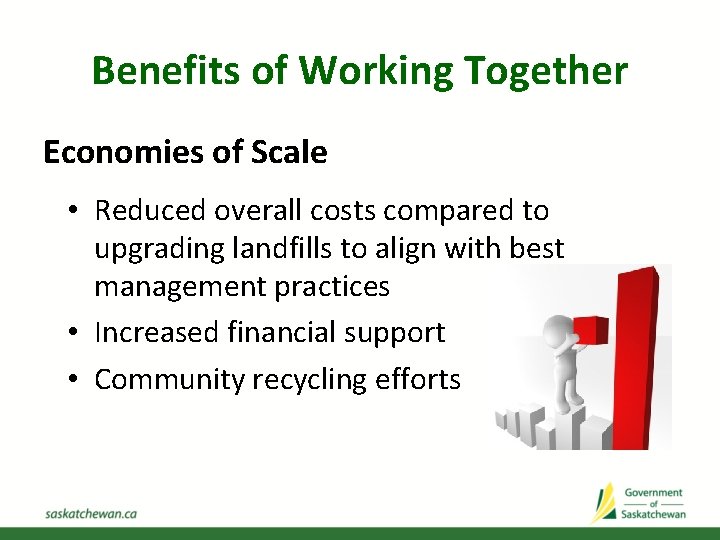
Benefits of Working Together Economies of Scale • Reduced overall costs compared to upgrading landfills to align with best management practices • Increased financial support • Community recycling efforts
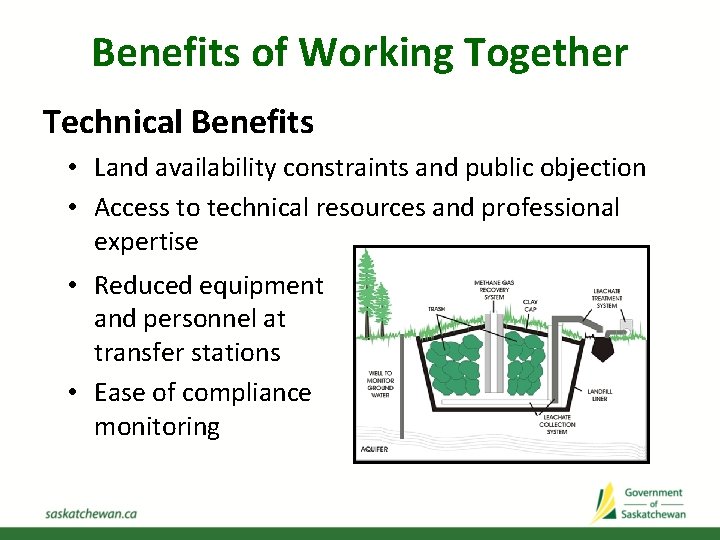
Benefits of Working Together Technical Benefits • Land availability constraints and public objection • Access to technical resources and professional expertise • Reduced equipment and personnel at transfer stations • Ease of compliance monitoring
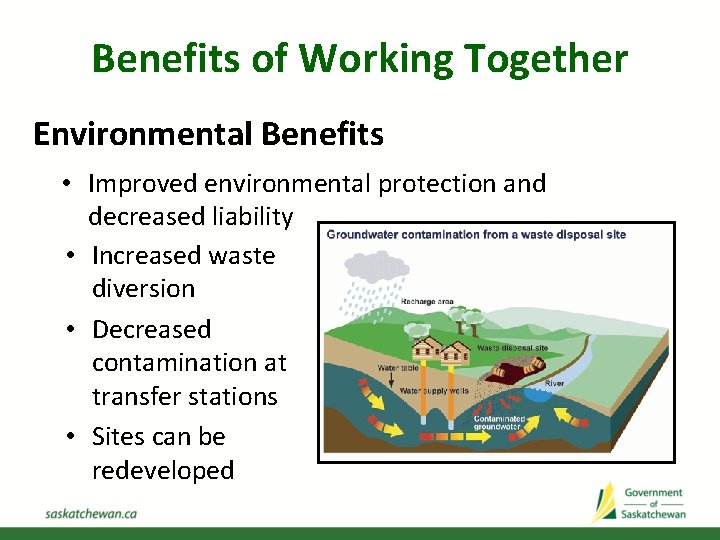
Benefits of Working Together Environmental Benefits • Improved environmental protection and decreased liability • Increased waste diversion • Decreased contamination at transfer stations • Sites can be redeveloped
Potential Barriers of Transitioning into a Regional System • • • Differing solid waste management goals Transportation of waste and associated costs Expansion of current landfills Costs of decommissioning current landfills Resistance to change or lack of perceived problem with existing system
Discussion Questions • Are you currently part of a regional system? • Is there opportunity or desire to create more regional waste management systems? • Is there an appetite for regional borders to be created and defined by the provincial government? • How has regionalization impacted your community / how would regionalization impact your community? What are the advantages and disadvantages? • What barriers to regionalization existed/exist in your community?

Where do we go from here? If you have any comments or questions please email: brienne. bennett@gov. sk. ca
- Slides: 22