
Ministry of Education Hawalli Educational Zone Presented by
Ministry of Education Hawalli Educational Zone Presented by : H. O. D: Mariam Al Najjar Supervised by: Mrs. Germeen Gendia
* What is cooperative learning? * What is Kagan cooperative learning? * Why do we need to use K. C. L in our educational system. * What are Kagan structures? *What are the benefits to use Kagan cooperative learning? * Kagan Structures implement the PIES principles.
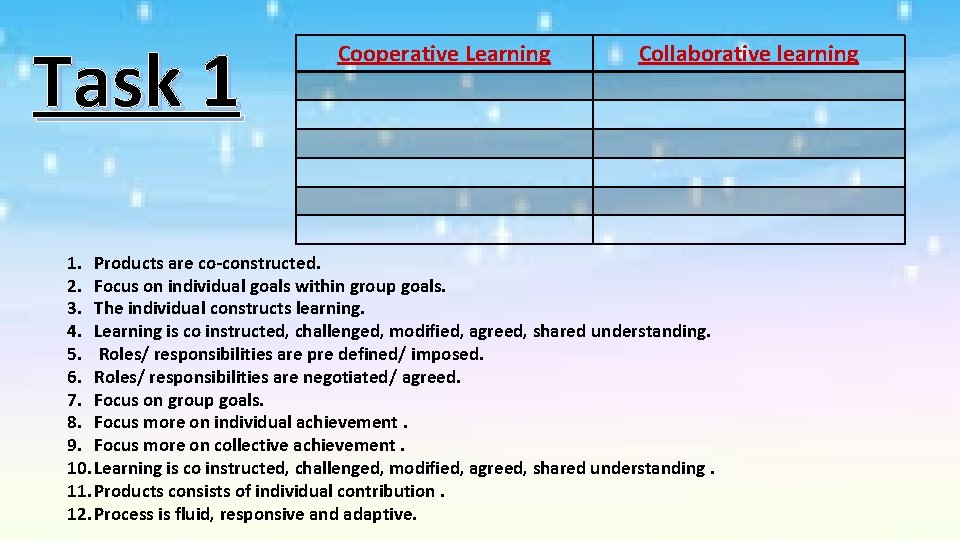
Task 1 Cooperative Learning Collaborative learning 1. Products are co-constructed. 2. Focus on individual goals within group goals. 3. The individual constructs learning. 4. Learning is co instructed, challenged, modified, agreed, shared understanding. 5. Roles/ responsibilities are pre defined/ imposed. 6. Roles/ responsibilities are negotiated/ agreed. 7. Focus on group goals. 8. Focus more on individual achievement. 9. Focus more on collective achievement. 10. Learning is co instructed, challenged, modified, agreed, shared understanding. 11. Products consists of individual contribution. 12. Process is fluid, responsive and adaptive.
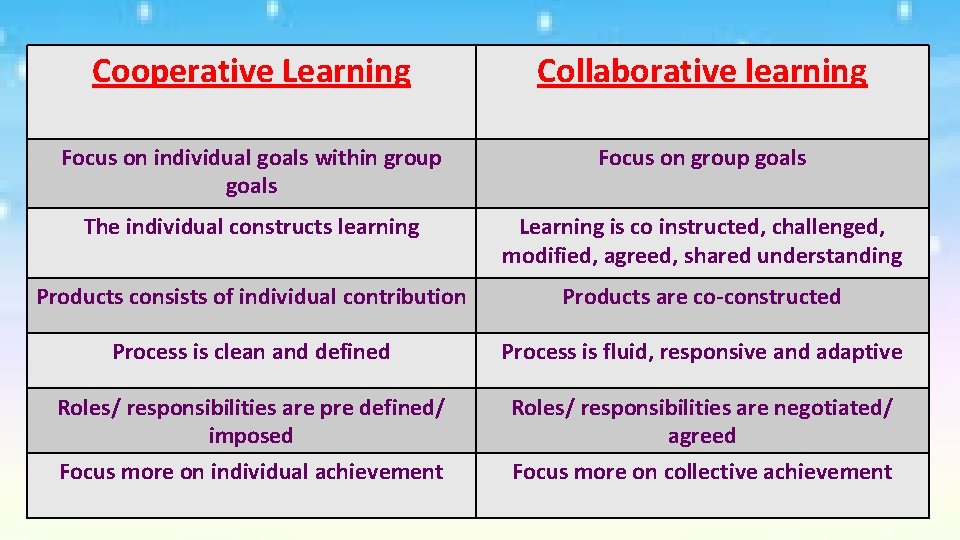
Cooperative Learning Collaborative learning Focus on individual goals within group goals Focus on group goals The individual constructs learning Learning is co instructed, challenged, modified, agreed, shared understanding Products consists of individual contribution Products are co-constructed Process is clean and defined Process is fluid, responsive and adaptive Roles/ responsibilities are pre defined/ imposed Focus more on individual achievement Roles/ responsibilities are negotiated/ agreed Focus more on collective achievement
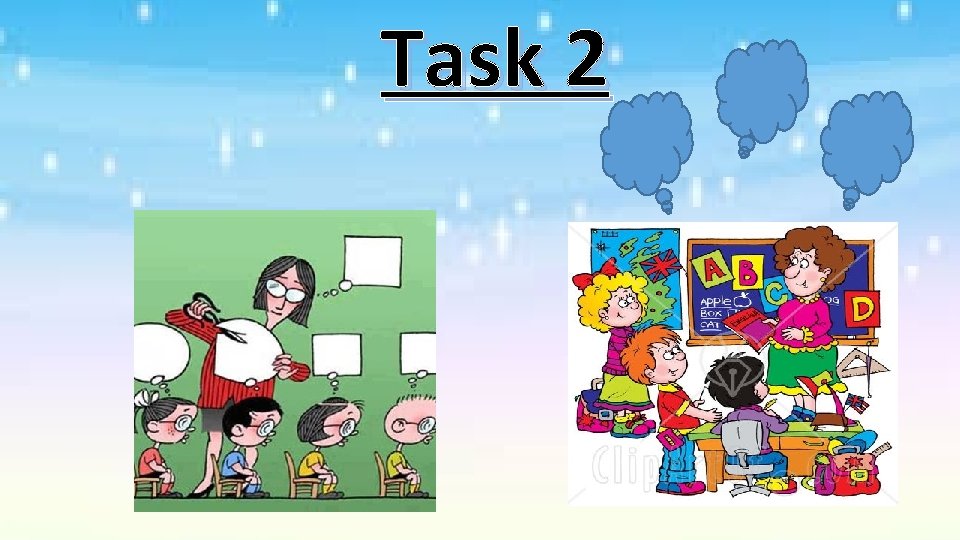
Task 2
Task 2 Traditional teacher Creative teacher 1. Information giver. 2. Teacher- centered 3. Passive 4. Active 5. Facilitator 6. Student Centered 7. Stress the “ what” of learning using memory work, question and answer methods 8. Uses fixed methodology, confined in the four walls of the class room 9. Utilizes conditioning to reward learning 10. Emphasizes the intrinsic benefits of learning 11. Uses variety of methods in teaching and explores different avenues of learning 12. Emphasizes the “ why” and the “ how” learning, encouraging students to do investigatory and exploratory work
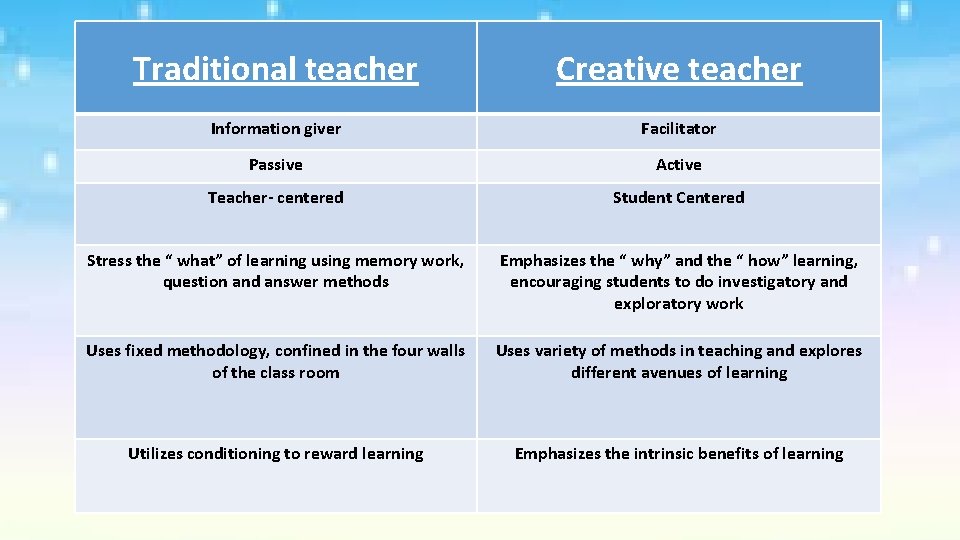
Traditional teacher Creative teacher Information giver Facilitator Passive Active Teacher- centered Student Centered Stress the “ what” of learning using memory work, question and answer methods Emphasizes the “ why” and the “ how” learning, encouraging students to do investigatory and exploratory work Uses fixed methodology, confined in the four walls of the class room Uses variety of methods in teaching and explores different avenues of learning Utilizes conditioning to reward learning Emphasizes the intrinsic benefits of learning
Kagan Cooperative Learning has been the most heavily cooperative learning innovation of all time.
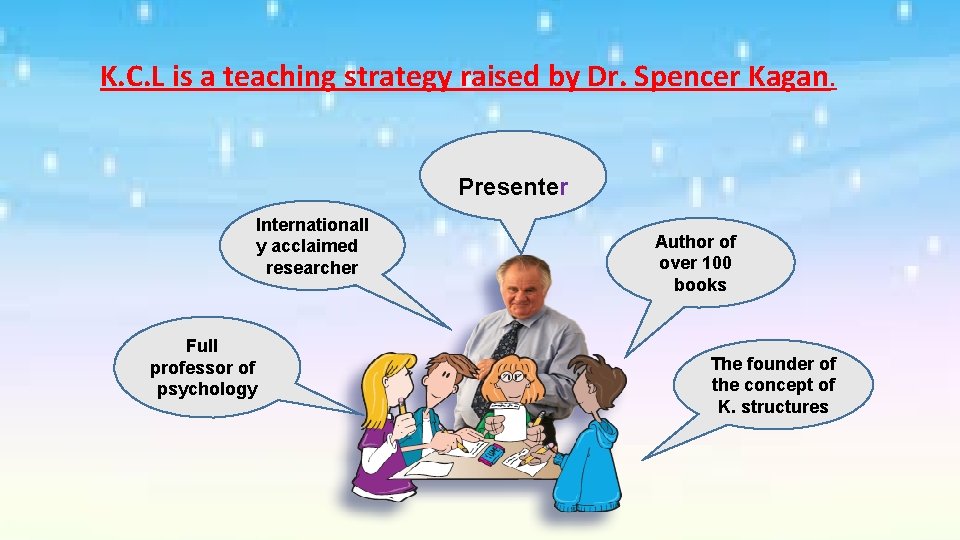
K. C. L is a teaching strategy raised by Dr. Spencer Kagan. Presenter Internationall y acclaimed researcher Full professor of psychology Author of over 100 books The founder of the concept of K. structures
What are K. C structures? ?
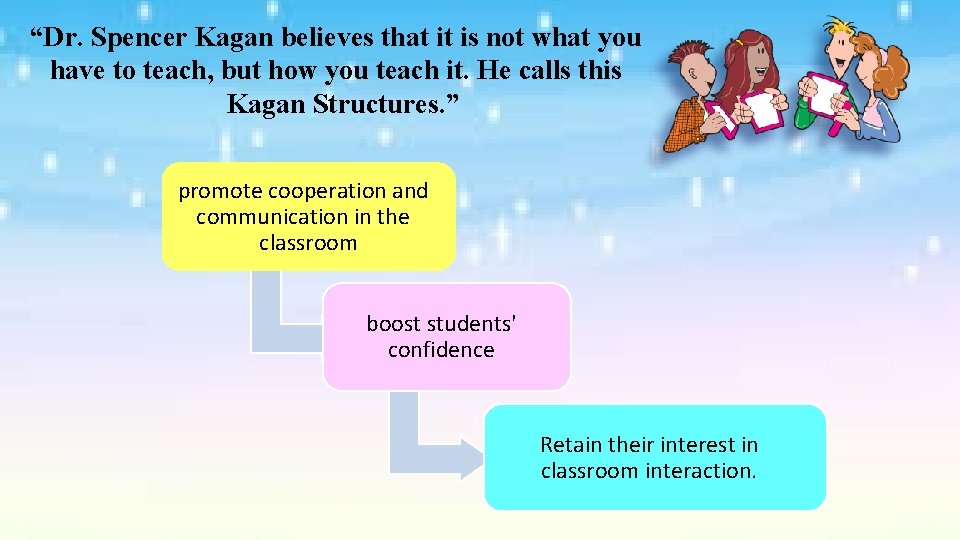
“Dr. Spencer Kagan believes that it is not what you have to teach, but how you teach it. He calls this Kagan Structures. ” promote cooperation and communication in the classroom boost students' confidence Retain their interest in classroom interaction.
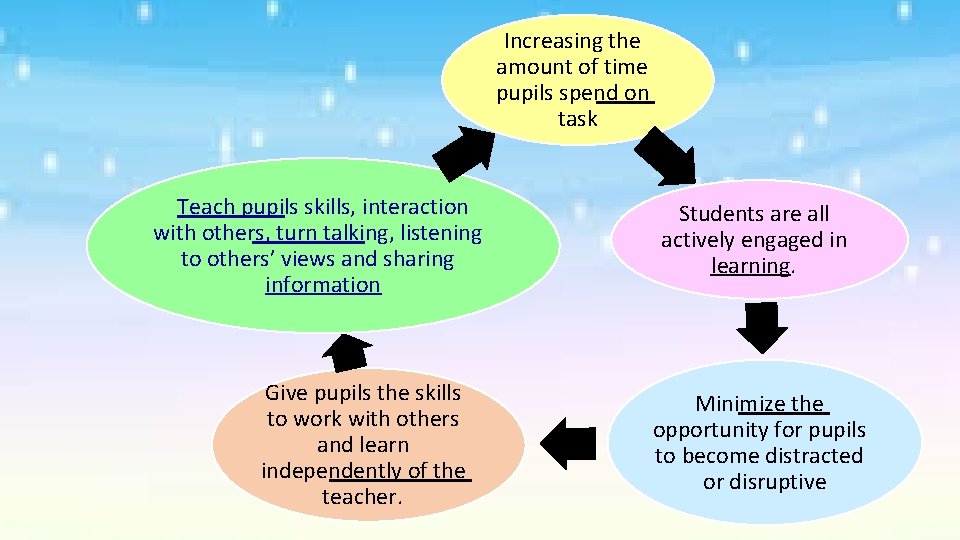
Increasing the amount of time pupils spend on task Teach pupils skills, interaction with others, turn talking, listening to others’ views and sharing information Give pupils the skills to work with others and learn independently of the teacher. Students are all actively engaged in learning. Minimize the opportunity for pupils to become distracted or disruptive

What are K. C. L structures in alignment with?
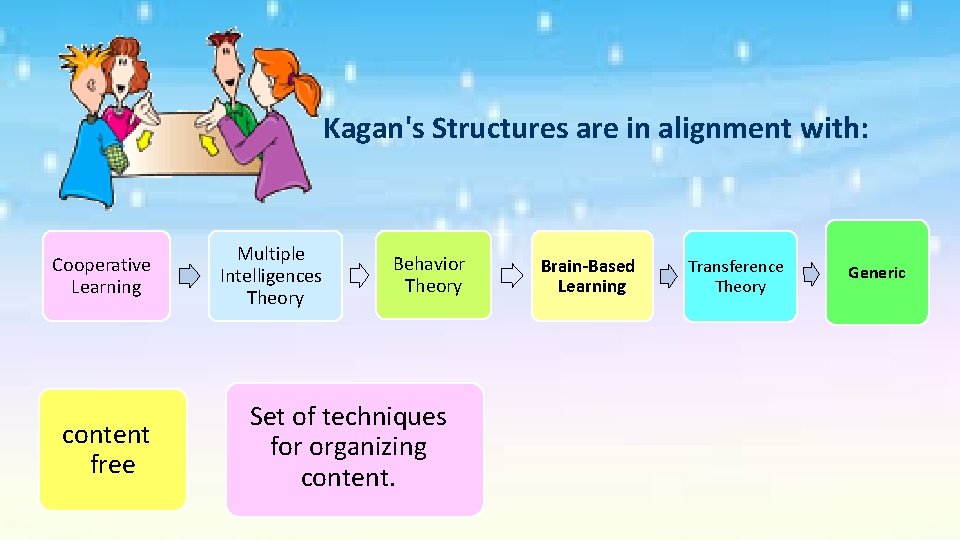
Kagan's Structures are in alignment with: Cooperative Learning content free Multiple Intelligences Theory Behavior Theory Set of techniques for organizing content. Brain-Based Learning Transference Theory Generic
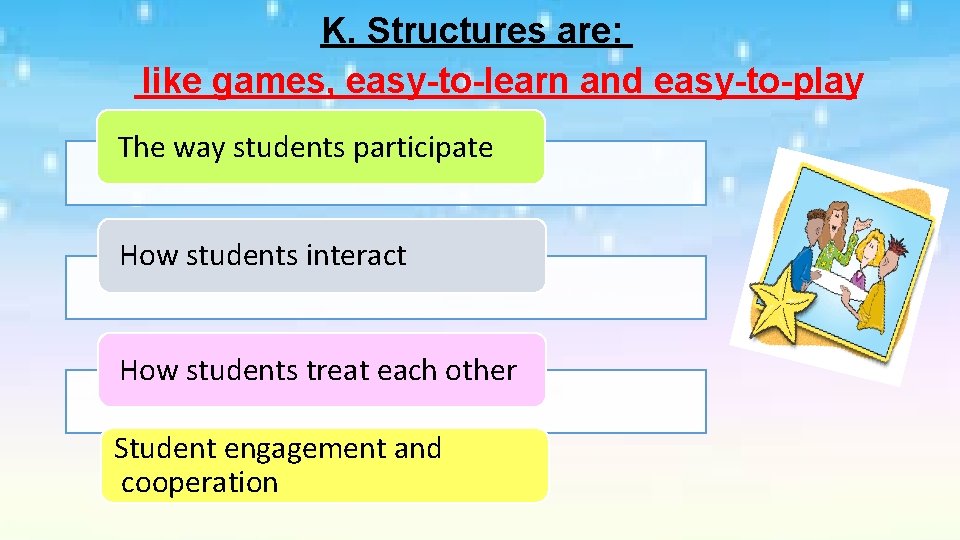
K. Structures are: like games, easy-to-learn and easy-to-play The way students participate How students interact How students treat each other Student engagement and cooperation
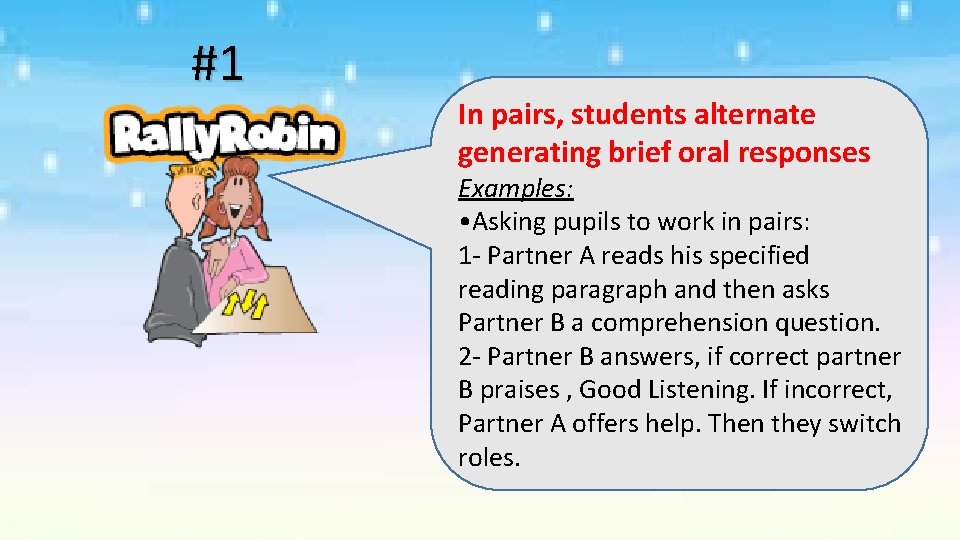
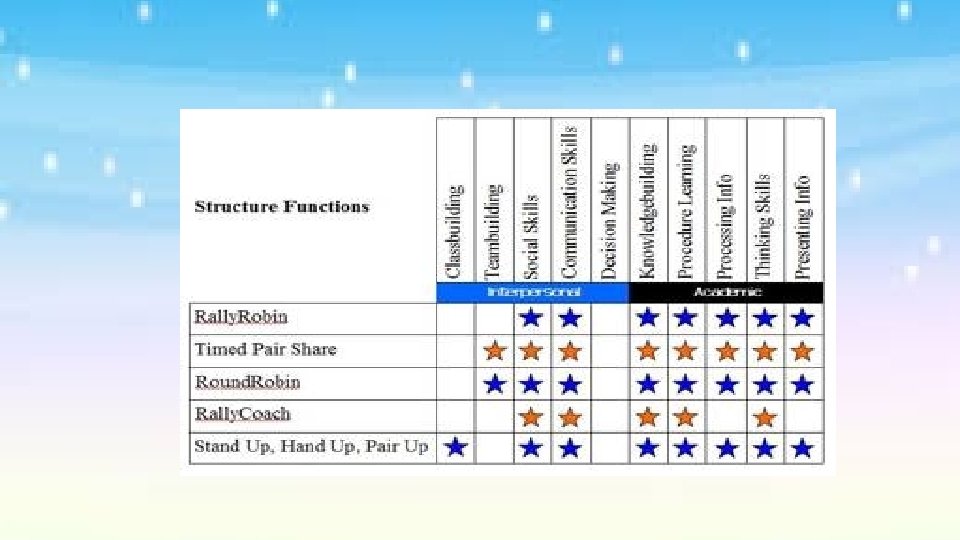
#1 In pairs, students alternate generating brief oral responses Examples: • Asking pupils to work in pairs: 1 - Partner A reads his specified reading paragraph and then asks Partner B a comprehension question. 2 - Partner B answers, if correct partner B praises , Good Listening. If incorrect, Partner A offers help. Then they switch roles.
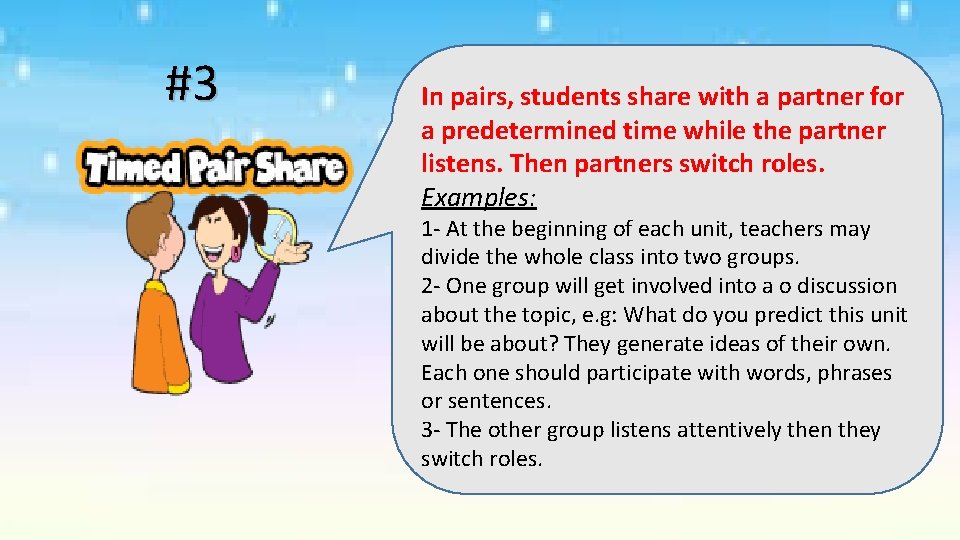
#3 In pairs, students share with a partner for a predetermined time while the partner listens. Then partners switch roles. Examples: 1 - At the beginning of each unit, teachers may divide the whole class into two groups. 2 - One group will get involved into a o discussion about the topic, e. g: What do you predict this unit will be about? They generate ideas of their own. Each one should participate with words, phrases or sentences. 3 - The other group listens attentively then they switch roles.
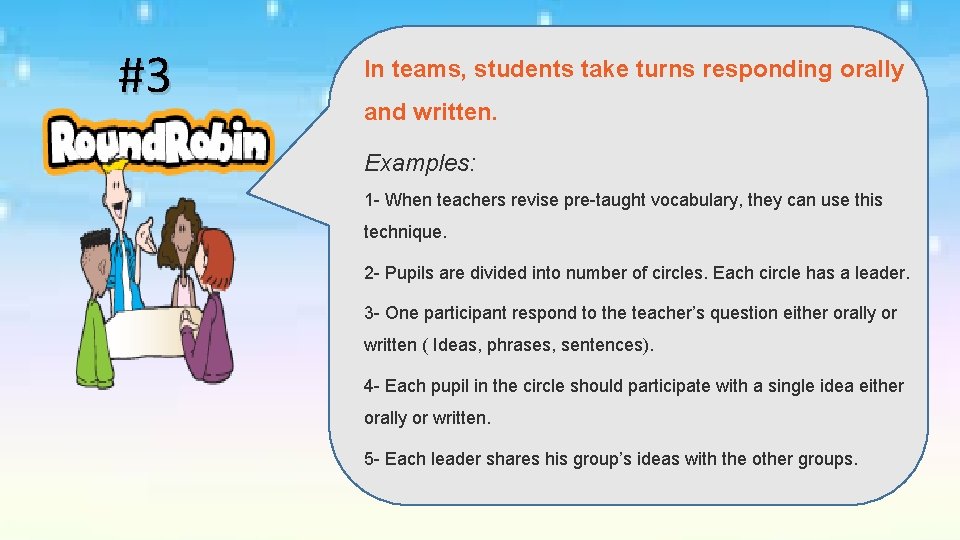
#3 In teams, students take turns responding orally and written. Examples: 1 - When teachers revise pre-taught vocabulary, they can use this technique. 2 - Pupils are divided into number of circles. Each circle has a leader. 3 - One participant respond to the teacher’s question either orally or written ( Ideas, phrases, sentences). 4 - Each pupil in the circle should participate with a single idea either orally or written. 5 - Each leader shares his group’s ideas with the other groups.
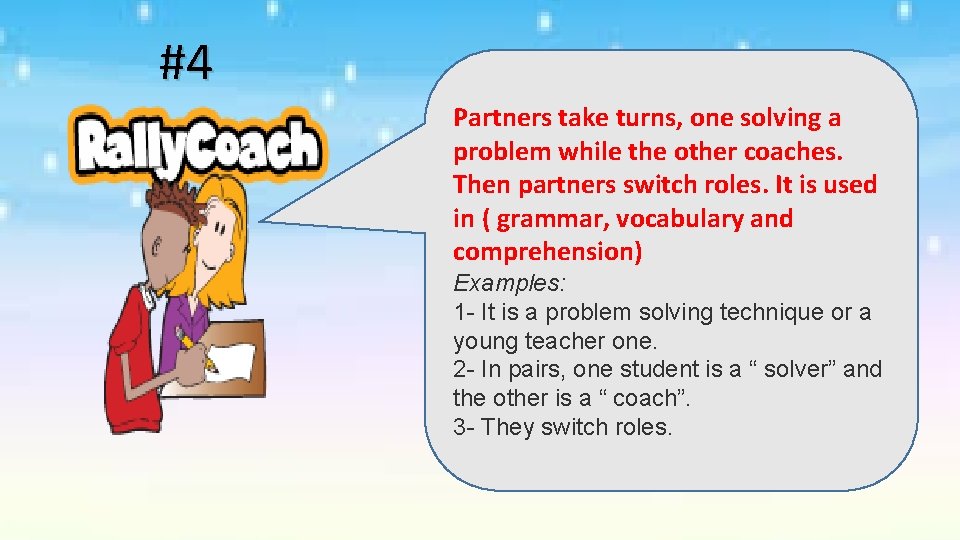
#4 Partners take turns, one solving a problem while the other coaches. Then partners switch roles. It is used in ( grammar, vocabulary and comprehension) Examples: 1 - It is a problem solving technique or a young teacher one. 2 - In pairs, one student is a “ solver” and the other is a “ coach”. 3 - They switch roles.
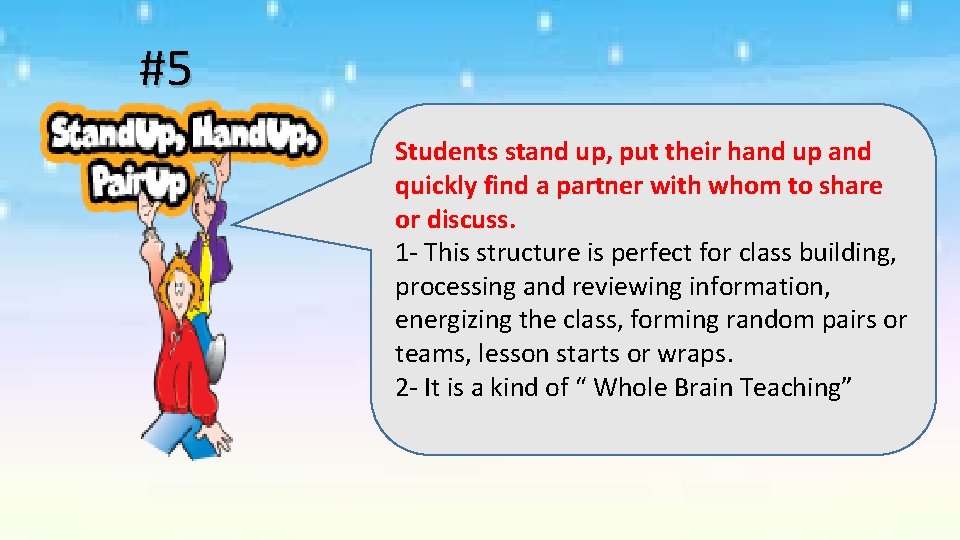
#5 Students stand up, put their hand up and quickly find a partner with whom to share or discuss. 1 - This structure is perfect for class building, processing and reviewing information, energizing the class, forming random pairs or teams, lesson starts or wraps. 2 - It is a kind of “ Whole Brain Teaching”
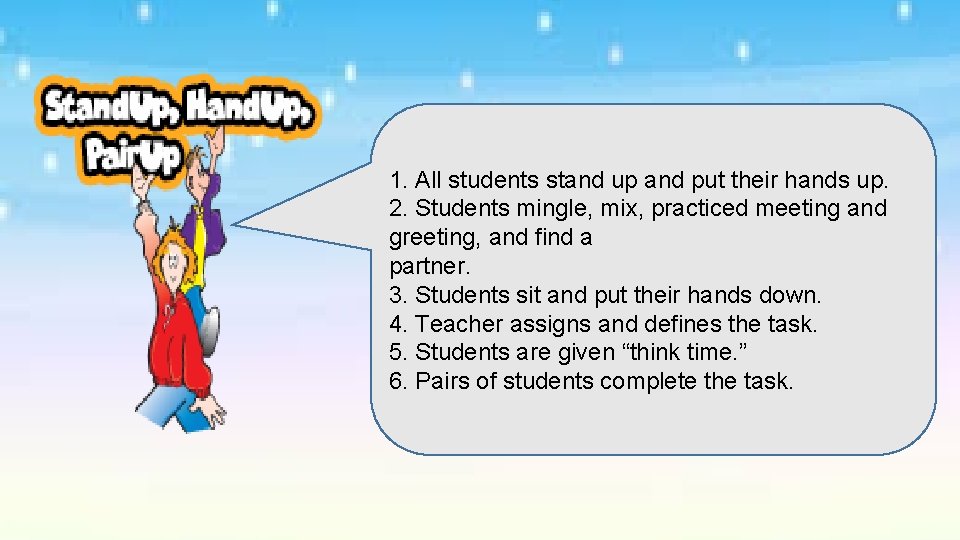
1. All students stand up and put their hands up. 2. Students mingle, mix, practiced meeting and greeting, and find a partner. 3. Students sit and put their hands down. 4. Teacher assigns and defines the task. 5. Students are given “think time. ” 6. Pairs of students complete the task.
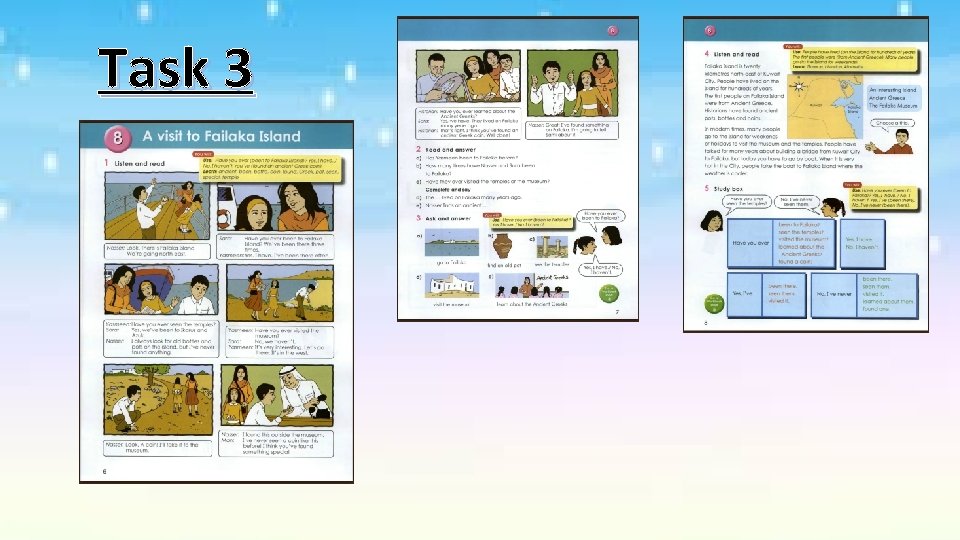
Task 3
Task 4 "Which Kagan Structure should I use first and Where do I begin? " 1. 2. 3. 4. 5.
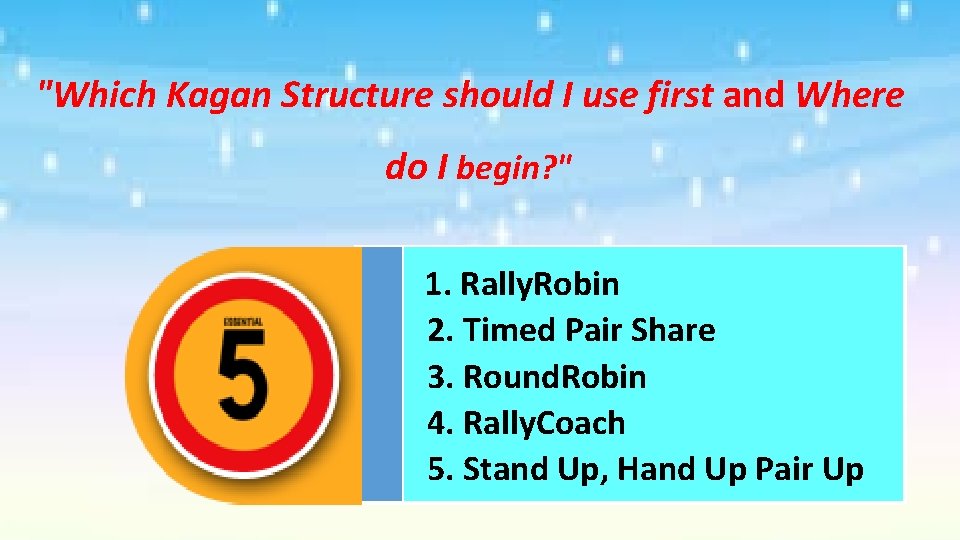
"Which Kagan Structure should I use first and Where do I begin? " 1. Rally. Robin 2. Timed Pair Share 3. Round. Robin 4. Rally. Coach 5. Stand Up, Hand Up Pair Up
Task 5 What are the positive outcomes from Kagan Structures?
Students Teachers Schools
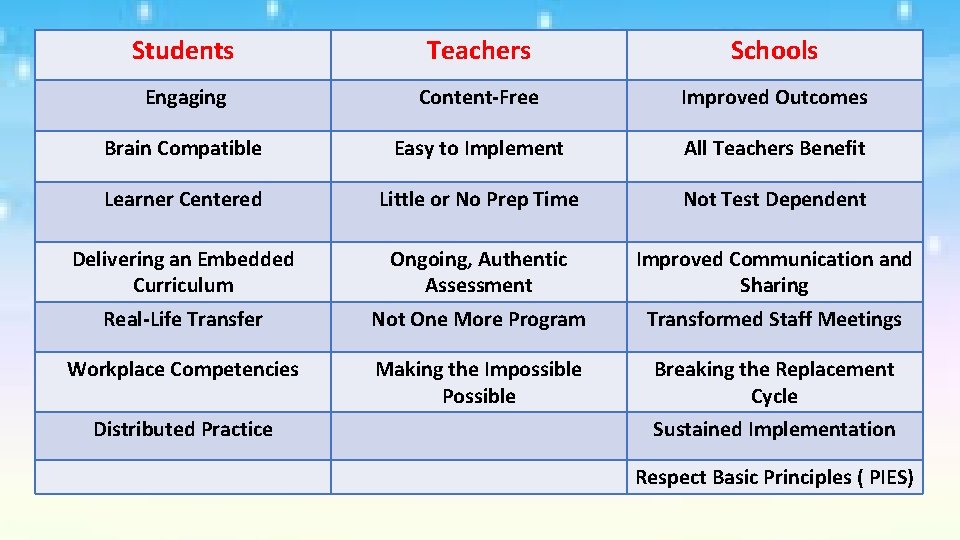
Students Teachers Schools Engaging Content-Free Improved Outcomes Brain Compatible Easy to Implement All Teachers Benefit Learner Centered Little or No Prep Time Not Test Dependent Delivering an Embedded Curriculum Ongoing, Authentic Assessment Improved Communication and Sharing Real-Life Transfer Not One More Program Transformed Staff Meetings Workplace Competencies Making the Impossible Possible Breaking the Replacement Cycle Distributed Practice Sustained Implementation Respect Basic Principles ( PIES)
What is “ PIES” concepts that summarizes Kagan Structures?
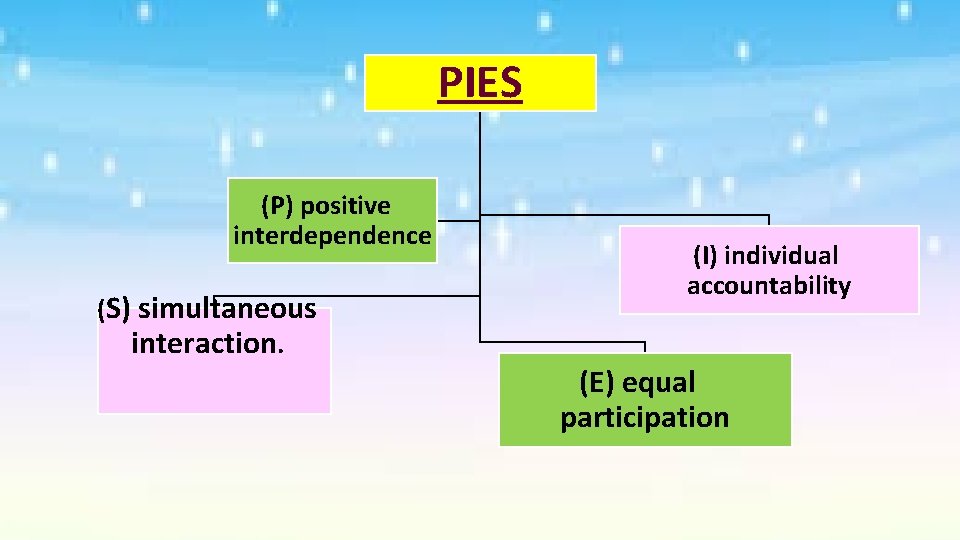
PIES (P) positive interdependence (S) simultaneous interaction. (I) individual accountability (E) equal participation

Hope you have got the whole benefit
- Slides: 31