
MiniResearch Projects What are they Sample Grade 6

- Slides: 15
Mini-Research Projects What are they? Sample Grade 6 Mini-Inquiry Sue Taylor-Foley SSDSB
Mini Research Projects • • Short term research projects Cooperative learning structures Promote curiosity in learning Helps with the development of questioning skills • Does not take a long period of time
Procedure • Introduce broad topic focus • Elicit prior knowledge – Use KWL – Use graffiti – Develop a question board – Use other tried and try methods • Form inquiry teams • Teams can be activated in a centre approach during active reading or at some other appropriate time of the day • Not all teams need to be engaged in research at the same time • Not all team members need to conduct their research at once but, they will need to meet and the beginning and completion of their research.
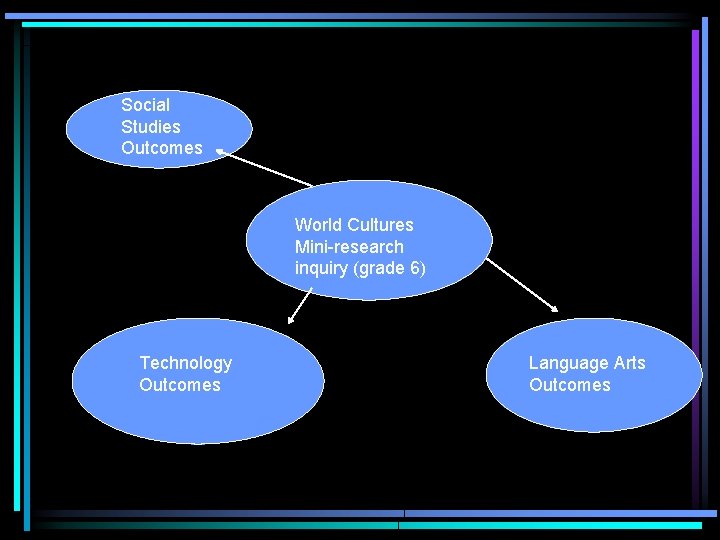
Social Studies Outcomes World Cultures Mini-research inquiry (grade 6) Technology Outcomes Language Arts Outcomes
Social Studies Outcomes • GCO: Students will be expected to demonstrate an understanding of culture, diversity, and world view, recognizing the similarities and differences reflected in various personal, cultural, racial, and ethnic perspectives • SCO • explore their concept of culture and demonstrate an understanding of the influence of culture in their lives • develop an appreciation of the importance of cross-cultural understanding • identify, locate, and map the major culture realms of the world
Language Arts • Students will be expected to ask and respond to questions to seek clarification or explanation of ideas and concepts • Students will be expected to answer, with increasing independence, their own questions and those of others by selecting relevant information from a variety of texts. • Students will be expected to use a range of reference texts and a database or an electronic search to facilitate the selection process. • Students will be expected to use a range of strategies to writing and other ways of representing to frame questions and design investigations to answer their questions. . .
L. A. Cont. • Students will be expected to create written and media texts. . . (depending on presentation/product expectations) • Students will be expected to select, organize and combine relevant information from 3 -5 sources.
Technology Outcomes • Having researched a topic within a curriculum unit, students will discover patterns and relationships between pieces of information. . (use Inspiration template on comparisons to assist with this) • Students will collaborate with others to conduct simple research, then plan and create a representation of their learning. . . • With the assistance of their teacher students will use the Internet. . to search and access curriculum materials located on the world wide web. • Students will understand that well researched solutions to curriculum problems and personally important challenges can provide security when their conclusions are uncommon or unexpected
Introduction to World Cultures(Graffiti, Webbing …) • • Asia Europe Africa Australia Antarctica North America South America
Creating Questions • Prior knowledge and teaching is assumed (see handout- Asking Good Questions) • Using post-its have students generate questions and put them on the chart(s) that the question(s) relate to.
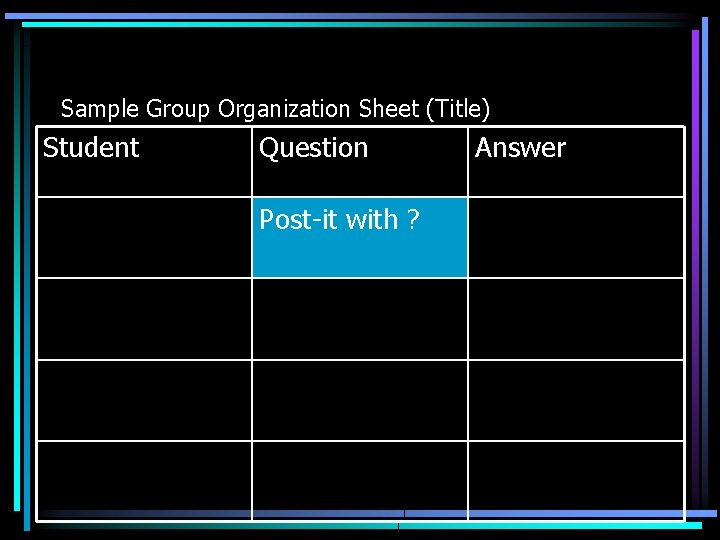
Groupings • Assign students to a chart and have them choose a question (of their own or someone else’s to research) • Use a group organization sheet for each group so you will know the questions being researched and who is conducting this research.
Sample Group Organization Sheet (Title) Student Question Post-it with ? Answer
Each person in the group will research their own ? on the topic. You will use • the Internet (pre-selected resources) • Print resources • Globe
Expectations • All group members will complete their research in specified period of time. • Group members may assist each other if they come across information that would be helpful to someone else. • All group members will meet within a specific time period time to create a 10 minute presentation for the class on the information discovered. • Presentations will be marked using the presentation rubric.
Internet Resources • EBSCOsearchasaurus • Africa • Europe • North America • South America • Australia • Antarctica • Asia