
MINING Mineral Resource Naturally occurring material in or

- Slides: 32
MINING
• Mineral Resource: Naturally occurring material in or on Earth’s crust that can be extracted and processed into useful materials for a profit. • Ore: a rock containing enough of one or more metallic minerals that can be mined profitably. • Reserves: easily extracted and economical to mine.
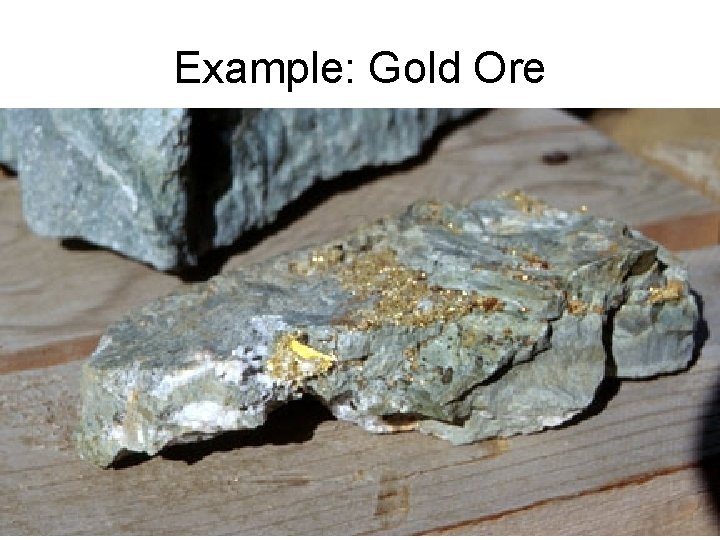
Example: Gold Ore
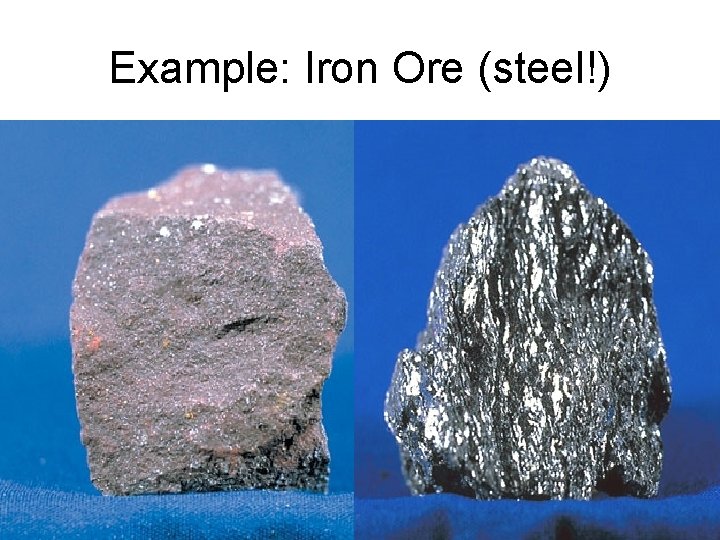
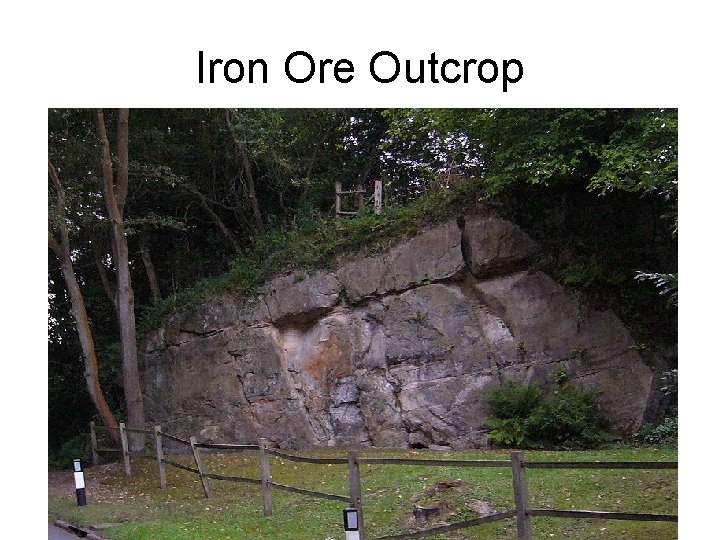
Example: Iron Ore (steel!)
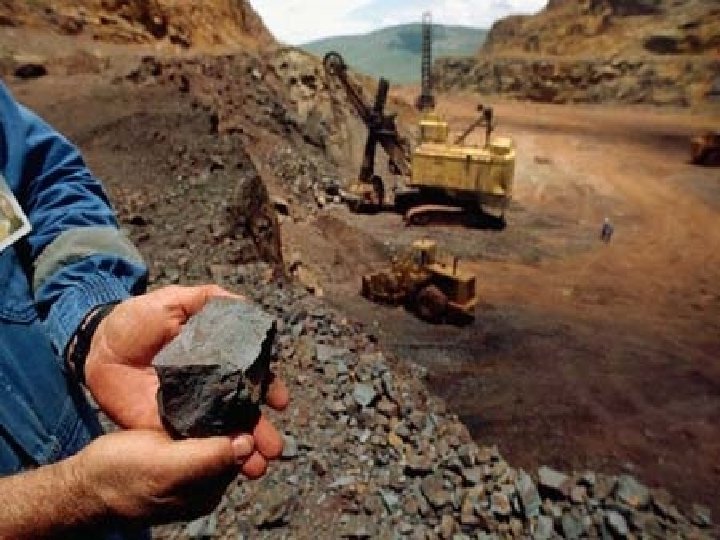
Iron Ore Outcrop
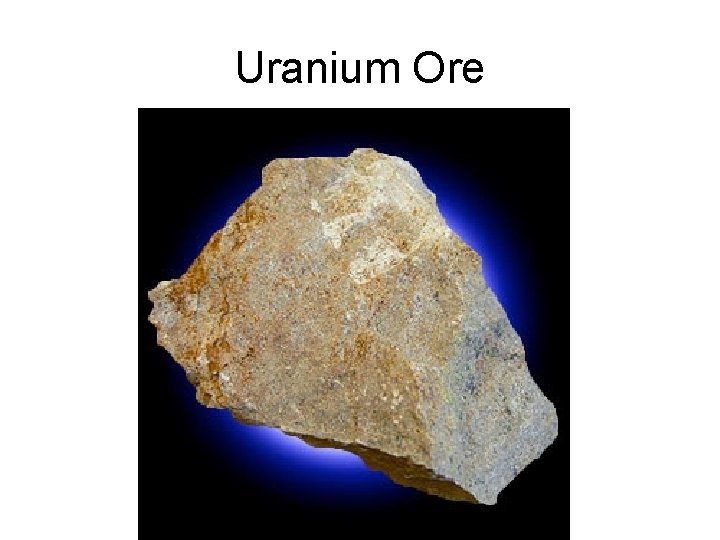
Uranium Ore
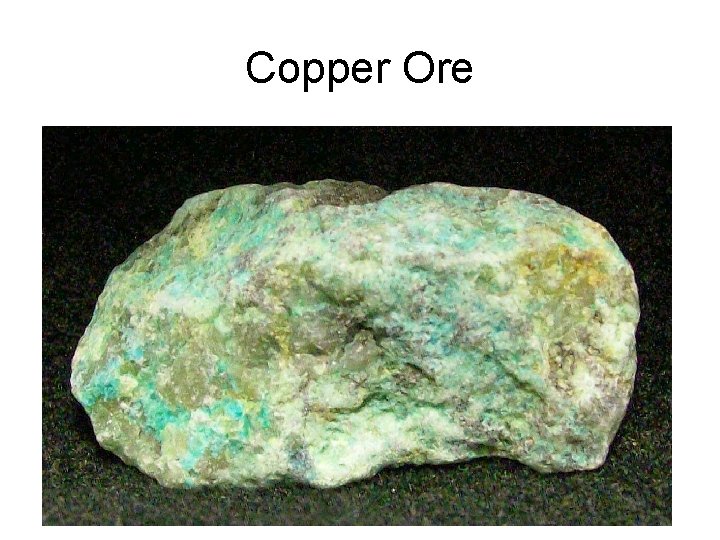
Copper Ore
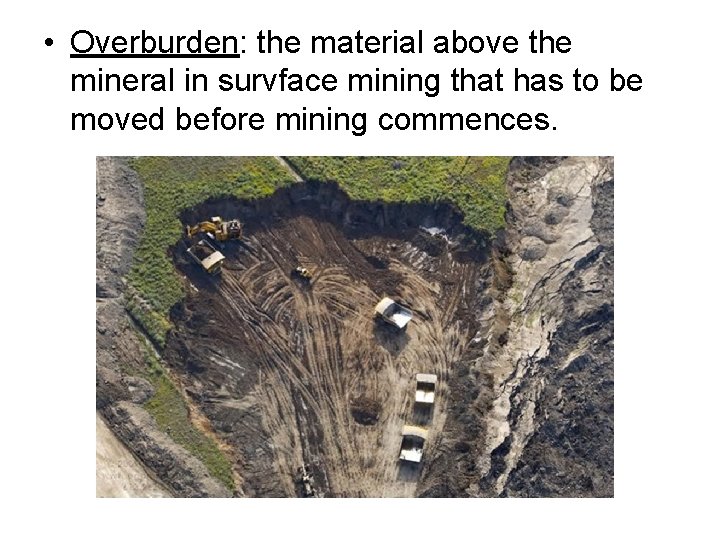
• Overburden: the material above the mineral in survface mining that has to be moved before mining commences.
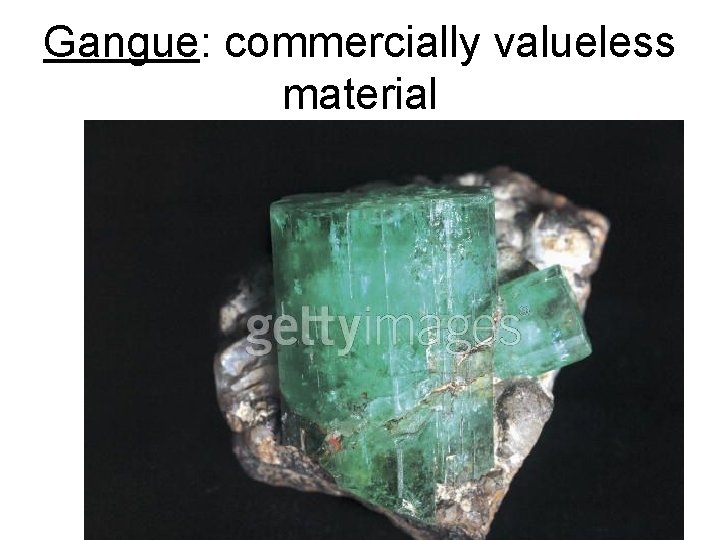
Gangue: commercially valueless material
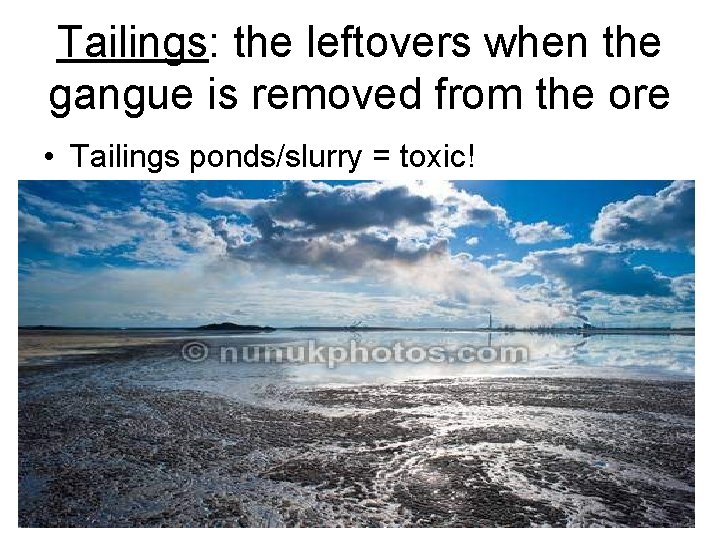
Tailings: the leftovers when the gangue is removed from the ore • Tailings ponds/slurry = toxic!
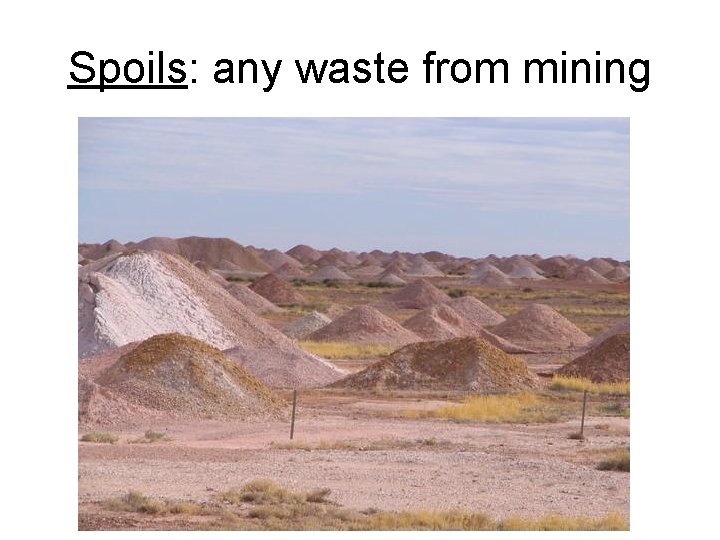
Spoils: any waste from mining
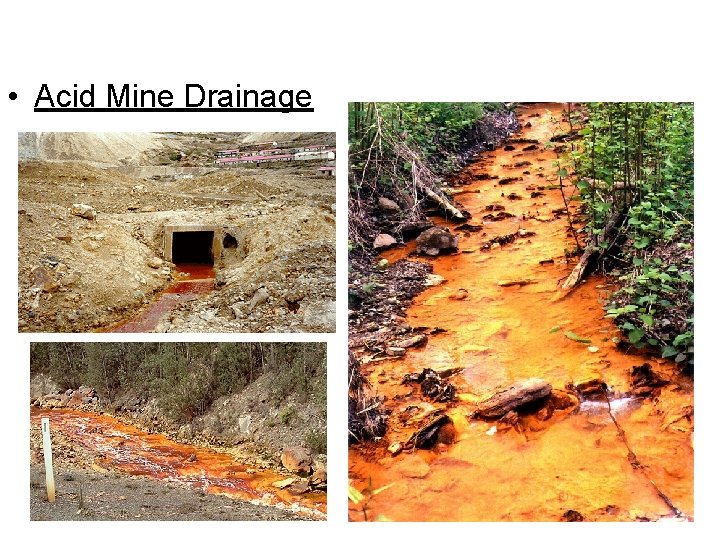
Environmental Effects: • AMD: highly acidic water rich in heavy metals – water+rocks that contain sulfur = sulfuric acid – Heavy metals can be leached from rocks that come in contact with the sulfuric acid • Treatment: most often liming: lime neutralization; when the p. H becomes neutral, heavy metals such as iron precipitate (“yellow boy”)
• Acid Mine Drainage
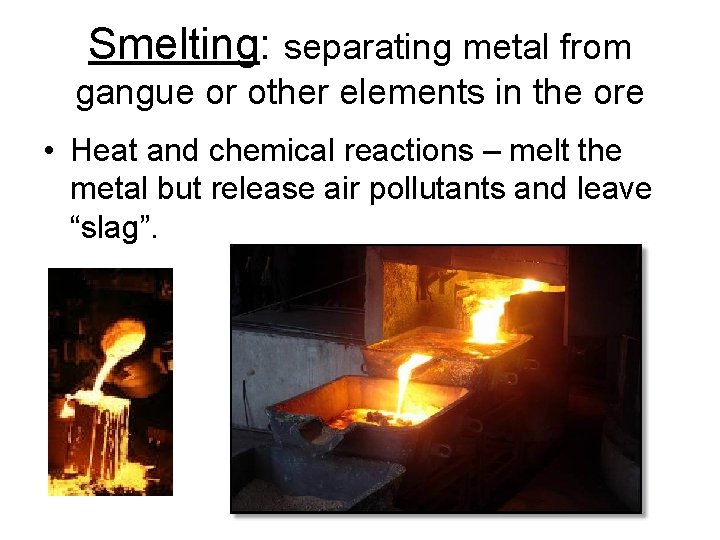
Smelting: separating metal from gangue or other elements in the ore • Heat and chemical reactions – melt the metal but release air pollutants and leave “slag”.
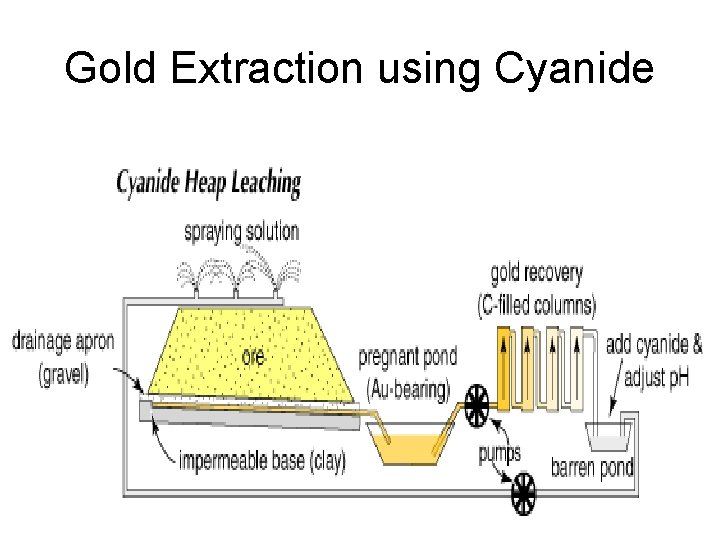
Gold Extraction using Cyanide
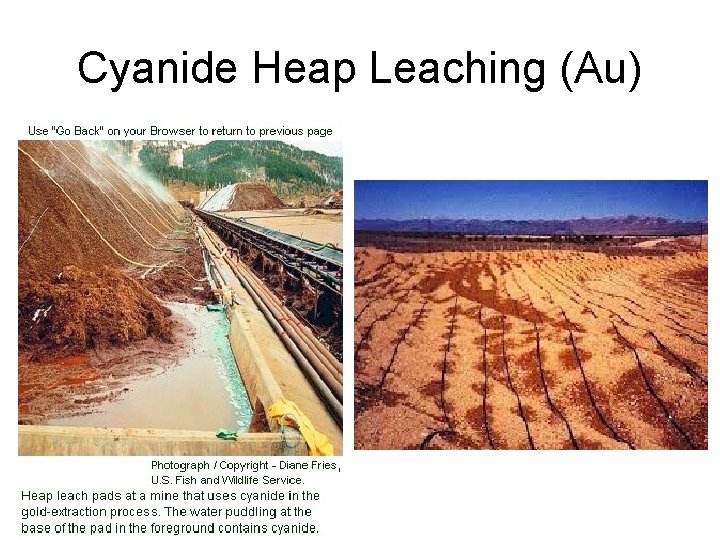
Cyanide Heap Leaching (Au)
TYPES OF MINING Surface and Subsurface
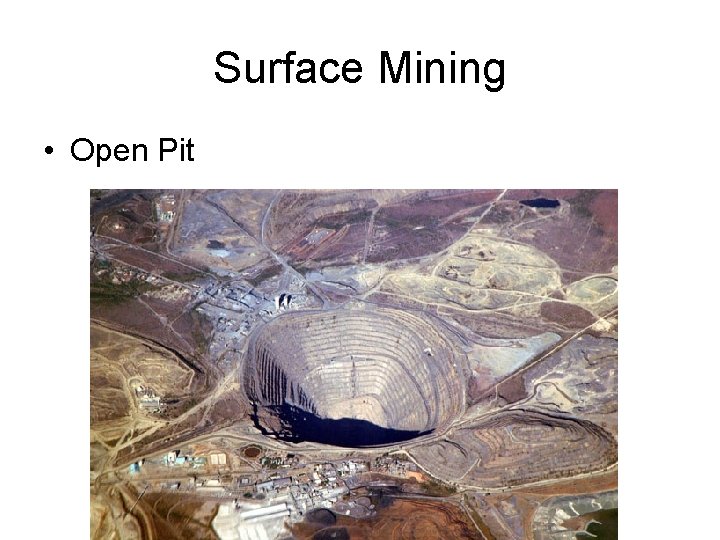
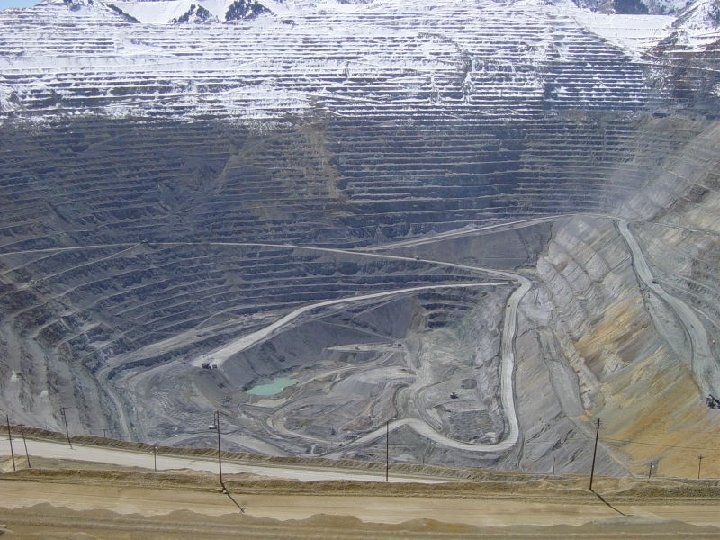
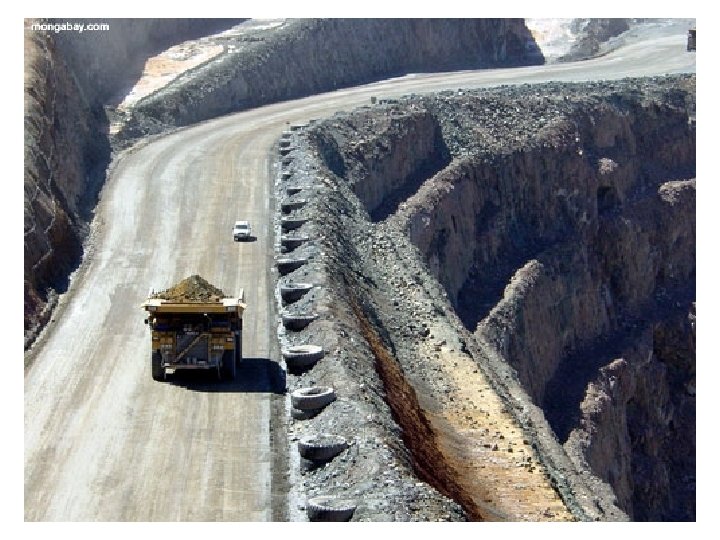
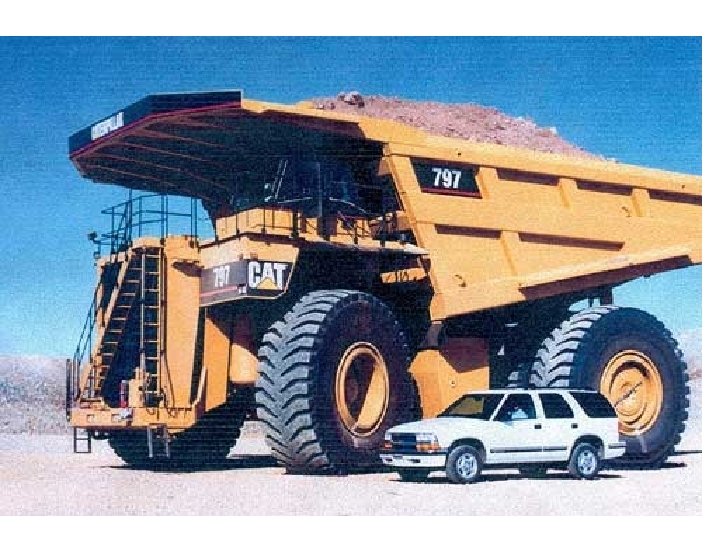
Surface Mining • Open Pit
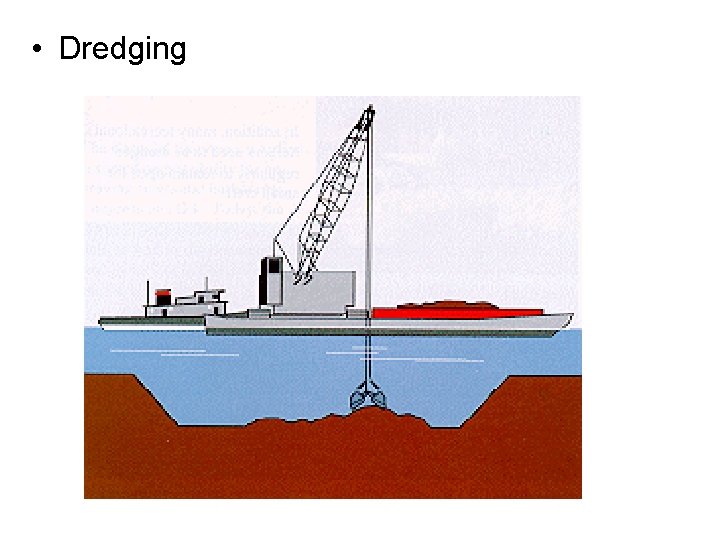
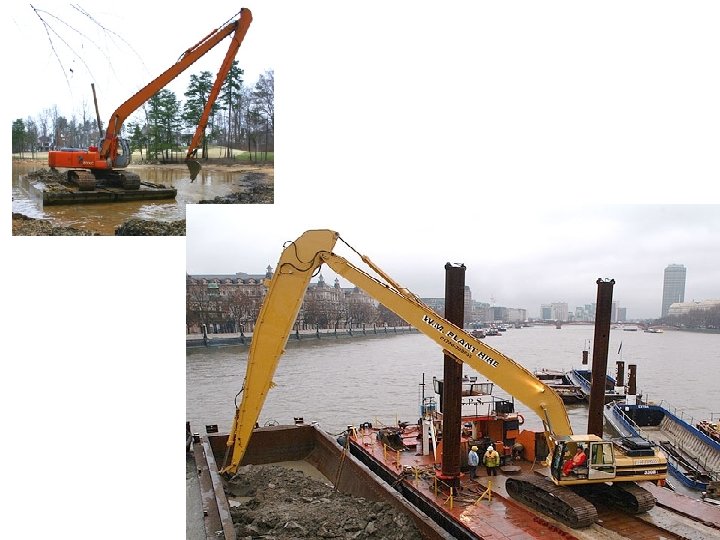
• Dredging
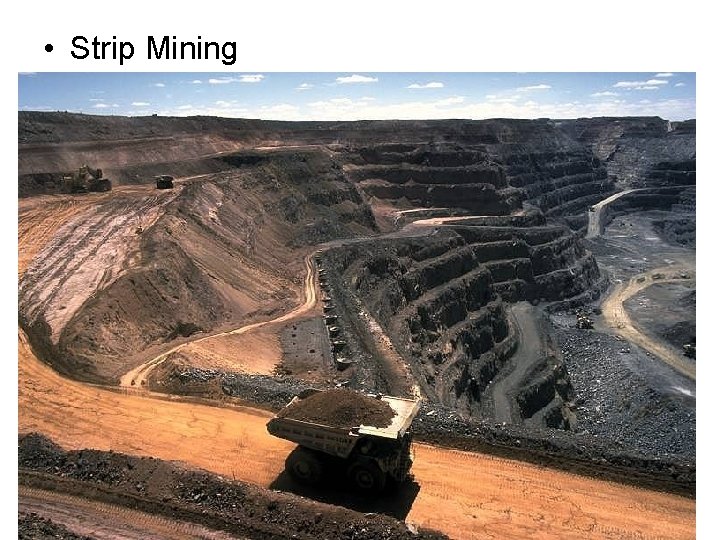
• Strip Mining
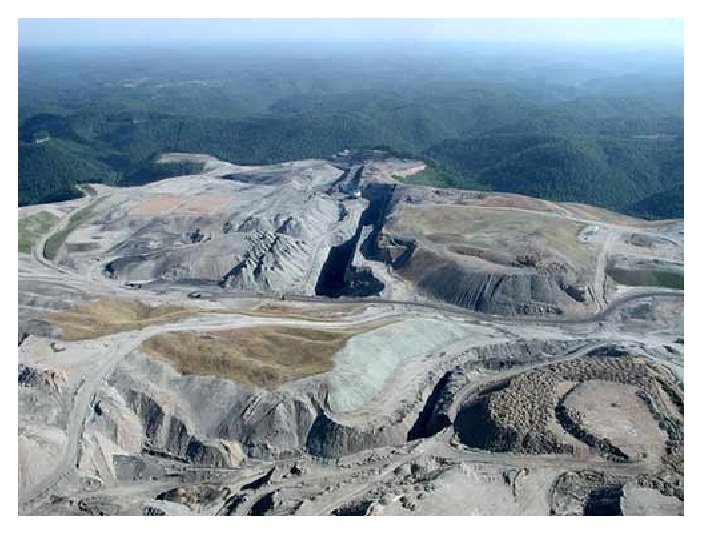
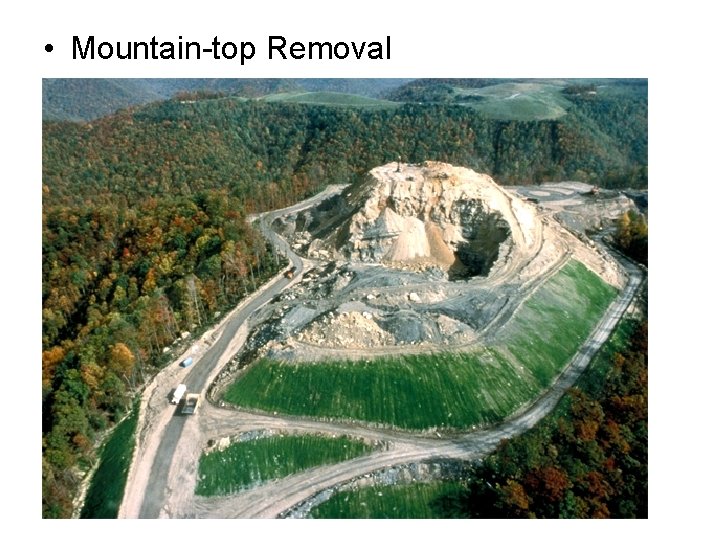
• Mountain-top Removal
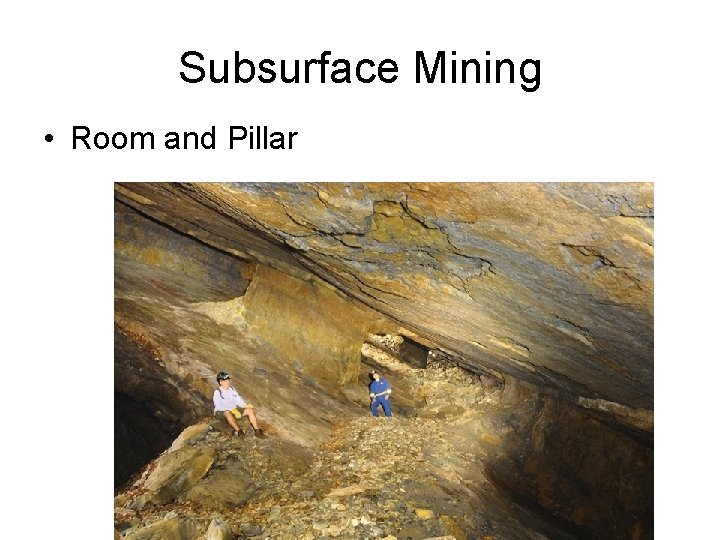
Subsurface Mining • Room and Pillar
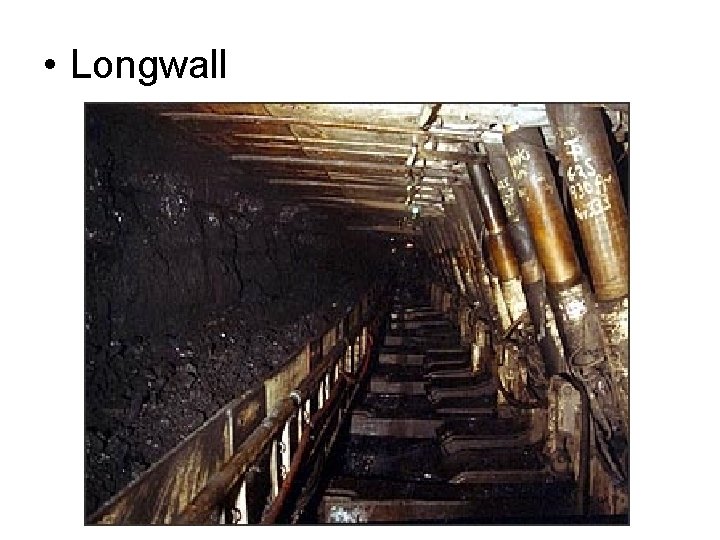
• Longwall
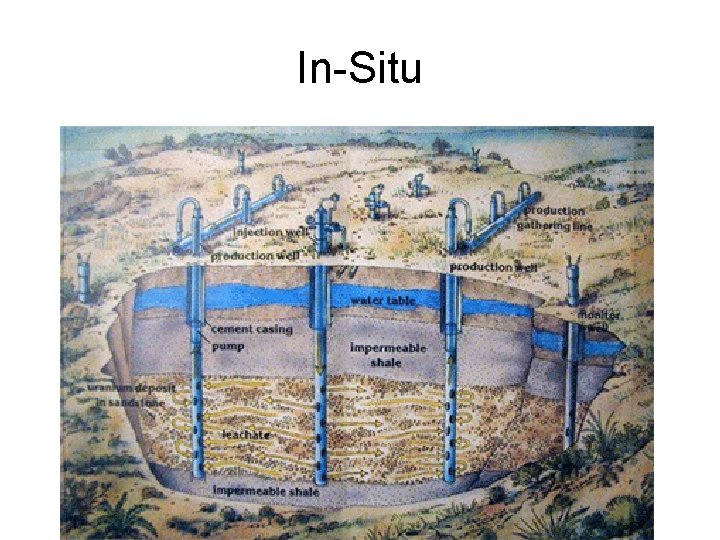
In-Situ
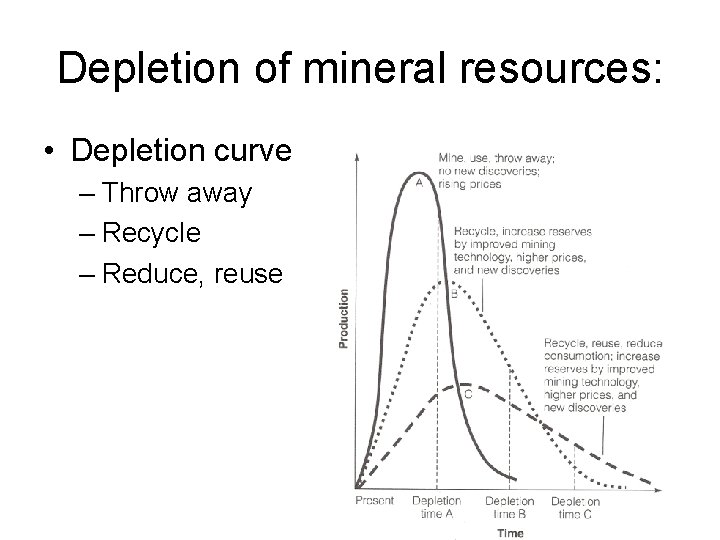
Depletion of mineral resources: • Depletion curve – Throw away – Recycle – Reduce, reuse
Legislation • Mining Law of 1872: Encouraged the mineral exploration and mining of hardrock minerals on U. S. public land. • Surface Mining Control and Reclamation Act (SMCRA): (1977) requires any surface mining be “reclaimed”. This means that soil surface must be “restored” to its original condition.