
MINING How we use resources from the earth

- Slides: 35
MINING: How we use resources from the earth
Warm-Up • What resources do we need to take out of the earth? • How do we get those resources out of the earth so we can use them?
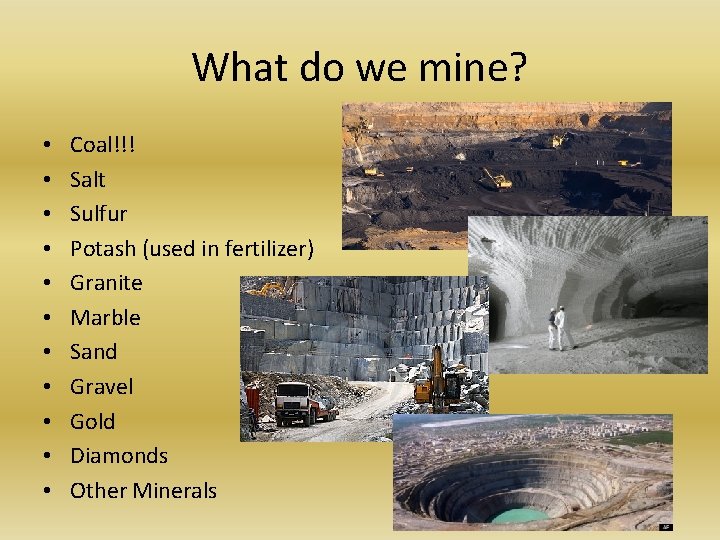
What do we mine? • • • Coal!!! Salt Sulfur Potash (used in fertilizer) Granite Marble Sand Gravel Gold Diamonds Other Minerals
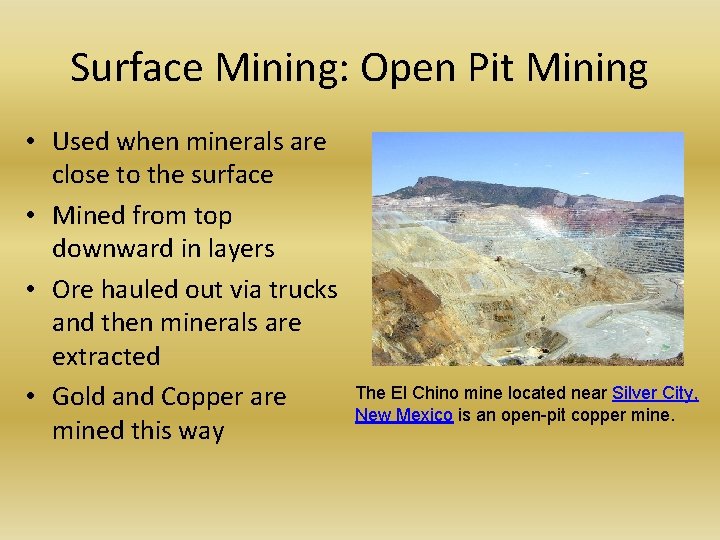
Surface Mining: Open Pit Mining • Used when minerals are close to the surface • Mined from top downward in layers • Ore hauled out via trucks and then minerals are extracted • Gold and Copper are mined this way The El Chino mine located near Silver City, New Mexico is an open-pit copper mine.
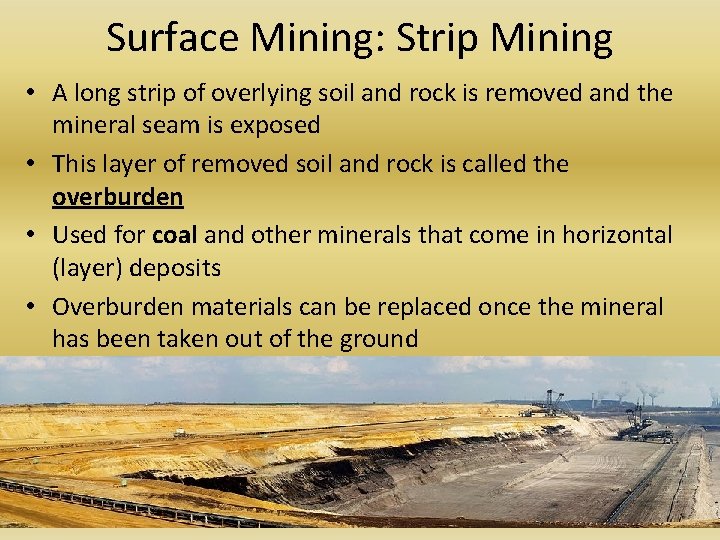
Surface Mining: Strip Mining • A long strip of overlying soil and rock is removed and the mineral seam is exposed • This layer of removed soil and rock is called the overburden • Used for coal and other minerals that come in horizontal (layer) deposits • Overburden materials can be replaced once the mineral has been taken out of the ground
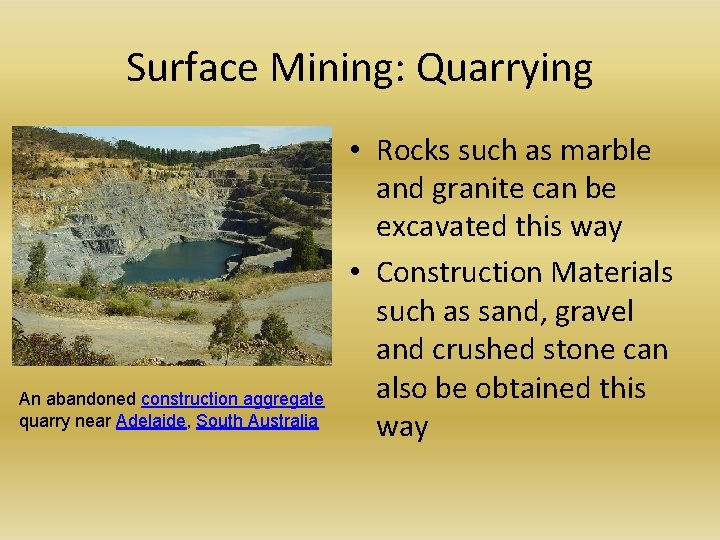
Surface Mining: Quarrying An abandoned construction aggregate quarry near Adelaide, South Australia • Rocks such as marble and granite can be excavated this way • Construction Materials such as sand, gravel and crushed stone can also be obtained this way
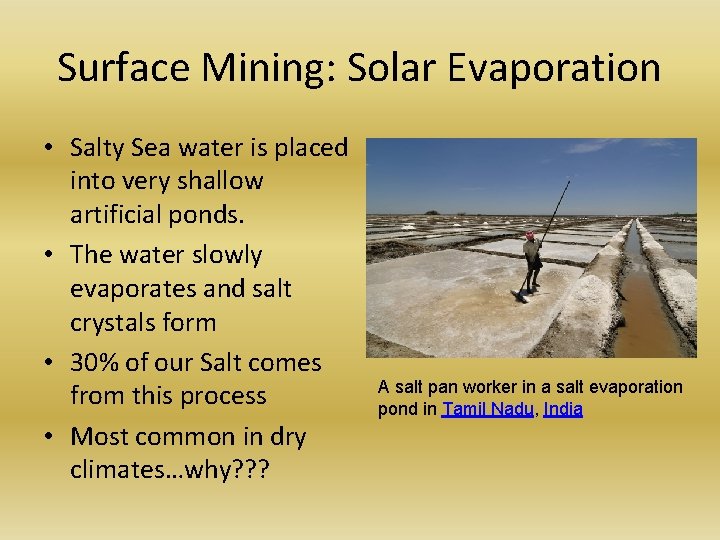
Surface Mining: Solar Evaporation • Salty Sea water is placed into very shallow artificial ponds. • The water slowly evaporates and salt crystals form • 30% of our Salt comes from this process • Most common in dry climates…why? ? ? A salt pan worker in a salt evaporation pond in Tamil Nadu, India
Subsurface Mining: Room-and-Pillar Mining • “Rooms” are cut into seams of coal (or salt or iron) • Pillars of ore are left standing to support the ceiling • When all possible ore is extracted from the rooms – often the pillars are then removed and the land above collapses
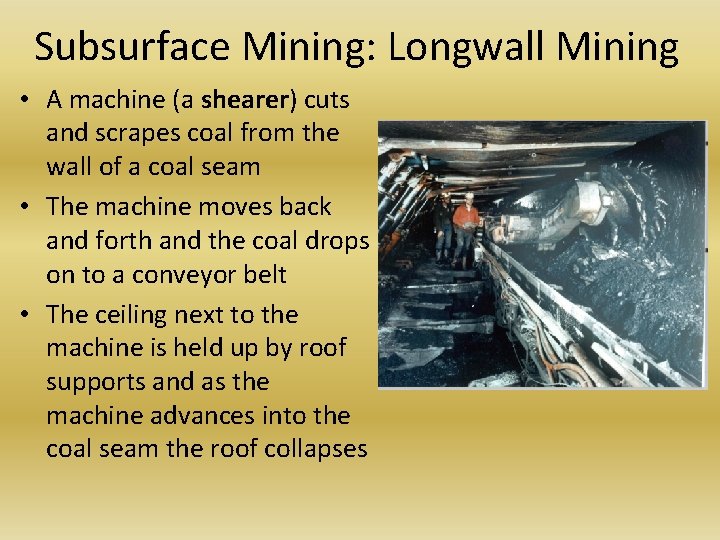
Subsurface Mining: Longwall Mining • A machine (a shearer) cuts and scrapes coal from the wall of a coal seam • The machine moves back and forth and the coal drops on to a conveyor belt • The ceiling next to the machine is held up by roof supports and as the machine advances into the coal seam the roof collapses
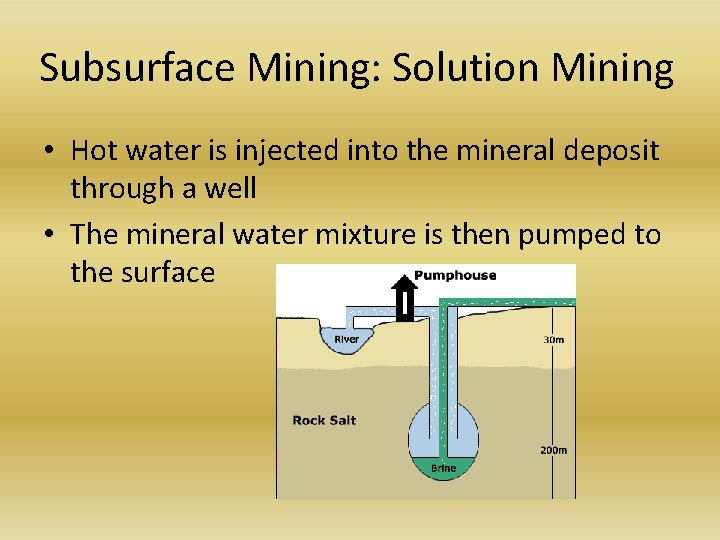
Subsurface Mining: Solution Mining • Hot water is injected into the mineral deposit through a well • The mineral water mixture is then pumped to the surface
Mining Regulations & Mine Reclamation
Warm Up. Environmental Impacts of Mining What are some environmental impacts associated with mining? Be ready to explain your answers or provide examples.
Environmental Impacts of Mining • • • Air and noise pollution Water pollution Displacement of wildlife Erosion and sedimentation Soil degradation Subsidence Because the environmental impacts are so great, mining is one of the most heavily regulated industries in the US!
Air and Noise Pollution • Dust is produced by removing, loading, hauling, and dumping soil and overburden (stuff on top of ore) • Dust is also produced from ore blasting • Noise is created by equipment and blasting
Air and Noise Pollution • Equipment noise pollution is more of a nuisance. • Blasting noise pollution cause damage to nearby buildings.
Air and Noise Pollution Regulation • Most surface mines are NOT located near urban populations • Regulations in US forbid mining operations to allow dust or noise to exit the area being mined
Water Contamination • Water that seeps into mines or through piles of rock can pick up or dissolve toxic substances • Containments can then wash into streams where they can harm or kill aquatic life Think! What do you think happens when water is contaminated with a mineral like sulfur? What regulations do you think exist to combat water contamination?
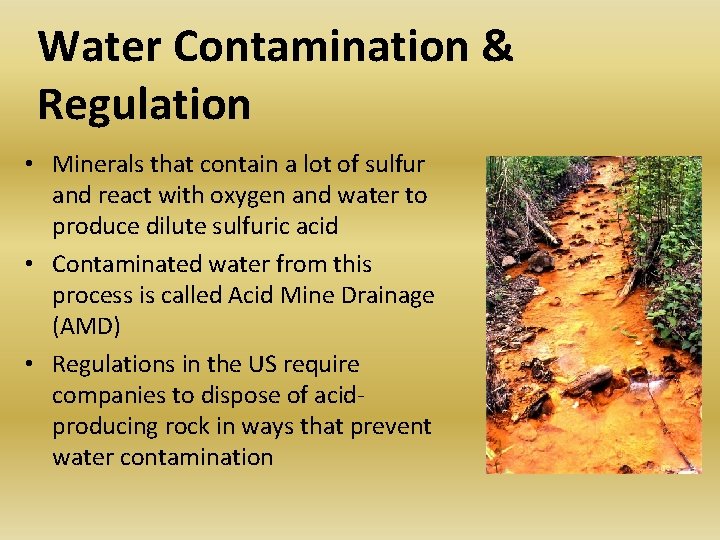
Water Contamination & Regulation • Minerals that contain a lot of sulfur and react with oxygen and water to produce dilute sulfuric acid • Contaminated water from this process is called Acid Mine Drainage (AMD) • Regulations in the US require companies to dispose of acidproducing rock in ways that prevent water contamination
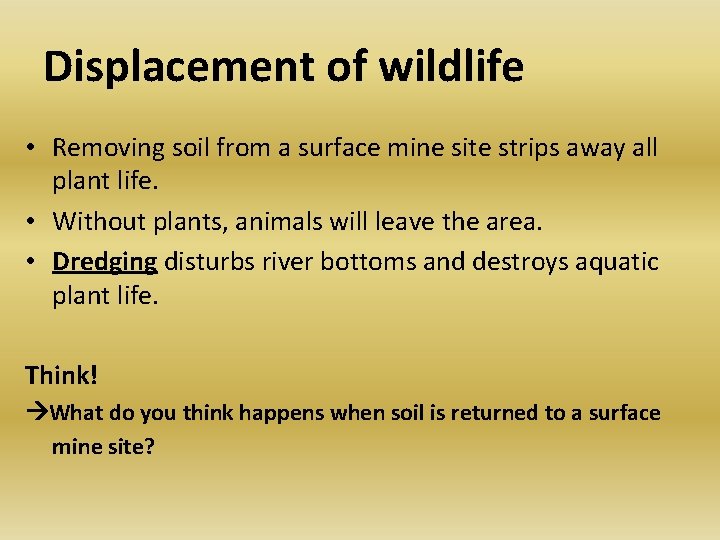
Displacement of wildlife • Removing soil from a surface mine site strips away all plant life. • Without plants, animals will leave the area. • Dredging disturbs river bottoms and destroys aquatic plant life. Think! What do you think happens when soil is returned to a surface mine site?
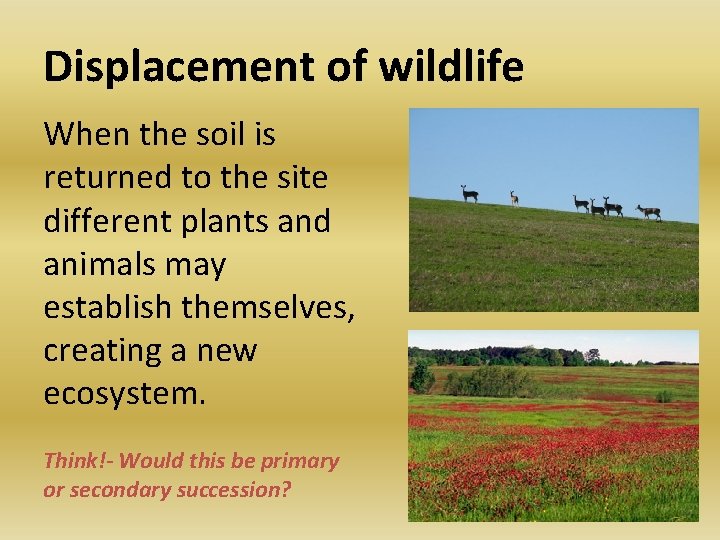
Displacement of wildlife When the soil is returned to the site different plants and animals may establish themselves, creating a new ecosystem. Think!- Would this be primary or secondary succession?
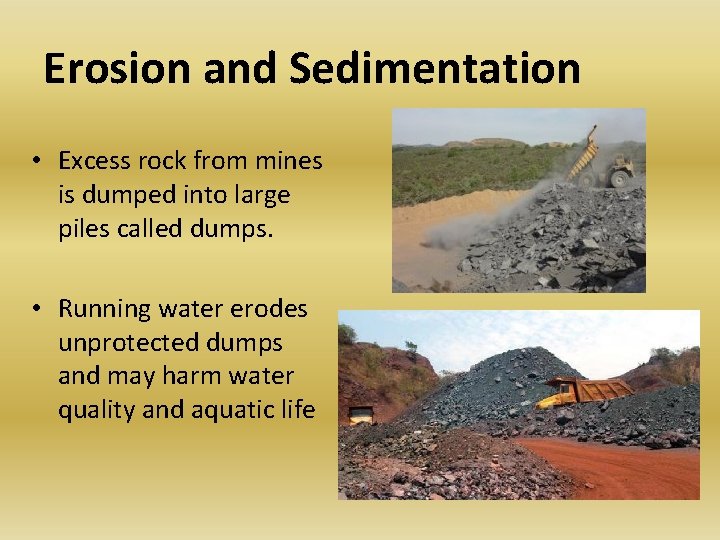
Erosion and Sedimentation • Excess rock from mines is dumped into large piles called dumps. • Running water erodes unprotected dumps and may harm water quality and aquatic life
Soil Degradation • Soil at a mine is removed from the uppermost layer downward. • Soil must be stored in layers with the upper layers stored above lower layers. Think! What do you think happens if the soil is not removed and stored properly?
Soil Degradation • Soil must be removed and stored properly or it can be depleted of nutrients when it is reclaimed. • Deeper soil layers may also contain sulfur. Think! à What might happens to sulfur compounds in the soil? à How might this affect plant growth?
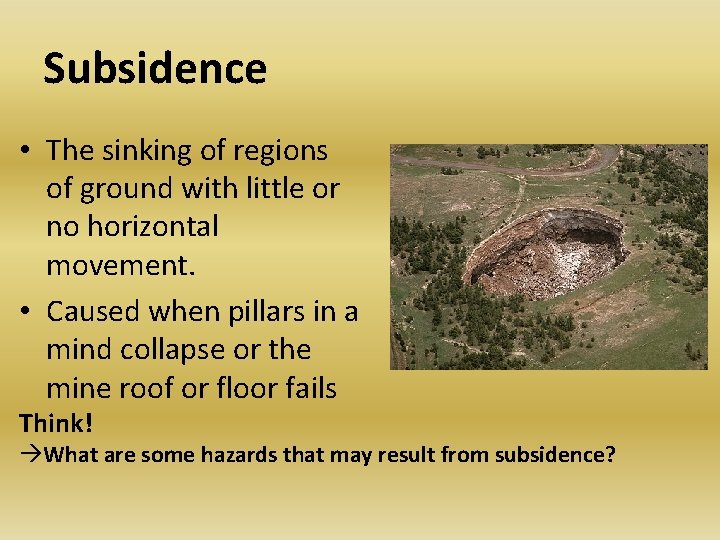
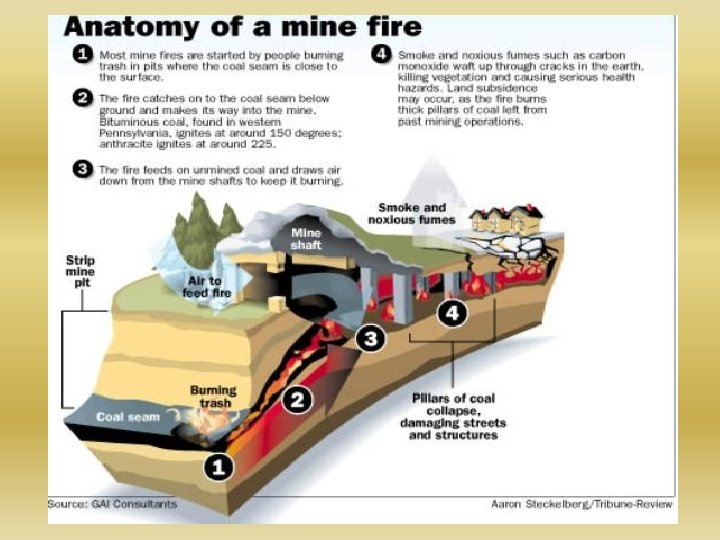
Subsidence • The sinking of regions of ground with little or no horizontal movement. • Caused when pillars in a mind collapse or the mine roof or floor fails Think! àWhat are some hazards that may result from subsidence?
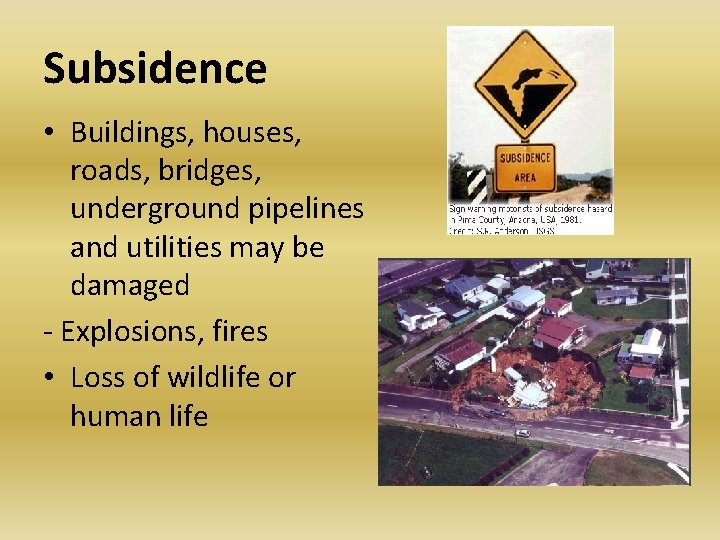
Subsidence • Buildings, houses, roads, bridges, underground pipelines and utilities may be damaged - Explosions, fires • Loss of wildlife or human life
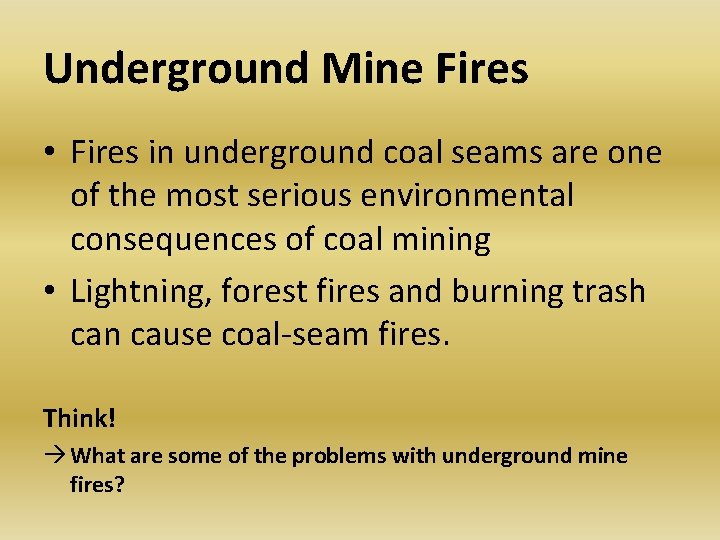
Underground Mine Fires • Fires in underground coal seams are one of the most serious environmental consequences of coal mining • Lightning, forest fires and burning trash can cause coal-seam fires. Think! à What are some of the problems with underground mine fires?
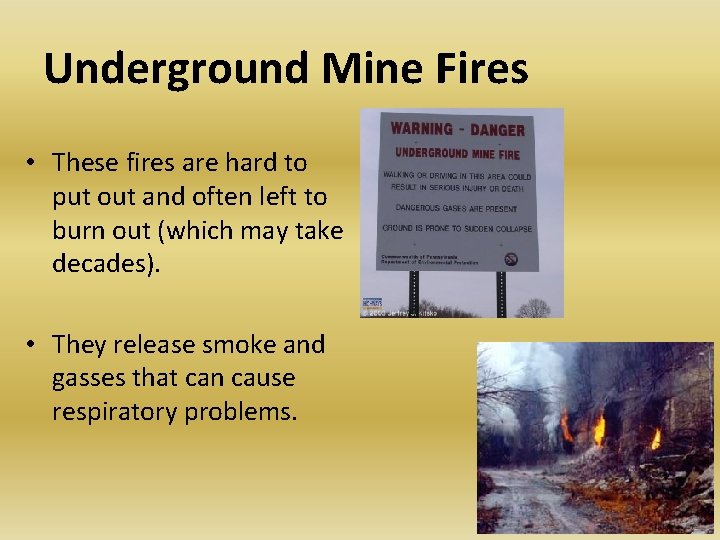
Underground Mine Fires • These fires are hard to put out and often left to burn out (which may take decades). • They release smoke and gasses that can cause respiratory problems.
Mining Regulations • Mining is the most heavily regulated industry in the US. • Mines on land in the US are regulated by federal and state laws. • States must issue permits for mining, run inspections, and address noncompliance. Think! à What federal regulations exist to control negative impacts mining has on the environment?
Mining Regulations • The Clean Water Act &The Safe Drinking Water Act • The Comprehensive Response Compensation and Liability Act – regulates the release of hazardous substances into air, soil, & water • The Endangered Species Act – protects threatened & endangered species and their habitats
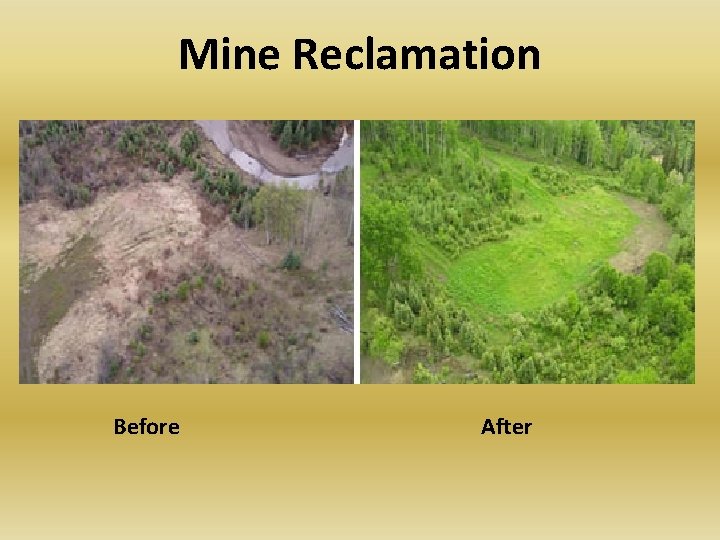
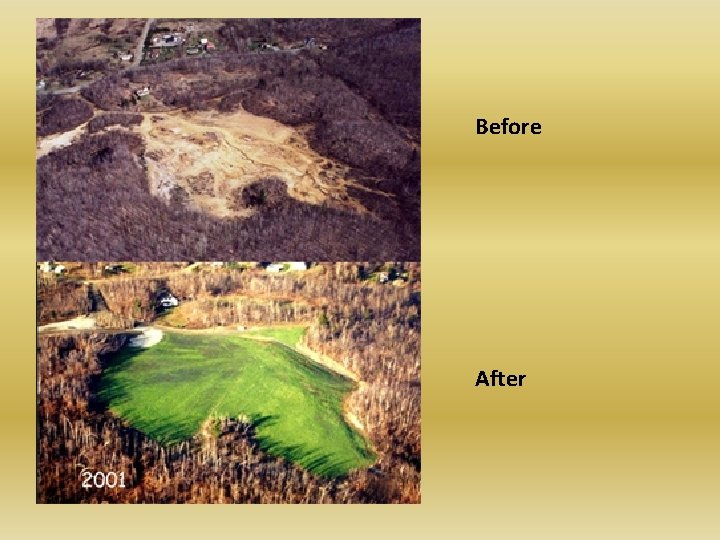
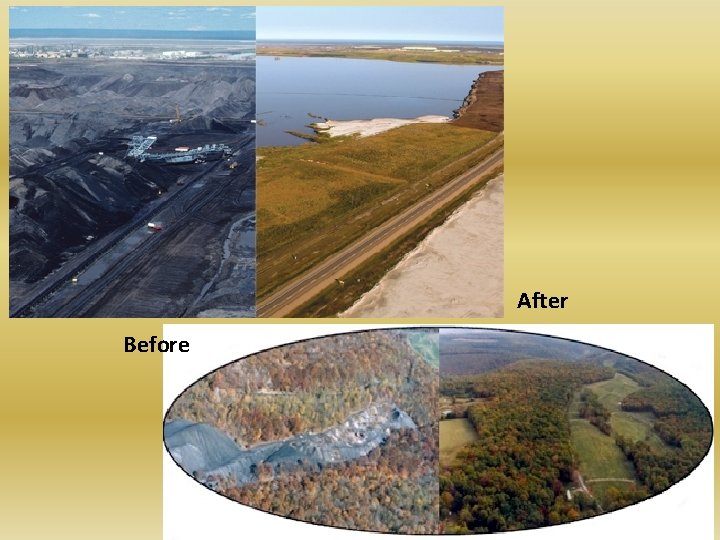
Reclamation • Reclaiming the land or returning it to its original or better condition after mining. • Billions of dollars are spent to clean up abandoned mines. • The Surface Mining control and Reclamation Act of 1977 (SMCRA) – Set standards to minimize the effects of coal mining on environment – Established funds used to reclaim land water resources adversely affected by mining
Mine Reclamation Before After
Before After
After Before
Lessening impact: The 3 R’s of Mining • Reduce the amount of waste you produce (use less stuff) • Reuse materials in the waste stream as much as possible • Maximize Recycling opportunities