
MINING Extraction of Natural Resources Natural resource A

- Slides: 67
MINING Extraction of Natural Resources
Natural resource A material source of wealth, such as timber, fresh water, or a mineral deposit, that occurs in a natural state and has economic value.
Resource n A concentration of naturally occurring solid, liquid, or gaseous material in or on the Earth's crust in such form and amount that economic extraction of a commodity from the concentration is currently or potentially feasible. USGS
Need for, Use of Resources n Need – Must have to survive n n Want/Convenience – makes life easier n n Food, water, shelter, clothing Transportation, phone, electronics What do you feel you MUST have (In today’s world, we use much more than previous generations. ) Raw materials for needs/wants are either grown, or extracted from the Earth
What are you wearing, carrying, using today? n n n Clothing Food, drink and containers Jewelry, glasses, contacts Electronic Devices Transportation Electricity
Food and water n n n Energy is required to grow, harvest, transport, and prepare our food Energy is required to purify and transport our water supply. Most of out energy comes from petroleum, natural gas and coal.
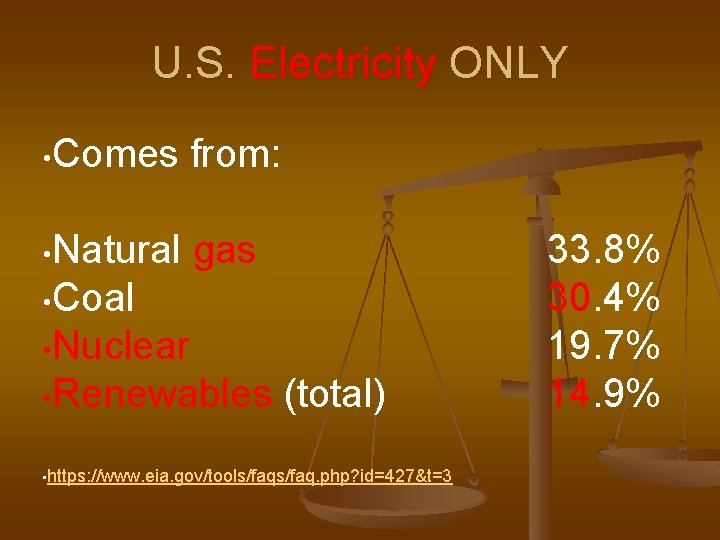
U. S. Electricity ONLY • Comes from: • Natural gas • Coal • Nuclear • Renewables (total) • https: //www. eia. gov/tools/faq. php? id=427&t=3 33. 8% 30. 4% 19. 7% 14. 9%
Clothing n n Natural fabrics Require production energy Synthetic Fabrics -Nylon is derived from coal -Polyester and many others come from petroleum
Jewelry n Gold, silver, gemstones – are Elements or minerals valued due to rarity, special properties, beauty.
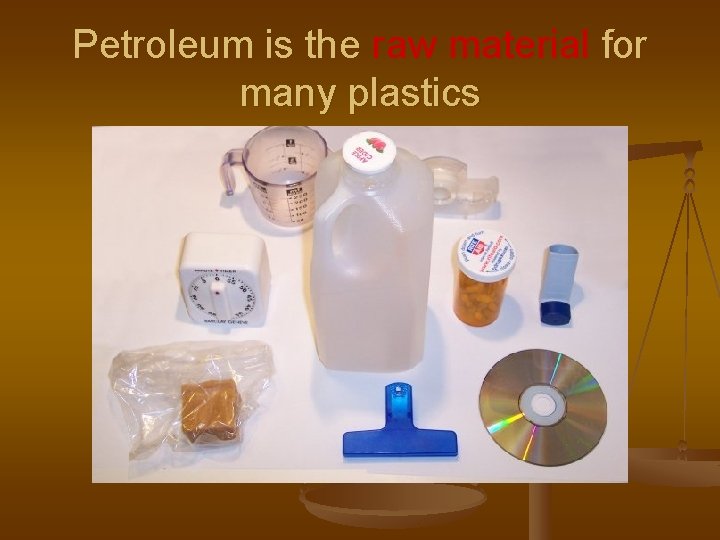
Petroleum is the raw material for many plastics
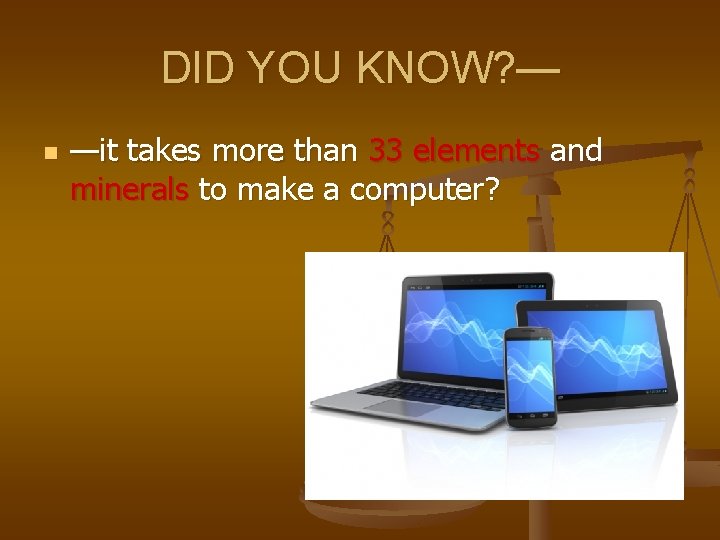
DID YOU KNOW? — n —it takes more than 33 elements and minerals to make a computer?
Think of something you need, have. n n n How was the item made? What are the raw materials that make up this item How did you get the item?
Where Does It All Come From? “If it can’t be grown, it has to be mined. ” n “Everything we have and everything we use comes from natural resources. ” n
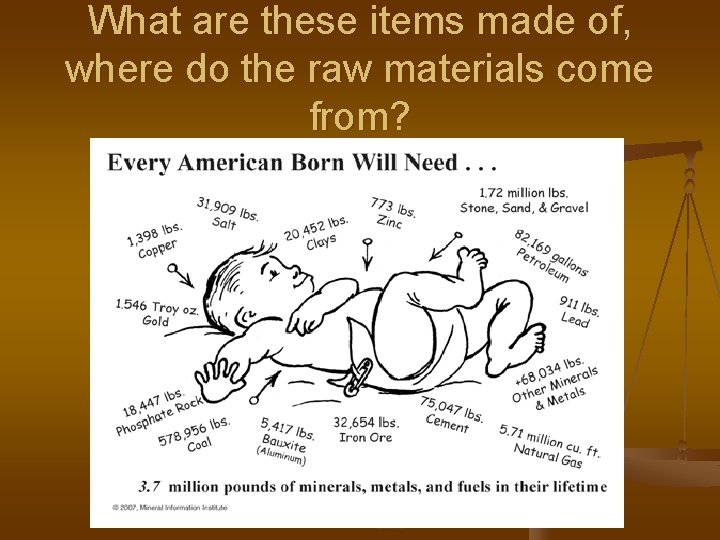
What are these items made of, where do the raw materials come from?
Your Use of Materials n n Direct You are consuming, wearing, using with your own hands, feet. Indirect - Something that is used to manufacture or bring you materials for direct use. - Part of the countries infrastructure – you benefit, “even if you don’t know about it/use it”
What is mined/extracted that you use daily? n n n Oil/Natural Gas, Coal Precious elements and gems – gold, silver, platinum, diamond Metals Ferrous – containing iron Non-ferrous – aluminum
Continue mined/extracted that you use daily? n n Industrial materials and minerals Borates, phosphate, zeolites Building materials Sand, stone, cement, gypsum
II. History of Mining n A. Ages of Mankind Historic ages based on composition of tools, and resource mined. Stone Age (-lithic) Prior to 3300 BC Bronze Age (Copper and Tin) 3300 BC – 1200 BC Iron Age 1200 BC – 600 BC
B. New Mexico Native American n Native Americans mined or quarried: Obsidian, Flint (Arrowheads, tools) Oxidized minerals (Pigments) Turquoise (Jewelry, Trade) Stone (Buildings)
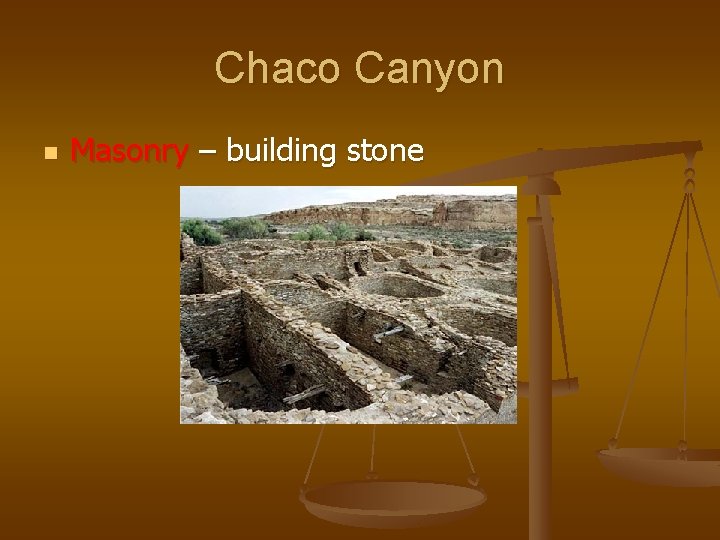
Chaco Canyon n Masonry – building stone
CERRILLOS HILLS HISTORIC PARK n n Tri-Cultural Use of the Cerrillos Mines Native Americans mined turquoise as of 600 AD. Galena, a lead mineral, was also mined. Late 1500’s to early 1700’s Spanish mined silver, lead. Late 1800’s U. S. mined silver, turquoise.
C. Brief History of Western. U. S. Mining n Many Americans ventured west starting in the 1840’s to ranch, explore, seek fortune. - (1871, Horace Greeley) “Can you chop? Can you plow? Can you mow? ” Greeley concluded, “Having mastered these, gather up your family, and Go West!”) n Prospecting – to search for or explore (a region) for valuable materials.
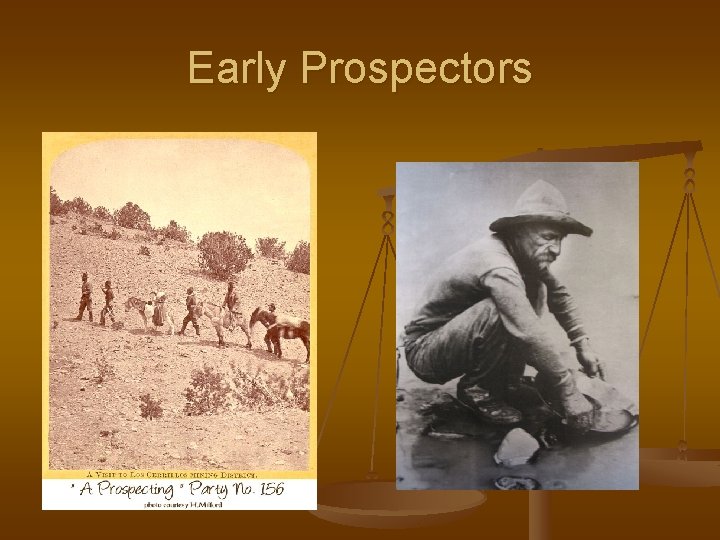
Prospecting n n n The simplest technique to extract gold from placer ore is panning. Sand, gravel (ore) is placed in a large metal or plastic pan. Combined with a generous amount of water. Agitated so that the gold particles settle to the bottom. The lighter waste material washes over the side of the pan, leaving the gold behind. Once a placer deposit is located by gold panning, the miner usually shifts to equipment that can treat large volumes of sand gravel more quickly and efficiently.
Early Prospectors
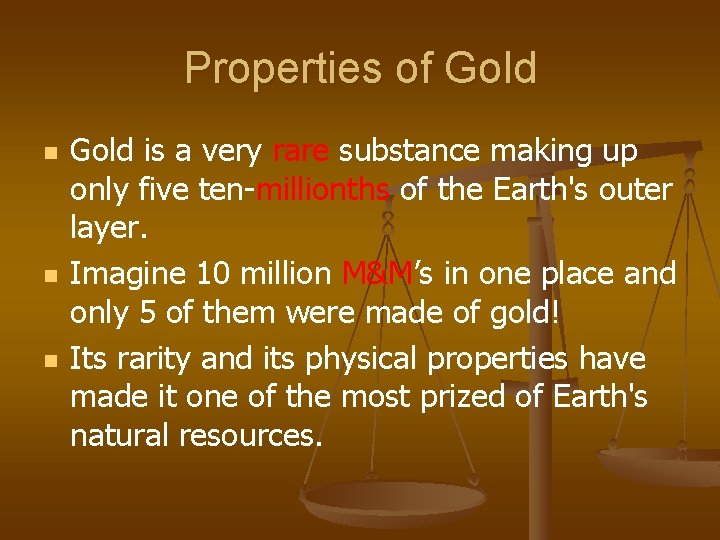
Properties of Gold n n n Gold is a very rare substance making up only five ten-millionths of the Earth's outer layer. Imagine 10 million M&M’s in one place and only 5 of them were made of gold! Its rarity and its physical properties have made it one of the most prized of Earth's natural resources.
Properties of Gold n n Malleable, ductile, soft, good conductor of heat and electricity, non-corrosive. High density and specific gravity Density – mass per unit volume Specific gravity – density material/density of water
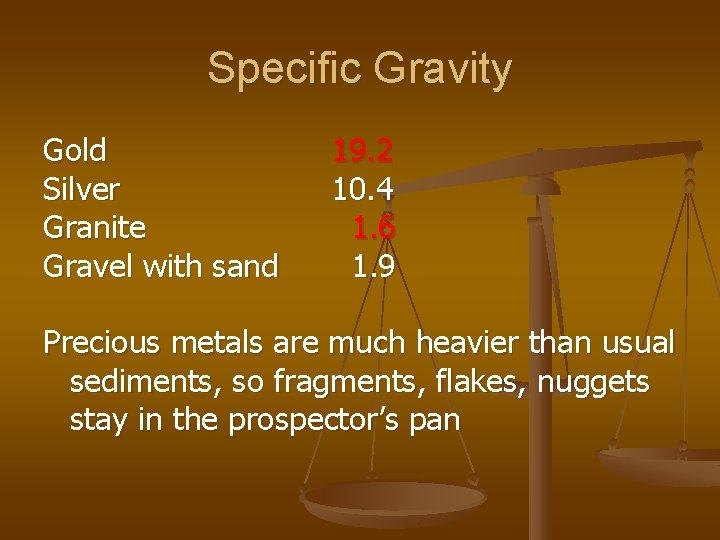
Specific Gravity Gold Silver Granite Gravel with sand 19. 2 10. 4 1. 6 1. 9 Precious metals are much heavier than usual sediments, so fragments, flakes, nuggets stay in the prospector’s pan
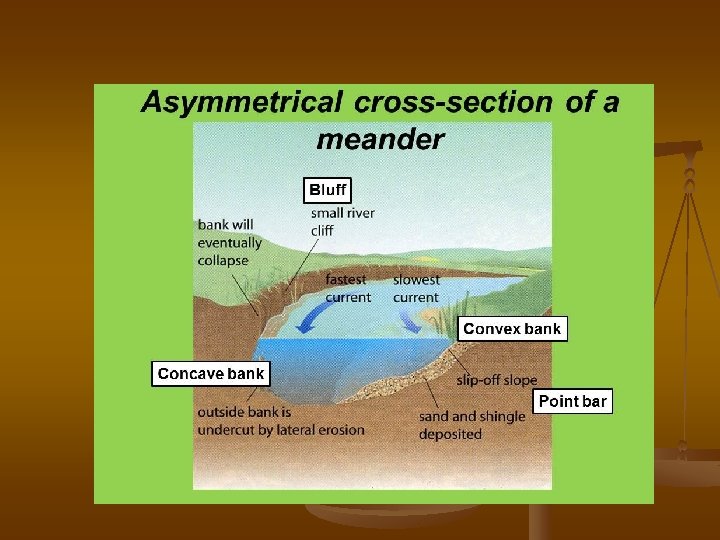
Placer mining n n n Placer mining refers to the mining of alluvial deposits for minerals The name derives from Spanish placera, meaning "alluvial sand. " Valuable minerals weather, erode from solid rock Become part of unconsolidated sediments in streams or valleys Are concentrated over centuries, millennia due to the action of water.
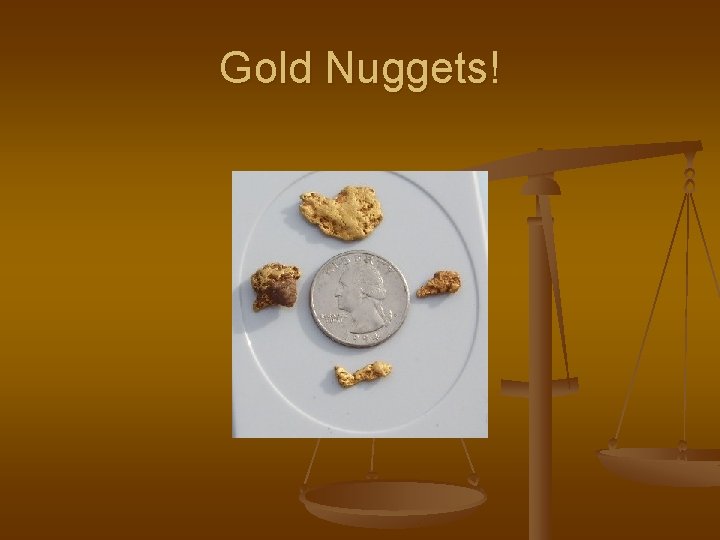
Gold Nuggets!
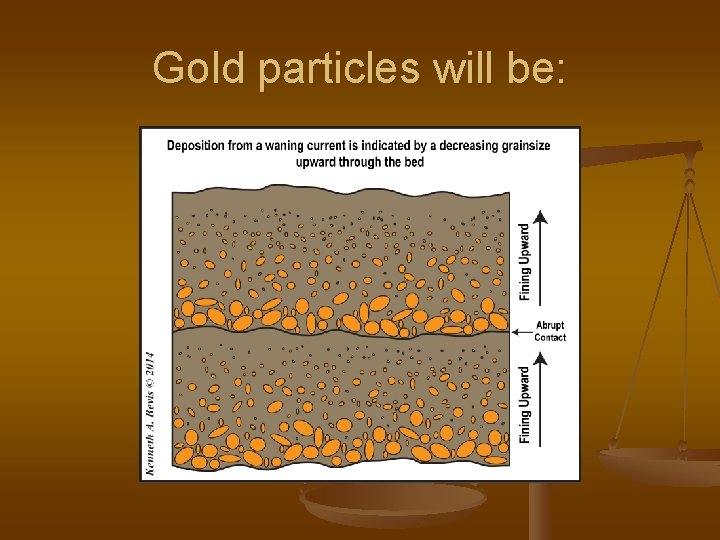
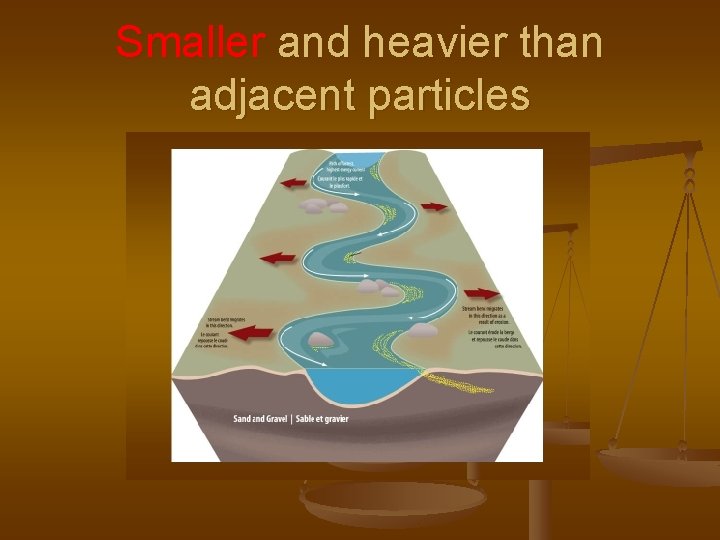
Gold particles will be:
Smaller and heavier than adjacent particles
“Hard rock”, or lode mining Once placers were found, minerals were traced to their outcrops, digging and trenching follow. If enough gold or other valuable material exists, larger operations follow, including open-pit, or underground mining. A variety of modern exploration methods are used to locate deposits.
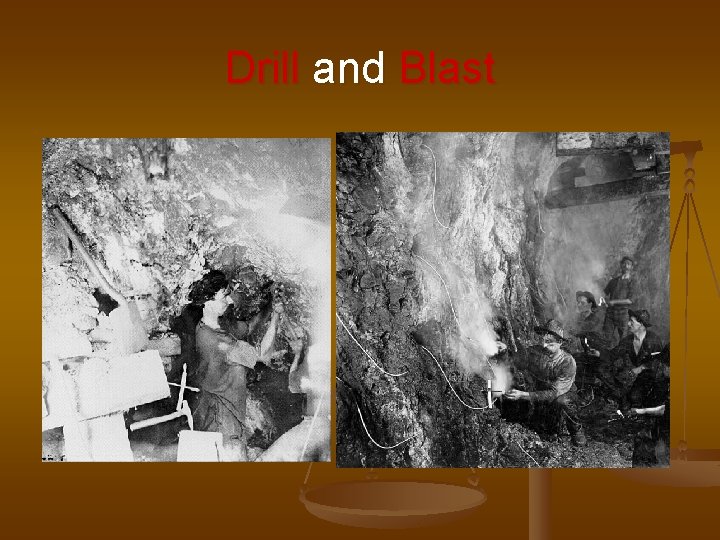
Underground Mining n n n In the 1800’s, this was extremely hard and dangerous work. Prior to mechanization, all work was done by hand candle light, or burning carbide, or kerosene. Low oxygen, explosions, fires, and falls could all be part of the work day.
Drill and Blast
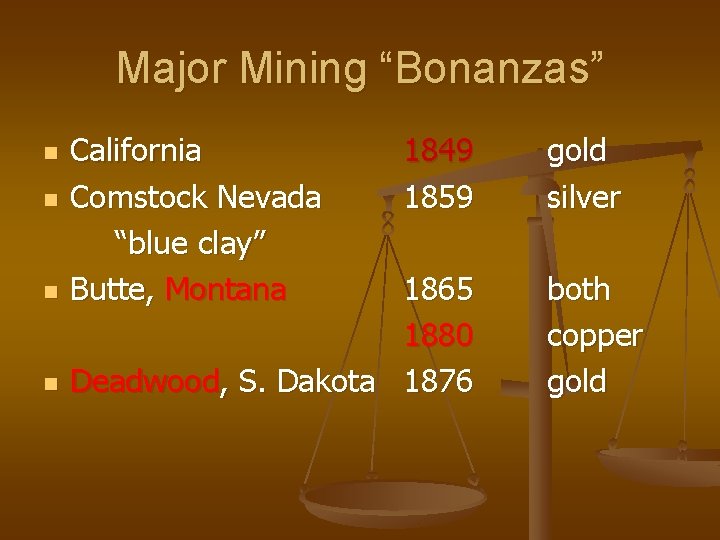
Major Mining “Bonanzas” n n California Comstock Nevada “blue clay” Butte, Montana 1849 1859 1865 1880 Deadwood, S. Dakota 1876 gold silver both copper gold
Historic New Mexico Mining n n NM – arid, isolated, and actively hostile Apaches, kept interest in the area low Not until about 1860 that prospectors and miners were attracted to the region. Mining in the Territory was suspended during the Confederate invasion 1861 -62. Restarted post - Civil War
New Mexico Mining Booms n n n n 1865 White Mtns Ruidoso 1866 Elizabethtown 1866 Magdalena 1877 Hillsboro 1878 Lake Valley 1912 Grant County Silver City 1950 Grants gold silver-lead gold silver copper uranium
Modern Mining n n n Today, companies mine materials both on the surface and underground. Most mines must be large to be profitable. Economy of Scale: Reduction in cost per unit resulting from increased production, realized through operational efficiencies. As production increases, the cost of producing each additional unit falls.
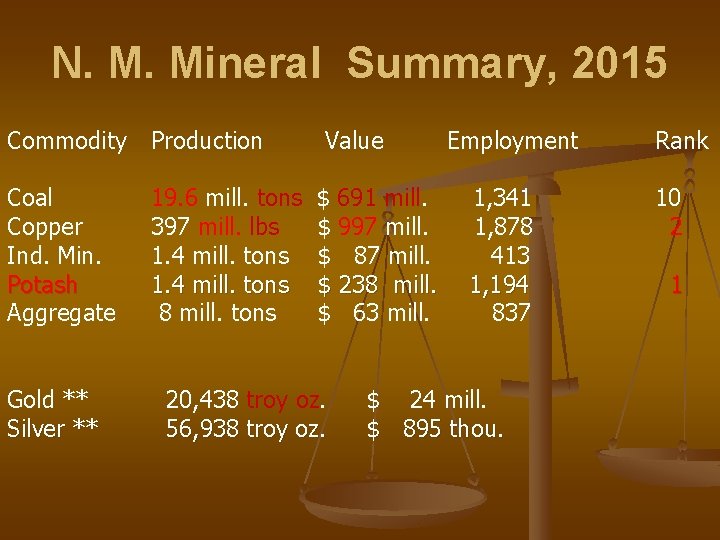
Mining in New Mexico n n n Mining is vital to the state's economy, adding $2. 5 billion in total economic output (2015). NM was fifteenth nationally in total non-fuel mineral production value. Tenth in the production of coal. Second in copper We lead Nation in the production of potash, perlite and zeolites.
N. M. Mineral Summary, 2015 Commodity Production Coal Copper Ind. Min. Potash Aggregate 19. 6 mill. tons 397 mill. lbs 1. 4 mill. tons 8 mill. tons Gold ** Silver ** Value $ 691 mill. $ 997 mill. $ 87 mill. $ 238 mill. $ 63 mill. 20, 438 troy oz. 56, 938 troy oz. Employment 1, 341 1, 878 413 1, 194 837 $ 24 mill. $ 895 thou. Rank 10 2 1
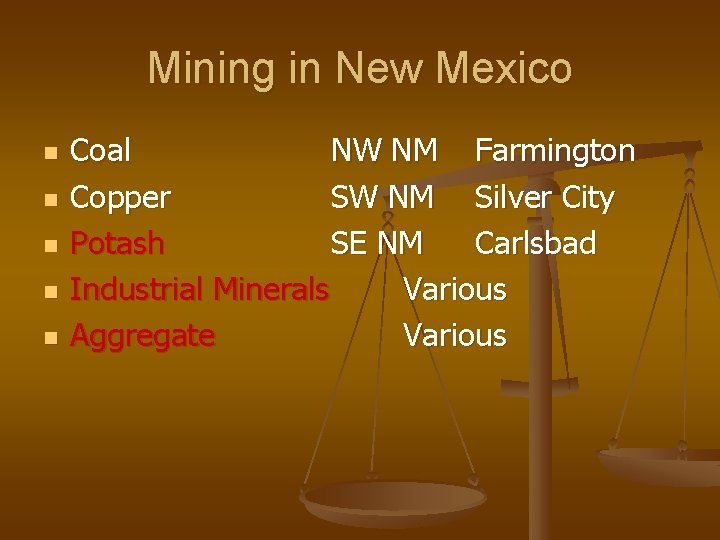
Mining in New Mexico n n n Coal NW NM Farmington Copper SW NM Silver City Potash SE NM Carlsbad Industrial Minerals Various Aggregate Various
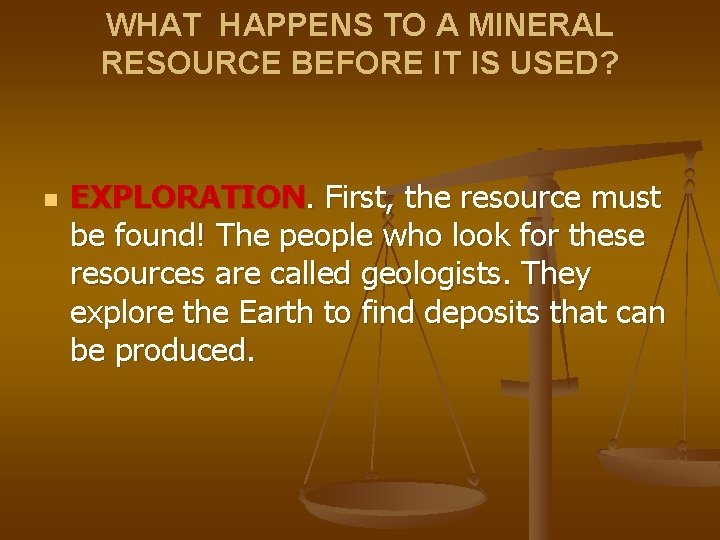
WHAT HAPPENS TO A MINERAL RESOURCE BEFORE IT IS USED? n EXPLORATION. First, the resource must be found! The people who look for these resources are called geologists. They explore the Earth to find deposits that can be produced.
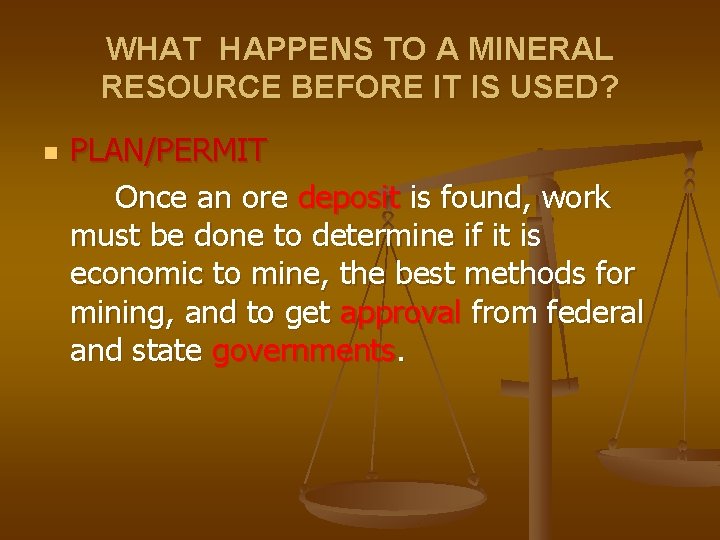
WHAT HAPPENS TO A MINERAL RESOURCE BEFORE IT IS USED? n PLAN/PERMIT Once an ore deposit is found, work must be done to determine if it is economic to mine, the best methods for mining, and to get approval from federal and state governments.
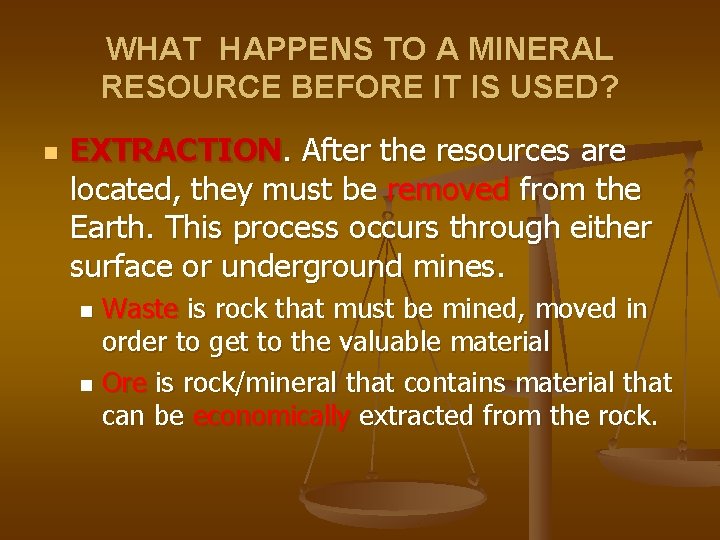
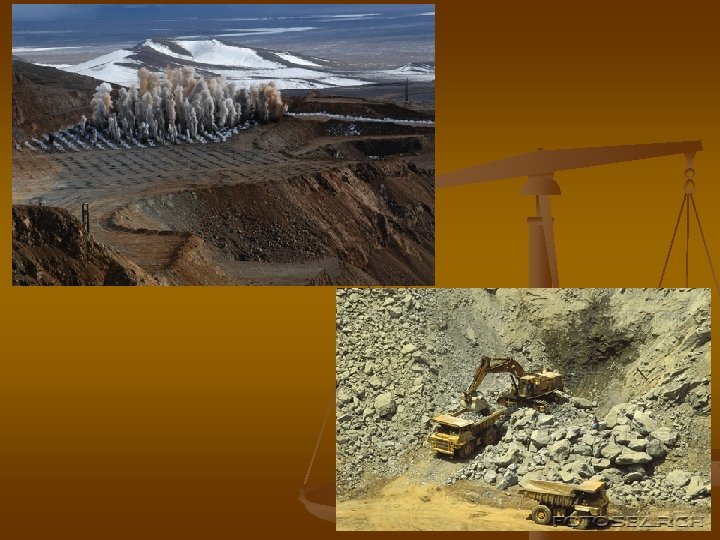
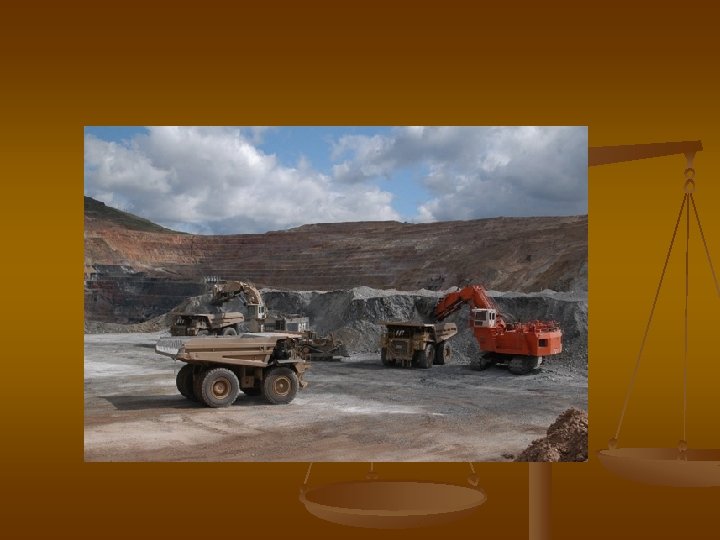
WHAT HAPPENS TO A MINERAL RESOURCE BEFORE IT IS USED? n EXTRACTION. After the resources are located, they must be removed from the Earth. This process occurs through either surface or underground mines. Waste is rock that must be mined, moved in order to get to the valuable material n Ore is rock/mineral that contains material that can be economically extracted from the rock. n
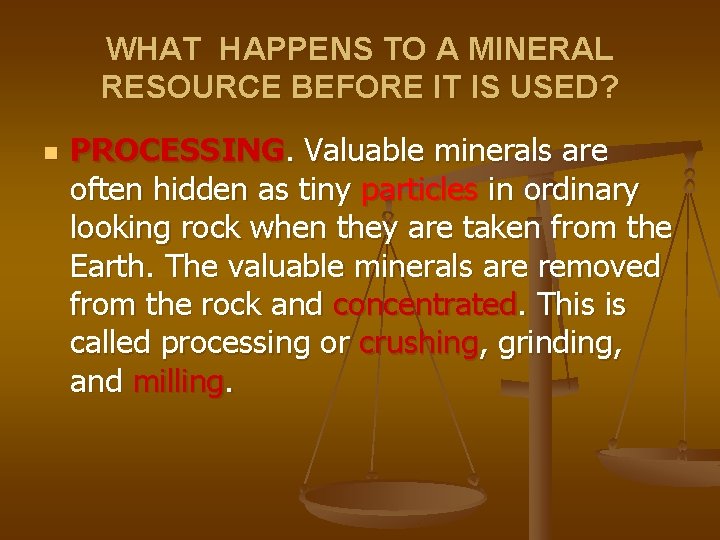
WHAT HAPPENS TO A MINERAL RESOURCE BEFORE IT IS USED? n PROCESSING. Valuable minerals are often hidden as tiny particles in ordinary looking rock when they are taken from the Earth. The valuable minerals are removed from the rock and concentrated. This is called processing or crushing, grinding, and milling.
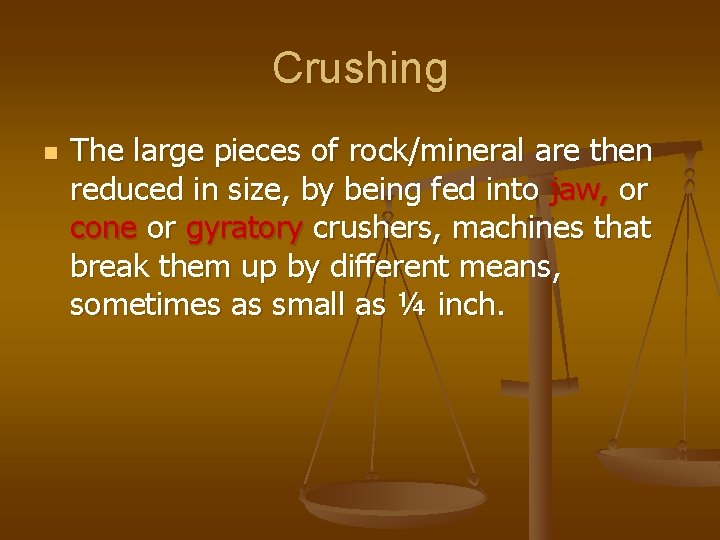
Crushing n The large pieces of rock/mineral are then reduced in size, by being fed into jaw, or cone or gyratory crushers, machines that break them up by different means, sometimes as small as ¼ inch.
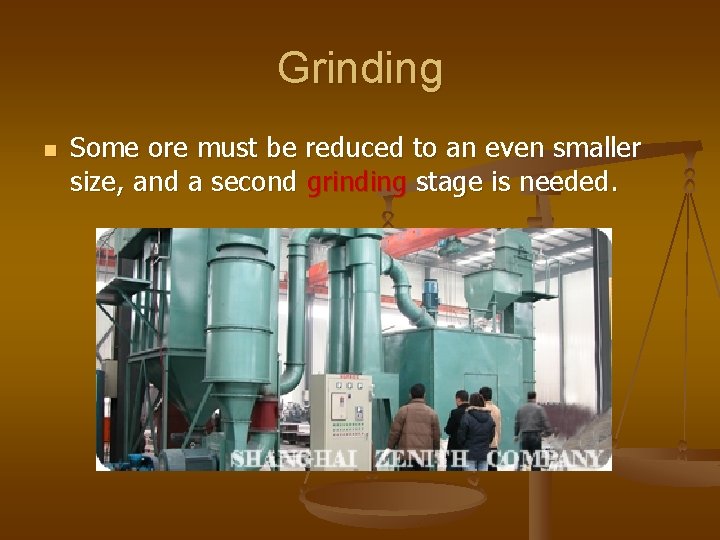
Grinding n Some ore must be reduced to an even smaller size, and a second grinding stage is needed.
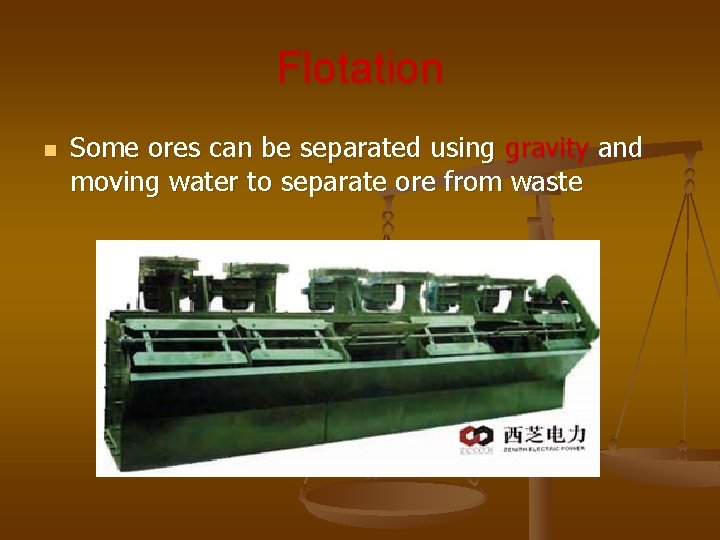
Flotation n Some ores can be separated using gravity and moving water to separate ore from waste
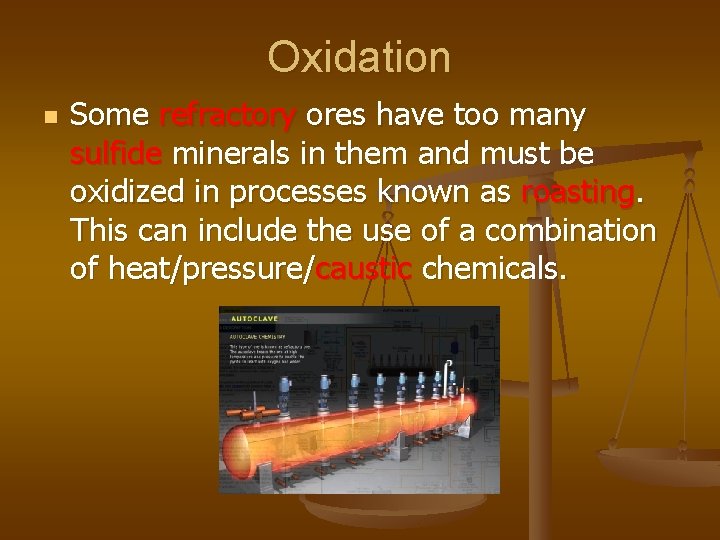
Oxidation n Some refractory ores have too many sulfide minerals in them and must be oxidized in processes known as roasting. This can include the use of a combination of heat/pressure/caustic chemicals.
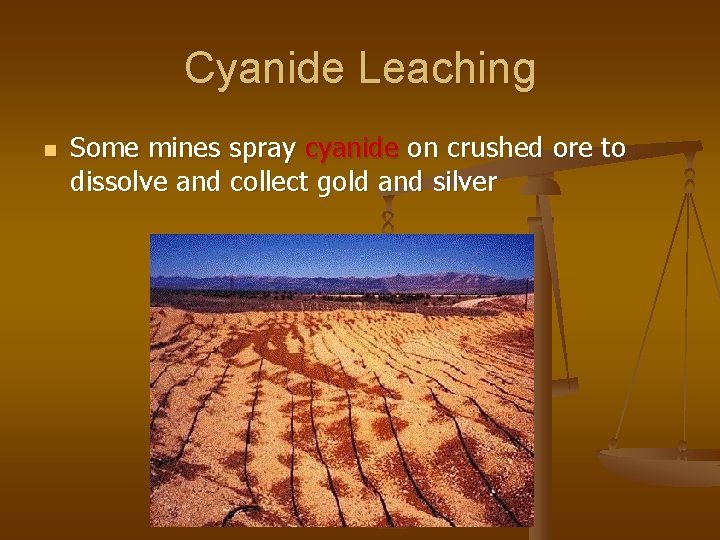
Cyanide Leaching n Some mines spray cyanide on crushed ore to dissolve and collect gold and silver
Smelting n Chemical reduction, or smelting, is a form of extractive metallurgy. The main use of smelting is to produce a metal from its ore.
Refining n n Refining is the process of purification of a a natural resource that is almost in a usable form, but which is more useful in its pure form. Most gold/silver mines send their smelted product to a company that specializes in refining, for purification.
WHAT HAPPENS TO A MINERAL RESOURCE BEFORE IT IS USED? n n 6. MANUFACTURING. After the mineral and energy resources are refined, these raw materials are made into products. 7. MARKETING. Once the products are made, they are sold or marketed
Companies Pay to Extract Energy Raw Materials n Revenues from federal oil, gas, and coal leasing provide returns to U. S. taxpayers as well as State governments. In 2016, $6 billion in oil and gas revenues were paid to the U. S. Treasury, and coal leases accounted for over $900 million in revenues, of which 50 percent were paid to State governments.
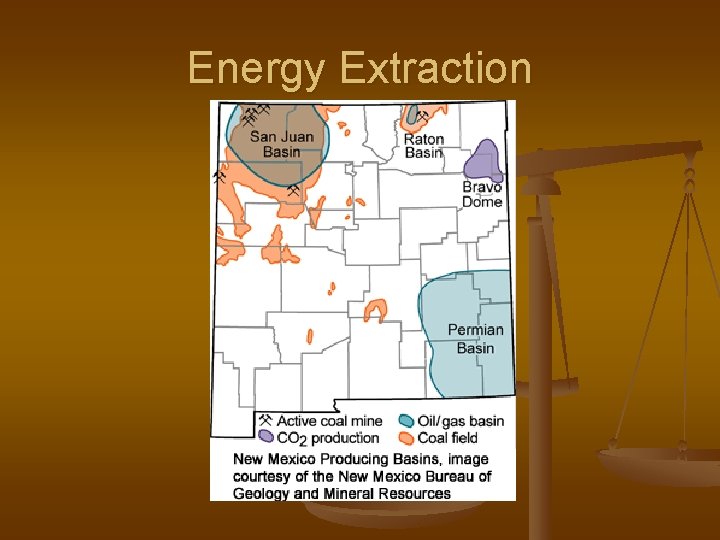
Energy Extraction
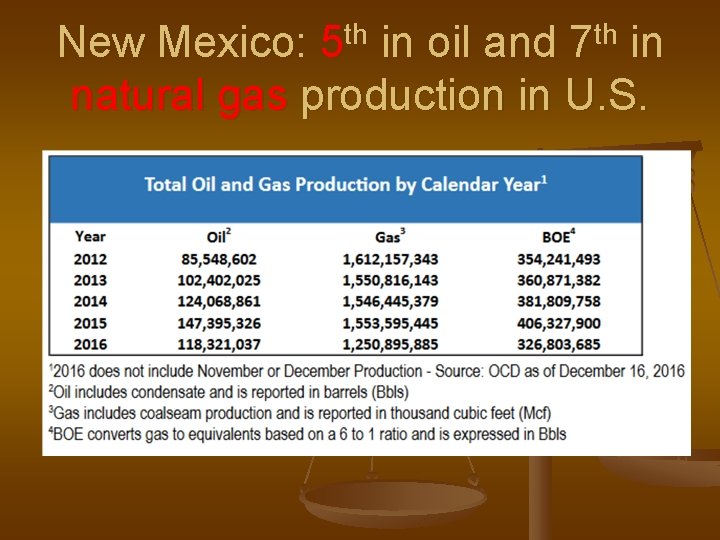
th 5 th 7 New Mexico: in oil and in natural gas production in U. S.
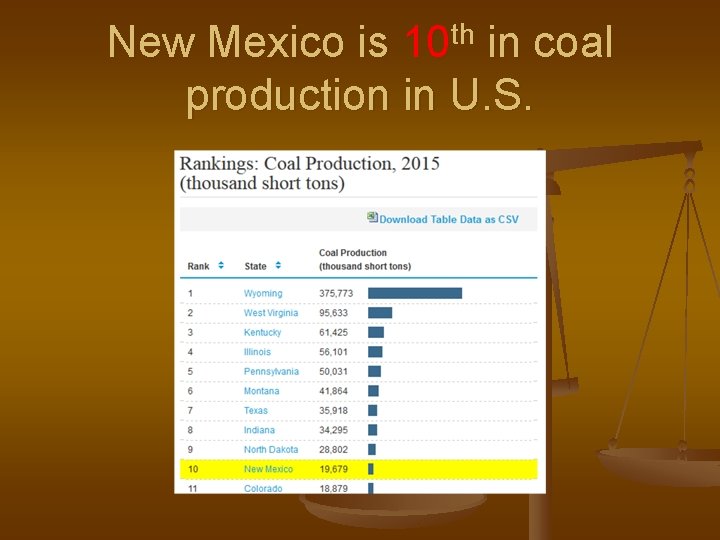
th 10 New Mexico is in coal production in U. S.
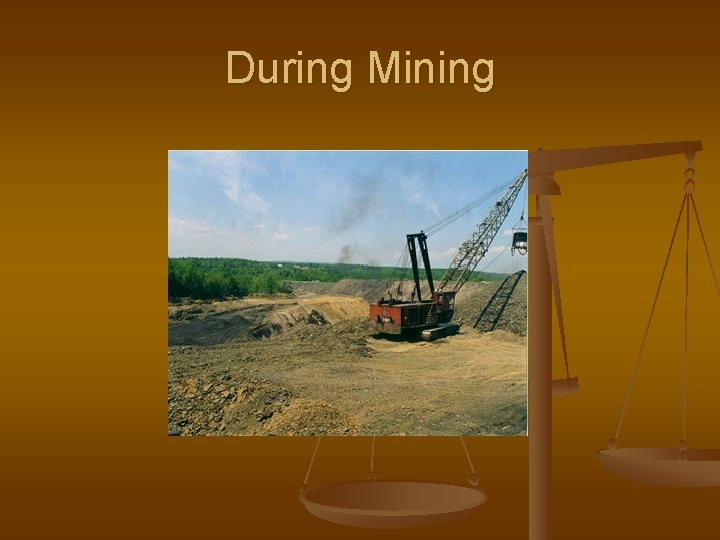
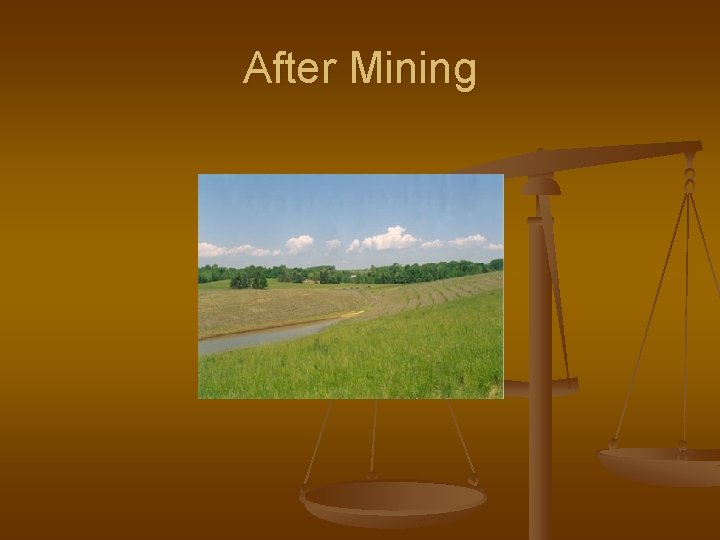
RECLAMATION n n The process of reclamation includes maintaining water and air quality, minimizing flooding, erosion and damage to wildlife and aquatic habitats caused by surface mining. The final step in this process is often topsoil replacement and revegetation with suitable plant species.
During Mining
After Mining
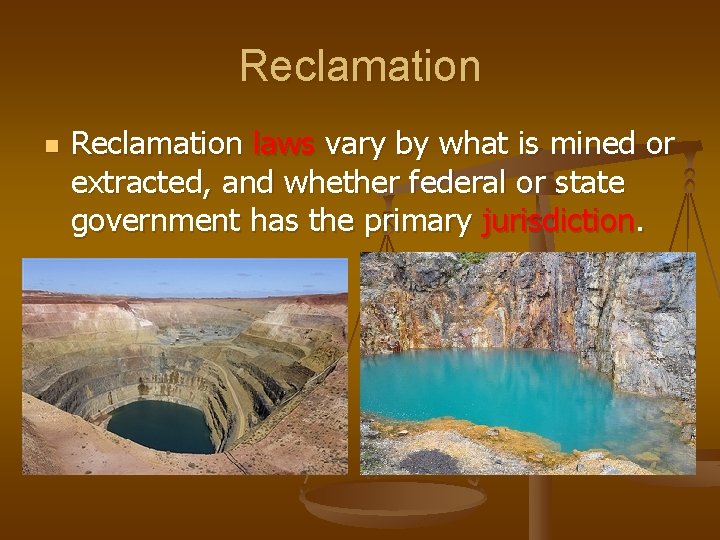
Reclamation n Reclamation laws vary by what is mined or extracted, and whether federal or state government has the primary jurisdiction.
Conservation n The conservation ethic - resource use, allocation, exploitation, and protection. Wise management and use of our resources Sustainable development - use natural resources without depleting them, provide for human needs without causing longterm environmental damage
RECYCLE n n n Recycling is the reprocessing of old materials into new products. Prevent the waste of potentially useful materials. Reduce the consumption of fresh raw materials. Reducing energy usage Reducing pollution by reducing the need for "conventional" waste disposal.