
Mining CGC 1 D Geography of Canada May
- Slides: 18
Mining CGC 1 D Geography of Canada May 9, 2014
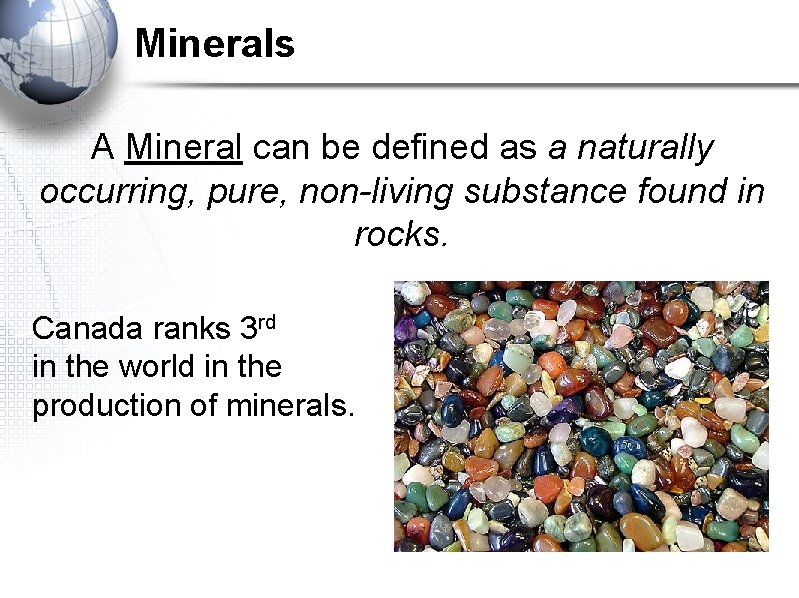
Minerals A Mineral can be defined as a naturally occurring, pure, non-living substance found in rocks. Canada ranks 3 rd in the world in the production of minerals.
3 Types of Minerals: 1. Metallic Minerals- when refined, yield metals. E. g. , silver, gold, steel, iron, copper 2. Fossil Fuels- minerals that release energy when burned. E. g. , coal, natural gas, oil 3. Industrial Minerals- all OTHER things that are mined. E. g. , sand, gravel, potash
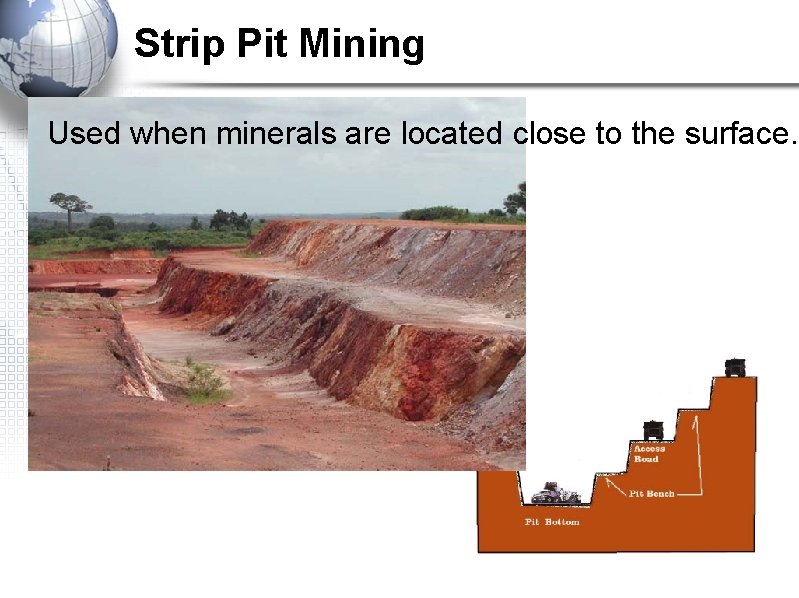
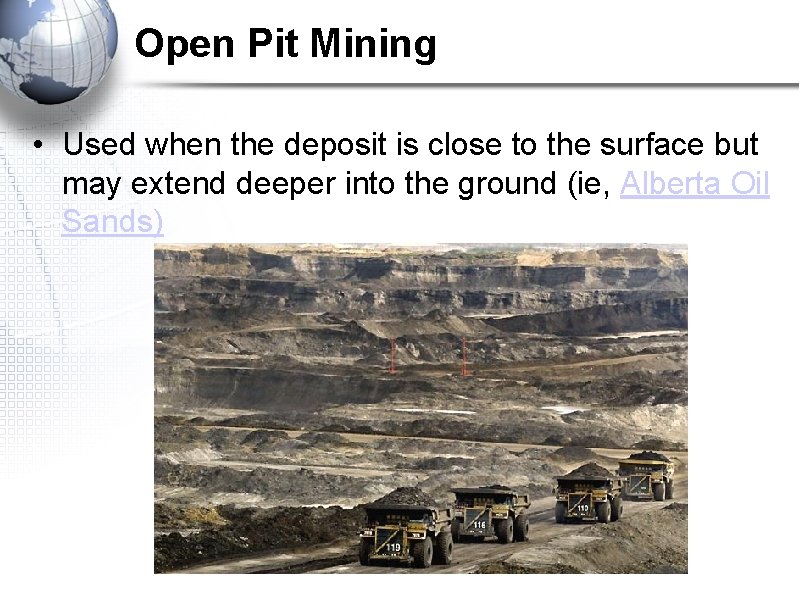
Depending on the depth of the mineral deposit, there are 3 mining methods used: Strip Pit, Open Pit, and Underground Mining.
Strip Pit Mining Used when minerals are located close to the surface.
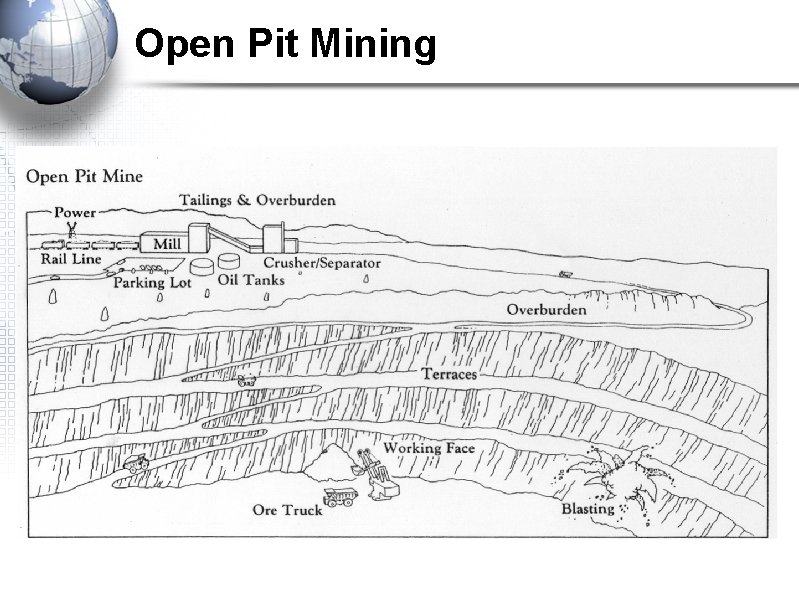
Open Pit Mining • Used when the deposit is close to the surface but may extend deeper into the ground (ie, Alberta Oil Sands)
Open Pit Mining
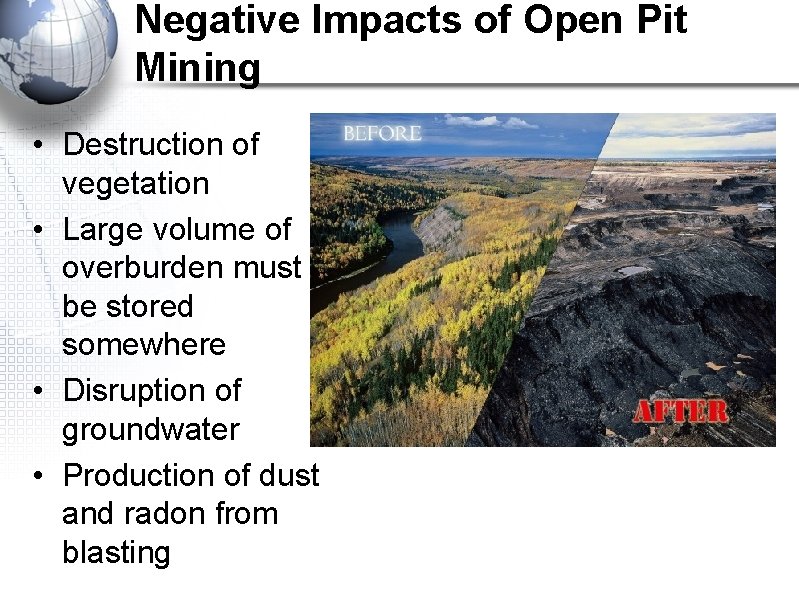
Negative Impacts of Open Pit Mining • Destruction of vegetation • Large volume of overburden must be stored somewhere • Disruption of groundwater • Production of dust and radon from blasting
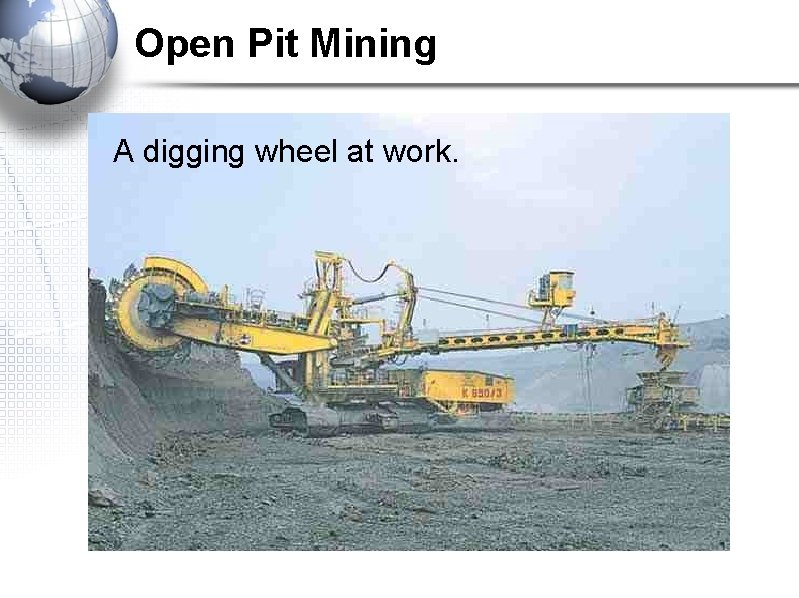
Open Pit Mining A digging wheel at work.
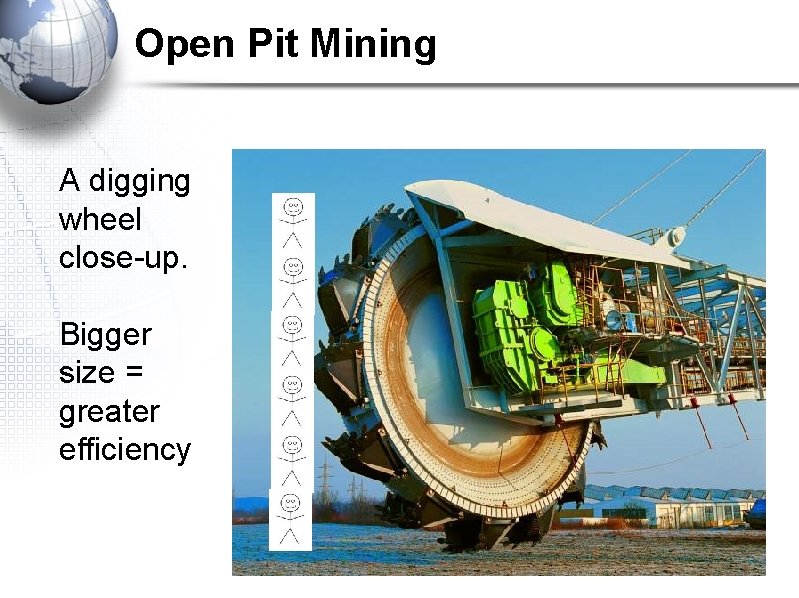
Open Pit Mining A digging wheel close-up. Bigger size = greater efficiency
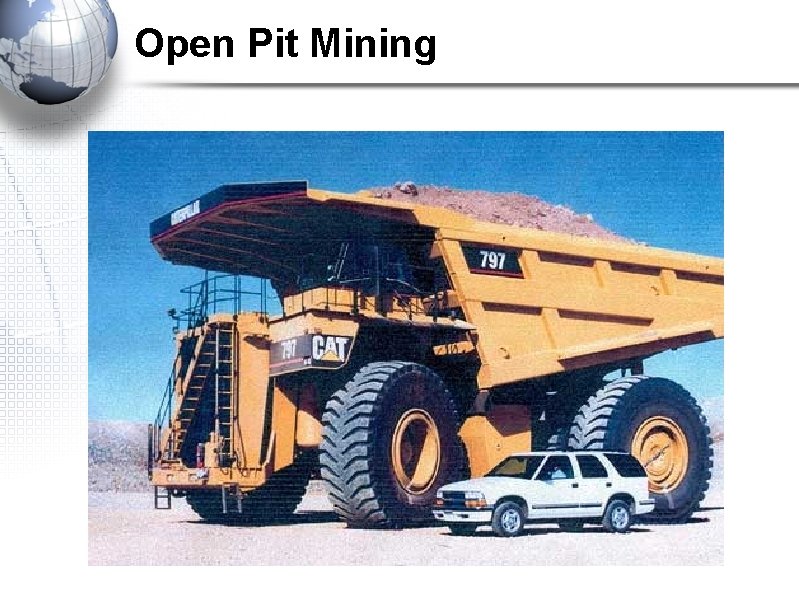
Open Pit Mining
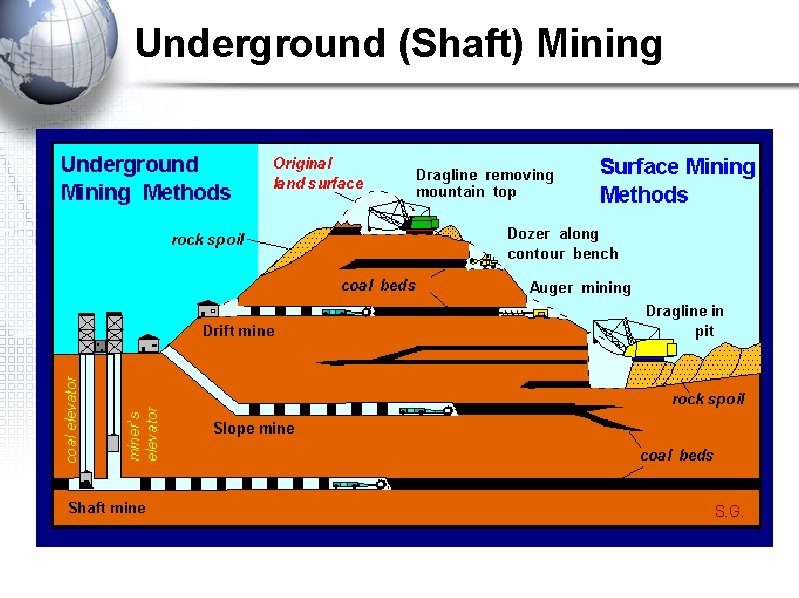
Underground (Shaft) Mining
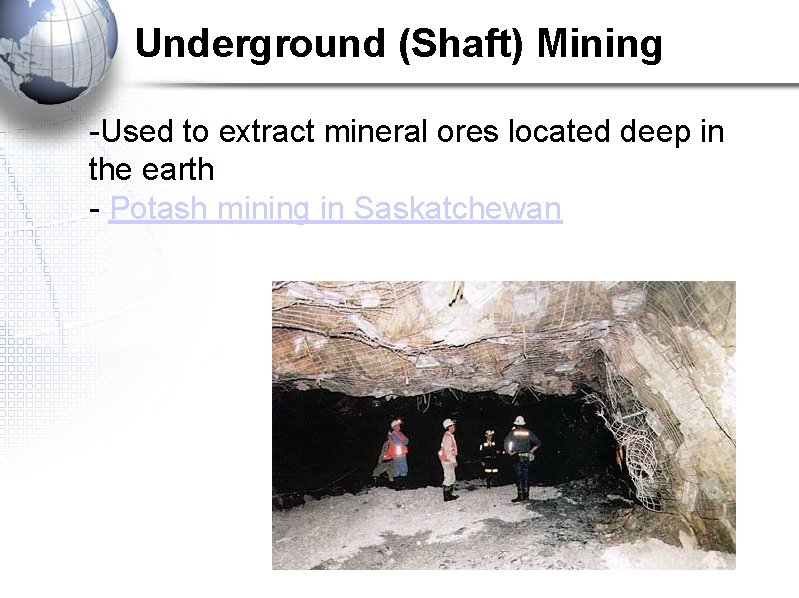
Underground (Shaft) Mining -Used to extract mineral ores located deep in the earth - Potash mining in Saskatchewan
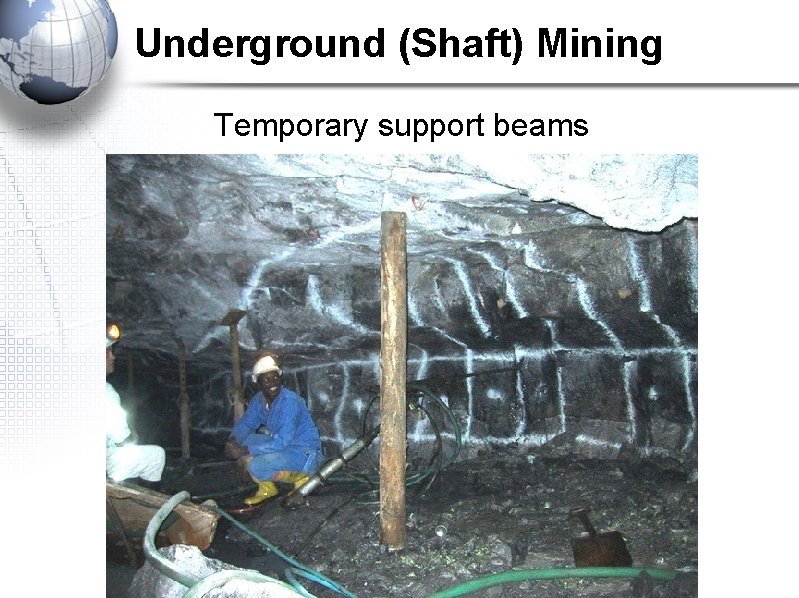
Underground (Shaft) Mining Temporary support beams
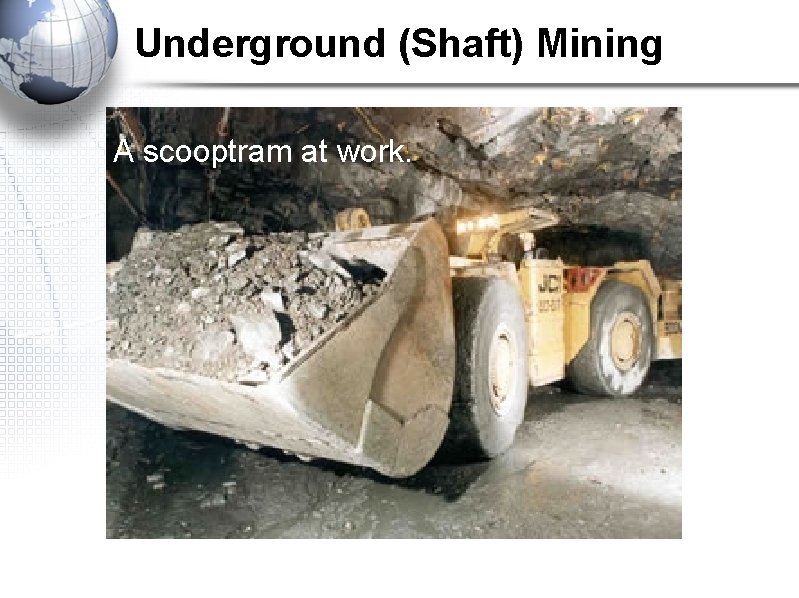
Underground (Shaft) Mining A scooptram at work.
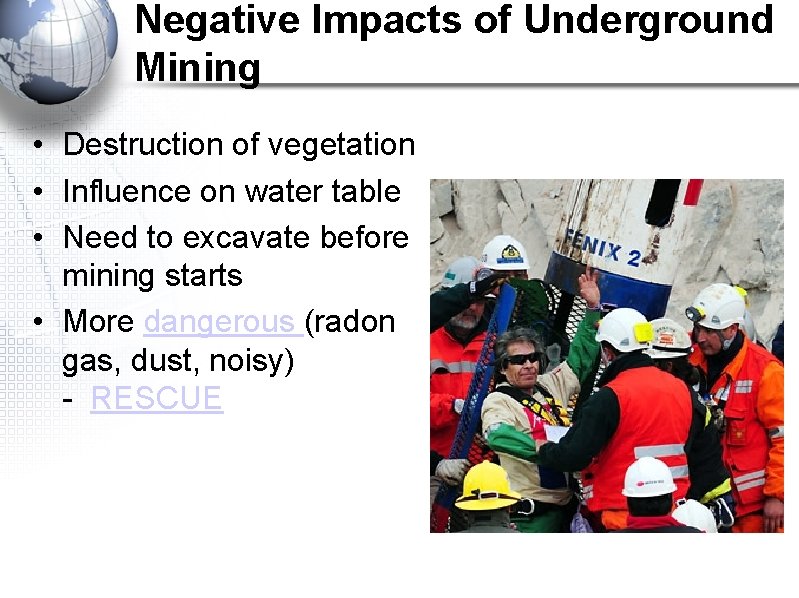
Negative Impacts of Underground Mining • Destruction of vegetation • Influence on water table • Need to excavate before mining starts • More dangerous (radon gas, dust, noisy) - RESCUE
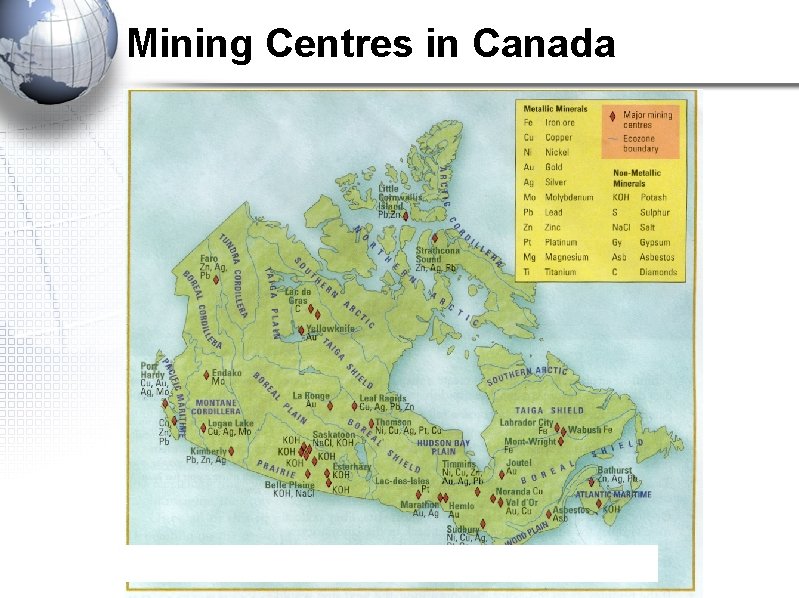
Mining Centres in Canada
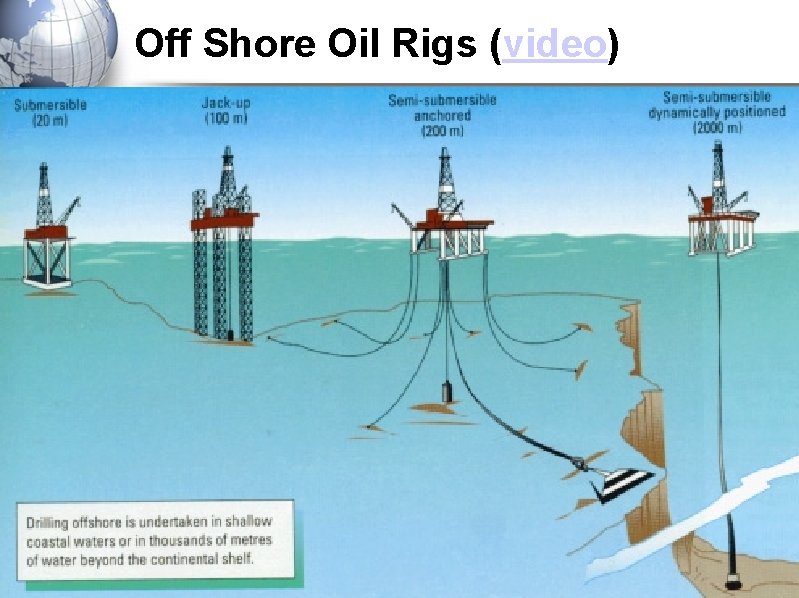
Off Shore Oil Rigs (video)