
Minimum Zero Tillage Tillage The preparation of land

- Slides: 43
“Minimum & Zero Tillage”
Tillage • The preparation of land for growing crops.
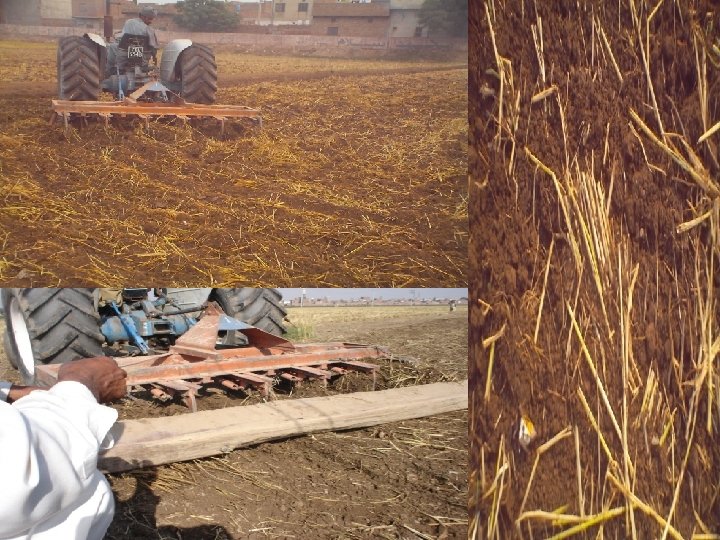
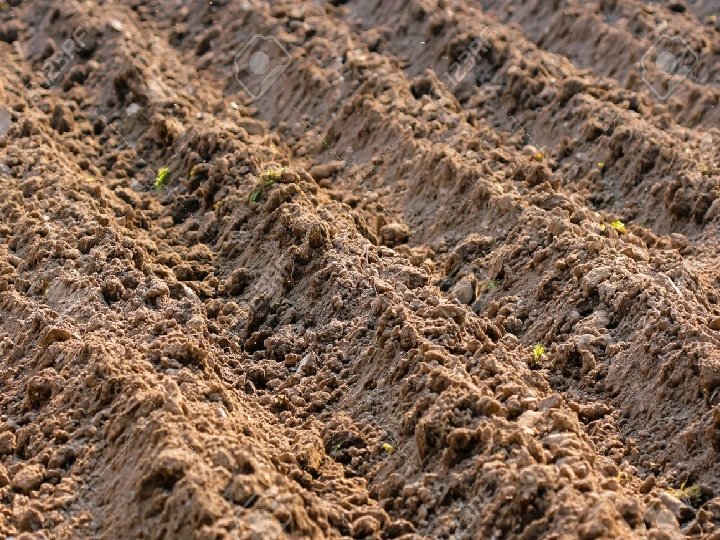
Conventional Tillage • It involves applying power to break up and rearrange the entire top soil structure. • In conventional tillage, energy is often wasted and sometimes, soil structure is destroyed.
Advantages • Destroys pests shelters and disturbs their lifecycles. • Exposes pests to predators and unfavorable conditions. • Controls weeds.
Disadvantages Destroys soil structure. Enhances soil erosion. High moisture loss. Disturbs the lifecycle of beneficial soil organisms. • Needs more machinery for the soil preparation. • •
Conservation Tillage • Any tillage in which at least 30% of the soil surface is covered by plant residues after planting to reduce erosion.
Why, Conservation Tillage • When fertile soil is used, when crops are grown on them, the fertility is drawn out. • Nutrient levels reduces. • Moisture levels decline. • Repeated plowing and cultivating causes erosion from wind and water.
Advantages • Conserves water through mulches and reduces water to evaporate. • Reduces erosion and topsoil is protected. • Reduces soil compaction.
Advantages • Protects from rain and wind. • Improves the soil condition with the increased organic matter content. • Lessens the overall production cost.
Disadvantages • Needs best understanding. • Requires careful farm management practices. • Soil pests population are increased from the crop residues.
Minimum Tillage? • It involves considerable soil disturbance, in lesser extent than that associated with conventional tillage.
History of Minimum Tillage • Minimum-tillage have been used since ancient times so-called “primitive cultures” for the production of crops, simply because man has not the muscle force to till any significant area of land to a significant depth by hand.
History of Minimum Tillage • Used a stick to make a hole in the ground, put seeds in the soil by hand, and covered the seeds with the foot.
Principles of Minimum Tillage • Reduce the cost of production e. g. machinery and labor. • Rethink crop production systems e. g. keep crop residues on the soil surface, improving biological activity. • Make environmental improvements e. g. reduce erosion, and loss of nutrients.
Objectives of Minimum Tillage • Reducing energy input and labour required. • Conserving soil moisture and reducing erosion. • Increase infiltration of water. • Soil compaction is reduced.
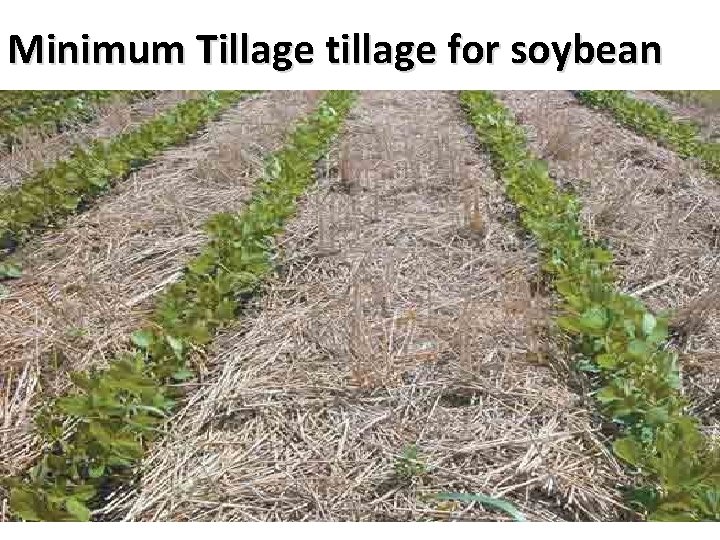
Minimum Tillage tillage for soybean
Advantages of Minimum Tillage • • • High infiltration. Reduce energy consumption. Reduced soil erosion. Less soil compaction. Reduced tillage works best in dry conditions.
Disadvantages of Minimum Tillage • Pest attack is more. • Minimum tillage practices require more pesticides. • Requires careful farm management practices.
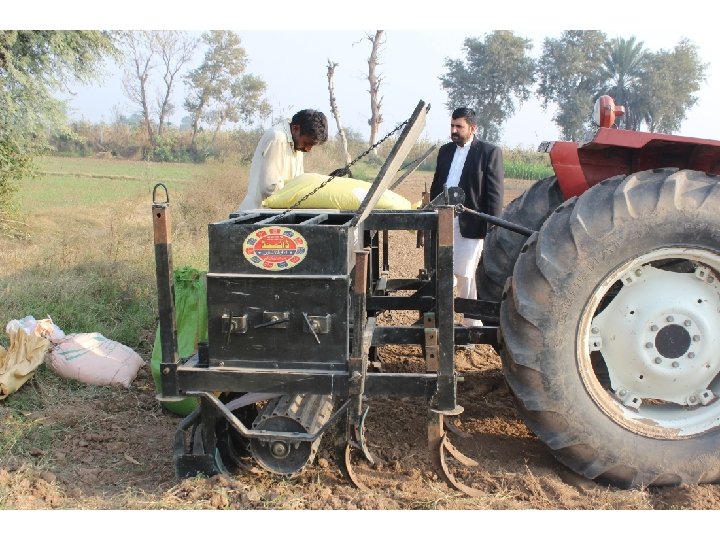
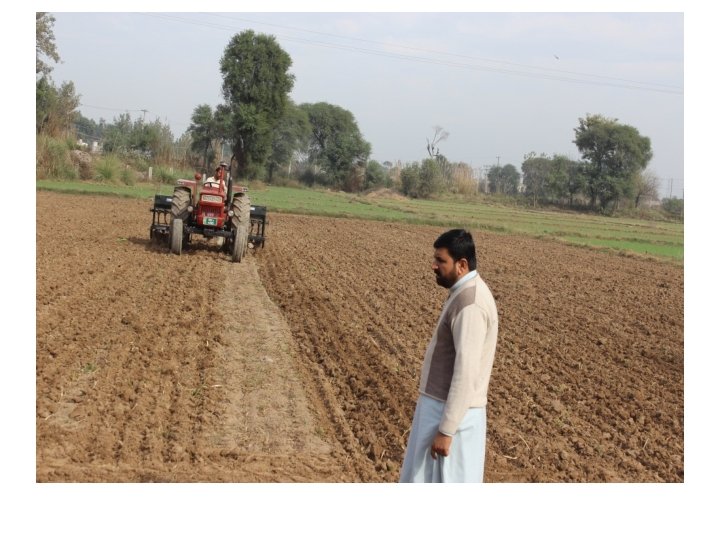
Zero Tillage • Placement of seed in to soil without soil preparation. • It is direct sowing of seed in the field without any disturbance to soil.
History of Zero Tillage System • No-tillage started in the USA in the 1930 s. • Recent studies estimate that there about 111 million hectares of farmland under no-till worldwide.
Zero Tillage in Pakistan • Zero Tillage technology, first introduced amongst the farmers during 1980. • The technology was rapidly accepted by the farmers due to its reducing cost of production, conservation of resources, and improving yield.
Zero Tillage in Pakistan • Wheat was grown with this technique on an area of about one million acres in Pakistan during 2003 -04. • Now there are more than 5, 000 Zero Tillage drills owned by farmers. • Now in Pakistan this system consumes around 1. 7 million hectares.
Principles of Zero Tillage system Ø Maintaining soil cover with plant residues. Ø Elimination of mechanical soil tillage. Ø Weed control. Ø Direct seeding with special instrument. (Prabhakar et al. , 2002)
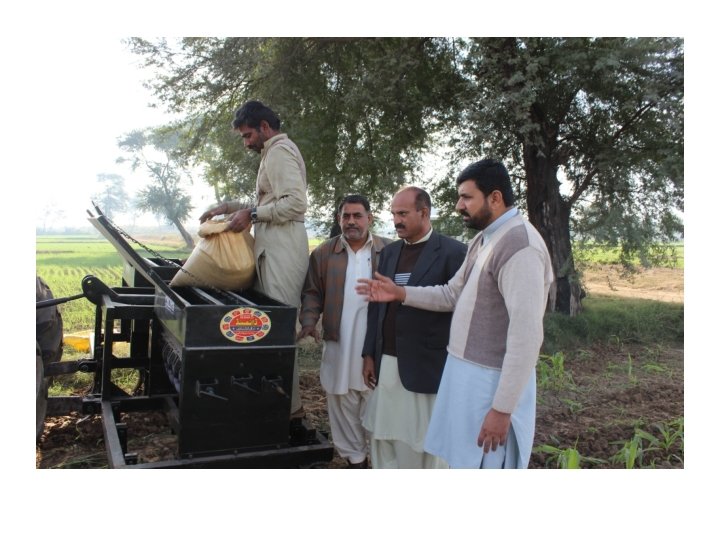
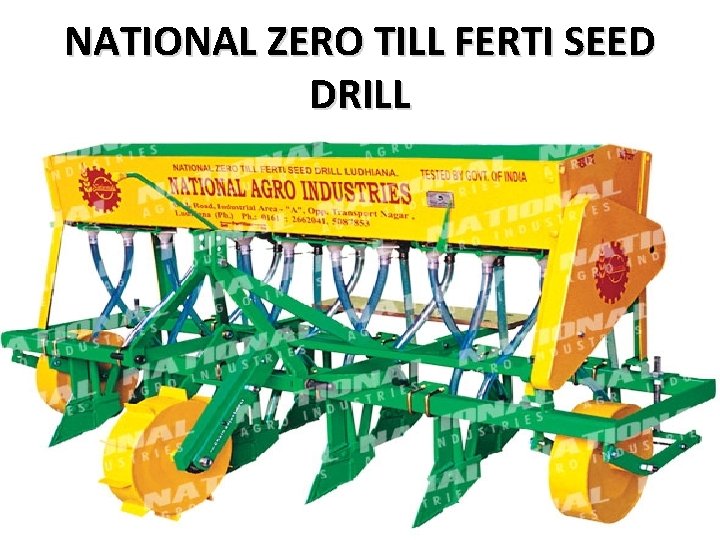
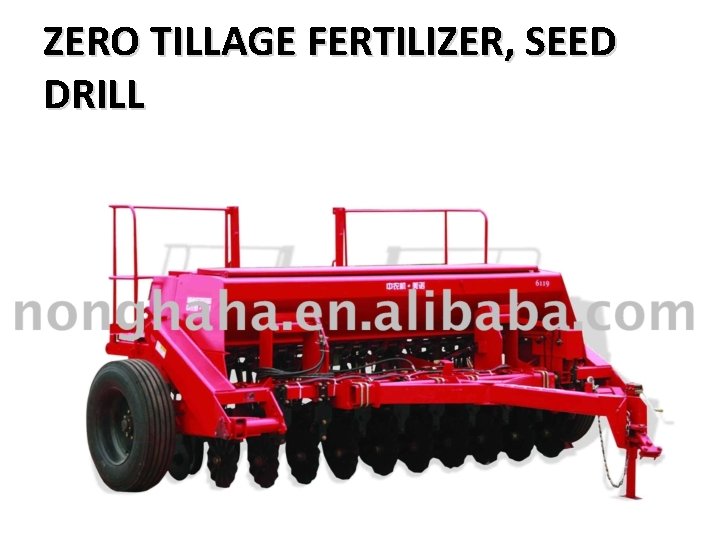
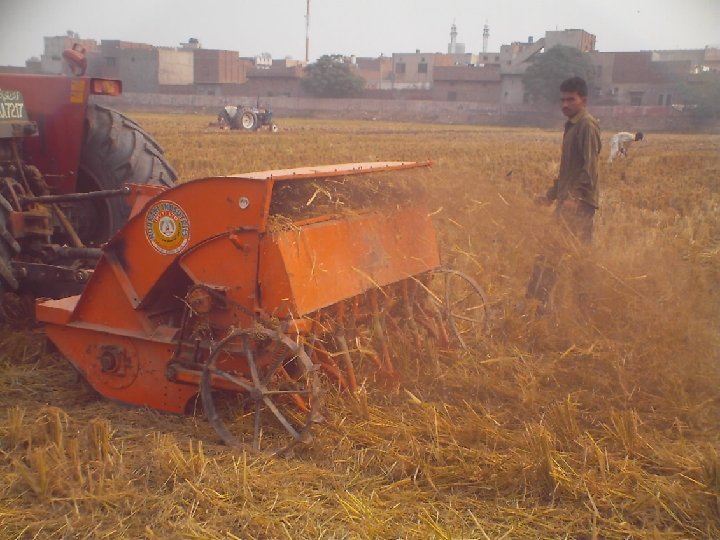
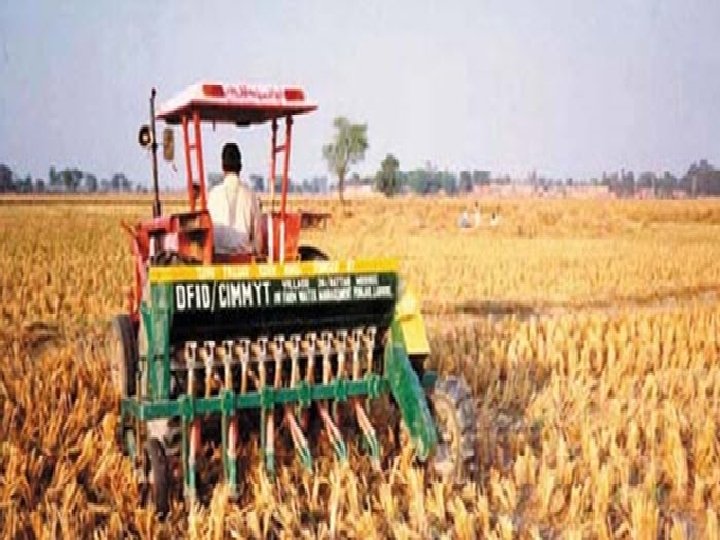
NATIONAL ZERO TILL FERTI SEED DRILL
ZERO TILLAGE FERTILIZER, SEED DRILL
Importance of Zero Tillage • In recent years , drought has become a limiting factor in crop production , and farmers are facing problems of soil erosion. • Conventional tillage completely inverts the soil, while no-till causes only negligible soil disturbance.
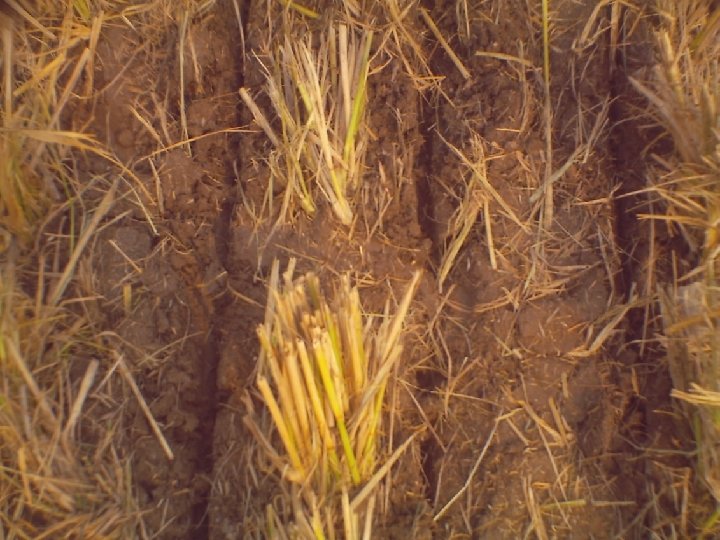
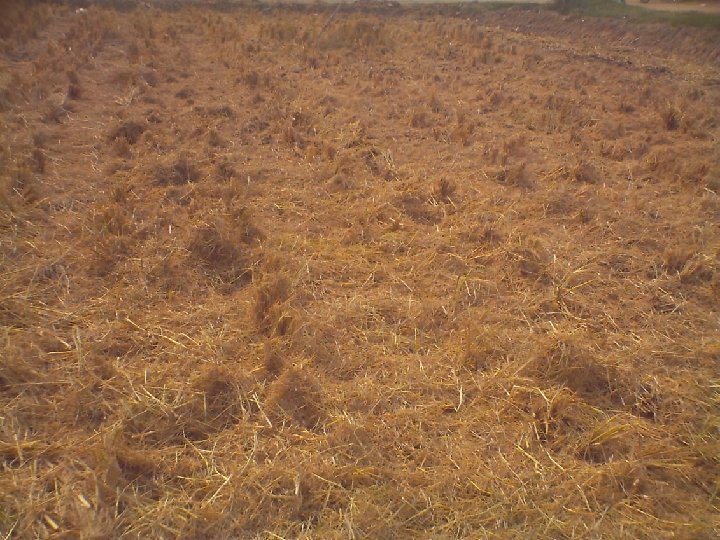
Importance of Zero Tillage • The residues from previous crops remain largely undisturbed at the soil surface as mulch. • There is a great saving of time, irrigation, and monetary costs. • Zero-tillage is the most conservative and suitable system for wheat in Pakistan.
Yield of wheat • Farmers remain busy in harvesting, thrashing and handling of rice straw until early December. • Land preparation delays wheat sowing. • The best time to plant wheat after rice is November. Thereafter, delay results in yield reduction by 30 -35 kg per hectare.
Yield of wheat • After rice harvest, sufficient residual moisture is generally available to establish new crop. • Conventional tillage accelerates soil moisture evaporation and requires extra irrigation water. This causes major delays in wheat sowing, which ultimately affects final crop yields.
Residue management • One completely new feature of zero-tillage cropping systems compared to conventional farming is the management of cover crop residues where applicable
Limitations of Zero Tillage • Planting: The main challenge for the engineers was difficulty in penetrating hard setting soils might be overcome by heavy seed-drills to ensure an accurate depth placement.
Limitations of Zero Tillage • Weed control: For weed control, different approaches are required. Some suggested approaches to weed control could be, depending on the type of weed problem, cutting and mulching.
Advantages of Zero Tillage • Reduced wind. • Reduced water erosion. • Reduce energy requirement. • Less preparation and plating time is required.
Advantages of Zero Tillage • Decreased evaporation and increase infiltration. • Improves soil structure. • Better rainwater use.
Disadvantages of Zero Tillage • Crop residue at the soil surface reduces the effectiveness of seed delivery systems and results in poor seed soil contact. • Special Machinery is Required. • Involves more management. • Risk of Diseases.