
Minimum Wage Policy in Romania Alejandro Hajdenberg IMF
Minimum Wage Policy in Romania Alejandro Hajdenberg IMF Resident Representative for Romania and Bulgaria
I. Recent developments related to minimum wages II. Economic impact of minimum wage increases a. Pass-through to general wages b. Employment c. Competitiveness III. Policy implications This presentation is based on the selected issues paper by Piyaporn Sodsriwiboon prepared as part of the 2016 Article IV Consultation available at: http: //www. imf. org/external/pubs/cat/longres. aspx? sk=43890. 0 Outline 2
I. Recent developments 3
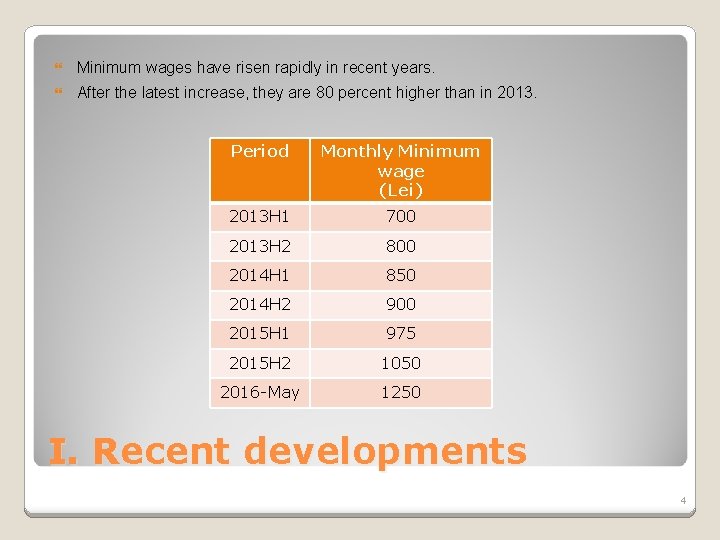
Minimum wages have risen rapidly in recent years. After the latest increase, they are 80 percent higher than in 2013. Period Monthly Minimum wage (Lei) 2013 H 1 700 2013 H 2 800 2014 H 1 850 2014 H 2 900 2015 H 1 975 2015 H 2 1050 2016 -May 1250 I. Recent developments 4
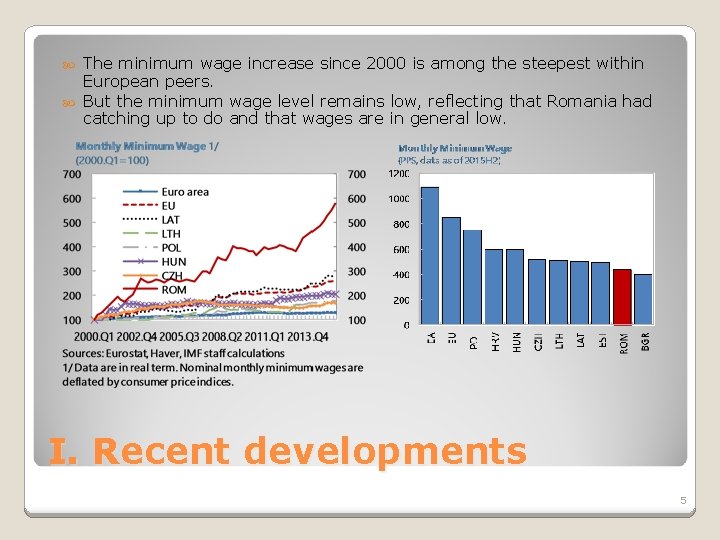
The minimum wage increase since 2000 is among the steepest within European peers. But the minimum wage level remains low, reflecting that Romania had catching up to do and that wages are in general low. I. Recent developments 5
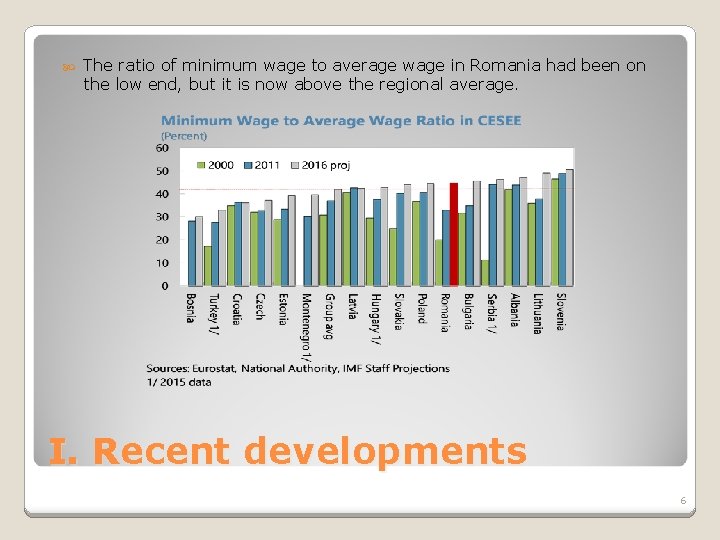
The ratio of minimum wage to average wage in Romania had been on the low end, but it is now above the regional average. I. Recent developments 6
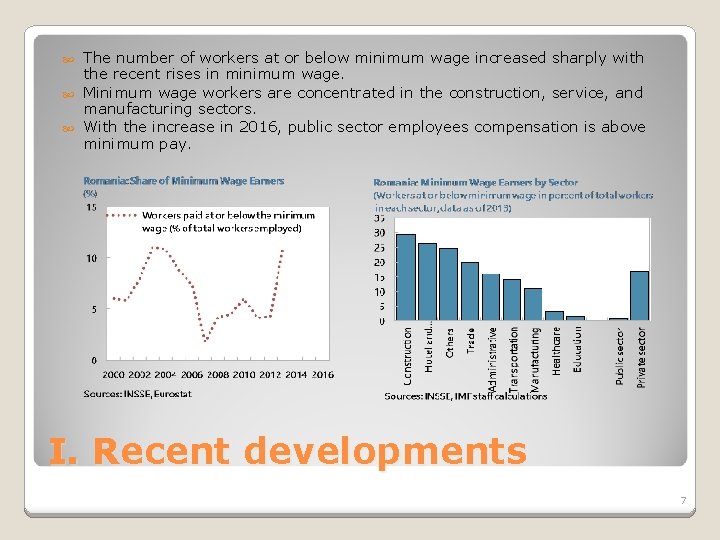
The number of workers at or below minimum wage increased sharply with the recent rises in minimum wage. Minimum wage workers are concentrated in the construction, service, and manufacturing sectors. With the increase in 2016, public sector employees compensation is above minimum pay. I. Recent developments 7
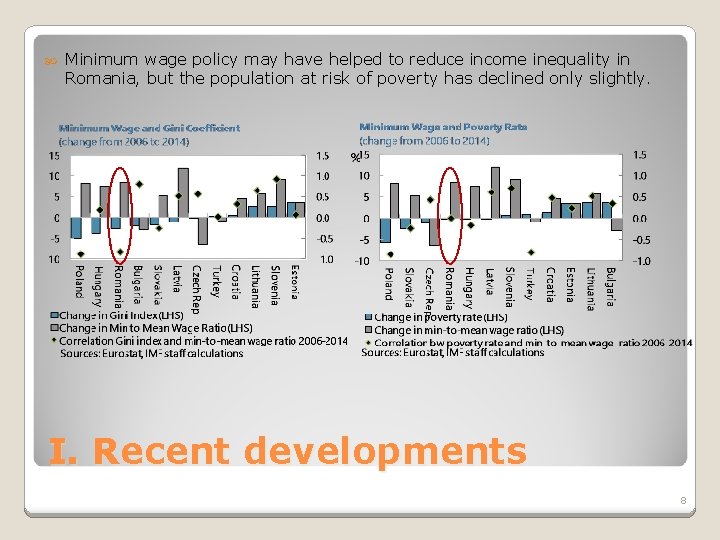
Minimum wage policy may have helped to reduce income inequality in Romania, but the population at risk of poverty has declined only slightly. I. Recent developments 8
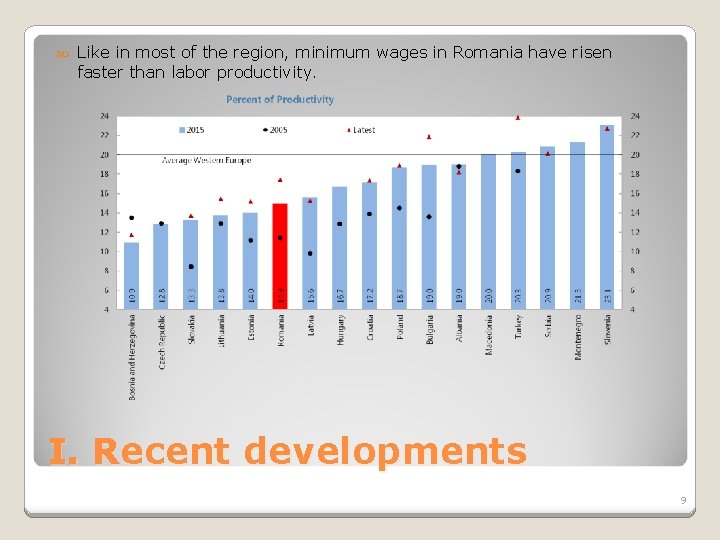
Like in most of the region, minimum wages in Romania have risen faster than labor productivity. I. Recent developments 9
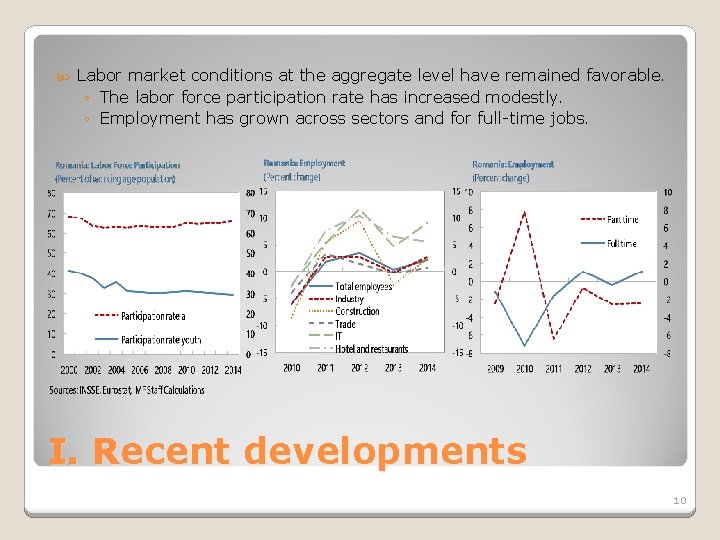
Labor market conditions at the aggregate level have remained favorable. ◦ The labor force participation rate has increased modestly. ◦ Employment has grown across sectors and for full-time jobs. I. Recent developments 10
II. Economic Impact 11
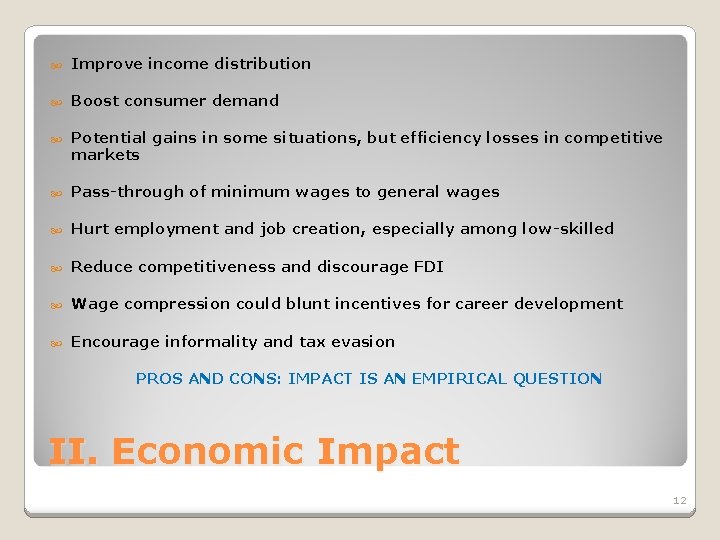
Improve income distribution Boost consumer demand Potential gains in some situations, but efficiency losses in competitive markets Pass-through of minimum wages to general wages Hurt employment and job creation, especially among low-skilled Reduce competitiveness and discourage FDI Wage compression could blunt incentives for career development Encourage informality and tax evasion PROS AND CONS: IMPACT IS AN EMPIRICAL QUESTION II. Economic Impact 12
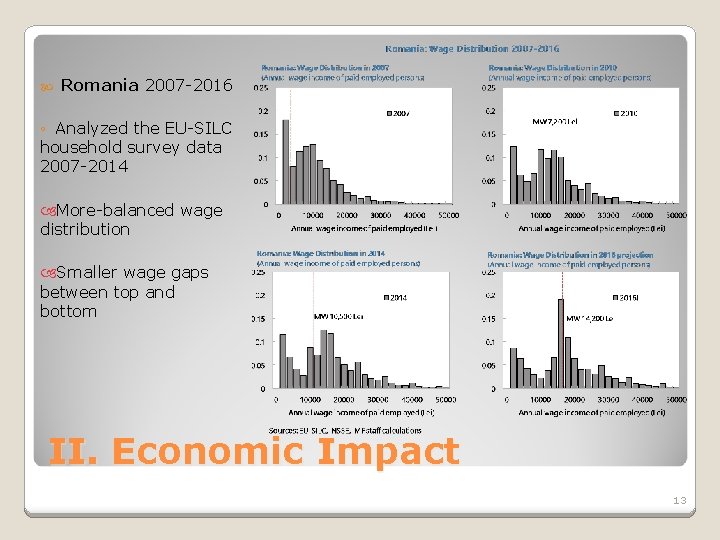
Romania 2007 -2016 ◦ Analyzed the EU-SILC household survey data 2007 -2014 More-balanced wage distribution Smaller wage gaps between top and bottom II. Economic Impact 13
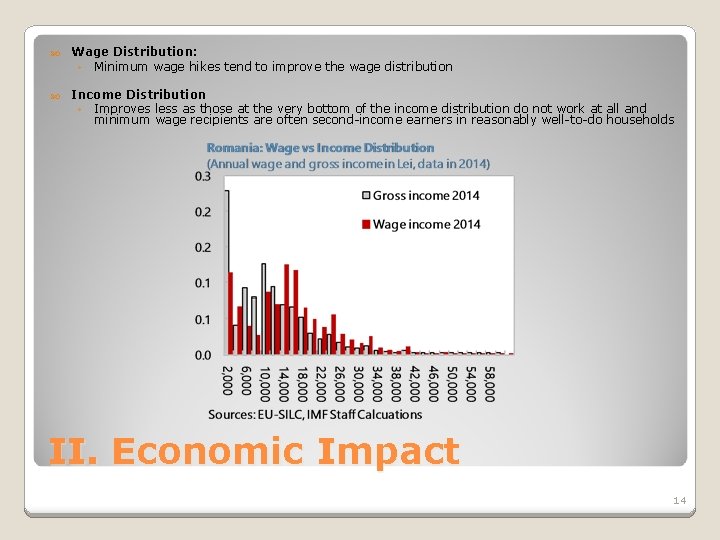
Wage Distribution: ◦ Minimum wage hikes tend to improve the wage distribution Income Distribution ◦ Improves less as those at the very bottom of the income distribution do not work at all and minimum wage recipients are often second-income earners in reasonably well-to-do households II. Economic Impact 14
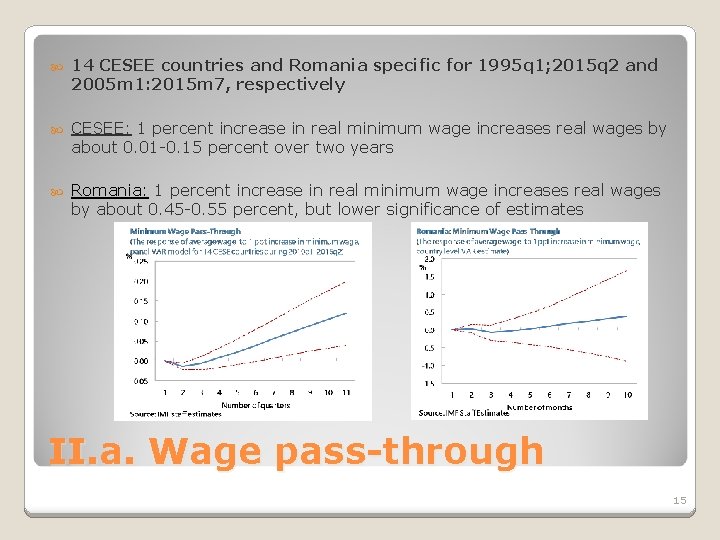
14 CESEE countries and Romania specific for 1995 q 1; 2015 q 2 and 2005 m 1: 2015 m 7, respectively CESEE: 1 percent increase in real minimum wage increases real wages by about 0. 01 -0. 15 percent over two years Romania: 1 percent increase in real minimum wage increases real wages by about 0. 45 -0. 55 percent, but lower significance of estimates II. a. Wage pass-through 15
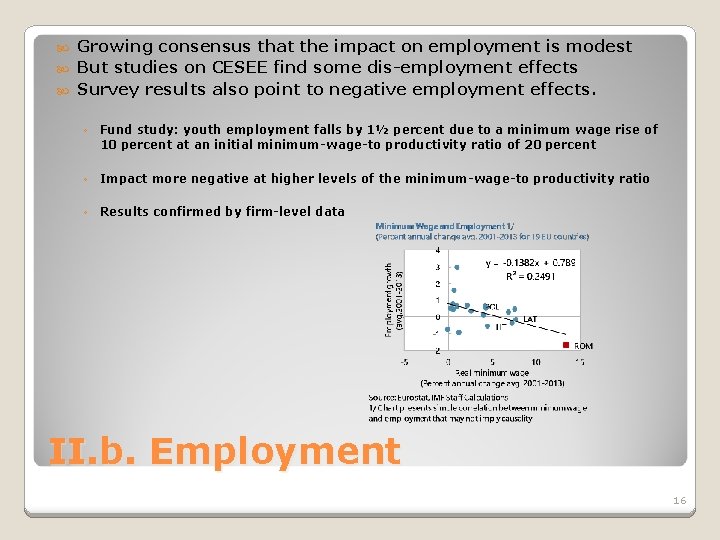
Growing consensus that the impact on employment is modest But studies on CESEE find some dis-employment effects Survey results also point to negative employment effects. ◦ Fund study: youth employment falls by 1½ percent due to a minimum wage rise of 10 percent at an initial minimum-wage-to productivity ratio of 20 percent ◦ Impact more negative at higher levels of the minimum-wage-to productivity ratio ◦ Results confirmed by firm-level data II. b. Employment 16
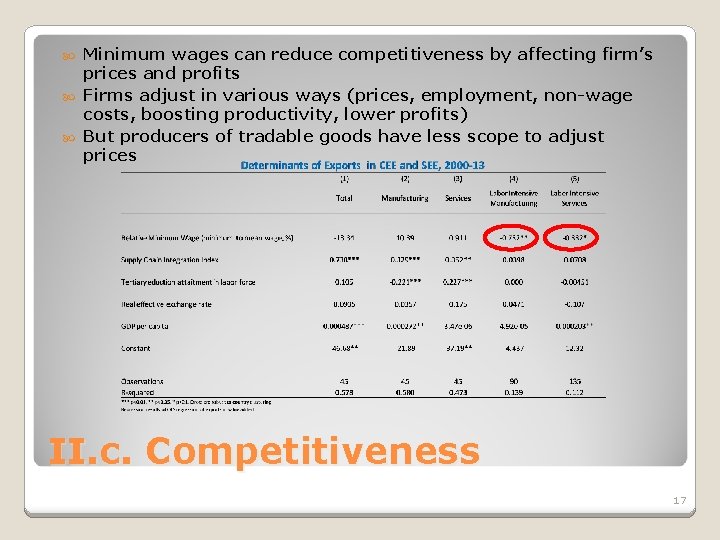
Minimum wages can reduce competitiveness by affecting firm’s prices and profits Firms adjust in various ways (prices, employment, non-wage costs, boosting productivity, lower profits) But producers of tradable goods have less scope to adjust prices II. c. Competitiveness 17
III. Policy implications 18
§ Appropriate level of minimum wages: § Question not about hikes being good or bad, but about appropriate level § The few available studies suggest 25 -50 percent of average wage § Tipping point in CESEE in 40 -50 percent rate for minimum-to-average wage ratio III. Policy implications 19
Minimum wage setting should be depoliticized Minimum wage differentiation should be considered Minimum wage policy cannot address income inequality concerns on its own III. Policy implications 20

Thank you! 21
- Slides: 21