
MINIMUM REQUIREMENTS ANALYSIS Note to presenters This file
![MINIMUM REQUIREMENTS ANALYSIS “A conservationist [wilderness steward] is one who is humbly aware that](https://slidetodoc.com/presentation_image_h2/51a75ccf5182fad080f79389be3e3df6/image-18.jpg "MINIMUM REQUIREMENTS ANALYSIS “A conservationist [wilderness steward] is one who is humbly aware that")

- Slides: 19
MINIMUM REQUIREMENTS ANALYSIS Note to presenters This file is part of the FS Resources section at: http: //www. wilderness. net/fs/ This presentation should be reviewed and revised as needed to match the training objectives and target audience and to insert local images as needed. The Minimum Requirements Analysis training presentations are posted in 6 parts which may be combined and used as needed: • Introduction • Basis in Law and Policy • Definitions • Minimum Requirements process • Step 1 • Step 2 • Use of the MRA process • Use of Traditional Skills and Tools
MINIMUM REQUIREMENTS ANALYSIS Applying the Minimum Requirements Analysis Process
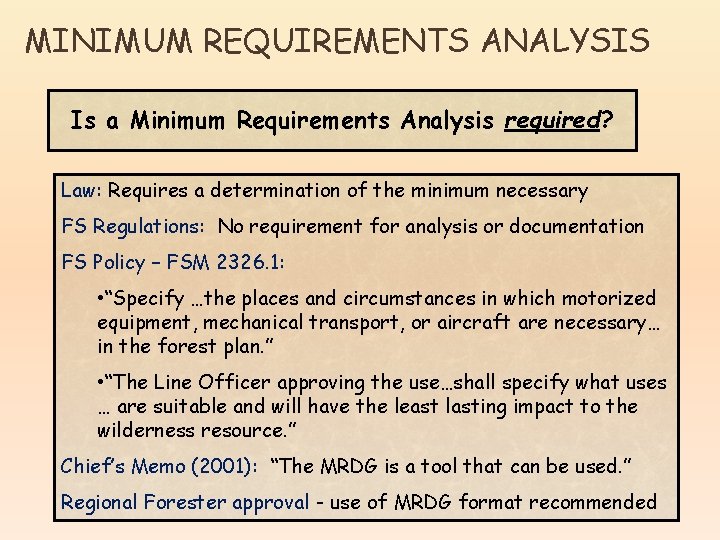
MINIMUM REQUIREMENTS ANALYSIS Is a Minimum Requirements Analysis required? Law: Requires a determination of the minimum necessary FS Regulations: No requirement for analysis or documentation FS Policy – FSM 2326. 1: • “Specify …the places and circumstances in which motorized equipment, mechanical transport, or aircraft are necessary… in the forest plan. ” • “The Line Officer approving the use…shall specify what uses … are suitable and will have the least lasting impact to the wilderness resource. ” Chief’s Memo (2001): “The MRDG is a tool that can be used. ” Regional Forester approval - use of MRDG format recommended
MINIMUM REQUIREMENTS ANALYSIS Minimum Requirements Process - Benefits • Meets the direction of both the law and agency policy. Provides a process that is flexible enough to meet a range of proposed actions. • Creates a decision that is “visible” to the public and defensible.
MINIMUM REQUIREMENTS ANALYSIS Minimum Requirements Process - Benefits Helps prevent “decision creep” – the tendency over time for the cumulative effect of multiple decisions to permanently erode wilderness character • • Avoids tendency to justify a predetermined course of action • Helps make and support the best decision for your wilderness.
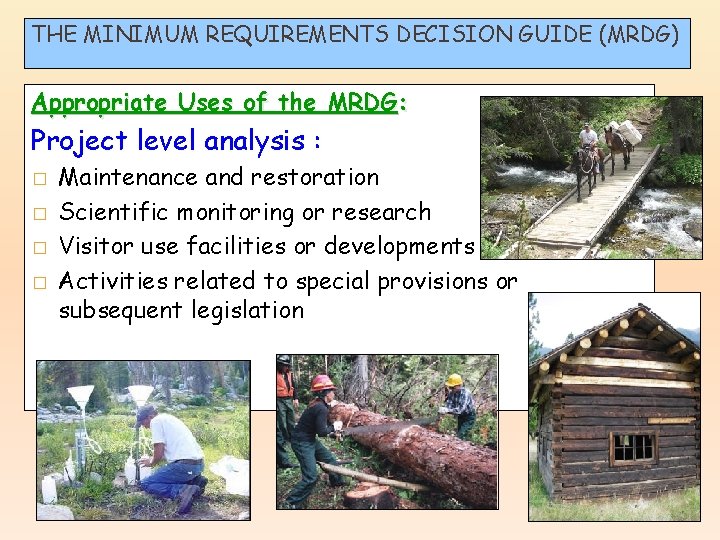
THE MINIMUM REQUIREMENTS DECISION GUIDE (MRDG) Appropriate Uses of the MRDG: Project level analysis : � � Maintenance and restoration Scientific monitoring or research Visitor use facilities or developments Activities related to special provisions or subsequent legislation
THE MINIMUM REQUIREMENTS DECISION GUIDE (MRDG) Inappropriate Uses of the MRDG 1) As a substitute for a NEPA analysis, documentation or public involvement. � � Use the MRDG to support a NEPA analysis and decision The MRDG determination can be the proposed action for a NEPA analysis if needed. 2) As a substitute for programmatic wilderness planning (LAC or other process)
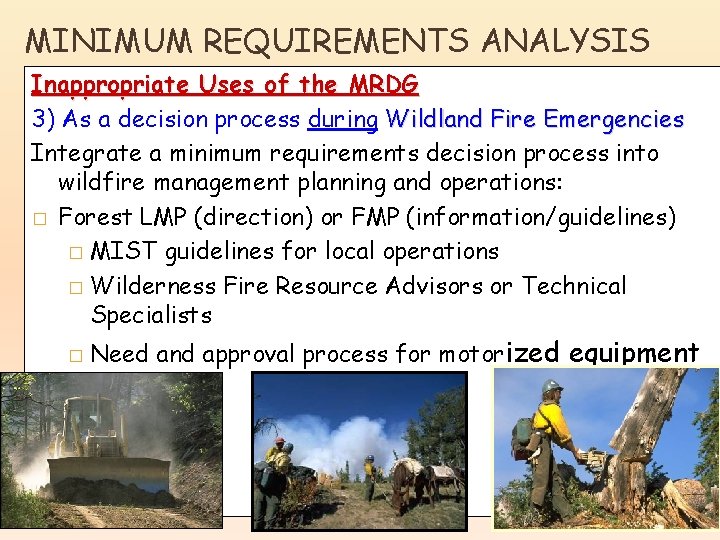
MINIMUM REQUIREMENTS ANALYSIS Inappropriate Uses of the MRDG 3) As a decision process during Wildland Fire Emergencies Integrate a minimum requirements decision process into wildfire management planning and operations: � Forest LMP (direction) or FMP (information/guidelines) � MIST guidelines for local operations � Wilderness Fire Resource Advisors or Technical Specialists � Need and approval process for motorized equipment
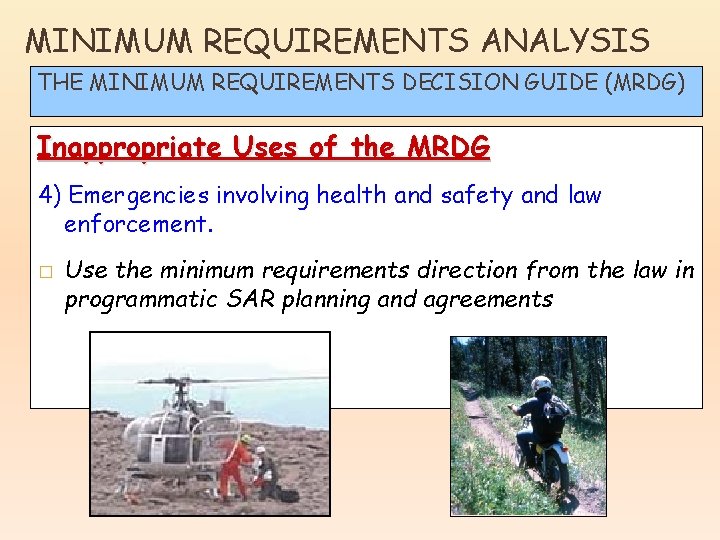
MINIMUM REQUIREMENTS ANALYSIS THE MINIMUM REQUIREMENTS DECISION GUIDE (MRDG) Inappropriate Uses of the MRDG 4) Emergencies involving health and safety and law enforcement. � Use the minimum requirements direction from the law in programmatic SAR planning and agreements
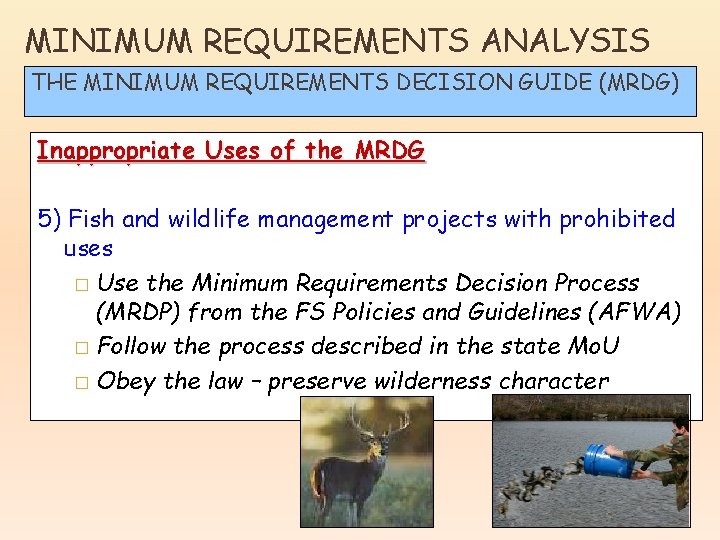
MINIMUM REQUIREMENTS ANALYSIS THE MINIMUM REQUIREMENTS DECISION GUIDE (MRDG) Inappropriate Uses of the MRDG 5) Fish and wildlife management projects with prohibited uses � Use the Minimum Requirements Decision Process (MRDP) from the FS Policies and Guidelines (AFWA) � Follow the process described in the state Mo. U � Obey the law – preserve wilderness character
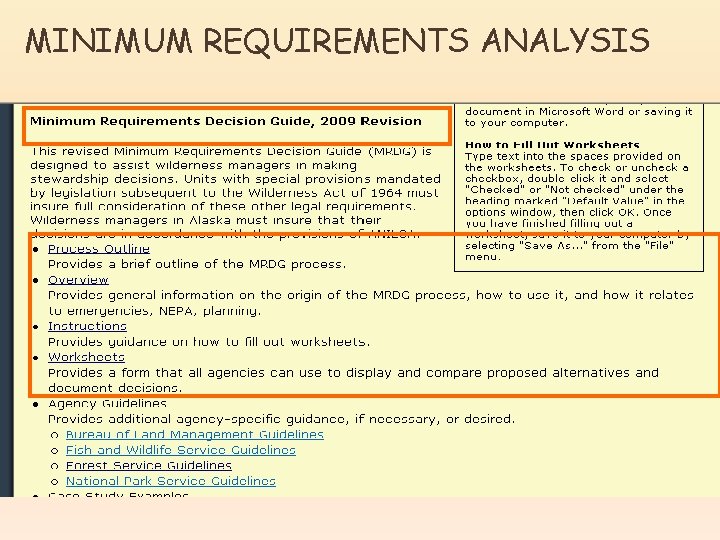
MINIMUM REQUIREMENTS ANALYSIS Minimum Requirements Decision Guide (MRDG) Available at: http: //www. wilderness. net/mrdg/ -MS Word format -Revised January 2009
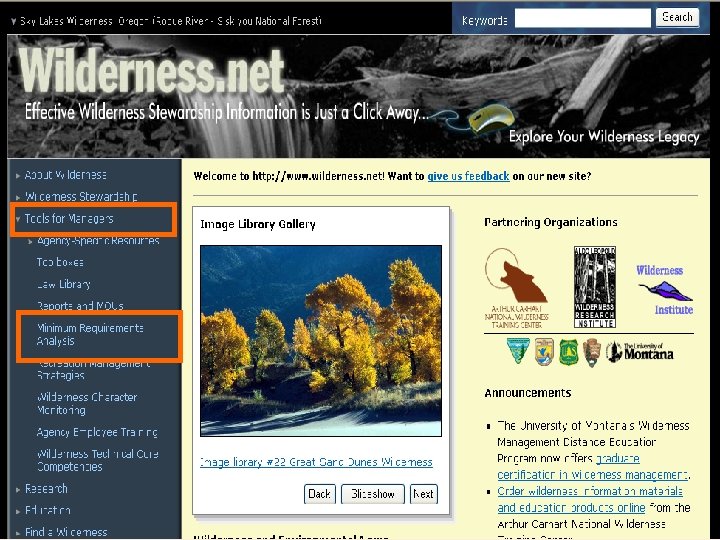
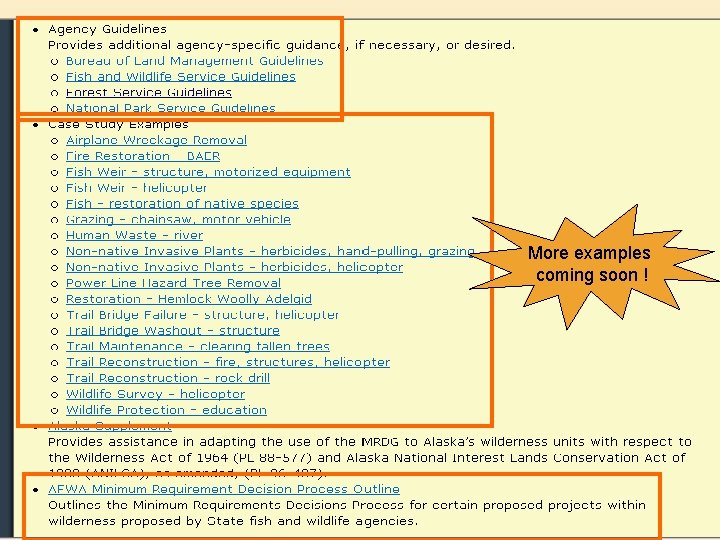
MINIMUM REQUIREMENTS ANALYSIS Information Resources for Minimum Requirements Analysis
MINIMUM REQUIREMENTS ANALYSIS
More examples coming soon !
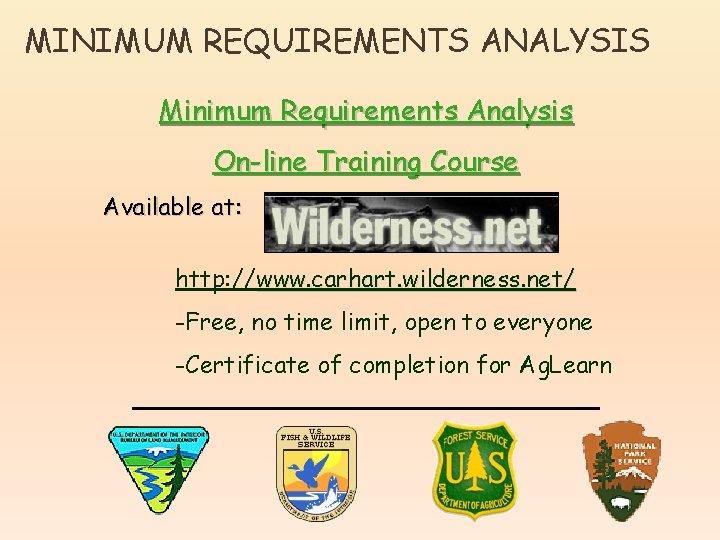
MINIMUM REQUIREMENTS ANALYSIS Minimum Requirements Analysis On-line Training Course Available at: http: //www. carhart. wilderness. net/ -Free, no time limit, open to everyone -Certificate of completion for Ag. Learn
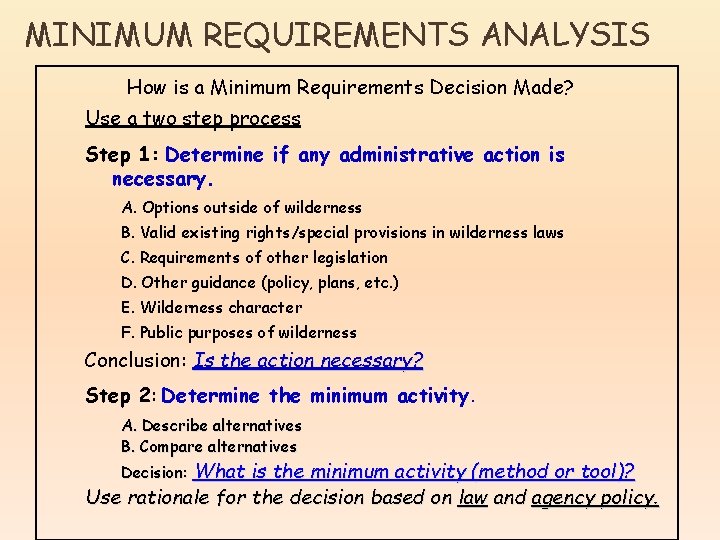
MINIMUM REQUIREMENTS ANALYSIS How is a Minimum Requirements Decision Made? Use a two step process Step 1: Determine if any administrative action is necessary. A. Options outside of wilderness B. Valid existing rights/special provisions in wilderness laws C. Requirements of other legislation D. Other guidance (policy, plans, etc. ) E. Wilderness character F. Public purposes of wilderness Conclusion: Is the action necessary? Step 2: Determine the minimum activity. A. Describe alternatives B. Compare alternatives Decision: What is the minimum activity (method or tool)? Use rationale for the decision based on law and agency policy.
MINIMUM REQUIREMENTS ANALYSIS “A conservationist [wilderness steward] is one who is humbly aware that with each stroke he is writing his signature on the face of the land. ” - Aldo Leopold, A Sand County Almanac, 1949