
MINIMIZING INJURY RISK IN YOUNG ATHLETES Neeru Jayanthi


- Slides: 94
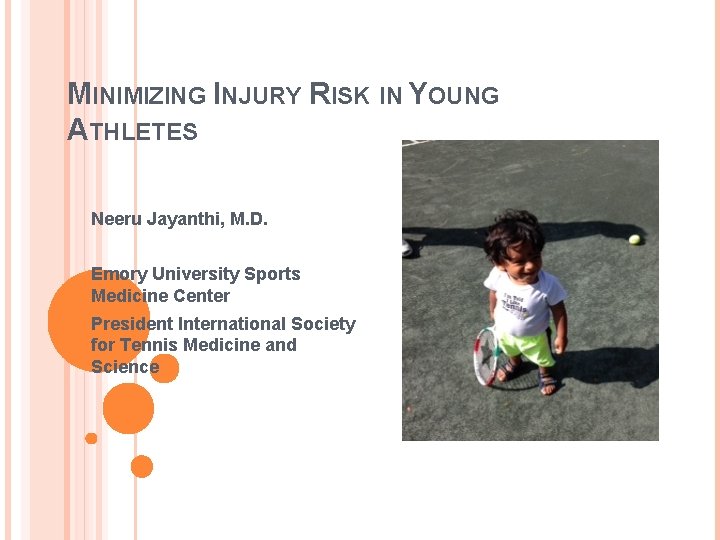
MINIMIZING INJURY RISK IN YOUNG ATHLETES Neeru Jayanthi, M. D. Emory University Sports Medicine Center President International Society for Tennis Medicine and Science
EMORY SPORTS MEDICINE-ATLANTA LOYOLA UNIVERSITY CHICAGO
“EMORY TENNIS MEDICINE”
YOUTH SPORTS BACKGROUND Overuse injuries in Young Athletes AMSSM Panel/Writing Group Collaborative Research with Lurie Children’s (multiple grants) Consultant (Unpaid): American Academy Pediatrics (AAP) Council of Sports Medicine Fitness (COSMF) Aspen Institute (Project Play) Mom’s. Team Institute WTA medical advisory board (Age Eligibility Rule)
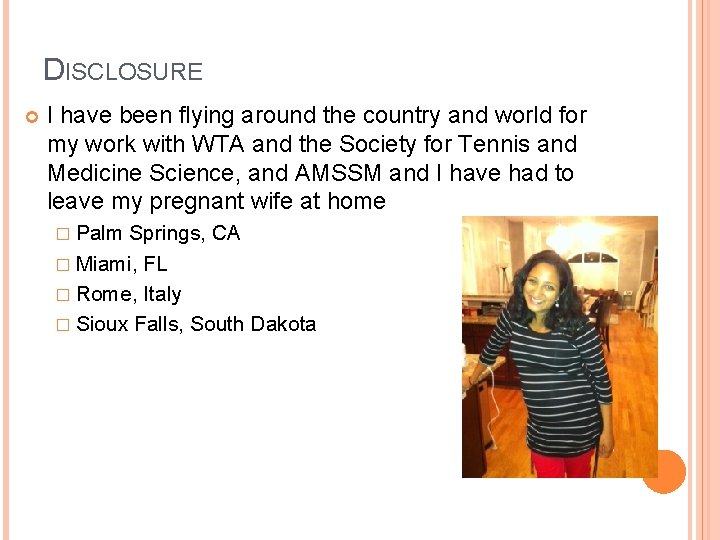
DISCLOSURE I have been flying around the country and world for my work with WTA and the Society for Tennis and Medicine Science, and AMSSM and I have had to leave my pregnant wife at home � Palm Springs, CA � Miami, FL � Rome, Italy � Sioux Falls, South Dakota
DISCLOSURE (INCLUDE MILLAN PICTURE)
OBJECTIVES To understand how to utilize the evidence to identify at risk training patterns in youth sports To understand the potential successes and risks of sports specialized training To understand how to counsel a young athlete on appropriate training recommendations that may reduce their risk of serious overuse injuries
COUNSELING?
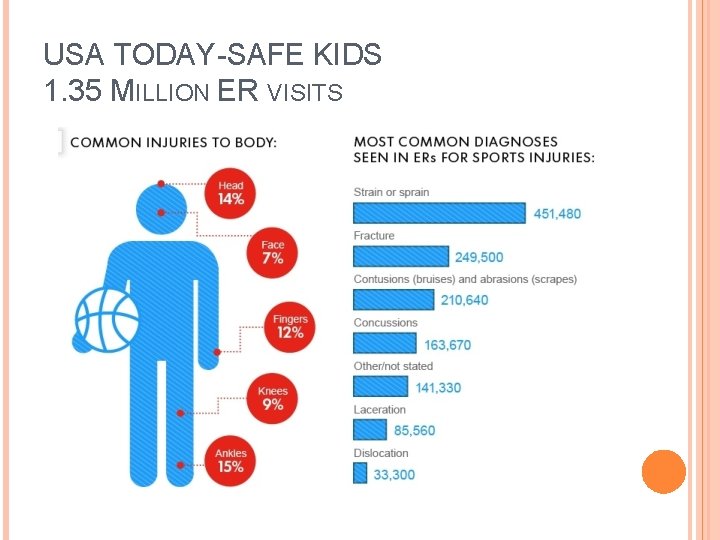
USA TODAY-SAFE KIDS 1. 35 MILLION ER VISITS
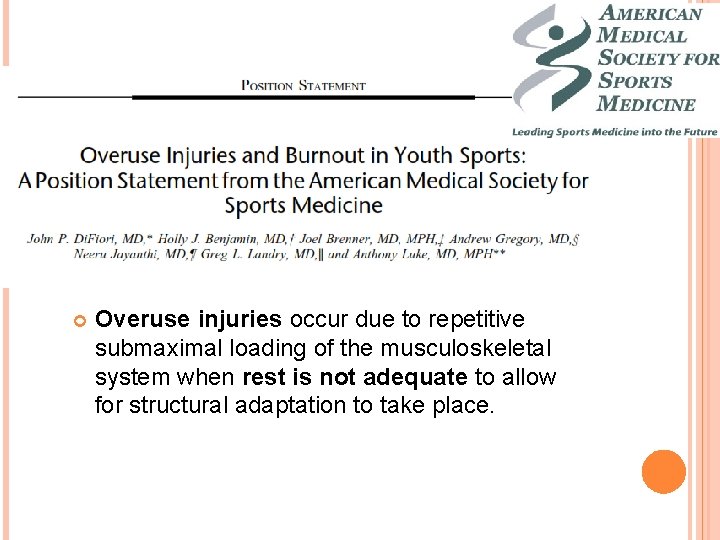
Overuse injuries occur due to repetitive submaximal loading of the musculoskeletal system when rest is not adequate to allow for structural adaptation to take place.
BACKGROUND-OVERUSE INJURIES American Medical Society of Sports Medicine (AMSSM) Aspen Institute American Academy of Pediatrics (AAP) National Athletic Training Association (NATA) American College of Sports Medicine (ACSM) American Orthopaedic Society for Sports Medicine (AOSSM) STOP campaign USA Youth Baseball Safe Kids Campaign Mom’s Team
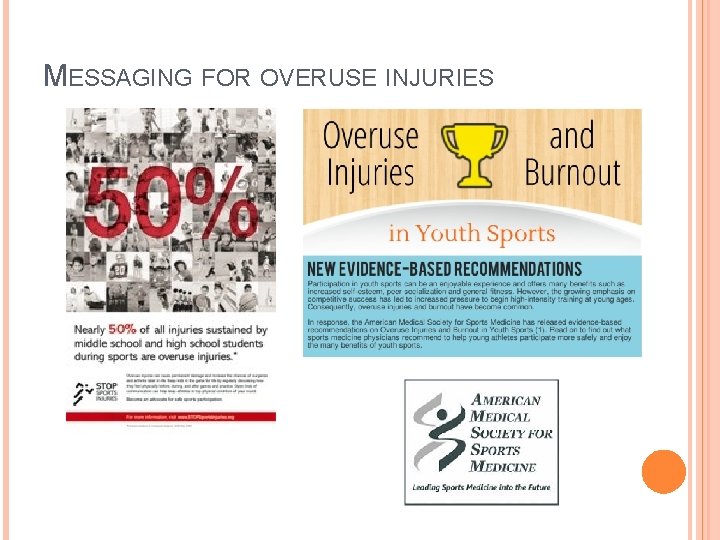
“MESSAGING” OVERUSE INJURIES
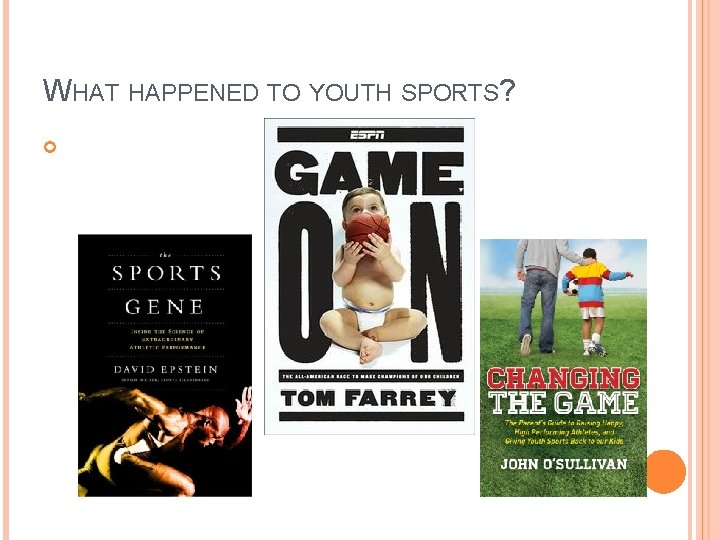
WHAT HAPPENED TO YOUTH SPORTS?
FACES OF YOUTH SPORTS TODAY (INDIVIDUAL STORIES)
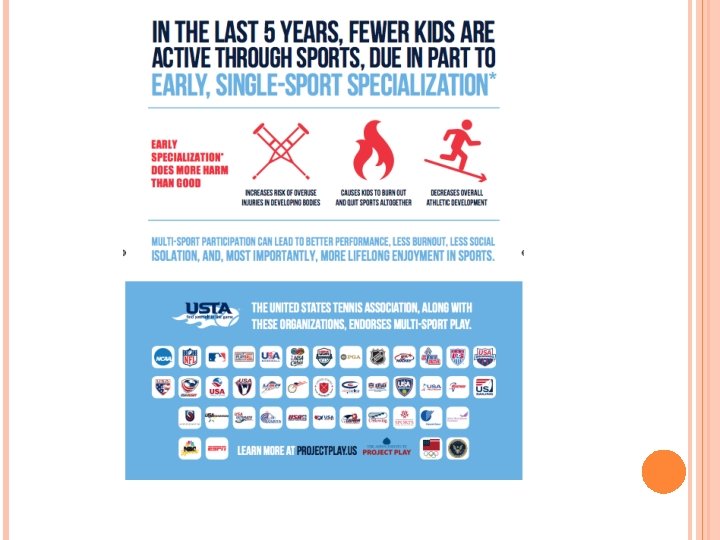
ORGANIZATIONAL AND COMMUNITY EFFORTS Sports specific National Governing Bodies Youth sports leagues
DO WE PRACTICE WHAT WE PREACH?
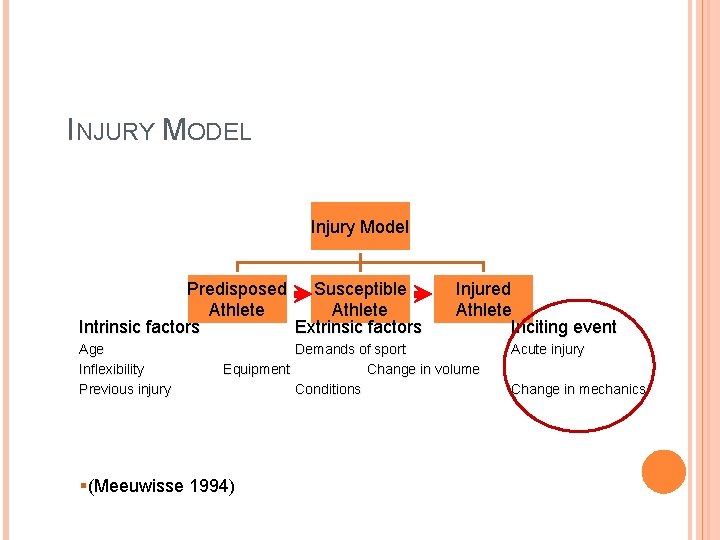
INJURY MODEL Injury Model Predisposed Susceptible Athlete Intrinsic factors Extrinsic factors Age Inflexibility Previous injury Injured Athlete Inciting event Demands of sport Equipment Change in volume Conditions (Meeuwisse 1994) Acute injury Change in mechanics
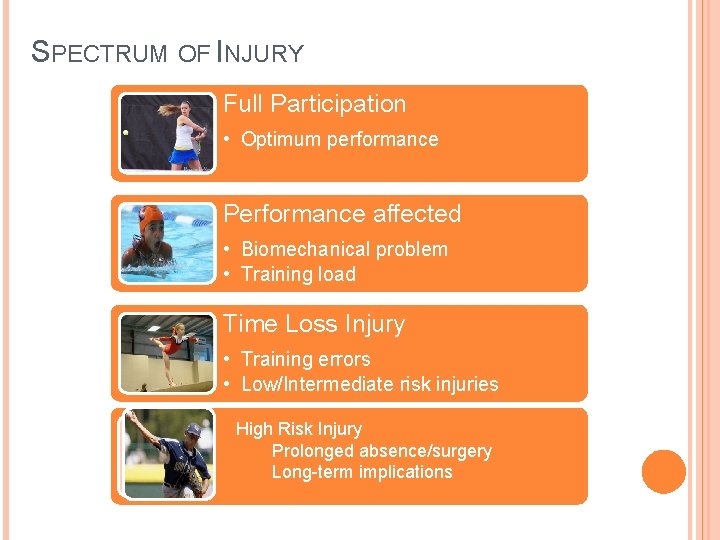
SPECTRUM OF INJURY Full Participation • Optimum performance Performance affected • Biomechanical problem • Training load Time Loss Injury • Training errors • Low/Intermediate risk injuries High Risk Injury Prolonged absence/surgery Long-term implications
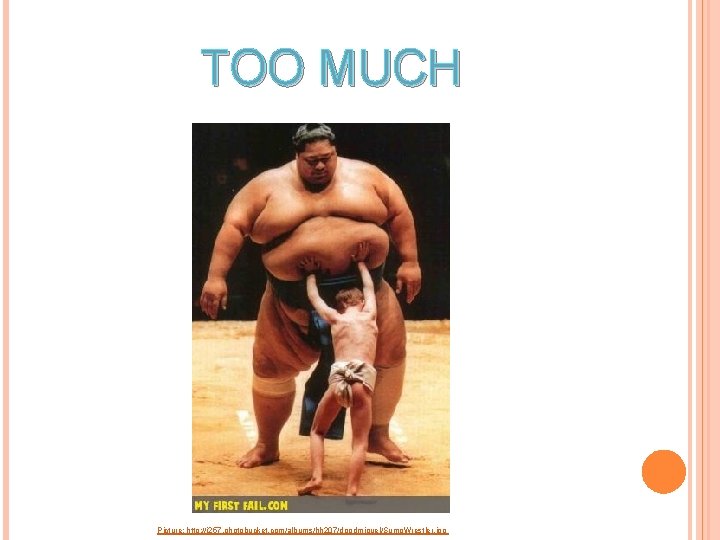
TOO MUCH Picture: http: //i 257. photobucket. com/albums/hh 207/doodmiguel/Sumo. Wrestler. jpg
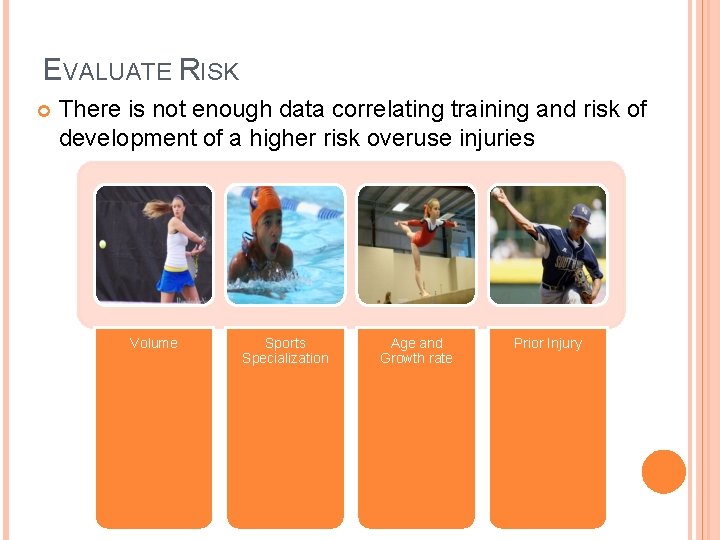
EVALUATE RISK There is not enough data correlating training and risk of development of a higher risk overuse injuries Volume Sports Specialization Age and Growth rate Prior Injury
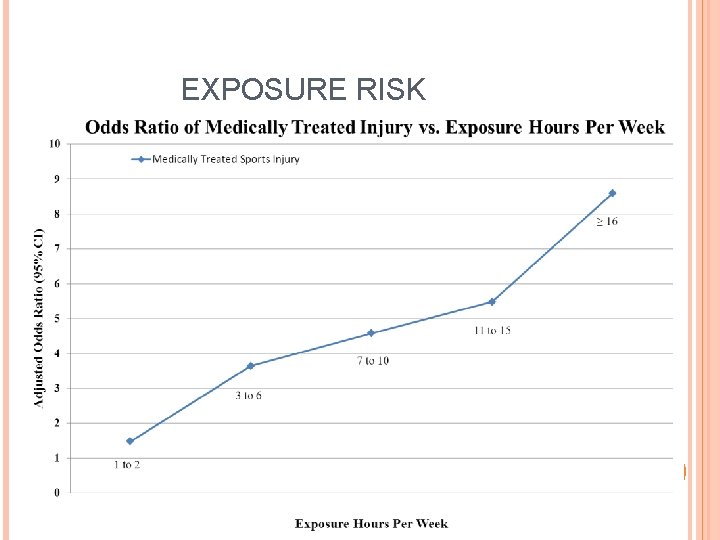
EXPOSURE RISK
RISK FACTORS FOR MEDICAL WITHDRAWALS IN USTA JUNIOR NATIONAL TENNIS TOURNAMENTS
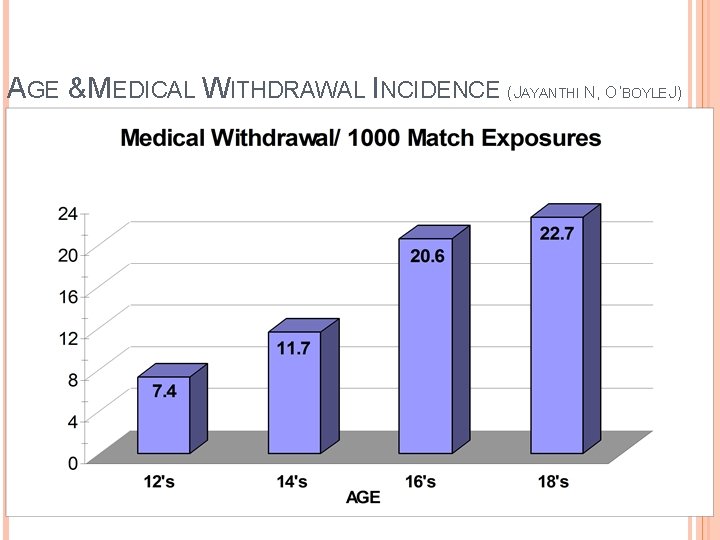
AGE & MEDICAL WITHDRAWAL INCIDENCE (JAYANTHI N, O’BOYLE J)
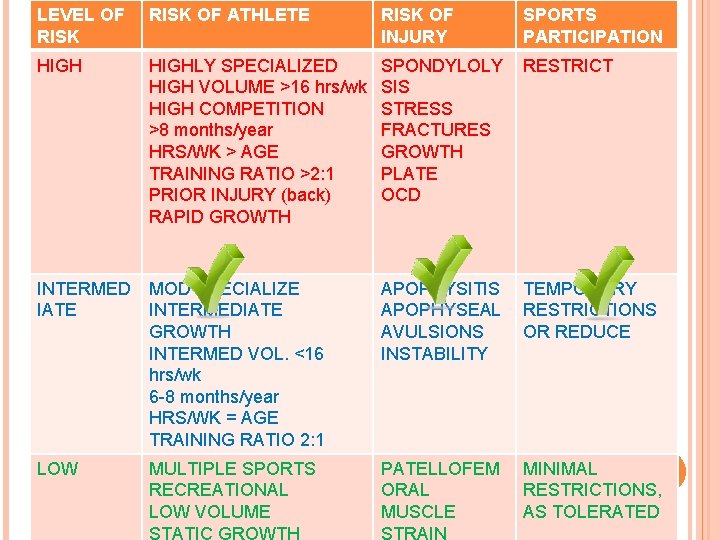
LEVEL OF RISK OF INJURY SPORTS PARTICIPATION HIGHLY SPECIALIZED UANTIFYING NJURY ISK HIGH VOLUME >16 hrs/wk HIGH COMPETITION >8 months/year HRS/WK > AGE TRAINING RATIO >2: 1 PRIOR INJURY (back) RAPID GROWTH SPONDYLOLY SIS STRESS FRACTURES GROWTH PLATE OCD RESTRICT INTERMED MOD SPECIALIZE IATE INTERMEDIATE GROWTH INTERMED VOL. <16 hrs/wk 6 -8 months/year HRS/WK = AGE TRAINING RATIO 2: 1 APOPHYSITIS TEMPORARY APOPHYSEAL RESTRICTIONS AVULSIONS OR REDUCE INSTABILITY LOW PATELLOFEM ORAL MUSCLE STRAIN Q RISK OF ATHLETE I R MULTIPLE SPORTS RECREATIONAL LOW VOLUME STATIC GROWTH MINIMAL RESTRICTIONS, AS TOLERATED
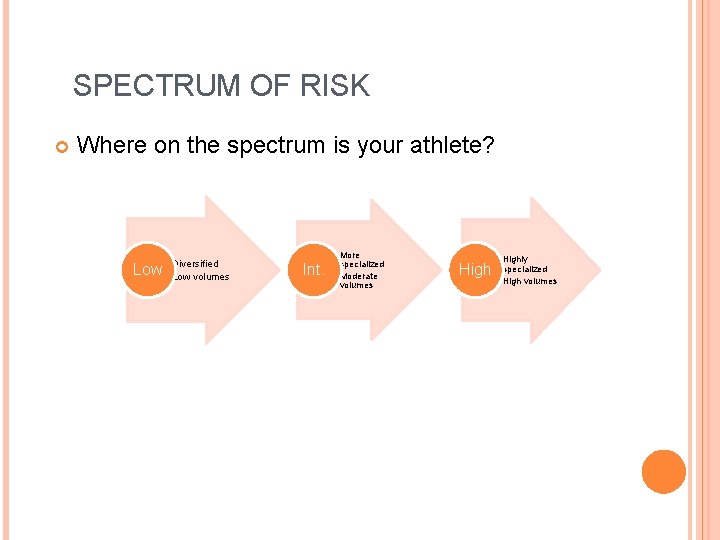
SPECTRUM OF RISK Where on the spectrum is your athlete? • Diversified Low • Low volumes • More Int. specialized • Moderate volumes High • Highly specialized • High volumes
SPECIFIC ADVISE TO REDUCE RISK?
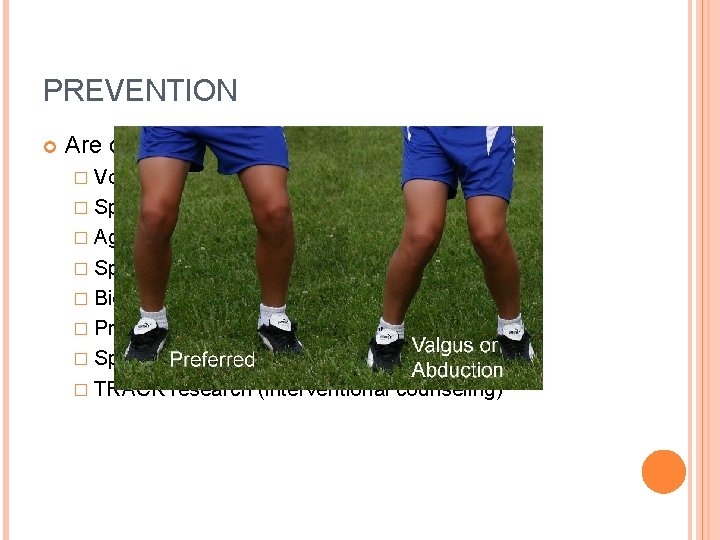
PREVENTION Are overuse injuries more preventable? � Volume related � Sports specialization (young athletes) � Age related � Sports specificity � Biomechanical load � Prior injury � Sports specialization � TRACK research (interventional counseling)
NCAA DATA A more recent NCAA study describes 30% to be overuse and 70% to be acute/traumatic. � Football was 8 times more likely to be acute � Females twice as likely to be overuse Yang et al 2012 � Sampling problem of the 16 sports (biased towards more traumatic sports)
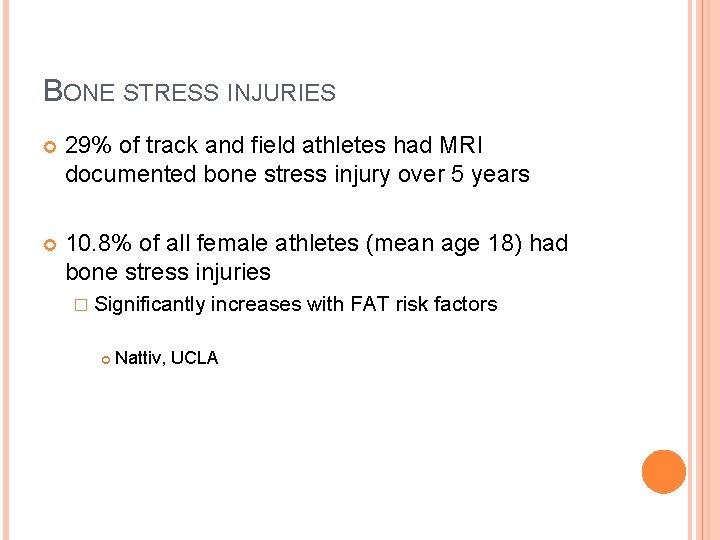
BONE STRESS INJURIES 29% of track and field athletes had MRI documented bone stress injury over 5 years 10. 8% of all female athletes (mean age 18) had bone stress injuries � Significantly increases with FAT risk factors Nattiv, UCLA
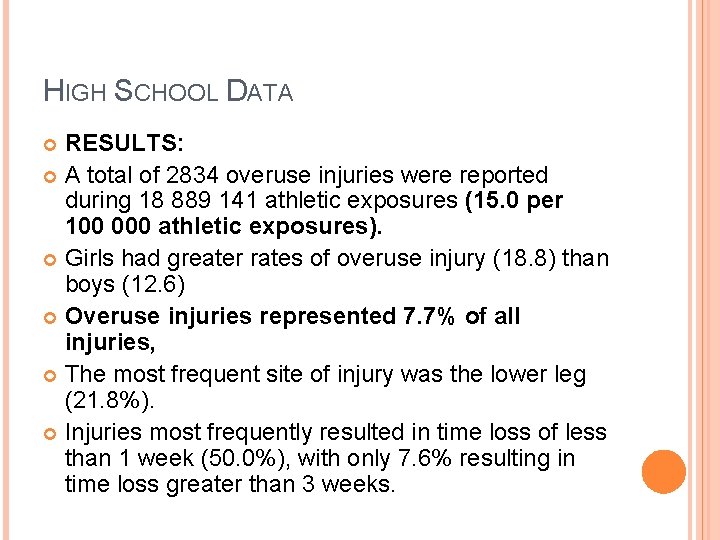
HIGH SCHOOL DATA RESULTS: A total of 2834 overuse injuries were reported during 18 889 141 athletic exposures (15. 0 per 100 000 athletic exposures). Girls had greater rates of overuse injury (18. 8) than boys (12. 6) Overuse injuries represented 7. 7% of all injuries, The most frequent site of injury was the lower leg (21. 8%). Injuries most frequently resulted in time loss of less than 1 week (50. 0%), with only 7. 6% resulting in time loss greater than 3 weeks.
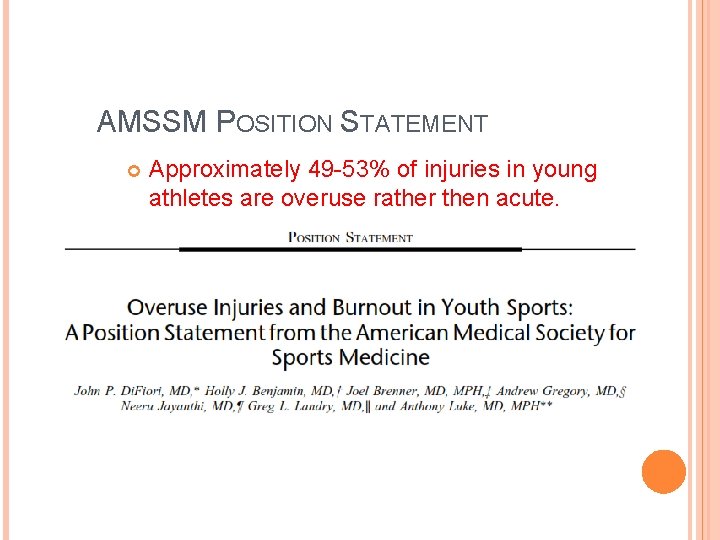
AMSSM POSITION STATEMENT Approximately 49 -53% of injuries in young athletes are overuse rather then acute.
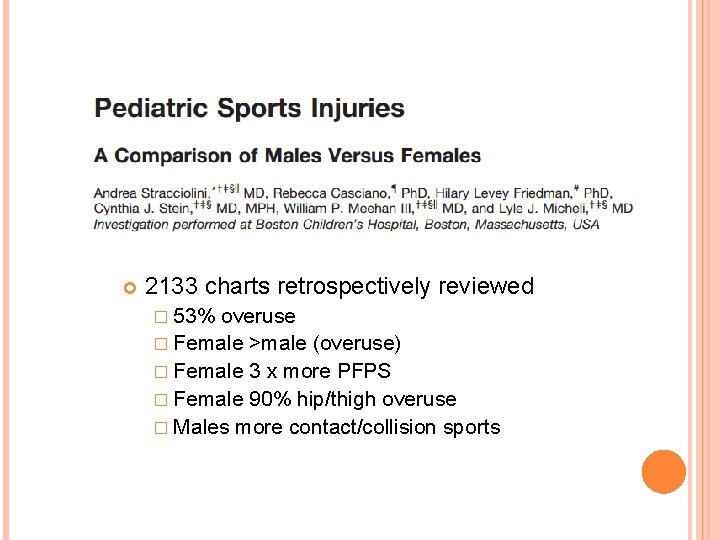
2133 charts retrospectively reviewed � 53% overuse � Female >male (overuse) � Female 3 x more PFPS � Female 90% hip/thigh overuse � Males more contact/collision sports
YOUNG FEMALE ATHLETESS Patellofemoral pain � Point prevalence 16. 3/100 young female athletes Young female athletes more likely to develop patellofemoral pain if specialized � Myer et al.
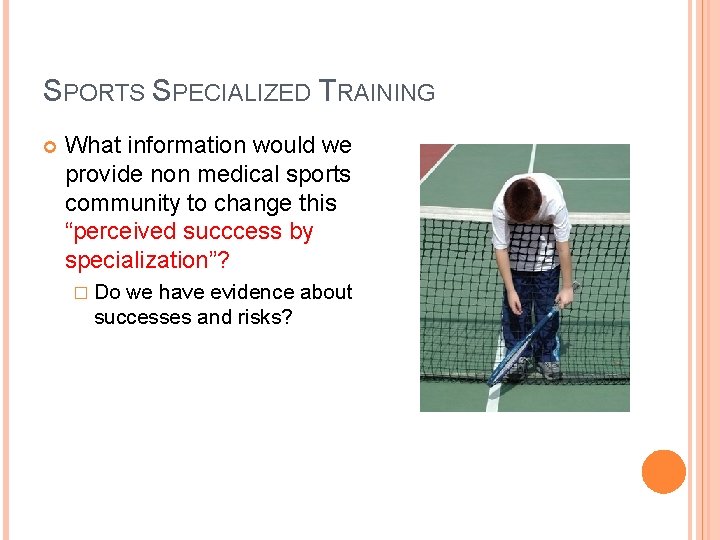
SPORTS SPECIALIZED TRAINING What information would we provide non medical sports community to change this “perceived succcess by specialization”? � Do we have evidence about successes and risks?
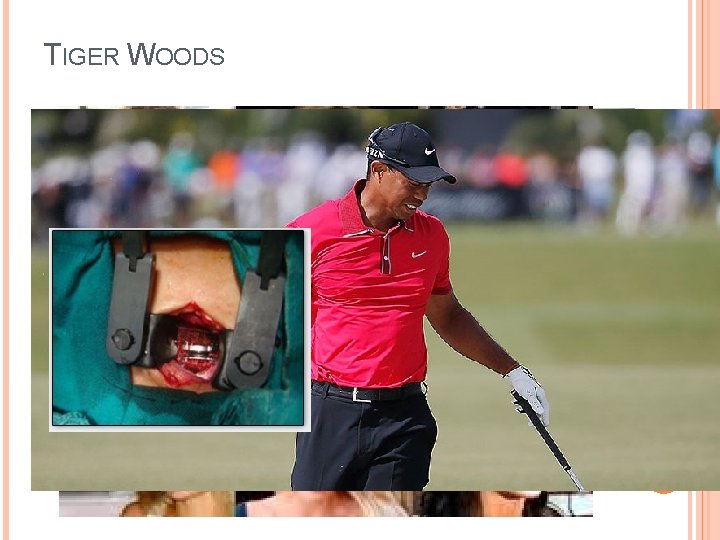
TIGER WOODS
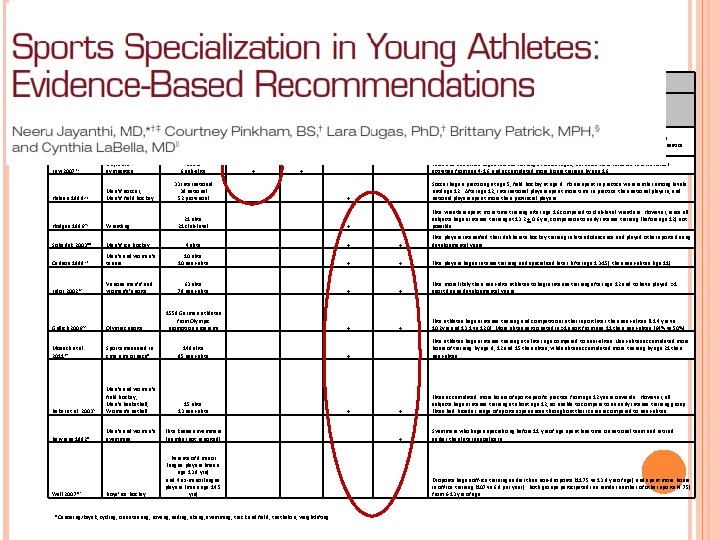
Study Sport(s) Hume 199426 Rhythmic gymnastics Law 200731 Rhythmic gymnastics Helsen 199823 Men’s' soccer, Men’s' field hockey Hodges 199625 Wrestling Soberlak 200344 Men’s' ice hockey Carlson 198813 Men's and women's tennis Lidor 200232 Various men’s' and women’s' sports Athletes Evidence for (+): Begin intense training before age 12 106 across all levels + 33 international 39 national 52 provincial 21 elite 21 club-level + Diversify early, specialize after age 12 + Amount of gymnastic training during development is related to level of attainment. All gymnasts participated in other sports, with no difference between elites and sub-elites. Enjoyment of gymnastics was strong predictor of attainment. Elites and sub-elites began intense training at similar ages, but elites were involved in fewer other activities from age 4 -16, and accumulated more hours training by age 16. + Soccer began practicing at age 5, field hockey at age 9. Hours spent in practice were similar among levels until age 12. After age 12, international players spent more time in practice than national players, and national players spent more than provincial players. Elite wrestlers spent more time training after age 16 compared to club-level wrestlers. However, since all subjects began intense training at 13. 2 + 0. 6 yrs, comparison to early intense training (before age 12) not possible. + + + Elite players intensified their deliberate hockey training in late adolescence and played other sports during developmental years 10 elite 10 near-elite + + Elite players began intense training and specialized later (after age 13 -15) than near-elites (age 11). 63 elite 78 near-elite + + Elite more likely than near-elite athletes to begin intense training after age 12 and to have played >1 sport during developmental years. + + Elite athletes began intense training and competition in their sport later than near-elites (11. 4 yrs vs 10. 2 yrs and 13. 1 vs 12. 0). More elites participated in >1 sport from age 11 than near-elites (64% vs 50%). Elite athletes began intense training at a later age compared to near-elites. Near-elites accumulated more hours of training by age 9, 12 and 15 than elites, while elites accumulated more training by age 21 than near-elites. + Elites accumulated more hours of sport-specific practice from age 12 years onwards. However, all subjects began intense training at about age 12, so unable to compare to an early intense training group. Elites had broader range of sports experiences throughout their careers compared to near-elites. + Swimmers who began specializing before 11 yrs of age spent less time on national team and retired earlier than later specializers. Dropouts began off-ice training earlier than non-dropouts (11. 75 vs 13. 8 yrs of age) and spent more hours in off-ice training (107 vs 6. 8 per year). Both groups participated in a similar number of other sports (4. 75) from 6 -13 yrs of age. 4 elite 1558 German athletes from Olympic promotion programs Gullich 200622 Olympic sports Moesch et al. 201139 Sports measured in cms, gms or secs* 148 elite 95 near-elite Baker et al. 20035 Men's and women's field hockey, Men's basketball, Women's netball 15 elite 13 near-elite Barynina 19926 Men's and women's swimming Elite Russian swimmers (number not reported) Boys' ice hockey Parents of 8 minor league players (mean age 13. 9 yrs) and 4 ex-minor league players (mean age 14. 5 yrs) Wall 200747 Begin intense training after age 12 Specialize before age 12 6 elite 6 sub-elite + Study conclusions + + *Canoeing/kayak, cycling, orienteering, rowing, sailing, skiing, swimming, track and field, triathalon, weightlifting +
IS 12 THE MAGIC NUMBER? Higher proportion of injuries in those who quit all other sports before 12 � Jayanthi et al.
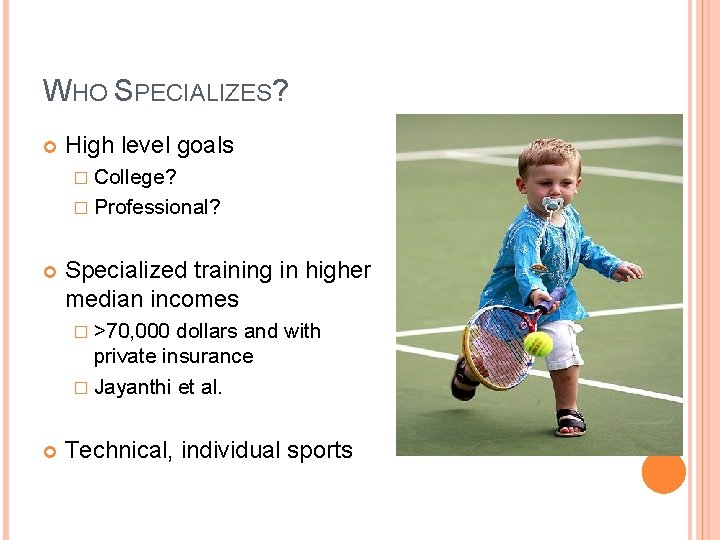
WHO SPECIALIZES? High level goals � College? � Professional? Specialized training in higher median incomes � >70, 000 dollars and with private insurance � Jayanthi et al. Technical, individual sports
NCAA STUDIES Di-Fiori, et al. 296 student athletes vs 164 students Similar age of specialization (14 -17 y/o) Parent or sibling in competitive sports (p<0. 001) Unpublished Malina et al. 376 Div 1 Female athletes 17% specialized (highest rates in individual sports) Jayanthi, et al. 318 student athletes Many chose their Univ sport as main sport in elem school Many played multiple sports in high school without year round training Unpublished
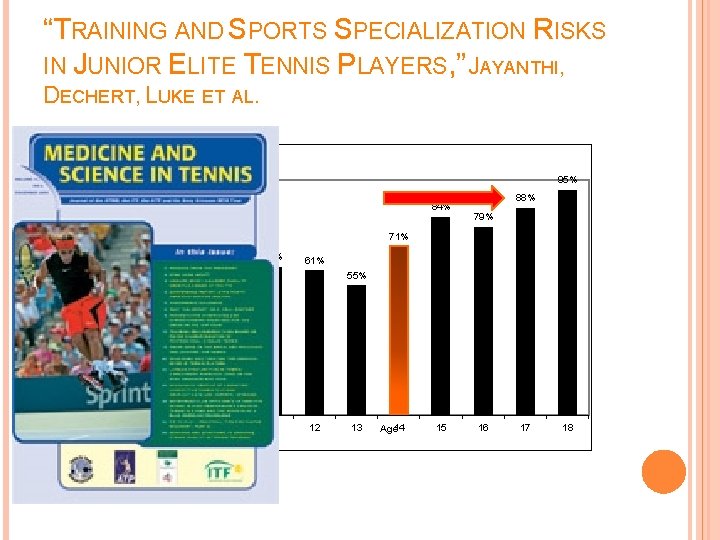
“TRAINING AND SPORTS SPECIALIZATION RISKS IN JUNIOR ELITE TENNIS PLAYERS, ” JAYANTHI, DECHERT, LUKE ET AL. 95% 100% Percent Specializing 90% 84% 80% 79% 71% 70% 60% 88% 63% 58% 61% 55% 50% 40% 30% 20% 10% 0% <10 11 12 13 14 Age 15 16 17 18
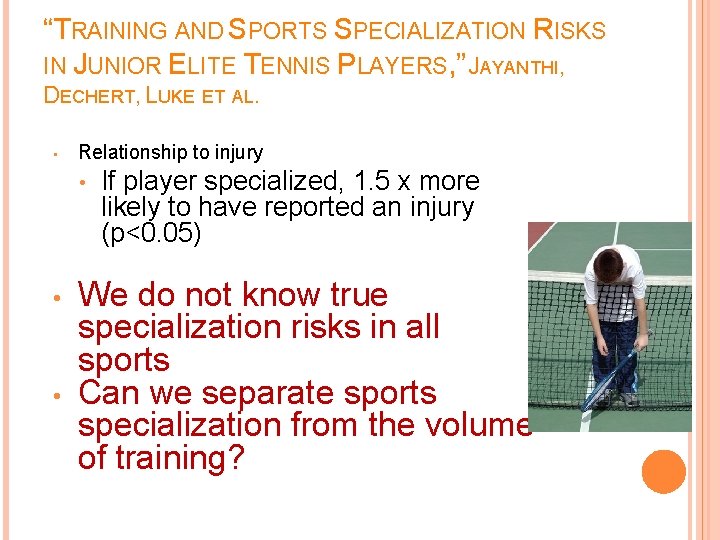
“TRAINING AND SPORTS SPECIALIZATION RISKS IN JUNIOR ELITE TENNIS PLAYERS, ” JAYANTHI, DECHERT, LUKE ET AL. • Relationship to injury • • • If player specialized, 1. 5 x more likely to have reported an injury (p<0. 05) We do not know true specialization risks in all sports Can we separate sports specialization from the volume of training?
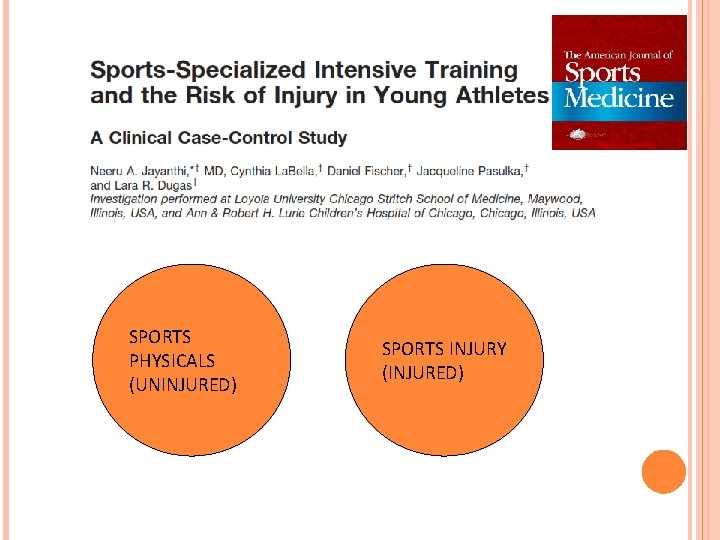
SPORTS PHYSICALS (UNINJURED) SPORTS INJURY (INJURED)
AMSSM FOUNDATION GRANTS AMSSM (American Medical Society for Sports Medicine) (two time recipient) Foundation Grant to continue this study in Collaboration with Lurie Children’s Memorial Hospital, Chicago, IL
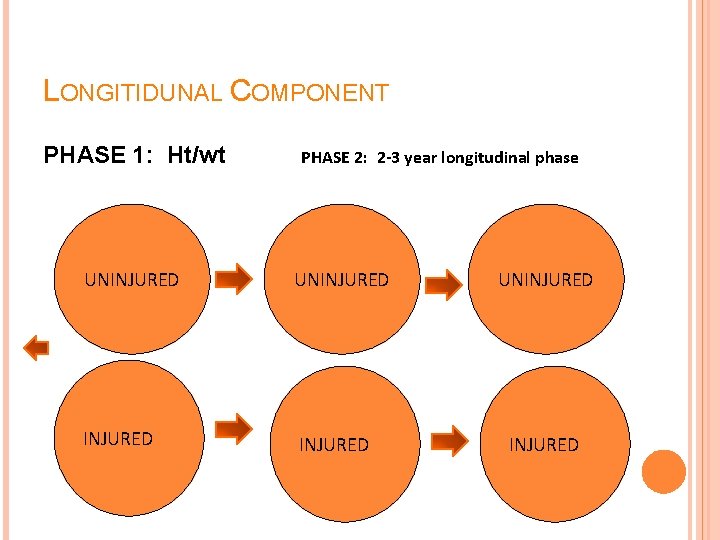
LONGITIDUNAL COMPONENT PHASE 1: Ht/wt PHASE 2: 2 -3 year longitudinal phase UNINJURED UNINJURED
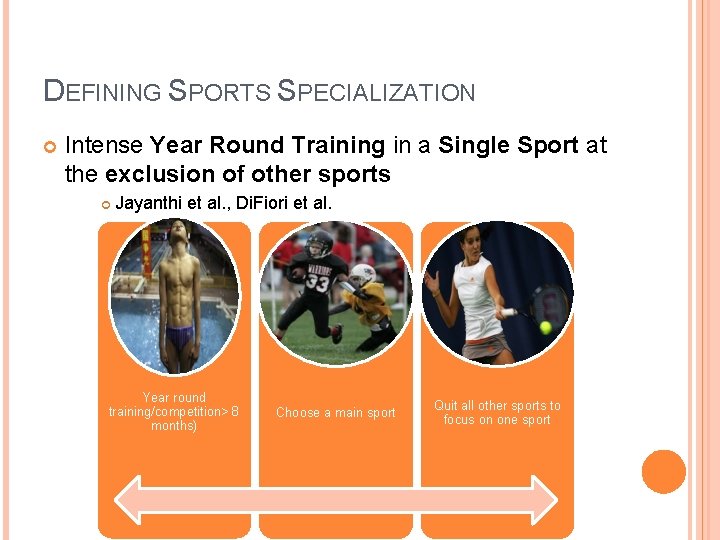
DEFINING SPORTS SPECIALIZATION Intense Year Round Training in a Single Sport at the exclusion of other sports Jayanthi et al. , Di. Fiori et al. Year round training/competition> 8 months) Choose a main sport Quit all other sports to focus on one sport
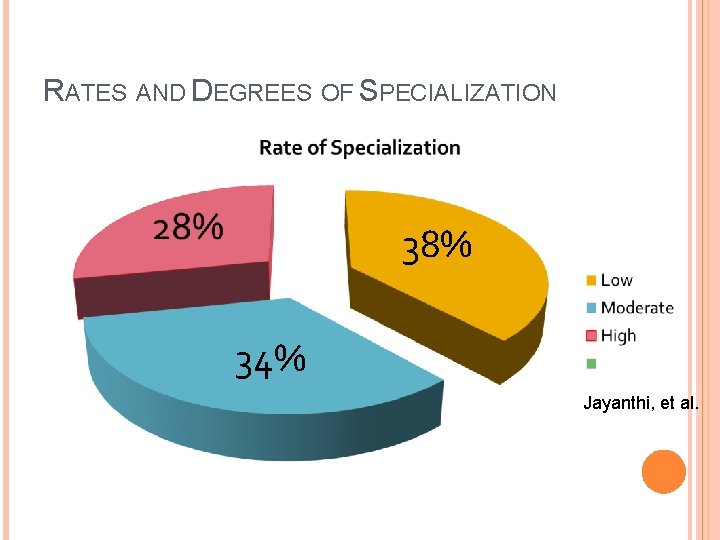
RATES AND DEGREES OF SPECIALIZATION 38% 34% Jayanthi, et al.
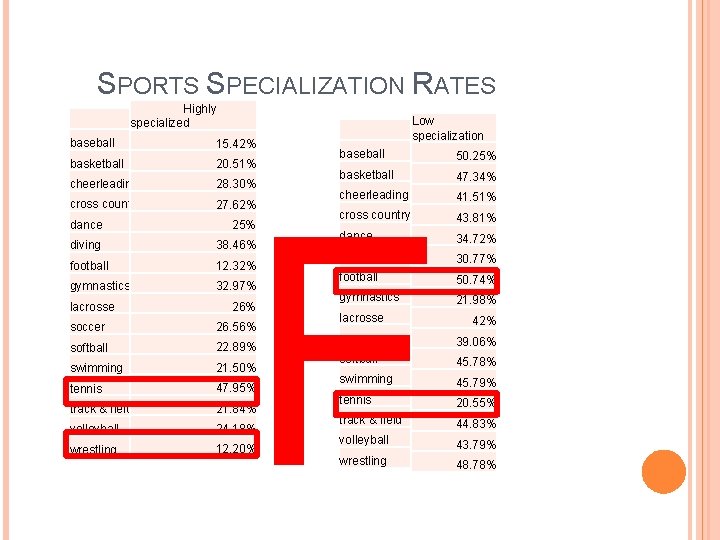
SPORTS SPECIALIZATION RATES Highly specialized baseball 15. 42% basketball 20. 51% cheerleading 28. 30% cross country 27. 62% Low specialization baseball 50. 25% basketball 47. 34% cheerleading 41. 51% cross country 43. 81% dance 34. 72% diving 30. 77% football 50. 74% gymnastics 21. 98% F dance 25% diving 38. 46% football 12. 32% gymnastics 32. 97% lacrosse 26% soccer 26. 56% softball 22. 89% swimming 21. 50% tennis 47. 95% track & field 21. 84% volleyball 24. 18% wrestling 12. 20% lacrosse 42% soccer 39. 06% softball 45. 78% swimming 45. 79% tennis 20. 55% track & field 44. 83% volleyball 43. 79% wrestling 48. 78%
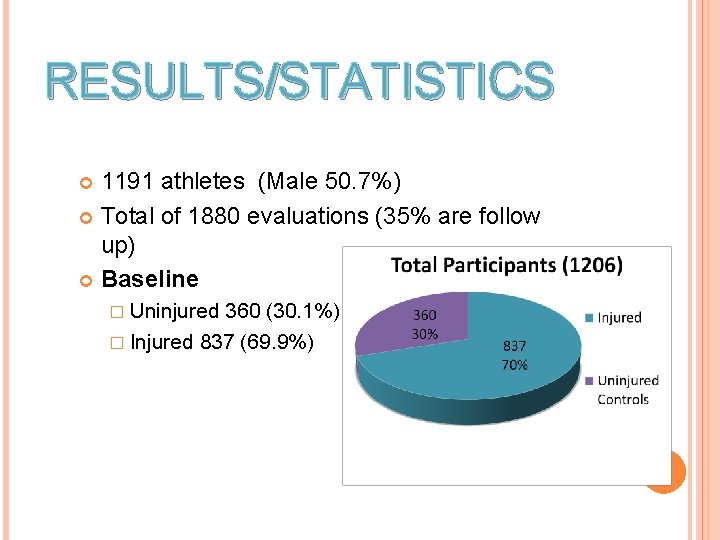
RESULTS/STATISTICS 1191 athletes (Male 50. 7%) Total of 1880 evaluations (35% are follow up) Baseline � Uninjured 360 (30. 1%) � Injured 837 (69. 9%)
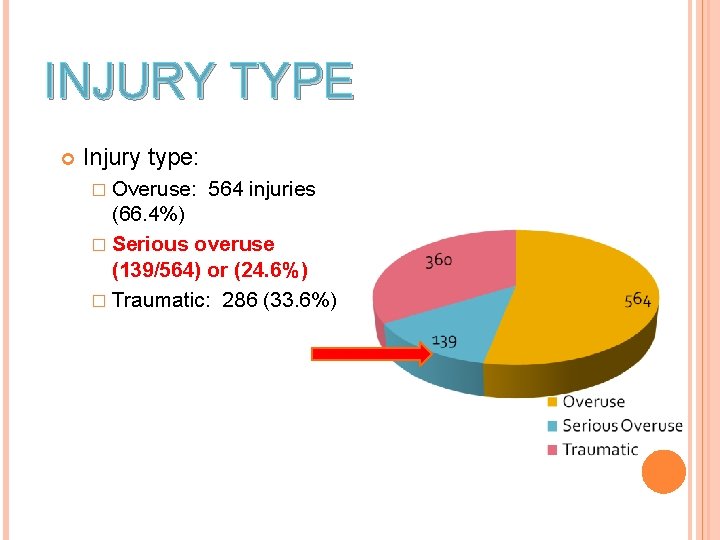
INJURY TYPE Injury type: � Overuse: 564 injuries (66. 4%) � Serious overuse (139/564) or (24. 6%) � Traumatic: 286 (33. 6%)
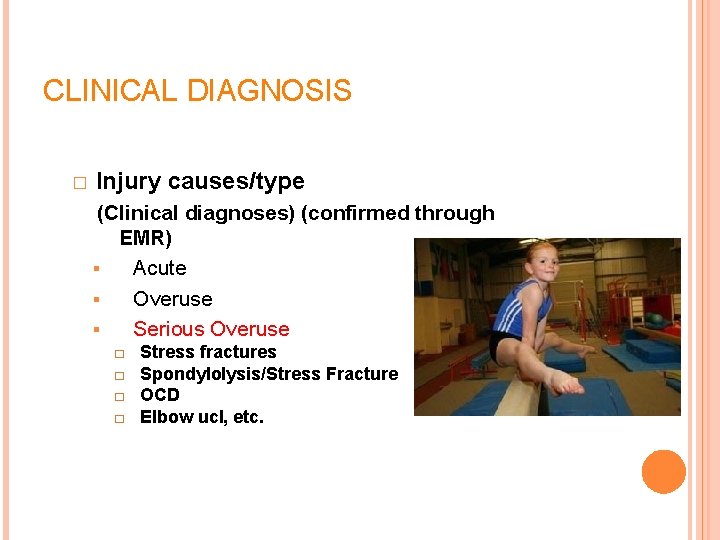
CLINICAL DIAGNOSIS � Injury causes/type (Clinical diagnoses) (confirmed through EMR) Acute Overuse Serious Overuse � � Stress fractures Spondylolysis/Stress Fracture OCD Elbow ucl, etc.
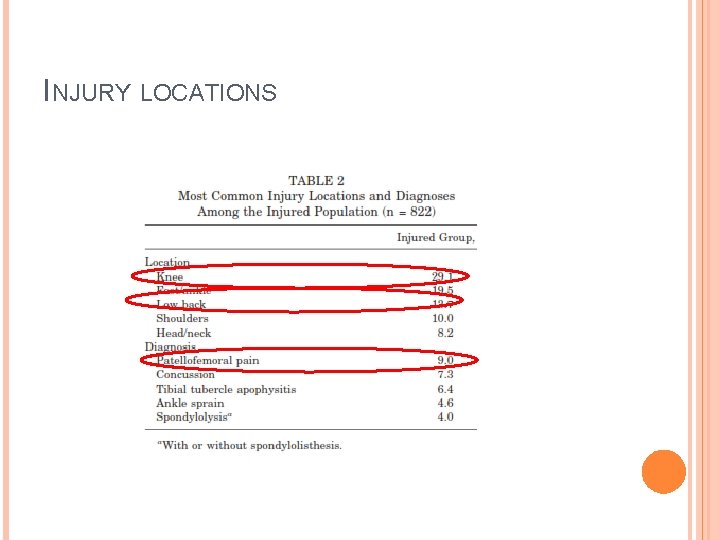
INJURY LOCATIONS
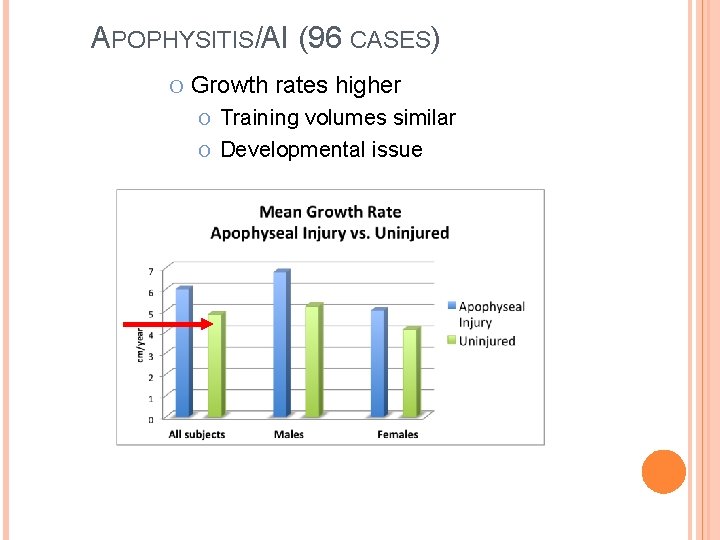
APOPHYSITIS/AI (96 CASES) O Growth rates higher O Training volumes similar O Developmental issue
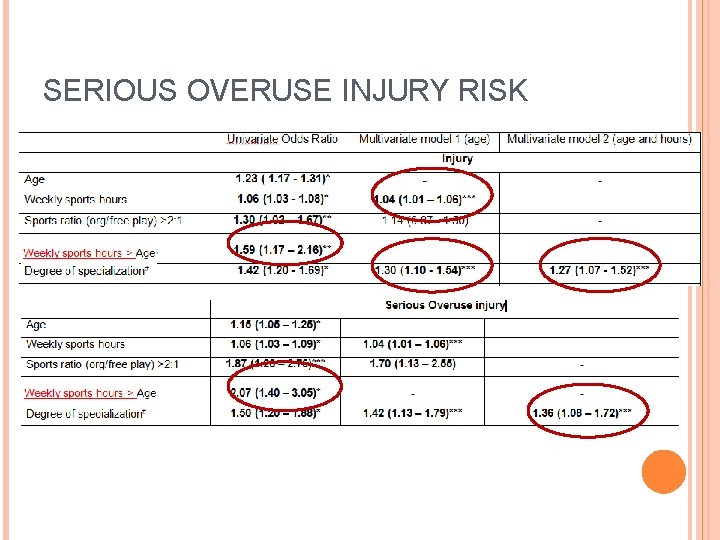
SERIOUS OVERUSE INJURY RISK
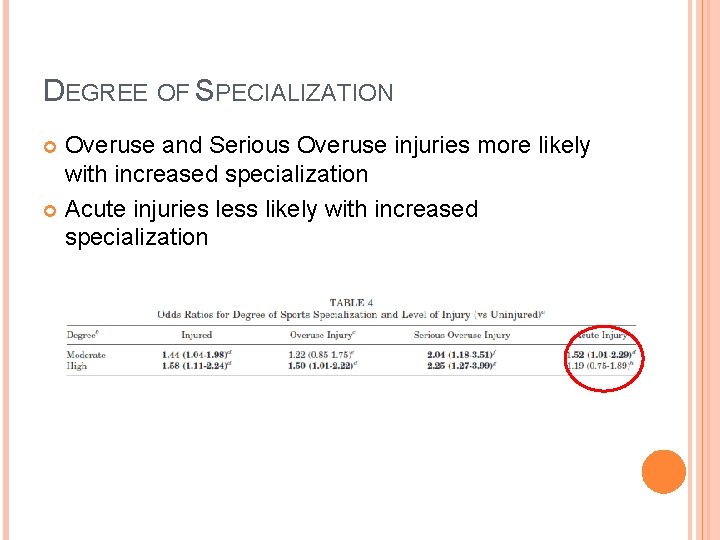
DEGREE OF SPECIALIZATION Overuse and Serious Overuse injuries more likely with increased specialization Acute injuries less likely with increased specialization
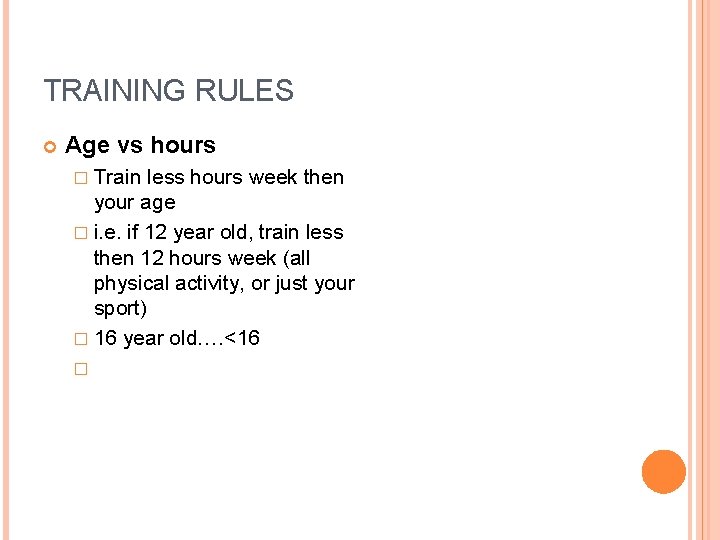
TRAINING RULES Age vs hours � Train less hours week then your age � i. e. if 12 year old, train less then 12 hours week (all physical activity, or just your sport) � 16 year old…. <16 �
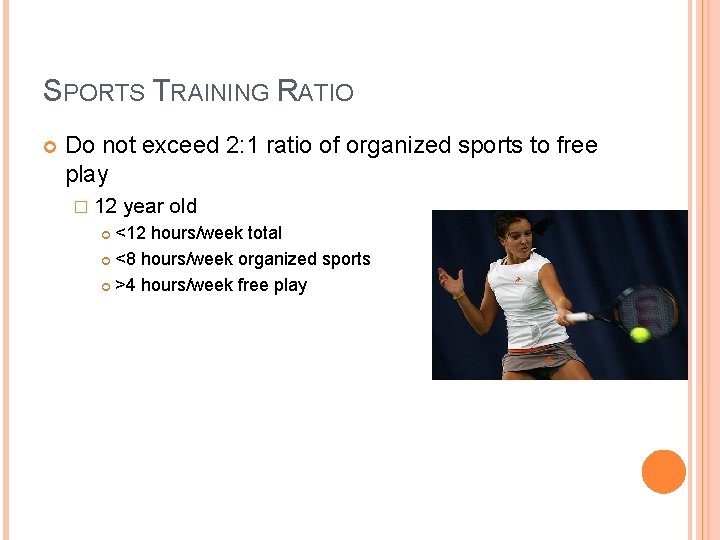
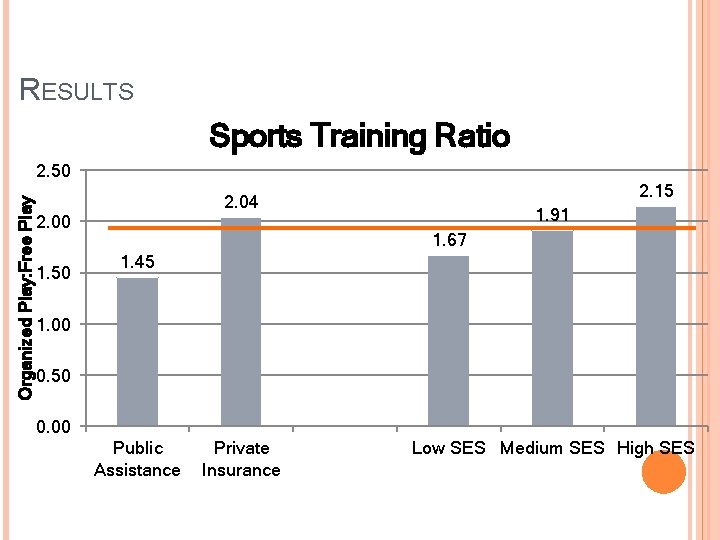
SPORTS TRAINING RATIO Do not exceed 2: 1 ratio of organized sports to free play � 12 year old <12 hours/week total <8 hours/week organized sports >4 hours/week free play
AGE OF SPECIALIZATION Higher proportion of injured athletes who specialized <12 years old vs > 12 years old Higher proportion of serious overuse injuries in athletes who specialized <12 years old vs >12 years old. � Unpublished, Jayanthi et al. 2015
SOCIOECONOMIC FACTORS FOR SPORTS SPECIALIZATION AND INJURY IN YOUNG ATHLETES: A CLINICAL STUDY Daniel B. Holt, B. S. 1, Neeru Jayanthi, M. D. 1, Alex Austin, M. D. 2, Pasulka Jacqueline, B. A. 3, Cynthia La. Bella, M. D. 3 and Lara Dugas, Ph. D. 1, 1. Loyola University Chicago – Stritch School of Medicine, Maywood, IL 2. Cook County-Loyola-Provident Family Medicine Residency Program, Chicago, IL 3. Ann and Robert H. Lurie Children's Hospital of Chicago, IL
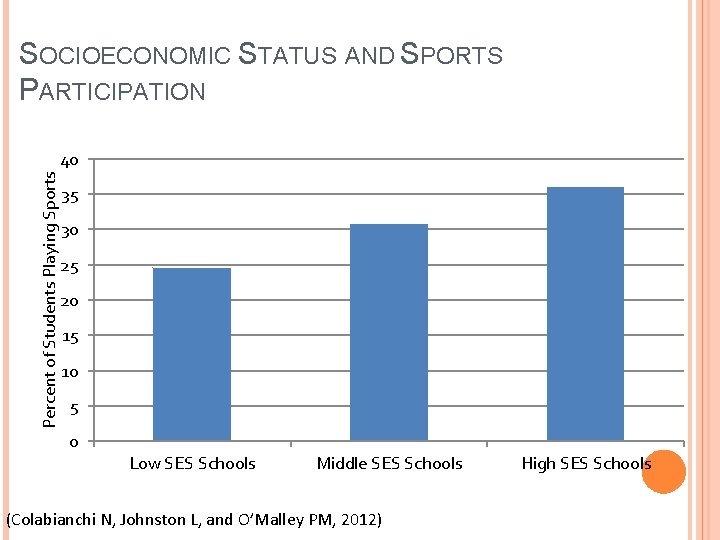
SOCIOECONOMIC STATUS AND SPORTS PARTICIPATION Percent of Students Playing Sports 40 35 30 25 20 15 10 5 0 Low SES Schools Middle SES Schools (Colabianchi N, Johnston L, and O’Malley PM, 2012) High SES Schools
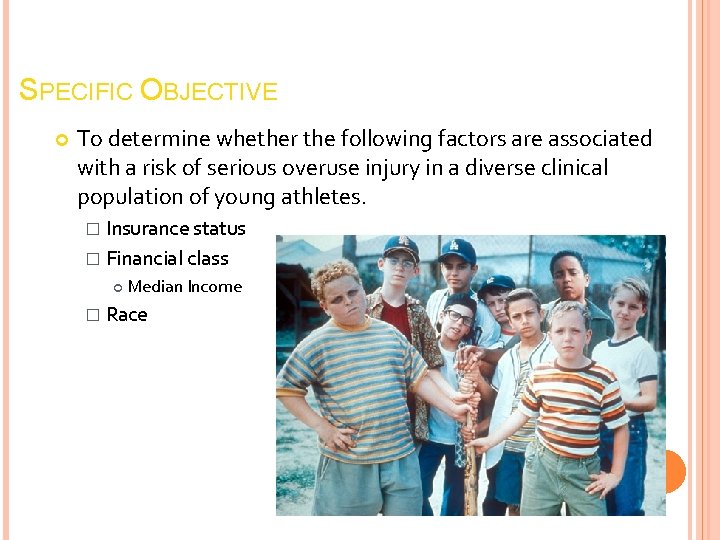
SPECIFIC OBJECTIVE To determine whether the following factors are associated with a risk of serious overuse injury in a diverse clinical population of young athletes. � Insurance status � Financial class Median Income � Race
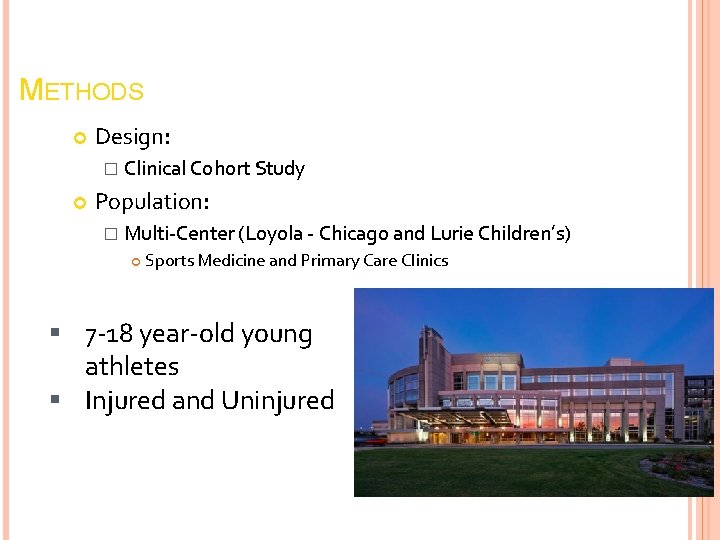
METHODS Design: � Clinical Cohort Study Population: � Multi-Center (Loyola - Chicago and Lurie Children’s) Sports Medicine and Primary Care Clinics 7 -18 year-old young athletes Injured and Uninjured
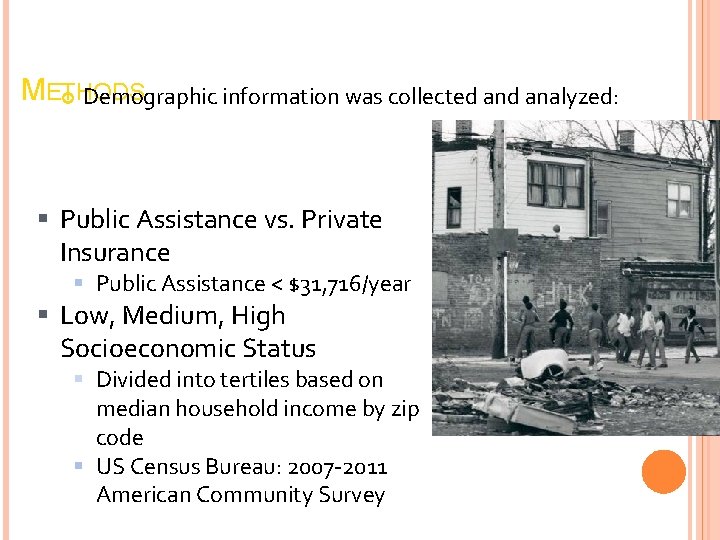
METHODS Demographic information was collected analyzed: Public Assistance vs. Private Insurance Public Assistance < $31, 716/year Low, Medium, High Socioeconomic Status Divided into tertiles based on median household income by zip code US Census Bureau: 2007 -2011 American Community Survey
RESULTS Athletes included in study = 1, 121 � 94% of young athletes who initially completed the survey were included Public Assistance = 19% 33% in Low, Medium, and High SES tertiles � $111, 499, $71, 440, and $48, 895
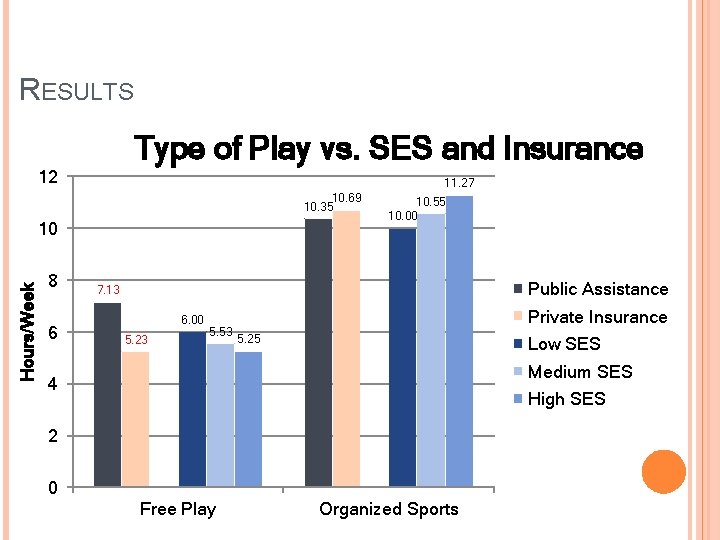
RESULTS Type of Play vs. SES and Insurance 12 11. 27 10. 69 10. 35 Hours/Week 10 8 6 10. 55 10. 00 Public Assistance 7. 13 6. 00 5. 23 5. 53 Private Insurance 5. 25 Low SES Medium SES 4 High SES 2 0 Free Play Organized Sports
RESULTS Sports Training Ratio Organized Play: Free Play 2. 50 2. 15 2. 04 2. 00 1. 50 1. 91 1. 67 1. 45 1. 00 0. 50 0. 00 Public Assistance Private Insurance Low SES Medium SES High SES
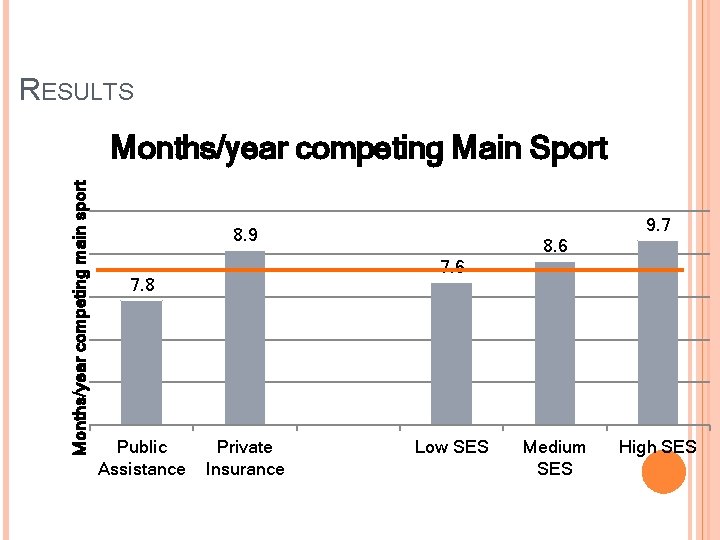
RESULTS Months/year competing main sport Months/year competing Main Sport 9. 7 8. 9 7. 6 7. 8 Public Assistance 8. 6 Private Insurance Low SES Medium SES High SES
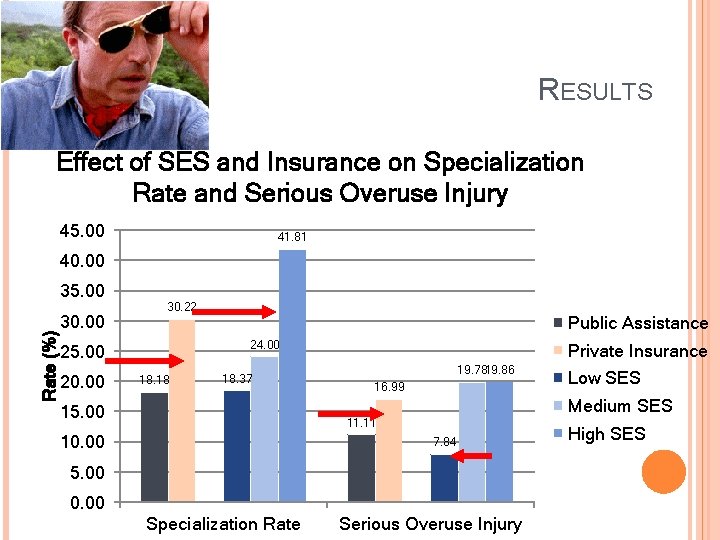
RESULTS Effect of SES and Insurance on Specialization Rate and Serious Overuse Injury 45. 00 41. 81 40. 00 Rate (%) 35. 00 30. 22 24. 00 25. 00 20. 00 Public Assistance 18. 18 18. 37 15. 00 Private Insurance 19. 7819. 86 16. 99 Medium SES 11. 11 10. 00 7. 84 5. 00 0. 00 Specialization Rate Low SES Serious Overuse Injury High SES
CONCLUSIONS Young athletes on public assistance may be protected from serious overuse injury due to: � A greater amount of free play and lower sports training ratio Young athletes on public assistance and of lower socioeconomic status may be protected from serious overuse injury due: � Lower sports specialization rates
SPORTS SPECIALIZED TRAINING: 2+ YEAR FOLLOW UP: PRELIMINARY RESULTS
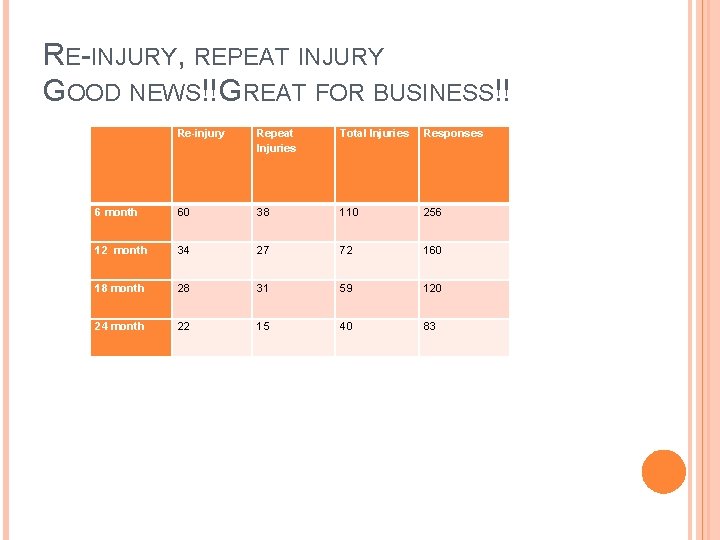
RE-INJURY, REPEAT INJURY GOOD NEWS!! GREAT FOR BUSINESS!! Re-injury Repeat Injuries Total Injuries Responses 6 month 60 38 110 256 12 month 34 27 72 160 18 month 28 31 59 120 24 month 22 15 40 83
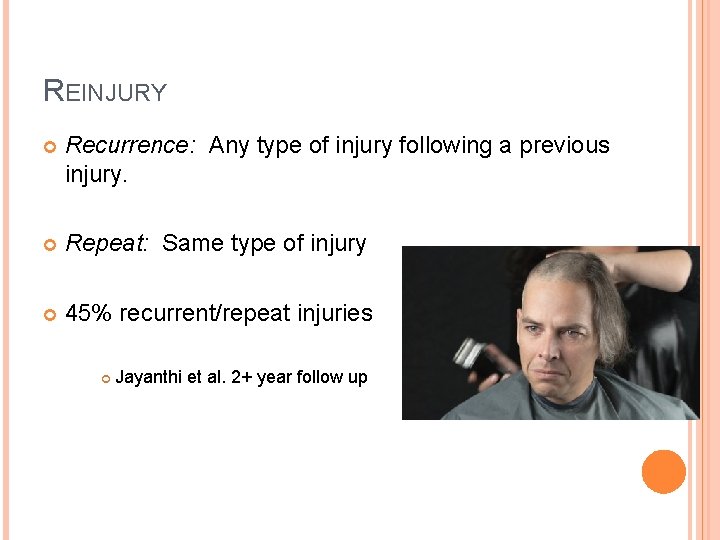
REINJURY Recurrence: Any type of injury following a previous injury. Repeat: Same type of injury 45% recurrent/repeat injuries Jayanthi et al. 2+ year follow up
HOW DO WE MINIMIZE INJURY RISK?
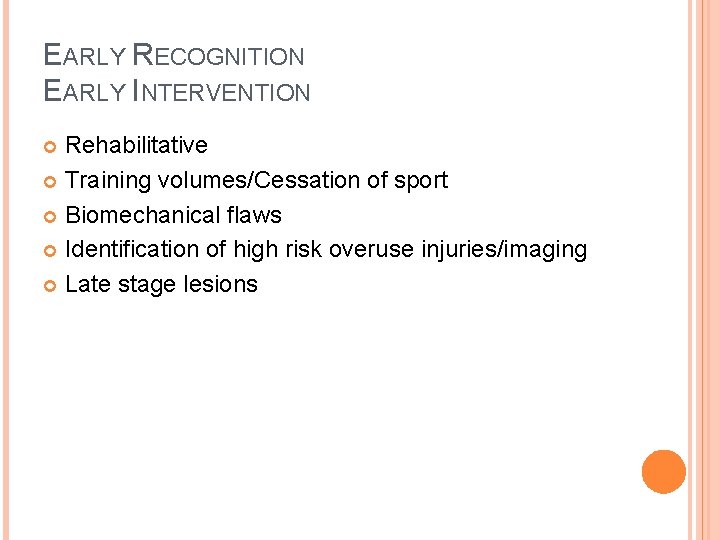
EARLY RECOGNITION EARLY INTERVENTION Rehabilitative Training volumes/Cessation of sport Biomechanical flaws Identification of high risk overuse injuries/imaging Late stage lesions
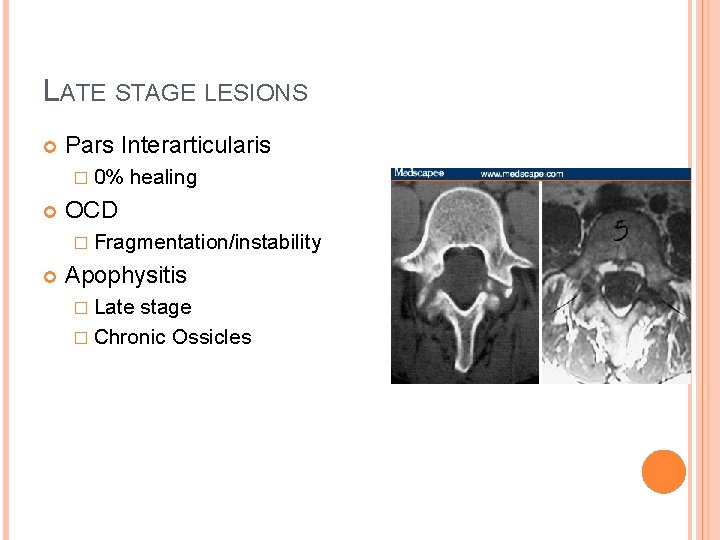
LATE STAGE LESIONS Pars Interarticularis � 0% healing OCD � Fragmentation/instability Apophysitis � Late stage � Chronic Ossicles
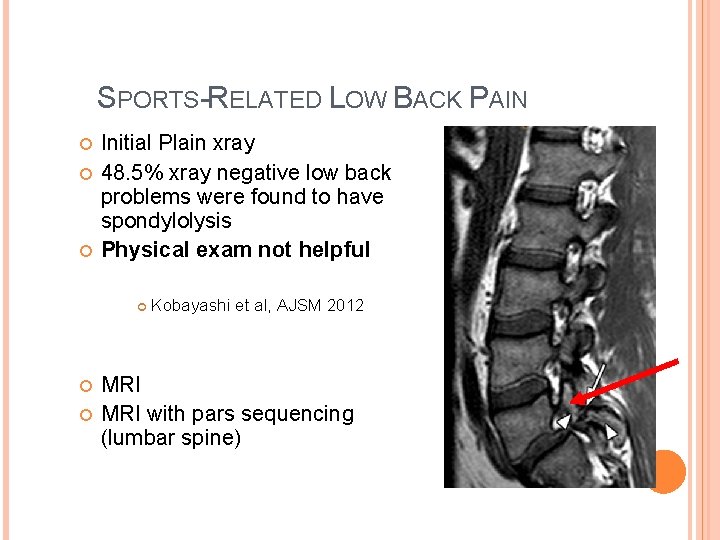
SPORTS-RELATED LOW BACK PAIN Initial Plain xray 48. 5% xray negative low back problems were found to have spondylolysis Physical exam not helpful Kobayashi et al, AJSM 2012 MRI with pars sequencing (lumbar spine)
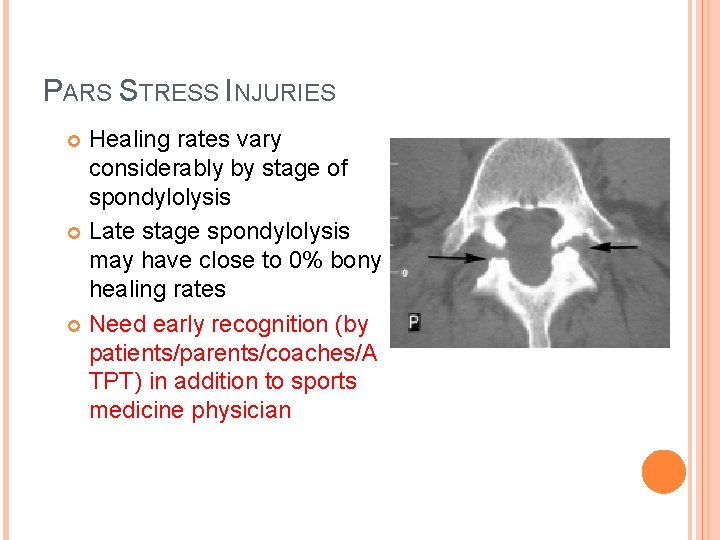
PARS STRESS INJURIES Healing rates vary considerably by stage of spondylolysis Late stage spondylolysis may have close to 0% bony healing rates Need early recognition (by patients/parents/coaches/A TPT) in addition to sports medicine physician
REINJURY Some successful programs to prevent primary injury � ACL Myer Silvers La. Bella The most success is in the previously injured (effect on risk reduction). � Hamstring Bahr � Serious overuse injuries?
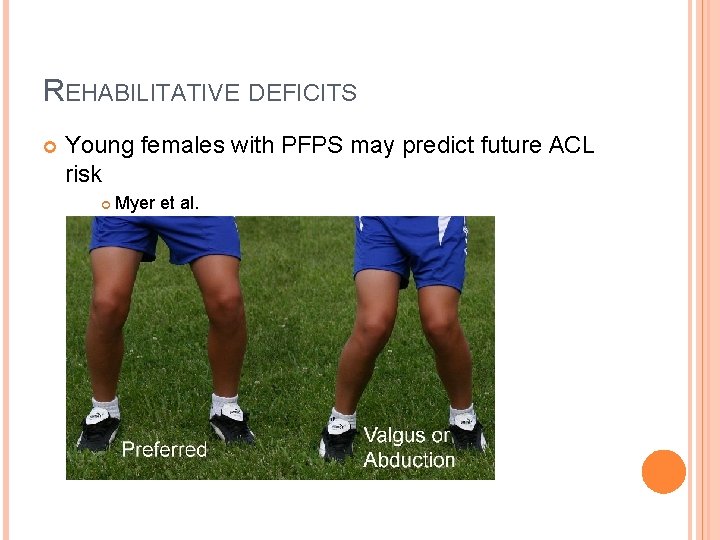
REHABILITATIVE DEFICITS Young females with PFPS may predict future ACL risk Myer et al.
TRAINING RULES Age vs hrs Sports training ratio Year round (8 months) Sports specialized training
SPORTS SPECIFIC RECOMMENDATIONS Pitch volumes Tennis tournament training guidelines
SPORTS MEDICINE If we really want to get more business, we should tell young athletes: � Play more hours/week then age � Play >2: 1 sports training ratio � Start specialization before the age of 12 � Play an individual sport � Be a female? � Have a prior injury � …we know you will probably need to see us!
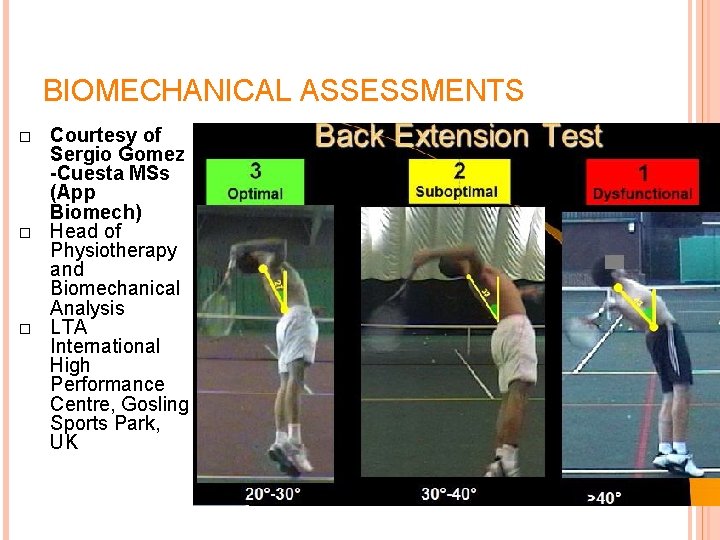
BIOMECHANICAL ASSESSMENTS � � � Courtesy of Sergio Gomez -Cuesta MSs (App Biomech) Head of Physiotherapy and Biomechanical Analysis LTA International High Performance Centre, Gosling Sports Park, UK
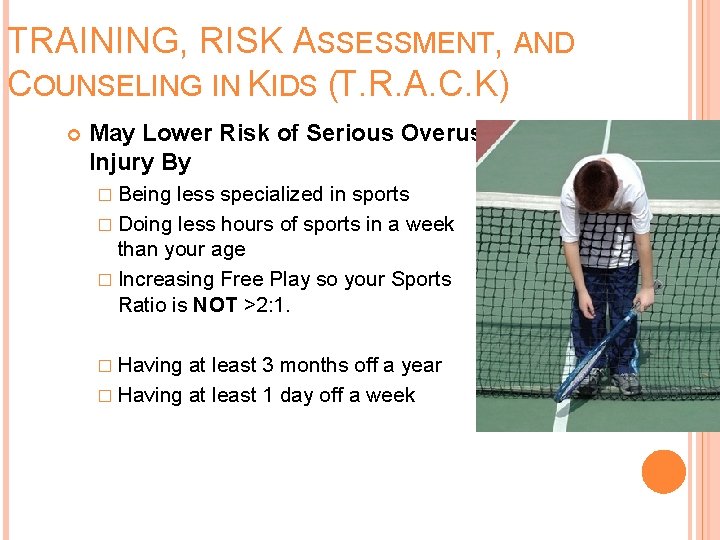
TRAINING, RISK ASSESSMENT, AND COUNSELING IN KIDS (T. R. A. C. K) May Lower Risk of Serious Overuse Injury By � Being less specialized in sports � Doing less hours of sports in a week than your age � Increasing Free Play so your Sports Ratio is NOT >2: 1. � Having at least 3 months off a year � Having at least 1 day off a week
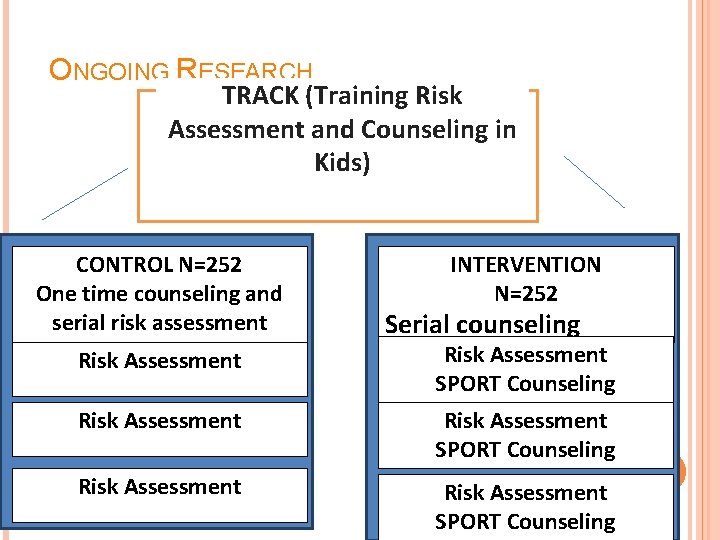
ONGOING RESEARCH TRACK (Training Risk Assessment and Counseling in Kids) CONTROL N=252 One time counseling and serial risk assessment INTERVENTION N=252 Serial counseling Risk Assessment SPORT Counseling Risk Assessment SPORT Counseling
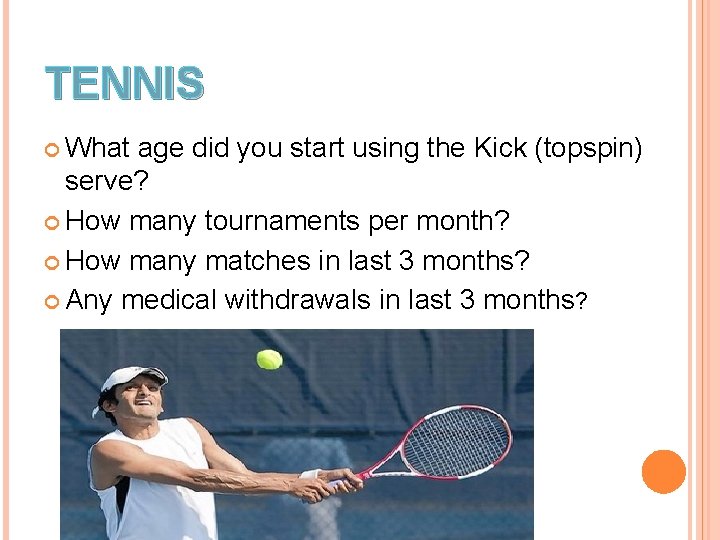
TENNIS What age did you start using the Kick (topspin) serve? How many tournaments per month? How many matches in last 3 months? Any medical withdrawals in last 3 months?
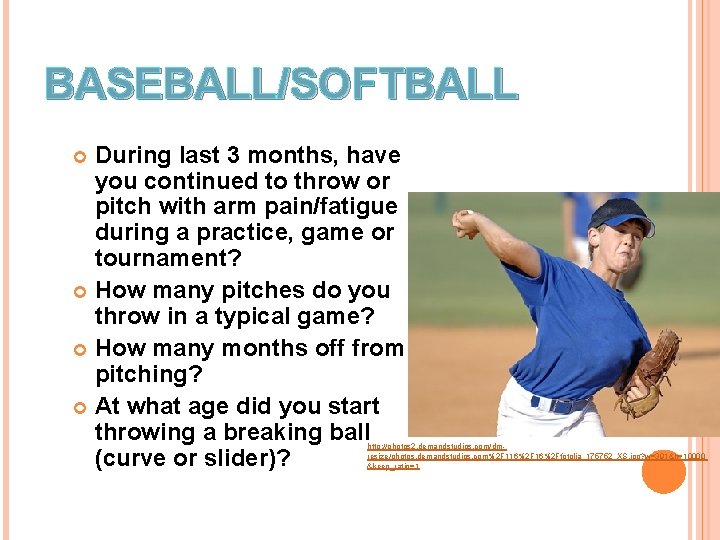
BASEBALL/SOFTBALL During last 3 months, have you continued to throw or pitch with arm pain/fatigue during a practice, game or tournament? How many pitches do you throw in a typical game? How many months off from pitching? At what age did you start throwing a breaking ball (curve or slider)? http: //photos 2. demandstudios. com/dmresize/photos. demandstudios. com%2 F 116%2 Ffotolia_175752_XS. jpg? w=391&h=10000 &keep_ratio=1
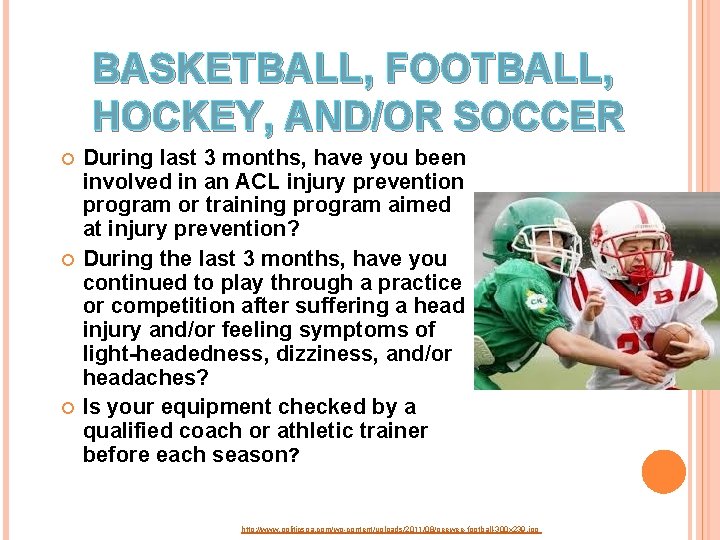
BASKETBALL, FOOTBALL, HOCKEY, AND/OR SOCCER During last 3 months, have you been involved in an ACL injury prevention program or training program aimed at injury prevention? During the last 3 months, have you continued to play through a practice or competition after suffering a head injury and/or feeling symptoms of light-headedness, dizziness, and/or headaches? Is your equipment checked by a qualified coach or athletic trainer before each season? http: //www. politicspa. com/wp-content/uploads/2011/08/peewee-football-300 x 239. jpg
TRACK-PRELIMINARY DATA Nearly 400 athletes (2 institutions): � Intervention group: 27. 7% injured � Control group: 45% injured
MESSAGING FOR OVERUSE INJURIES
JUST DON’T OVER DO IT.
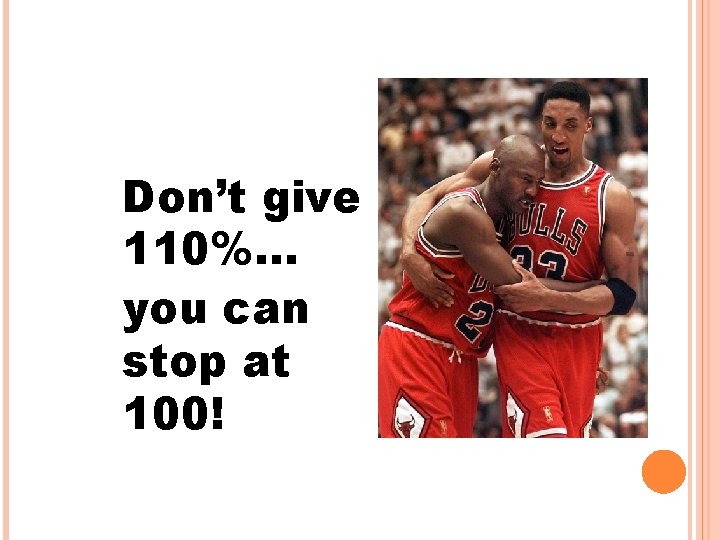
Don’t give 110%. . . you can stop at 100!
No! Actually, it is more likely from extrinsic modifiable causes such as excess training volume or sports specialization or neuromuscular training.
THANK YOU!