
Minimising and managing workplace stress Stress is up

- Slides: 21
Minimising and managing workplace stress
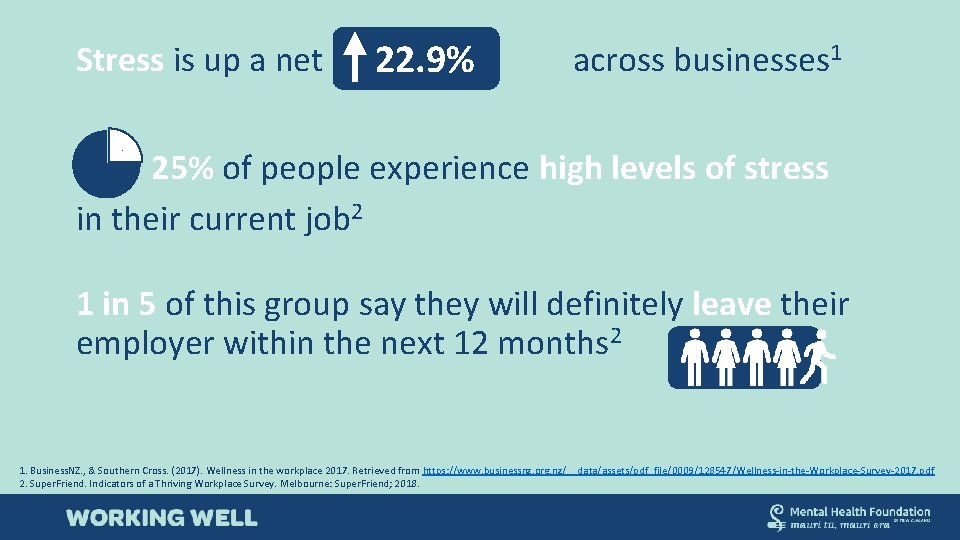
Stress is up a net 22. 9% across businesses 1 25% of people experience high levels of stress in their current job 2 25% 1 in 5 of this group say they will definitely leave their employer within the next 12 months 2 1. Business. NZ. , & Southern Cross. (2017). Wellness in the workplace 2017. Retrieved from https: //www. businessnz. org. nz/__data/assets/pdf_file/0009/128547/Wellness-in-the-Workplace-Survey-2017. pdf 2. Super. Friend. Indicators of a Thriving Workplace Survey. Melbourne: Super. Friend; 2018.
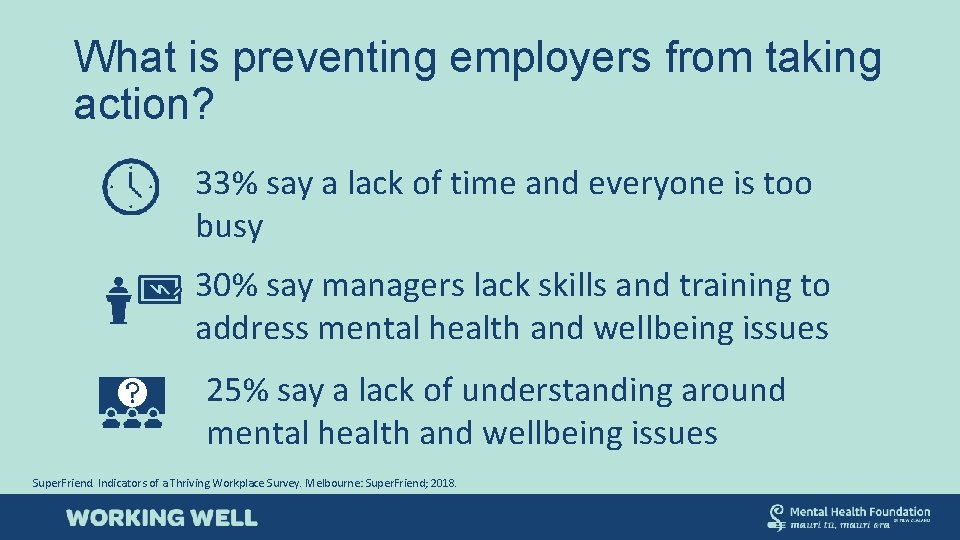
What is preventing employers from taking action? 33% say a lack of time and everyone is too busy 30% say managers lack skills and training to address mental health and wellbeing issues 25% say a lack of understanding around mental health and wellbeing issues Super. Friend. Indicators of a Thriving Workplace Survey. Melbourne: Super. Friend; 2018.
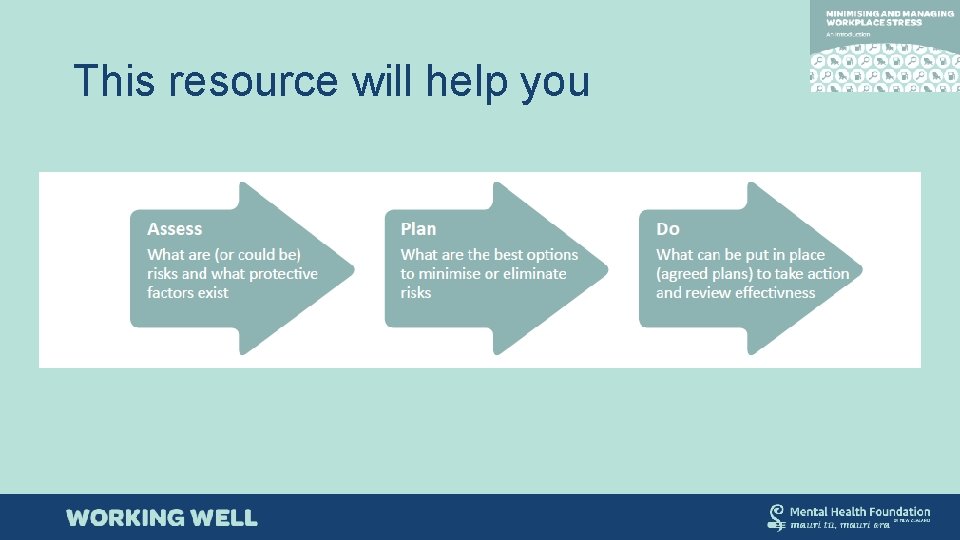
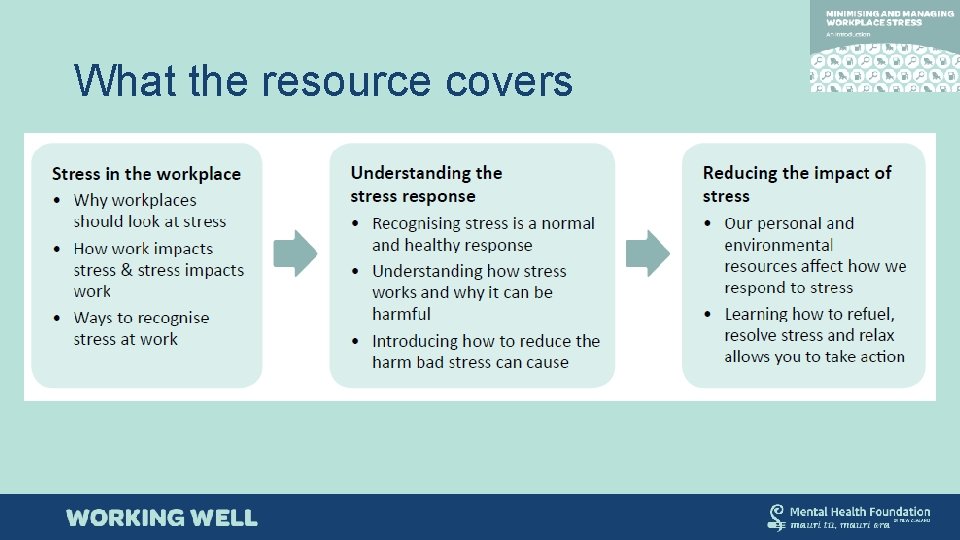
This resource will help you
What the resource covers
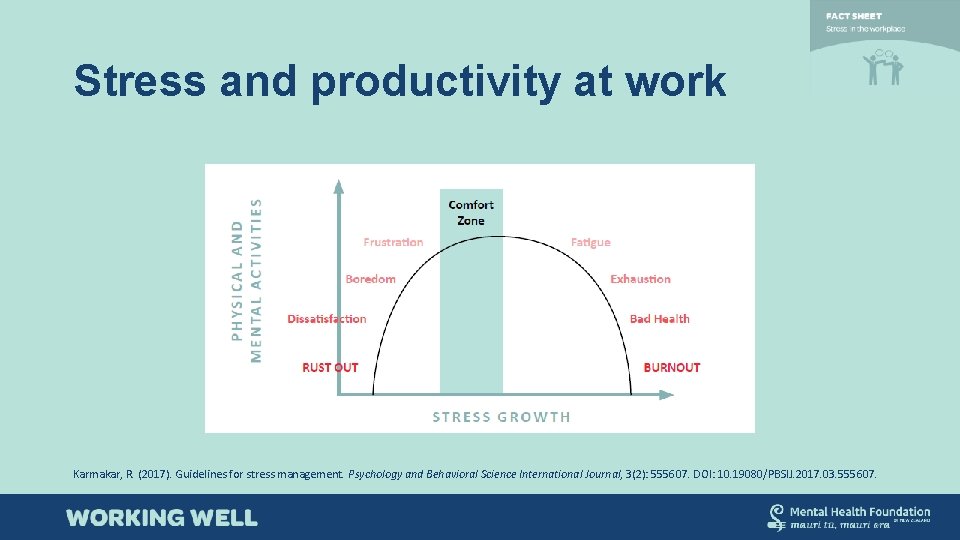
Stress and productivity at work Karmakar, R. (2017). Guidelines for stress management. Psychology and Behavioral Science International Journal, 3(2): 555607. DOI: 10. 19080/PBSIJ. 2017. 03. 555607.
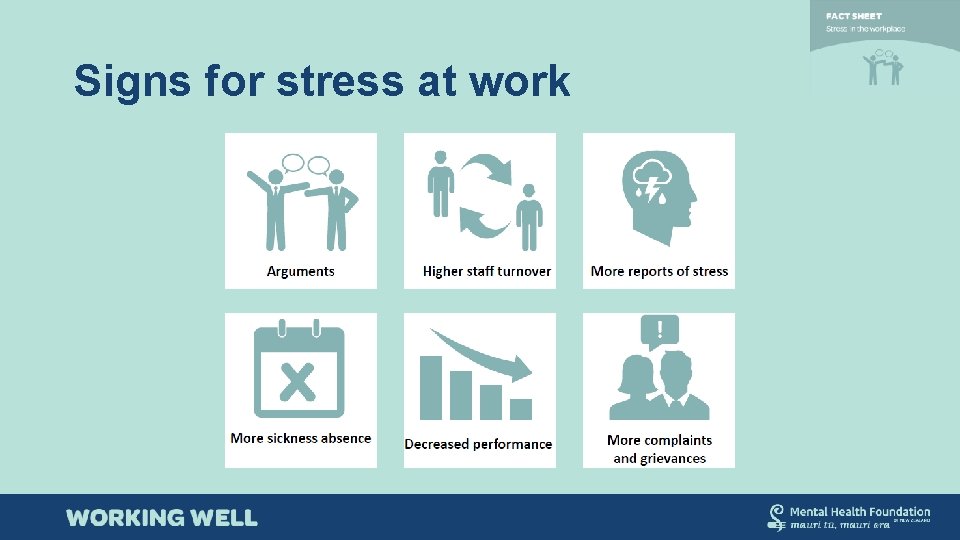
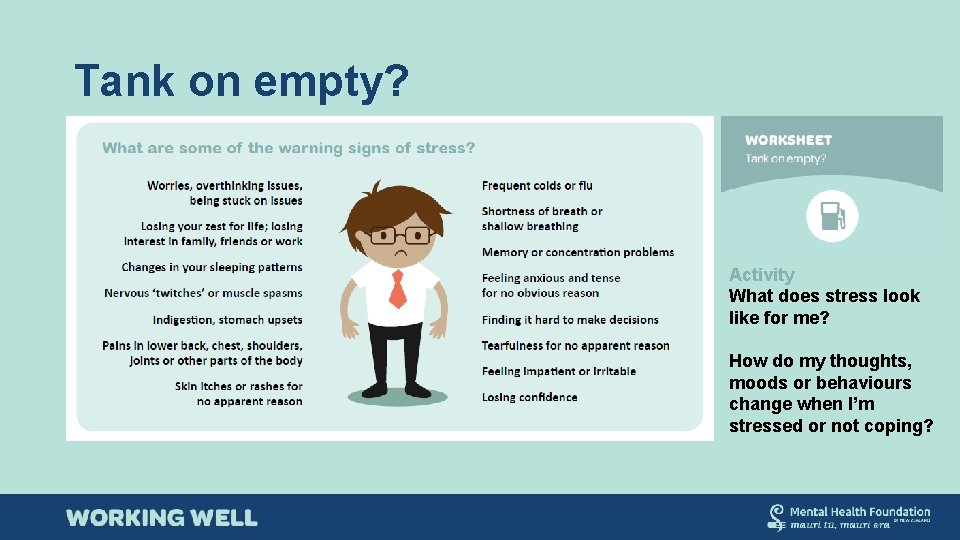
Signs for stress at work
Understanding the stress response • Stress is normal. It is our bodies’ response to help us prepare for challenges • In today’s world we face many situations that can trigger our stress response • We need to make sure we turn off and recover • Too much stress can be harmful • In small doses, experiencing stress can help us to perform • Workplace processes and systems can support minimising, managing and recovering from stress
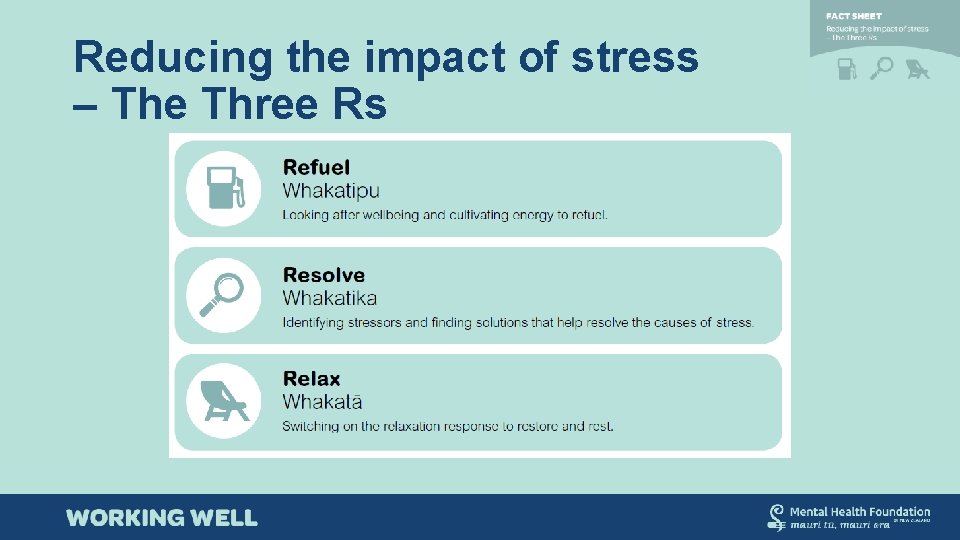
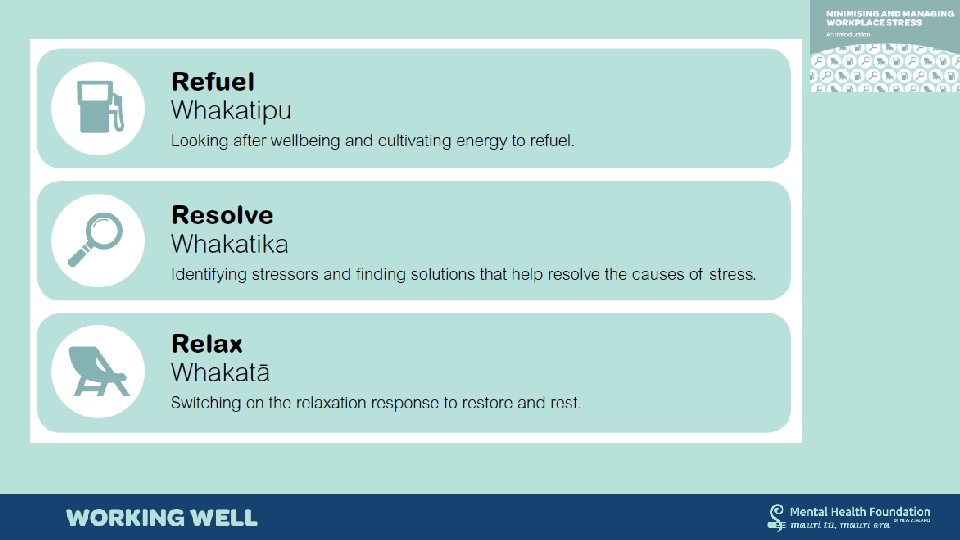
Reducing the impact of stress – The Three Rs
Tank on empty? Activity What does stress look like for me? How do my thoughts, moods or behaviours change when I’m stressed or not coping?
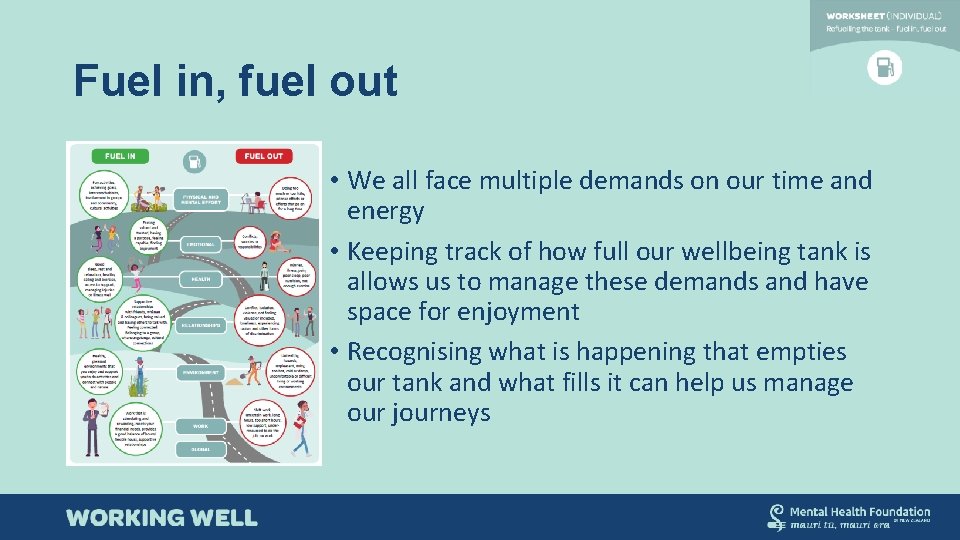
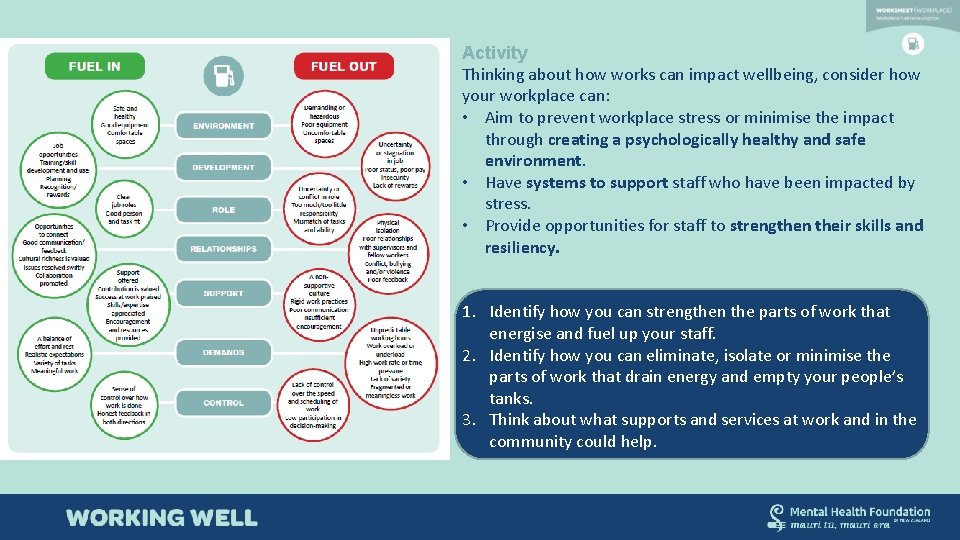
Fuel in, fuel out • We all face multiple demands on our time and energy • Keeping track of how full our wellbeing tank is allows us to manage these demands and have space for enjoyment • Recognising what is happening that empties our tank and what fills it can help us manage our journeys
Checking your fuel tank level Activity Look at the frameworks highlighting the different aspects of life we all experience. Consider which ones impact your life, topping up or draining your tank. 1. Think about the last week – what things happened and what things did you do? 2. Note down what was fuel in and what was fuel out. Have you got more going out then coming in? What supports can you call on to help top you up and reduce emptying your tank?
Activity Thinking about how works can impact wellbeing, consider how your workplace can: • Aim to prevent workplace stress or minimise the impact through creating a psychologically healthy and safe environment. • Have systems to support staff who have been impacted by stress. • Provide opportunities for staff to strengthen their skills and resiliency. 1. Identify how you can strengthen the parts of work that energise and fuel up your staff. 2. Identify how you can eliminate, isolate or minimise the parts of work that drain energy and empty your people’s tanks. 3. Think about what supports and services at work and in the community could help.
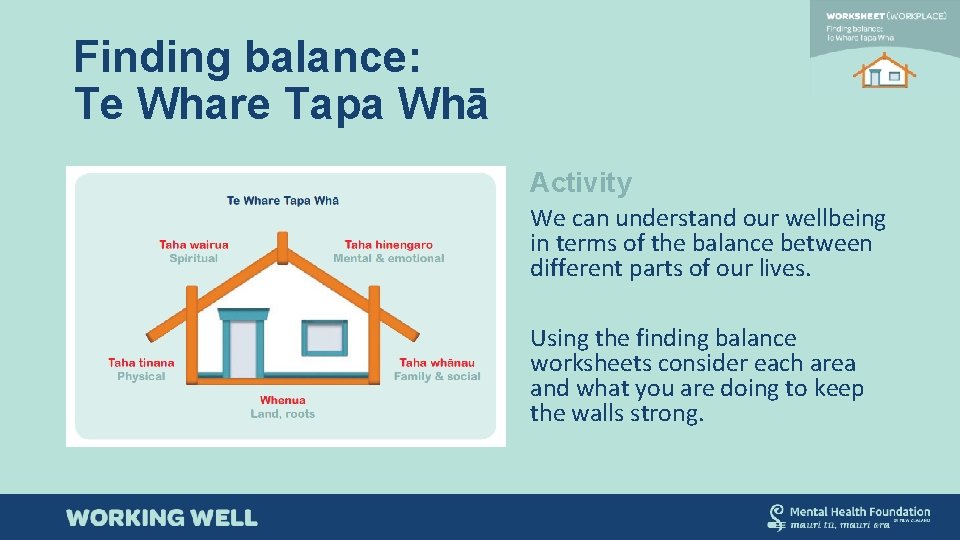
Finding balance: Te Whare Tapa Whā Activity We can understand our wellbeing in terms of the balance between different parts of our lives. Using the finding balance worksheets consider each area and what you are doing to keep the walls strong.
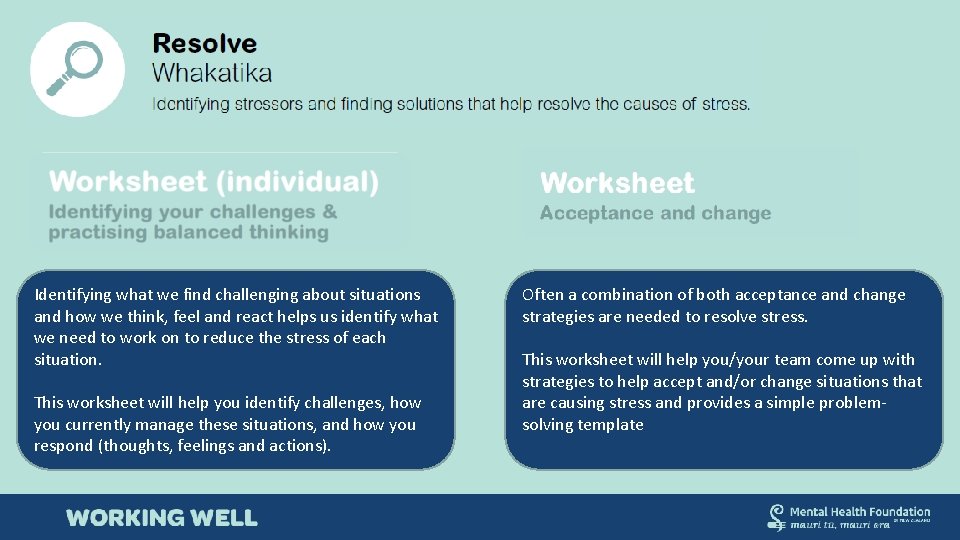
Identifying what we find challenging about situations and how we think, feel and react helps us identify what we need to work on to reduce the stress of each situation. This worksheet will help you identify challenges, how you currently manage these situations, and how you respond (thoughts, feelings and actions). Often a combination of both acceptance and change strategies are needed to resolve stress. This worksheet will help you/your team come up with strategies to help accept and/or change situations that are causing stress and provides a simple problemsolving template
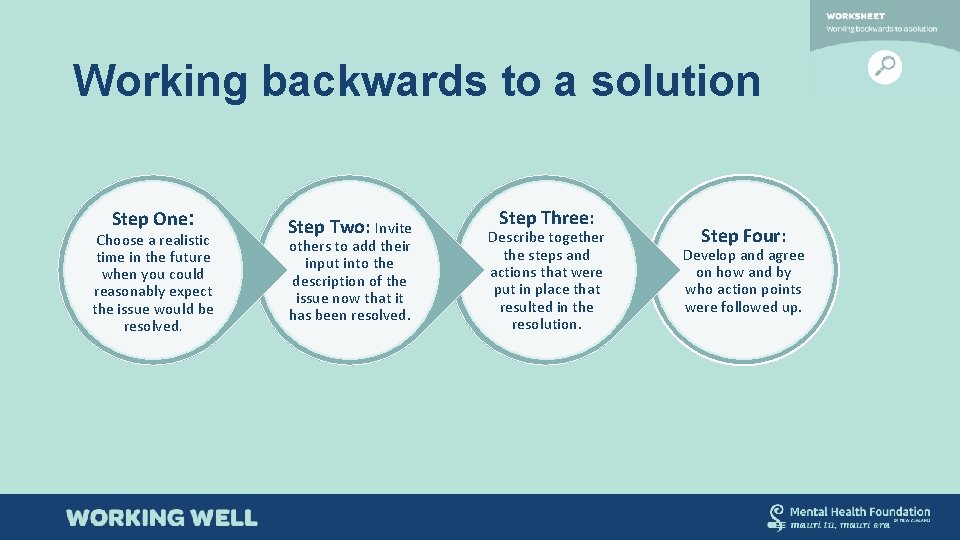
Working backwards to a solution Step One: Choose a realistic time in the future when you could reasonably expect the issue would be resolved. Step Two: Invite others to add their input into the description of the issue now that it has been resolved. Step Three: Describe together the steps and actions that were put in place that resulted in the resolution. Step Four: Develop and agree on how and by who action points were followed up.
Switching on your relaxation response Relax | Whakatā is one of the Three Rs that allow you to reduce things that trigger your stress response. Turning on our relaxation response puts a brake on the physical changes in our body, produced by the stress response. Switching on your relaxation response helps focus your mind on thoughts or actions that feel good – interrupting stressful thoughts and feelings. This worksheet introduces breathing and muscle techniques that have been shown to be particularly helpful for relaxation • Basic deep breathing • Guided breathing • Progressive muscle relaxation Activity – choose one of the three activities and follow the instruction to relax
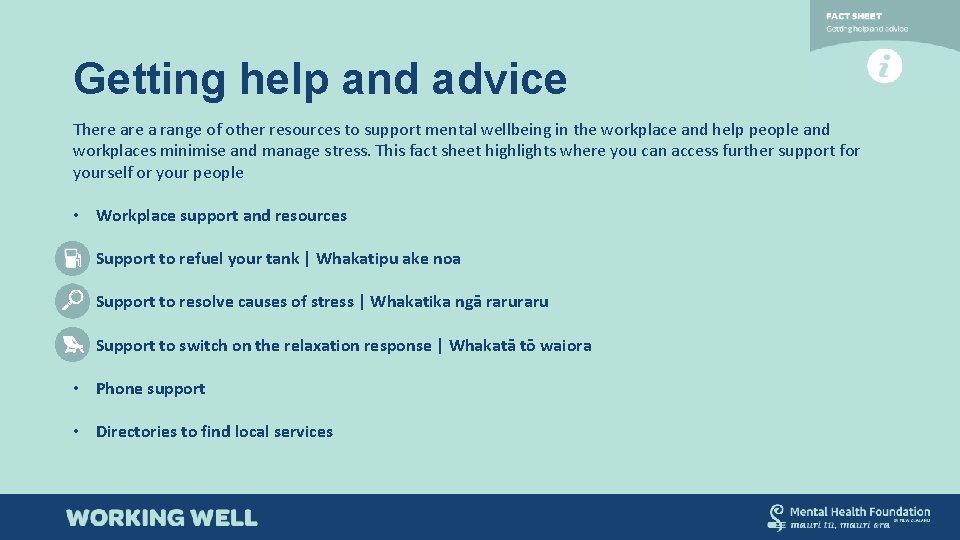
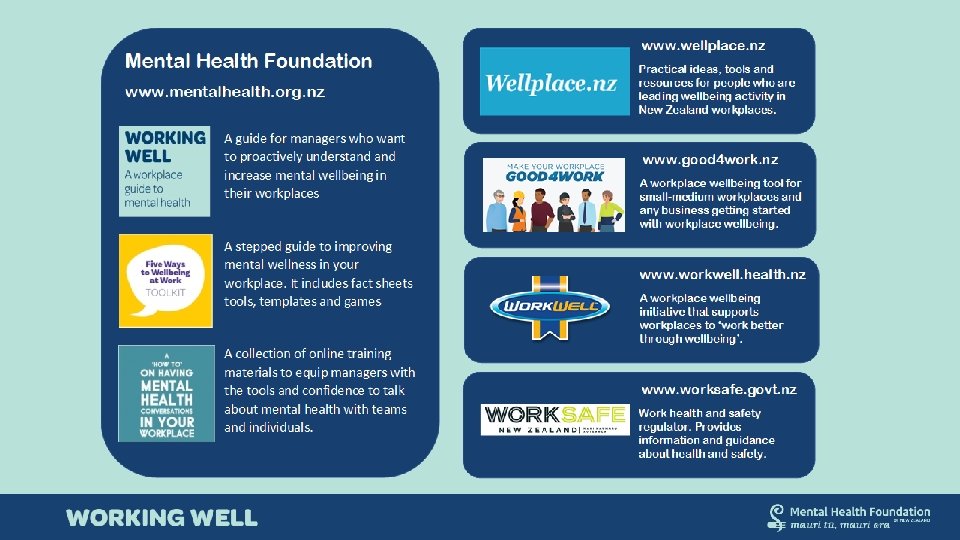
Getting help and advice There a range of other resources to support mental wellbeing in the workplace and help people and workplaces minimise and manage stress. This fact sheet highlights where you can access further support for yourself or your people • Workplace support and resources • Support to refuel your tank | Whakatipu ake noa • Support to resolve causes of stress | Whakatika ngā raru • Support to switch on the relaxation response | Whakatā tō waiora • Phone support • Directories to find local services