
MINERALS Understanding and identifying minerals Minerals are Formed

- Slides: 64
MINERALS Understanding and identifying minerals
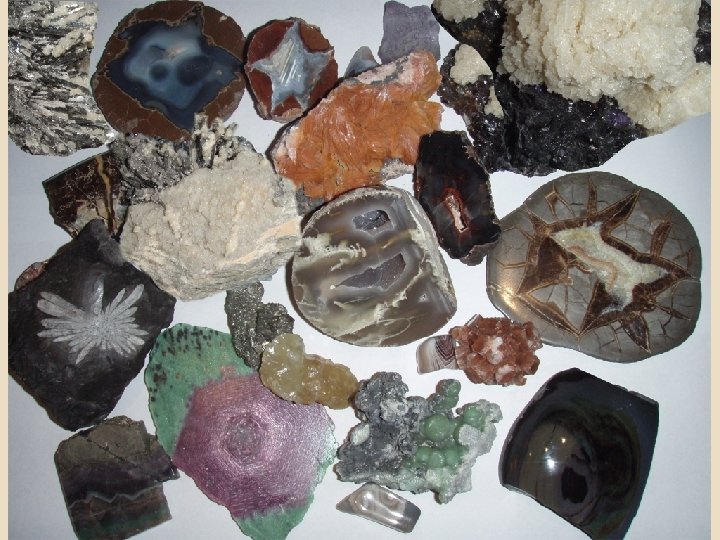
Minerals are Formed through natural processes Inorganic (non-living) Solid Crystalline Over 4000 types, but fewer than 100 common minerals
Natural Processes Natural processes that might cause minerals to form: Heat from volcanic activity Pressure from rock movement Cooling from air or water Addition of new material by wind or water
Inorganic Minerals are not created by living things Organic matter can not be a mineral Hair, dirt, leaves, nails/claws, oil, coal, anything made of proteins, carbohydrates, lipids, or nucleic acids Shells of bivalves, diatoms, and other seashells are inorganic
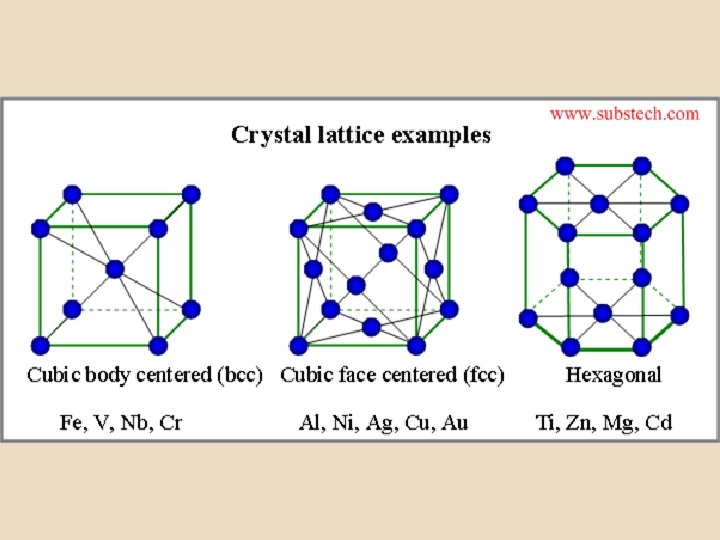
Crystalline Solids Liquid water is not a mineral Solid ice is a mineral Lava is not a mineral Crystal: solid in which the atoms are arranged in a regular, repeating pattern Each mineral has its own unique
Crystalline Solids Minerals have definite structure and composition Can be either elements or compounds Minerals will always grow in the same pattern
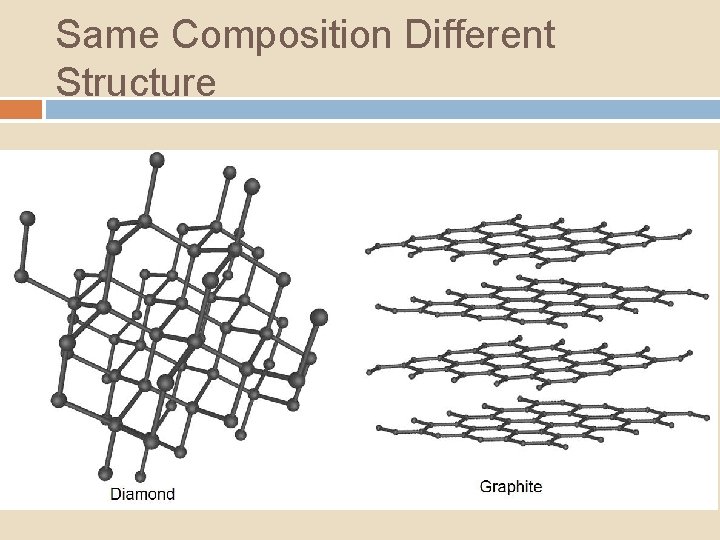
Same Composition Different Structure
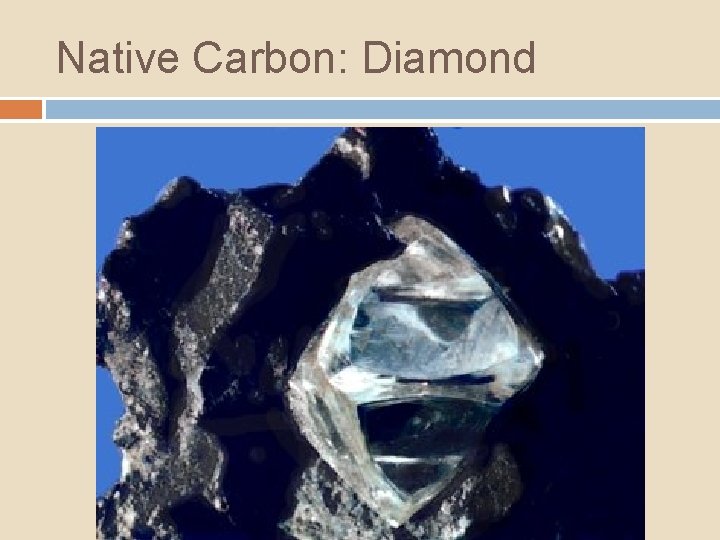
Native Carbon: Diamond
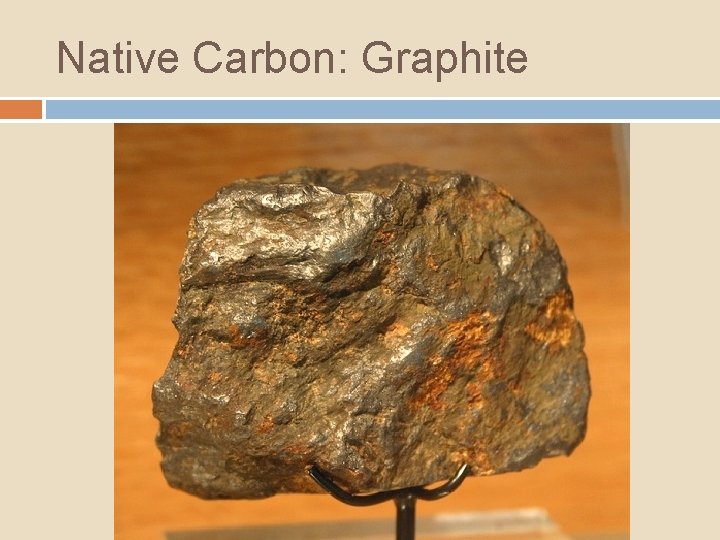
Native Carbon: Graphite
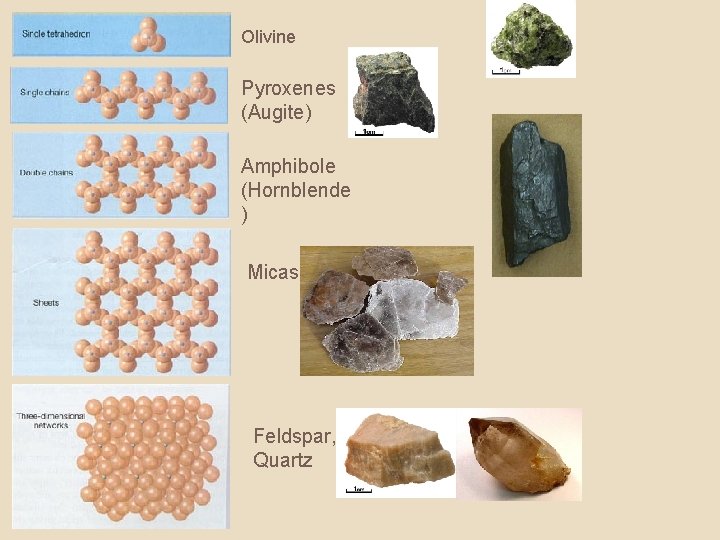
Olivine Pyroxenes (Augite) Amphibole (Hornblende ) Micas Feldspar, Quartz
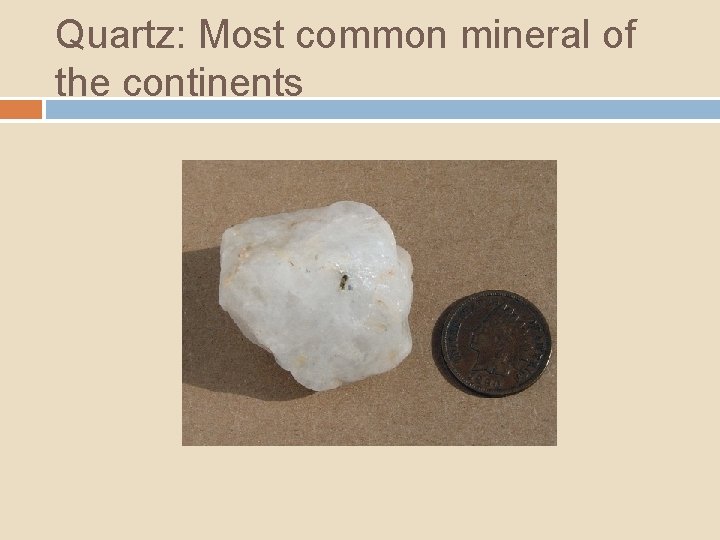
Quartz: Most common mineral of the continents
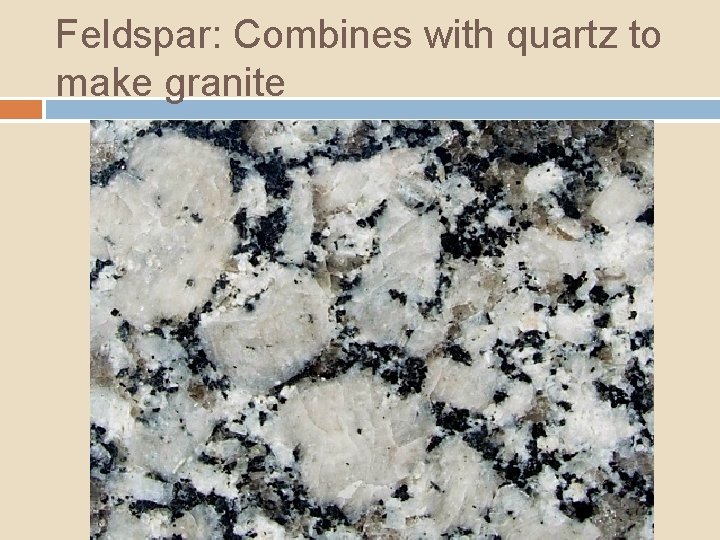
Feldspar: Combines with quartz to make granite
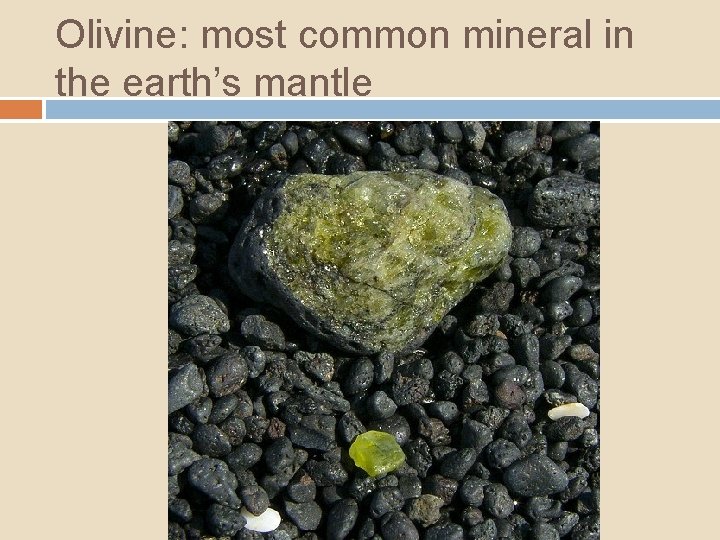
Olivine: most common mineral in the earth’s mantle
Mineral Formation Minerals form by Cooling of magma or lava Evaporation of water Reactions within mineral rich water
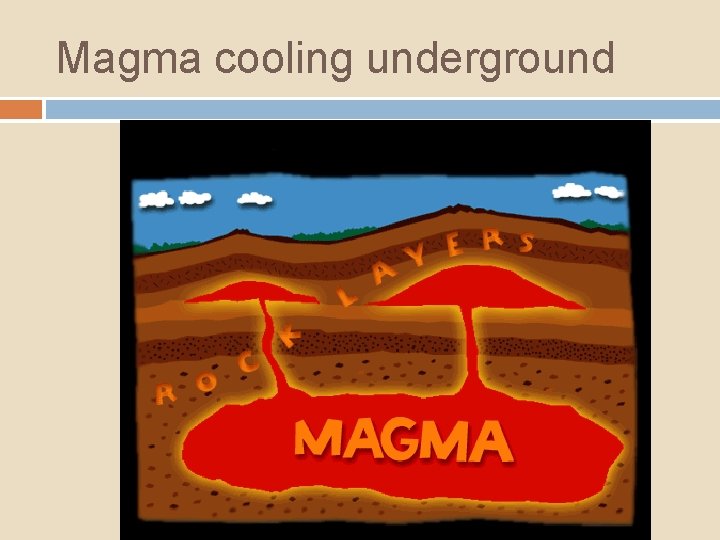
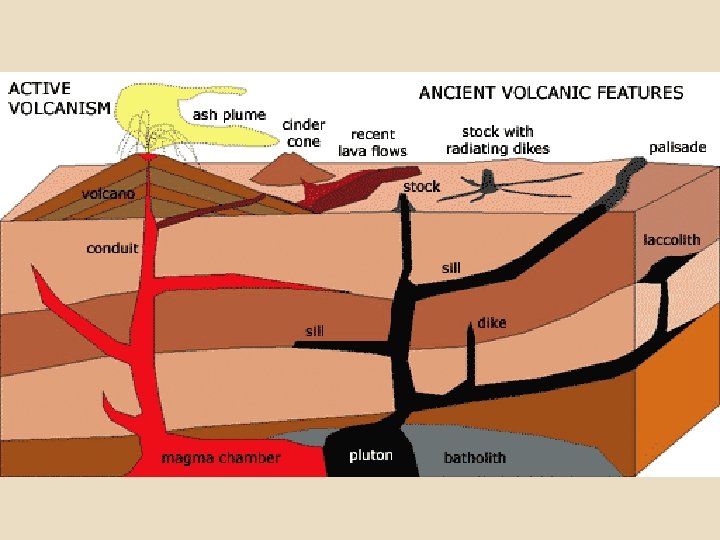
Cooling of Magma is molten rock Molten = melted Underground Magma Above ground Lava Most magma never becomes lava, it cools underground
Magma cooling underground
Cooling of Magma When magma cools, it solidifies Cool Solidify Crystallize Rocks: mixture of minerals Magma can solidify in seconds or over millions of years
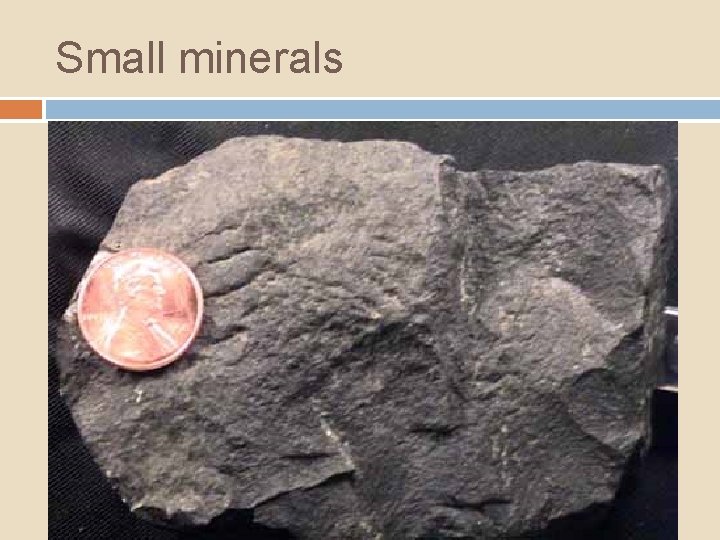
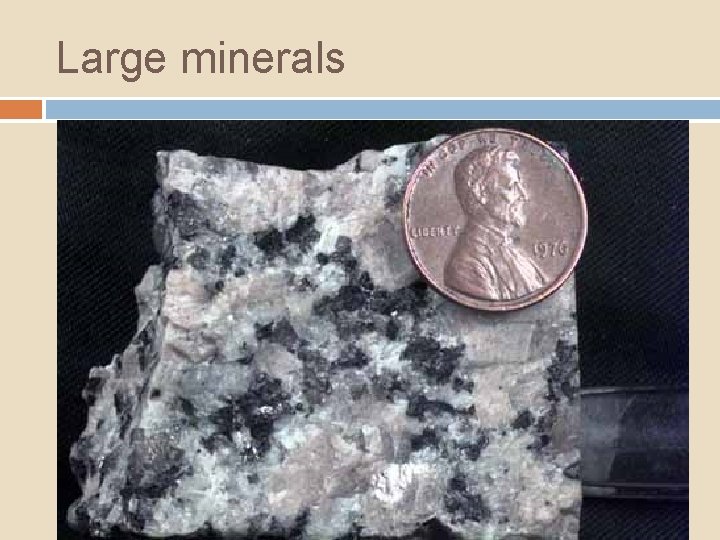
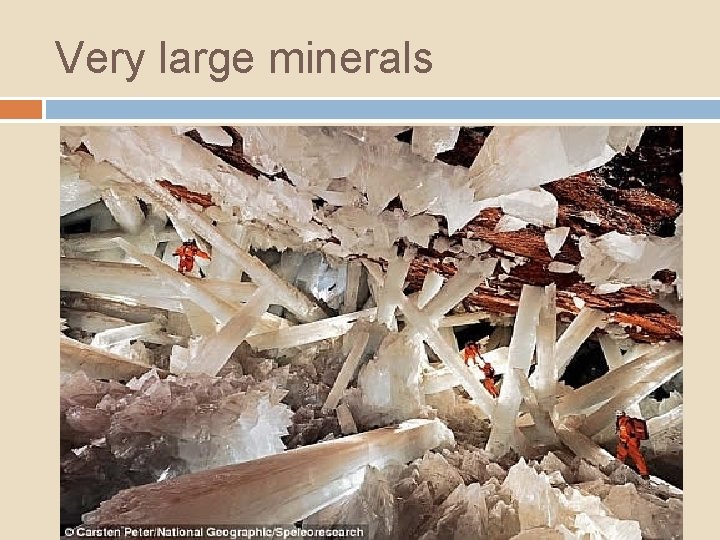
Cooling of Magma Quick cooling = small crystals Atoms do not have time to arrange themselves Slow cooling = large crystals Atoms arrange and rearrange themselves until they are in the most stable positions
Small minerals
Large minerals
Very large minerals
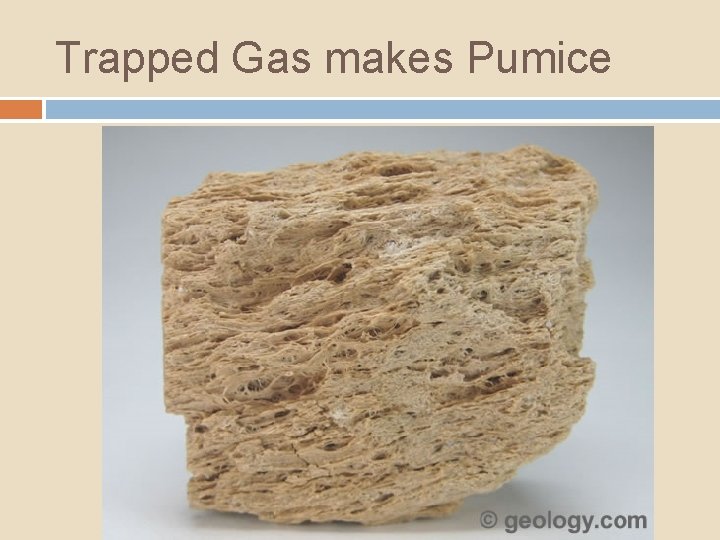
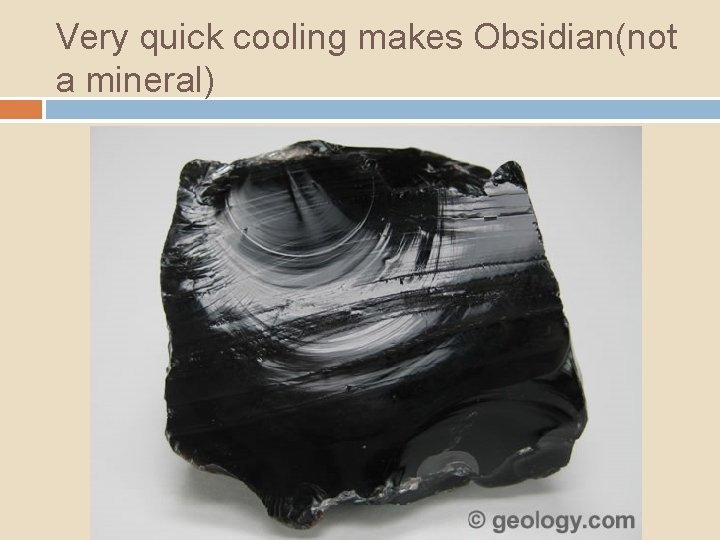
Cooling of Magma cools slowly; lava cools quickly Lava traps more gas as it cools Sometimes lava cools so quickly no crystalline structure can develop
Trapped Gas makes Pumice
Very quick cooling makes Obsidian(not a mineral)
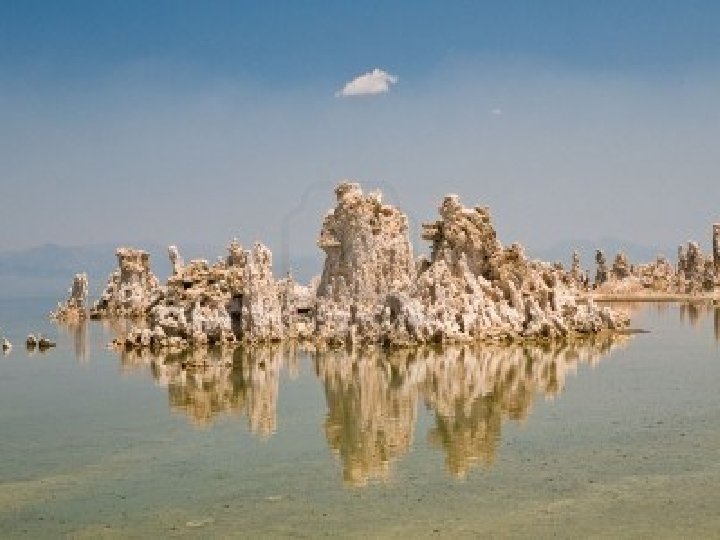
Evaporation of Water in nature always contains some amount of minerals it is a solution Hot water holds more minerals Minerals can precipitate out of solution
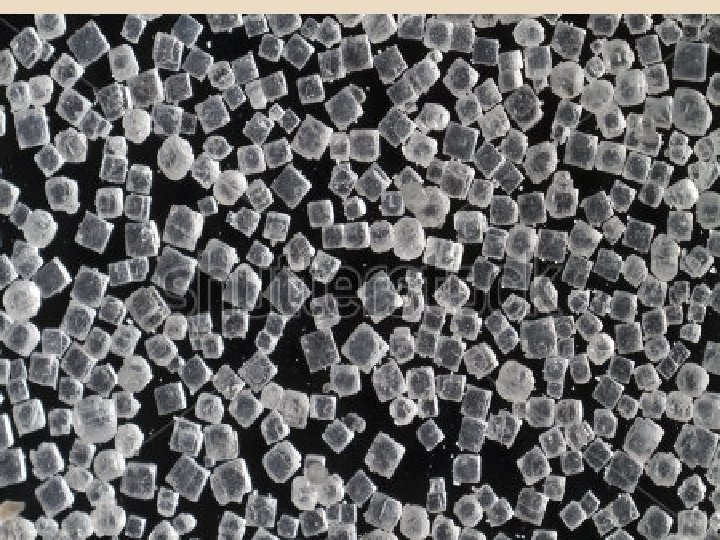
Evaporation of Water Precipitate: water evaporates but minerals are left behind Halides (salts) are the most common example of this
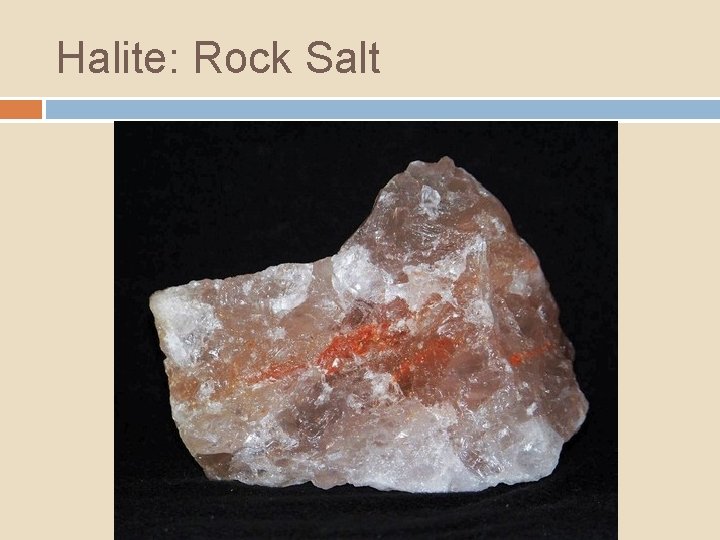
Halite: Rock Salt
Reactions in Mineral Rich Water deep below the surface can be very hot Hot water = more minerals As water moves up through cracks in rocks Water cools minerals are deposited Hot water = minerals dissolve Cold water = minerals precipitate
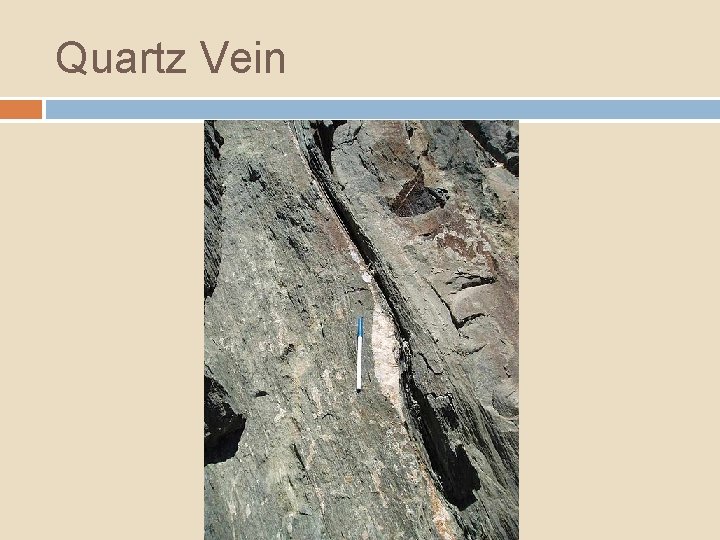
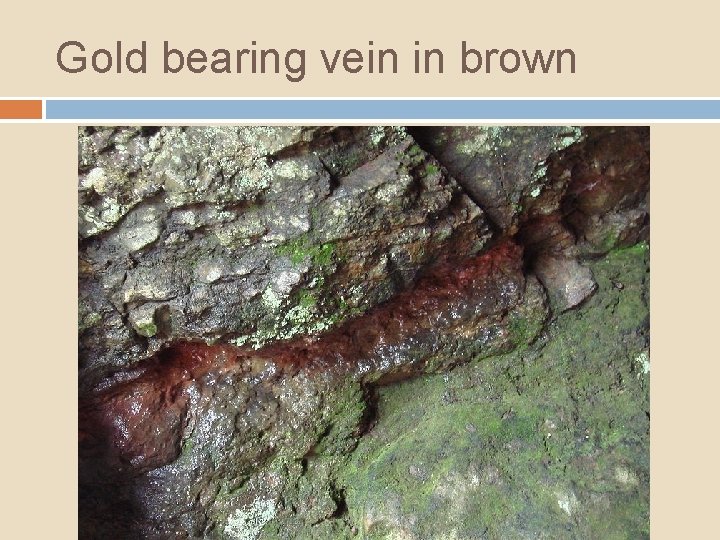
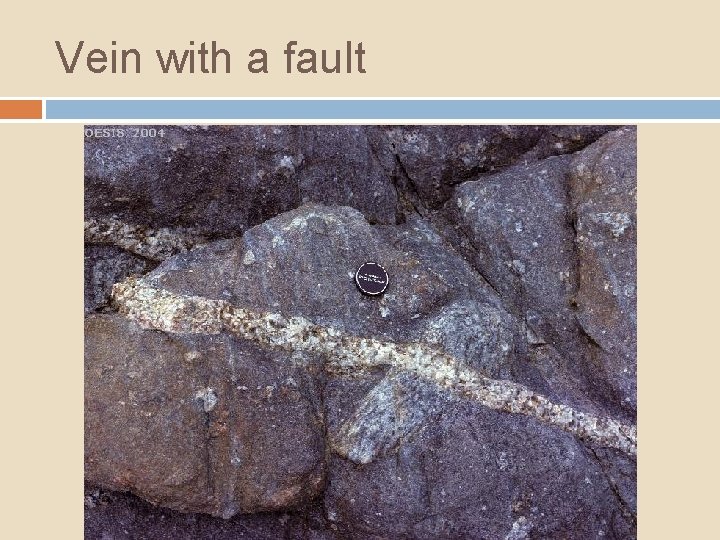
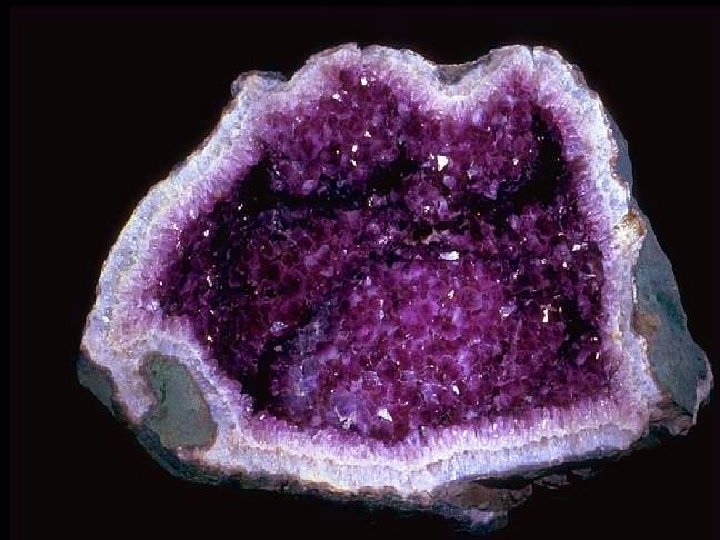
Reactions in Mineral Rich Water When water deposits minerals into cracks in existing rock, veins are formed When water deposits minerals into cavities in existing rocks, geodes are formed
Quartz Vein
Gold bearing vein in brown
Vein with a fault
Mining and Using Minerals Almost everything you own or use is made from one of these two things Plant and Animal remains: wood, cotton, food, oil, plastics Minerals: metal, rock, cement, glass
Minerals Because minerals are made by natural processes, they must be Found Mined Processed Used/Disposed of There are economic and environmental concerns in each of these steps
Finding Minerals (especially useful ones) are generally found underground Geologist find mineral deposits by Studying local rocks Mapping the area Taking rock samples
Finding Minerals Ore: mineral deposits that can be mined for a profit Mining is very expensive so extensive research is done before it begins
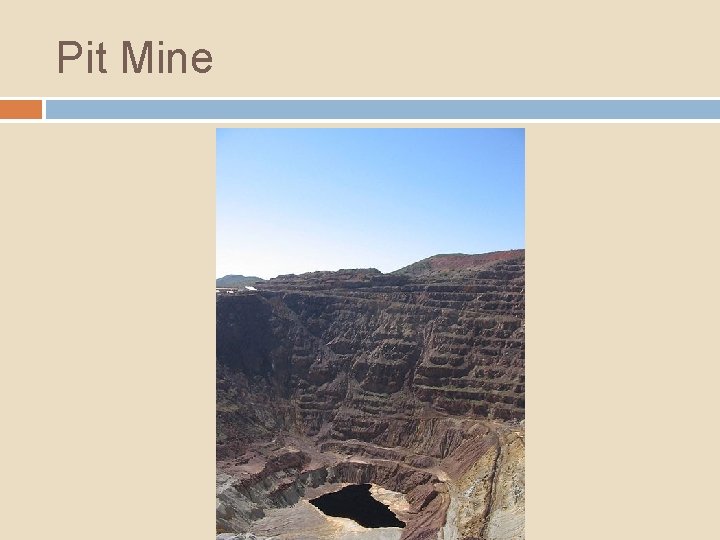
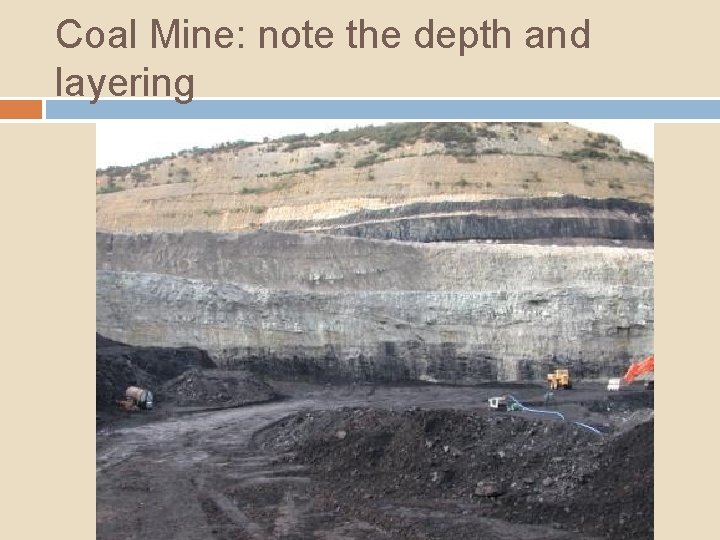
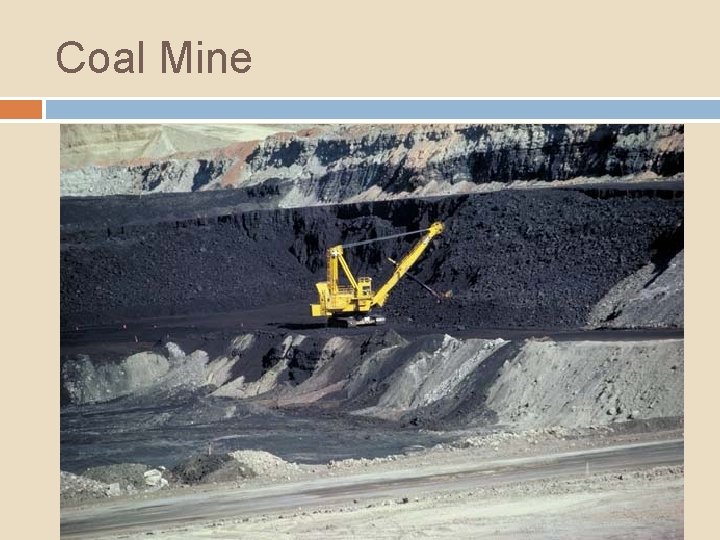
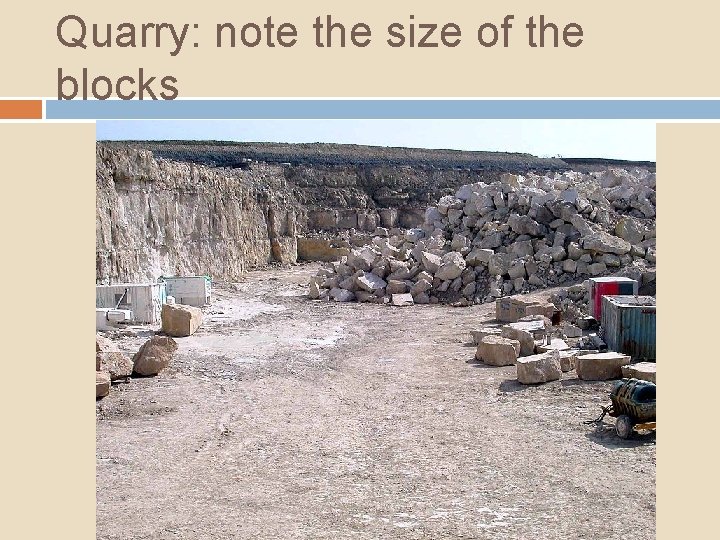
Mining Surface mining: mining operations that are exposed on the earth’s surface Pit mining Strip mining Quarrying Underground mining: mining operations that are accessed by underground tunnels
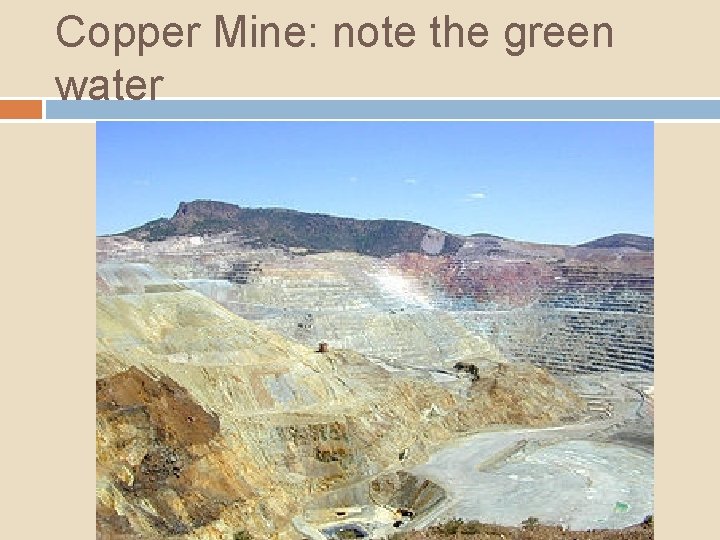
Copper Mine: note the green water
Pit Mine
Coal Mine: note the depth and layering
Coal Mine
Quarry: note the size of the blocks
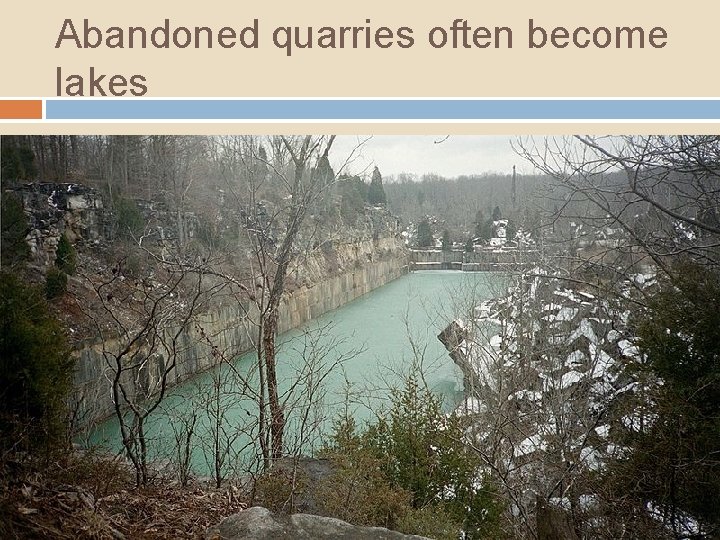
Abandoned quarries often become lakes
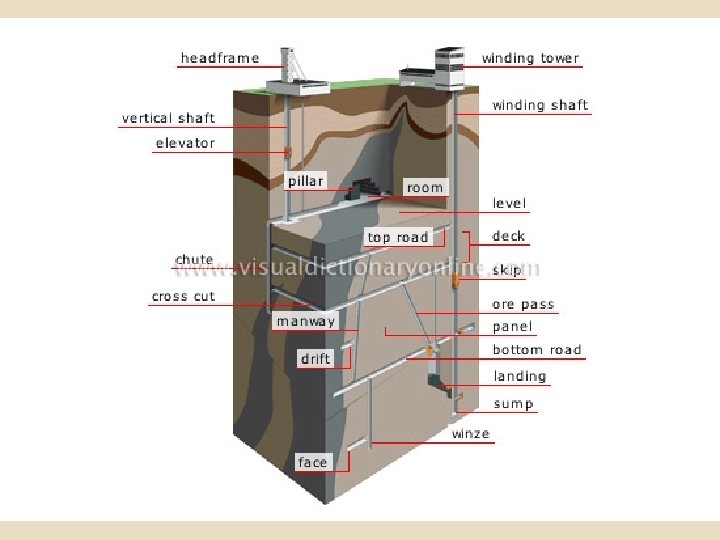
Underground Mining Accessed by tunnel Much more expensive and dangerous than surface mining Water, fresh air, cave-ins, movement of ore all take much more effort
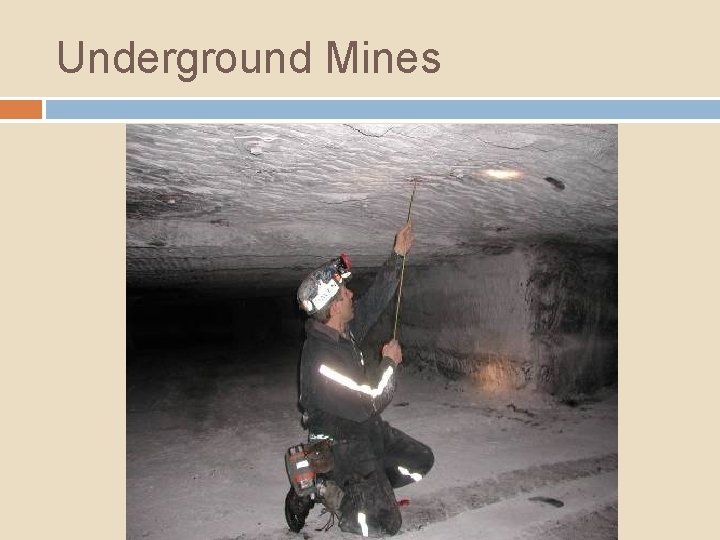
Underground Mines
Economic and Environmental Concerns Mining and ore handling provide many people with jobs Almost every product we use requires mined material Mines can be very bad for the local environment
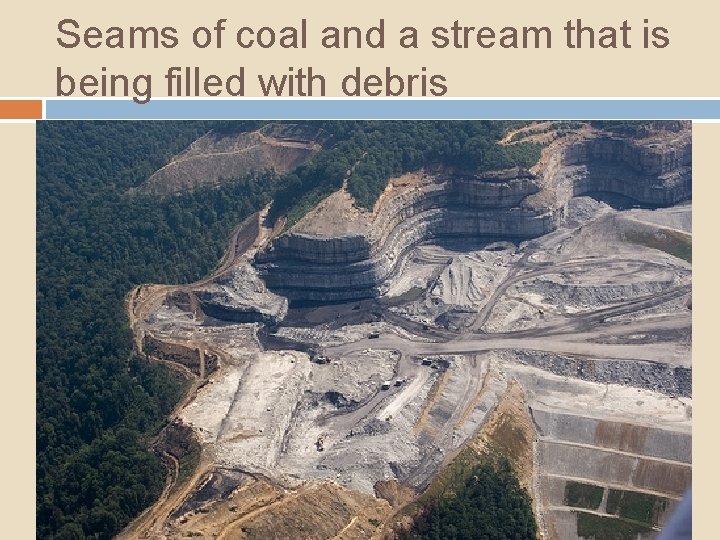
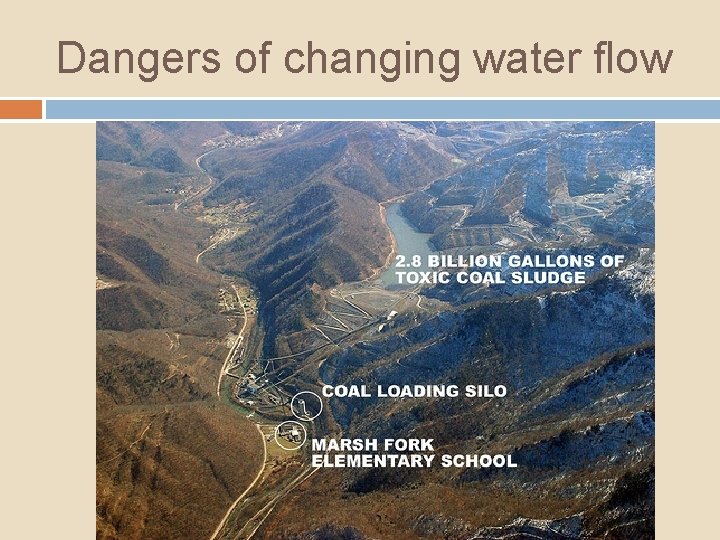
Environmental Concerns Mines affect the environment by Removing soil and biodiversity Deforestation Changing courses of flowing water Altering local topography Releasing heavy metals and volatile chemicals
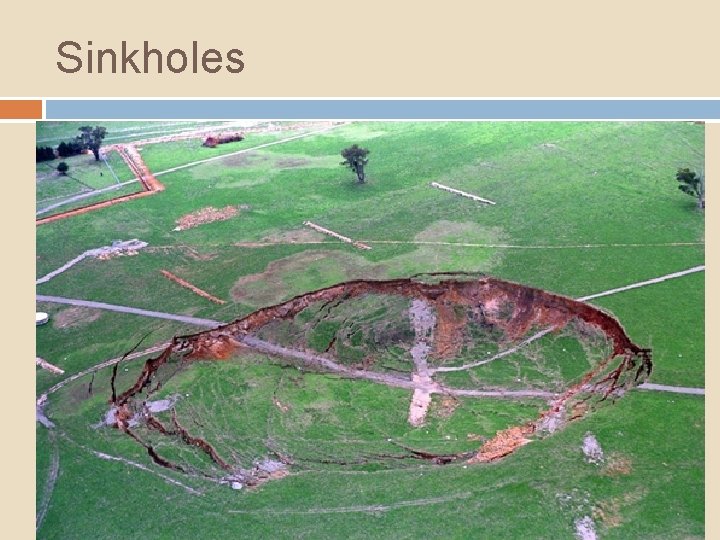
Sinkholes
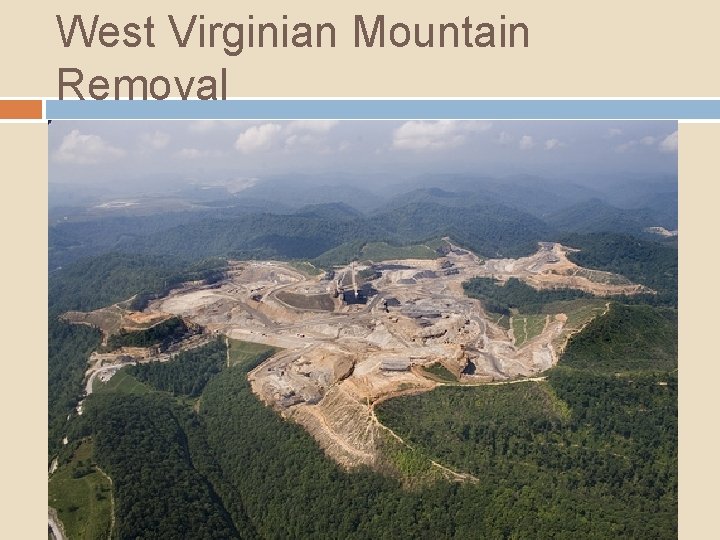
West Virginian Mountain Removal
Seams of coal and a stream that is being filled with debris
Dangers of changing water flow
Processing Metals are taken from rocks Ores require a lot of processing to get usable metal Heap leaching: addition of chemicals to remove ore Flotation: attaches compound that floats minerals out of solution Smelting: super-heating rock causing it to celebrate into layers Recycling metals is important
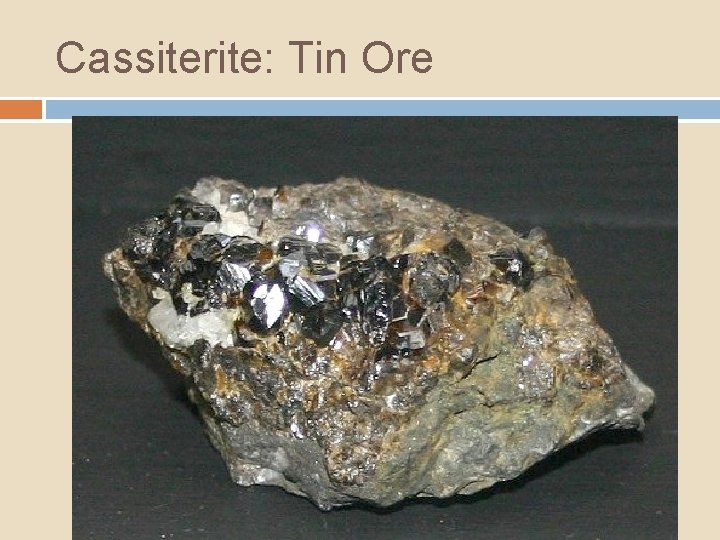
Cassiterite: Tin Ore
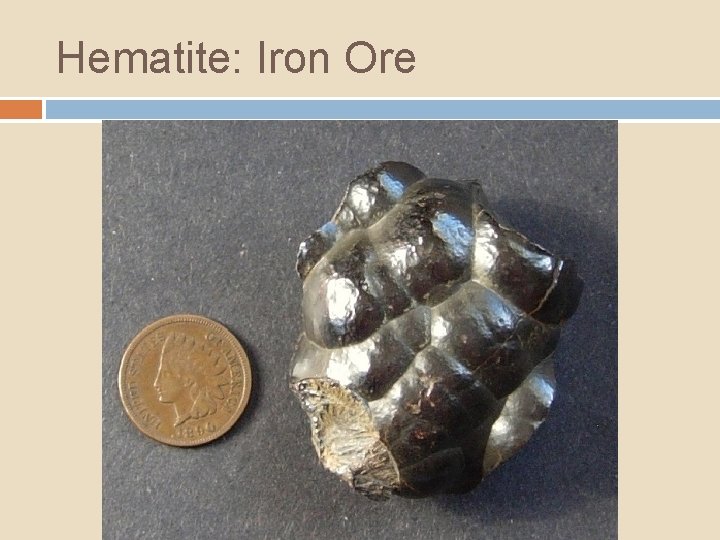
Hematite: Iron Ore
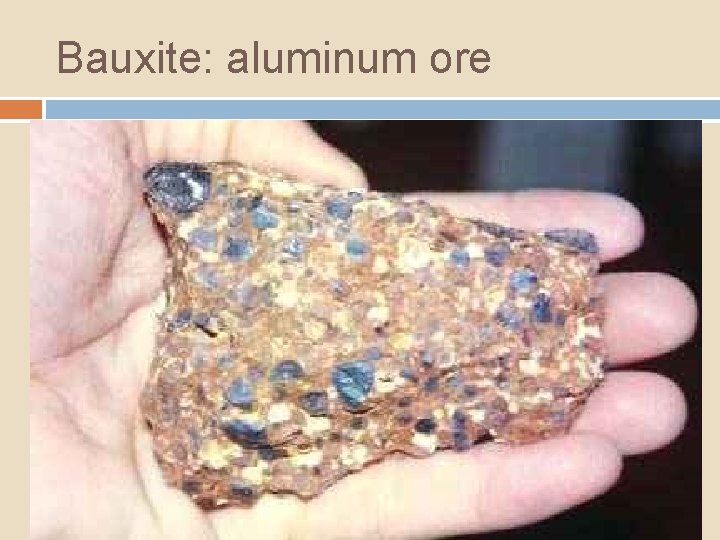
Bauxite: aluminum ore
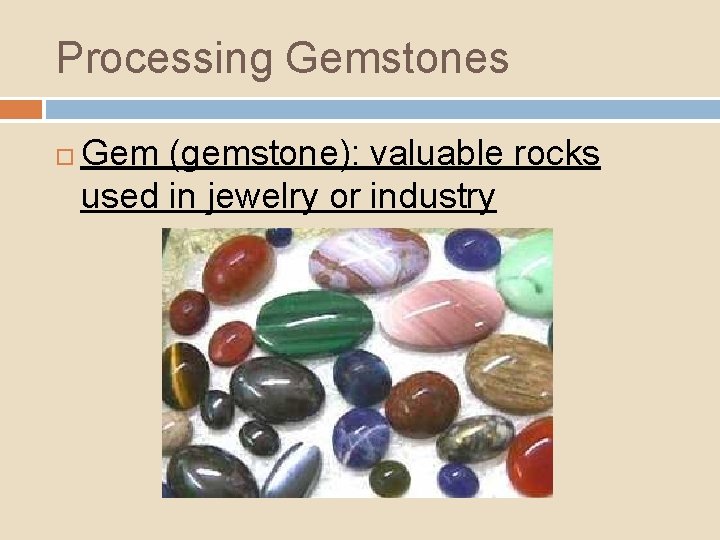
Processing Gemstones Gem (gemstone): valuable rocks used in jewelry or industry