
MINERALS ROCKS AND FOSSILS Natures Building Blocks to
MINERALS, ROCKS, AND FOSSILS …Natures Building Blocks to Life…
UNIFORMITARIANISM � Is a principle in science that suggests that the landscape of earth developed over long periods of time through a variety of slow geological and geomorphic processes

THE PHASES BEHIND UNIFORMITARIANISM � 1775, James Hutton � 1830, Charles Lyell
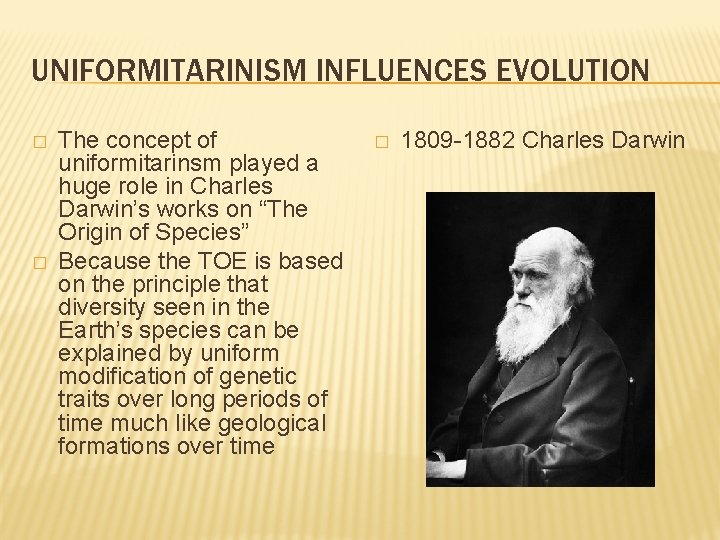
UNIFORMITARINISM INFLUENCES EVOLUTION � � The concept of uniformitarinsm played a huge role in Charles Darwin’s works on “The Origin of Species” Because the TOE is based on the principle that diversity seen in the Earth’s species can be explained by uniform modification of genetic traits over long periods of time much like geological formations over time � 1809 -1882 Charles Darwin
SO LET’S TALK ABOUT ROCKS AND MINERALS
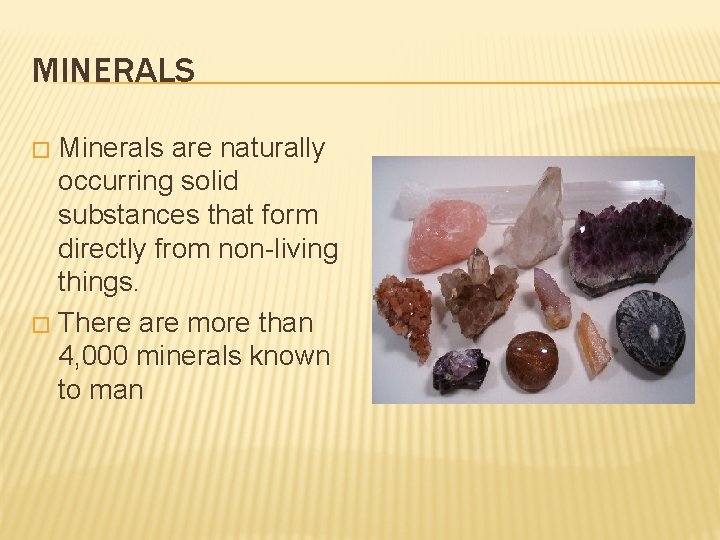
MINERALS Minerals are naturally occurring solid substances that form directly from non-living things. � There are more than 4, 000 minerals known to man �
MINERALS PHYSICAL PROPERTIES � Streak � Luster � Density � Hardness � Conductivity � Cleavage
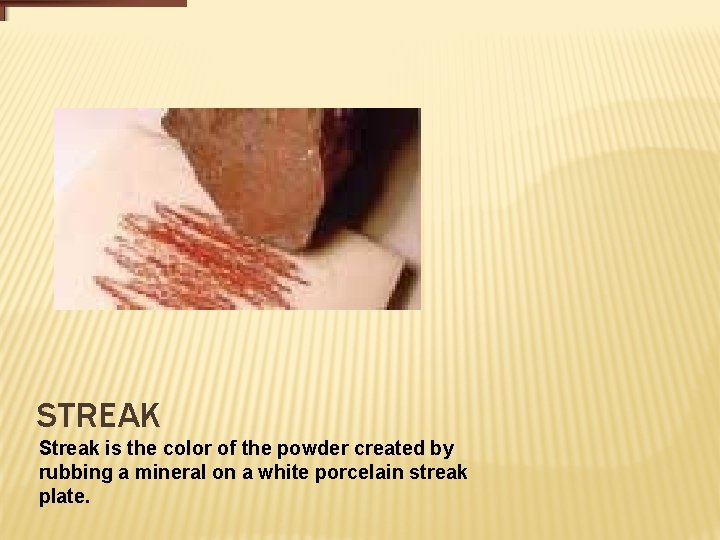
STREAK Streak is the color of the powder created by rubbing a mineral on a white porcelain streak plate.
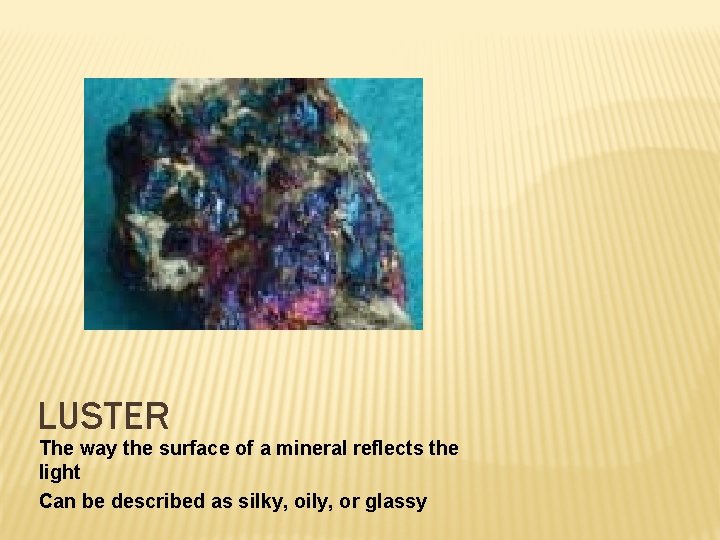
LUSTER The way the surface of a mineral reflects the light Can be described as silky, oily, or glassy
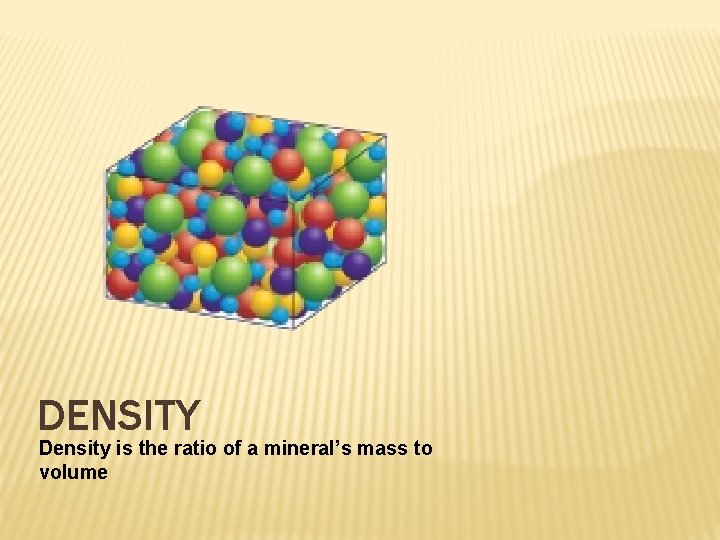
DENSITY Density is the ratio of a mineral’s mass to volume
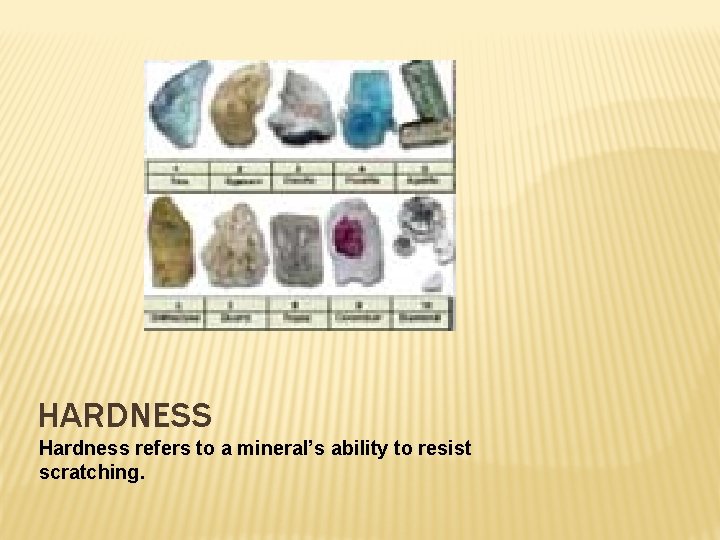
HARDNESS Hardness refers to a mineral’s ability to resist scratching.

CONDUCTIVITY Conductivity is a measure of a material’s ability to transfer energy, such as thermal or electrical.
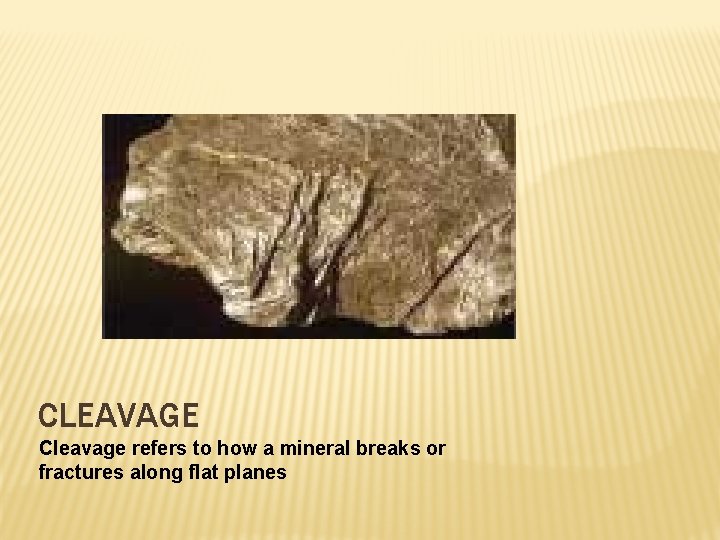
CLEAVAGE Cleavage refers to how a mineral breaks or fractures along flat planes
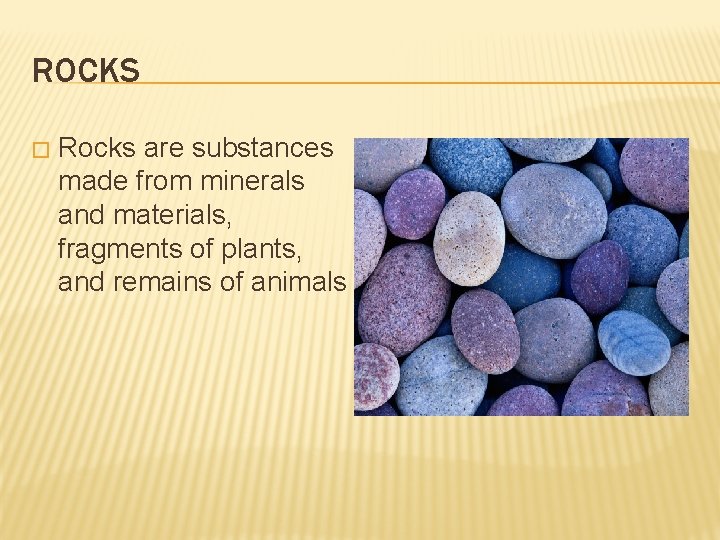
ROCKS � Rocks are substances made from minerals and materials, fragments of plants, and remains of animals
ROCK CATEGORIES � Igneous Rocks � Sedimentary Rocks � Metamorphic Rocks
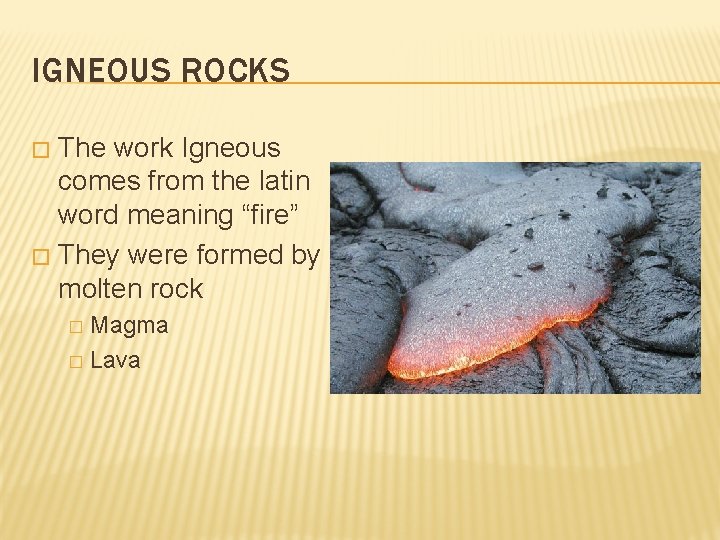
IGNEOUS ROCKS The work Igneous comes from the latin word meaning “fire” � They were formed by molten rock � Magma � Lava �
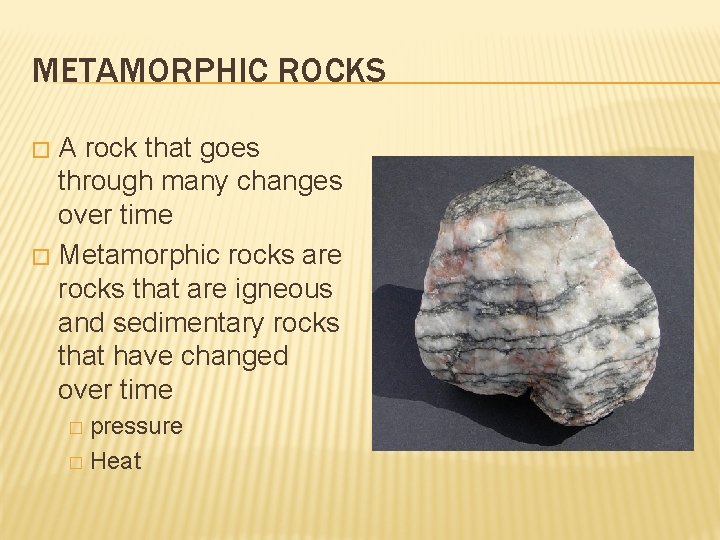
METAMORPHIC ROCKS A rock that goes through many changes over time � Metamorphic rocks are rocks that are igneous and sedimentary rocks that have changed over time � pressure � Heat �
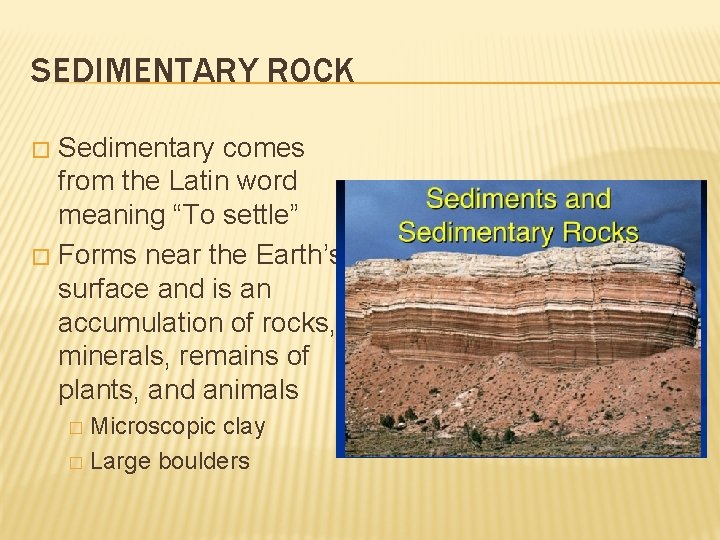
SEDIMENTARY ROCK Sedimentary comes from the Latin word meaning “To settle” � Forms near the Earth’s surface and is an accumulation of rocks, minerals, remains of plants, and animals � Microscopic clay � Large boulders �
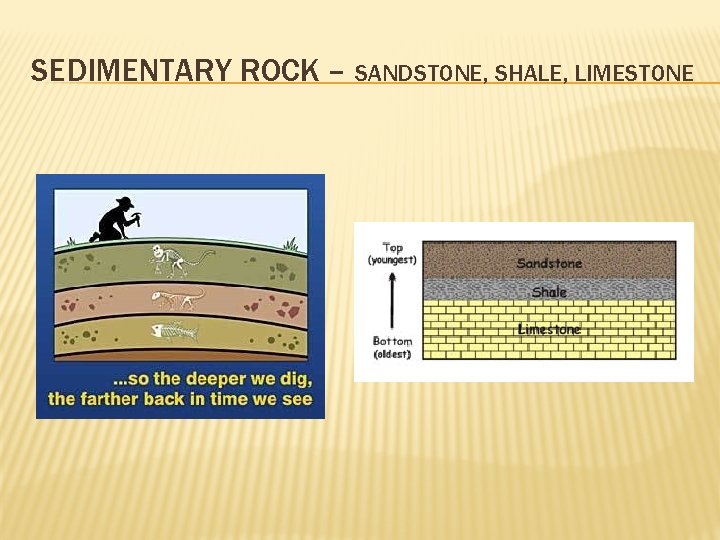
SEDIMENTARY ROCK – SANDSTONE, SHALE, LIMESTONE
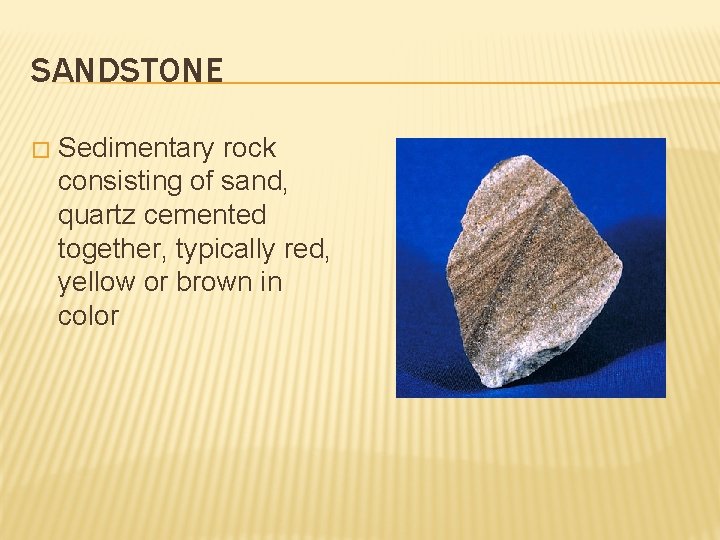
SANDSTONE � Sedimentary rock consisting of sand, quartz cemented together, typically red, yellow or brown in color
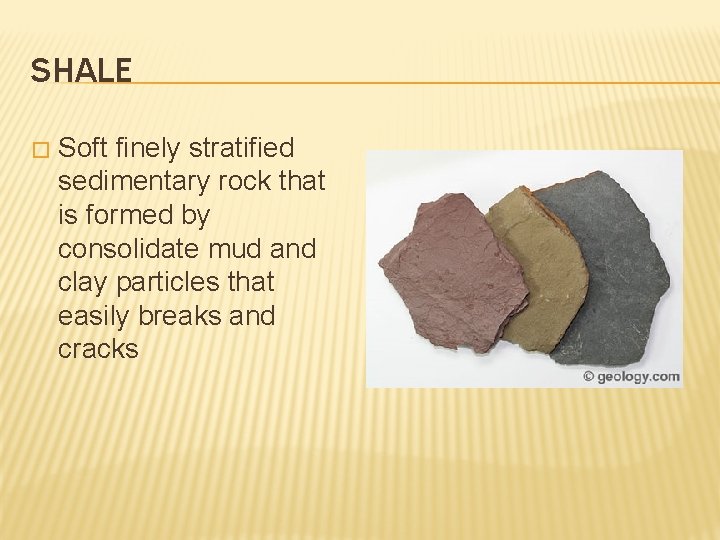
SHALE � Soft finely stratified sedimentary rock that is formed by consolidate mud and clay particles that easily breaks and cracks
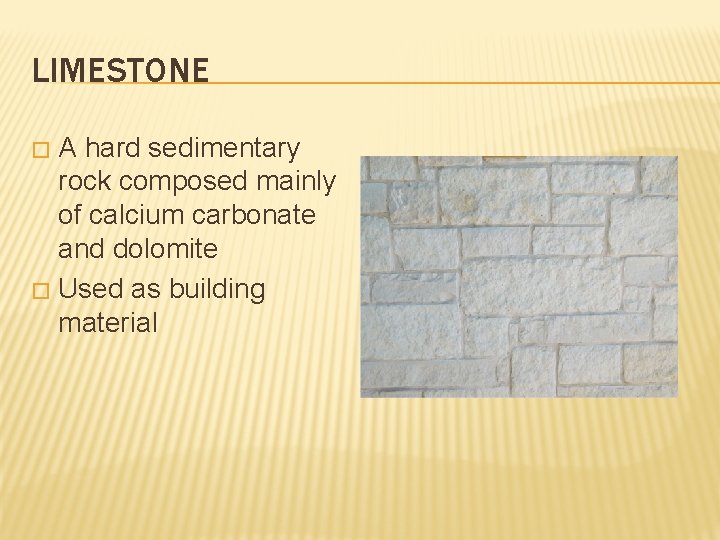
LIMESTONE A hard sedimentary rock composed mainly of calcium carbonate and dolomite � Used as building material �
MINERALS VS. ROCKS ü ü ü Minerals Inorganic Occur naturally, not man made Formed directly from geological sources (i. e. molten rock, salt water, etc. ) Definite shape and volume Definite chemical compositions (specific chemical formula) Forms crystalline structures by patterns within molecular and atomic structure ü ü Rocks Formation determines its classification Formed from minerals, plants, animals products, fragments of other rocks amorphous shape and volume Non-definite chemical compositions
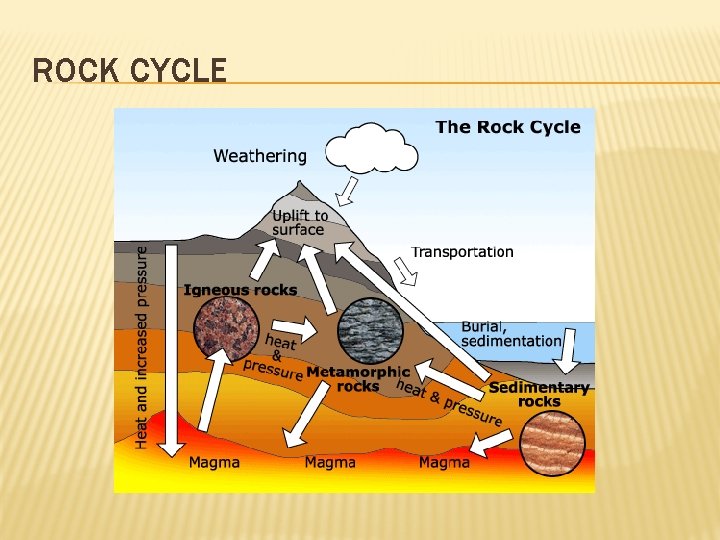
ROCK CYCLE

WHAT DOES THIS MATTER TO TRACKING THE EVOLUTION OF LIFE?
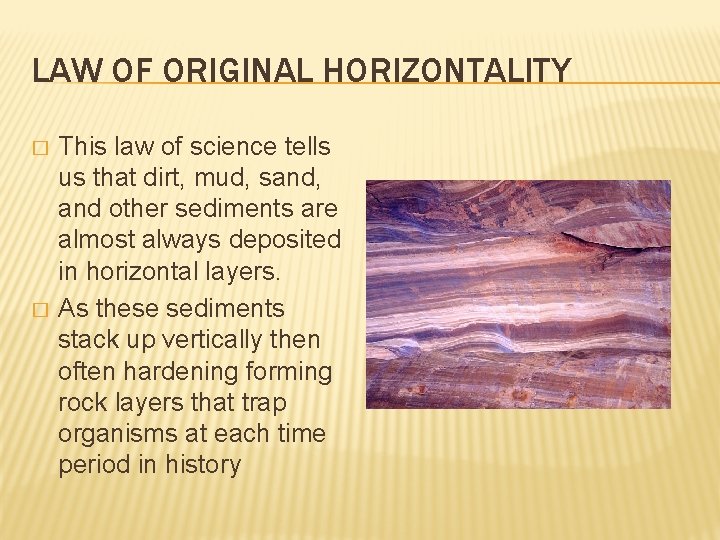
LAW OF ORIGINAL HORIZONTALITY � � This law of science tells us that dirt, mud, sand, and other sediments are almost always deposited in horizontal layers. As these sediments stack up vertically then often hardening forming rock layers that trap organisms at each time period in history
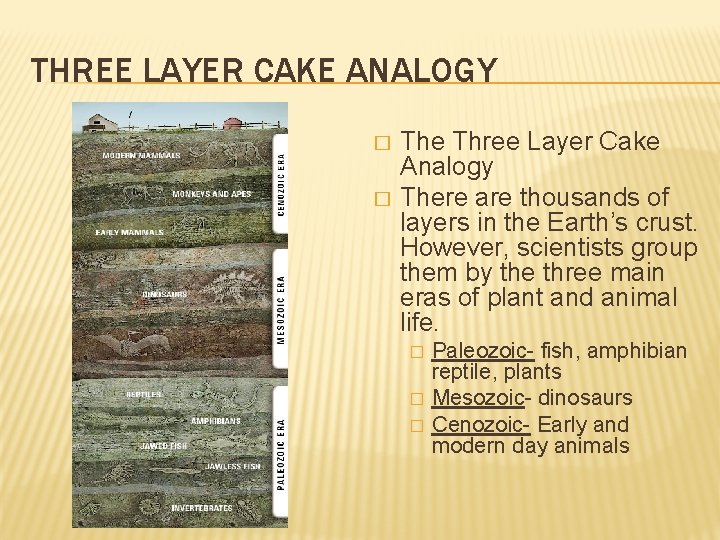
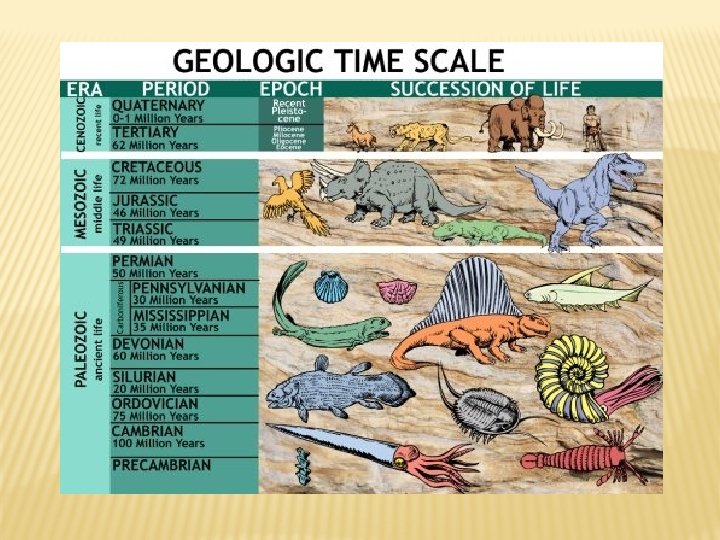
THREE LAYER CAKE ANALOGY � � The Three Layer Cake Analogy There are thousands of layers in the Earth’s crust. However, scientists group them by the three main eras of plant and animal life. � � � Paleozoic- fish, amphibian reptile, plants Mesozoic- dinosaurs Cenozoic- Early and modern day animals
FOSSILS AND THEIR DIFFERENT TYPES � Fossils are formed by the aid of both rocks and minerals. � Types of Fossils: � Mold & Cast � Mineral Replacements � Trace Fossils � Preserved Remains � Carbon films fossils
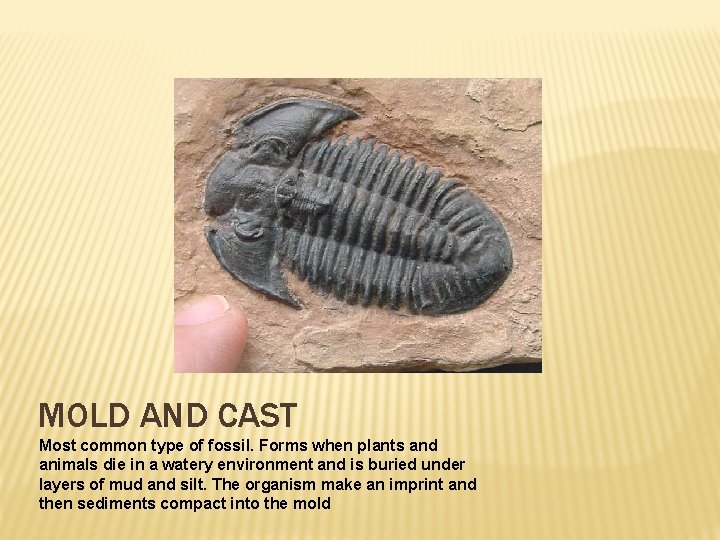
MOLD AND CAST Most common type of fossil. Forms when plants and animals die in a watery environment and is buried under layers of mud and silt. The organism make an imprint and then sediments compact into the mold
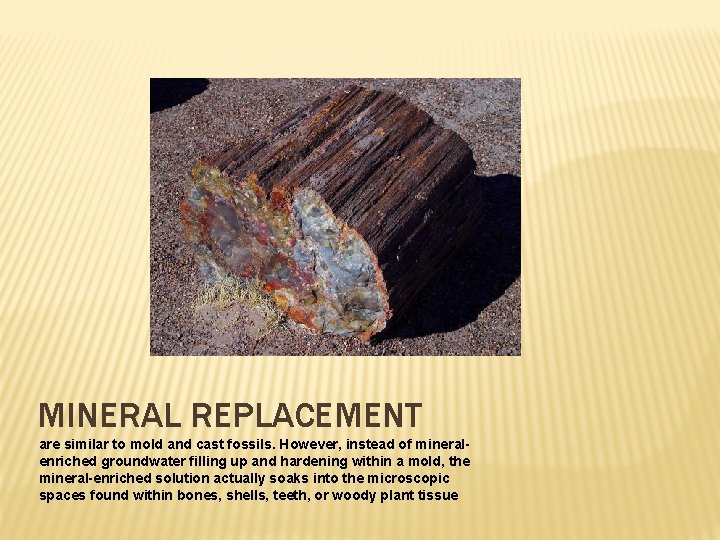
MINERAL REPLACEMENT are similar to mold and cast fossils. However, instead of mineralenriched groundwater filling up and hardening within a mold, the mineral-enriched solution actually soaks into the microscopic spaces found within bones, shells, teeth, or woody plant tissue
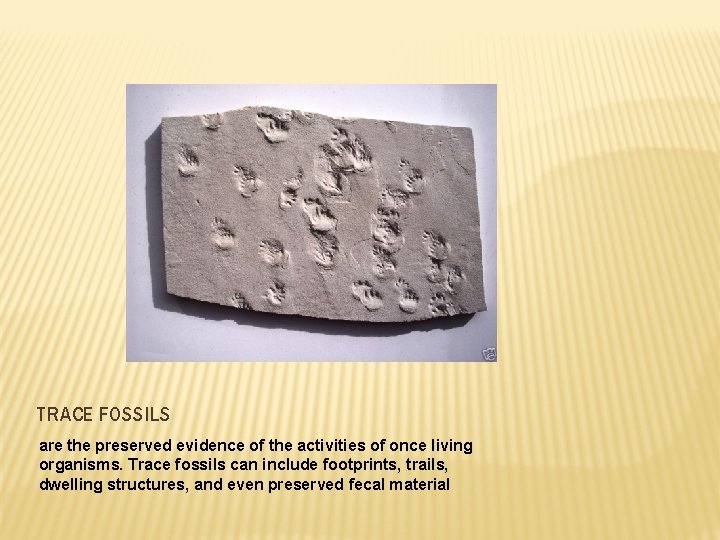
TRACE FOSSILS are the preserved evidence of the activities of once living organisms. Trace fossils can include footprints, trails, dwelling structures, and even preserved fecal material
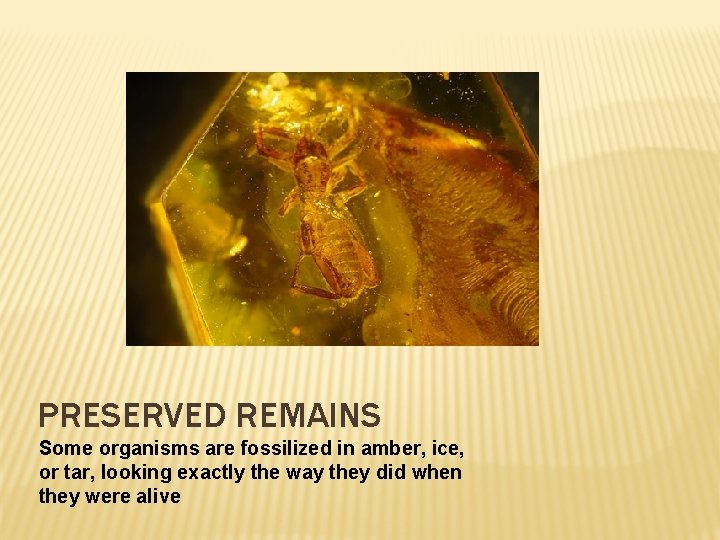
PRESERVED REMAINS Some organisms are fossilized in amber, ice, or tar, looking exactly the way they did when they were alive
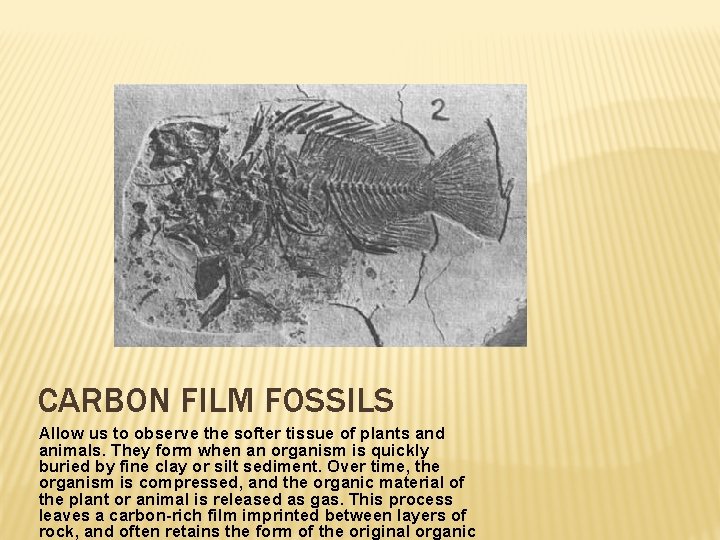
CARBON FILM FOSSILS Allow us to observe the softer tissue of plants and animals. They form when an organism is quickly buried by fine clay or silt sediment. Over time, the organism is compressed, and the organic material of the plant or animal is released as gas. This process leaves a carbon-rich film imprinted between layers of rock, and often retains the form of the original organic
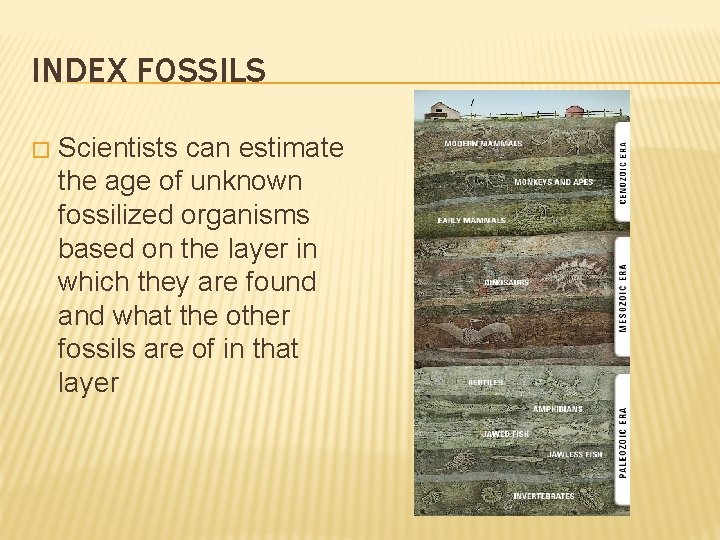
INDEX FOSSILS � Scientists can estimate the age of unknown fossilized organisms based on the layer in which they are found and what the other fossils are of in that layer
- Slides: 35