
Minerals Part 2 The properties Identifying Minerals Each

- Slides: 22
Minerals Part 2 The properties!
Identifying Minerals • Each mineral has its own specific properties that can be used to identify it.
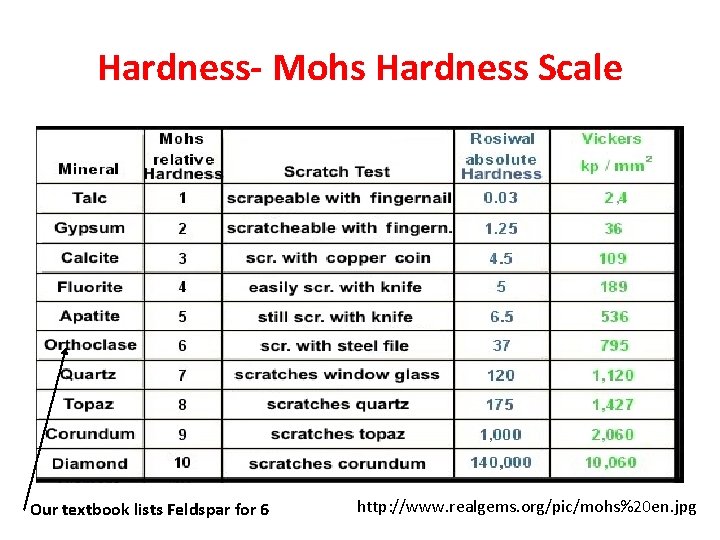
Hardness- Mohs Hardness Scale • Hardness (how hard a mineral is) is one of the best properties that can be used to help identify a mineral • Mohs Hardness Scale ranks 10 minerals from softest to hardest, Talc is softest and Diamond is hardest
Hardness- Mohs Hardness Scale Our textbook lists Feldspar for 6 http: //www. realgems. org/pic/mohs%20 en. jpg
Color • The color of a mineral is a physical property that is easy to observe. • Color can only be used for a few minerals that have their own specific color • The color of a mineral alone does not usually give enough information to make a definite identification. Some minerals come in many colors
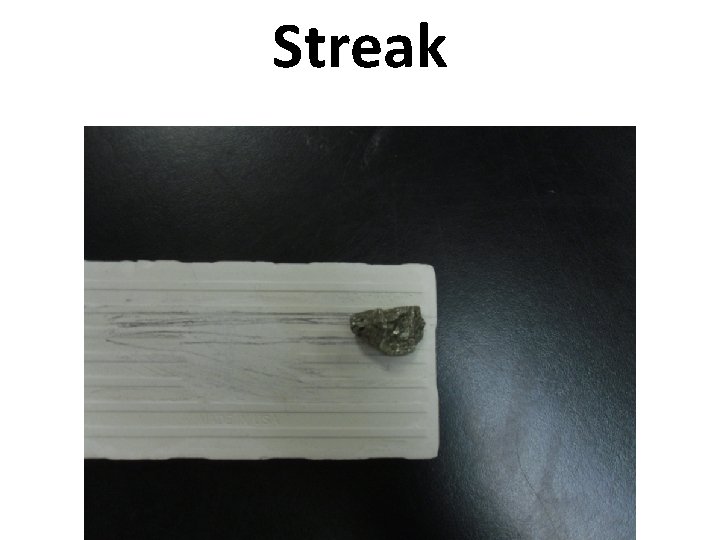
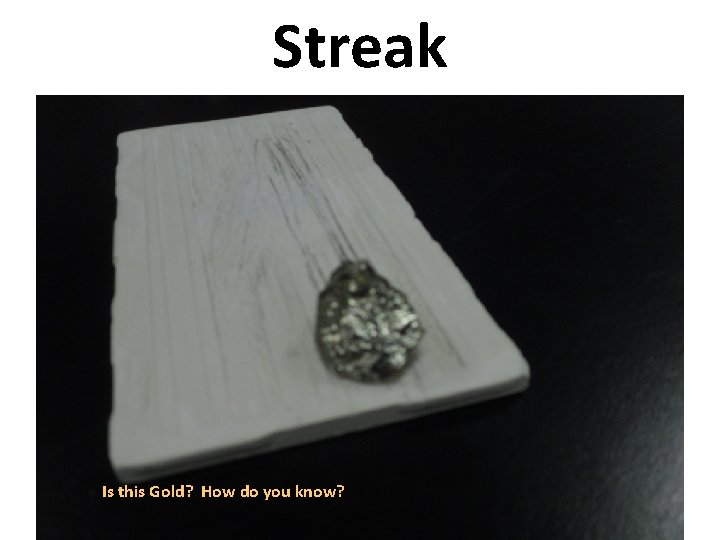
Streak • Streak tells the color of a mineral’s powder. To find the streak of a mineral you rub the mineral against an unglazed tile called a streak plate.
Streak
Streak Is this Gold? How do you know?
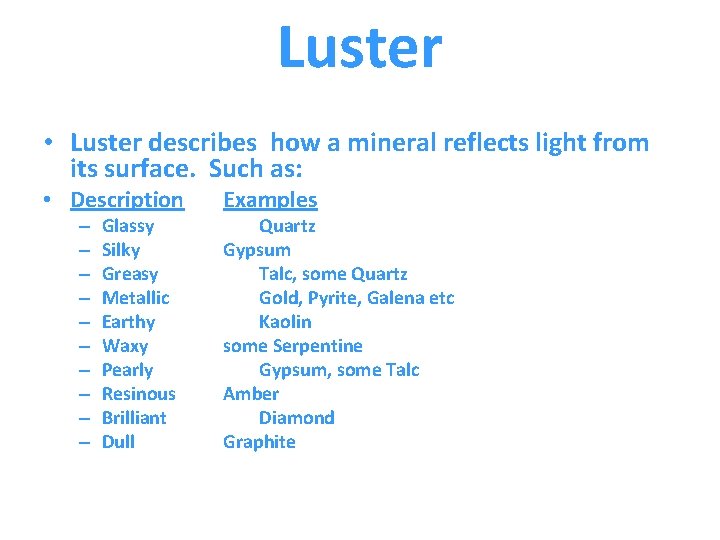
Luster • Luster describes how a mineral reflects light from its surface. Such as: • Description – – – – – Glassy Silky Greasy Metallic Earthy Waxy Pearly Resinous Brilliant Dull Examples Quartz Gypsum Talc, some Quartz Gold, Pyrite, Galena etc Kaolin some Serpentine Gypsum, some Talc Amber Diamond Graphite
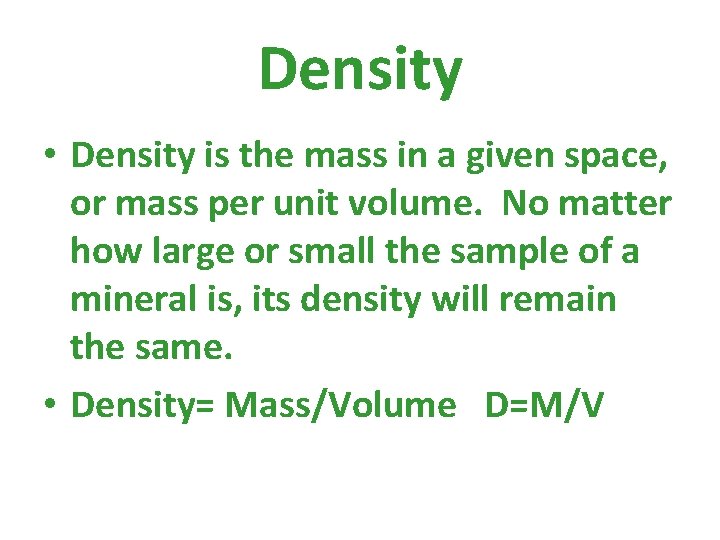
Density • Density is the mass in a given space, or mass per unit volume. No matter how large or small the sample of a mineral is, its density will remain the same. • Density= Mass/Volume D=M/V
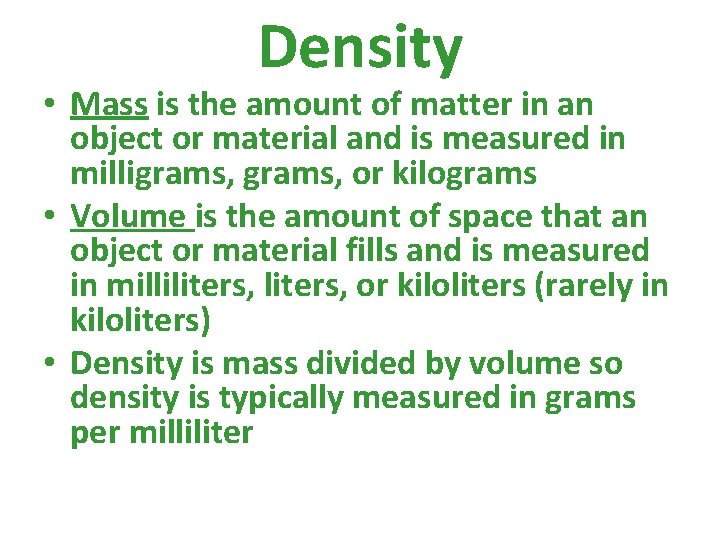
Density • Mass is the amount of matter in an object or material and is measured in milligrams, or kilograms • Volume is the amount of space that an object or material fills and is measured in milliliters, or kiloliters (rarely in kiloliters) • Density is mass divided by volume so density is typically measured in grams per milliliter
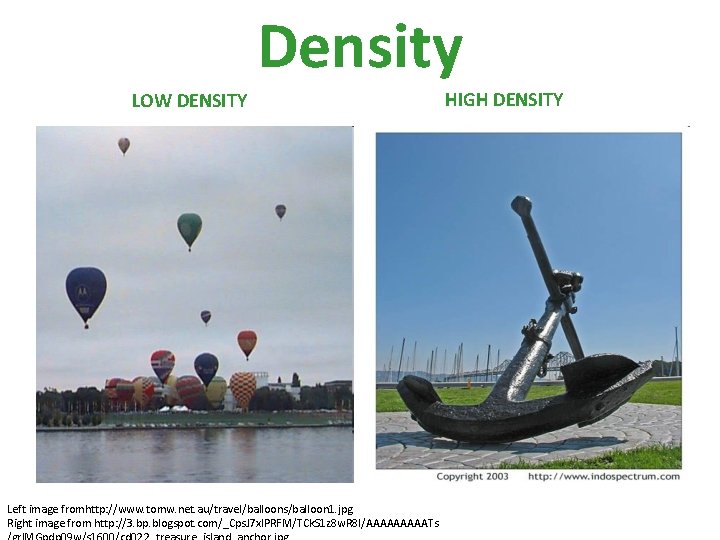
Density • The density of liquid water is 1. 0 grams per milliliter (1. 0 g/ml) –Anything more dense than 1. 0 g/ml sinks in water –Anything less dense than 1. 0 g/ml floats in water
Density LOW DENSITY Left image fromhttp: //www. tomw. net. au/travel/balloons/balloon 1. jpg Right image from http: //3. bp. blogspot. com/_Cps. J 7 xl. PRFM/TCk. S 1 z 8 w. R 8 I/AAAAATs HIGH DENSITY
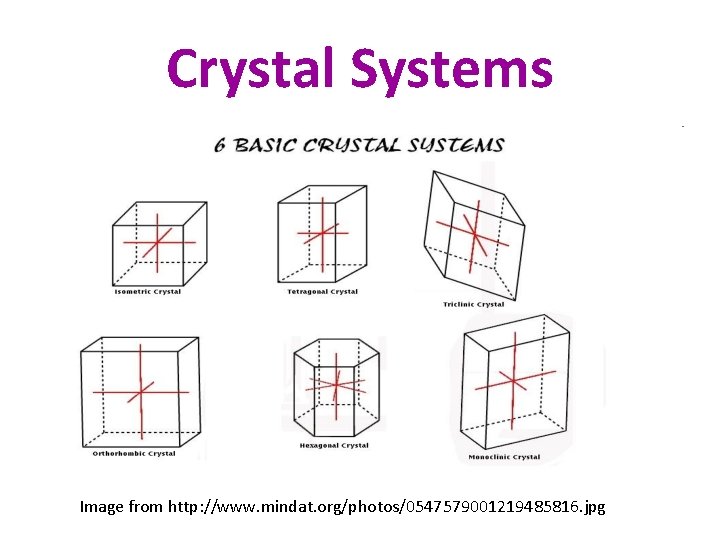
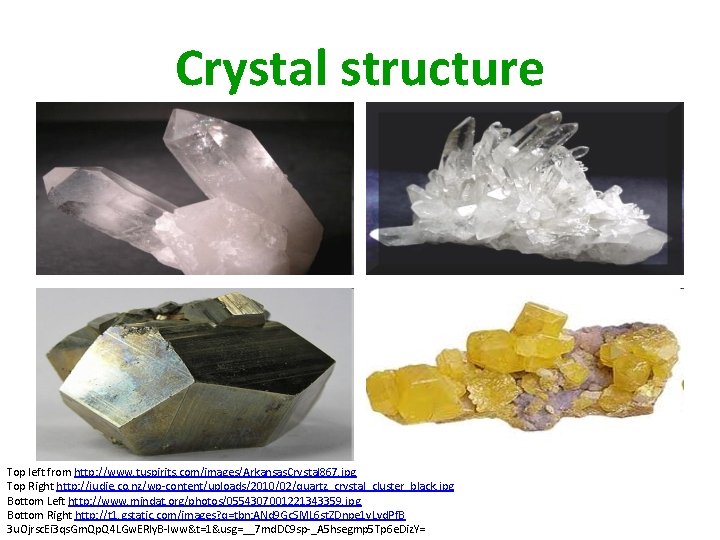
Crystal Systems • The crystals of minerals grow atom by atom to create that mineral’s crystal system. • Geologists classify crystal systems into six groups based on the number and angles of the crystal faces
Crystal Systems Image from http: //www. mindat. org/photos/0547579001219485816. jpg
Crystal structure Top left from http: //www. tuspirits. com/images/Arkansas. Crystal 867. jpg Top Right http: //judie. co. nz/wp-content/uploads/2010/02/quartz_crystal_cluster_black. jpg Bottom Left http: //www. mindat. org/photos/0554307001221343359. jpg Bottom Right http: //t 1. gstatic. com/images? q=tbn: ANd 9 Gc. SML 6 st. ZDnpe 1 v. Lvd. Pf. B 3 u. Ojrsc. Ei 3 qs. Gm. Qp. Q 4 LGw. ERly. B-Iww&t=1&usg=__7 md. DC 9 sp-_A 5 hsegmp 5 Tp 6 e. Diz. Y=
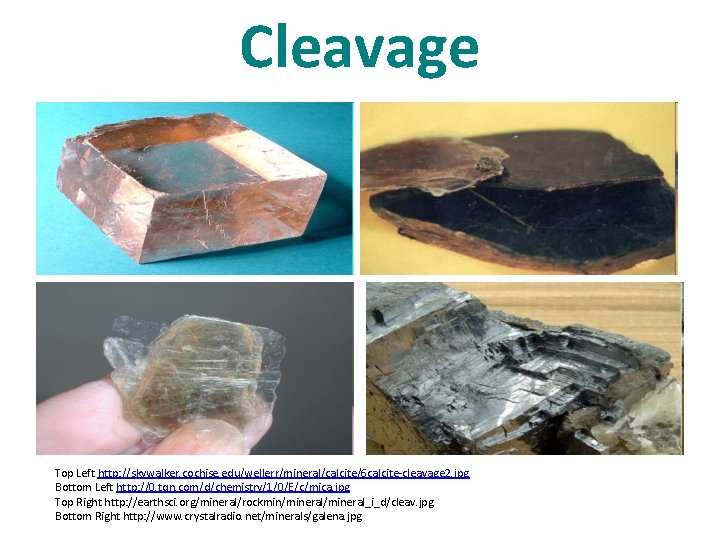
Cleavage • Cleavage is a property that describes a mineral that splits evenly along flat surfaces • Cleavage is due to how atmos are arranged in the crystals of a mineral • Mica is a mineral that splits easily along a flat surface
Cleavage Top Left http: //skywalker. cochise. edu/wellerr/mineral/calcite/6 calcite-cleavage 2. jpg Bottom Left http: //0. tqn. com/d/chemistry/1/0/E/c/mica. jpg Top Right http: //earthsci. org/mineral/rockmin/mineral_i_d/cleav. jpg Bottom Right http: //www. crystalradio. net/minerals/galena. jpg
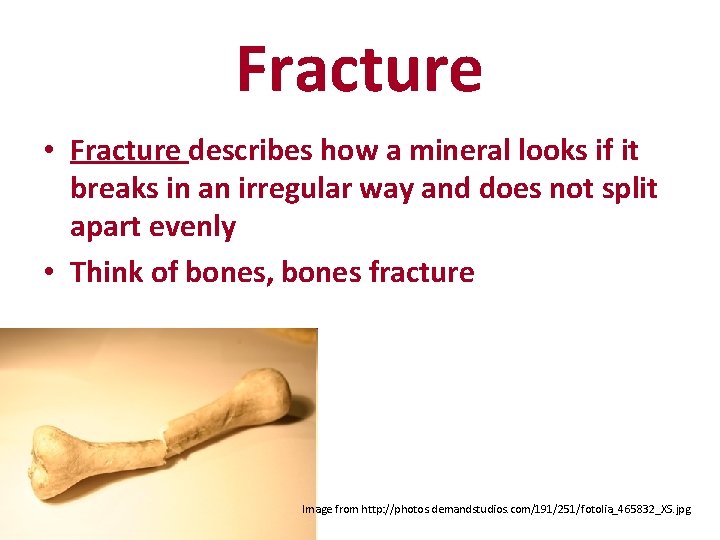
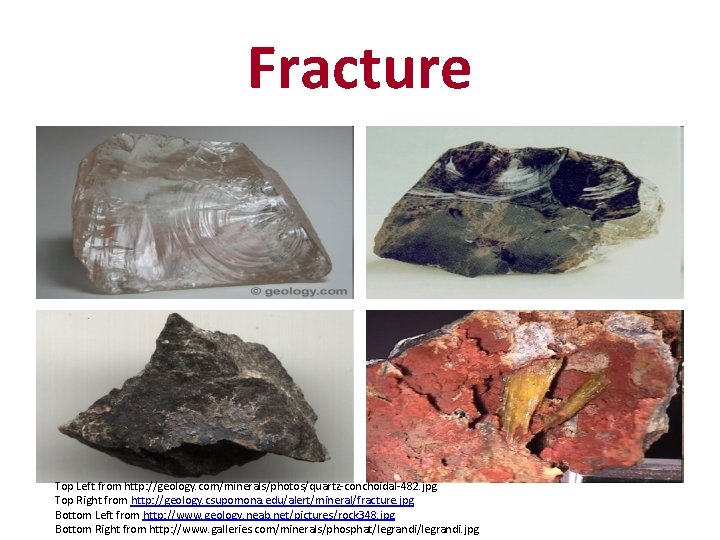
Fracture • Fracture describes how a mineral looks if it breaks in an irregular way and does not split apart evenly • Think of bones, bones fracture Image from http: //photos. demandstudios. com/191/251/fotolia_465832_XS. jpg
Fracture Top Left from http: //geology. com/minerals/photos/quartz-conchoidal-482. jpg Top Right from http: //geology. csupomona. edu/alert/mineral/fracture. jpg Bottom Left from http: //www. geology. neab. net/pictures/rock 348. jpg Bottom Right from http: //www. galleries. com/minerals/phosphat/legrandi. jpg
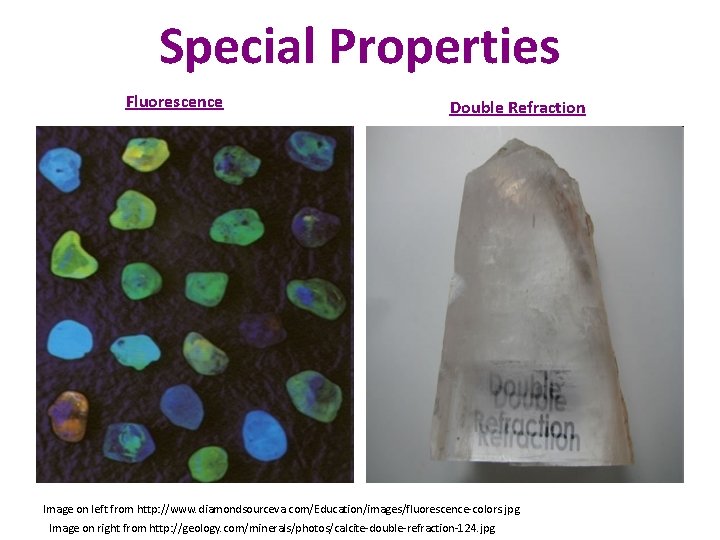
Special Properties • Some minerals have special physical properties that help to identify the minerals, such as • Fluorescence means that mineral can glow under ultraviolet light • Double Refraction produces two images when something is viewed through the mineral
Special Properties Fluorescence Double Refraction Image on left from http: //www. diamondsourceva. com/Education/images/fluorescence-colors. jpg Image on right from http: //geology. com/minerals/photos/calcite-double-refraction-124. jpg