
Minerals Ores and Fossil Fuels EARTHS RESOURCES HAVE

- Slides: 10
Minerals, Ores and Fossil Fuels EARTH’S RESOURCES HAVE PROPERTIES THAT MAKE THEM IMPORTANT AND USEFUL.
Properties that determine the usefulness of an ore or mineral may be identified using a chart, diagram, or dichotomous key. There are two types of properties: 1. Physical Properties 2. Chemical Properties
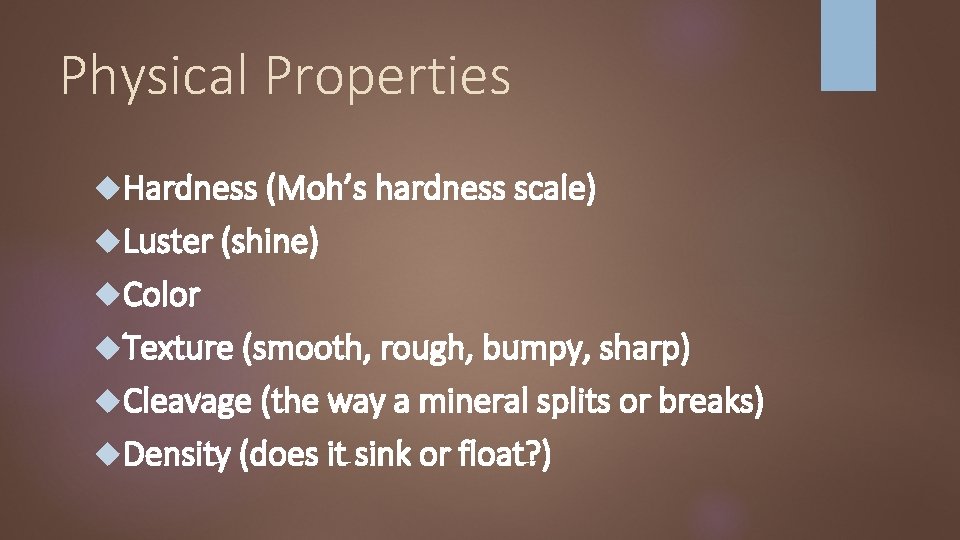
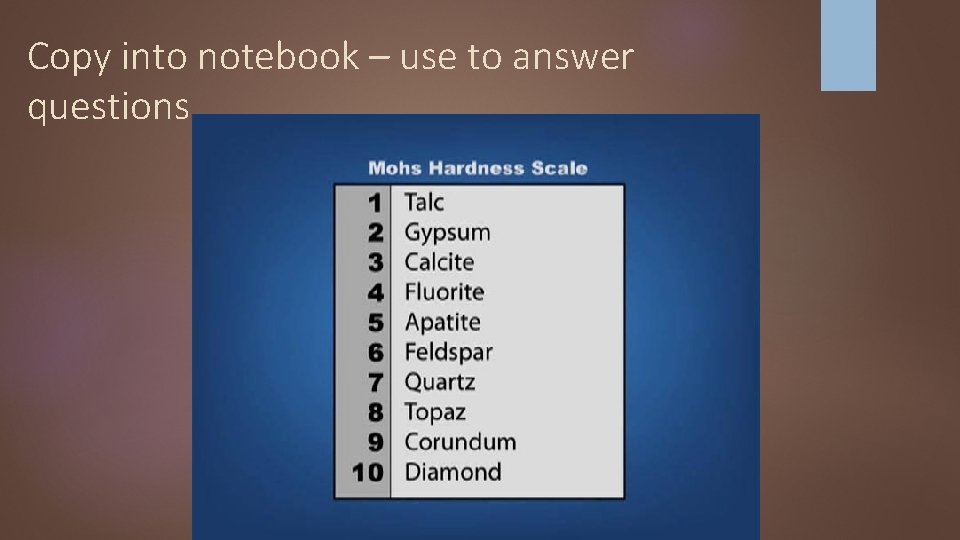
Physical Properties Hardness (Moh’s hardness scale) Luster (shine) Color Texture (smooth, rough, bumpy, sharp) Cleavage (the way a mineral splits or breaks) Density (does it sink or float? )
Copy into notebook – use to answer questions
Questions àCan a Quartz scratch a Diamond? àWhich is harder – Fluorite or Apatite? àWhich mineral can scratch Calcite? àWhich mineral could most easily be made into a powder? àWhich mineral would make the best tool for digging? Worst? àWhich mineral can scratch a Diamond?
Chemical Properties Ability to burn (flammable? ) Reactivity to acids (what happens when HCL is dropped on it? )
Three common Earth resources that have importance based on their properties: Minerals Ores Fossil Fuels
Minerals are: natural inorganic solid materials found on Earth building blocks of rock Each has a specific chemical makeup and set of properties that determine their use and value
Ores Minerals that are mined Contain useful metals and nonmetals Examples: Kimberlite –diamond Iron Ore---Iron
Fossil Fuels Natural Fuels Come from the remains of living things Give off energy when they are burned Example: Coal Oil Natural gas