
Minerals Naturally occurring Stable at room temperature Represented
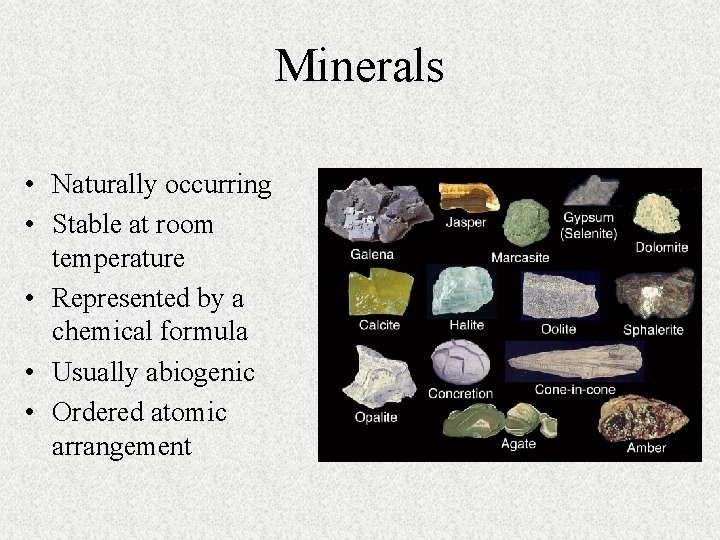
Minerals • Naturally occurring • Stable at room temperature • Represented by a chemical formula • Usually abiogenic • Ordered atomic arrangement
General Facts about Minerals • Over 4, 900 • Only a few are made of one element, such as sulfur, gold. copper, and graphite (carbon) • Most are compounds, especially the silicate group (Si, O). • Other important groups are oxides, carbonates, and sulfides.
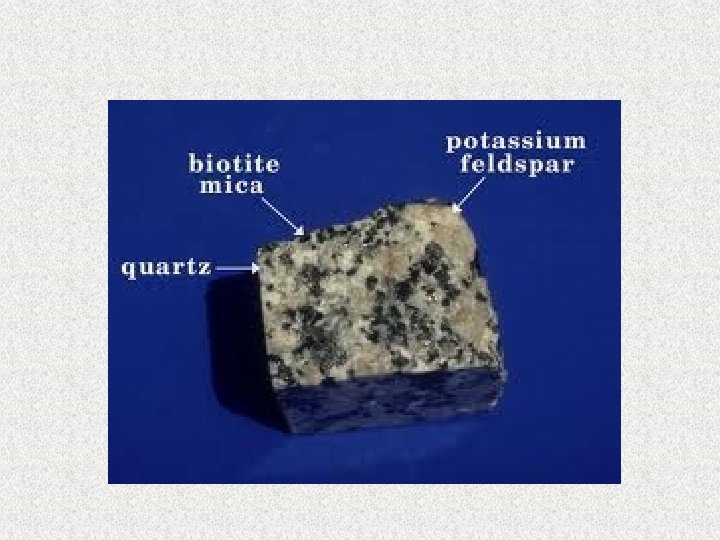
Less than a dozen are common in most rocks • Quartz • Feldspar (group) • Muscovite (white mica) • Biotite (black mica) • Calcite • Pyroxene • Olivine • Amphibole (group) • Magnetite, limonite, and other iron oxides • Pyrite
Common Uses • • • Aluminum--packaging, transport, building Beryllium--gemstones, fluorescent lights Copper--electric cables, wires, switches Feldspar--glass and ceramics Iron--buildings, automobiles, magnets Calcite--toothpaste, construction
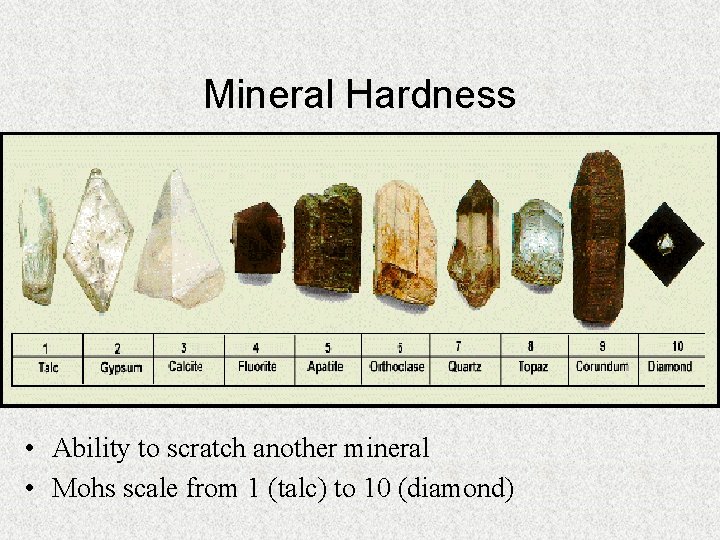
Mineral Hardness • Ability to scratch another mineral • Mohs scale from 1 (talc) to 10 (diamond)
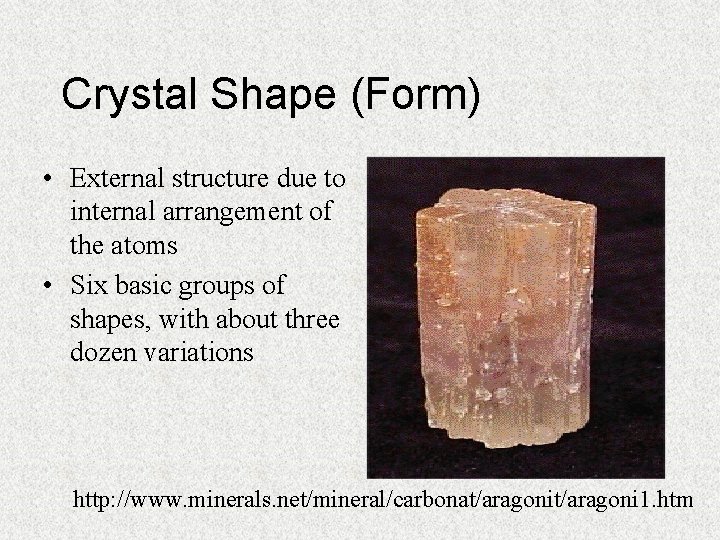
Crystal Shape (Form) • External structure due to internal arrangement of the atoms • Six basic groups of shapes, with about three dozen variations http: //www. minerals. net/mineral/carbonat/aragoni 1. htm
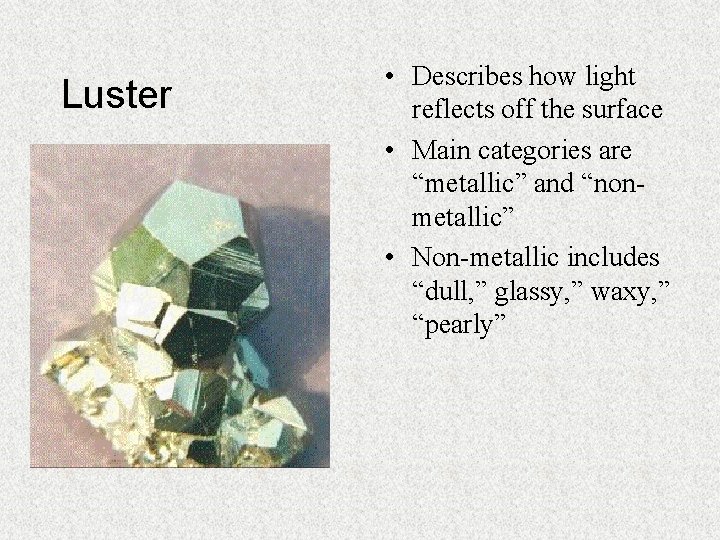
Luster • Describes how light reflects off the surface • Main categories are “metallic” and “nonmetallic” • Non-metallic includes “dull, ” glassy, ” waxy, ” “pearly”
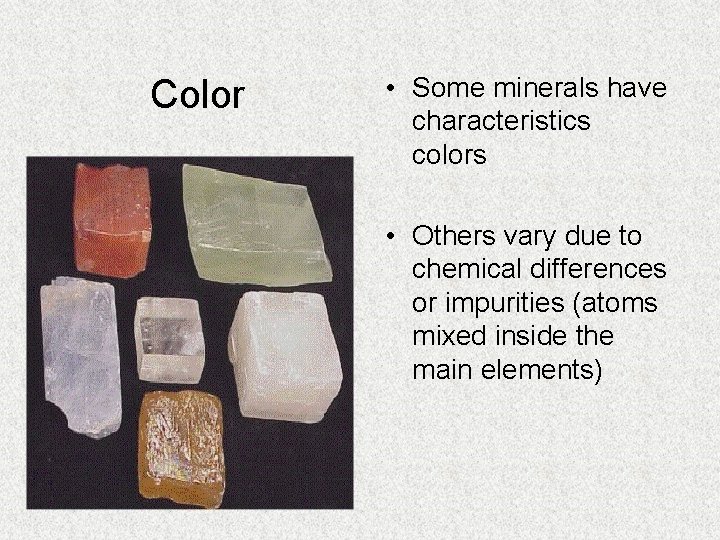
Color • Some minerals have characteristics colors • Others vary due to chemical differences or impurities (atoms mixed inside the main elements)
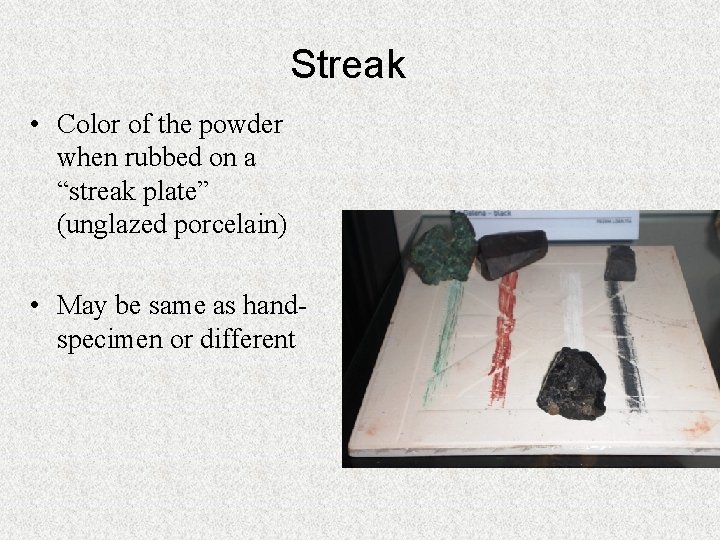
Streak • Color of the powder when rubbed on a “streak plate” (unglazed porcelain) • May be same as handspecimen or different
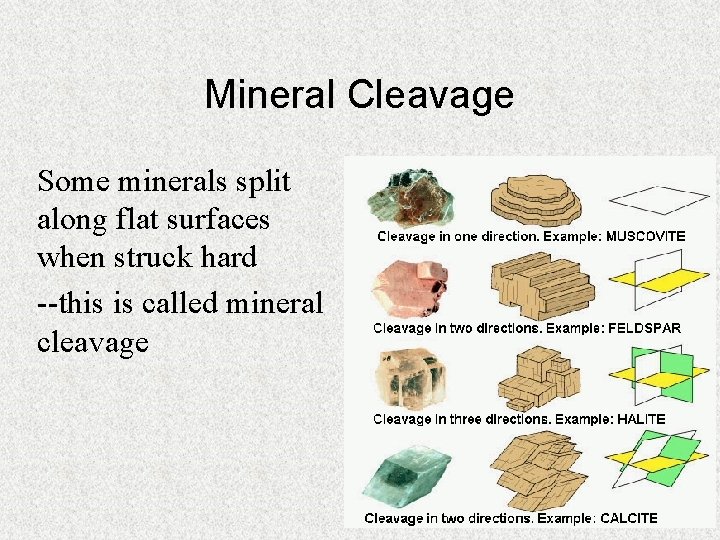
Mineral Cleavage Some minerals split along flat surfaces when struck hard --this is called mineral cleavage
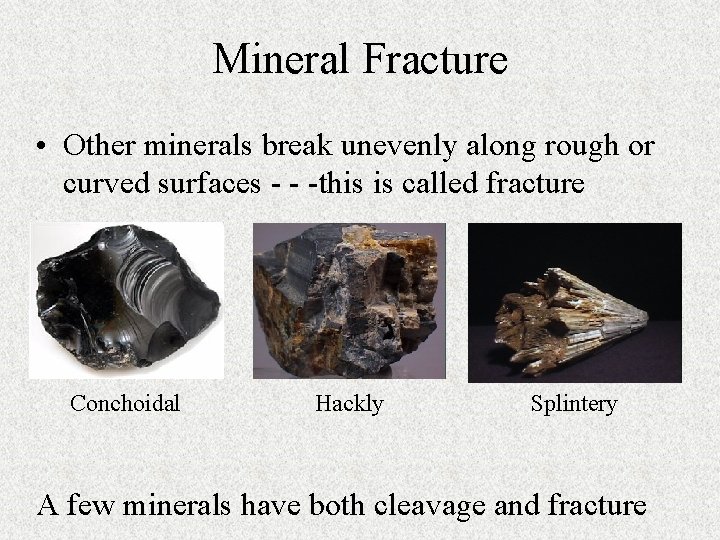
Mineral Fracture • Other minerals break unevenly along rough or curved surfaces - - -this is called fracture Conchoidal Hackly Splintery A few minerals have both cleavage and fracture
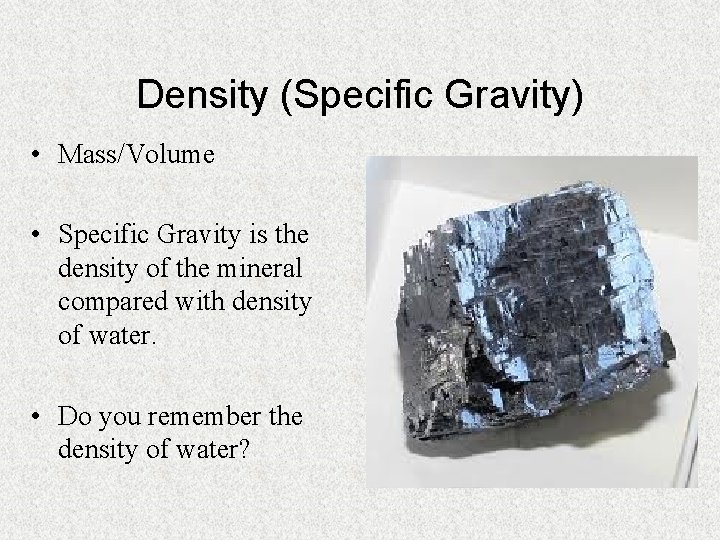
Density (Specific Gravity) • Mass/Volume • Specific Gravity is the density of the mineral compared with density of water. • Do you remember the density of water?
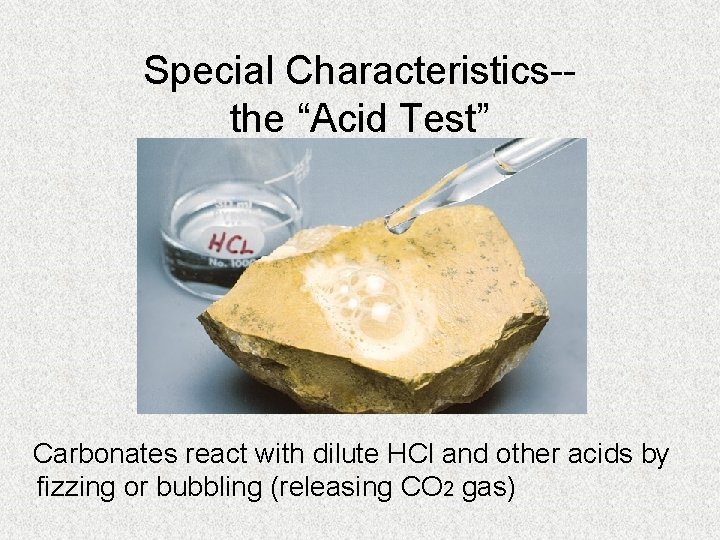
Special Characteristics-the “Acid Test” Carbonates react with dilute HCl and other acids by fizzing or bubbling (releasing CO 2 gas)
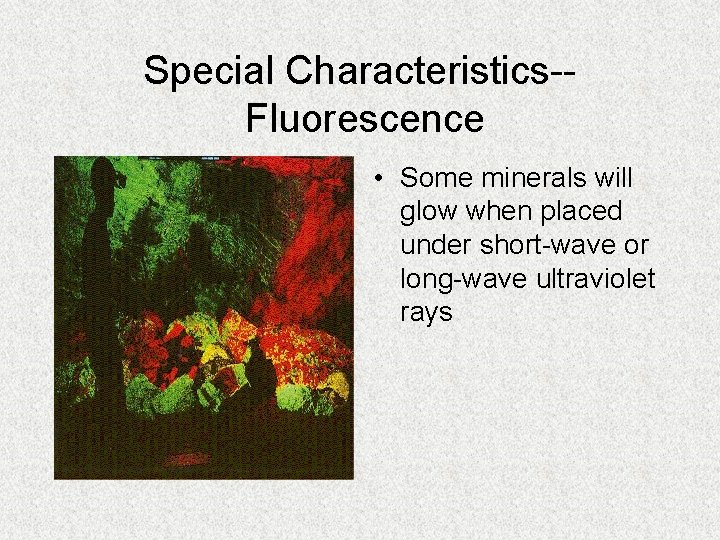
Special Characteristics-Fluorescence • Some minerals will glow when placed under short-wave or long-wave ultraviolet rays
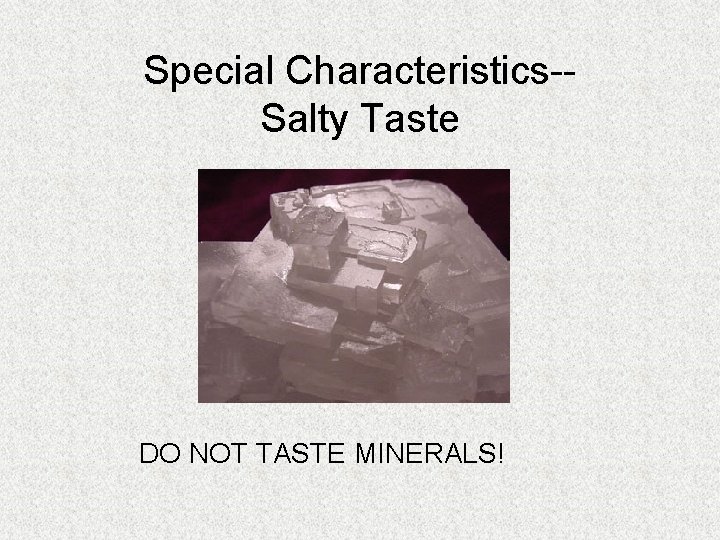
Special Characteristics-Salty Taste DO NOT TASTE MINERALS!
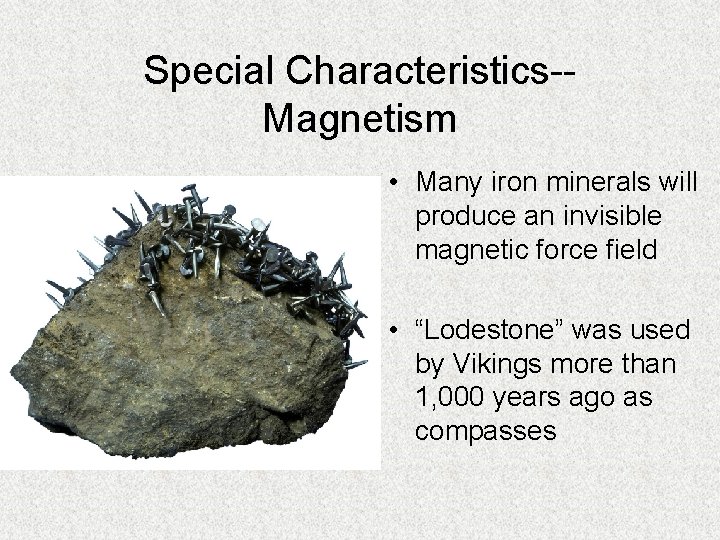
Special Characteristics-Magnetism • Many iron minerals will produce an invisible magnetic force field • “Lodestone” was used by Vikings more than 1, 000 years ago as compasses
Two Main Groups Silicates Non-Silicates
- Slides: 18