
Minerals Minerals in human body More than 25
Minerals
Minerals in human body § More than 25 have been isolated from the body. § 22 elements have been shown to be essential (excluding C, H, and O) § Minerals make up about 4 to 5% of body weight (for a 70 kg individual: 2. 8 kg)

Minerals (Function) Minerals = Inorganic elemental atoms that are essential nutrients and electrolytes. Not changed by digestion or metabolism. 1. Nutritionally essential § Serve both structural and functional roles in the body. – Structural minerals (calcium and phosphorus) are the major inorganic matrix of bone and teeth. – Functional minerals (calcium, phosphorus and all the others) 1. Participation in all cellular activities 2. Serve as enzyme cofactors or in oxidation/reduction reactions. 3. Maintain the delicate cellular fluid balance 4. Maintain the acid-base balance in body fluids 5. Control the osmolarity in the fluid compartment 6. provide for electrochemical nerve activity 7. Regulate muscle tone and activity (including organ muscles like heart, stomach, liver, etc
Minerals (Function) 2. Nutritionally beneficial § Effects of boron in the presence of Vitamin D depletion 3. Pharmacologically beneficial § Fluoride to prevent dental caries § Lithium salts to treat maniac depression
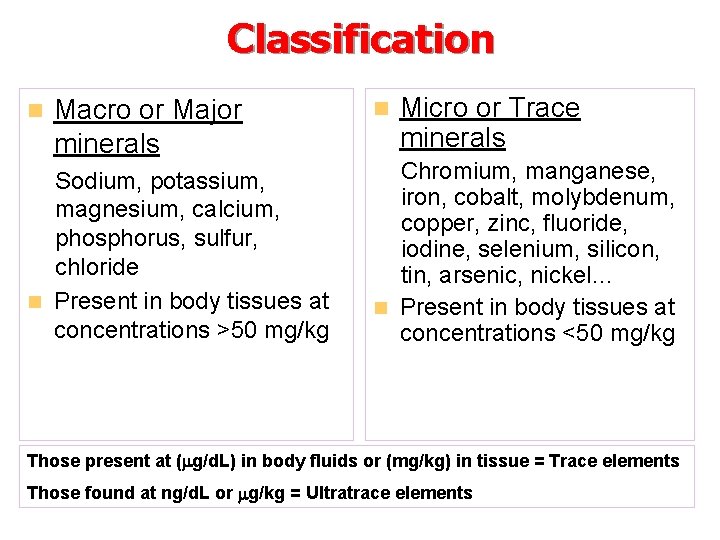
Classification n Macro or Major minerals Sodium, potassium, magnesium, calcium, phosphorus, sulfur, chloride n Present in body tissues at concentrations >50 mg/kg n Micro or Trace minerals Chromium, manganese, iron, cobalt, molybdenum, copper, zinc, fluoride, iodine, selenium, silicon, tin, arsenic, nickel… n Present in body tissues at concentrations <50 mg/kg Those present at ( g/d. L) in body fluids or (mg/kg) in tissue = Trace elements Those found at ng/d. L or g/kg = Ultratrace elements
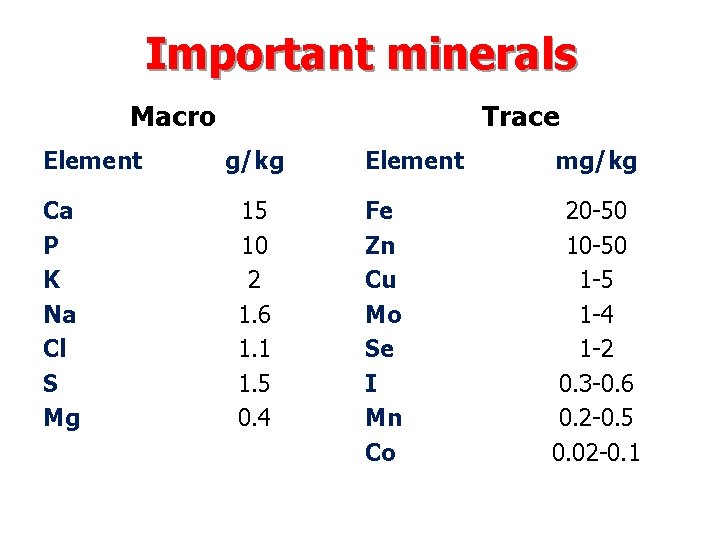
Important minerals Macro Element Ca P K Na Cl S Mg Trace g/kg 15 10 2 1. 6 1. 1 1. 5 0. 4 Element mg/kg Fe Zn Cu Mo Se I Mn Co 20 -50 1 -5 1 -4 1 -2 0. 3 -0. 6 0. 2 -0. 5 0. 02 -0. 1
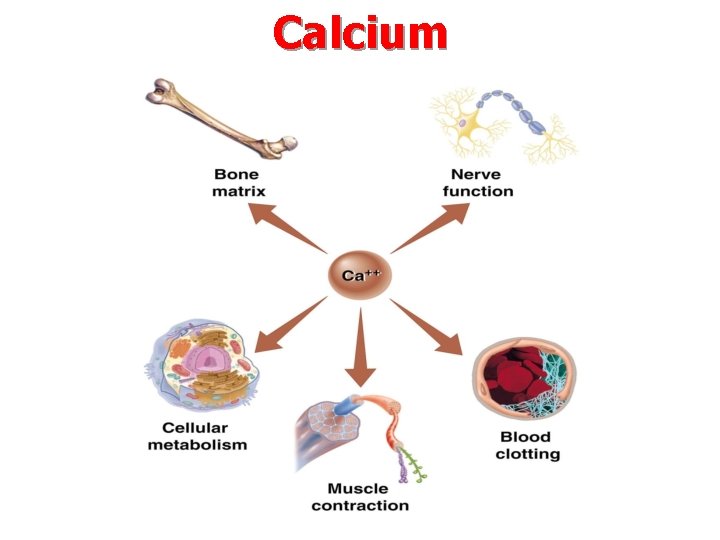
Calcium
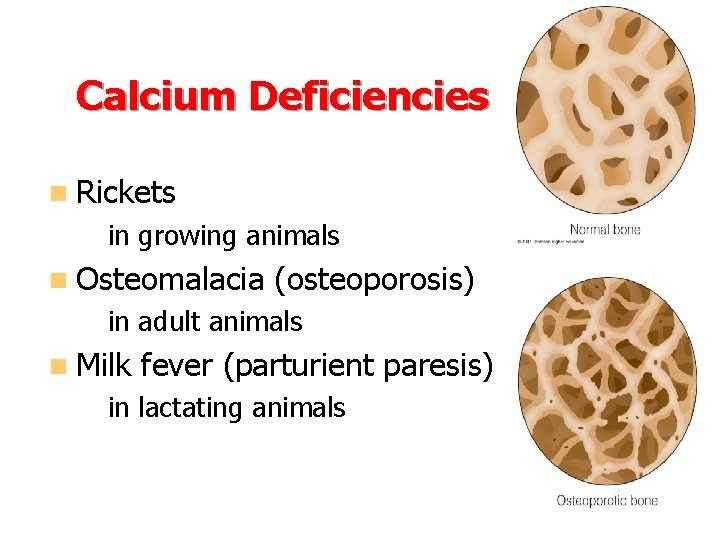
Calcium Deficiencies n Rickets – in growing animals n Osteomalacia (osteoporosis) – in adult animals n Milk fever (parturient paresis) – in lactating animals
Phosphorus (P) Functions of Phosphorus n n n n Component of cell membranes & walls (Phospholipids) Structural & functional roles in body Component of Nucleic acids and ATP Acid-base balance High energy phosphate compounds Protein synthesis important in energy metabolism and Energy transfer Maintenance of blood p. H Deficiencies include Rickets or osteomalacia Pica (depraved appetite)
Magnesium n Functions in more than 300 enzyme systems: – cofactor of all enzymes involved in phosphate transfer reactions that use ATP and other nucleotide triphosphates such as: - phosphatases -Pyrophosphatases n Most metabolically active tissues: brain, heart, liver and kidney – Essential for the conversion of vitamin D to its biologically active form to help absorb and use calcium. – Prevents cardiovascular disease. CNS (central nervous system): n Prevents the calcification of soft tissue n Bone strength and springiness n
Magnesium n Second most plentiful cation in intracellular fluids. n Deficiencies § Hypomagnesemic tetany § poor nervous and muscular control § Abnormal nerve & muscle function
Functions of Trace Minerals in the Body n Cofactors – Metalloenzyme n Components of nonenzymatic molecules n Provide structure to mineralized tissues
Iron (Fe) Functions of Iron n Oxygen n Iron transport: hemoglobin reservoir: myoglobin n Cellular energy metabolism
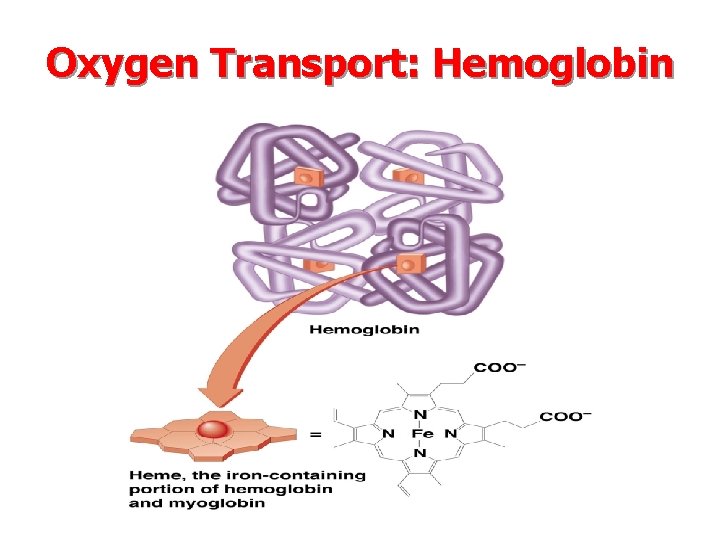
Oxygen Transport: Hemoglobin
Iron deficiency Initial symptoms are vague and ill-defined § easy fatigability § lack of appetite § headache § dizziness § Palpitations § decreased exercise tolerance. § Impaired intellectual abilities in children then: hypochromic-microcytic anemia § microcytosis (small RBCs) § hypochromia (poor fill of hemoglobin) § poikilocytosis (bizarre shapes) § anisocytosis (variable sizes) Low Fe levels correlated with akathisia (Greek word meaning “can’t sit down”) or the “restless leg syndrome” (RLS) Over supplementation with Fe causes recurrent illnesses in athletes and infants.
Copper (Cu) Cu functions § § § Energy Production Connective tissue formation Iron metabolism Melanin synthesis Antioxidant functions Regulation of gene expression
Copper Deficiency n Anemia n Bone disorders n
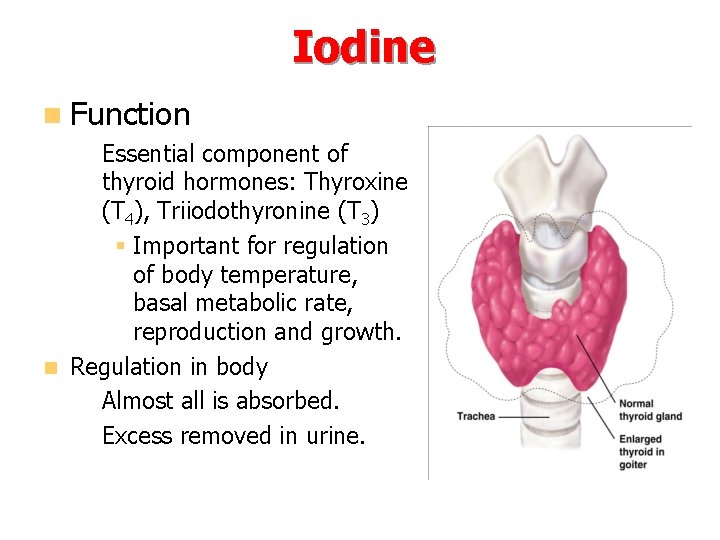
Iodine n Function – Essential component of thyroid hormones: Thyroxine (T 4), Triiodothyronine (T 3) § Important for regulation of body temperature, basal metabolic rate, reproduction and growth. n Regulation in body – Almost all is absorbed. – Excess removed in urine.
Iodine Deficiency n Goiter (less severe) – Enlarged thyroid gland due to body’s attempt to increase thyroid hormone production n Cretinism (more severe) – Severe iodine deficiency during pregnancy serious problems in baby § Stunted growth, deaf, mute, mentally retarded. n To prevent the development of endemic goiter, table salt has been spiked with sodium iodide.
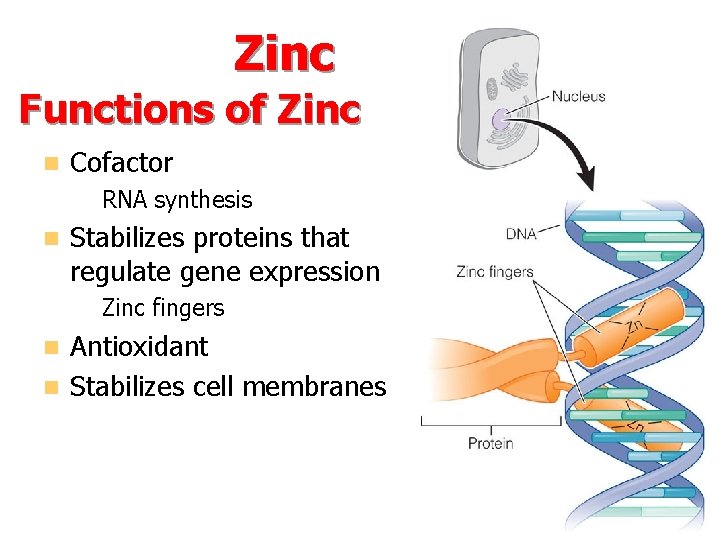
Zinc Functions of Zinc n Cofactor – RNA synthesis n Stabilizes proteins that regulate gene expression – Zinc fingers Antioxidant n Stabilizes cell membranes n
Biological roles Part of every cell. Important for body immunity and strength. Male sexual function, male hormone metabolism, sperm formation, sperm motility. Deficiency may cause infertility. n Vital role during pregnancy n n n Zinc Deficiency Deficiencies include poor growth, delayed wound healing, Skin irritations, diarrhea, impairment of sexual development
Bioenergetics and Thermodynamics § § § Types of Chemical transformations within the cells Organisms Transform Energy Laws of Thermodynamics Free Energy Endergonic and Exergonic Reactions
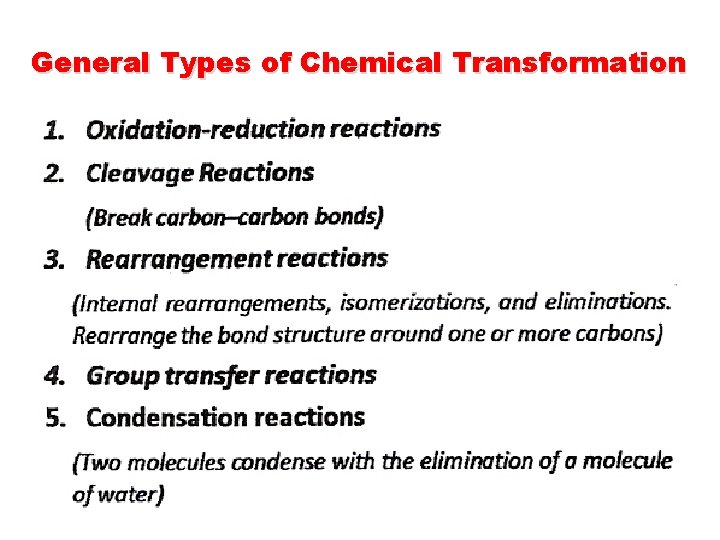
General Types of Chemical Transformation
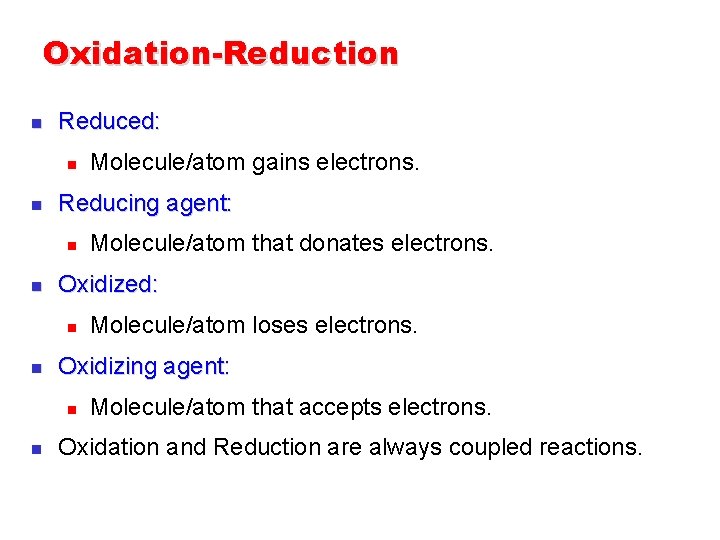
Oxidation-Reduction n Reduced: n n Reducing agent: n n Molecule/atom loses electrons. Oxidizing agent: n n Molecule/atom that donates electrons. Oxidized: n n Molecule/atom gains electrons. Molecule/atom that accepts electrons. Oxidation and Reduction are always coupled reactions.
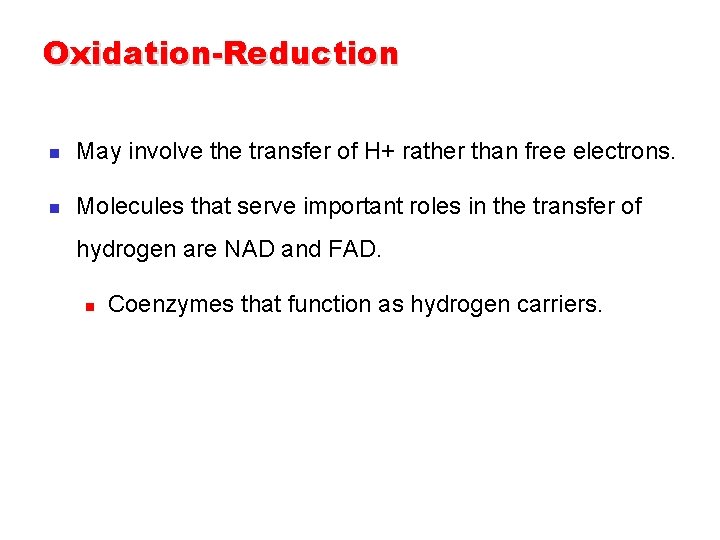
Oxidation-Reduction n May involve the transfer of H+ rather than free electrons. n Molecules that serve important roles in the transfer of hydrogen are NAD and FAD. n Coenzymes that function as hydrogen carriers.
- Slides: 25