
Minerals Learning objectives Understand that plants require mineral
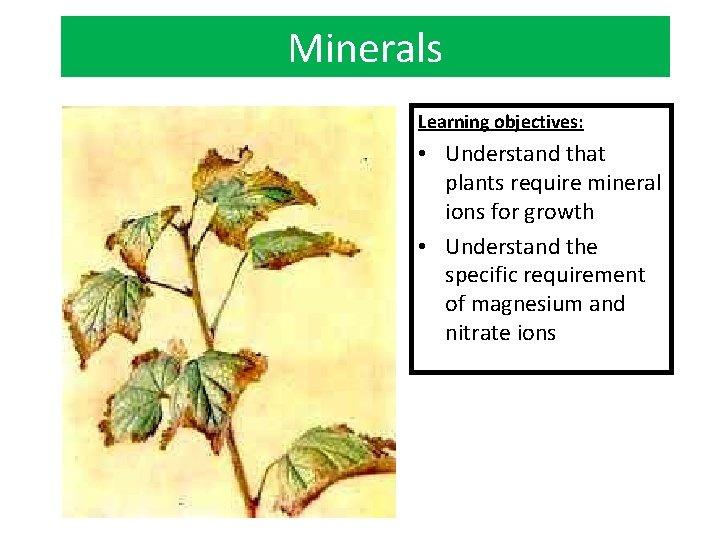
Minerals Learning objectives: • Understand that plants require mineral ions for growth • Understand the specific requirement of magnesium and nitrate ions
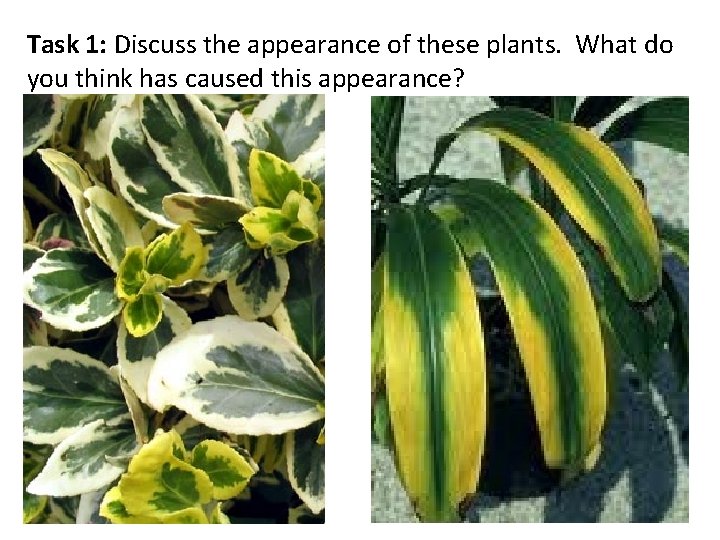
Task 1: Discuss the appearance of these plants. What do you think has caused this appearance?
Minerals Although plants can produce their own carbohydrates they need other substances for healthy growth. Essential plant nutrients include: • Nitrogen (nitrates) • Magnesium (magnesium ions) • Potassium (potassium ions) • Phosphorous (phosphates)
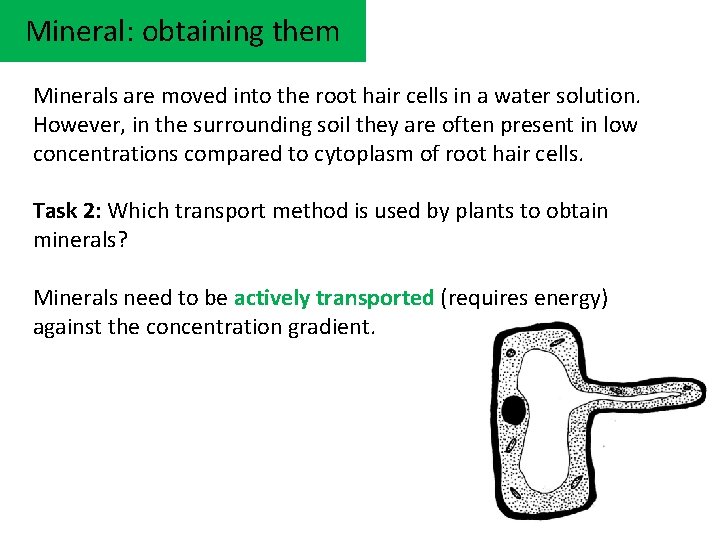
Mineral: obtaining them Minerals are moved into the root hair cells in a water solution. However, in the surrounding soil they are often present in low concentrations compared to cytoplasm of root hair cells. Task 2: Which transport method is used by plants to obtain minerals? Minerals need to be actively transported (requires energy) against the concentration gradient.
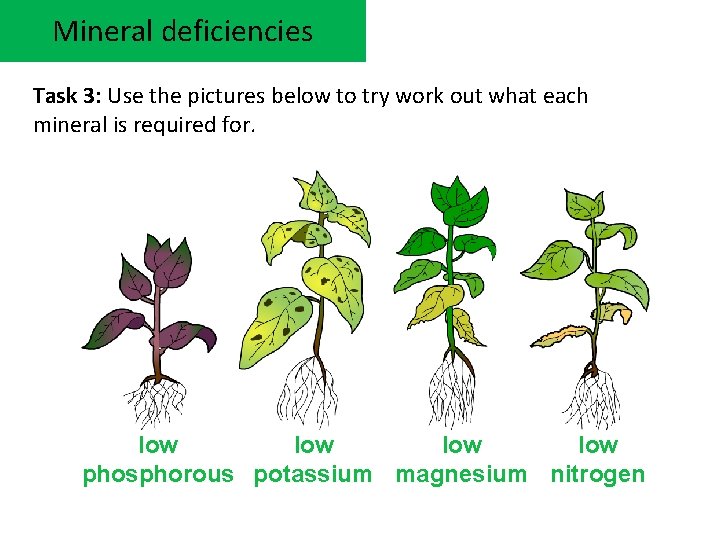
Mineral deficiencies Task 3: Use the pictures below to try work out what each mineral is required for. low low phosphorous potassium magnesium nitrogen

Nitrogen (nitrates) • Nitrates are used to make amino acids which are the building blocks of proteins. • This includes producing enzymes which cells need to function. • Nitrates are also needed to make DNA and some hormones. DEFFICIENCY: Plants with low nitrate levels have older leaves that turn yellow and die, growth is also stunted. low nitrogen
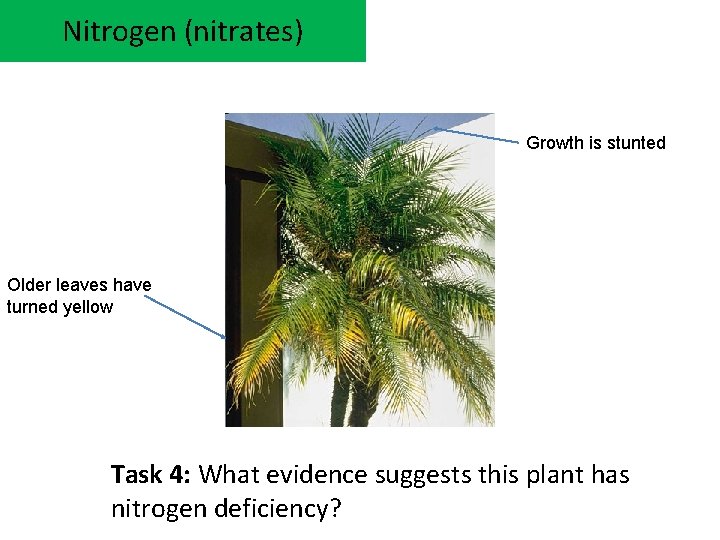
Nitrogen (nitrates) Growth is stunted Older leaves have turned yellow Task 4: What evidence suggests this plant has nitrogen deficiency?
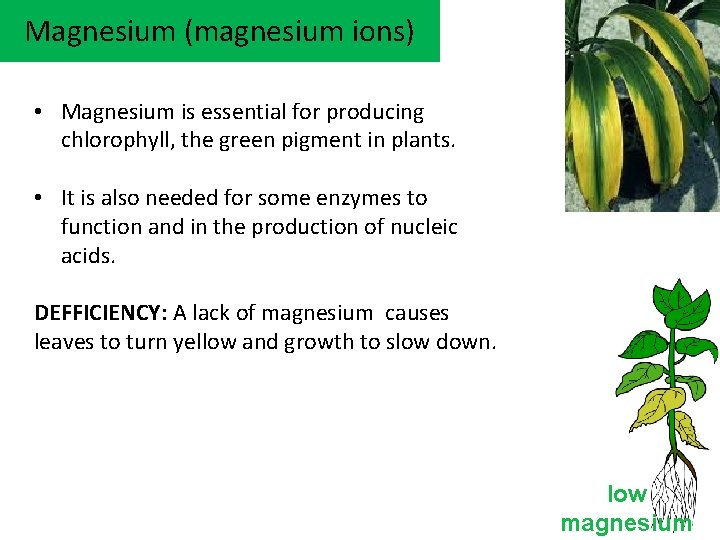
Magnesium (magnesium ions) • Magnesium is essential for producing chlorophyll, the green pigment in plants. • It is also needed for some enzymes to function and in the production of nucleic acids. DEFFICIENCY: A lack of magnesium causes leaves to turn yellow and growth to slow down. low magnesium
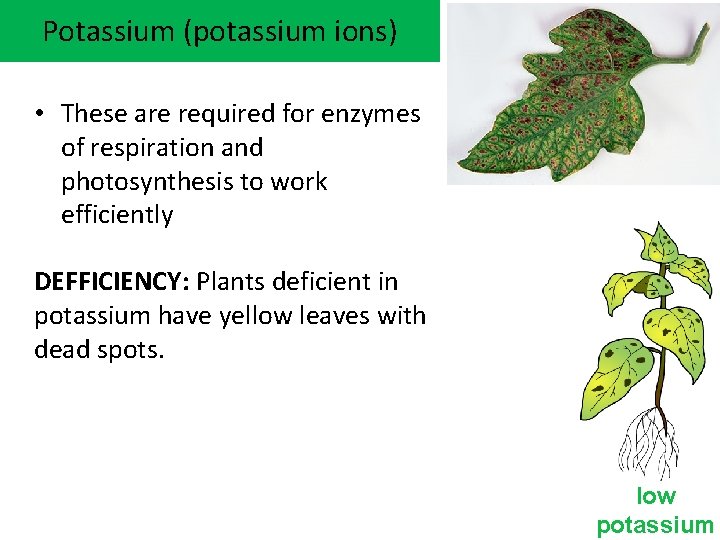
Potassium (potassium ions) • These are required for enzymes of respiration and photosynthesis to work efficiently DEFFICIENCY: Plants deficient in potassium have yellow leaves with dead spots. low potassium
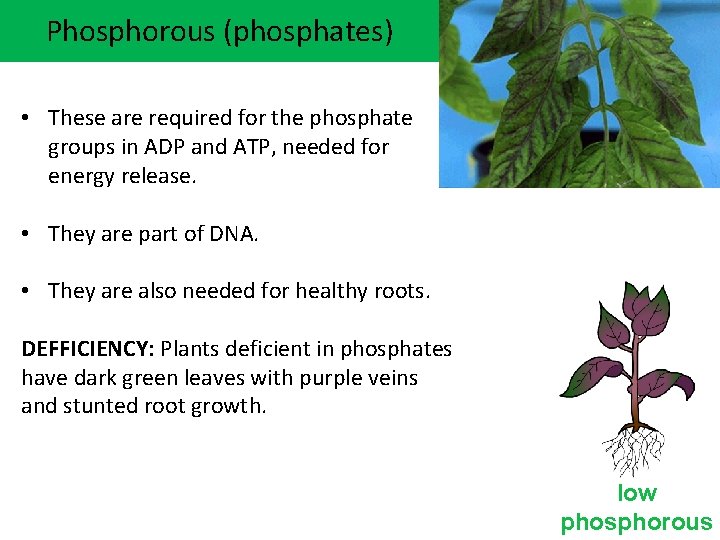
Phosphorous (phosphates) • These are required for the phosphate groups in ADP and ATP, needed for energy release. • They are part of DNA. • They are also needed for healthy roots. DEFFICIENCY: Plants deficient in phosphates have dark green leaves with purple veins and stunted root growth. low phosphorous
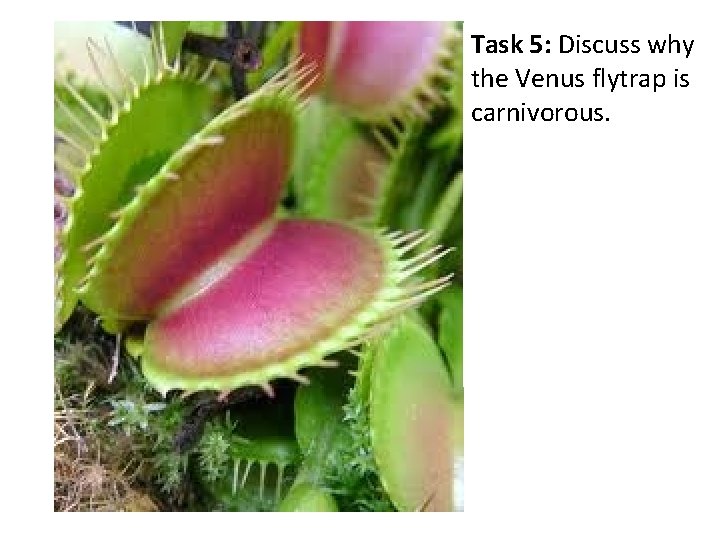
Task 5: Discuss why the Venus flytrap is carnivorous.
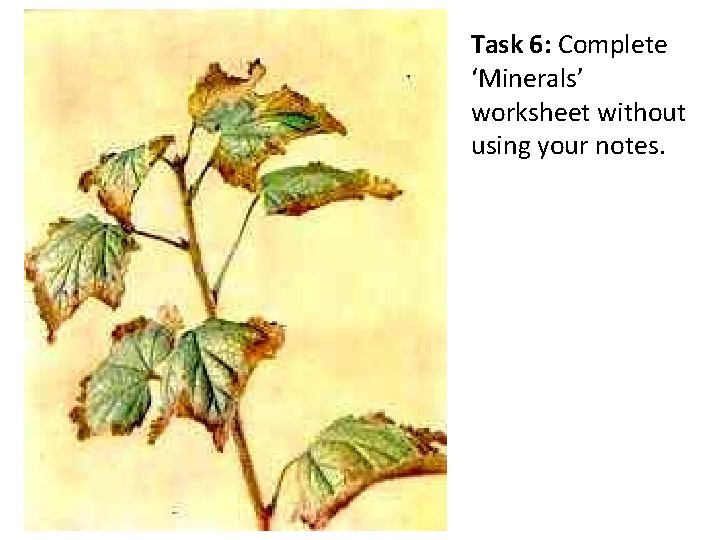
Task 6: Complete ‘Minerals’ worksheet without using your notes.
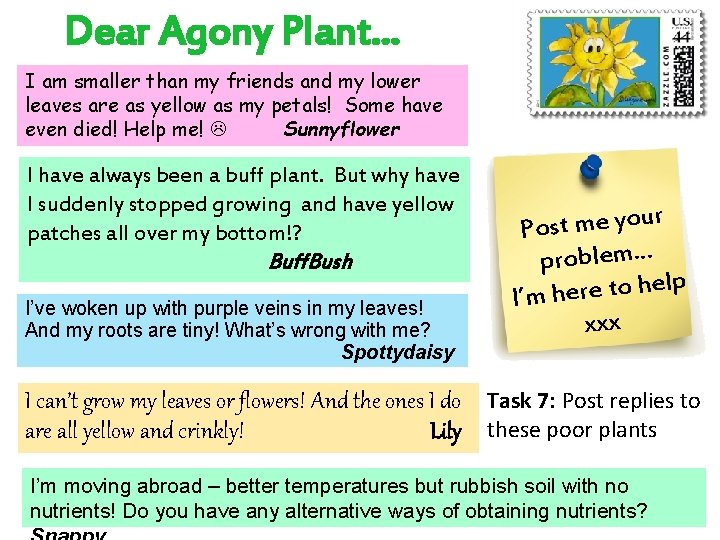
Dear Agony Plant. . . I am smaller than my friends and my lower leaves are as yellow as my petals! Some have even died! Help me! Sunnyflower I have always been a buff plant. But why have I suddenly stopped growing and have yellow patches all over my bottom!? Buff. Bush I’ve woken up with purple veins in my leaves! And my roots are tiny! What’s wrong with me? Spottydaisy r u o y e m t s Po problem. . . lp e h o t e r e h I’m xxx I can’t grow my leaves or flowers! And the ones I do Task 7: Post replies to are all yellow and crinkly! Lily these poor plants I’m moving abroad – better temperatures but rubbish soil with no nutrients! Do you have any alternative ways of obtaining nutrients?
Thumbs up or down Learning objectives: • Understand that plants require mineral ions for growth • Understand the specific requirement of magnesium and nitrate ions
- Slides: 14