
Minerals Chapter 9 Mineral a naturally occurring solid
- Slides: 30
Minerals Chapter 9
Mineral -a naturally occurring solid -inorganic (not made of living things) -has a crystal structure
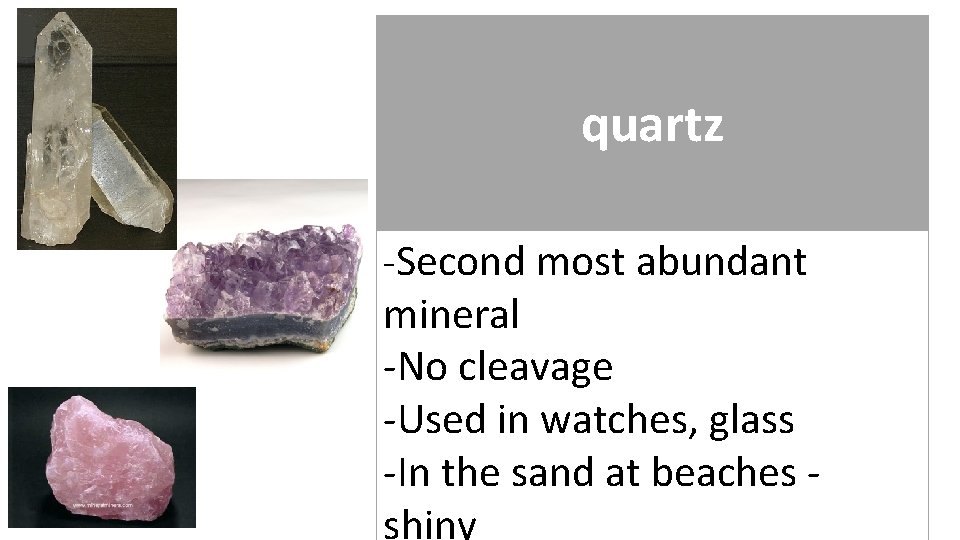
Color -A property of minerals -Least reliable property quartz can come in pink, clear, milky white
texture -a property of minerals -describes how the mineral feels smooth, sticky, grainy, powdery
Luster -property of a mineral -how light reflects off a mineral -metallic or non-metallic
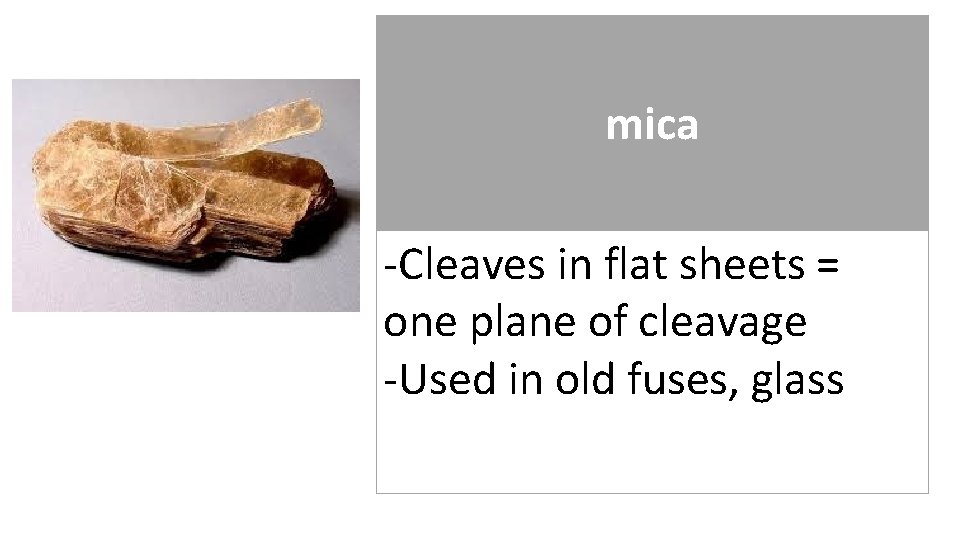
cleavage -property of minerals -how many planes a mineral breaks into -mica breaks into sheets- one plane of cleavage
hardness -a property of minerals -how hard the mineral is -Moh’s hardness scale goes from 1 -10 1= soft (can be scratched by fingernail)…. . such as talc 3=can be scratched by copper …. calcite 4= can be sctratched by steel –nail…. . fluorite 6= can scratch glass…feldspar 10 = hardest…. such as diamond
streak -property of minerals -color of the powder left on an unglazed porcelain tile
Oddball properties -Magnetic -Density of the mineral -Florescent
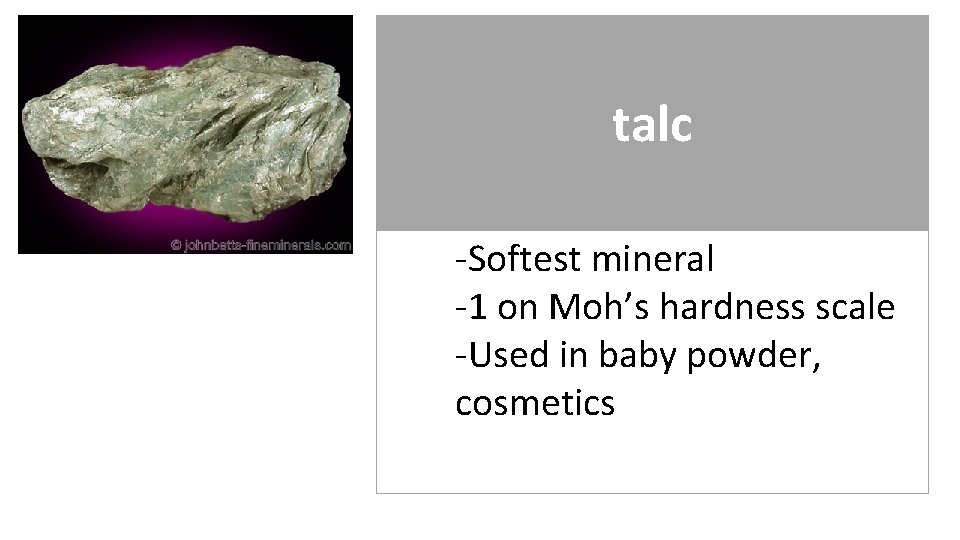
talc -Softest mineral -1 on Moh’s hardness scale -Used in baby powder, cosmetics
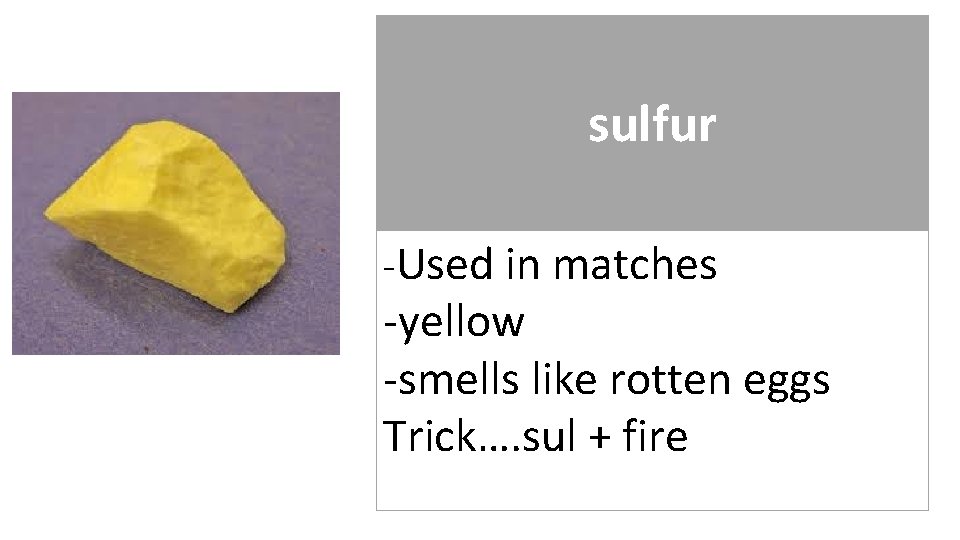
sulfur -Used in matches -yellow -smells like rotten eggs Trick…. sul + fire
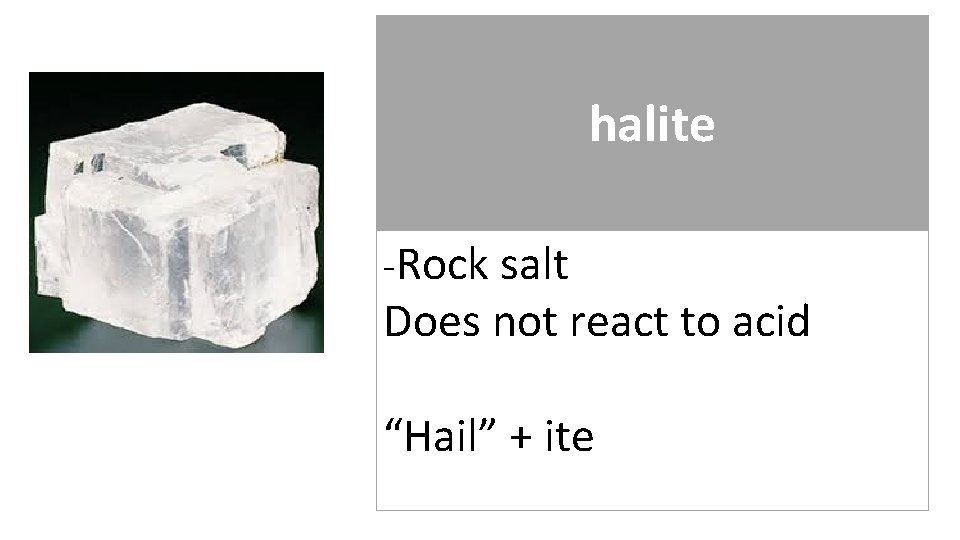
halite -Rock salt Does not react to acid “Hail” + ite
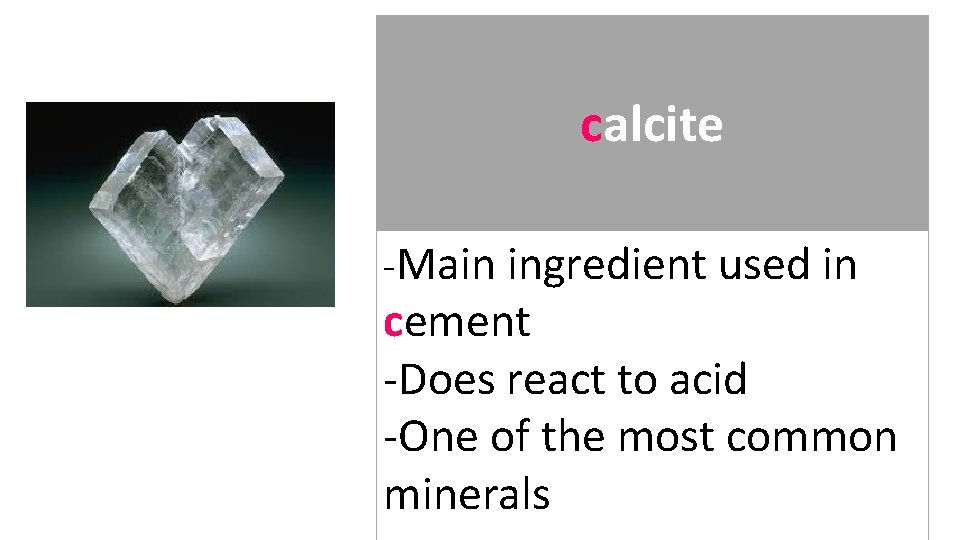
calcite -Main ingredient used in cement -Does react to acid -One of the most common minerals
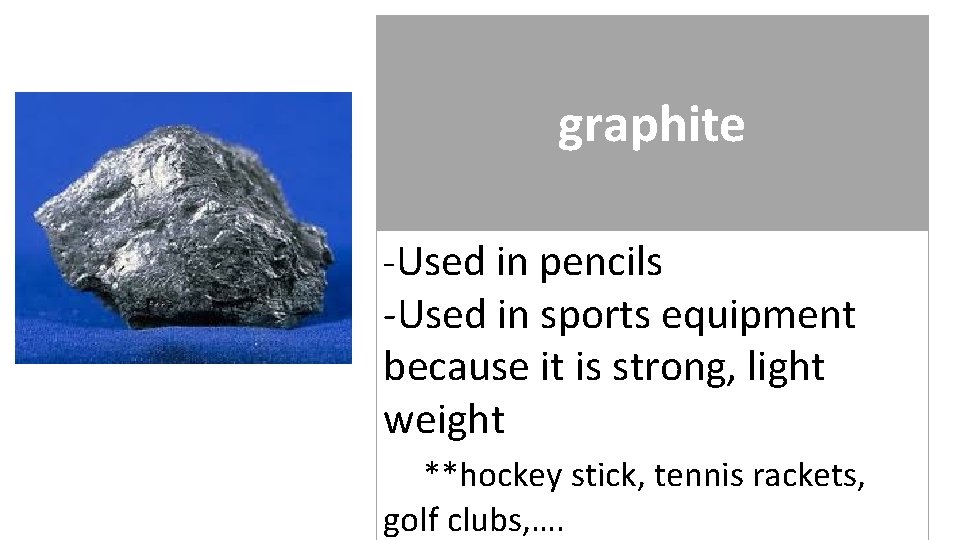
graphite -Used in pencils -Used in sports equipment because it is strong, light weight **hockey stick, tennis rackets, golf clubs, ….
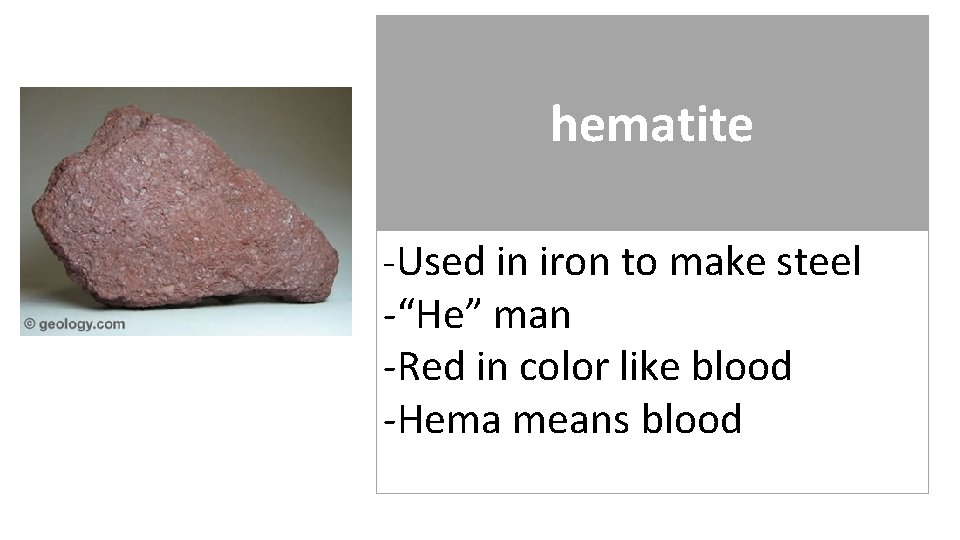
hematite -Used in iron to make steel -“He” man -Red in color like blood -Hema means blood
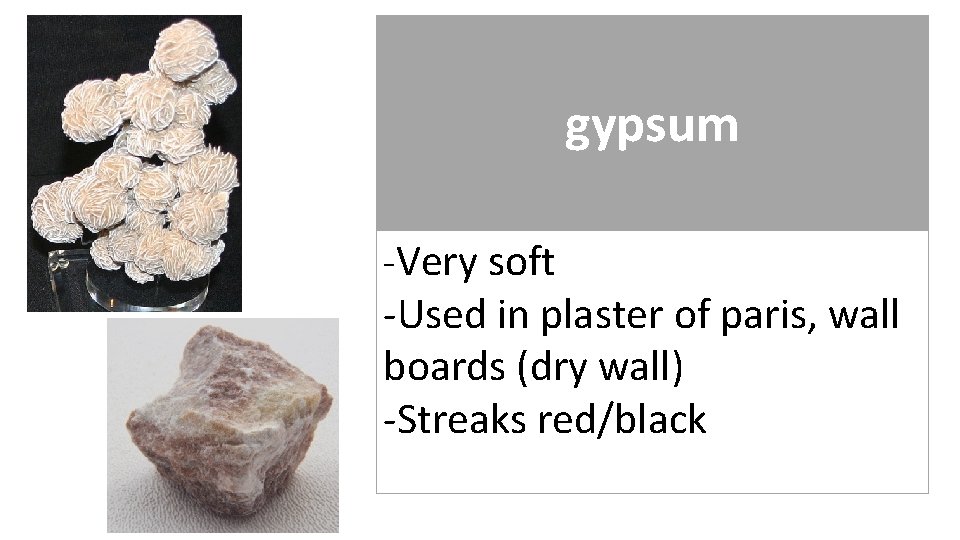
gypsum -Very soft -Used in plaster of paris, wall boards (dry wall) -Streaks red/black
quartz -Second most abundant mineral -No cleavage -Used in watches, glass -In the sand at beaches shiny
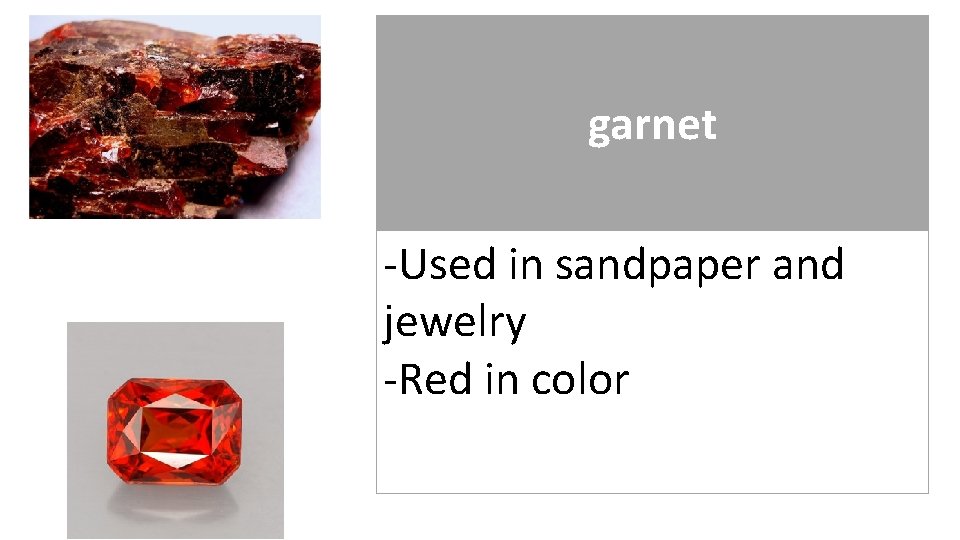
garnet -Used in sandpaper and jewelry -Red in color
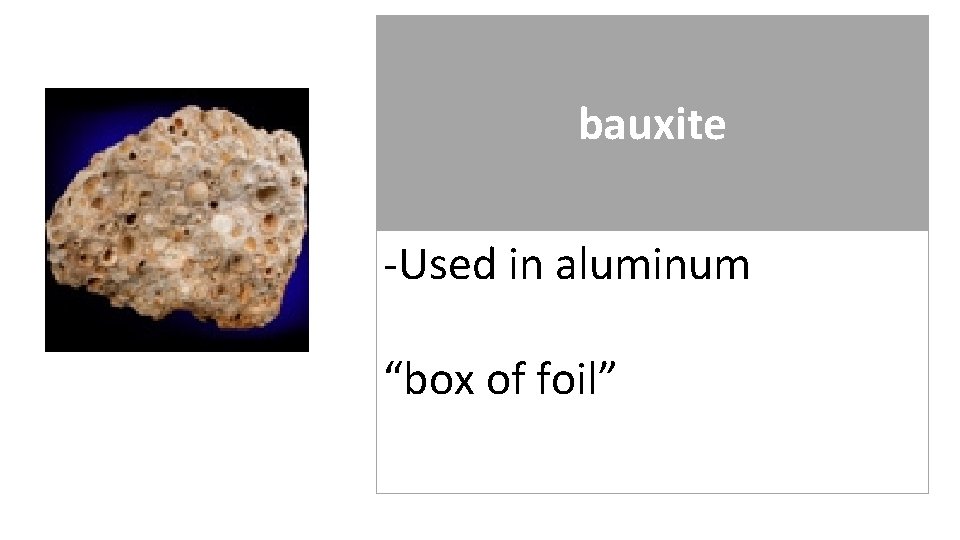
bauxite -Used in aluminum “box of foil”
mica -Cleaves in flat sheets = one plane of cleavage -Used in old fuses, glass
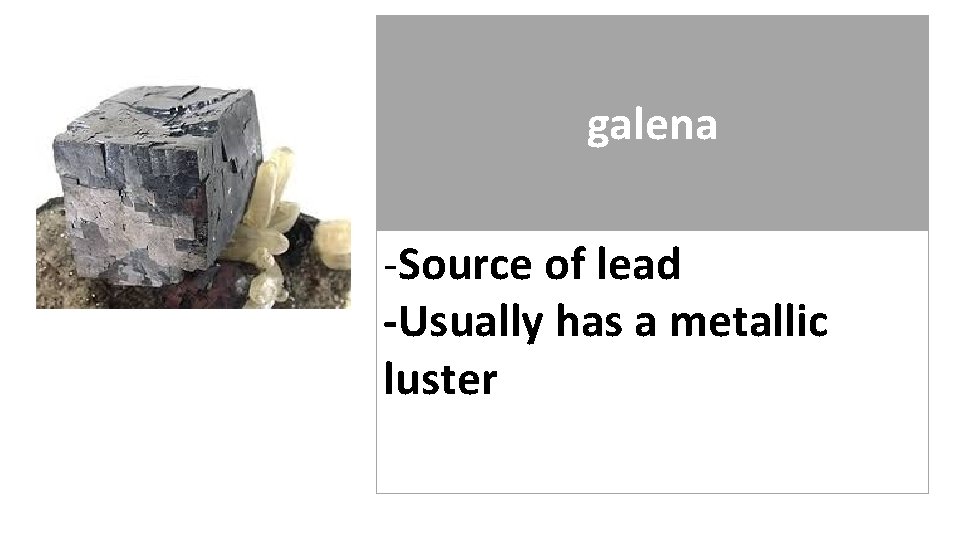
galena -Source of lead -Usually has a metallic luster
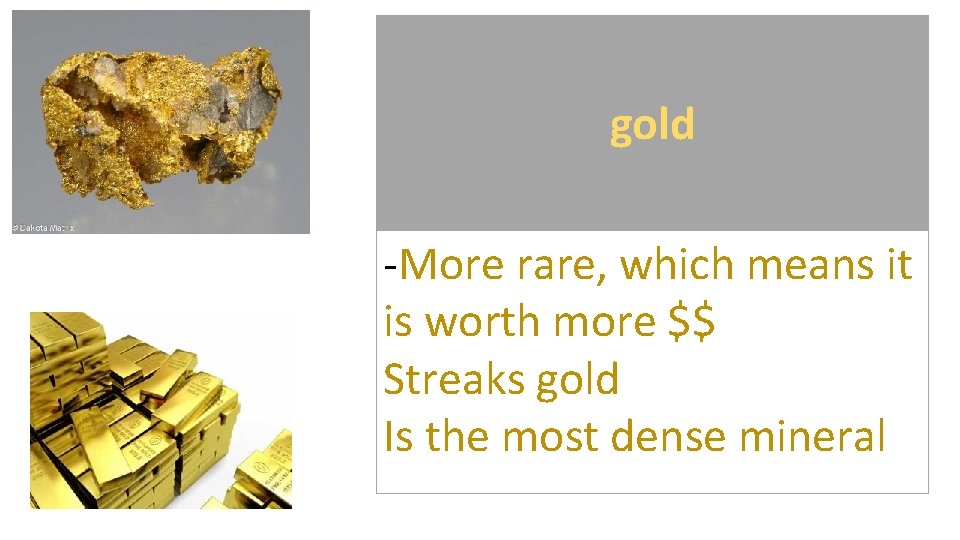
gold -More rare, which means it is worth more $$ Streaks gold Is the most dense mineral
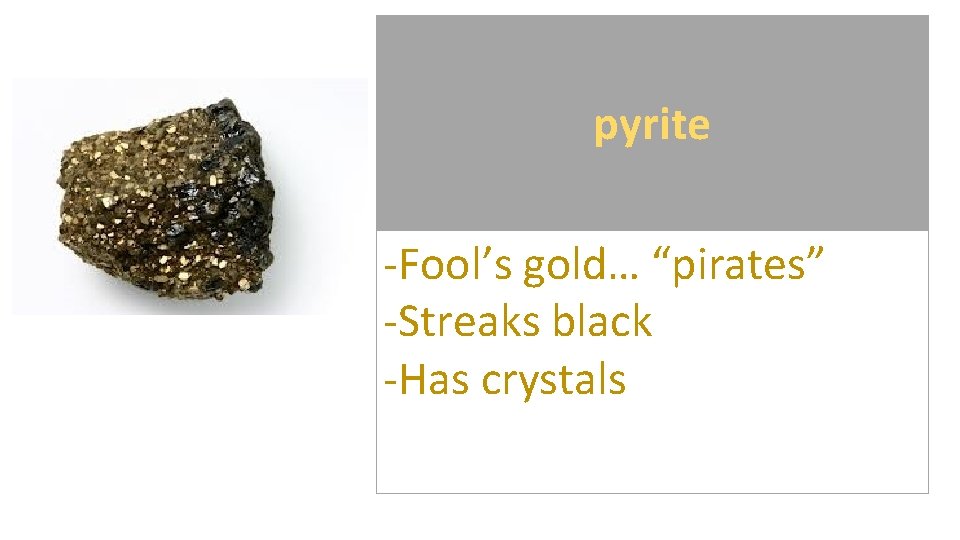
pyrite -Fool’s gold… “pirates” -Streaks black -Has crystals
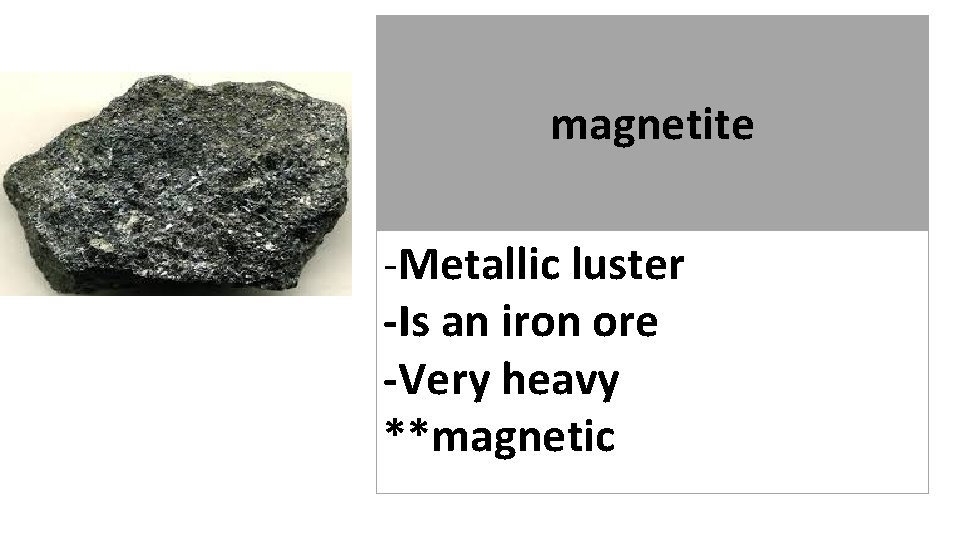
magnetite -Metallic luster -Is an iron ore -Very heavy **magnetic
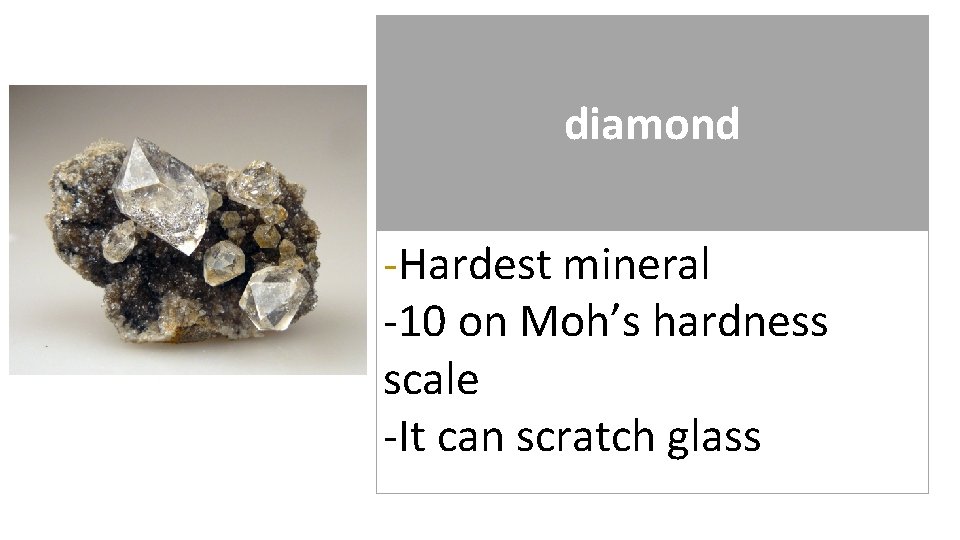
diamond -Hardest mineral -10 on Moh’s hardness scale -It can scratch glass
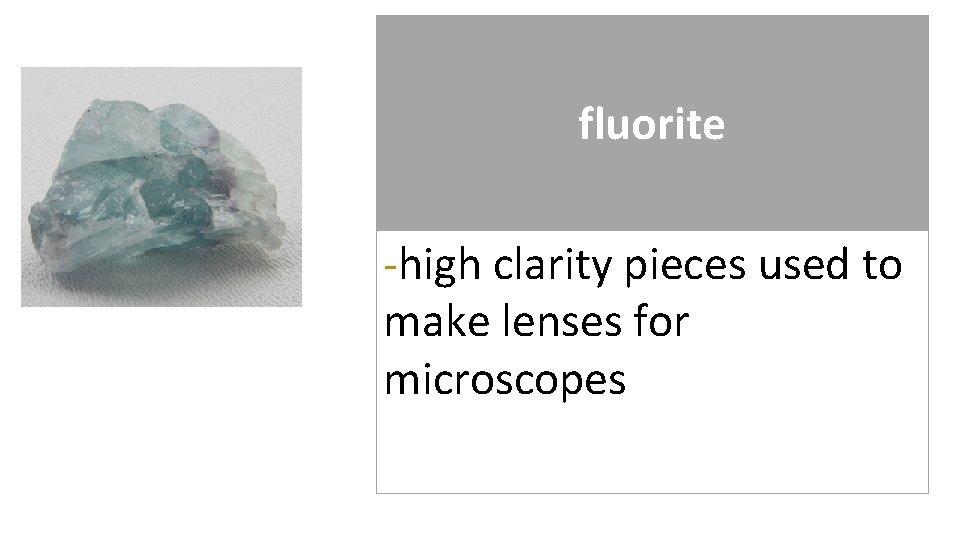
fluorite -high clarity pieces used to make lenses for microscopes
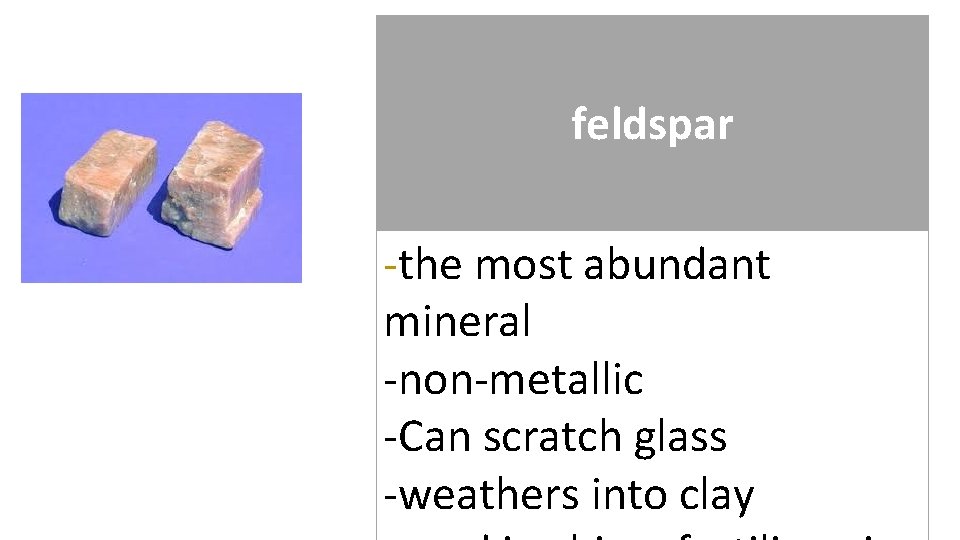
feldspar -the most abundant mineral -non-metallic -Can scratch glass -weathers into clay
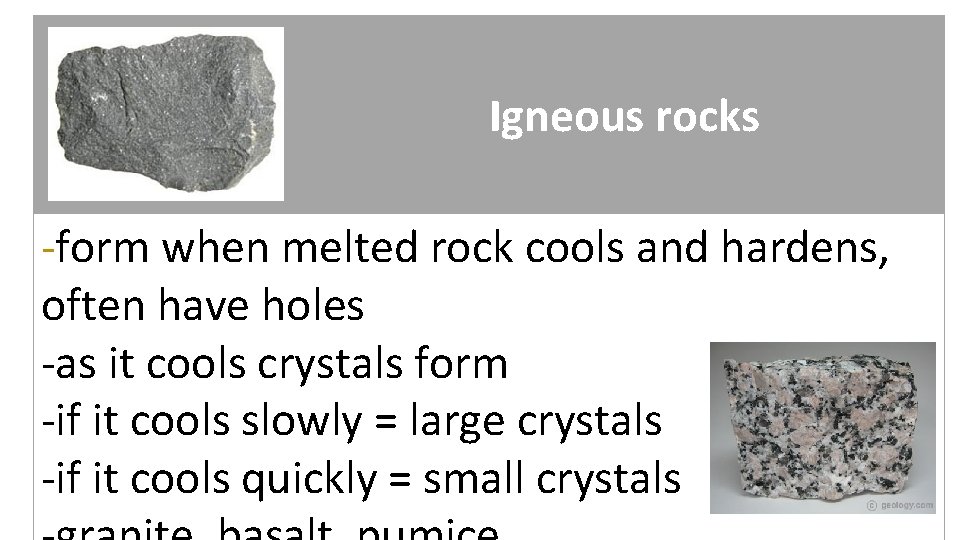
Igneous rocks -form when melted rock cools and hardens, often have holes -as it cools crystals form -if it cools slowly = large crystals -if it cools quickly = small crystals
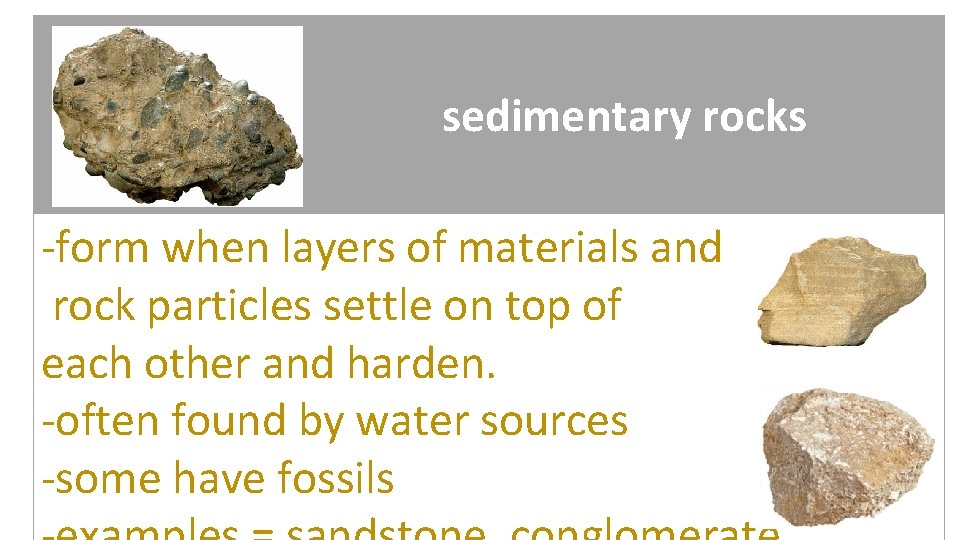
sedimentary rocks -form when layers of materials and rock particles settle on top of each other and harden. -often found by water sources -some have fossils
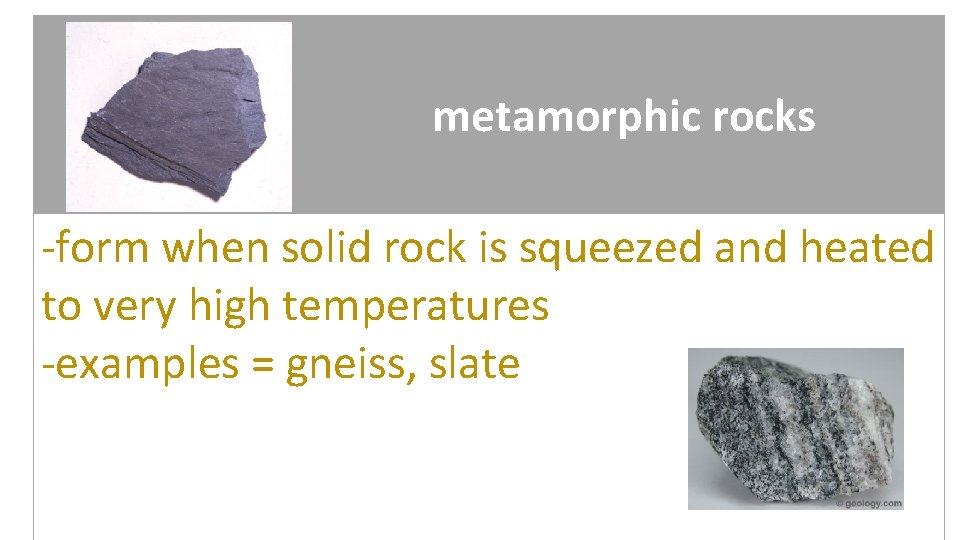
metamorphic rocks -form when solid rock is squeezed and heated to very high temperatures -examples = gneiss, slate