
MINERALS AND ROCKS Earth Space Science Unit 1

- Slides: 25
MINERALS AND ROCKS Earth Space Science Unit 1 Lessons 8 & 9
OBJECTIVES Mineral definition Mineral identification Rock types Rock cycle Kahoot! Review
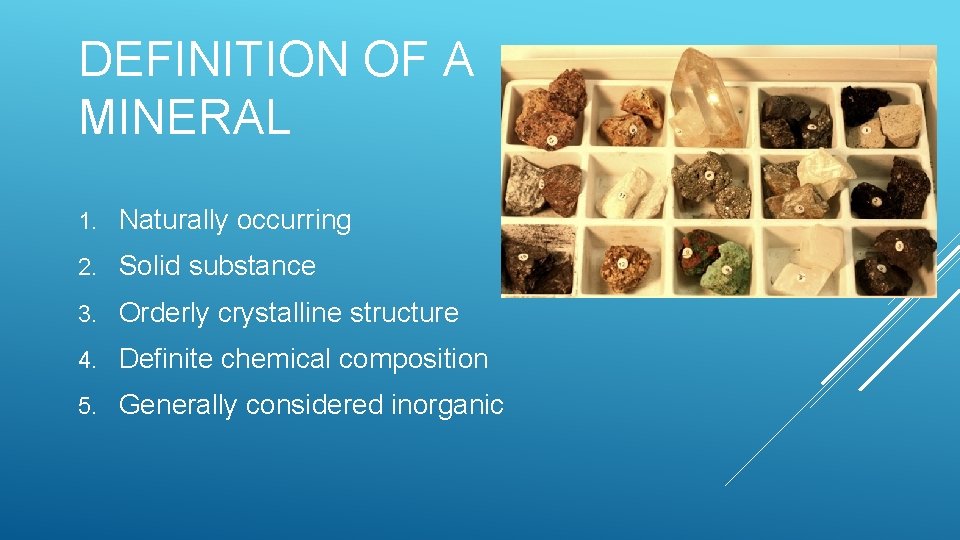
DEFINITION OF A MINERAL 1. Naturally occurring 2. Solid substance 3. Orderly crystalline structure 4. Definite chemical composition 5. Generally considered inorganic
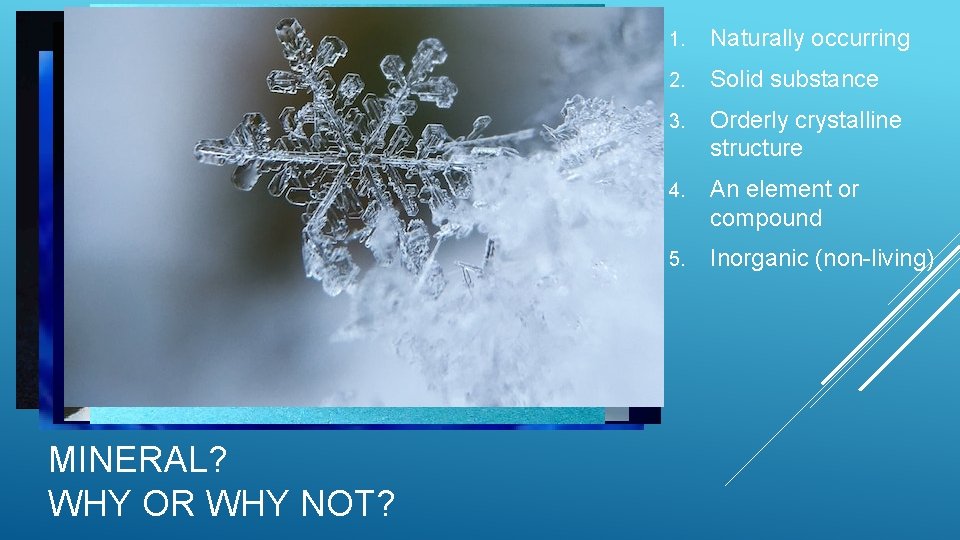
MINERAL? WHY OR WHY NOT? 1. Naturally occurring 2. Solid substance 3. Orderly crystalline structure 4. An element or compound 5. Inorganic (non-living)
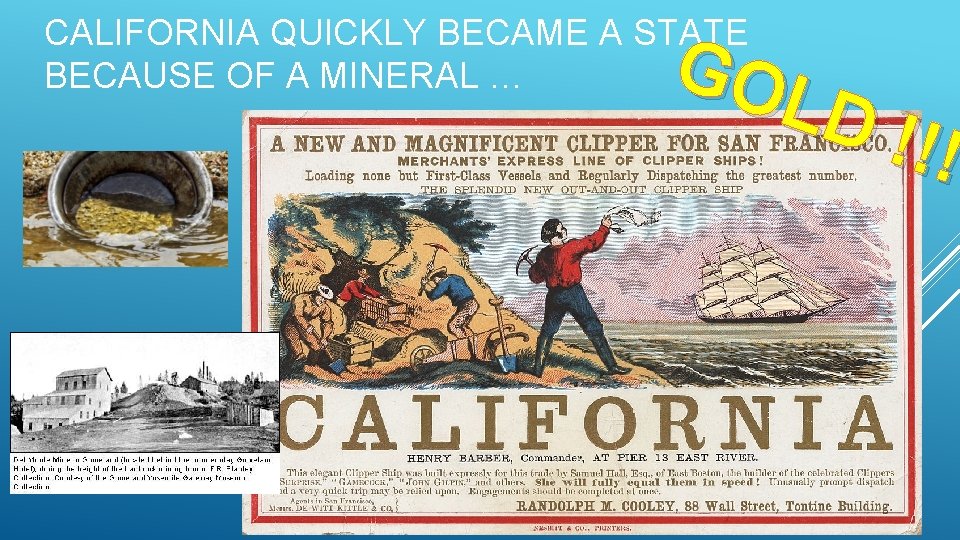
CALIFORNIA QUICKLY BECAME A STATE BECAUSE OF A MINERAL … GO LD !!!
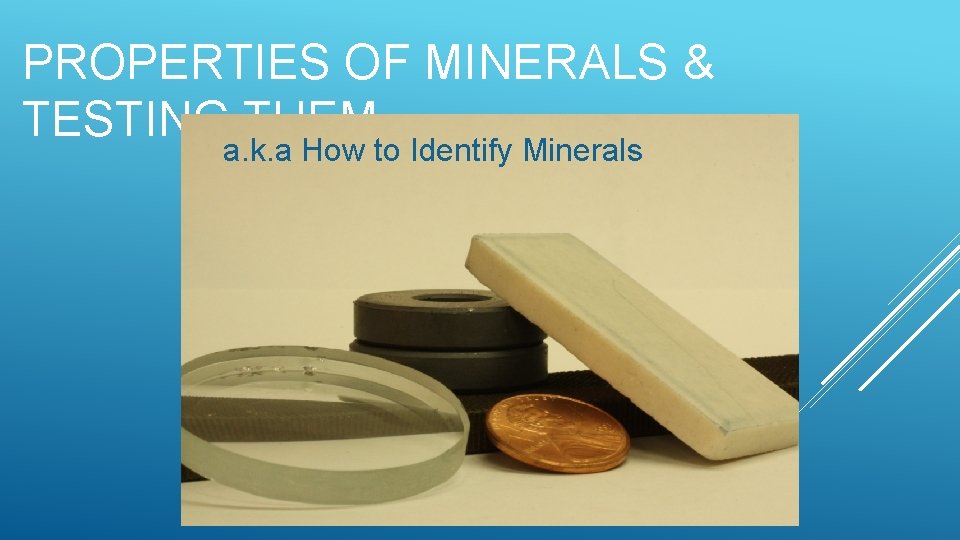
PROPERTIES OF MINERALS & TESTING THEM a. k. a How to Identify Minerals
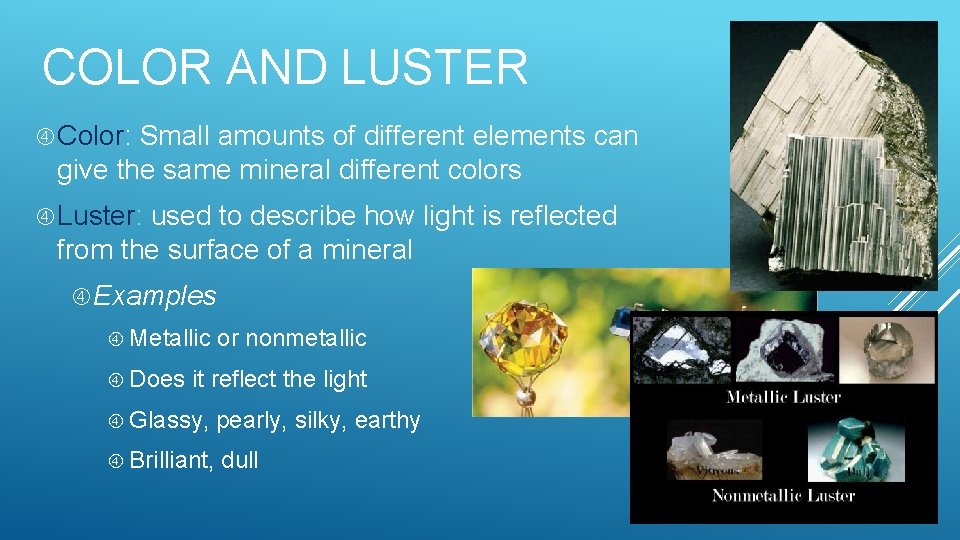
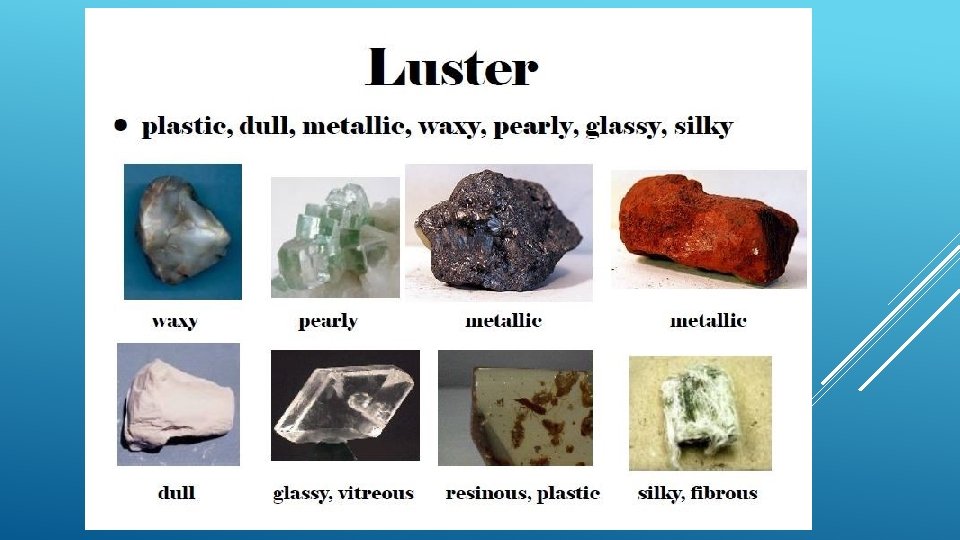
COLOR AND LUSTER Color: Small amounts of different elements can give the same mineral different colors Luster: used to describe how light is reflected from the surface of a mineral Examples Metallic Does or nonmetallic it reflect the light Glassy, pearly, silky, earthy Brilliant, dull
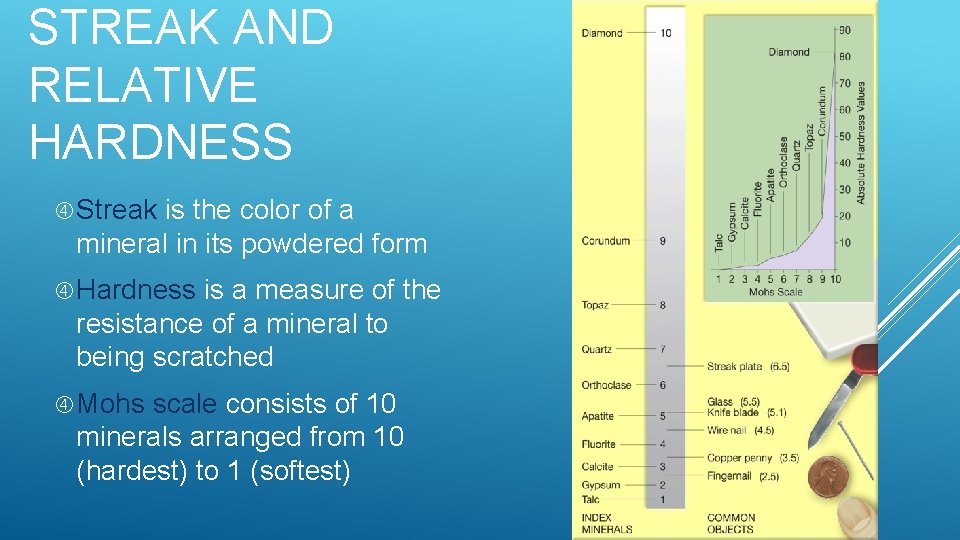
STREAK AND RELATIVE HARDNESS Streak is the color of a mineral in its powdered form Hardness is a measure of the resistance of a mineral to being scratched Mohs scale consists of 10 minerals arranged from 10 (hardest) to 1 (softest)
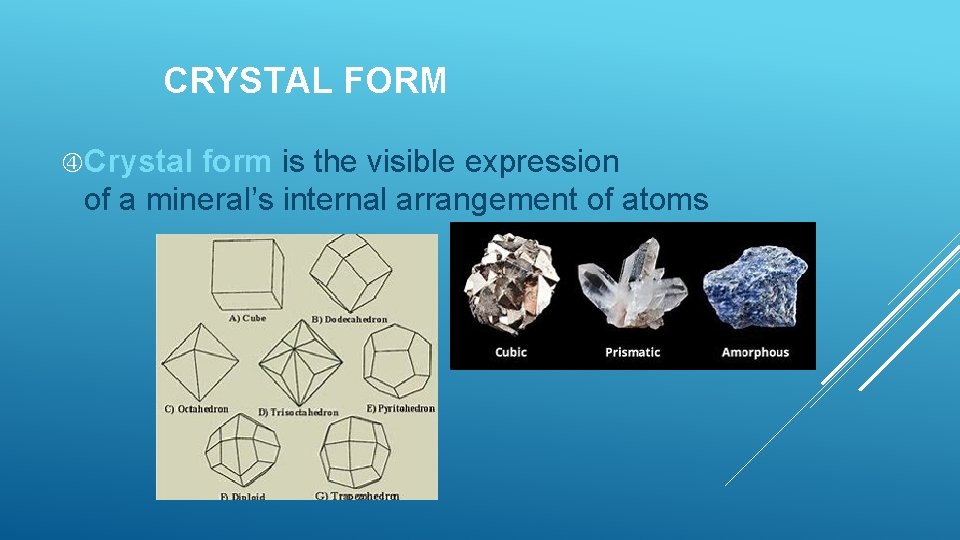
CRYSTAL FORM Crystal form is the visible expression of a mineral’s internal arrangement of atoms
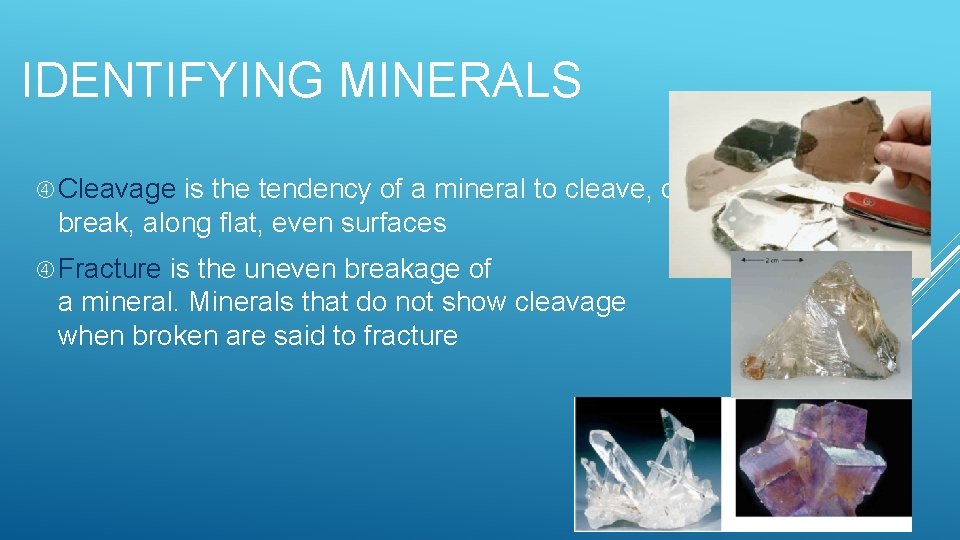
IDENTIFYING MINERALS Cleavage is the tendency of a mineral to cleave, or break, along flat, even surfaces Fracture is the uneven breakage of a mineral. Minerals that do not show cleavage when broken are said to fracture
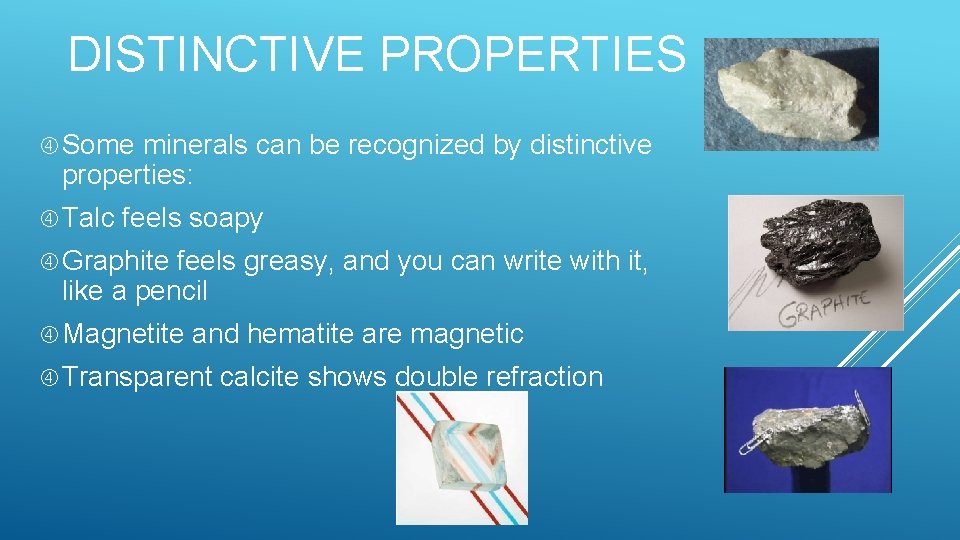
DISTINCTIVE PROPERTIES Some minerals can be recognized by distinctive properties: Talc feels soapy Graphite feels greasy, and you can write with it, like a pencil Magnetite and hematite are magnetic Transparent calcite shows double refraction
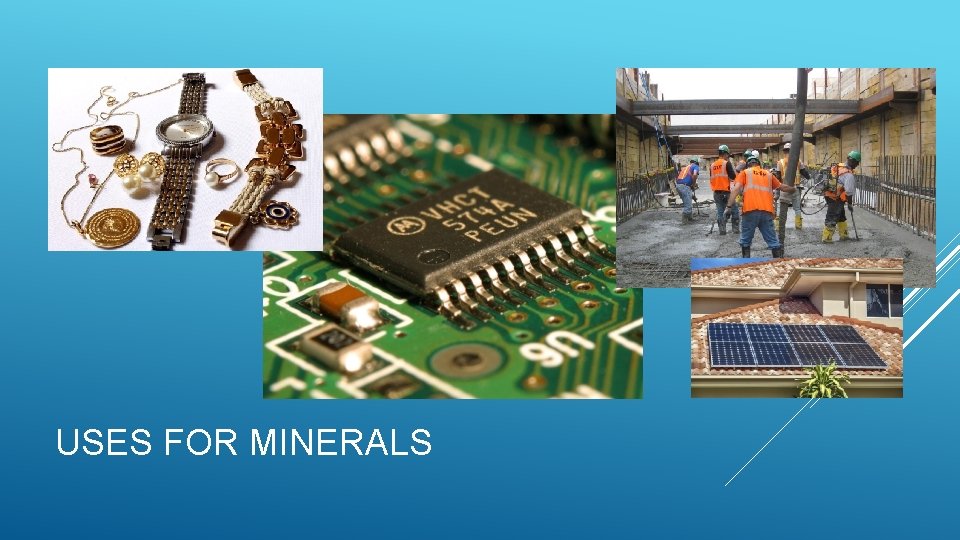
USES FOR MINERALS
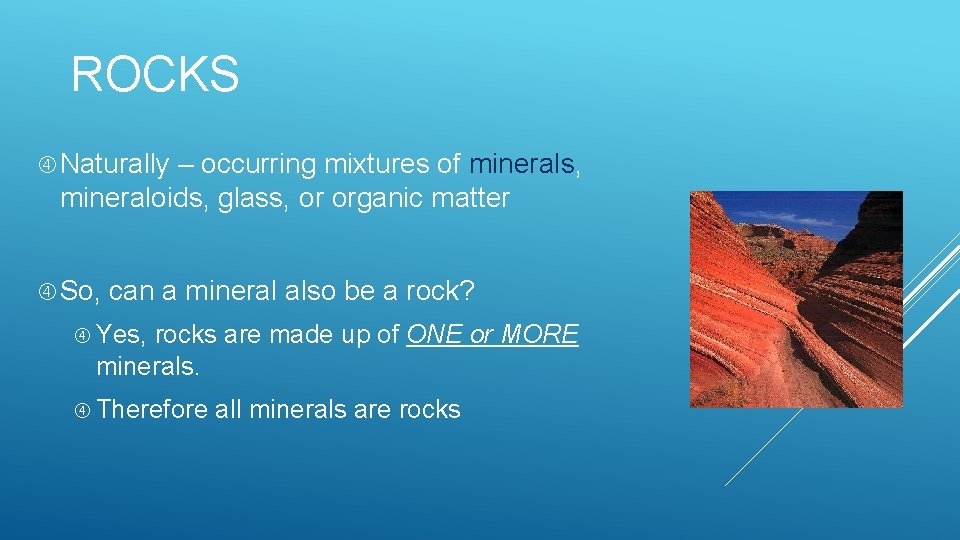
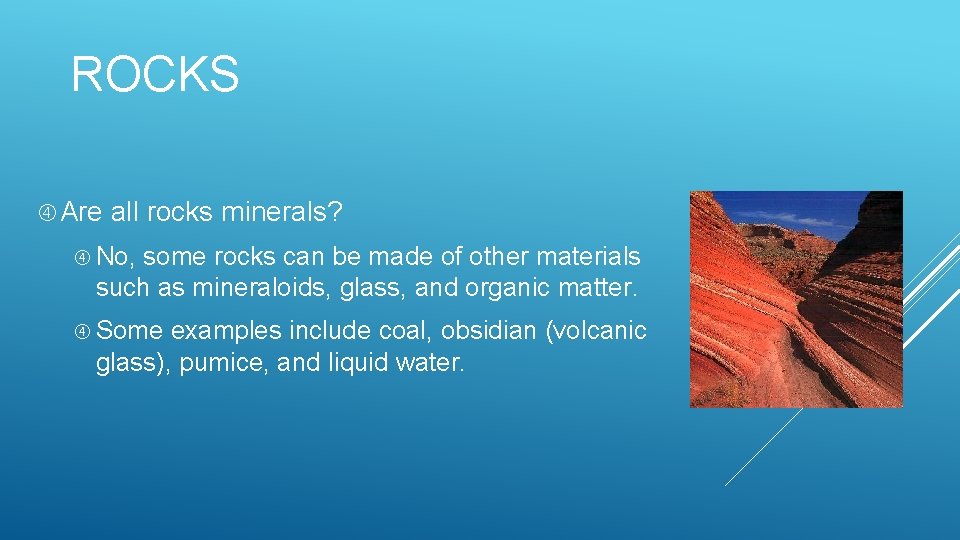
ROCKS Naturally – occurring mixtures of minerals, mineraloids, glass, or organic matter So, can a mineral also be a rock? Yes, rocks are made up of ONE or MORE minerals. Therefore all minerals are rocks
ROCKS Are all rocks minerals? No, some rocks can be made of other materials such as mineraloids, glass, and organic matter. Some examples include coal, obsidian (volcanic glass), pumice, and liquid water.
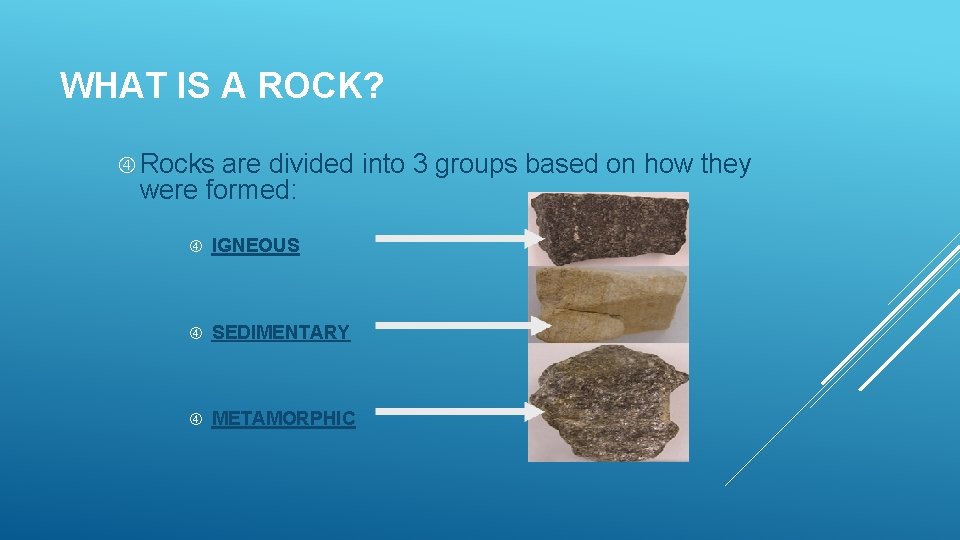
WHAT IS A ROCK? Rocks are divided into 3 groups based on how they were formed: IGNEOUS SEDIMENTARY METAMORPHIC
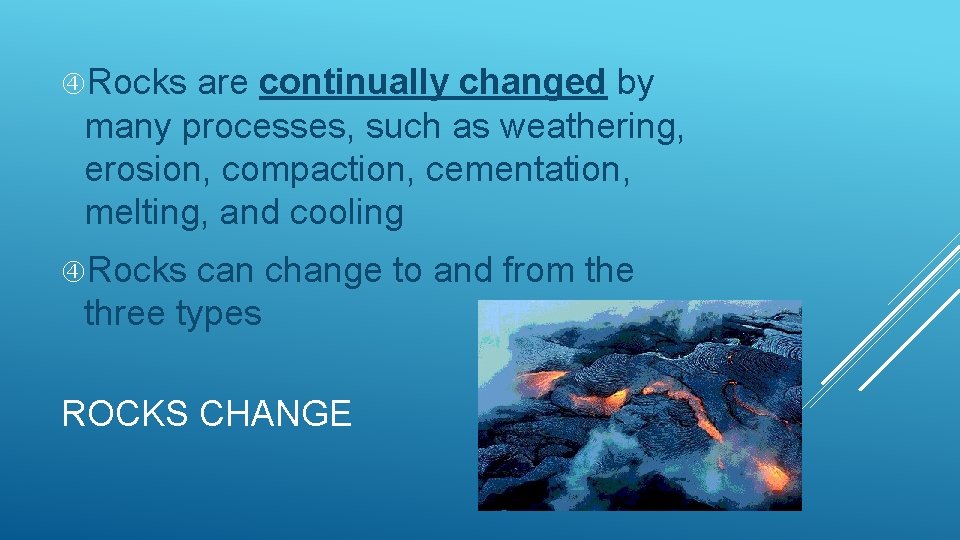
Rocks are continually changed by many processes, such as weathering, erosion, compaction, cementation, melting, and cooling Rocks can change to and from the three types ROCKS CHANGE
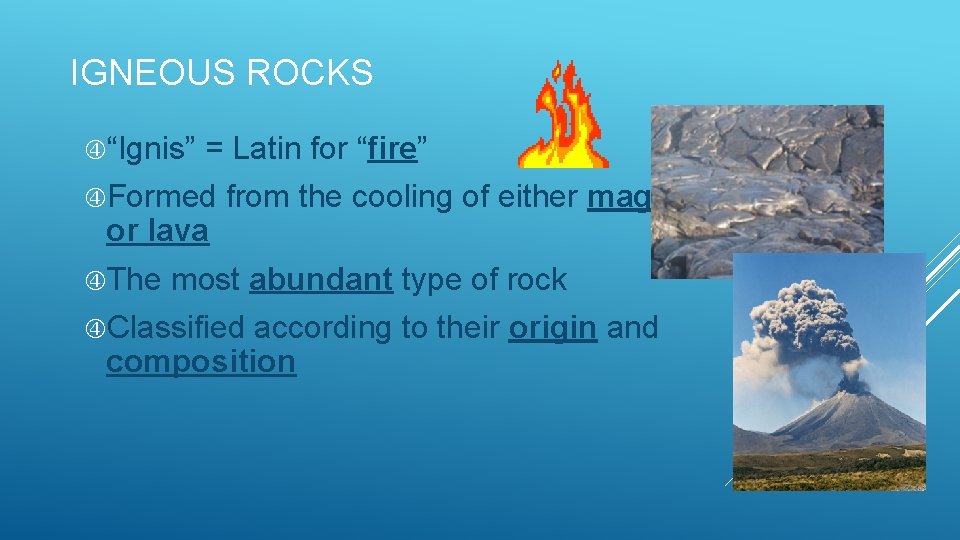
IGNEOUS ROCKS “Ignis” = Latin for “fire” Formed or lava The from the cooling of either magma most abundant type of rock Classified according to their origin and composition
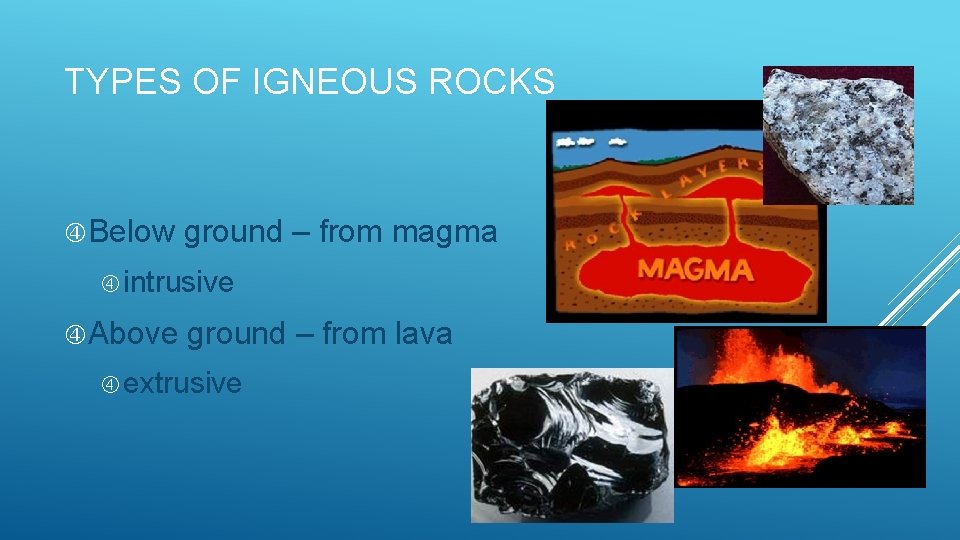
TYPES OF IGNEOUS ROCKS Below ground – from magma intrusive Above ground – from lava extrusive
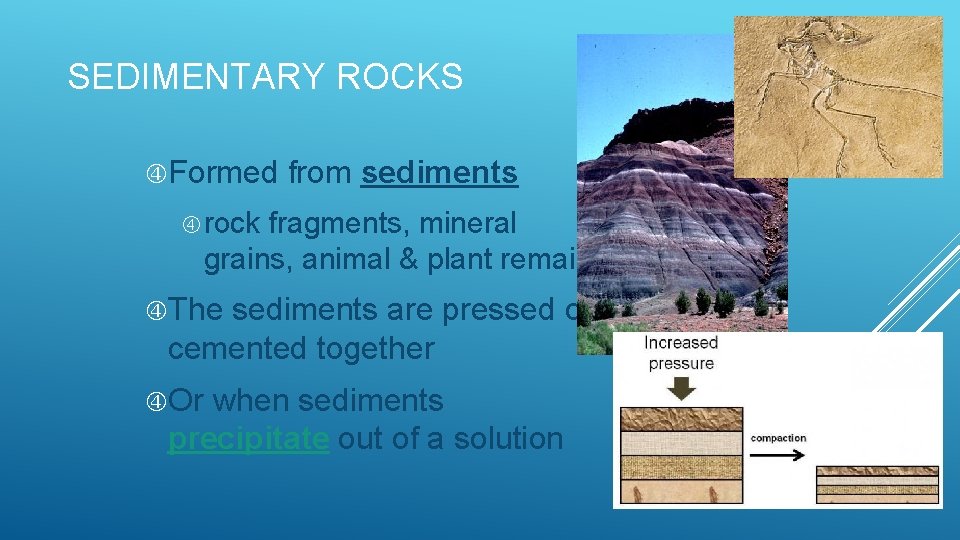
SEDIMENTARY ROCKS Formed from sediments rock fragments, mineral grains, animal & plant remains The sediments are pressed or cemented together Or when sediments precipitate out of a solution
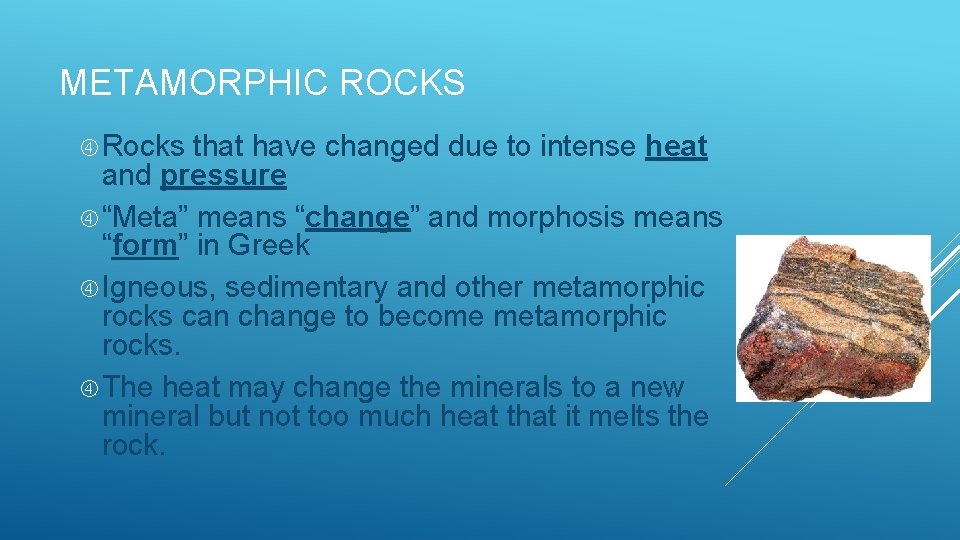
METAMORPHIC ROCKS Rocks that have changed due to intense heat and pressure “Meta” means “change” and morphosis means “form” in Greek Igneous, sedimentary and other metamorphic rocks can change to become metamorphic rocks. The heat may change the minerals to a new mineral but not too much heat that it melts the rock.
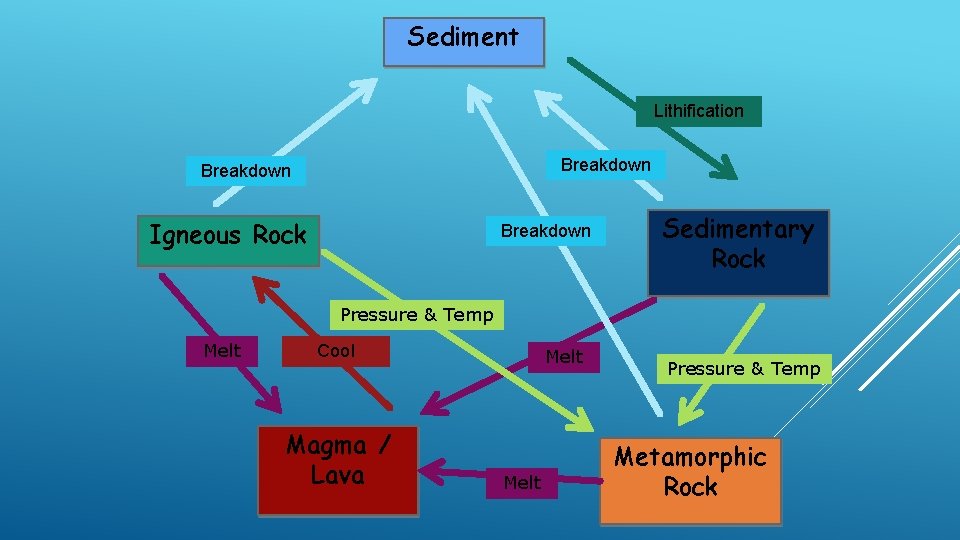
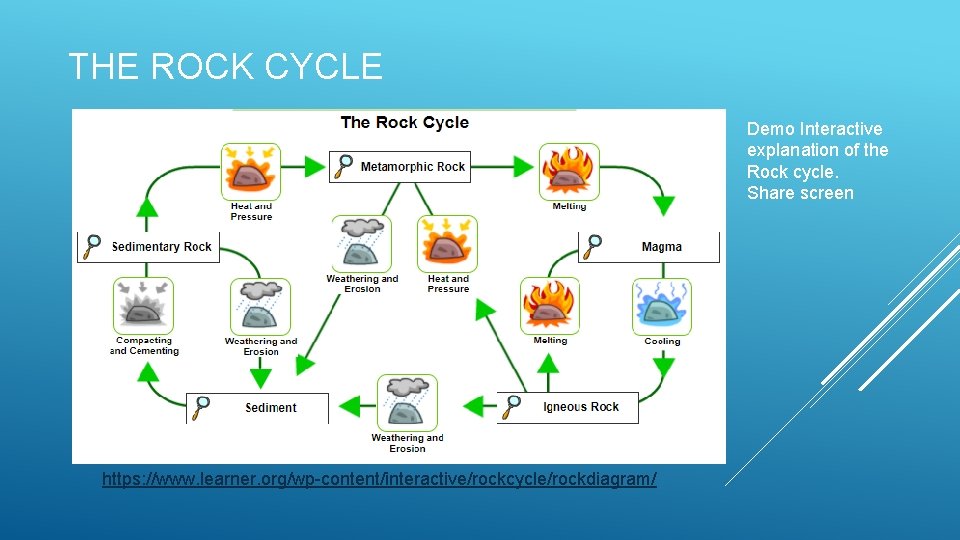
WHAT IS THE PROCESS THROUGH WHICH ROCKS CHANGE? The Rock Cycle — Earth materials change back and forth among the different types of rocks No set path a rock takes to become another kind of rock Rock Cycle There is no ONE way to describe the order So, I have few variations on the following slide
Sediment Lithification Breakdown Igneous Rock Breakdown Sedimentary Rock Pressure & Temp Melt Cool Magma / Lava Melt Pressure & Temp Metamorphic Rock
THE ROCK CYCLE Demo Interactive explanation of the Rock cycle. Share screen https: //www. learner. org/wp-content/interactive/rockcycle/rockdiagram/