
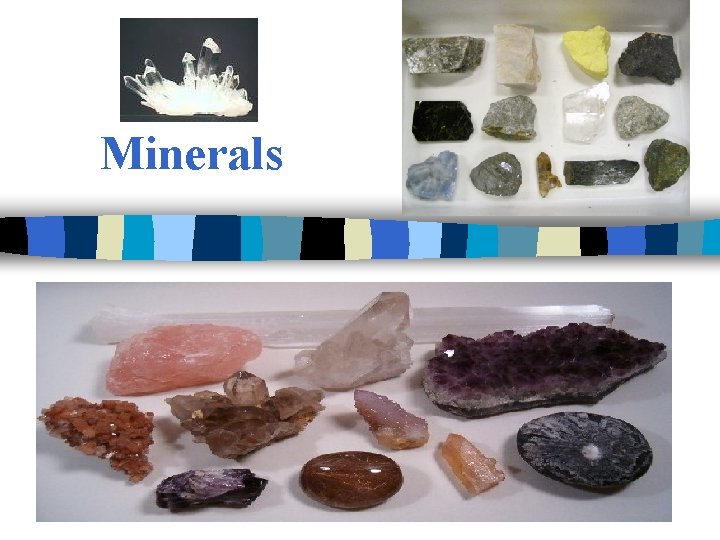
Minerals A What is a mineral Mineral Characteristics
- Slides: 35
Minerals
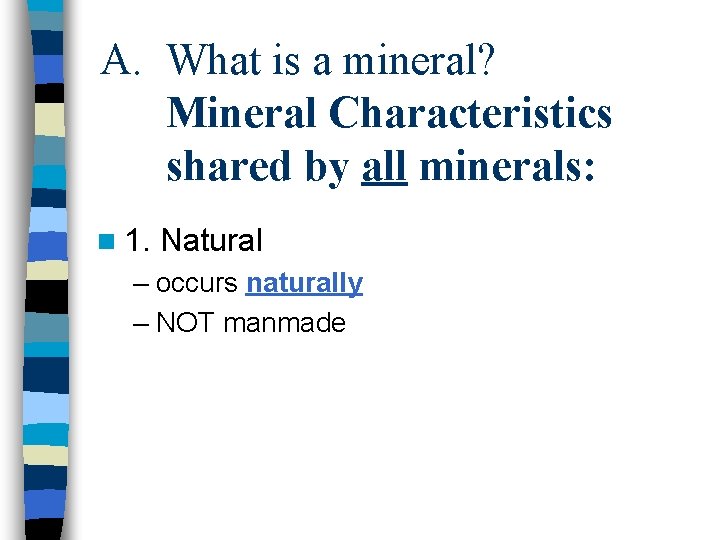
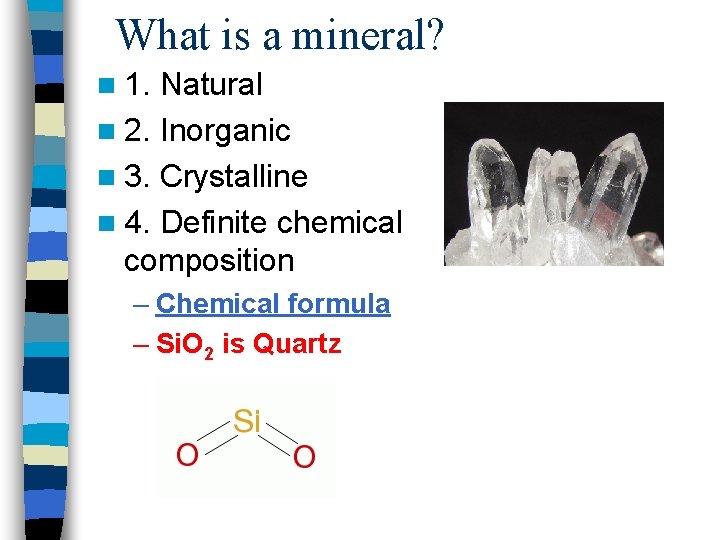
A. What is a mineral? Mineral Characteristics shared by all minerals: n 1. Natural – occurs naturally – NOT manmade
What is a mineral? n 1. Natural n 2. Inorganic – Is not alive – Was never alive
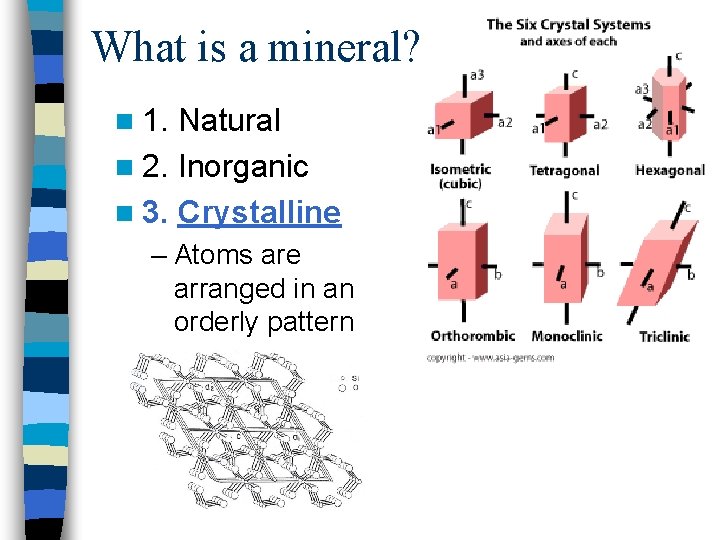
What is a mineral? n 1. Natural n 2. Inorganic n 3. Crystalline – Atoms are arranged in an orderly pattern
What is a mineral? n 1. Natural n 2. Inorganic n 3. Crystalline n 4. Definite chemical composition – Chemical formula – Si. O 2 is Quartz
What is a mineral? n 1. Natural n 2. Inorganic n 3. Crystalline n 4. Definite chemical composition n 5. Solid – Not a gas, not a liquid
How will we remember this? n Natural n Inorganic n Crystalline n Definite n Solid chemical composition
Mineral Characteristics shared by all minerals: Now I Can Define mineral. S! n Natural n Inorganic n Crystalline n Definite n Solid chemical composition
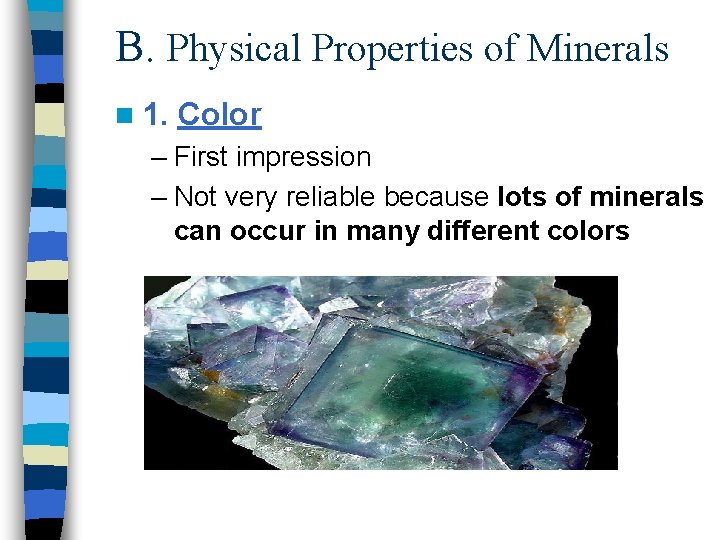
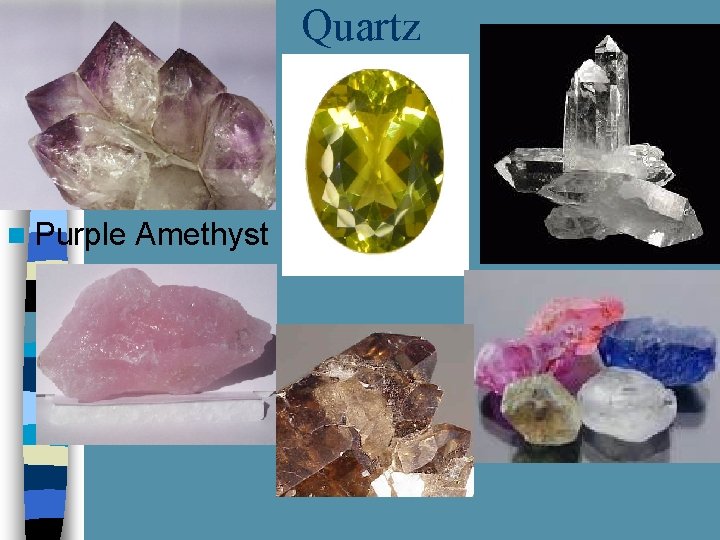
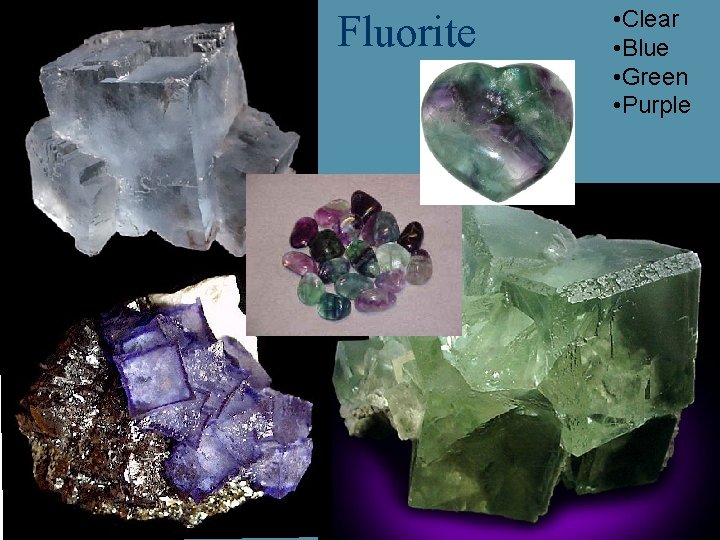
B. Physical Properties of Minerals n 1. Color – First impression – Not very reliable because lots of minerals can occur in many different colors
Quartz n Purple Amethyst
Fluorite • Clear • Blue • Green • Purple
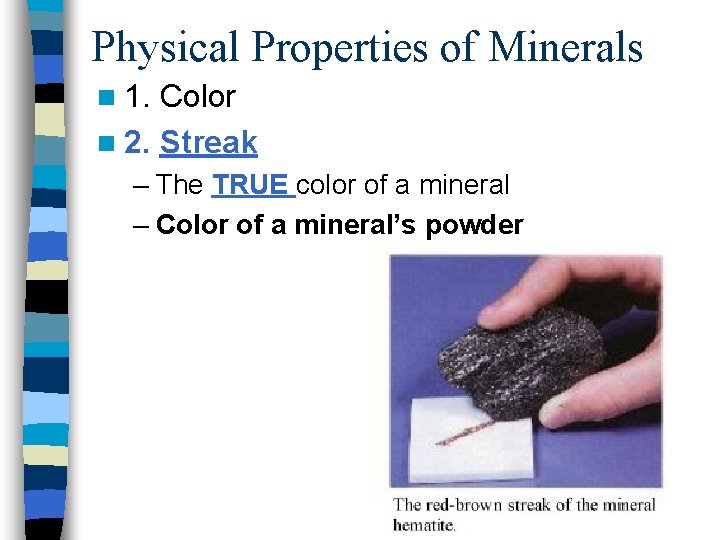
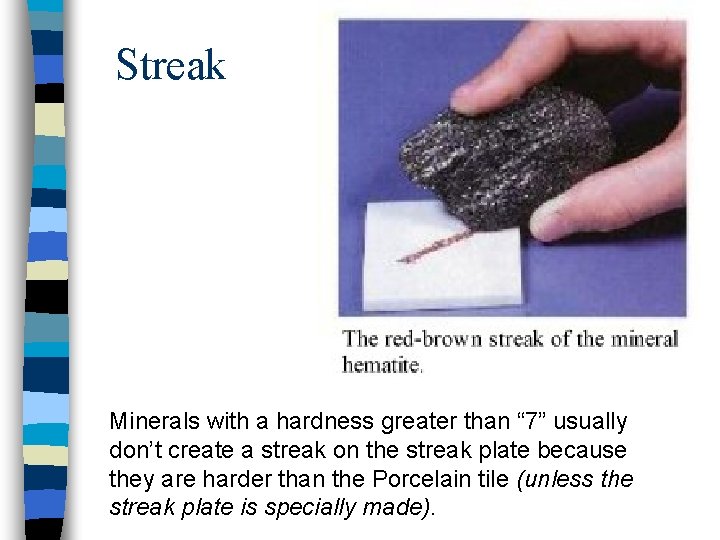
Physical Properties of Minerals n 1. Color n 2. Streak – The TRUE color of a mineral – Color of a mineral’s powder
Streak Minerals with a hardness greater than “ 7” usually don’t create a streak on the streak plate because they are harder than the Porcelain tile (unless the streak plate is specially made).
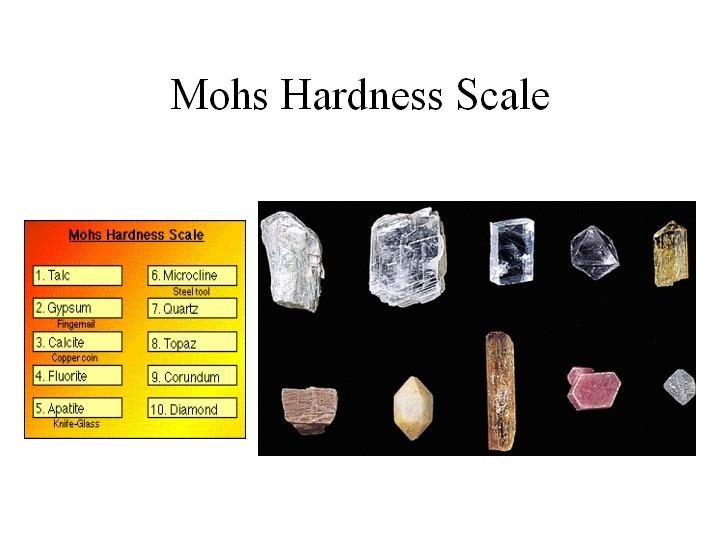
Physical Properties of Minerals n 1. Color n 2. Streak n 3. Hardness – A mineral’s resistance to being scratched – Mohs Hardness Scale from 1 -10 Hardness depends on how “tightly packed” the atoms are
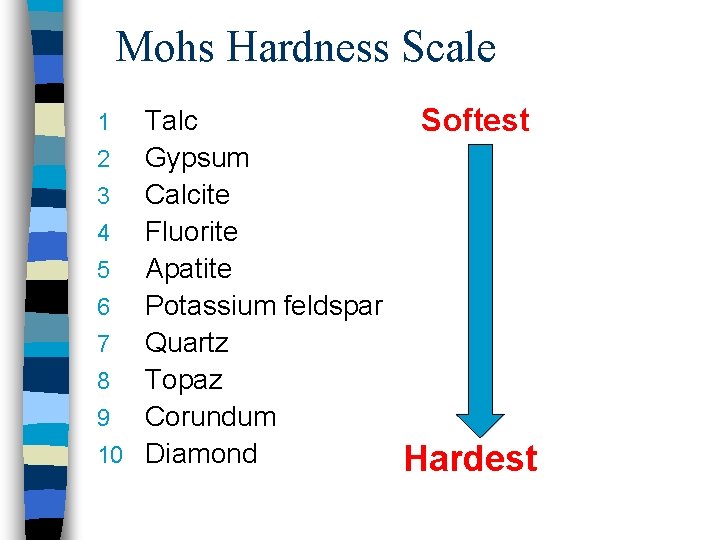
Mohs Hardness Scale Talc 2 Gypsum 3 Calcite 4 Fluorite 5 Apatite 6 Potassium feldspar 7 Quartz 8 Topaz 9 Corundum 10 Diamond 1 Softest Hardest
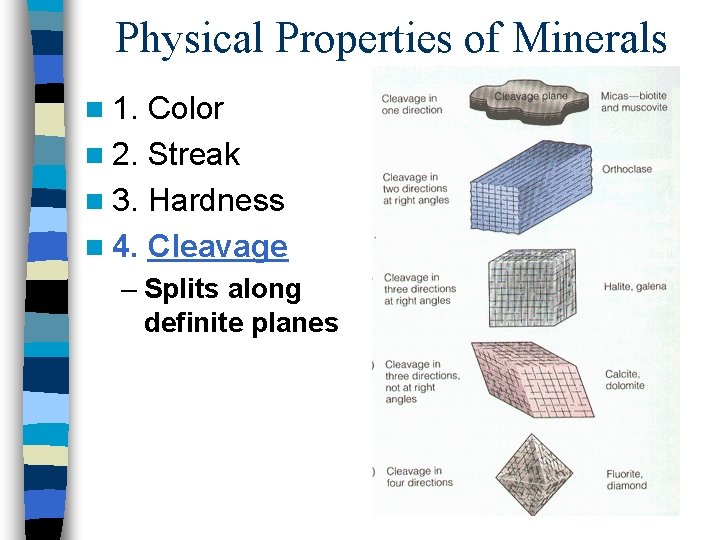
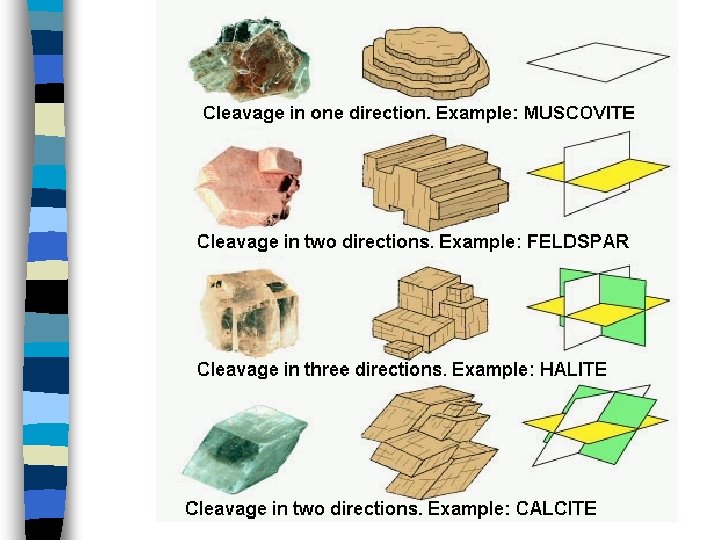
Physical Properties of Minerals n 1. Color n 2. Streak n 3. Hardness n 4. Cleavage – Splits along definite planes
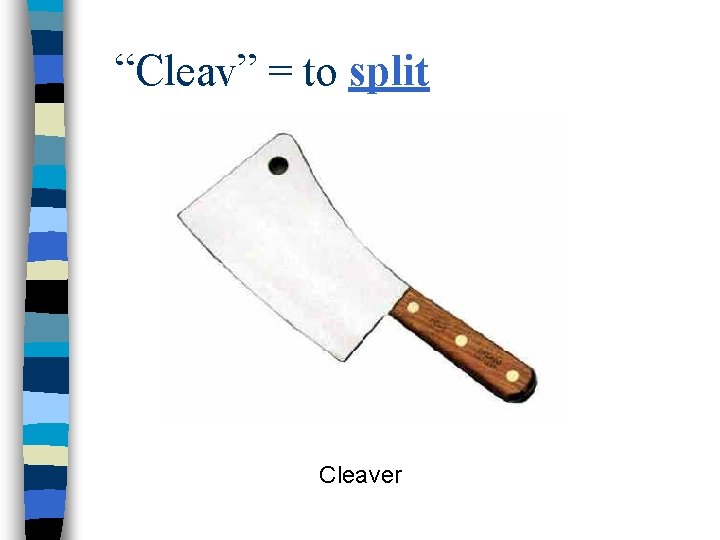
“Cleav” = to split Cleaver
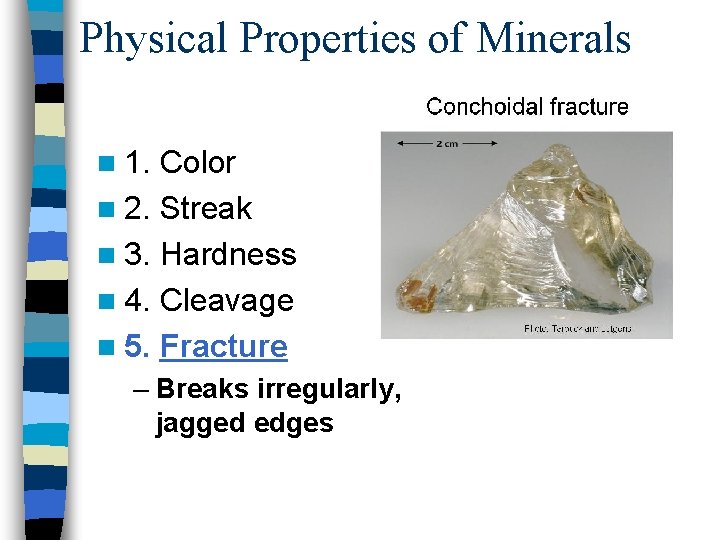
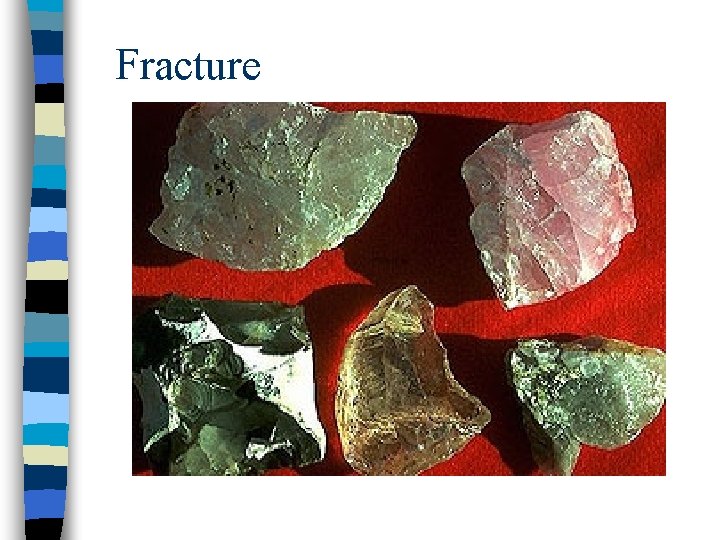
Physical Properties of Minerals n 1. Color n 2. Streak n 3. Hardness n 4. Cleavage n 5. Fracture – Breaks irregularly, jagged edges
Fracture
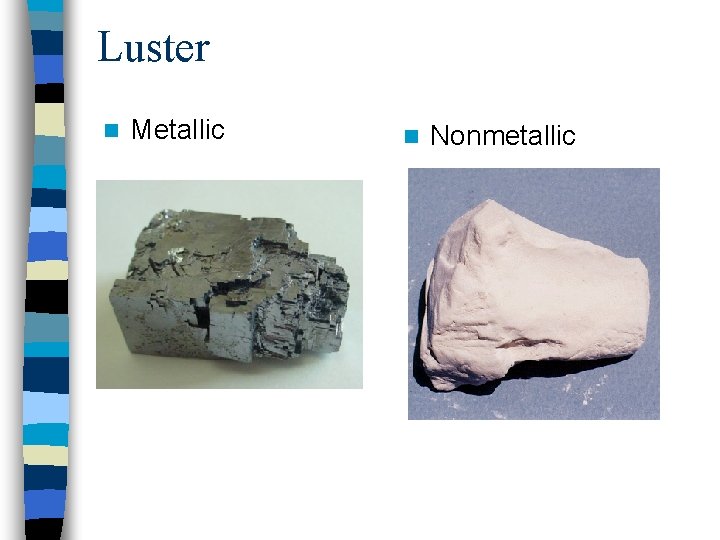
Physical Properties of Minerals n 1. Color n 2. Streak n 3. Hardness n 4. Cleavage n 5. Fracture n 6. Luster – How light shines off a mineral – Metallic or Nonmetallic
Luster n Metallic n Nonmetallic
Physical Properties of Minerals: Used for Identification (I. D. ) n Color n Streak n Hardness n Cleavage n Fracture n Luster
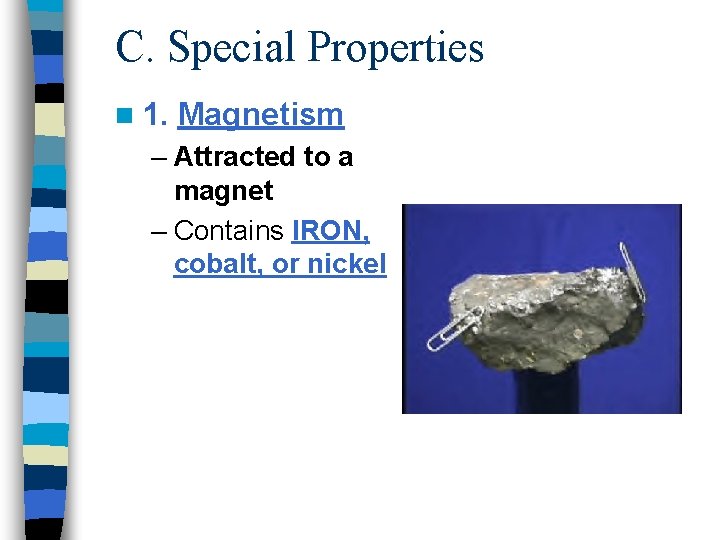
C. Special Properties n 1. Magnetism – Attracted to a magnet – Contains IRON, cobalt, or nickel
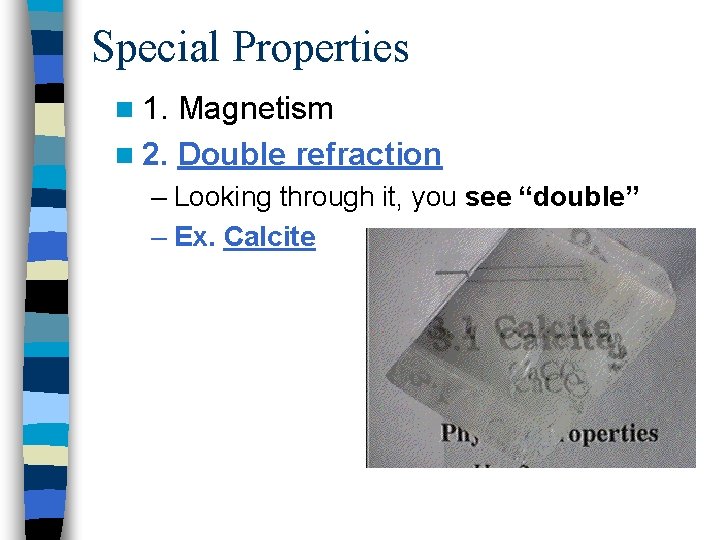
Special Properties n 1. Magnetism n 2. Double refraction – Looking through it, you see “double” – Ex. Calcite
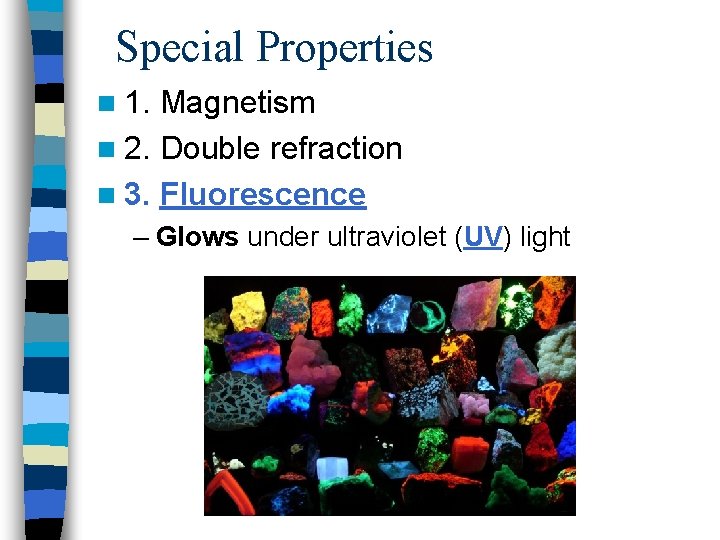
Special Properties n 1. Magnetism n 2. Double refraction n 3. Fluorescence – Glows under ultraviolet (UV) light
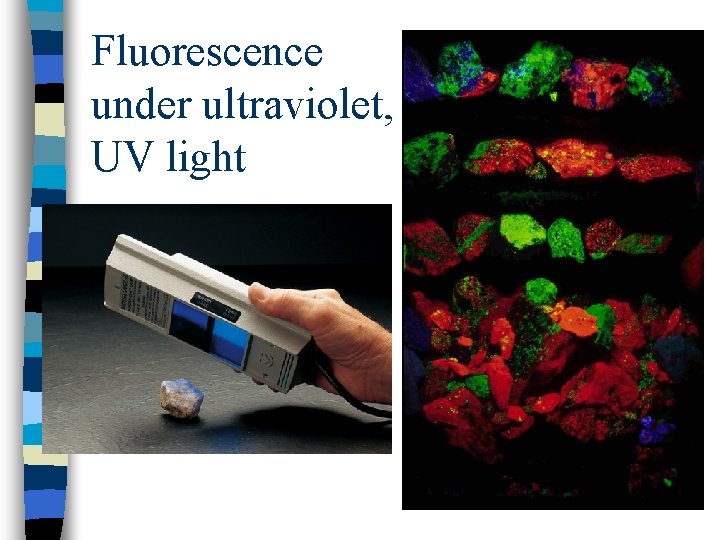
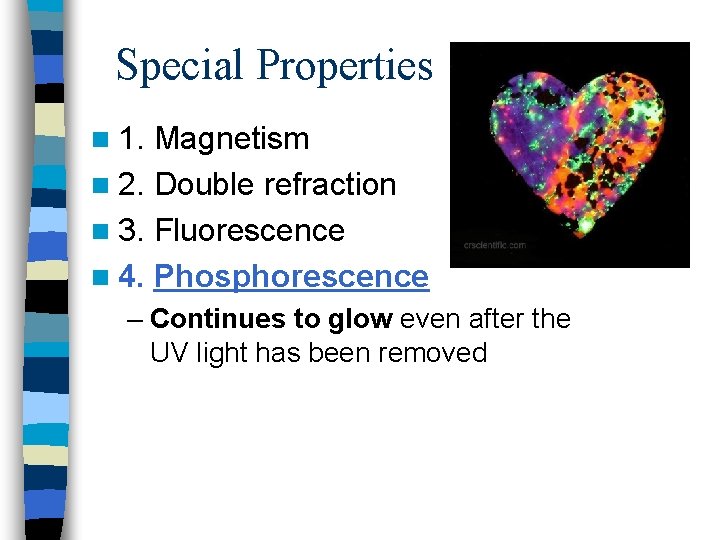
Fluorescence under ultraviolet, UV light
Special Properties n 1. Magnetism n 2. Double refraction n 3. Fluorescence n 4. Phosphorescence – Continues to glow even after the UV light has been removed
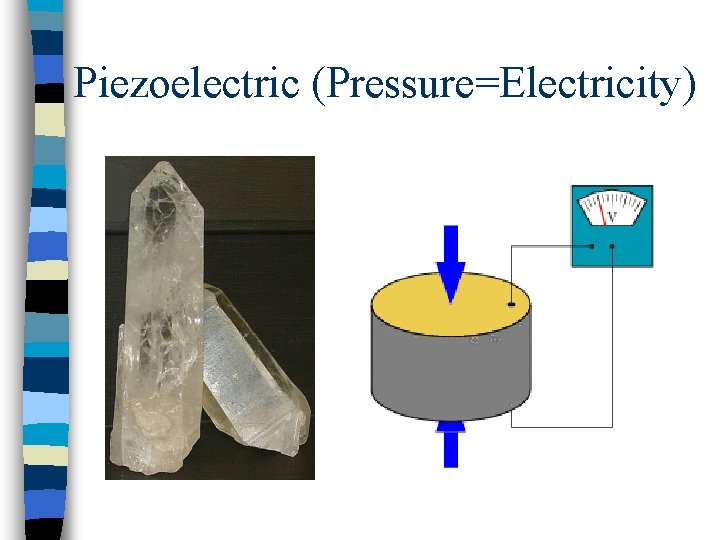
Special Properties n 1. Magnetism n 2. Double refraction n 3. Fluorescence n 4. Phosphorescence n 5. Piezoelectric – Electricity is generated from Pressure – Example: Quartz
Piezoelectric (Pressure=Electricity)
Special Properties n Magnetism n Double refraction n Fluorescence n Phosphorescence n Piezoelectric
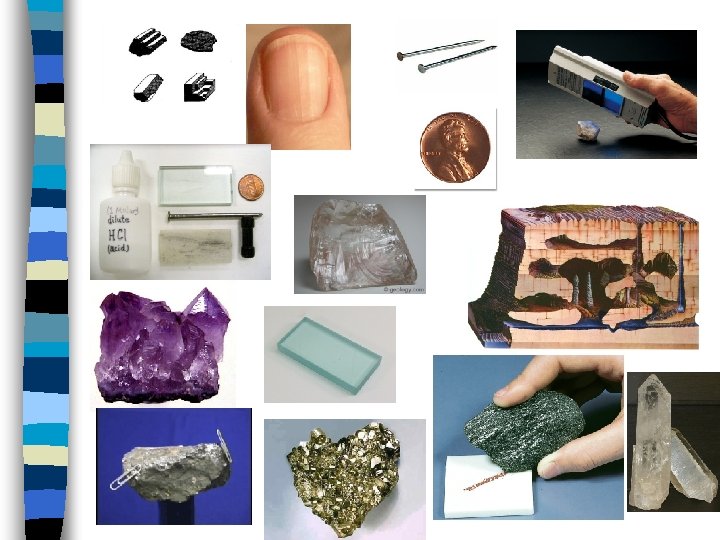
D. Identification Tests n 1. Hardness n 2. Streak (True Color) n 3. Acid Test – Use hydrochloric acid – Tests for carbonate (calcite)
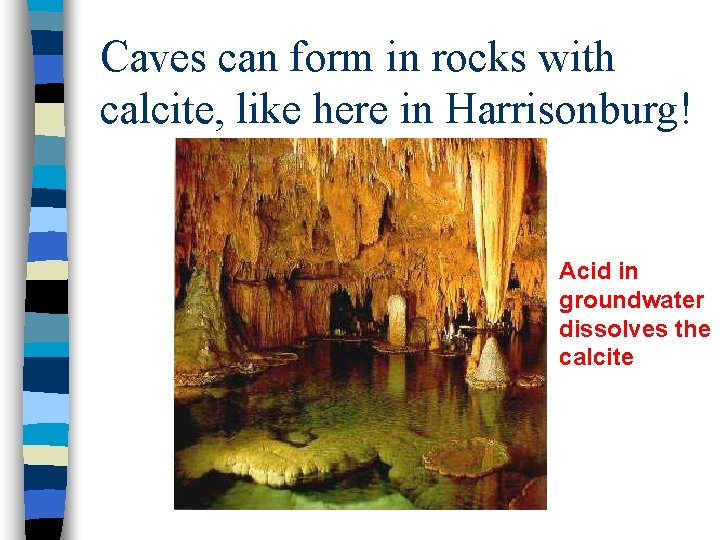
Caves can form in rocks with calcite, like here in Harrisonburg! Acid in groundwater dissolves the calcite