
Mineralogy of Bone And its effects Osteoporosis By
Mineralogy of Bone And its effects Osteoporosis By Vanessa Rutherford
Introduction Ø The body and the environment around it Ø React to exposure of natural and man-made chemicals Ø Discussion of Ø The bones/their mineral content Ø Crystal chemistry and structure Ø Analysis of Bone Ø Osteoporosis

Mineralized Tissues � Calcium � Normal phosphate hydroxylapatite mineralized tissues: �Teeth (enamel, dentine & cementum) �Bone � Pathological mineralization �Tumors, scar tissue, arteries, kidneys, dental calculus.
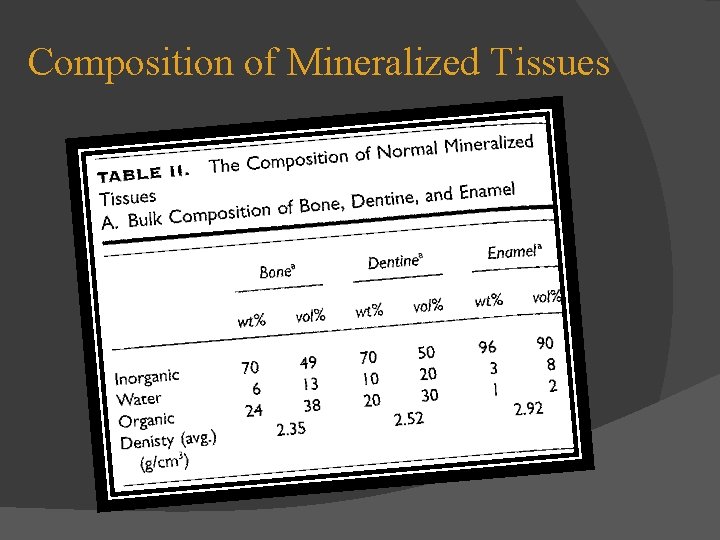
Composition of Mineralized Tissues
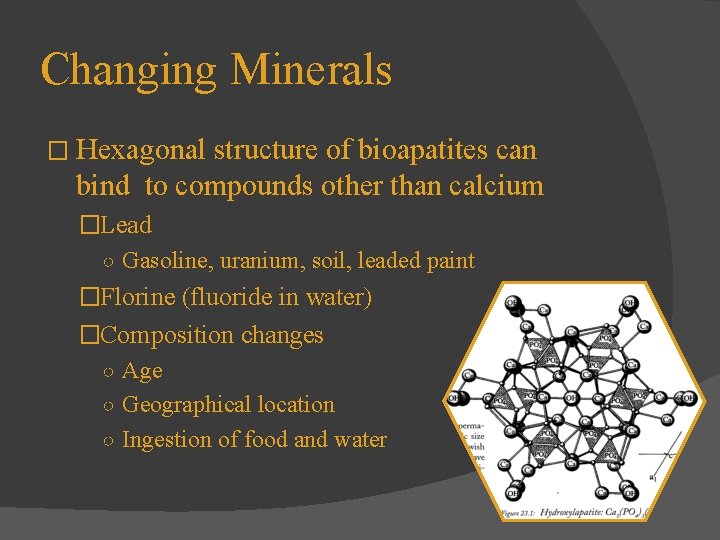
Changing Minerals � Hexagonal structure of bioapatites can bind to compounds other than calcium �Lead ○ Gasoline, uranium, soil, leaded paint �Florine (fluoride in water) �Composition changes ○ Age ○ Geographical location ○ Ingestion of food and water
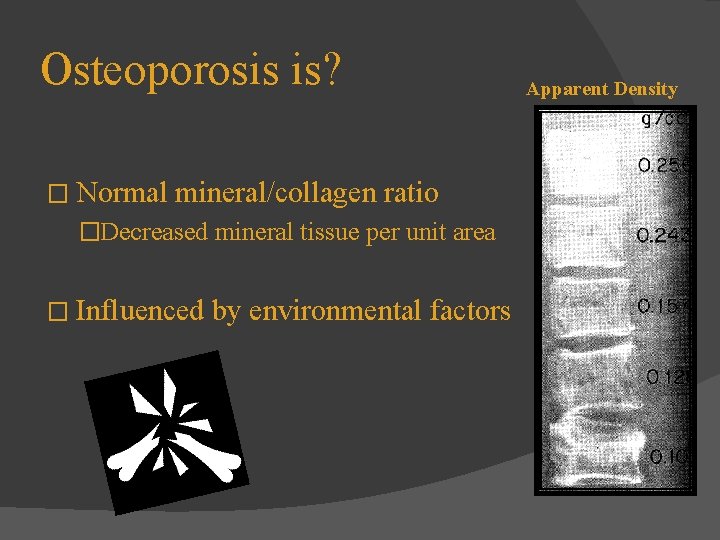
Osteoporosis is? � Normal mineral/collagen ratio �Decreased mineral tissue per unit area � Influenced by environmental factors Apparent Density
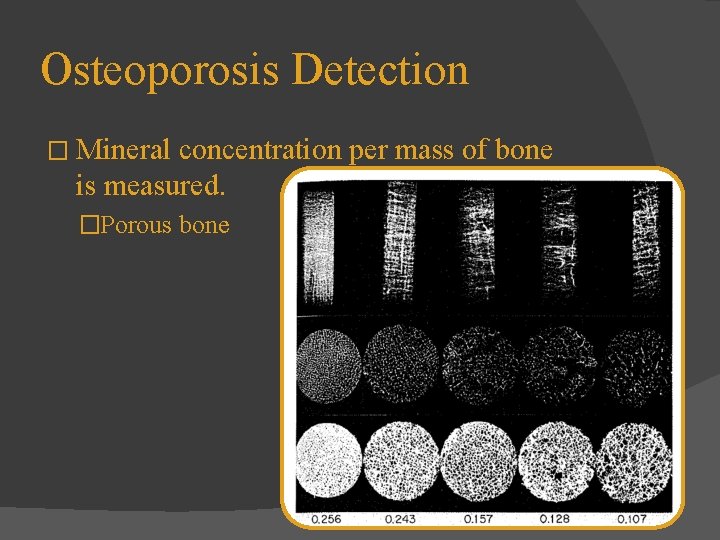
Osteoporosis Detection � Mineral concentration per mass of bone is measured. �Porous bone
Osteoporosis Mineral Focused Treatments � Fluoride �May affect bone cells and the formation of the organic matrix. ○ Narrow therapeutic window � Bisphonates �Prevents resorption of calcium phosphates by osteoclast cells to prevent dissolution of bioapatite. ○ May cause osteoclast apoptosis � Hormones �Estrogen ○ Important in keeping calcium levels adequate for proper skeletal mineralization.
Conclusion � Mineralized tissues play a role in growth development and maintenance of all bodily functions, organs, and tissues. � Bioapatite as a record keeper of chemicals ingested and our environments. Three forward!
- Slides: 9