
Mineral VA earthquake illustrates seismicity of a passiveaggressive
- Slides: 20
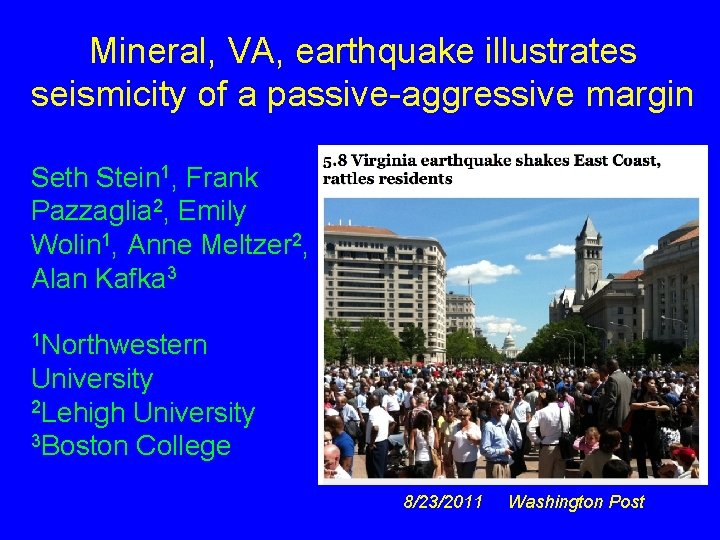
Mineral, VA, earthquake illustrates seismicity of a passive-aggressive margin Seth Stein 1, Frank Pazzaglia 2, Emily Wolin 1, Anne Meltzer 2, Alan Kafka 3 1 Northwestern University 2 Lehigh University 3 Boston College 8/23/2011 Washington Post
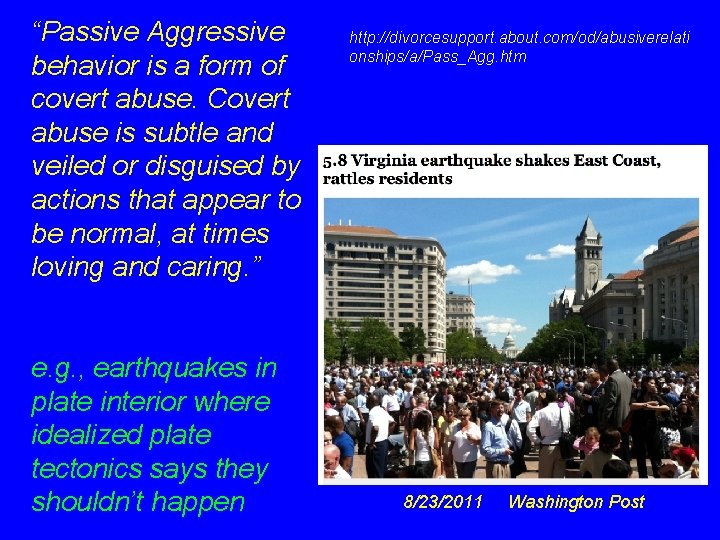
“Passive Aggressive behavior is a form of covert abuse. Covert abuse is subtle and veiled or disguised by actions that appear to be normal, at times loving and caring. ” e. g. , earthquakes in plate interior where idealized plate tectonics says they shouldn’t happen http: //divorcesupport. about. com/od/abusiverelati onships/a/Pass_Agg. htm 8/23/2011 Washington Post
Margins like ENAs are “passive” in not being plate boundaries, but are seismically active "Nearly all stable masses exhibit marginal features which are seismically active. " Gutenberg and Richter (1954)
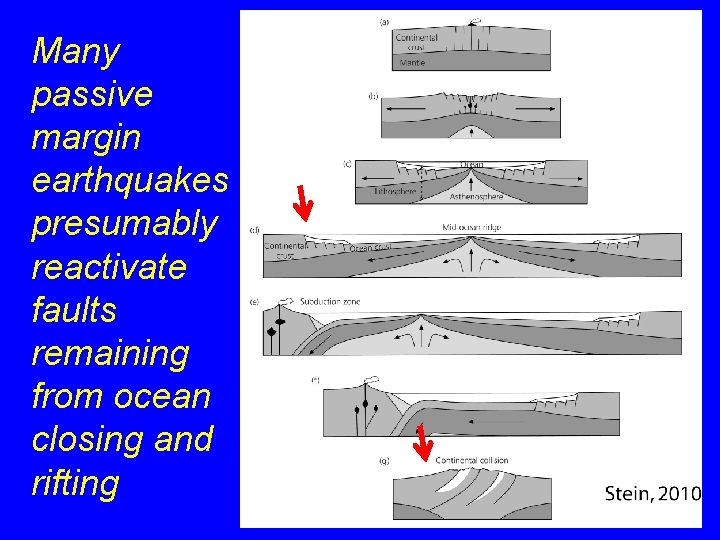
Many passive margin earthquakes presumably reactivate faults remaining from ocean closing and rifting
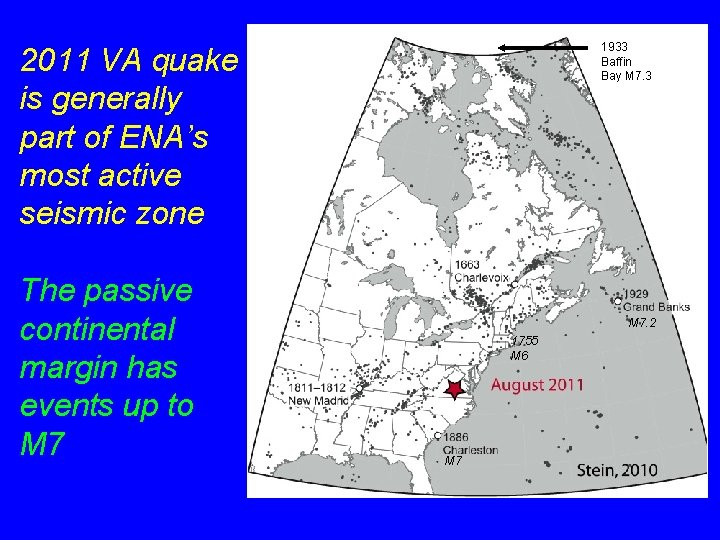
1933 Baffin Bay M 7. 3 2011 VA quake is generally part of ENA’s most active seismic zone The passive continental margin has events up to M 7. 2 1755 M 6 M 7
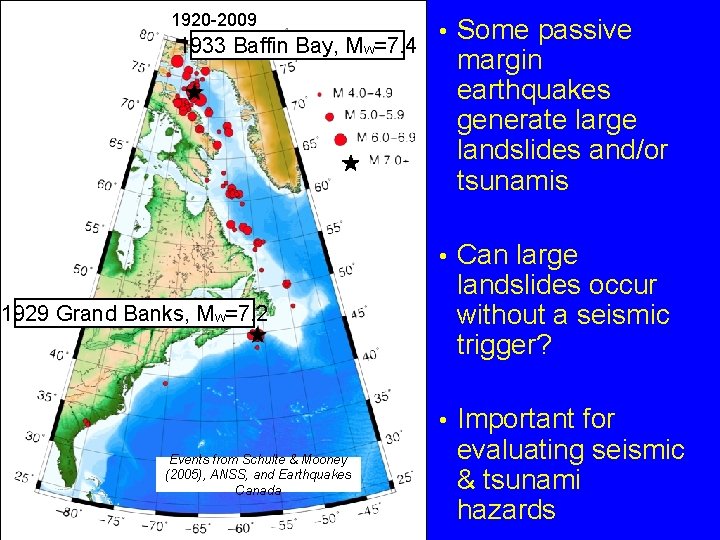
1920 -2009 1933 Baffin Bay, Mw=7. 4 • Some passive margin earthquakes generate large landslides and/or tsunamis • Can large landslides occur without a seismic trigger? • Important for evaluating seismic & tsunami hazards 1929 Grand Banks, Mw=7. 2 Events from Schulte & Mooney (2005), ANSS, and Earthquakes Canada
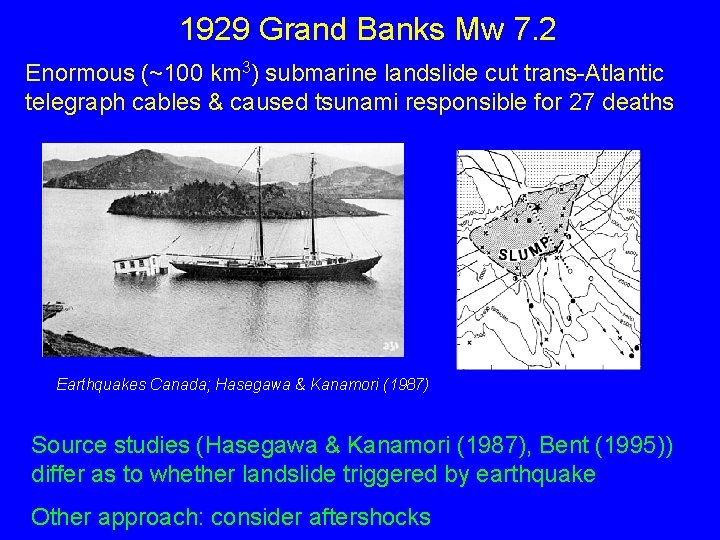
1929 Grand Banks Mw 7. 2 Enormous (~100 km 3) submarine landslide cut trans-Atlantic telegraph cables & caused tsunami responsible for 27 deaths Earthquakes Canada; Hasegawa & Kanamori (1987) Source studies (Hasegawa & Kanamori (1987), Bent (1995)) differ as to whether landslide triggered by earthquake Other approach: consider aftershocks
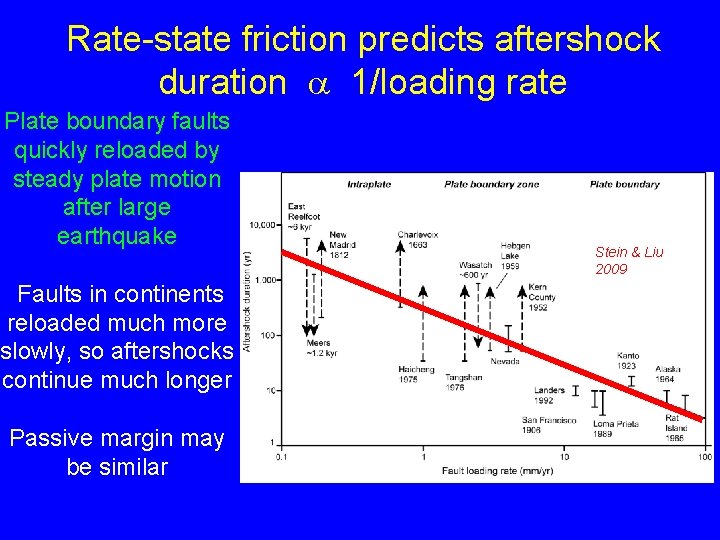
Rate-state friction predicts aftershock duration 1/loading rate Plate boundary faults quickly reloaded by steady plate motion after large earthquake Faults in continents reloaded much more slowly, so aftershocks continue much longer Passive margin may be similar Stein & Liu, 2009 Stein & Liu 2009
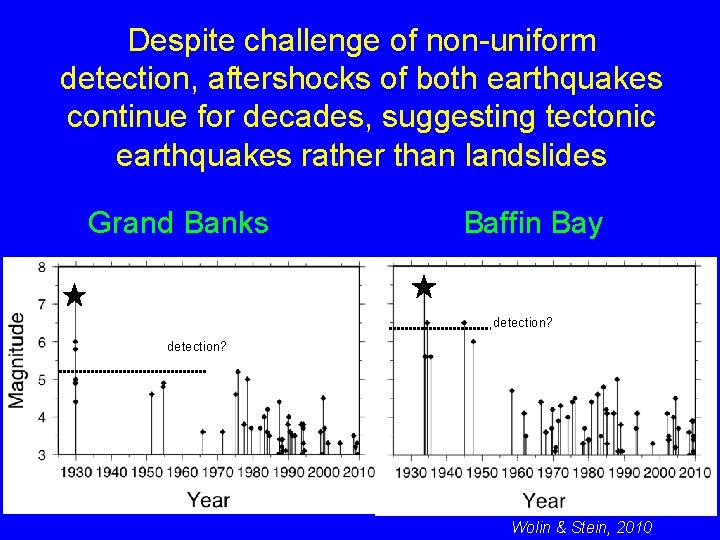
Despite challenge of non-uniform detection, aftershocks of both earthquakes continue for decades, suggesting tectonic earthquakes rather than landslides Grand Banks Baffin Bay detection? Wolin & Stein, 2010
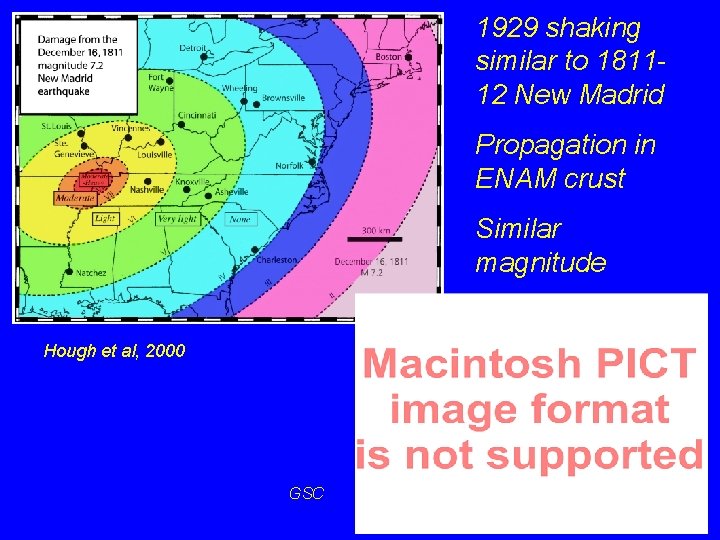
1929 shaking similar to 181112 New Madrid Propagation in ENAM crust Similar magnitude Hough et al, 2000 GSC
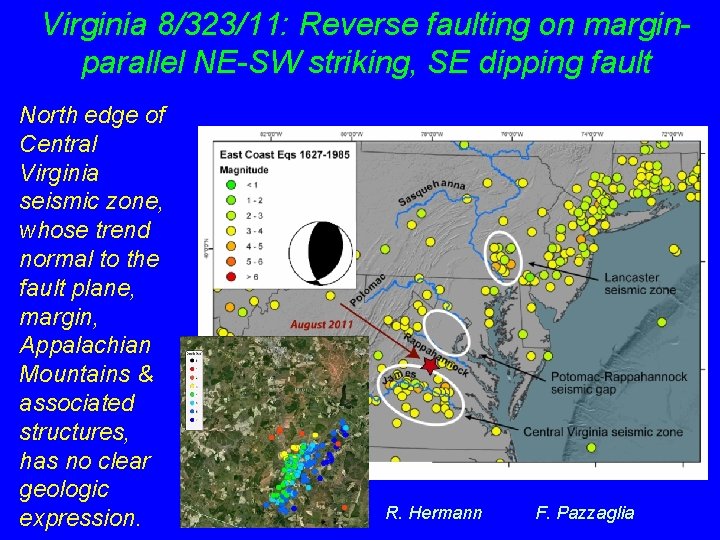
Virginia 8/323/11: Reverse faulting on marginparallel NE-SW striking, SE dipping fault North edge of Central Virginia seismic zone, whose trend normal to the fault plane, margin, Appalachian Mountains & associated structures, has no clear geologic expression. R. Hermann F. Pazzaglia
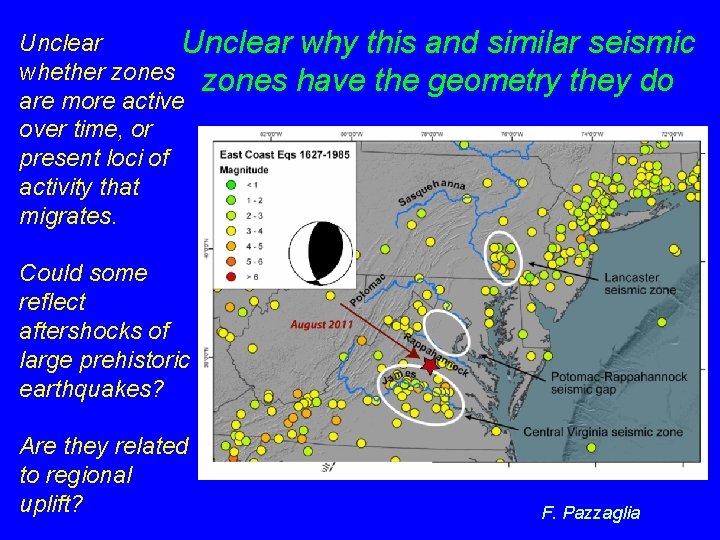
Unclear why this and similar seismic whether zones have the geometry they do are more active over time, or present loci of activity that migrates. Could some reflect aftershocks of large prehistoric earthquakes? Are they related to regional uplift? F. Pazzaglia
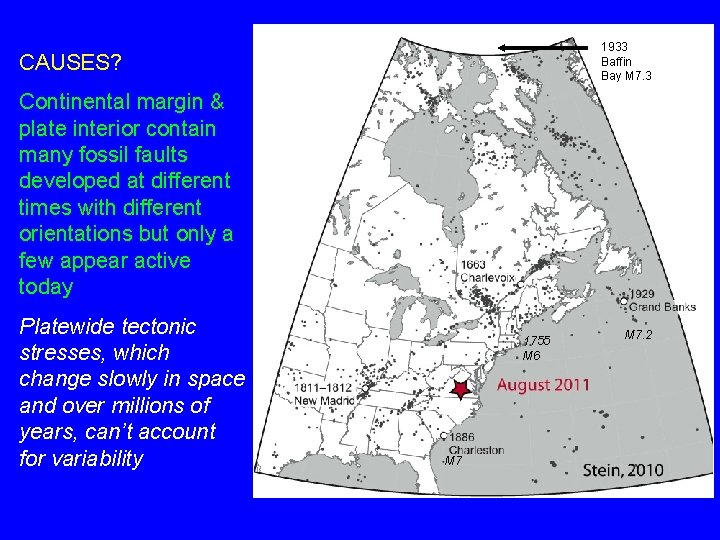
1933 Baffin Bay M 7. 3 CAUSES? Continental margin & plate interior contain many fossil faults developed at different times with different orientations but only a few appear active today Platewide tectonic stresses, which change slowly in space and over millions of years, can’t account for variability 1755 M 6 M 7. 2
Compression predicted across margin W. Holt Includes lithospheric structure, topography & mantle flow
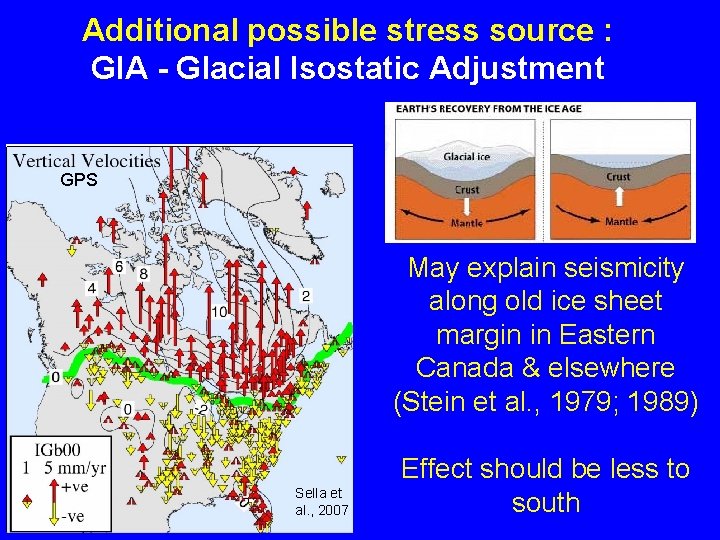
Additional possible stress source : GIA - Glacial Isostatic Adjustment GPS May explain seismicity along old ice sheet margin in Eastern Canada & elsewhere (Stein et al. , 1979; 1989) Sella et al. , 2007 Effect should be less to south
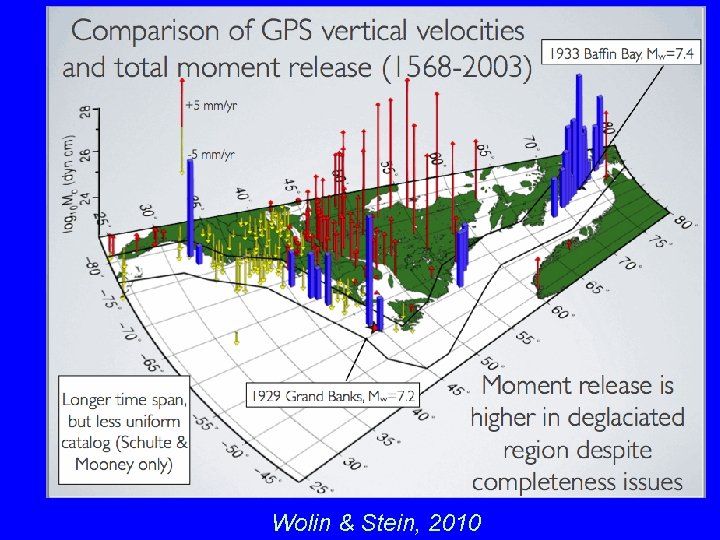
Wolin & Stein, 2010
Extensions of Fracture Zones hypothesis (Sykes, 1978) Inadequately describes locations A. Kafka
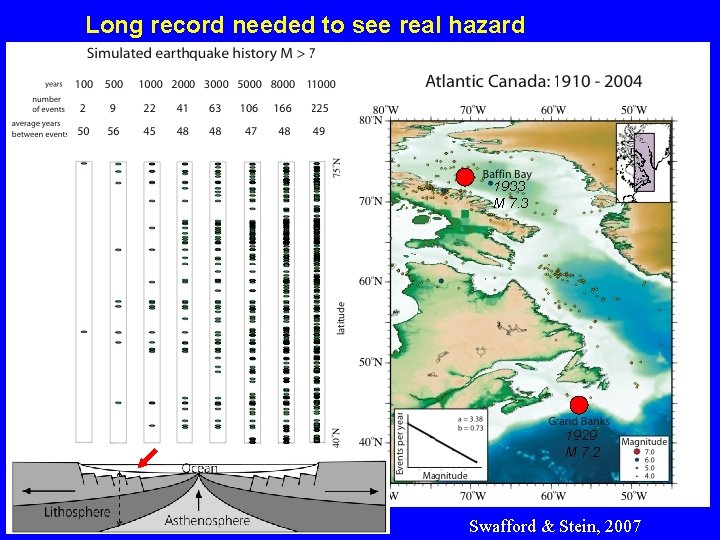
Long record needed to see real hazard 1933 M 7. 3 1929 M 7. 2 Swafford & Stein, 2007
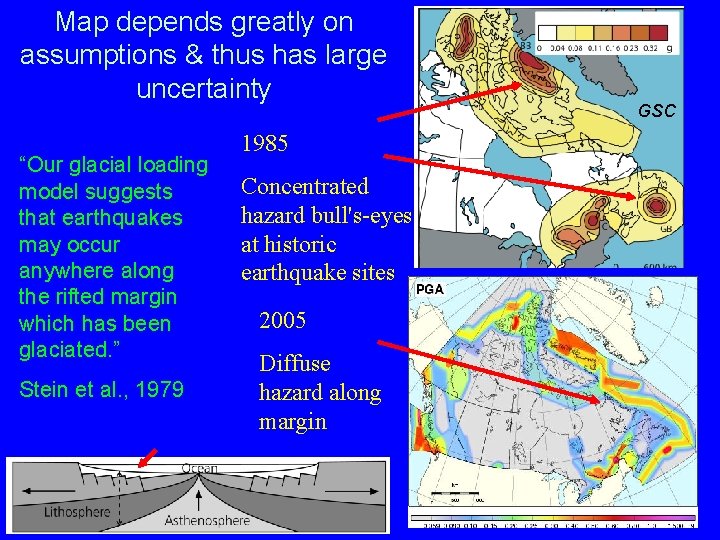
Map depends greatly on assumptions & thus has large uncertainty “Our glacial loading model suggests that earthquakes may occur anywhere along the rifted margin which has been glaciated. ” Stein et al. , 1979 1985 Concentrated hazard bull's-eyes at historic earthquake sites 2005 Diffuse hazard along margin GSC
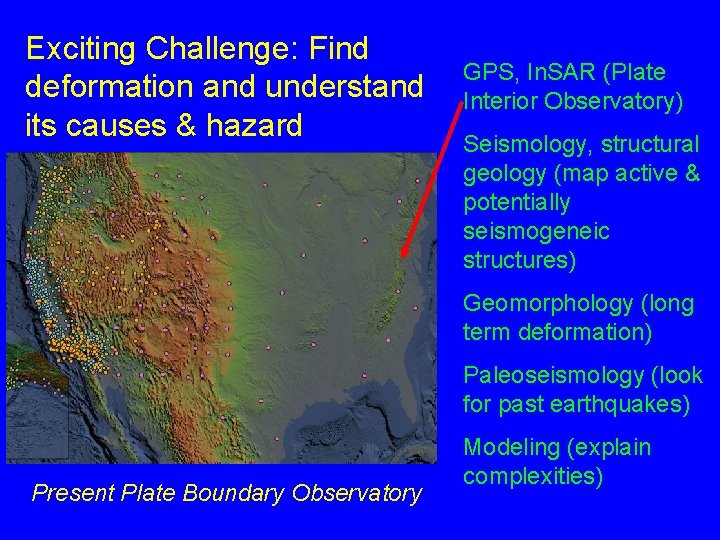
Exciting Challenge: Find deformation and understand its causes & hazard GPS, In. SAR (Plate Interior Observatory) Seismology, structural geology (map active & potentially seismogeneic structures) Geomorphology (long term deformation) Paleoseismology (look for past earthquakes) Present Plate Boundary Observatory Modeling (explain complexities)