
Mineral Properties Physical Properties of Minerals Color Streak
- Slides: 21
Mineral Properties
Physical Properties of Minerals ► Color ► Streak ► Hardness ► Cleavage or Fracture ► Crystalline Structure ► Magnetism ► Luster ► Chemical Composition ► Specific Gravity (density)
Color ► 18 Of the mineral properties, color is the least accurate for figuring out a mineral’s identity ► 23 The purest color of quartz is clear because it has the fewest impurities inside of it
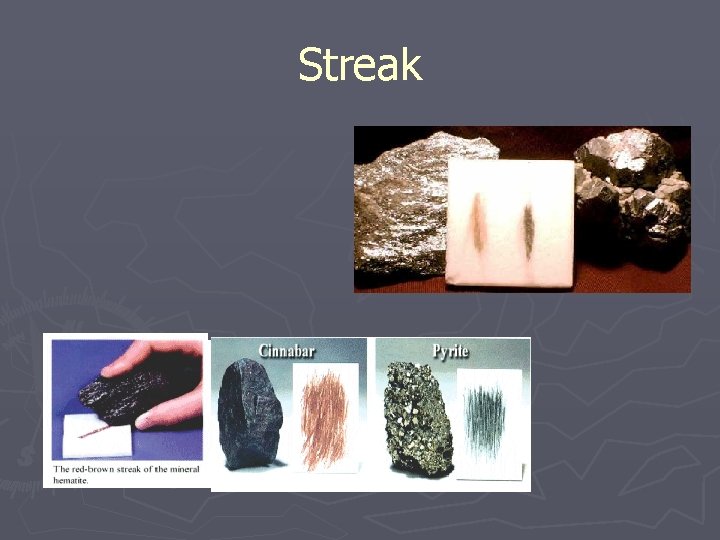
Streak ► 13 A mineral’s streak is the powder left behind when a mineral scratches against a streak plate. ► 14 The color of the powder that a mineral leaves on a piece of white, unglazed porcelain is called the streak.
Streak
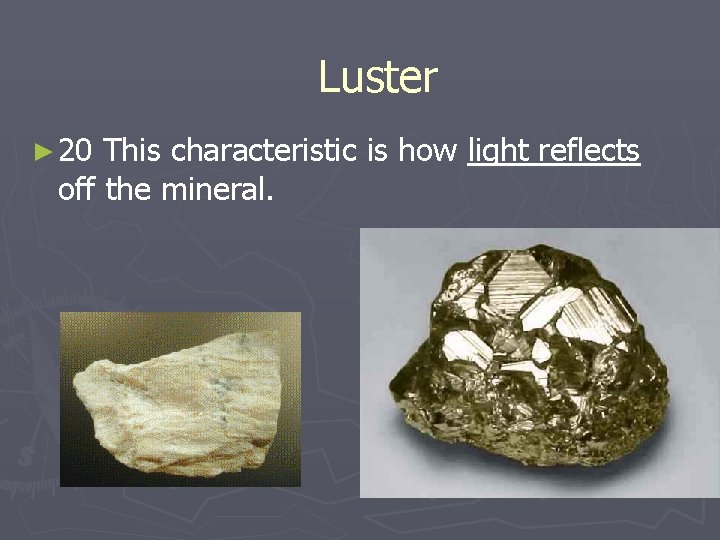
Luster ► 20 This characteristic is how light reflects off the mineral.
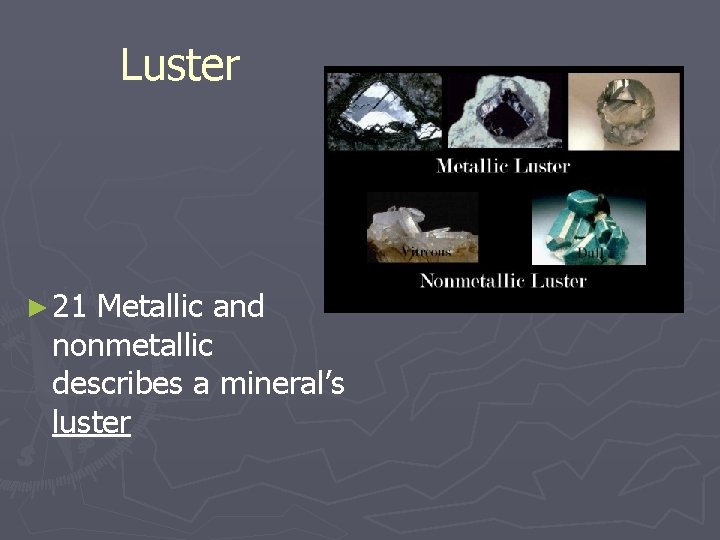
Luster ► 21 Metallic and nonmetallic describes a mineral’s luster
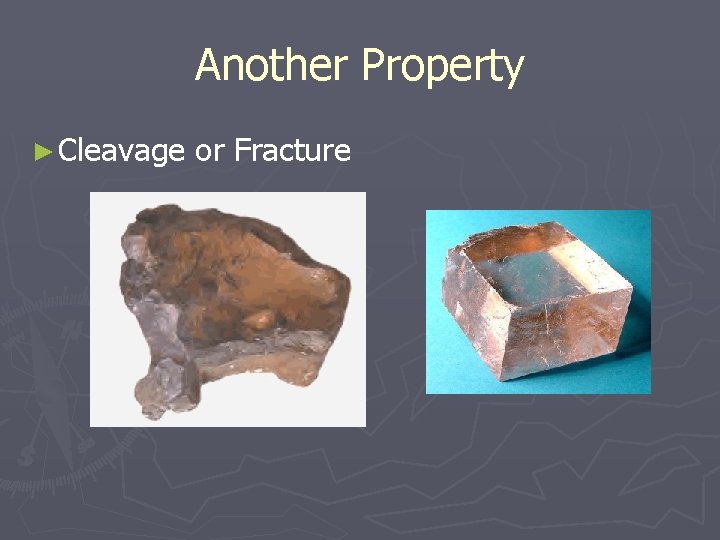
Another Property ► Cleavage or Fracture
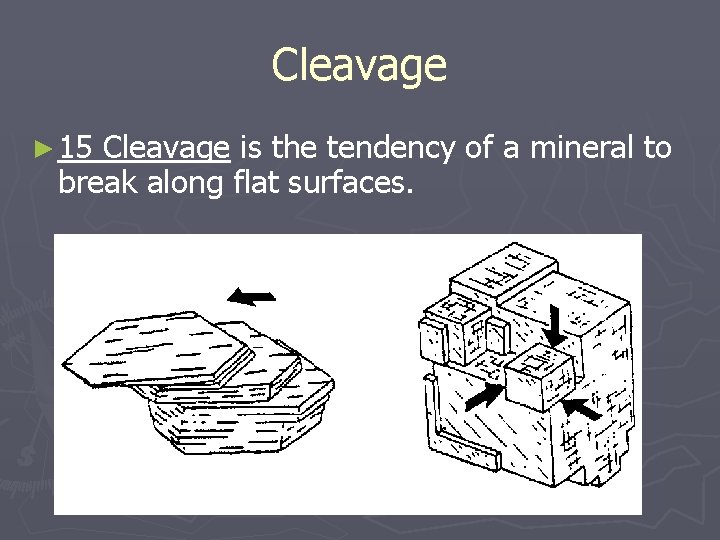
Cleavage ► 15 Cleavage is the tendency of a mineral to break along flat surfaces.
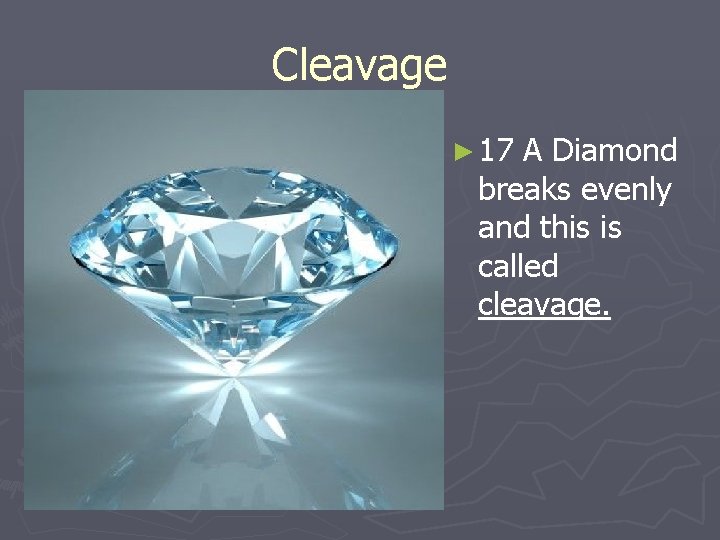
Cleavage ► 17 A Diamond breaks evenly and this is called cleavage.
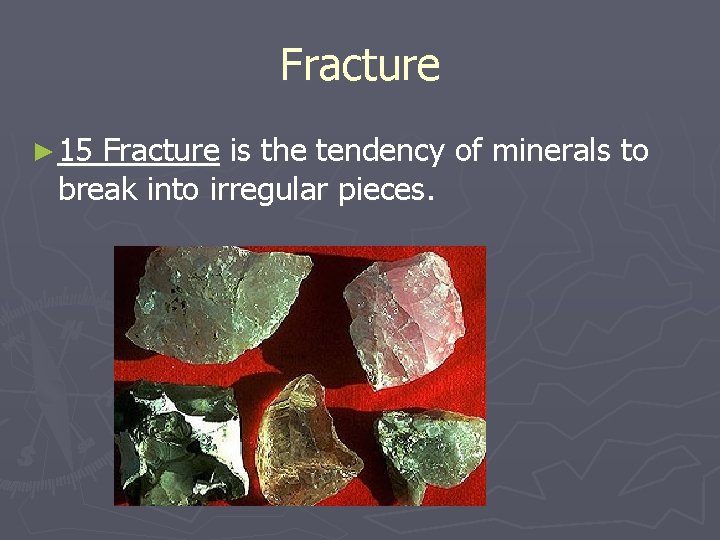
Fracture ► 15 Fracture is the tendency of minerals to break into irregular pieces.
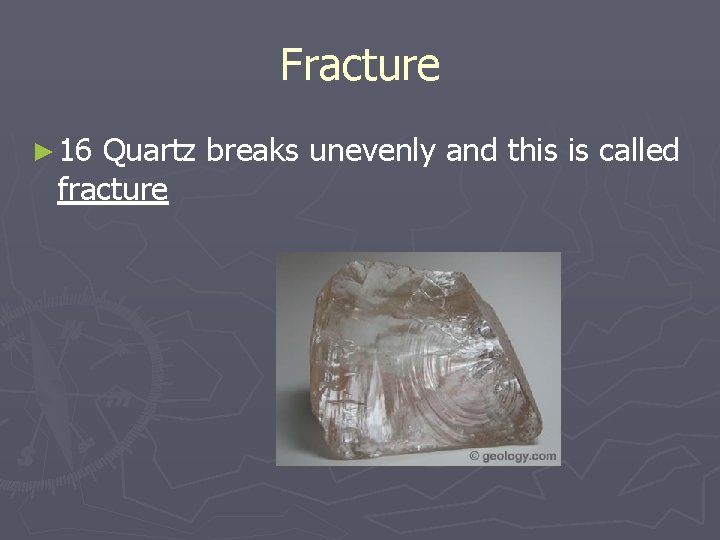
Fracture ► 16 Quartz breaks unevenly and this is called fracture
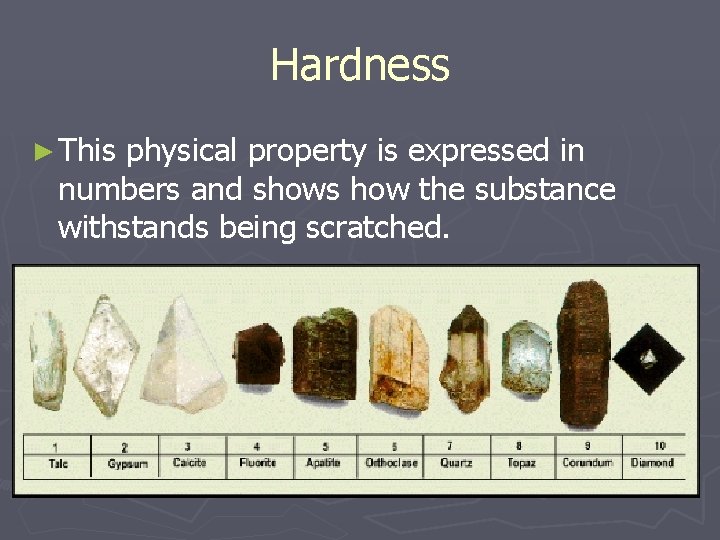
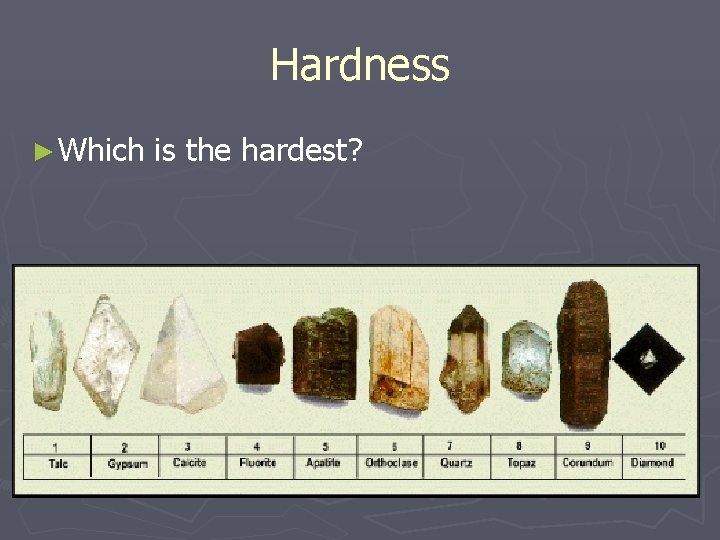
Hardness ► This physical property is expressed in numbers and shows how the substance withstands being scratched.
► 10 Minerals are identified by Hardness is tested by scratching
Hardness ► What ► 9 is Mohs' hardness scale? A scale from 1 to 10 that measures the hardness of minerals.
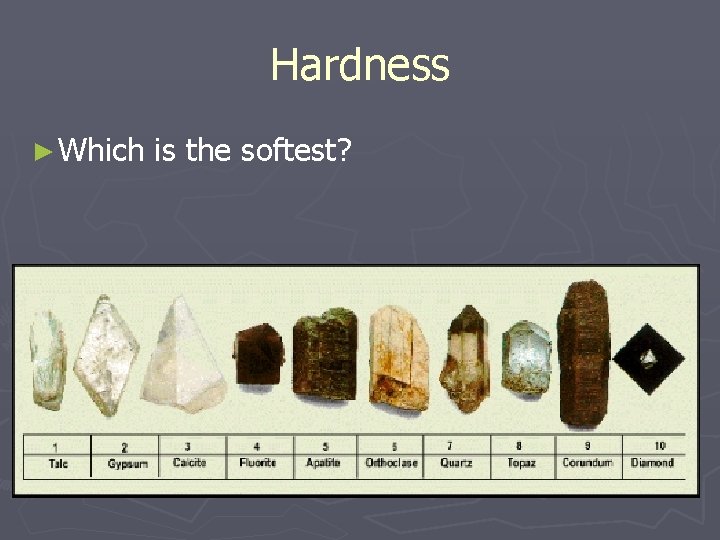
Hardness ► Which is the softest?
Hardness ► Which is the hardest?
► 11 What physical properties can be expressed in numbers and shows how that substance withstands being scratched? Hardness
Other Properties ► Magnetism ► Crystalline ► Chemical ► Specific Structure Composition Gravity (density)
Do you have all 9? ► Color ► Streak ► Hardness ► Cleavage or Fracture ► Crystalline Structure ► Magnetism ► Luster ► Chemical Composition ► Specific Gravity (density)
► 19 The most common classification of minerals is based on chemical composition. ► 22 This is considered a special property that applies to only a few minerals. Magnetism.