
Mineral Luster Explanation The way light reflects off
- Slides: 2
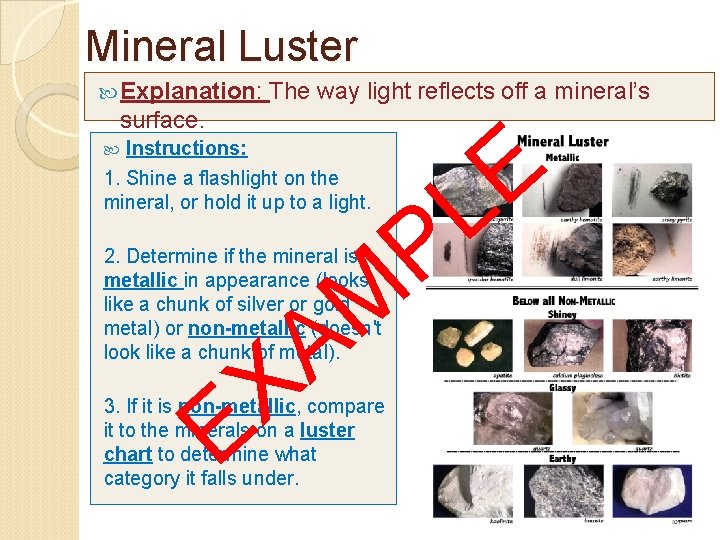
Mineral Luster Explanation: The way light reflects off a mineral’s surface. Instructions: 1. Shine a flashlight on the mineral, or hold it up to a light. E L 2. Determine if the mineral is metallic in appearance (looks like a chunk of silver or gold metal) or non-metallic (doesn't look like a chunk of metal). X E M A P 3. If it is non-metallic, compare it to the minerals on a luster chart to determine what category it falls under.
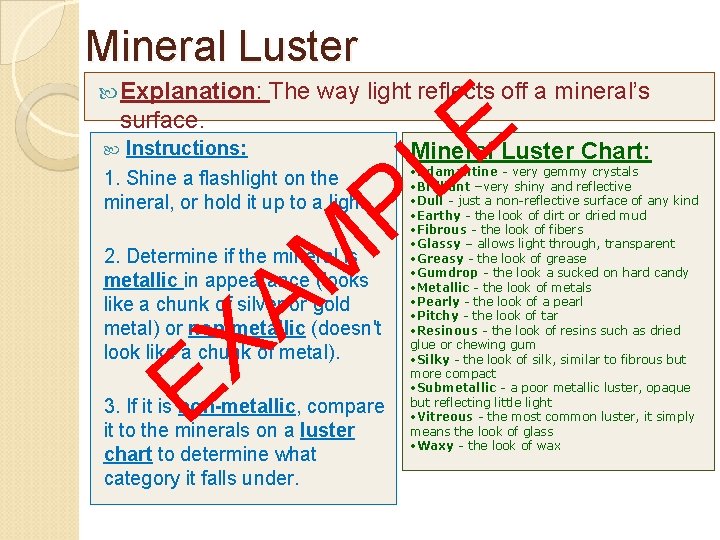
Mineral Luster Explanation: The way light reflects off a mineral’s E L P surface. Instructions: 1. Shine a flashlight on the mineral, or hold it up to a light. M A 2. Determine if the mineral is metallic in appearance (looks like a chunk of silver or gold metal) or non-metallic (doesn't look like a chunk of metal). X E 3. If it is non-metallic, compare it to the minerals on a luster chart to determine what category it falls under. Mineral Luster Chart: • Adamantine - very gemmy crystals • Brilliant –very shiny and reflective • Dull - just a non-reflective surface of any kind • Earthy - the look of dirt or dried mud • Fibrous - the look of fibers • Glassy – allows light through, transparent • Greasy - the look of grease • Gumdrop - the look a sucked on hard candy • Metallic - the look of metals • Pearly - the look of a pearl • Pitchy - the look of tar • Resinous - the look of resins such as dried glue or chewing gum • Silky - the look of silk, similar to fibrous but more compact • Submetallic - a poor metallic luster, opaque but reflecting little light • Vitreous - the most common luster, it simply means the look of glass • Waxy - the look of wax