
Minding the Gap Access Availability and Services by
Minding the Gap: Access, Availability, and Services by Dr. M. Gerlene Ross
Overview n n n Disability Research Access Challenges Disparity Issues Cultural Sensitivity Cultural Competency
Disability Research Shift in ethnic, racial and cultural composition of the U. S. n Must be a shift in vocational rehabilitation and other service delivery programs n Service delivery contrast between White Americans vs. Non-White n
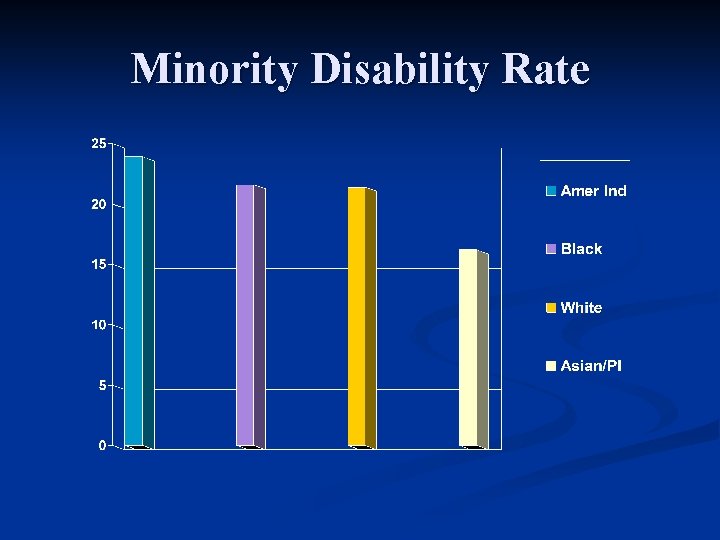
Minority Disability Rate
Barriers Impacting Racial/Ethnic Women with Disabilities
Disparity Issues Fifty-three million Americans have either a severe or a non severe disability n Disparities in rates of disability are pronounced for diverse groups n African Americans 20. 0% second only to Hispanics n African Americans have the highest rate of severe disability of all racial groups n
Disparity Issues Rates of disability are disproportionate in terms of gender n Women represent more than half of persons with disabilities n African American women (21. 7) are second to Hispanic women (21. 8) in disability rate. n African American women have more multiple disabling conditions n
Disparity Issues Cont Persons with disabilities are less likely to be meaningfully employed n Severity of Disability impacts employment status as well as quality of employment n Women are least likely to have employment regardless of disability n Women with disabilities are at higher risk for unemployment n
Cultural Sensitivity Respect n Reasonable Accommodations n
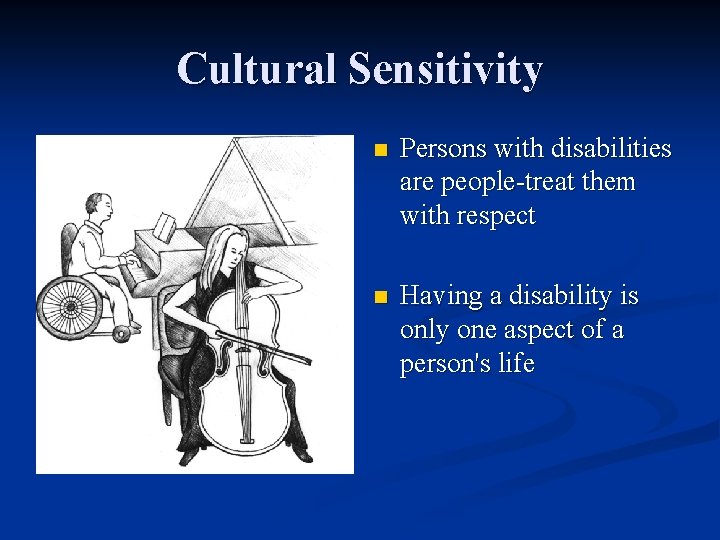
Cultural Sensitivity n Persons with disabilities are people-treat them with respect n Having a disability is only one aspect of a person's life
Cultural Sensitivity Be careful with the language that you use n Talk directly to the person n When in doubt ask n
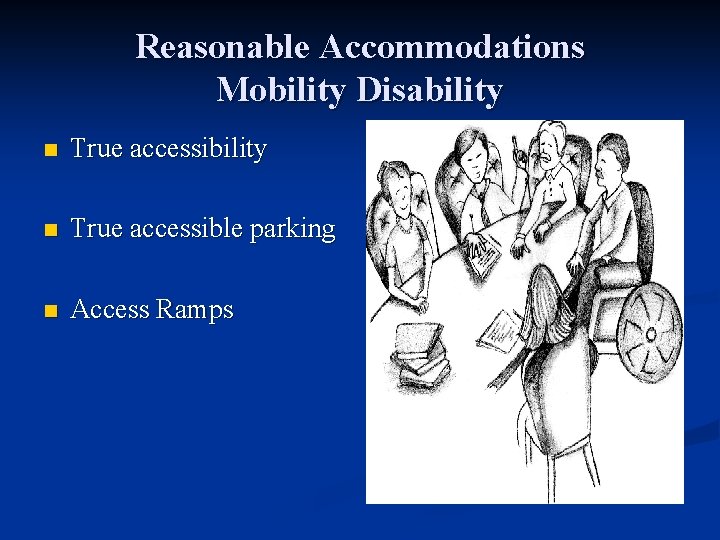
Reasonable Accommodations Mobility Disability n True accessible parking n Access Ramps
Reasonable Accommodations Hearing Disabilities n n n Utilizing TDDTelecommunication Device for the Deaf Be familiar with telecommunication abbreviations Utilizing an interpreter
Reasonable Accommodations Visual Disabilities n n Offer materials in Braille Use screen readers, speech synthesizers, scanner systems, Tele. Braille, and large format displays. Ask if they want assistance Do not pet or talk to service animals without permission
Reasonable Accommodations Communication Disabilities n Take time to listen to the person n Solicit and provide feedback n Reduce or eliminate background noise
Cultural Competence Individual-The ability to communicate effectively with individuals representing diverse racial and ethnic heritages n Organization-The ability to be responsive to diverse cultural, ethnic, or linguistic clientele. n Research- notes changing demographics, consumer-centered services, and validation as key for increasing cultural competence n
Research Needs Cultural Competence n Employment n Community Participation n Resources n
Recommendations & Research Questions-Cultural Competence n n Most frequently cited Need for Cultural Competence training Cultural Competence in service delivery Cultural Competence professional prep n n n Examine the awareness of cultural factors Examine pertinent correlations Apply information to racial identity development
Recommendations & Research Questions-Employment n n Survey employer awareness of ADA Survey attitudes towards PWD’s in underserved comm. n n n Expand employers for PWD’s from underserved comm. Enhance employment opportunities in underserved comm. Identify strategies that promote and sustain employment
Recommendations & Research Questions-Community Participation n n Evaluate accessibility in private and public sector Educational services for youth with disabilities in the juvenile justice system. n n Effects of lack of education on service provision. Research the impact collaboration on community participation.
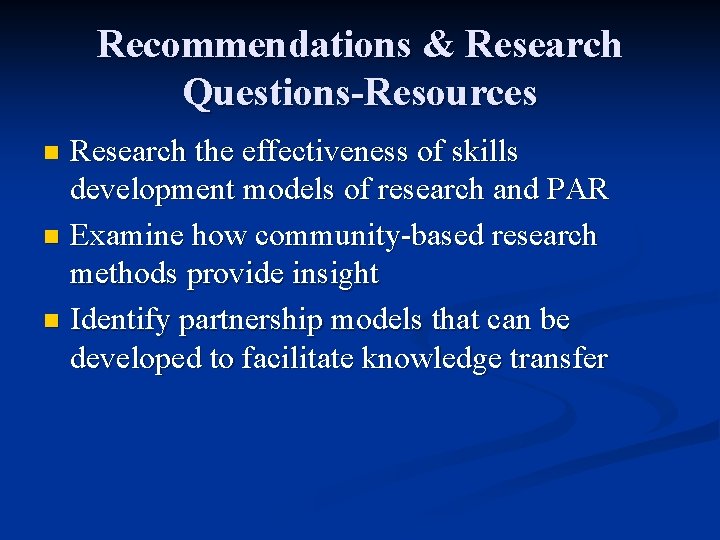
Recommendations & Research Questions-Resources Research the effectiveness of skills development models of research and PAR n Examine how community-based research methods provide insight n Identify partnership models that can be developed to facilitate knowledge transfer n
- Slides: 21