
MINDFULNESSBASED COGNITIVE THERAPY for CANCER MBCTCa Gently Turning
MINDFULNESS-BASED COGNITIVE THERAPY for CANCER (MBCT-Ca) Gently Turning Towards Trish Bartley and Ursula Bates

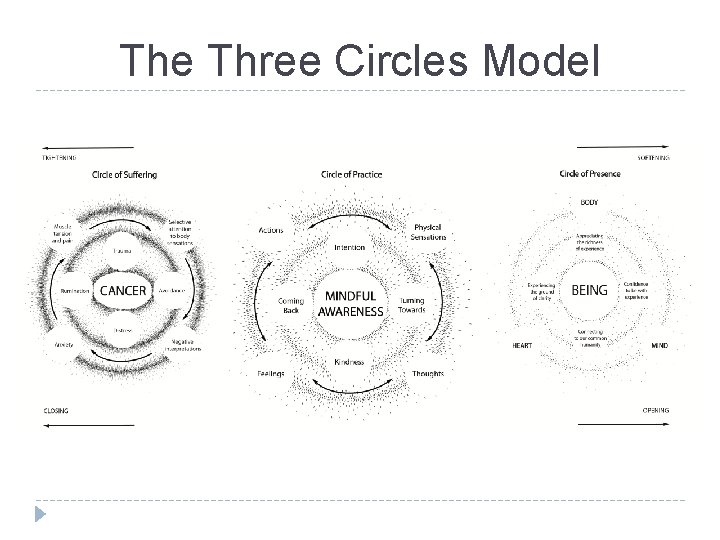
The Three Circles Model
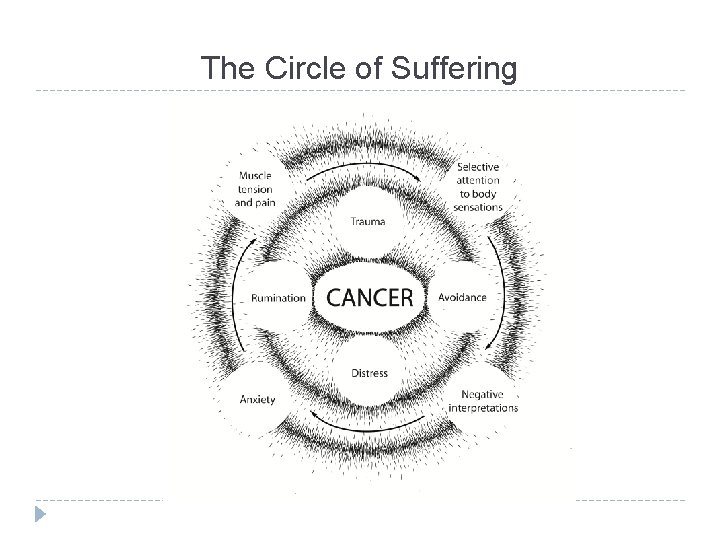
The Circle of Suffering
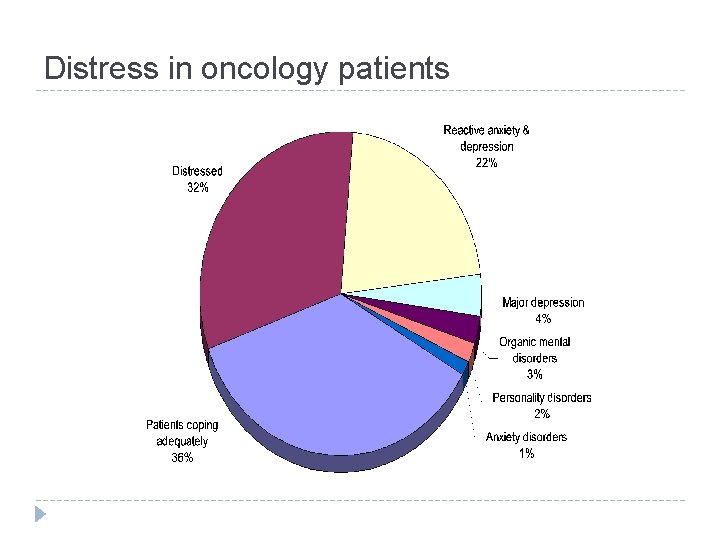
Distress in oncology patients
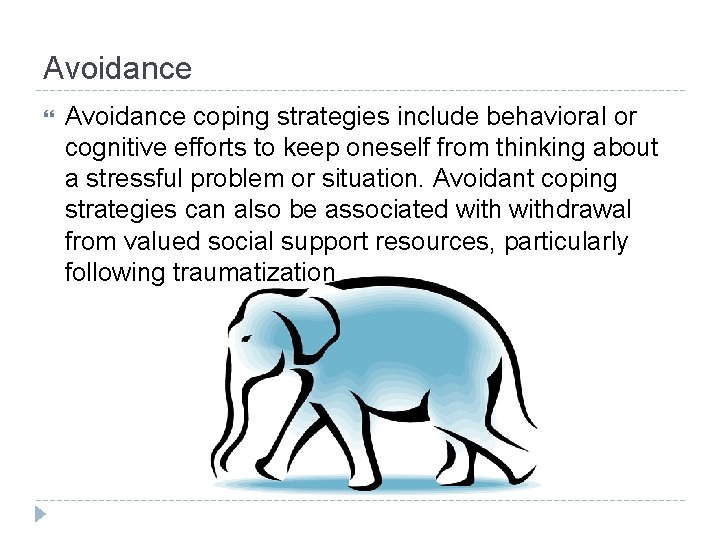
Avoidance coping strategies include behavioral or cognitive efforts to keep oneself from thinking about a stressful problem or situation. Avoidant coping strategies can also be associated withdrawal from valued social support resources, particularly following traumatization
Rumination is a way of responding to distress that involves repetitively (and passively) focusing on the symptoms of distress, and on its possible causes and consequences. Rumination is more common in people who are pessimistic, and who have negative attributional styles. The tendency to ruminate is a stable constant over time and serves as a significant risk factor for clinical depression. Not only are habitual ruminators more likely to become depressed, but experimental studies have demonstrated that people who are induced to ruminate experience greater depressed mood. There is also evidence that rumination is linked to general anxiety, post traumatic stress, binge drinking, eating disorders, and self-injurious behavior.
Trauma Some survivors of cancer experience trauma -related symptoms similar to symptoms experienced by people who have survived highly stressful situations, such as military combat, natural disasters, violent personal attack, or other lifethreatening events. This group of symptoms is called posttraumatic stress disorder (PTSD) and includes avoiding situations related to the trauma, continuously thinking of the trauma, and being overexcited. People with histories of cancer are considered to be at risk for PTSD. The physical and mental shock of having a lifethreatening disease, of receiving treatment for cancer, and living with repeated threats to one's body and life are traumatic experiences for many cancer patients.
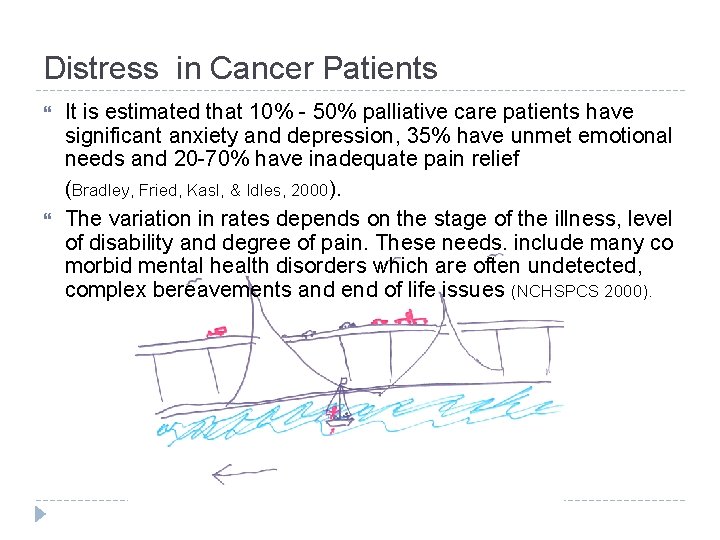
Distress in Cancer Patients It is estimated that 10% - 50% palliative care patients have significant anxiety and depression, 35% have unmet emotional needs and 20 -70% have inadequate pain relief (Bradley, Fried, Kasl, & Idles, 2000). The variation in rates depends on the stage of the illness, level of disability and degree of pain. These needs. include many co morbid mental health disorders which are often undetected, complex bereavements and end of life issues (NCHSPCS 2000).
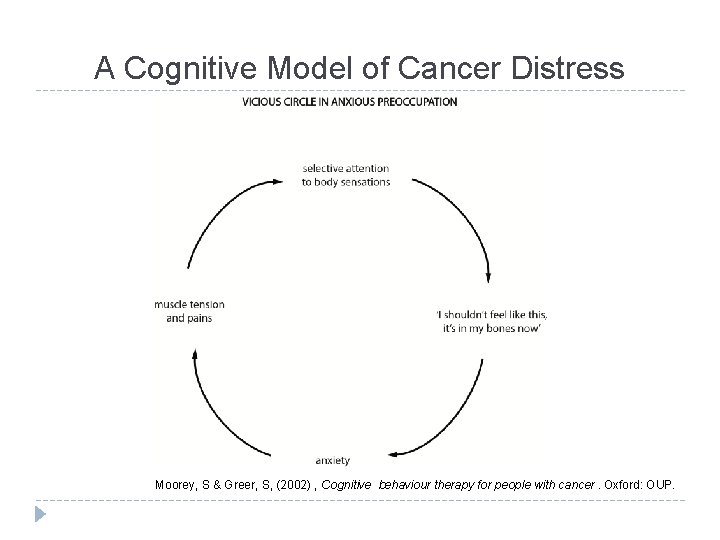
A Cognitive Model of Cancer Distress Moorey, S & Greer, S, (2002) , Cognitive behaviour therapy for people with cancer. Oxford: OUP.
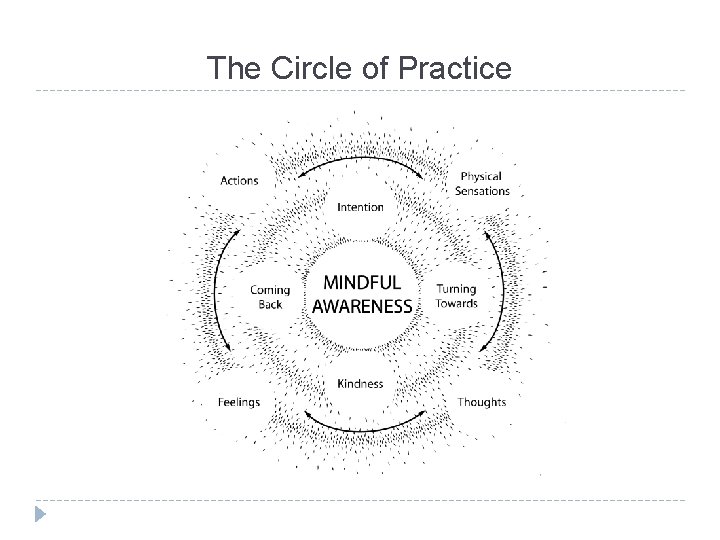
The Circle of Practice
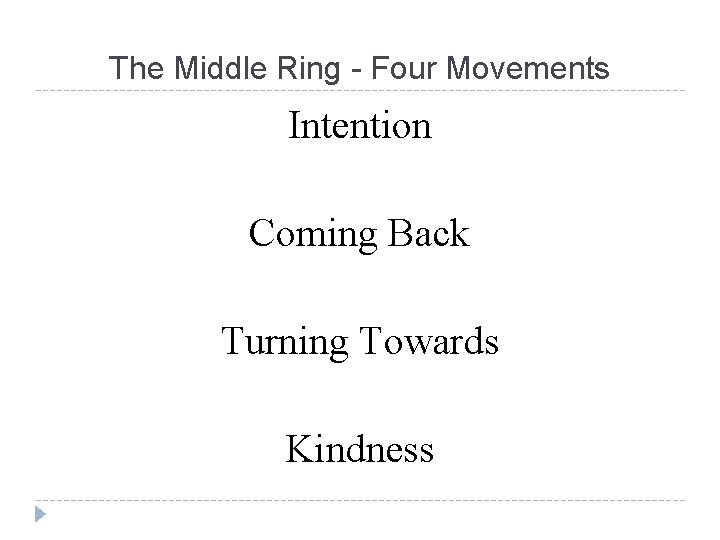
The Middle Ring - Four Movements Intention Coming Back Turning Towards Kindness
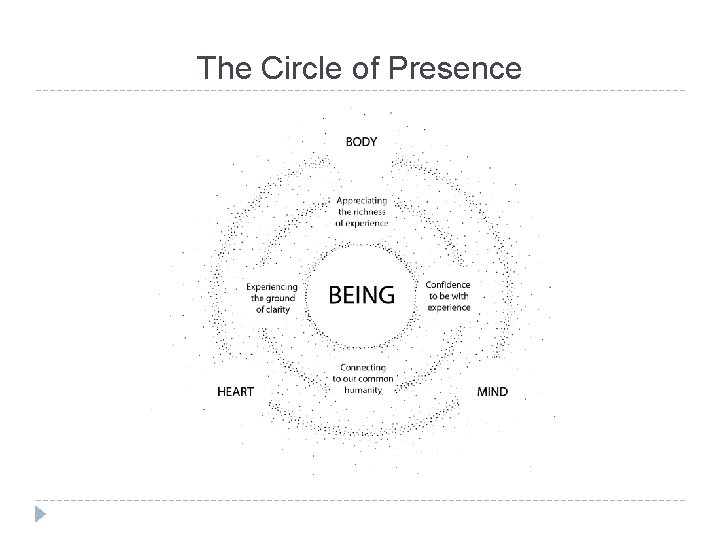
The Circle of Presence
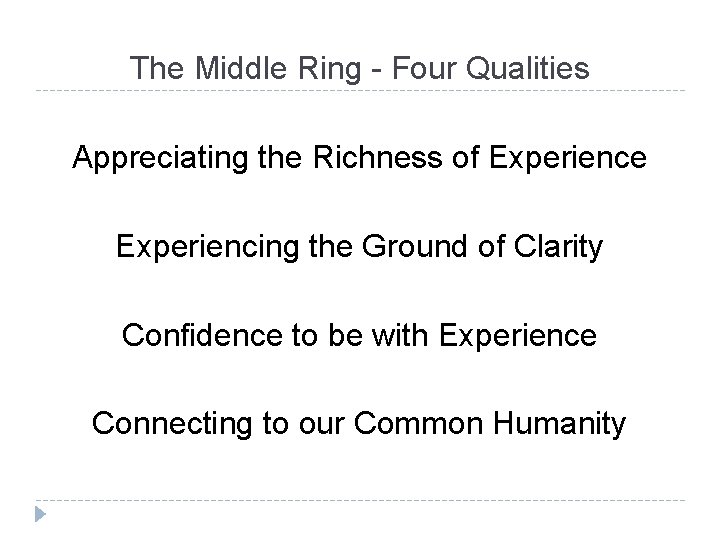
The Middle Ring - Four Qualities Appreciating the Richness of Experience Experiencing the Ground of Clarity Confidence to be with Experience Connecting to our Common Humanity
The Three Circles Model
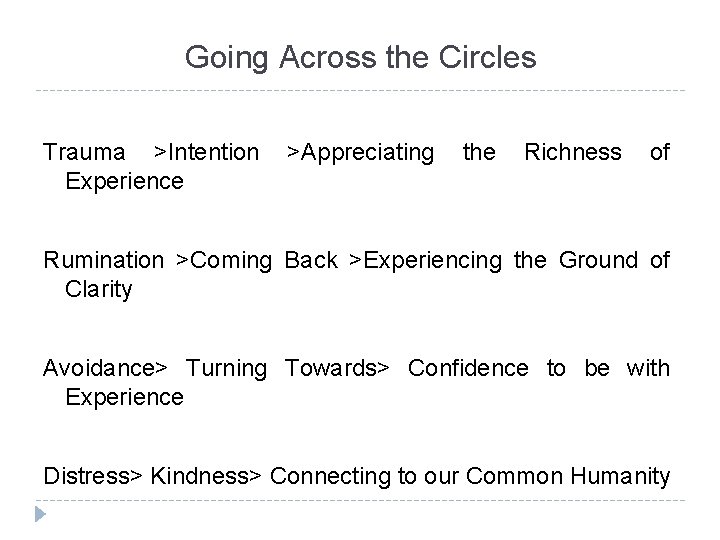
Going Across the Circles Trauma >Intention Experience >Appreciating the Richness of Rumination >Coming Back >Experiencing the Ground of Clarity Avoidance> Turning Towards> Confidence to be with Experience Distress> Kindness> Connecting to our Common Humanity
Resources and References Shennan, C. , Payne, S. , Fenlon, D. , (2010). What is the evidence for the use of mindfulness-based interventions in cancer care? A review. Psycho-Oncology DOI: 10. 1002/pon. 1819 christinashennan@talk. net Bartley, T. , (in press), Mindfulness-Based Cognitive Therapy for Cancer: Gently Turning Towards. Oxford: Wiley Blackwell Speca, M. , Carlson, L. E. , Goodey, E. , & Angen, M. , (2000) A randomised, wait-list controlled clinical trial: The effect of a mindfulness meditation-based stress reduction program on mood and symptoms of stress in cancer outpatients. Psychosomatic Medicine, 62, 613 -622. CMRP 2 day retreat workshop on 2 -4 th November 2011 in North Wales. ‘Mindfulness Based Cancer Therapy for Cancer’ led by
- Slides: 16