
Mind UP Understanding your Brain What does the
Mind. UP Understanding your Brain
What does the brain do? Makes us think Makes us see, hear, touch, feel , smell Controls our muscle movement Makes our organs (heart, lungs, etc) work Makes us feel emotions
Unit 1: Getting Focused We are going to learn: How our brains respond to stress Strategies we can use to quiet our mind and control our reactions
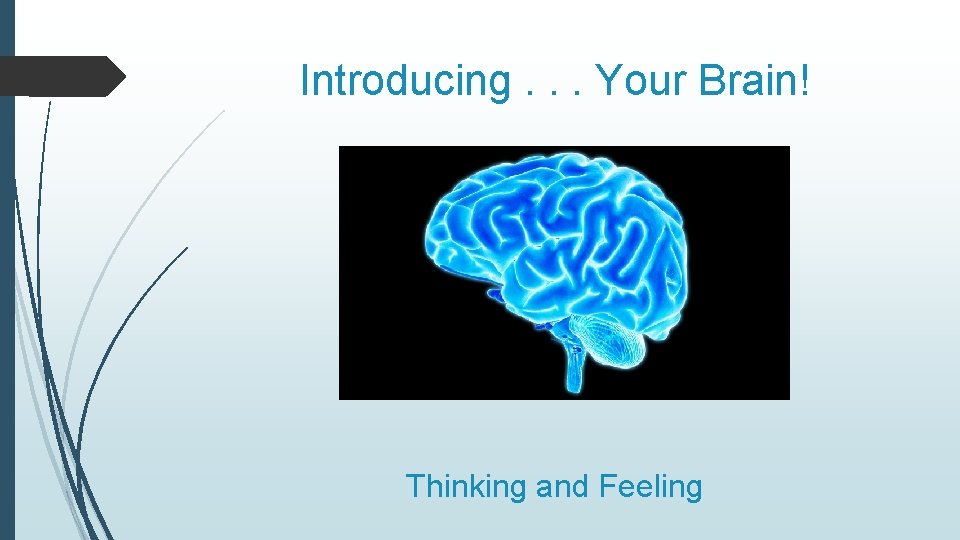
Introducing. . . Your Brain! Thinking and Feeling
Meet “Team Brain” The parts of the brain operate like a team Each part has its own job The Prefrontal Cortex: thinking The Hippocampus: remembering The Amygdala: reacting
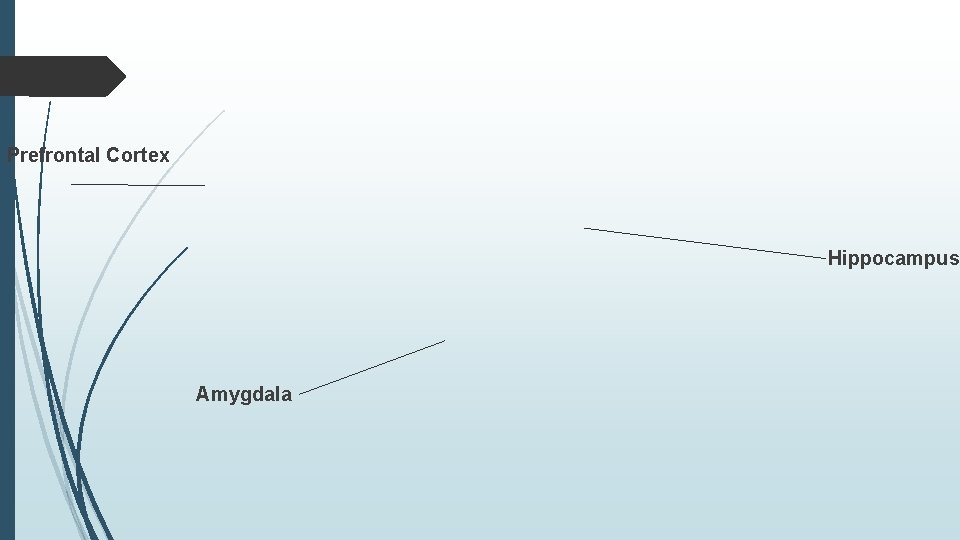
Prefrontal Cortex Hippocampus Amygdala
The Hippocampus 2 crescent-shaped structures Storage area for memory and learning Helps you remember things that are important to you
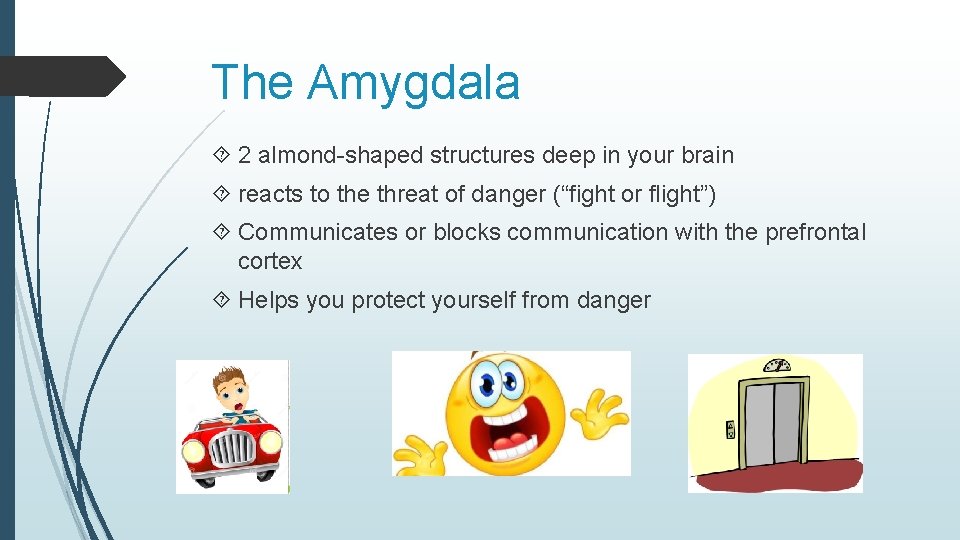
The Amygdala 2 almond-shaped structures deep in your brain reacts to the threat of danger (“fight or flight”) Communicates or blocks communication with the prefrontal cortex Helps you protect yourself from danger
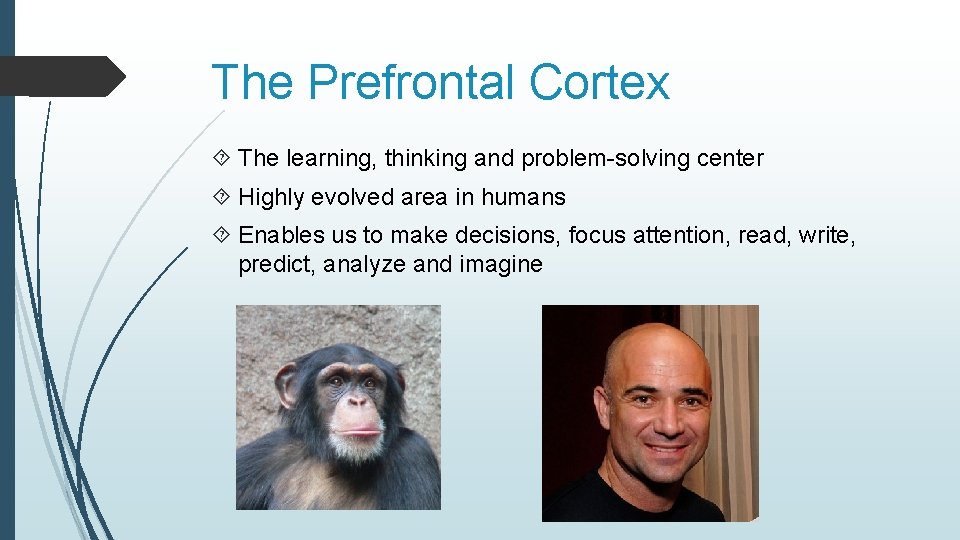
The Prefrontal Cortex The learning, thinking and problem-solving center Highly evolved area in humans Enables us to make decisions, focus attention, read, write, predict, analyze and imagine
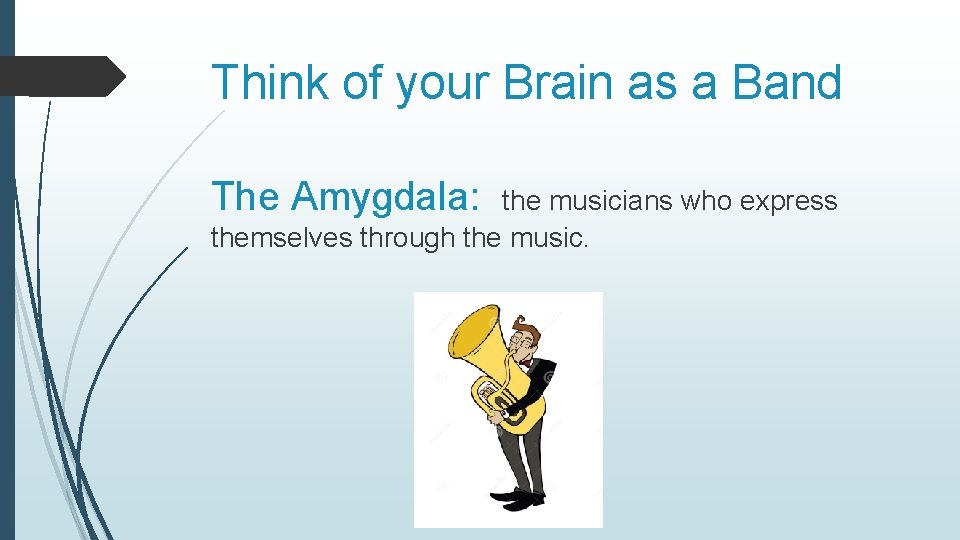
Think of your Brain as a Band The Amygdala: the musicians who express themselves through the music.
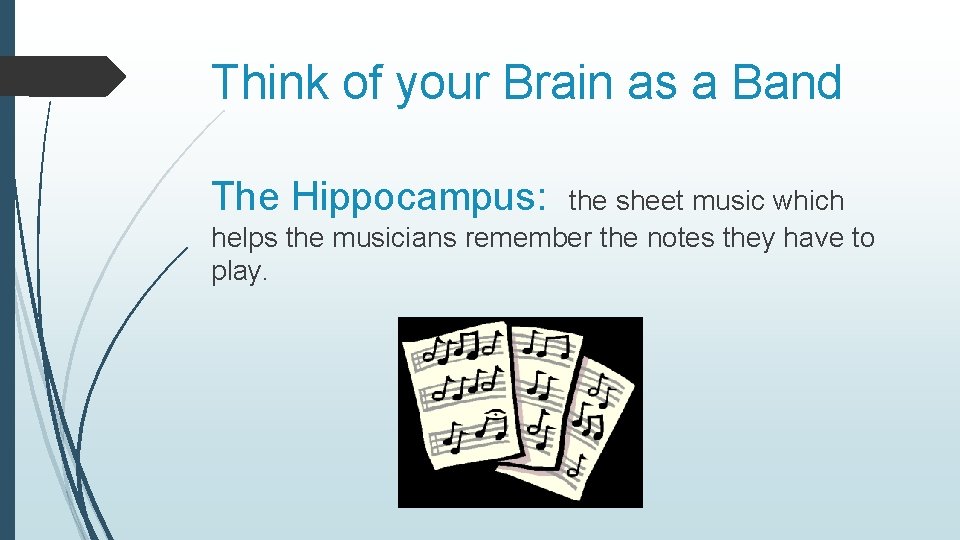
Think of your Brain as a Band The Hippocampus: the sheet music which helps the musicians remember the notes they have to play.
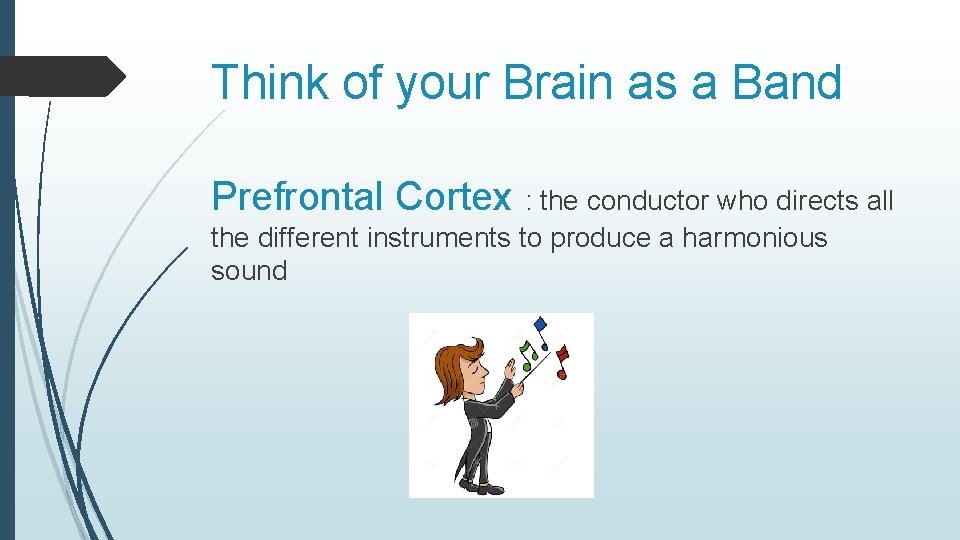
Think of your Brain as a Band Prefrontal Cortex : the conductor who directs all the different instruments to produce a harmonious sound
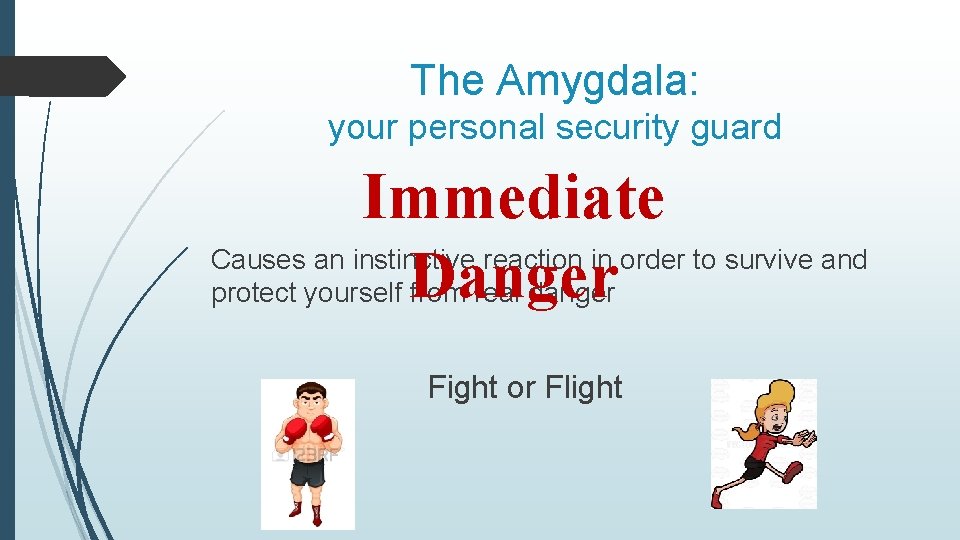
The Amygdala: your personal security guard Immediate Causes an instinctive reaction in order to survive and protect yourself Danger from real danger Fight or Flight
WARNING A baseball is flying at full speed towards your face Your Hippocampus recognizes the ball and the pain it will cause if it hits you. It sends a message to alert the amygdala of danger. Your Amygdala activates a reflexive response –you cover your face (fight) or you duck (flight). Your Prefrontal Cortex doesn’t even know what happened!
The Amygdala: your personal security guard Possible Danger Puts you on alert and sends information to the prefrontal cortex to be considered and evaluated.
WARNING The fire alarm goes off at school Your Hippocampus recognizes the fire alarm as a sign of emergency. It sends a message to alert the amygdala. Your Amygdala is activated and makes you alert and tense. It signals possible danger to the prefrontal cortex. Your Prefrontal Cortex allows you to look at the situation, recognize that it is a drill, remain calm, follow the proper procedure and know that it will all be over in a few minutes
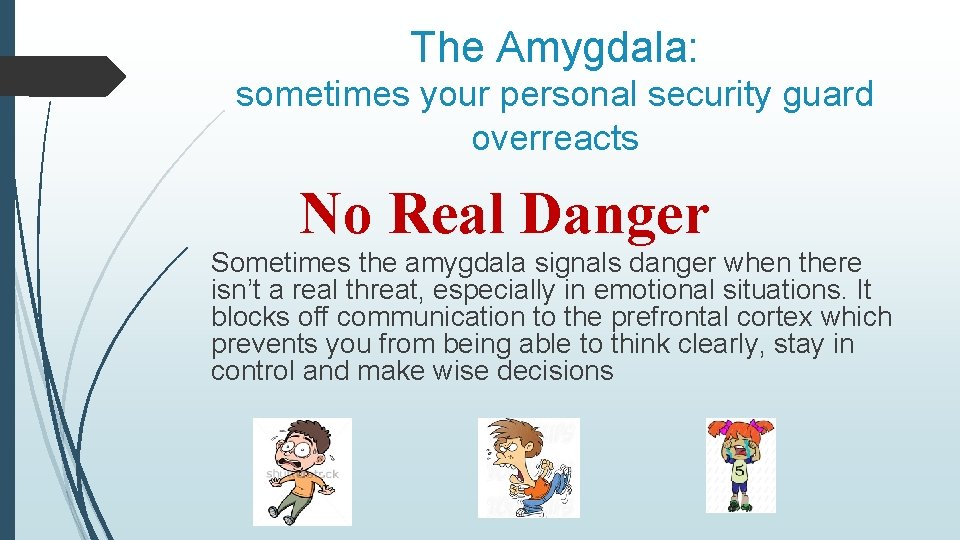
The Amygdala: sometimes your personal security guard overreacts No Real Danger Sometimes the amygdala signals danger when there isn’t a real threat, especially in emotional situations. It blocks off communication to the prefrontal cortex which prevents you from being able to think clearly, stay in control and make wise decisions
WARNING You are about to do a presentation in front of the class Your Hippocampus remembers that this is a situation that makes you nervous. It sends a message to alert the amygdala of possible danger. Your Amygdala activates a reflexive response to a threat. It shuts down communication with the prefrontal cortex. You become unable to think clearly and you panic or freeze. Your Prefrontal Cortex can’t help you because your emotions have taken your brain hostage.
Time to fill out your worksheet!
Small Group Discussion Imagine you are walking to school and you see ahead of you, blocking the sidewalk, a large group of bigger kids you don’t know 1. How does your body immediately react? (amygdala) 2. What memories/experience/knowledge can you draw on? (hippocampus) 3. What is your plan? (prefrontal cortex)
Mind. UP can help you! We will learn strategies to: help calm your amygdala when there is no danger Strengthen your ability to focus by getting information to your prefrontal cortex efficiently Store important ideas in your hippocampus
- Slides: 21