
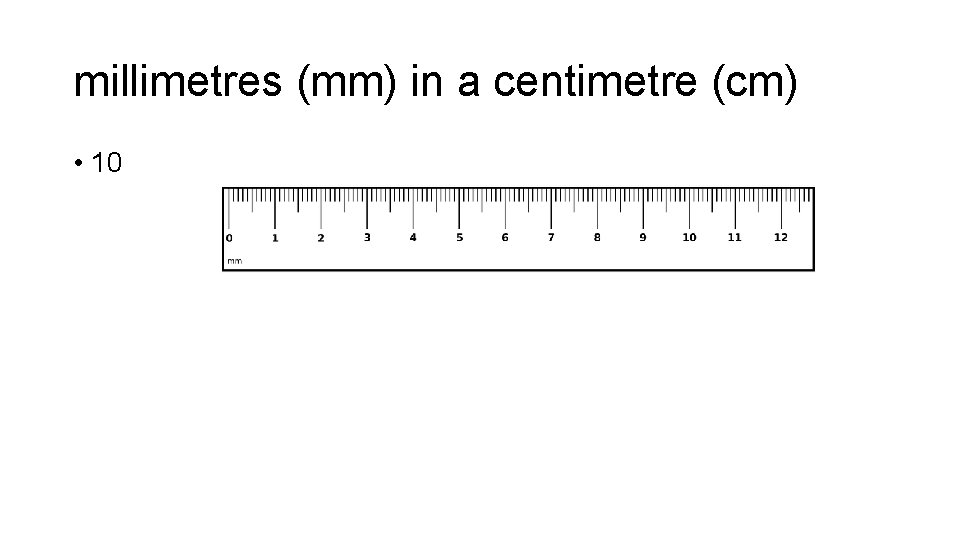
millimetres mm in a centimetre cm 10 centimetres
- Slides: 59
millimetres (mm) in a centimetre (cm) • 10
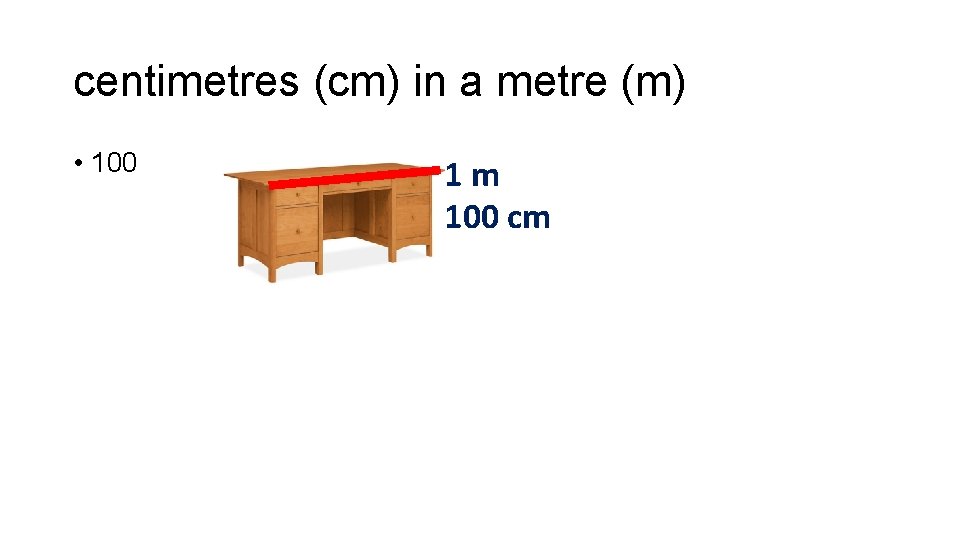
centimetres (cm) in a metre (m) • 100 1 m 100 cm
metres (m) in a kilometre (km) • 1000
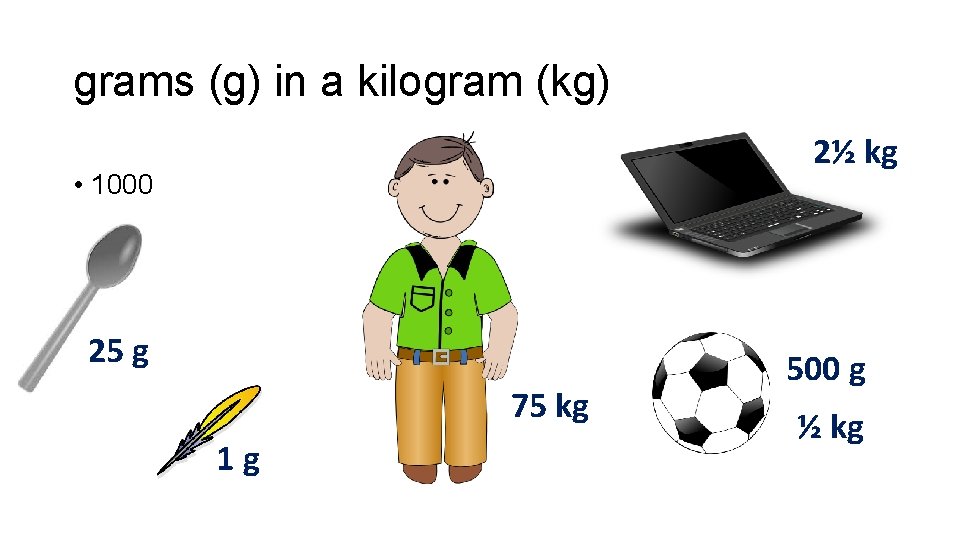
grams (g) in a kilogram (kg) 2½ kg • 1000 25 g 75 kg 1 g 500 g ½ kg
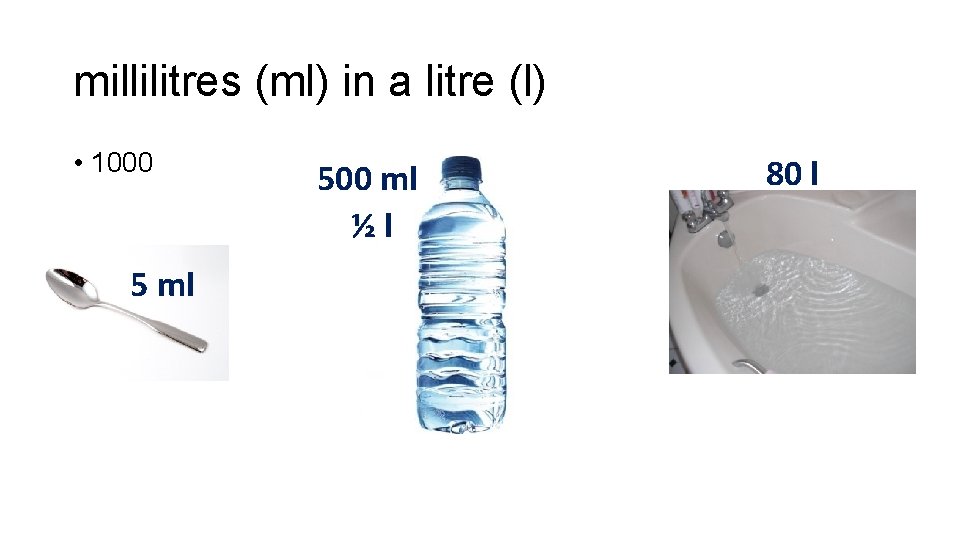
millilitres (ml) in a litre (l) • 1000 5 ml 500 ml ½l 80 l
1 mile = ___ kilometres • 1. 6
8 kilometres = _ miles • 5
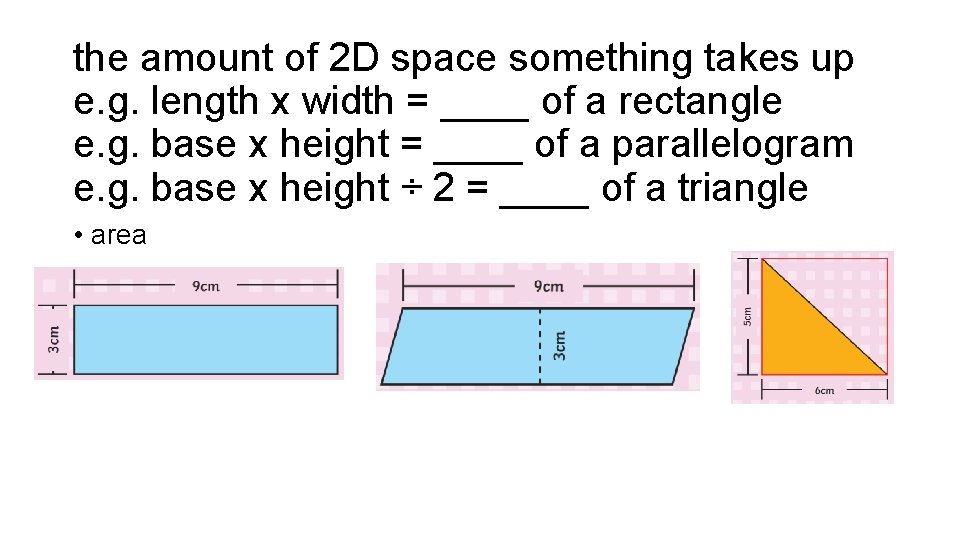
the amount of 2 D space something takes up e. g. length x width = ____ of a rectangle e. g. base x height = ____ of a parallelogram e. g. base x height ÷ 2 = ____ of a triangle • area
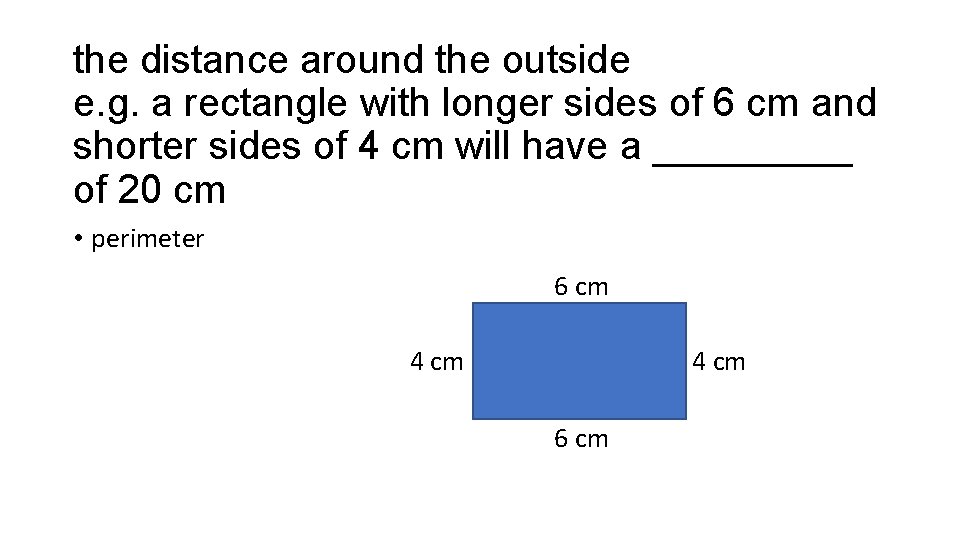
the distance around the outside e. g. a rectangle with longer sides of 6 cm and shorter sides of 4 cm will have a _____ of 20 cm • perimeter 6 cm 4 cm 6 cm
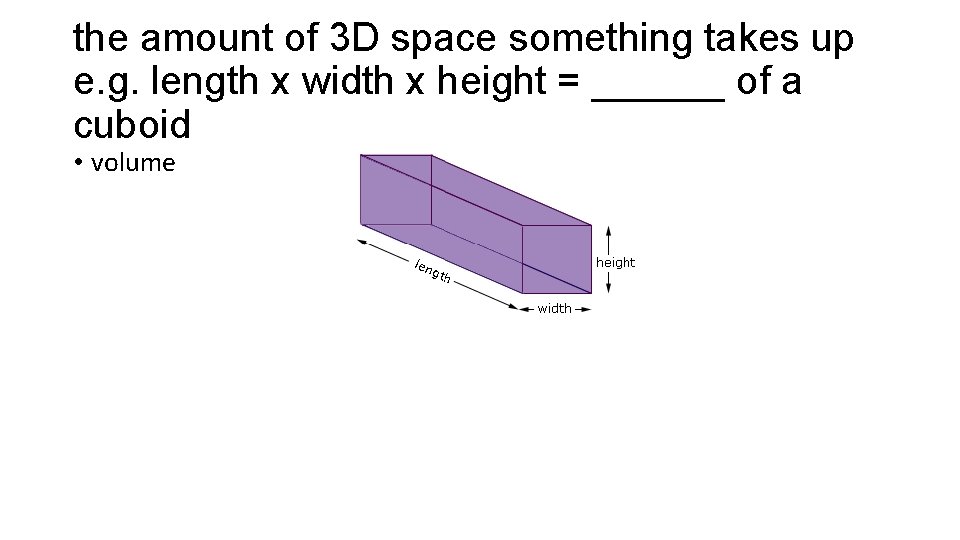
the amount of 3 D space something takes up e. g. length x width x height = ______ of a cuboid • volume
seconds in a minute • 60
minutes in an hour • 60
hours in a day • 24
September, April, June and November have __ days • 30
January, March, May, July, August, October and December have __ days • 31
February has 28 days or 29 in a ____ • leap year
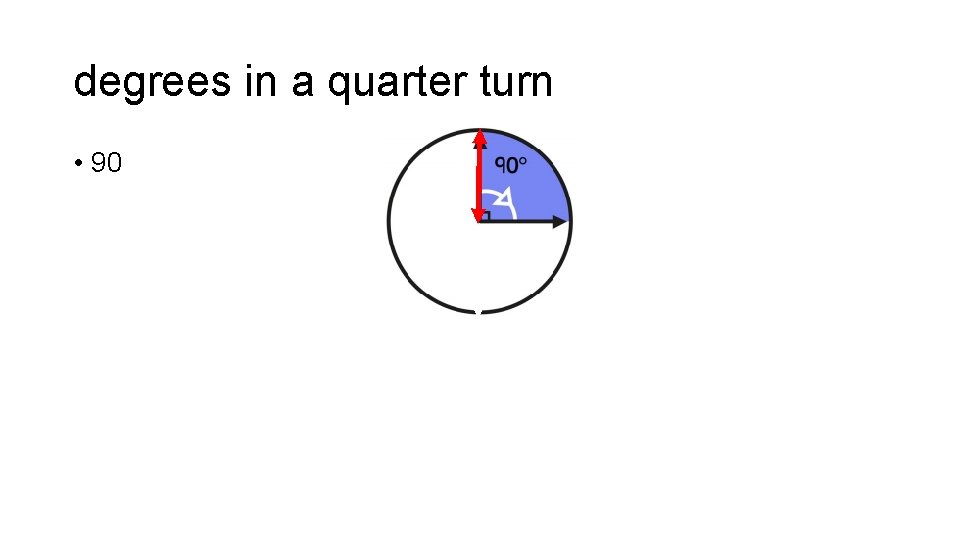
degrees in a quarter turn • 90
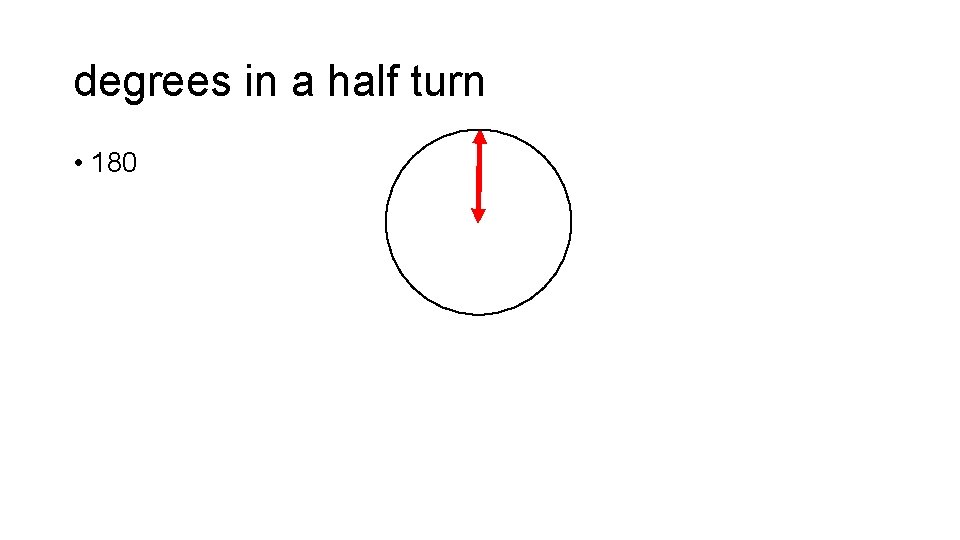
degrees in a half turn • 180
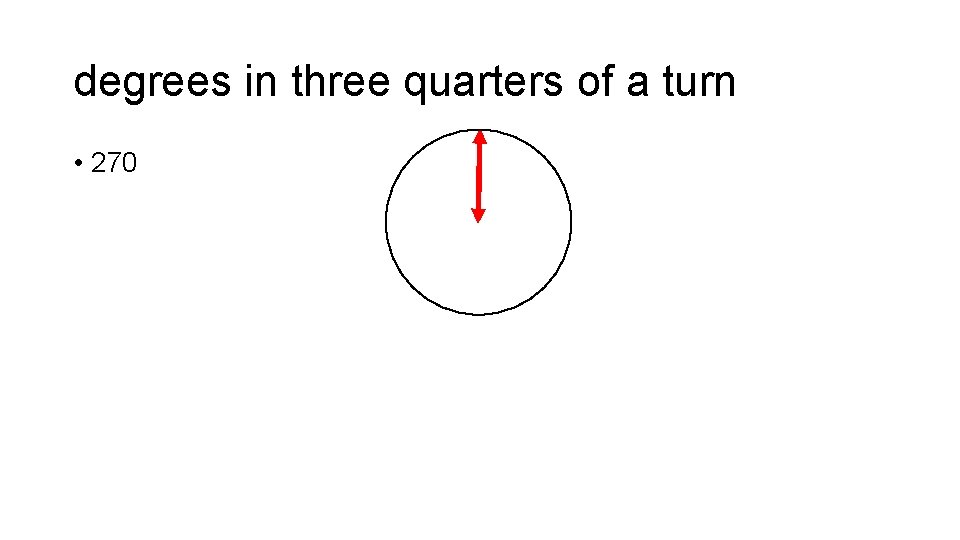
degrees in three quarters of a turn • 270
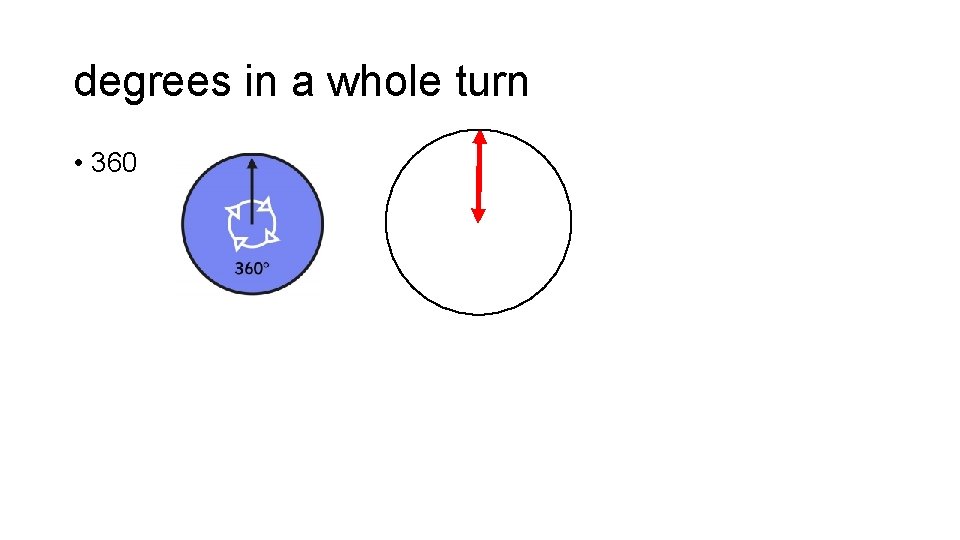
degrees in a whole turn • 360
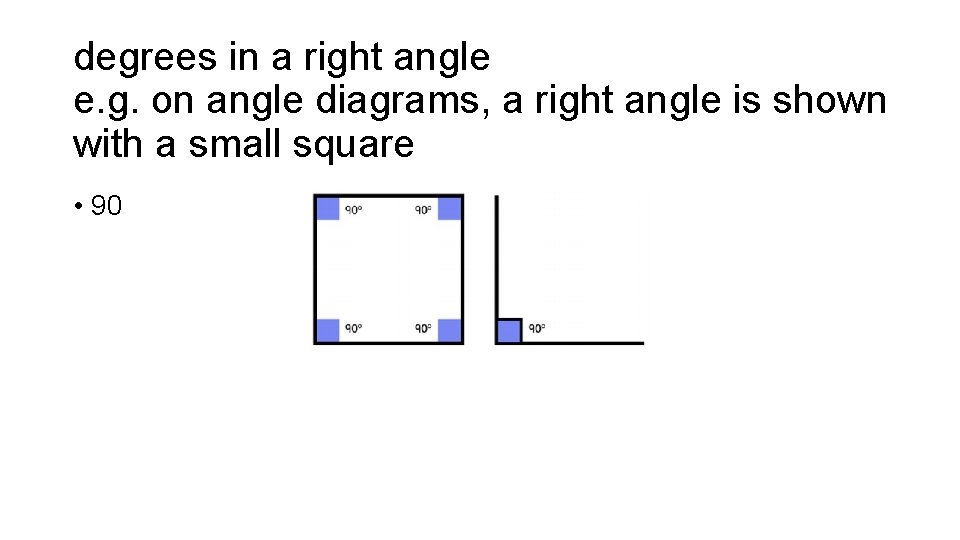
degrees in a right angle e. g. on angle diagrams, a right angle is shown with a small square • 90
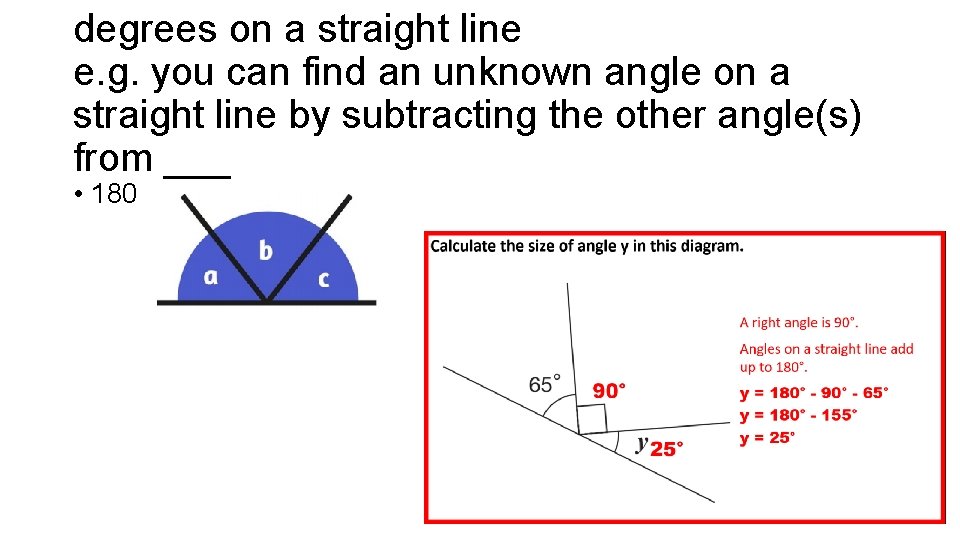
degrees on a straight line e. g. you can find an unknown angle on a straight line by subtracting the other angle(s) from ___ • 180
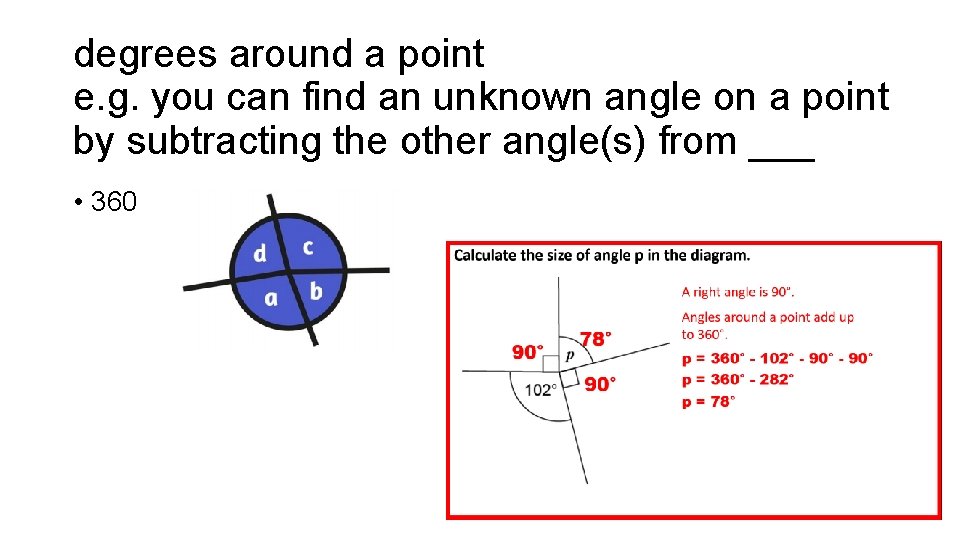
degrees around a point e. g. you can find an unknown angle on a point by subtracting the other angle(s) from ___ • 360
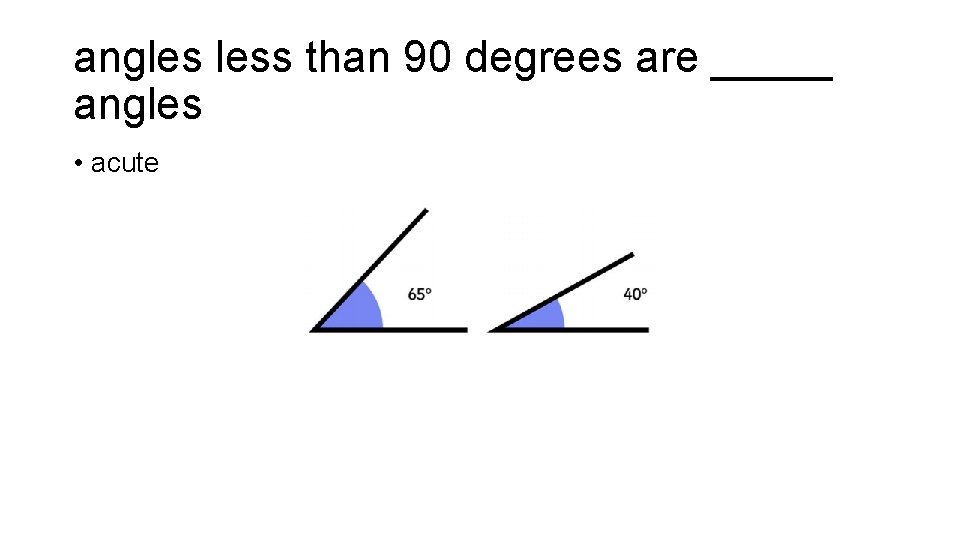
angles less than 90 degrees are _____ angles • acute
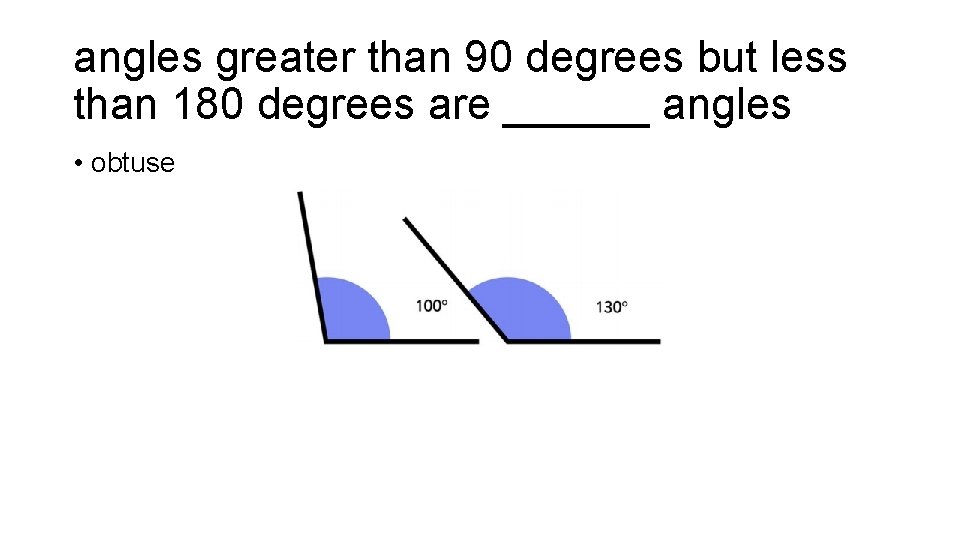
angles greater than 90 degrees but less than 180 degrees are ______ angles • obtuse
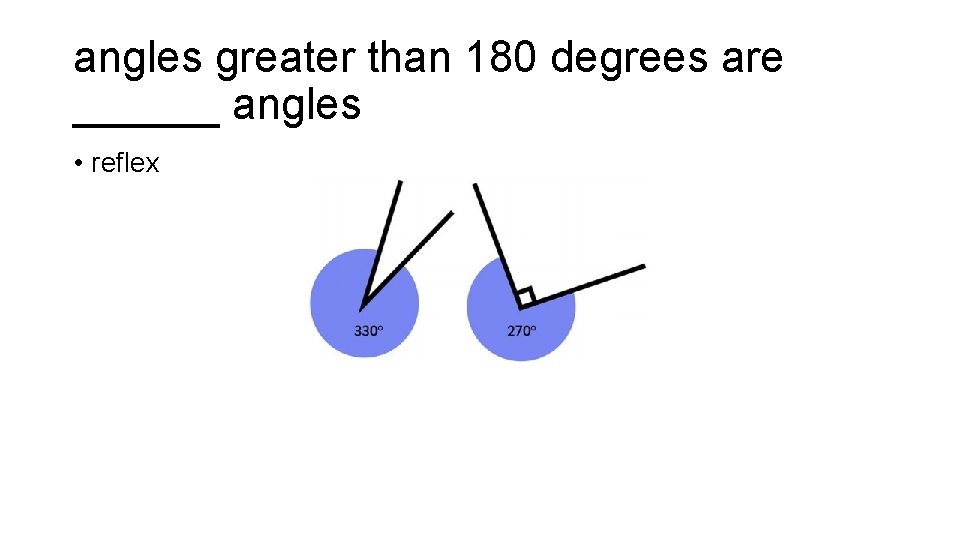
angles greater than 180 degrees are ______ angles • reflex
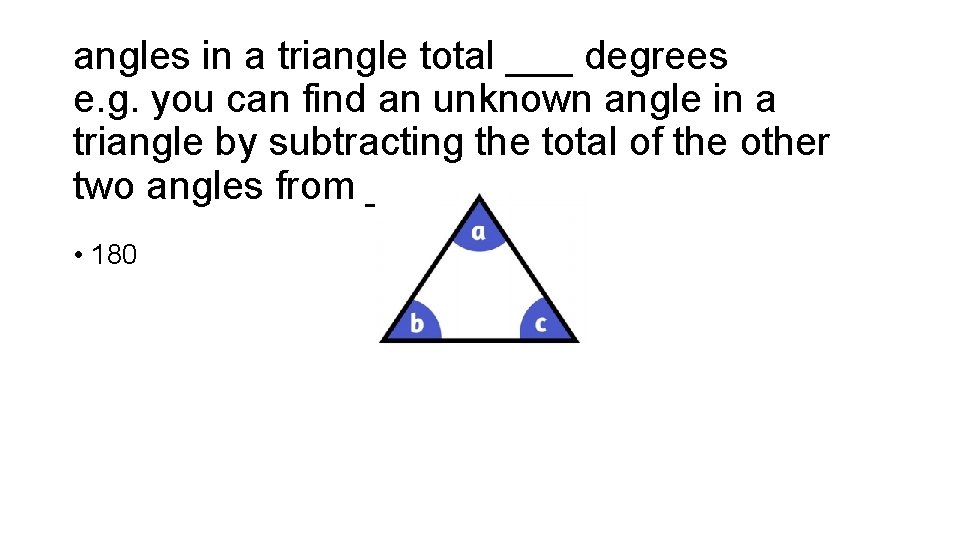
angles in a triangle total ___ degrees e. g. you can find an unknown angle in a triangle by subtracting the total of the other two angles from ___ • 180
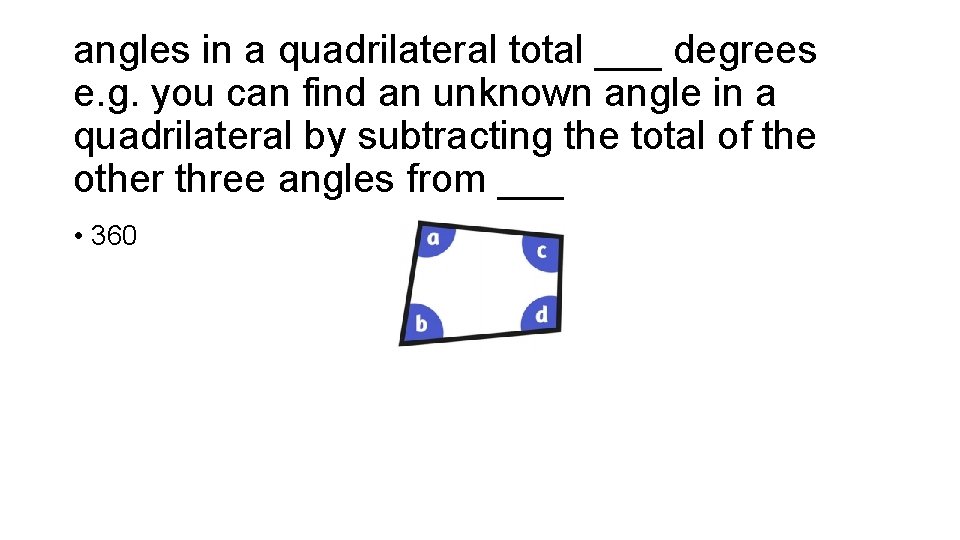
angles in a quadrilateral total ___ degrees e. g. you can find an unknown angle in a quadrilateral by subtracting the total of the other three angles from ___ • 360
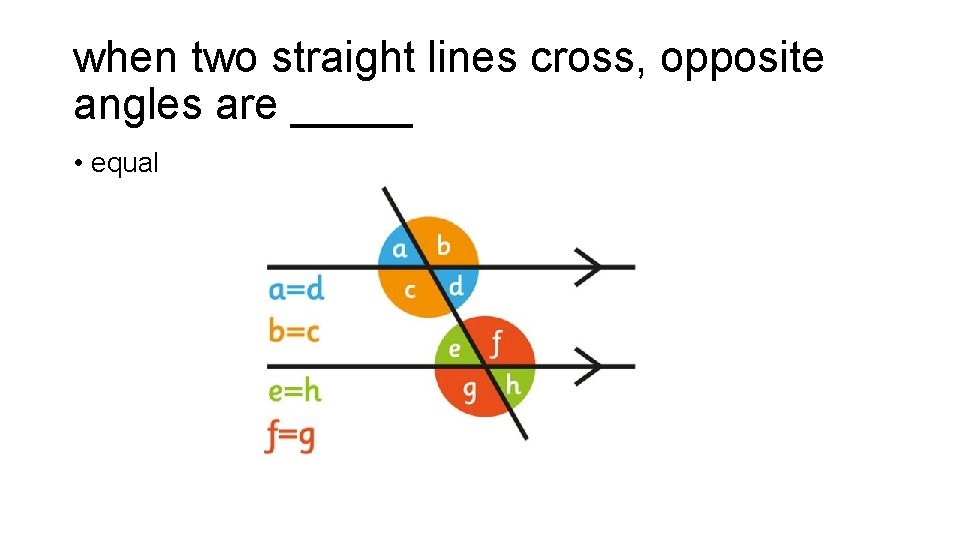
when two straight lines cross, opposite angles are _____ • equal
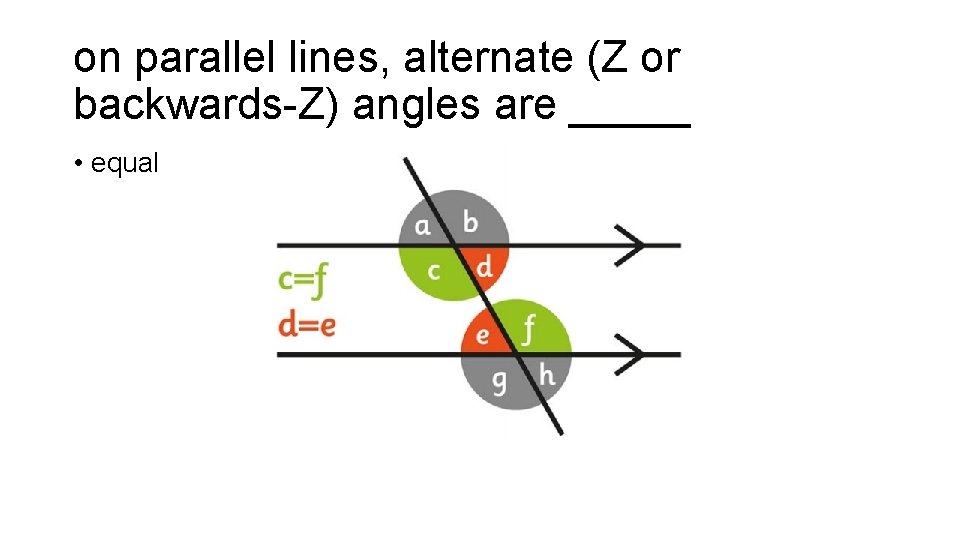
on parallel lines, alternate (Z or backwards-Z) angles are _____ • equal
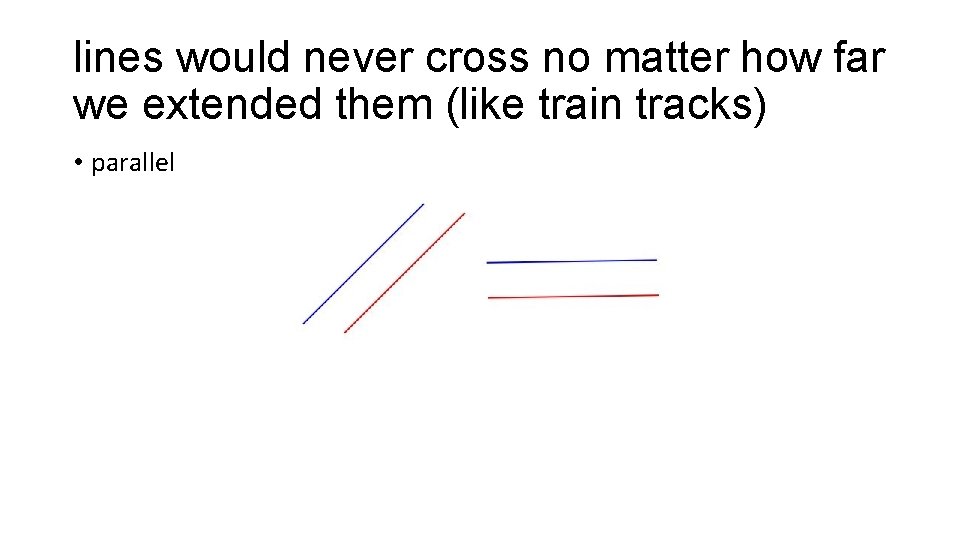
lines would never cross no matter how far we extended them (like train tracks) • parallel
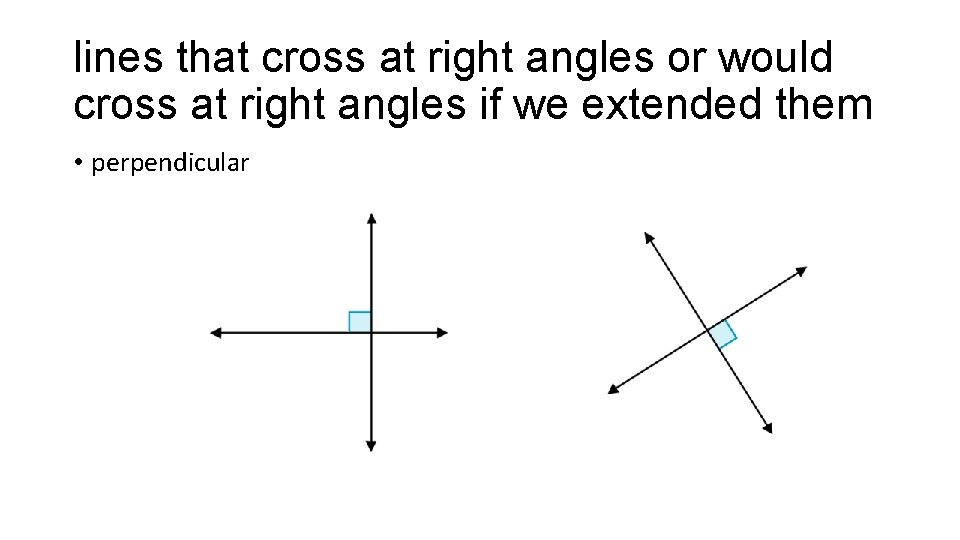
lines that cross at right angles or would cross at right angles if we extended them • perpendicular
a shape with four sides • quadrilateral
a shape with five sides • pentagon
a shape with six sides • hexagon
a shape with eight sides • octagon
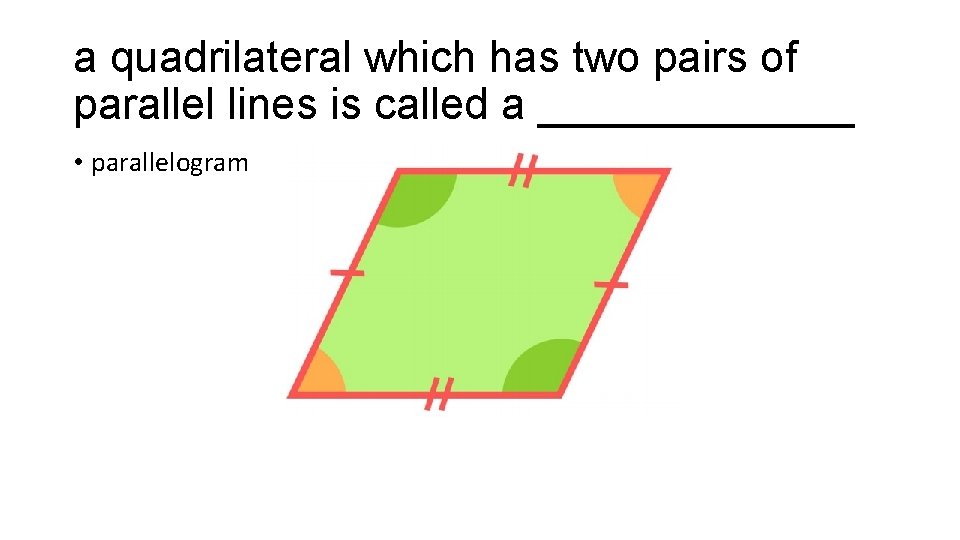
a quadrilateral which has two pairs of parallel lines is called a _______ • parallelogram
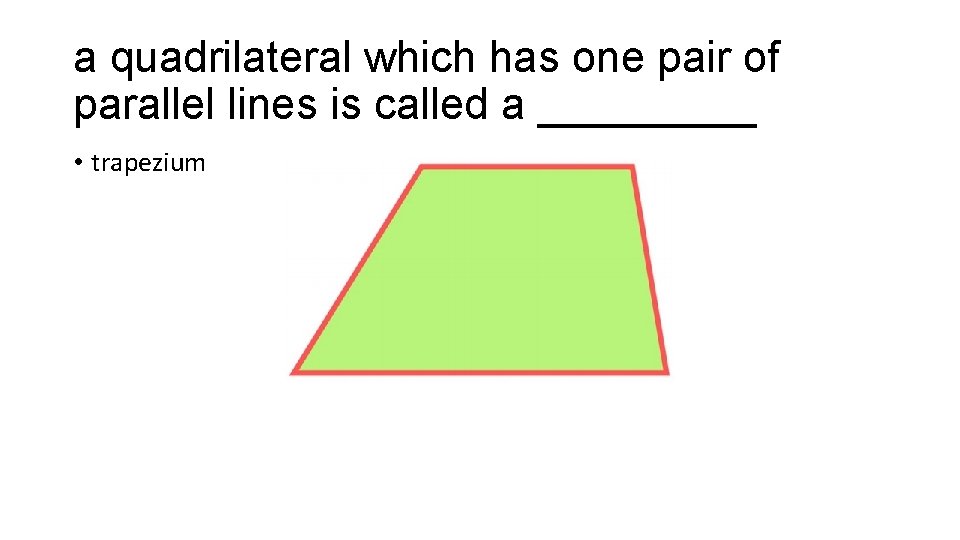
a quadrilateral which has one pair of parallel lines is called a _____ • trapezium
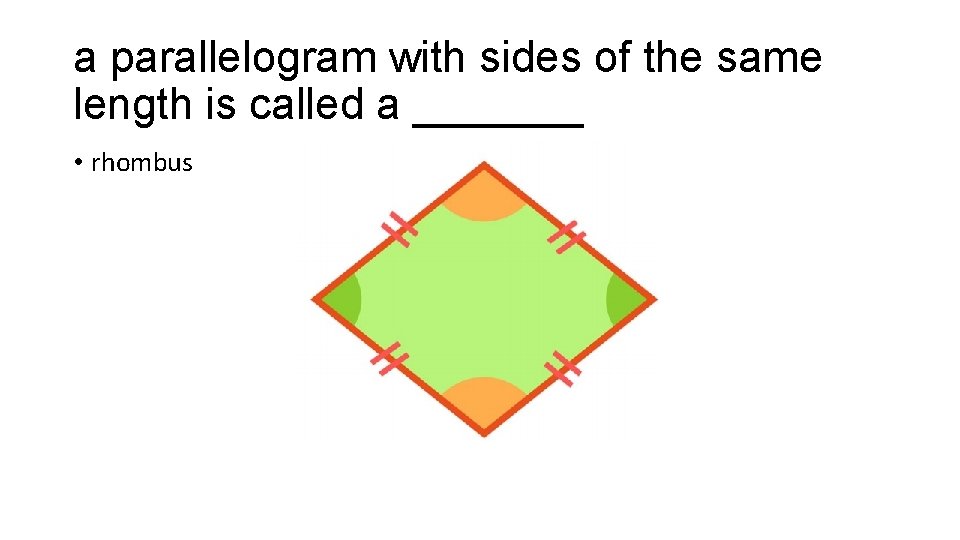
a parallelogram with sides of the same length is called a _______ • rhombus
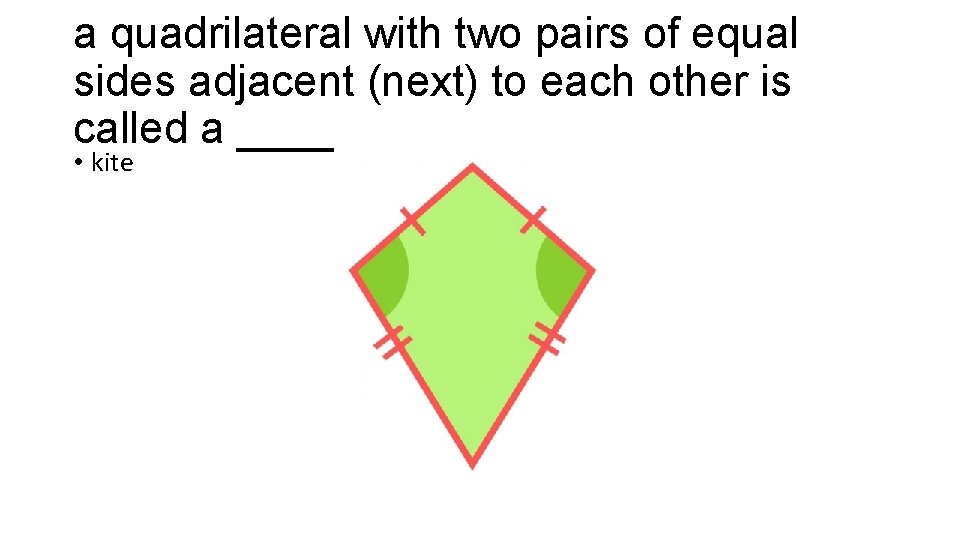
a quadrilateral with two pairs of equal sides adjacent (next) to each other is called a ____ • kite
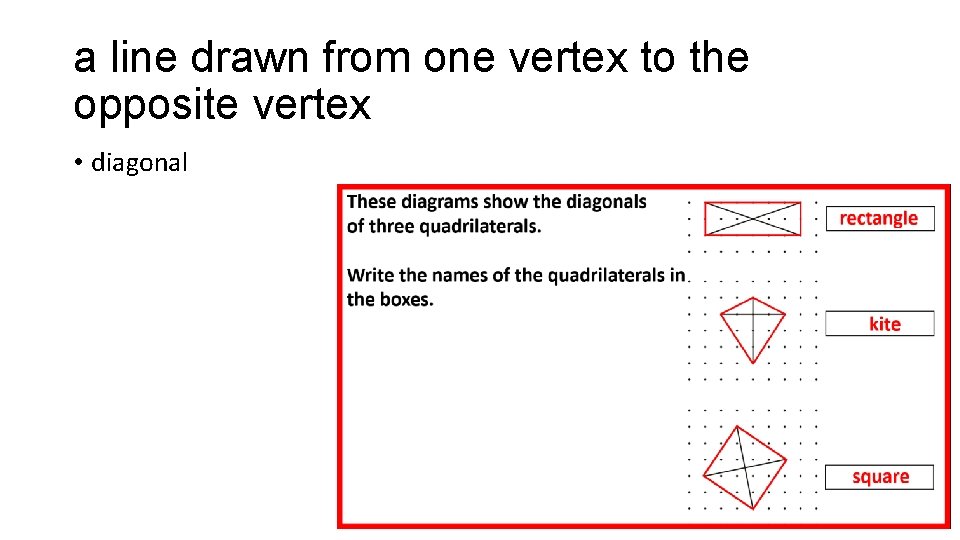
a line drawn from one vertex to the opposite vertex • diagonal
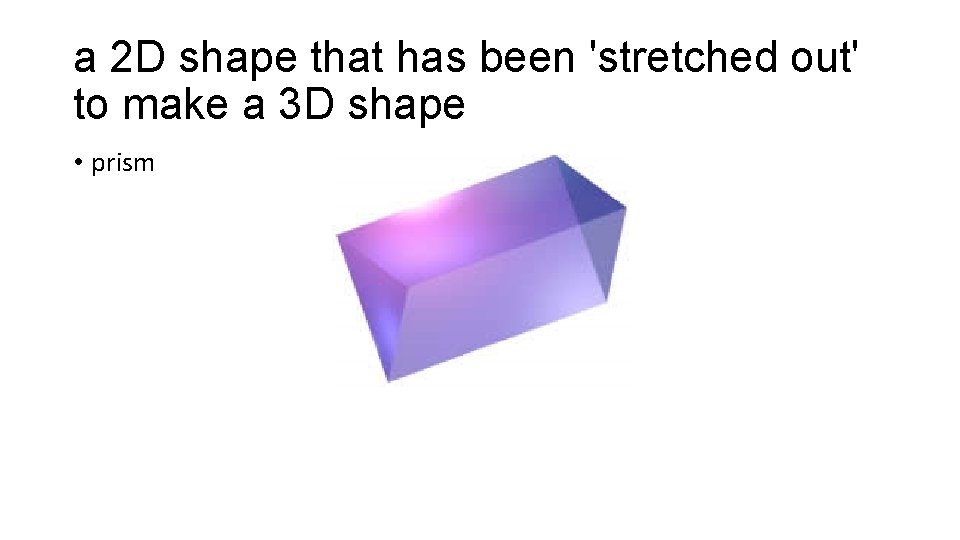
a 2 D shape that has been 'stretched out' to make a 3 D shape • prism
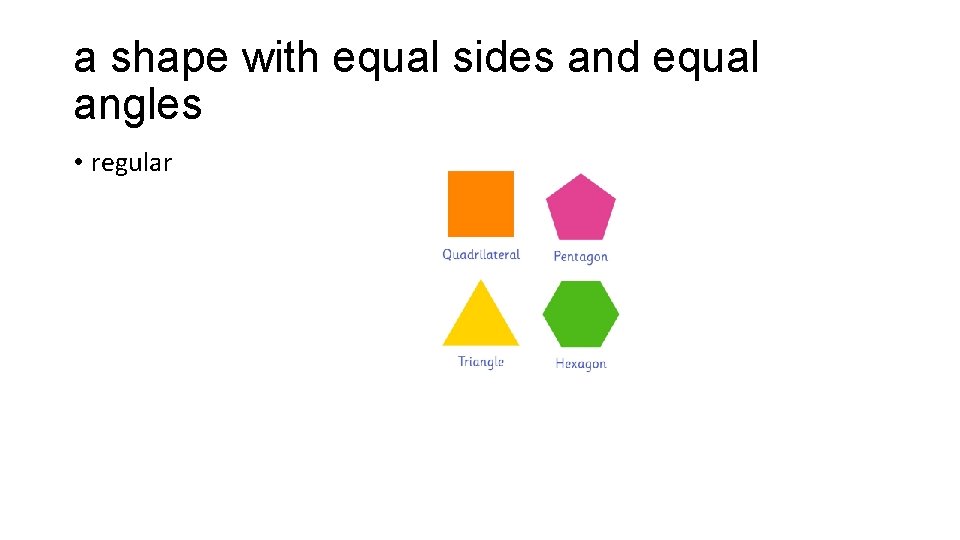
a shape with equal sides and equal angles • regular
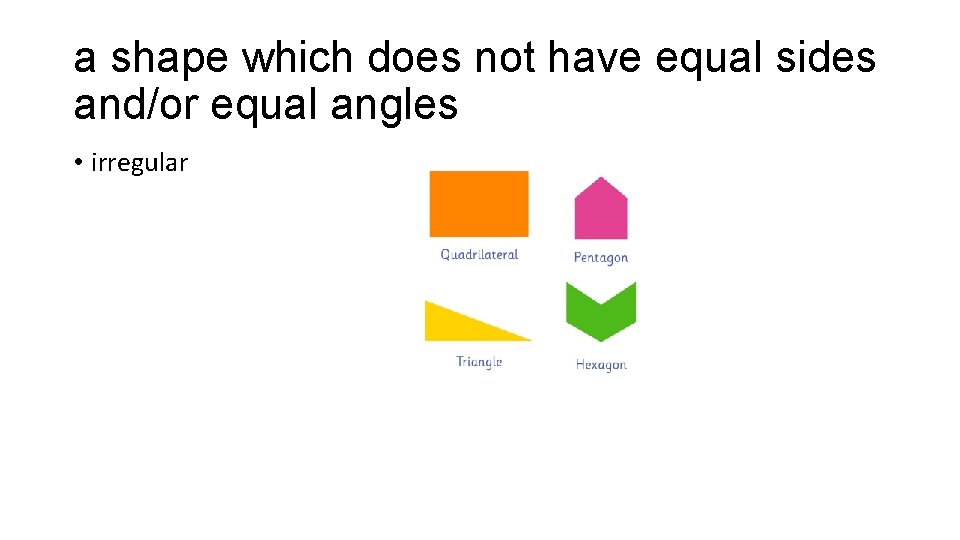
a shape which does not have equal sides and/or equal angles • irregular
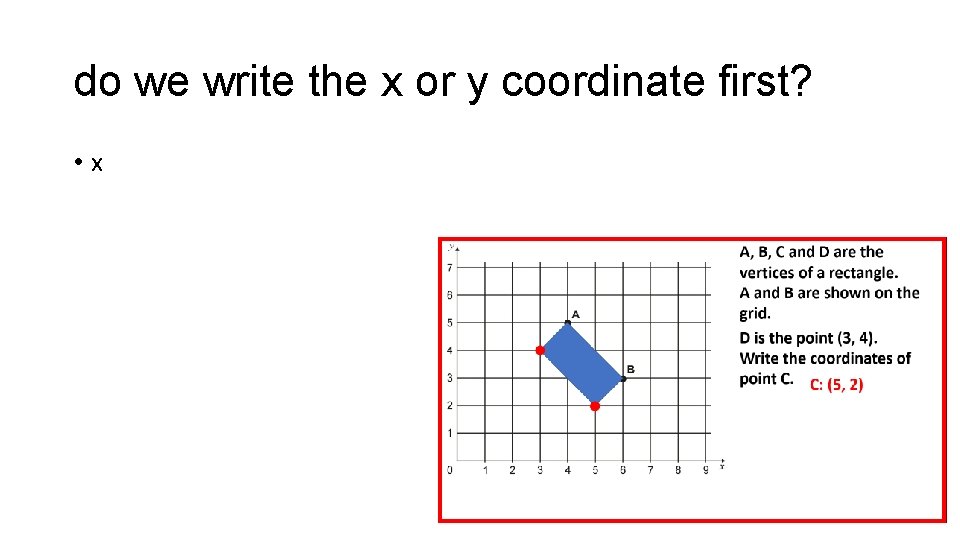
do we write the x or y coordinate first? • x
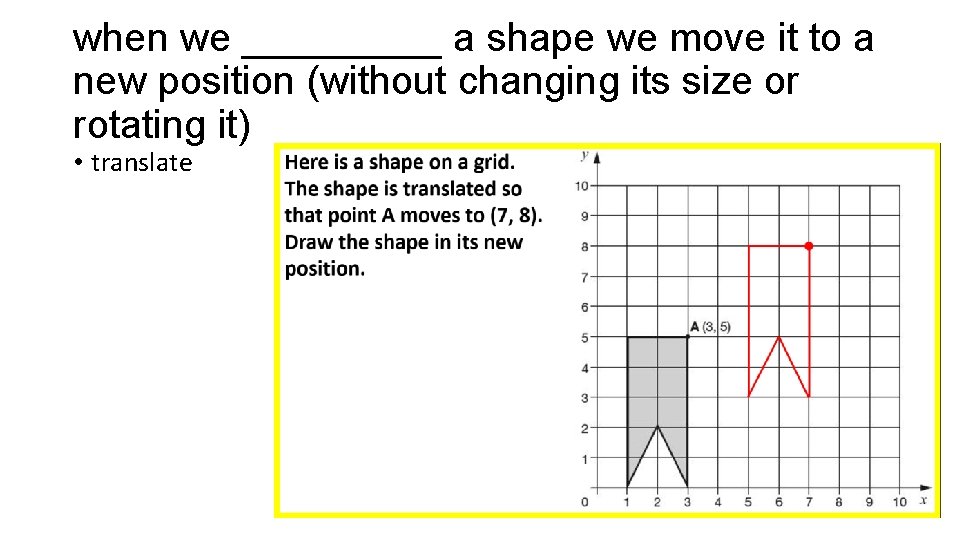
when we _____ a shape we move it to a new position (without changing its size or rotating it) • translate
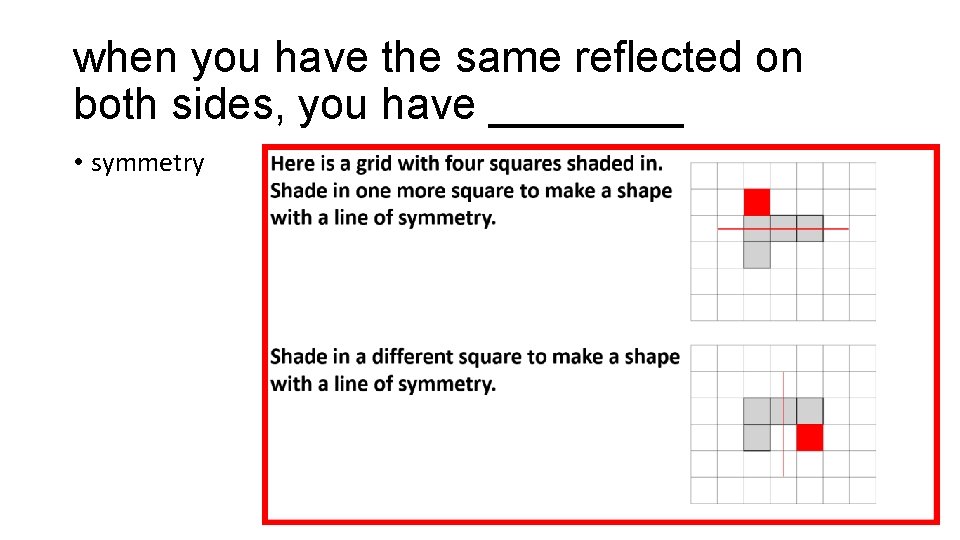
when you have the same reflected on both sides, you have ____ • symmetry
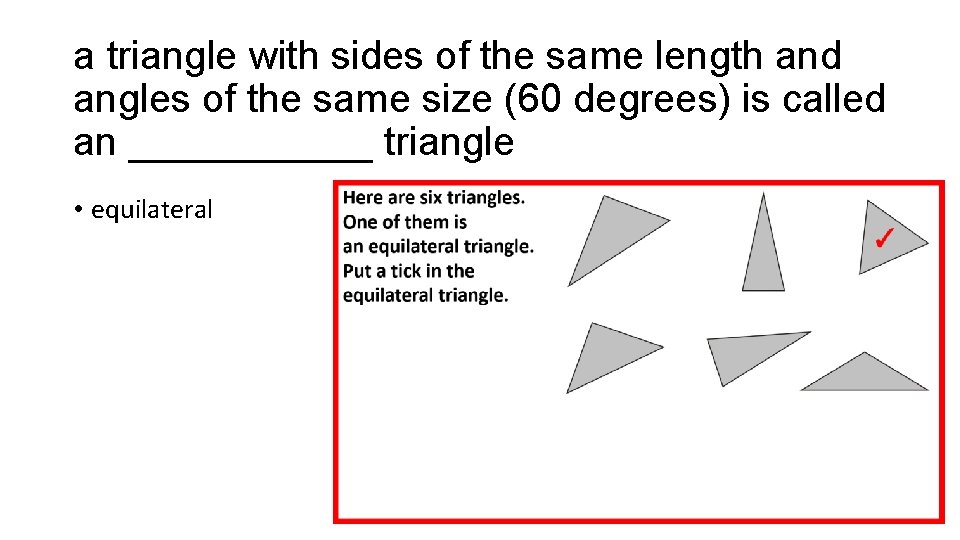
a triangle with sides of the same length and angles of the same size (60 degrees) is called an ______ triangle • equilateral
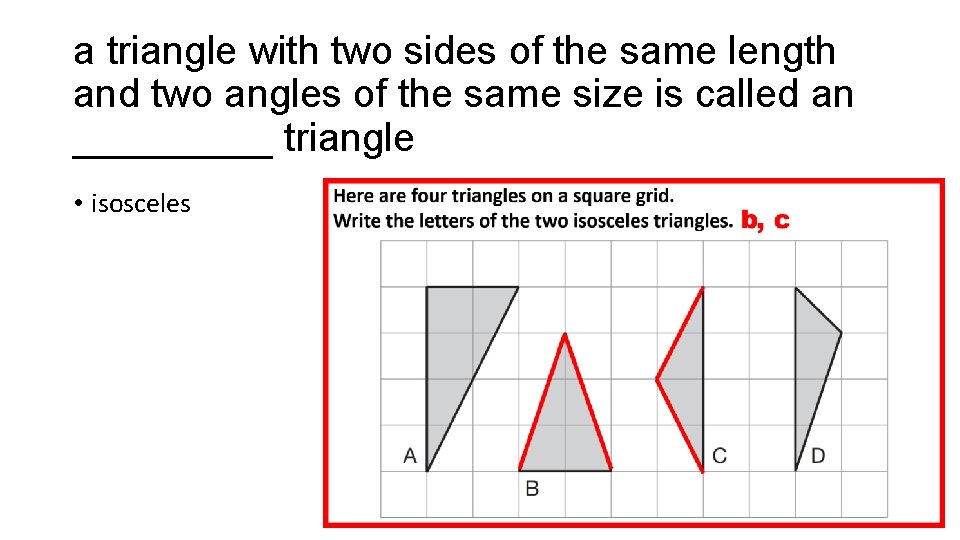
a triangle with two sides of the same length and two angles of the same size is called an _____ triangle • isosceles
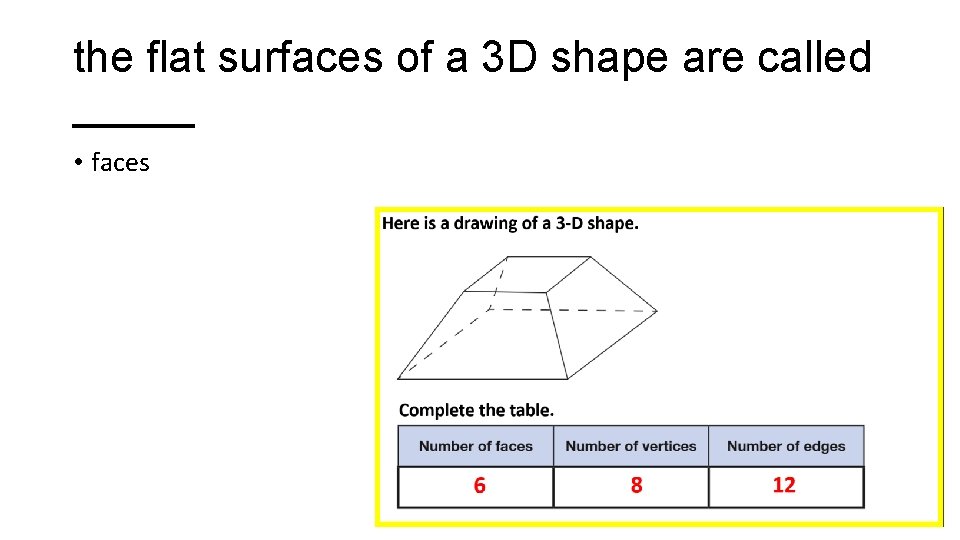
the flat surfaces of a 3 D shape are called _____ • faces
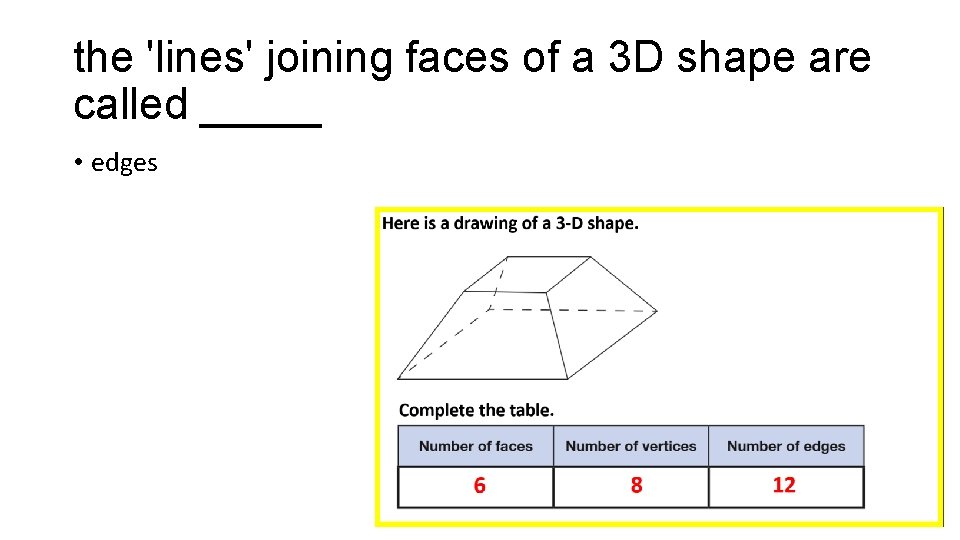
the 'lines' joining faces of a 3 D shape are called _____ • edges
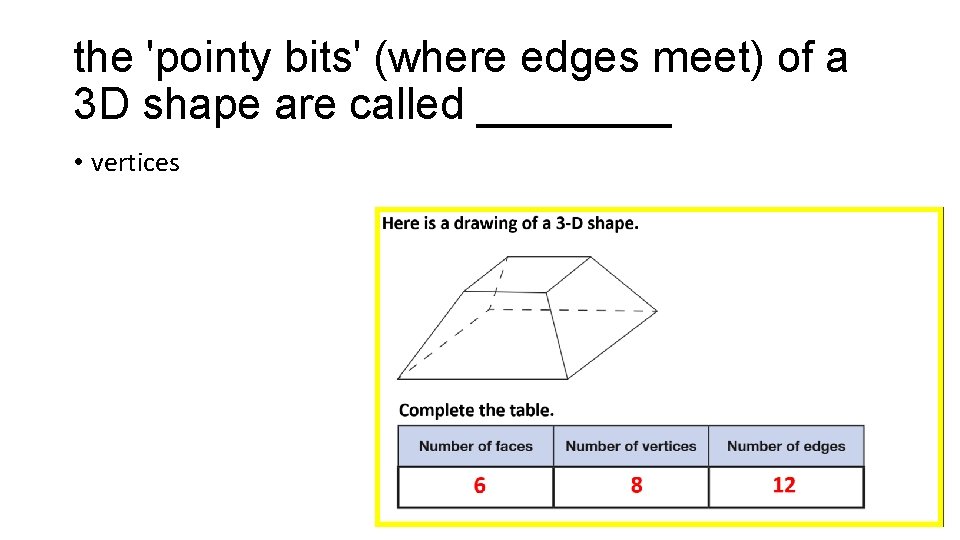
the 'pointy bits' (where edges meet) of a 3 D shape are called ____ • vertices
part: part e. g. a cake is cut into 18 slices. 15 are eaten. 3 are not eaten. The _____ of eaten to uneaten slices is 15: 3 e. g. a _____ of 15: 3 can be simplified to 5: 1 • ratio
with algebra, 3 y means 3 _____ y • multiplied by
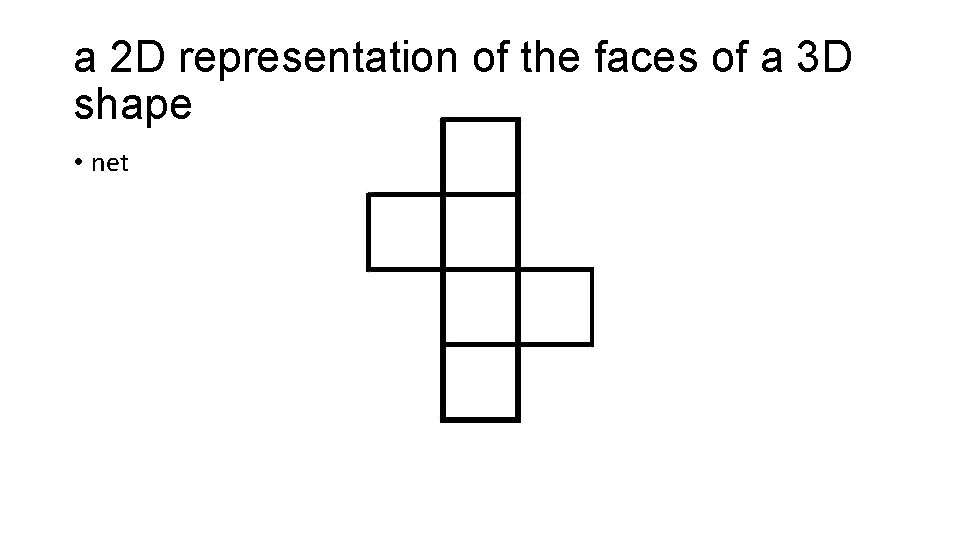
a 2 D representation of the faces of a 3 D shape • net
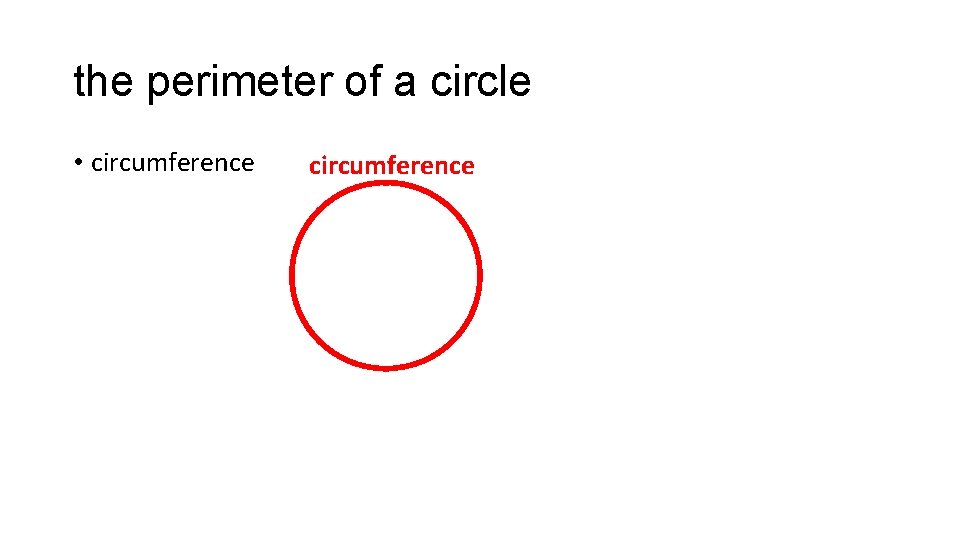
the perimeter of a circle • circumference
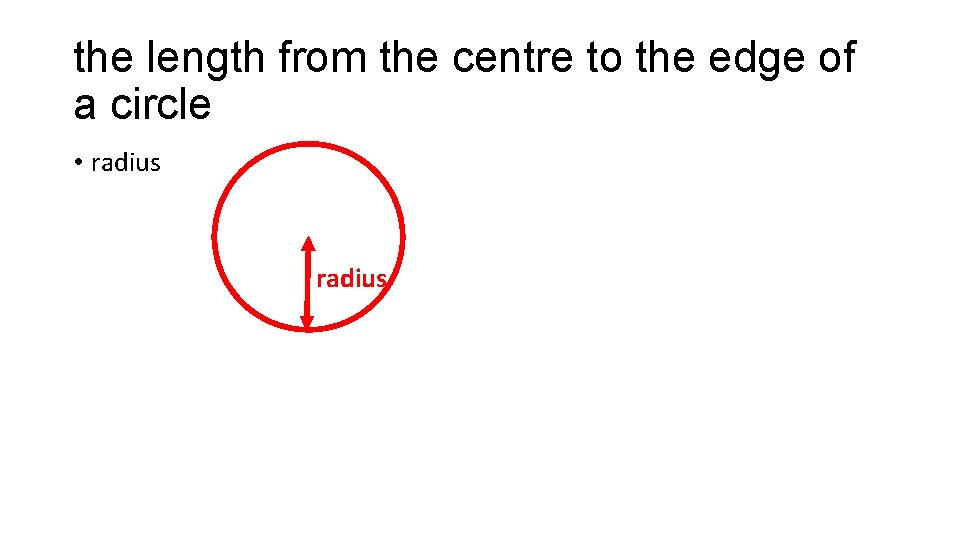
the length from the centre to the edge of a circle • radius
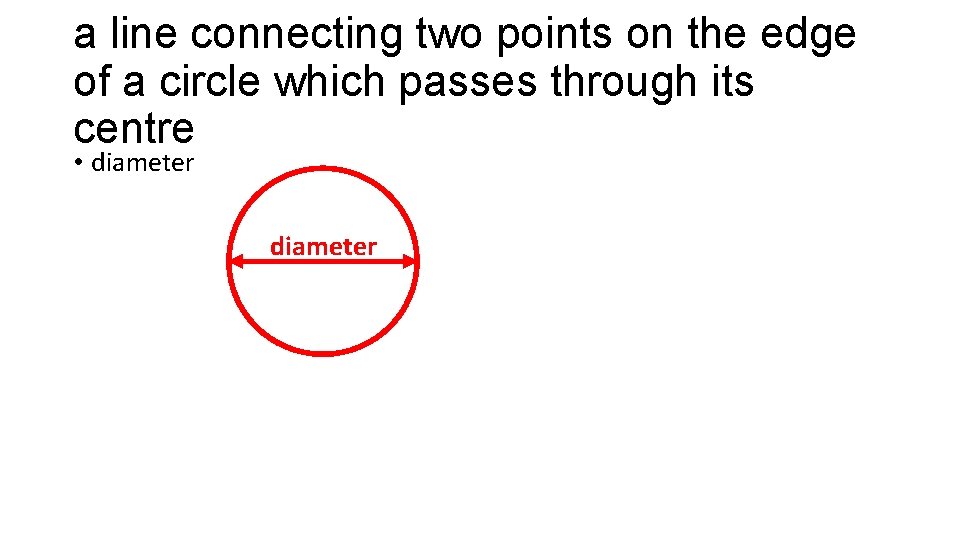
a line connecting two points on the edge of a circle which passes through its centre • diameter
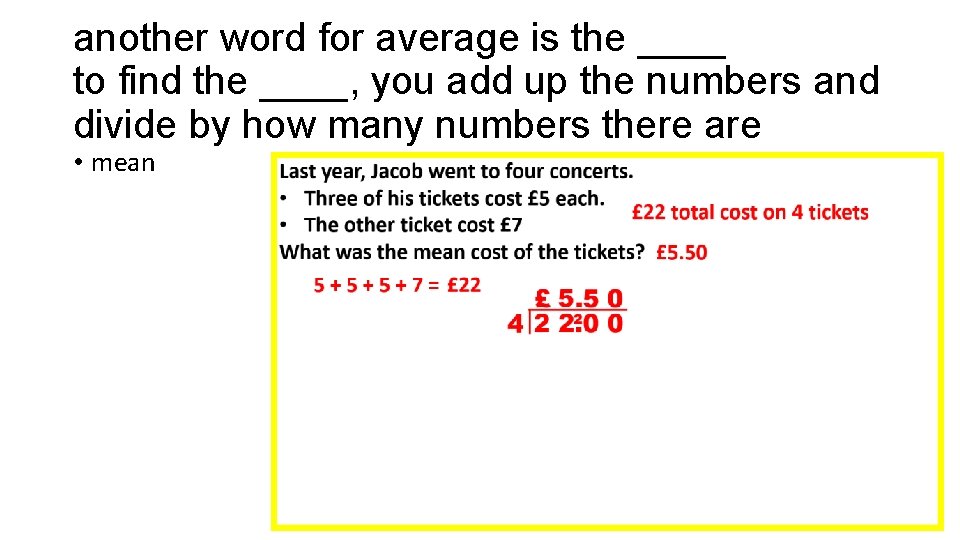
another word for average is the ____ to find the ____, you add up the numbers and divide by how many numbers there are • mean