
Millennium Development Goals Education Indicators Measurement Issues and
- Slides: 8
Millennium Development Goals, Education Indicators, Measurement Issues and Activities to Improve Measurements Workshop on Education Indicators for Millennium Development Goals, 21 -23 November 2012, Tirana, Albania Marieta Tsaturyan, National Statistics Service, Republic of Armenia 1
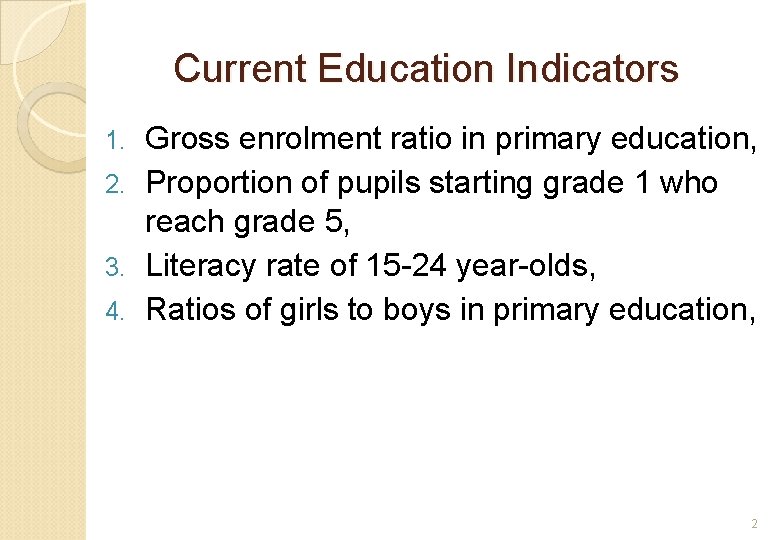
Current Education Indicators Gross enrolment ratio in primary education, 2. Proportion of pupils starting grade 1 who reach grade 5, 3. Literacy rate of 15 -24 year-olds, 4. Ratios of girls to boys in primary education, 1. 2
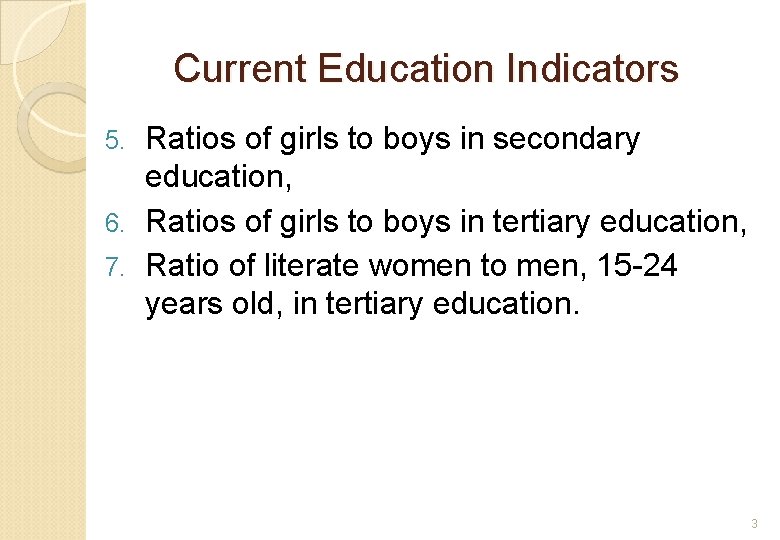
Current Education Indicators Ratios of girls to boys in secondary education, 6. Ratios of girls to boys in tertiary education, 7. Ratio of literate women to men, 15 -24 years old, in tertiary education. 5. 3
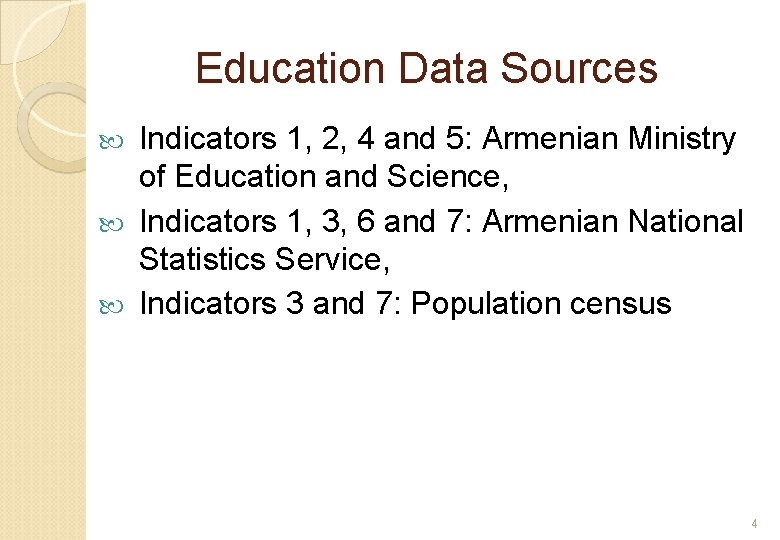
Education Data Sources Indicators 1, 2, 4 and 5: Armenian Ministry of Education and Science, Indicators 1, 3, 6 and 7: Armenian National Statistics Service, Indicators 3 and 7: Population census 4
Education Indicators: Measurement Issues Gross enrolment ratio in primary education. Issue: before 2010, the Armenian Ministry of Education and Science provided data on number of students by grades only. Therefore gross ratio was calculated instead of net ratio. 5
Activities to Improve Education Indicators From 2010, the Ministry of Education and Science provides data on grades and ages which allows for calculating net enrolment ratio in primary education. 6
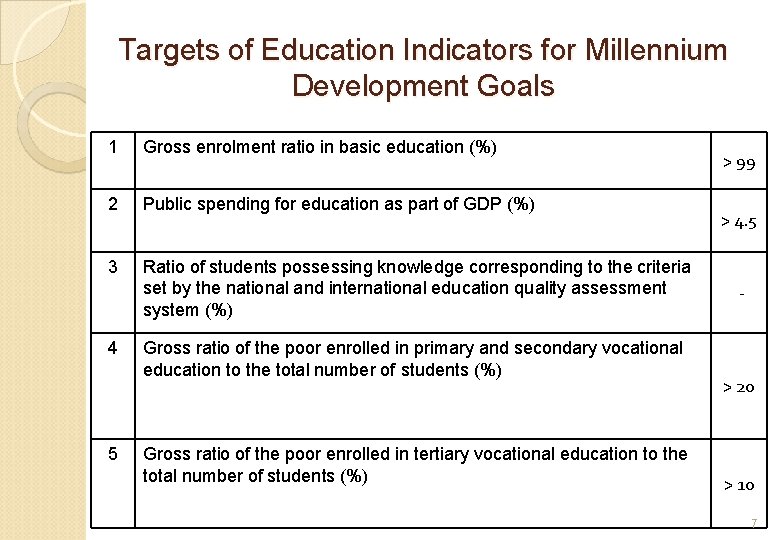
Targets of Education Indicators for Millennium Development Goals 1 Gross enrolment ratio in basic education (%) 2 Public spending for education as part of GDP (%) 3 Ratio of students possessing knowledge corresponding to the criteria set by the national and international education quality assessment system (%) 4 5 Gross ratio of the poor enrolled in primary and secondary vocational education to the total number of students (%) Gross ratio of the poor enrolled in tertiary vocational education to the total number of students (%) > 99 > 4. 5 - > 20 > 10 7
Thank you! 8