
Milk What is the processing grading cookery methods

- Slides: 13
Milk What is the processing, grading, cookery methods, and nutritional value of milk products?
Processing and Grading of Milk is one of the most nutritious foods without substitutions. The nutrients are needed by people of all ages. It is used as a beverage and an ingredient in many recipes. The sale of milk is controlled by the local health department. To insure safety , milk is pasteurized, which is a process of heating milk to destroy harmful bacteria. Raw milk is not pasteurized and therefore unsafe to drink. Homogenization is a process that breaks up fat particles in milk so they will be uniformly distributed in the product. Milk is fortified by exposing it to ultraviolet light, the process of irradiation , so fat changes to Vit D. Most of our milk is pasteurized, homogenized, and fortified. The grade of milk is based on bacterial count, the highest grade being ‘A’. Milk is composed of 13% solids and 87% water. Buttermilk is the liquid that is leftover after churning butter (a low-fat and high-protein substance that ferments to the point of tartness). You can add lemon juice or vinegar to regular milk, and these acids cause the protein to coagulate or gel. The milk will now have curds and whey.
VOCABULARY • Raw milk • Lactose • Pasteurized milk • Whole milk • Homogenized milk • Evaporated milk • Vitamin D milk • Sweetened condensed milk • Skim milk • Non-fat dry milk • Low fat milk • Buttermilk
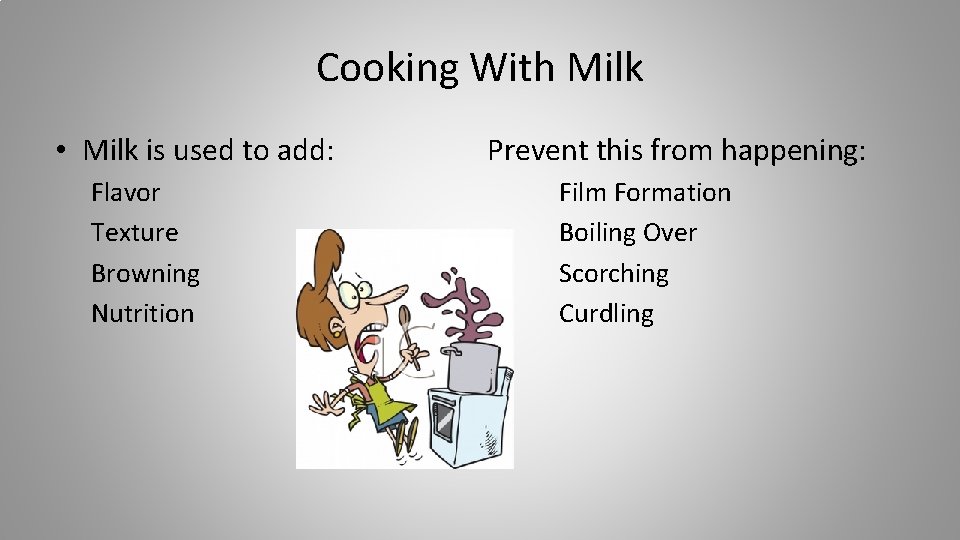
Cooking With Milk • Milk is used to add: Flavor Texture Browning Nutrition Prevent this from happening: Film Formation Boiling Over Scorching Curdling
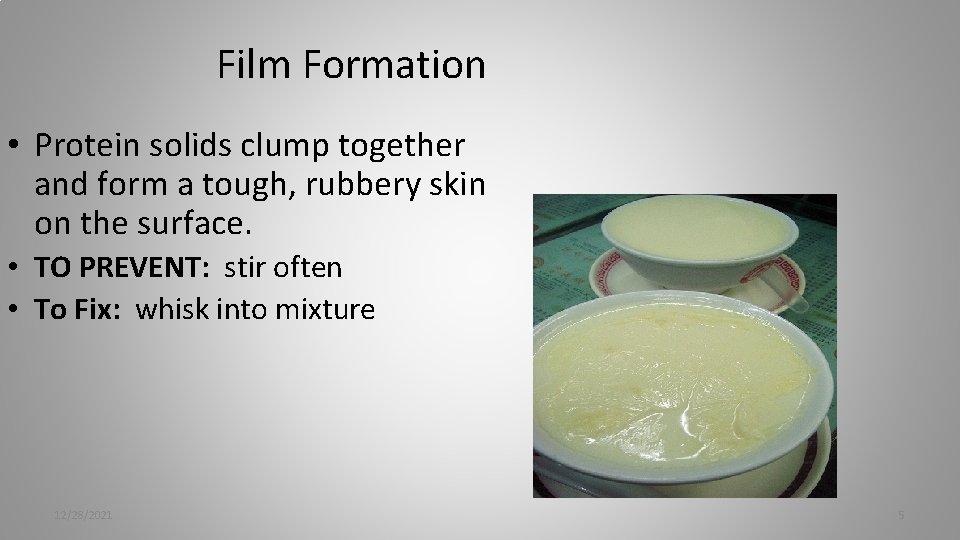
Film Formation • Protein solids clump together and form a tough, rubbery skin on the surface. • TO PREVENT: stir often • To Fix: whisk into mixture 12/28/2021 5
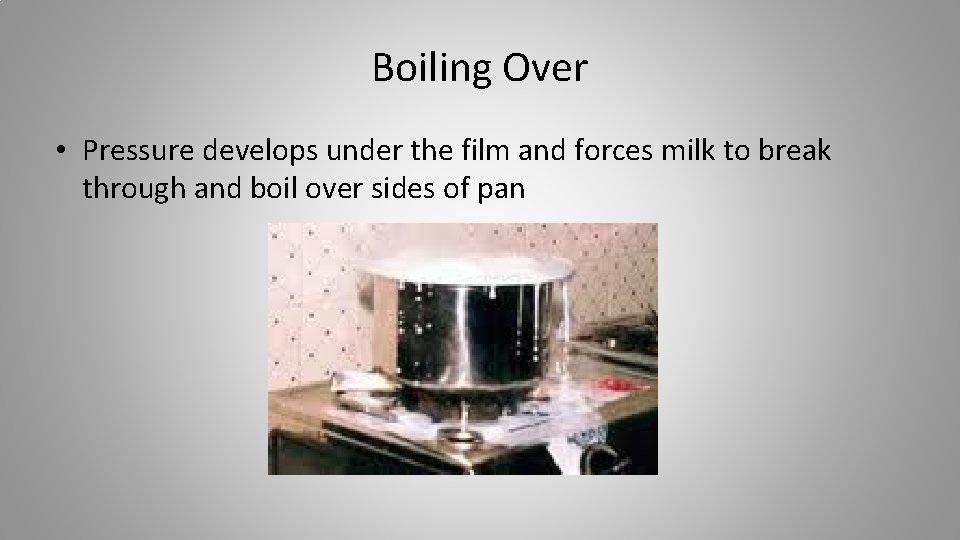
Boiling Over • Pressure develops under the film and forces milk to break through and boil over sides of pan
Scorching • Burnt milk (scorch-torch) • TO PREVENT: use low heat and stir often • No Fix 12/28/2021 Above is a picture of the bottom of a pan with scorched milk. 7
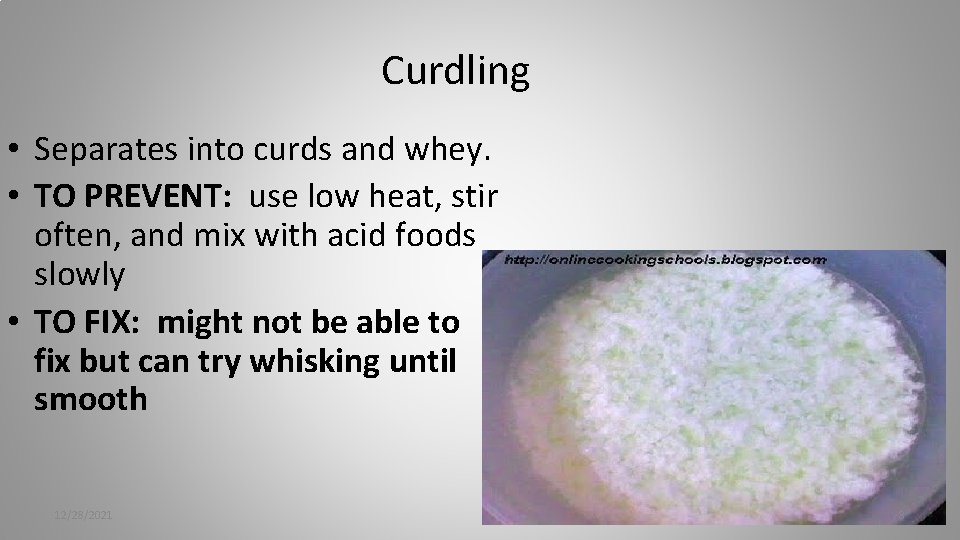
Curdling • Separates into curds and whey. • TO PREVENT: use low heat, stir often, and mix with acid foods slowly • TO FIX: might not be able to fix but can try whisking until smooth 12/28/2021 8
Nutrient Contributions of Milk • Minerals – Calcium…builds strong bones and teeth, strengthens body cells, aids in blood clotting, assist in regulation of heart muscle, maintains normal nerve function – Phosphorus…needed by every body cell, combines with calcium to make bones and teeth, influences oxidation of food in body cells to release energy to the body
Nutrient Contributions of Milk • Vitamins – Fat soluble Vitamin A and D found in the fat portion of milk. Aids the body in growth, repair and maintenance. Keeps the body operating in efficient and orderly way. – Water soluble Vitamin B-complex found in the non fat portion of the milk. Helps the body use oxygen and keeps skin, eyes and mouth in good condition. Necessary for proper function of nerves and digestives tract.
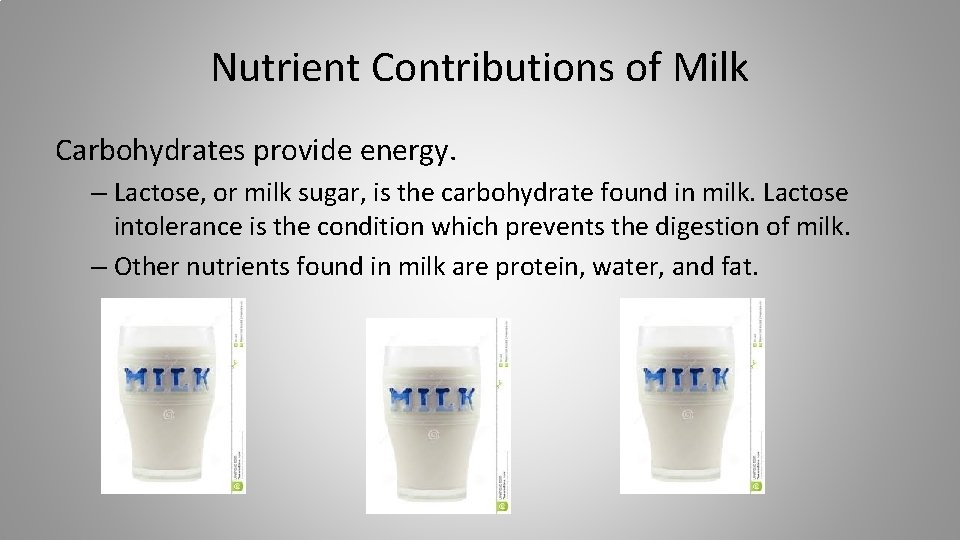
Nutrient Contributions of Milk Carbohydrates provide energy. – Lactose, or milk sugar, is the carbohydrate found in milk. Lactose intolerance is the condition which prevents the digestion of milk. – Other nutrients found in milk are protein, water, and fat.
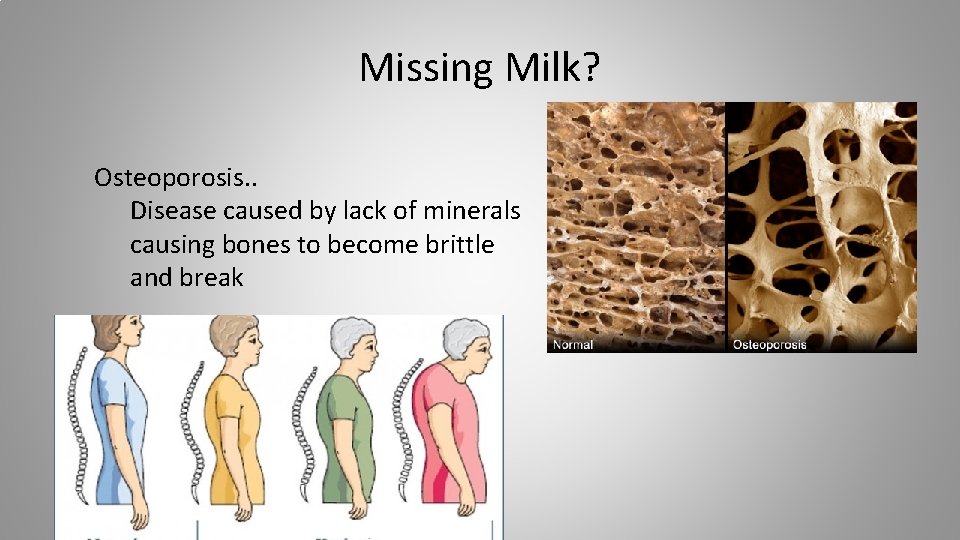
Missing Milk? Osteoporosis. . Disease caused by lack of minerals causing bones to become brittle and break
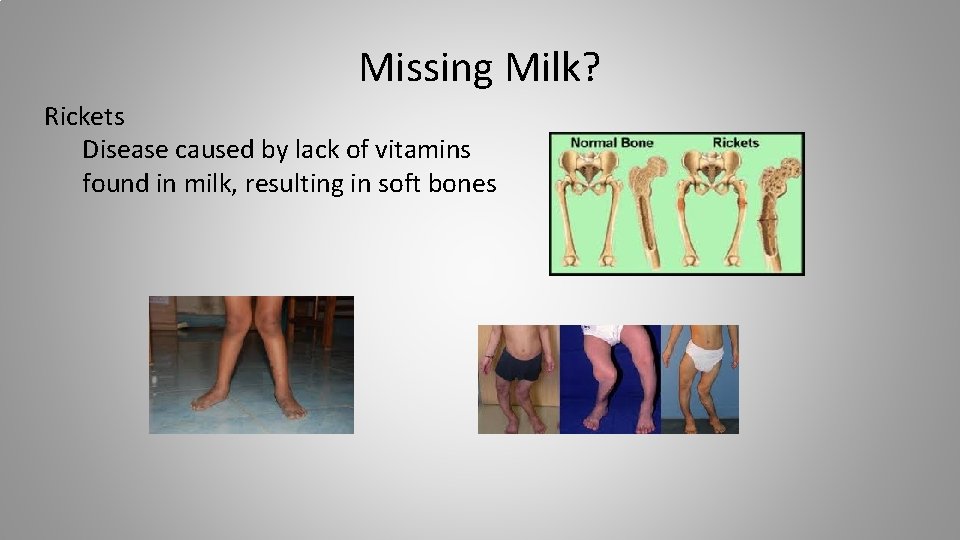
Missing Milk? Rickets Disease caused by lack of vitamins found in milk, resulting in soft bones