
MILK PROCESSING From foukeffa org Written by Teri
MILK PROCESSING From foukeffa. org Written by Teri Micke Ag Student Texas A&M GA Ag Ed Curriculum Office To accompany the Georgia Agriculture Education Curriculum Lesson 02421 -4. 3 July 2001
QUALITY GRADES 1. Grade A: fluid milk 2. Grade B: processing/manufacturing (cheese/butter); up to 3 million bacteria/ml
MAJOR PRODUCTS 1. fluid milk: whole milk, 2%, 1%, nonfat milk (less than. 5% fat), chocolate milk 2. Fermentation milk(grade A): cultured buttermilk, yogurt
3. creams (grade A): half & half (11% fat); cream (18%fat); whipping cream (30%fat); coffee cream (18%fat); heavy whipping cream(36%fat); sour cream (18%fat)
4. butter 5. canned milk: evaporated milk (60%water removed); sweetened condensed milk 6. dried milk
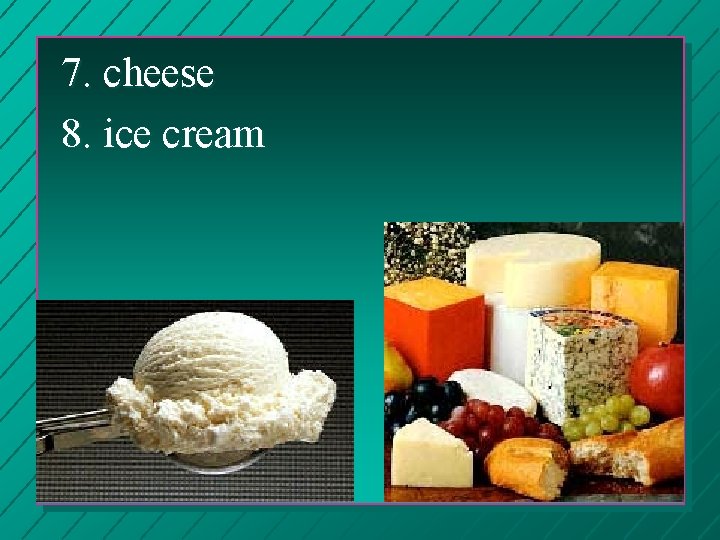
7. cheese 8. ice cream
BY-PRODUCTS 1. buttermilk: from butter, dried for baking 2. Whey - from cheese, dried or concentrated
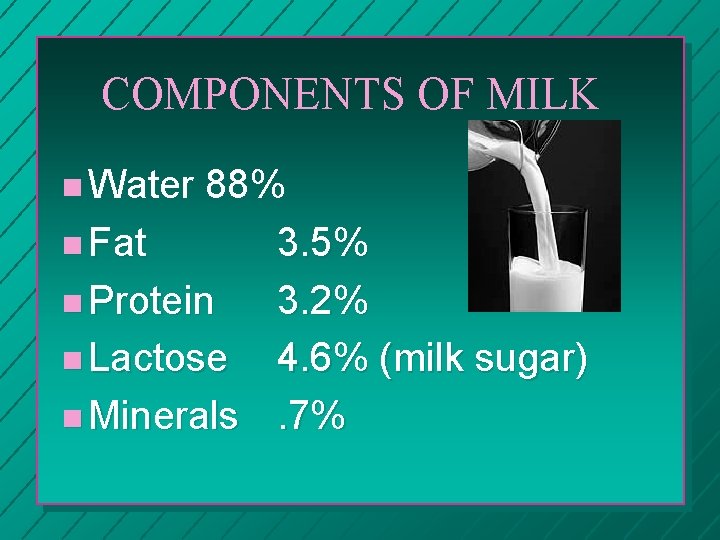
COMPONENTS OF MILK n Water 88% n Fat 3. 5% n Protein 3. 2% n Lactose 4. 6% (milk sugar) n Minerals. 7%
INFLUENCES ON COMPONENTS n breed of cow n individual animal n stage of lactation n feed - age - climate n frequency of milking
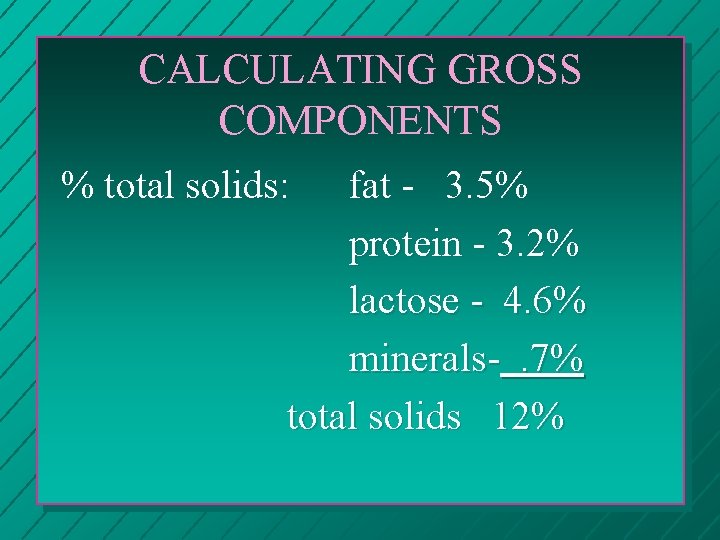
CALCULATING GROSS COMPONENTS % total solids: fat - 3. 5% protein - 3. 2% lactose - 4. 6% minerals-. 7% total solids 12%
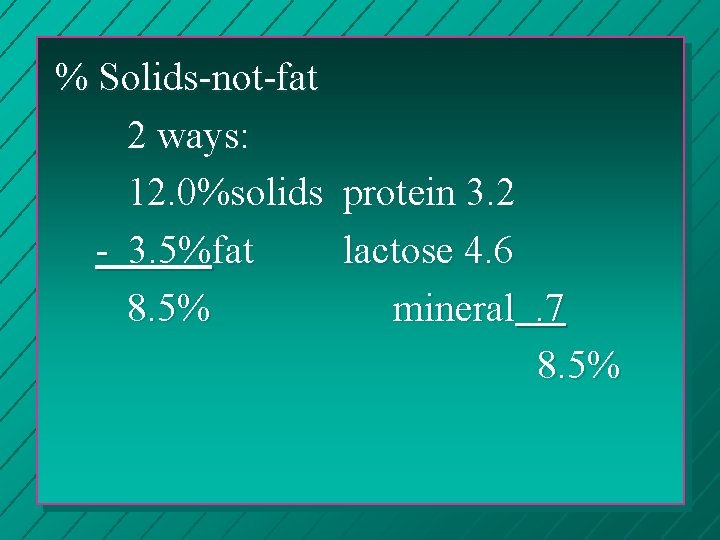
% Solids-not-fat 2 ways: 12. 0%solids protein 3. 2 - 3. 5%fat lactose 4. 6 8. 5% mineral. 7 8. 5%
n minimum legal composition of whole milk is not less thatn 3. 25% fat and not less than 8. 25 solids-not -fat
STEPS IN PROCESSING 1. standardization- adjust fat 2. clarification - remove foreign matter 3. pastuerization - destroy bacteria by heat
4. homogenization - break-up fat globules so the cream doesn’t float to top 5. packaging 6. dating-guaranteed drinkable 7. days beyond date

8. storage
TRENDS IN CONSUMPTION n prior to 1945: whole and condensed milk and butter most popular n after 1945 - more ice cream and cheese
n since 1975 shift from whole to low fat “lite” cheese and from regular ice cream to ice milk n recently yogurt and frozen yogurt
- Slides: 17